Transcript
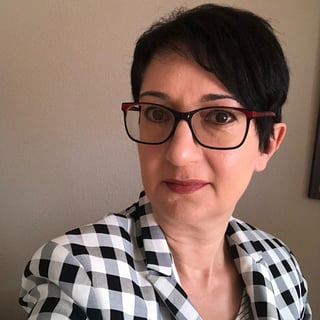
Joe Waltman: All right, today we have Maria Kundina. Maria, thank you so much.
Maria: Thanks for having me, Jo. It's a pleasure.
Joe Waltman: ah First question, same as always, refresh our memory. What have you been up to, or what did you do before INSEAD and what have you been up to the last 20-ish years?
Maria: Yes, it does sound quite scary. Very long time. So before I said I worked for JP Morgan in Moscow, I joined them in July 98. And that was about a month before Russia defaulted on its external debt.
Maria: And as you can imagine, and ah and an American investment bank didn't like that very much. So they've kind of mothballed the Moscow office and they offered a few staff to ah relocate.
Maria: And so in a year from then, I was on my way to London ah with JP Morgan, which was very exciting. And I landed in London and spent three years working for JP Morgan here. ah But I was in a finance graduate training program and they've placed me in the internal audit, which I absolutely hated.
Maria: It was the most a boring job in the world. um And at the internal audit, was just checking controls and processes and making sure that for other business units,
Joe Waltman: what does What does that mean for those of us who don't know internal audit?
Maria: and making sure that they're adhering to the control frameworks that they've set out and that they're robust and stuff. It's, it really is boring beyond belief.
Joe Waltman: Hmm.
Maria: And at the time I was hanging out with a lot of INSEAD graduates and it seemed like a very natural thing to try, ah to try to get myself out of that boring space. So I went ahead and applied and I got into INSEAD and said ah and ah yeah, I mean, and that was a fantastic move.
Maria: it was, I was quite on the young side and on the kind of junior side at INSEAD. And in hindsight, I think I would have benefited a lot more from it had I done it later in my career. But at the time it seemed like the only way out of internal audit, which which definitely worked.
Maria: ah So it was basically 10 months forward and i You know, I could tell you that I wanted to go to industry, but that wouldn't be true. I really just wanted to go back to London at the time.
Maria: So i've I've tried the interviewing for everything and I eventually ended up with Shell, um actually through um an INSEAD connection. And then I spent the next 13 years ah at Shell doing ah about four different jobs.
Maria: And most of them, but they were all in finance. ah mostly in M&A and some ah time in ah business finance. um Had some really interesting deals.
Maria: ah Sold some refineries in France, in the UK. Sold some businesses in Greece and France. You can see there's a thread here. It was mostly divestments rather than investments.
Maria: i Went to Sudan with Shell, which was...
Joe Waltman: But at that point, you weren't like the Russian person. You were you were the M&A person, pan-European, it sounds like.
Maria: No, no.
Maria: I was never connected to Russia. i did one project with Russia at the beginning of my time at Shell, but it was very much a kind of a one off. I used my language skills. We did some, we negotiated some deals with Gazprom, which never went anywhere, but it was a fun, fun experience as well.
Maria: I did set up a joint venture in Ukraine at the time. That was also great, great experience. So some really interesting trips and really interesting projects culminating in, uh,
Maria: working on the Shell BG merger, which was like a MAMOS merger at the time around 2015. um I also had three kids whilst I was at Shell.
Maria: So that was also quite a, quite a convenient ah arrangement for me.
Joe Waltman: wow
Maria: Uh, but I did have a massive career setback, um, around the back end of my time with Shell. Um, I had a manager was very unsupportive for about three and a half years. Um,
Maria: And it was a real really difficult time ah just to carry on kind of dragging through, working through that relationship and kind of trying to do something useful whilst having zero support. so at the end of the day, that person had a significant kind of role in ah getting me to leave Shell.
Maria: Um, but I think it was high time to leave anyway. So i ended up leaving after 13 long years in 2016. And from then on, um, I had a really interesting, uh, few jobs. So the next company I joined was, um, an American firm called, uh, World Fuel Services at the time. They've rebranded since, uh, it's, uh, energy, ah logistics and transportation firm,
Maria: ah quite a large one in the States. It kind of dips in and out of Fortune 100. And I was their head of M&A for the EMEA region. And that was really good fun. that was probably the most fun job that I had in my career.
Maria: um I got a great deal of freedom there compared to Shell. um It was much more kind of grown up. um It was fun. It was more experimental. I had a huge creative license. I could basically go out and source deals and kind of think about what the company might be interested in and go find it.
Maria: ah had a ah large scope of industry coverage. They worked across aviation, marine and land fuels across the whole region. So it was, um and and I was quite close to the top of the house. I reported to CFO.
Maria: um I talked to CEO, went to board meetings sometimes. It was it was great fun. It was really super job. But unfortunately, these guys, ah they were a bit too creative. So they've ah they'd run out of money for any M&A deals. And um it meant that after a little while, my job became a bit more like sitting on my hands. um And so and so at that around that time, I got up, you know,
Joe Waltman: Well, but but hold hold hold on. That sounds like maybe i've I've gotten too old and complacent, but that sounds like the ideal situation. ah could you How long could you have sat in your hands or or were you just too, you know, what's the word?
Joe Waltman: ah Anxious or or, yeah, restless.
Maria: I think it was a bit restless.
Joe Waltman: That's the word.
Maria: I think it was quite restless. Yeah. I tried, I poked around, I tried to find other applications for my finance talents in the company. ah it Didn't really get very far with that.
Maria: um Yeah. I think in hindsight, I probably could have squeezed another year out of the of that role, but you know, it was, it was going to come to an end at some point.
Maria: It couldn't have carried on like that forever.
Joe Waltman: Fair enough. Yeah.
Maria: um So i I ended up jumping ship. I was headhunted to a company that sounded really amazing. And now we're talking sort of 2019. It sounded super.
Maria: um I was going to be deputy CFO there, very large LPG trader, ah ended up not being quite sort of as described on the tin. um It was a family company. it was a very complex political environment on the inside, very small firm.
Maria: ah very tied to the owner and, the you know, the family's preferences and ways of working. Very strange culture as well. They kind of, after working for about 10 years at that point in a very kind of free flow environment, so I could pretty too much work from where I wanted and roughly the times i that that suited me, I suddenly ended up in an office-based culture where, you know arriving at 9.15 a.m. m was really not a thing.
Maria: ah you know, you had to be there before 9am and the kind of wall was a bit strange.
Joe Waltman: Mm-hmm.
Maria: And I ended up didn't didn't um ended up not lasting there for very long at all. I left, they made me redundant in January 2020. And obviously at that time, I didn't know COVID was coming coming upon us.
Maria: So I took um a couple months off. And by the time I decided that it's time to look for a new job, COVID well and truly ah closed the UK. in most of the rest of the world by then.
Maria: And I ended up with no job and lots of homeschooling, which was wasn't really a great fun at all. But um i I spent quite some time looking for a job, more than a year at the time. It was all very uncertain and stressful.
Maria: And I emerged from that in project roles. And so I've become a bit of an interim finance person since then. So
Maria: yeah I did a project role um running a large M&A deal and refinancing for, excuse me, a private a equity firm. And then I ah became CFO in a small um startup in recycling boom world.
Maria: And ah both of those jobs kind of pushed me towards considering decarbonizing my career a little. So I've been trying to stay that course. You know I've got a lot of sins to to answer for with 13 years at Shell and three years at World Fuel Services. So there's a lot of decarbonizing I need to do at this point. and But I would then ah went on to be c interim CFO in...
Joe Waltman: Hold on, hold on. I've never heard that term before from ah from a kind of career perspective. is Is that something people in your space say? Like, i've i've i've done I've worked in energy for too long.
Maria: I don't know.
Joe Waltman: I need to specifically get out of energy?
Maria: No, I'm still very much in energy. i just want to work in clean energy. I think it's ah it's a mixture of personal conviction and sort of what you you know what you hear you know about climate crisis and and whatnot.
Maria: But I've definitely been trying to, and even back at Shell, I wanted to try and get onto clean energy projects. They did a bit of solar and a bit of wind, but Shell was never big into those ah technologies or opportunities.
Joe Waltman: yeah
Maria: was very little to go around on that front, but I've i've i've had it on my mind since then.
Joe Waltman: Now, if well now is is the is the inspiration or impetus for this, like do you think it's there's more um there's more opportunity there? Or is there some like guilt, moral, you know reputational thing that that's driving this?
Maria: ah For me, it's guilt and moral thing.
Joe Waltman: Yeah.
Maria: um I think there are opportunities, but they are different. So they are much smaller, much less mature.
Maria: And that does have a play into what I'm trying to do in my career next. It's more difficult to find the right space for me where I can essentially combine that a desire to kind of not be in an oil and gas type company, but to still be in a relatively mature and large play.
Maria: then they're not mutually exclusive, but there's not a massive overlap between those two kind of circles on the Venn diagram.
Joe Waltman: So you're saying the, the, the, the The green stuff is earlier stage and has some of the trade-offs associated with an earlier stage ah company.
Maria: Yeah. so So I did three interim CFO roles in ah clean energy startups, essentially clean energy and recycling space.
Joe Waltman: Okay.
Maria: And they're all You know, they come with startup mentality and startup issues. So the the crux of the role ends up being fundraising and cash management. And quite frankly, neither of those are things that the rest of my career prepared me for. it And they're equally not things that I particularly love doing.
Joe Waltman: yeah
Maria: ah So after doing those three roles, I realized that it wasn't the startup. It was kind of me. and It just wasn't quite the right thing for me. So I've currently gone back to um the same company that I worked for three years ago to do another project for them. So I'm back at energy from waste firm called Veridor. It's a very British company for the most part.
Maria: It's owned by KKR and they're doing another massive project, which I'm helping them with. And really from here, I'm hoping to recover a little bit of the sense of direction in my career, i would quite like to go back to permanent rather than her working on a short term contracts that I've been doing for the last few years.
Maria: And I'm hoping to go back to kind of larger company space.
Joe Waltman: Can I ask you, what why i'm um'm i'm not I'm not trying to second guess, and i apologize for interrupting, but why is it that you want to go back to something permanent? this This project stuff could be the best of both worlds, where you've got the flexibility and you can kind of you know dive in and out of work as as as need be.
Maria: Yeah, like I don't know, kind of the lack of stability makes me nervous. i'm not I'm not good with uncertainty at this level, I don't think. I think a well it's, it's one of those things, I mean, like if you ask me a year from now and I've got a permanent role, I'll probably be complaining to you that I really miss my project days.
Joe Waltman: Hmm.
Joe Waltman: Fair enough. Yeah. Yeah. yeah Yeah.
Maria: ah it's It's difficult to know.
Joe Waltman: That makes sense. Grass is always greener.
Maria: yeah The grass is definitely, for me, for sure, it's always greener somewhere else. and It's been good fun, but it's been very unstable. And it does mean that I essentially have to be in the job search mode. I can't afford not to be in the job search mode at all times almost because most of the projects are quite open-ended. Most of them don't have an end date. And eventually after a few months, you kind of come to a point where you start thinking that it's not going to last and you you know lost much longer.
Maria: you've got to be back on the market again.
Joe Waltman: Yeah, and I guess with within, i mean, my American perspective is there is no such thing as job security. you know, I've been fired multiple times I be have been fired multiple times, whereas maybe in Europe, there's a bit still a bit of of job security there. So there's some some safety and some comfort to working for a big company.
Maria: I actually, i mean, as a fair point, I think it might all be in my head in the sense that there is no job security. You know in the UK, if you look at labor laws, you're essentially on probation for the first two years because in the first two years, in a permanent role, you can be let go with no reason, almost.
Maria: And there's nothing you can do. After the first two years, you start getting some ah form of recourse against the company where you can do something about it. But before the first two years, it may be very unfair.
Maria: But there's absolutely nothing you can do about it So long as they stay within the contract boundaries, they they can do it. ah So yes, it may just be a false sense of security and permanence that that I'm looking for other than the real sense. so um Yeah, it's difficult to know.
Joe Waltman: yeah Interesting. Well, let's not get too philosophical here, but that's, that is, this is somewhat top of mind for me too.
Maria: It's hurt definitely... The thing is, like I guess it's it's a very distinct two different things in the UK.
Joe Waltman: i
Maria: Contractor versus permanent are very different worlds. In many other countries, I understand that it's just there isn't such a big distinction between the two.
Joe Waltman: And you, and do you feel like a bit of a second class citizen if you're not permanent within these organizations?
Maria: It's not so much, well, yes, I suppose so. You don't get any of the benefits when you're a contractor, but that's kind of okay because you get paid better than, and you get taxed less as a contractor.
Maria: So it does work out that way.
Joe Waltman: Yeah, yeah.
Maria: It's more that, it's it's it's more that the fact that you kind of always need to be in the job market in a sense. I think that's what kills it for me a little.
Joe Waltman: Fair enough, fair enough. Okay, let's let let let's ah let's carry on. paul Apologies for the interruptions.
Maria: No, I mean, I think we we kind of got to where I am today with this. ah So quite a few years at Shell, followed by a couple of stints in smaller um companies where I was reporting to CFO.
Maria: And then COVID kind of collapsed after which I came out into different contract jobs.
Joe Waltman: Gotcha. Gotcha. Yeah. Yeah. um And what do you think is on on the on the on the horizon in an ideal world?
Maria: Yeah. So I would quite like to, to work for, for CFO of a medium sized company, similar to where I'm today. So size wise, so infrastructure, energy, um assets, real assets.
Maria: Um, so anything to do with assets, infrastructure, utilities is a great space as well for this kind of thing. So, um, those are the areas I'm looking to continue And, uh,
Maria: I think I've sort of, I've cooled down a little on the CFO role. There seems to be a ton of responsibility. and No one's ever happy with you somehow. And it's, I'd much rather work for someone who knows what they're doing in that space and and enjoy doing what I do just below that level.
Joe Waltman: that That answer might dovetail nicely into the the the the wrap-up question I usually have for people. you know what what What can we do for you and vice versa?
Joe Waltman: What might you be able to do for for your your ah your batchmates?
Maria: Yeah. Lovely. Thank you. ah So look what what I'm, um yeah, I mean, right now I would say and being very transactional, um any connections and introductions to either PE firms or portfolio companies, or in fact, publicly listed companies ah in those areas would be great for me. I would, I'll, I definitely pay. I always pay with nice vodka and nice Russian goodies and stuff to, for any good ah introductions and leads that I get. So there's definitely some ah reward at the end of this particular journey.
Maria: ah But yeah, I would love to talk to relevant ah members in everyone's networks to see where I can find my next ah professional home.
Maria: That would be a great thing.
Joe Waltman: Noted. Noted. That's great to know.
Maria: yeah In terms of what I can offer to the um to the rest of our class, um I really like um talking to people about the work I've done ah with the Alumni Association over the ah years. um I actually haven't really mentioned very much on this call, ah but i I've done quite a lot. I've been working for over three years on the women mentoring program that we had running here in the yeah UK and in France and in Belgium.
Maria: Unfortunately, it kind of mothballed, if not closed, because INSEAD have opened up their own i-Link and various initiatives surrounding that. And I think the two were not necessarily in conflict, but it was hard to maintain both.
Maria: and But we had a very interesting program here and I've already been able to expand it a little um by talking to the Global Energy Club about this because they were looking to set up a a mentoring scheme So there are some interesting learnings in that work that I'm happy, more than happy to share, would be delighted to share.
Maria: And I've also been the um co-chair of the UK Energy Club ah here for the last three, four years. um That's been great fun.
Joe Waltman: Yeah.
Maria: We've run some super events. We had some really interesting speakers. The last of them was Michael Libre, who those in energy industry will definitely know the name.
Maria: um There are some great events that we put up. um Most of them are face to face, but there is also a global energy club, which I'm heavily involved with. And they do a lot of virtual events that would of anyone obviously can join those and would, there's some, some of them are fantastic. So would definitely recommend that the guys kind of link, link into that space. I can tell them who to contact and where to find information and they'd be very welcome to attend.
Maria: Oh, and um yeah, and everyone can come and if you're passing through the UK, we have a house on the Kentish coast, about two hours drive from London.
Joe Waltman: Beautiful.
Maria: It's absolutely gorgeous here. It's right on the sea. And you're welcome to stay around if you like.
Joe Waltman: Wow, that's great. So any any any woman or energy stuff in London, Maria can help you out with as well as a free place to stay on the beach. i that's That's a lot of value right there.
Maria: I didn't say free.
Maria: It's exchanged for introductions.
Joe Waltman: Noted. Noted. Very transactional. Maria, thank you very, very much for your time. great to ah Great to reconnect.
Maria: Thanks very much, Joy. was a pleasure.
Joe Waltman: Bye.