Transcript
Speaker: Welcome everybody to Universal Soul Talk.
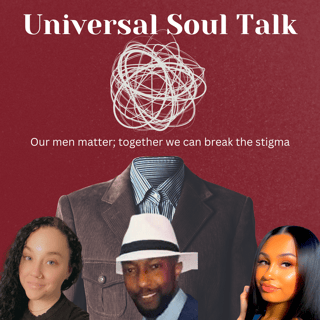
Speaker: My name is Kay Wavy and I am here with Miss Mel Mel Douglas and we are bringing you an episode based on the stigmas of mental health and how they have affected us and people that we know in our community and also some things that we can do to try to break free and evolve from these stigmas.
Speaker: Hey Mel Mel.
Speaker: Hey family.
Speaker: How's everybody doing today?
Speaker: I'm really excited to actually have this conversation.
Speaker: I feel like it is so very important that we talk about this and touch on this and share this information because I think a lot of people tend to forget how impactful mental health issues can be and the stigmas surrounding it that keep people from feeling comfortable to reach out and get help.
Speaker: So I'm super excited to get this started.
Speaker: Yes, ma'am.
Speaker: Me too.
Speaker: And like one of the biggest things for me is like these stigmas go beyond the textbook.
Speaker: Like these stigmas really affect people's everyday lives, like including my own to the point where like on my mental health journey, I saw as I got older, as I, you know, had children, as I tried to advance like in a career or in relationships, like the stigma of mental health can be, it can compromise.
Speaker: the success and like the freedoms you have to do things like people still to this day, look at you sideways, feel like you maybe cannot be trusted, feel like automatically, without even inquiring about what you're struggling with, with mental health, like assume that you are dangerous, that you are uncontrollable, that you are unstable.
Speaker: And that is just like, it's so harmful that for so long, I did not speak up for myself.
Speaker: I couldn't advocate for myself.
Speaker: And I sure as hell couldn't feel, you know, safe and comfortable enough to go get some of the help that I needed.
Speaker: And taking time for myself because I was just so busy trying to mask my mental health that it like deteriorated my mental health until like I like snapped one day.
Speaker: And I feel like that happens to a lot of us.
Speaker: Yeah, most definitely.
Speaker: I definitely can say as a stay-at-home mother.
Speaker: Now, let me just backtrack for a second.
Speaker: I have been working since I was probably, I don't even know, 12 years old.
Speaker: My dad owned his own company.
Speaker: And right away, as soon as I was cognitively available to do something like that as a young kid,
Speaker: My dad's like, let's go.
Speaker: You know, he taught me work ethic to have, you know, morals and values and standards.
Speaker: And like, you know, you're going to you're going to grow up being a hard worker, like regardless of you being a woman, whatever the case is, like you're going to you're going to know what this is about.
Speaker: So I've been working my whole entire, you know, from being 12 and on, whether it's having little jobs here and there or, you know, now I am a stay at home mom, but I've done, you know, service industry and
Speaker: I've been a manager.
Speaker: I've worked at a bank.
Speaker: I've done like many, many different things.
Speaker: So it's, let me just put that out there that I have very much so my whole entire adult life and even teenager life have worked nine to fives or even, you know, different hours than that.
Speaker: But the point is I was a working woman.
Speaker: And now having a child and my family being military is,
Speaker: My life has definitely taken a huge twist.
Speaker: Obviously, I can't work and my husband do his thing with the military.
Speaker: And if anybody is in the military, you would know that nothing is consistent.
Speaker: Scheduling is always changing.
Speaker: Days are always different.
Speaker: Things are very last minute.
Speaker: Anything can come up at any time to where you have to drop everything and head over to your unit.
Speaker: So I had to take that sacrifice.
Speaker: And yes, I call it a sacrifice to become a stay at home mother so I can actually be engaged in my child's life and not, you know, put her in a daycare or have a babysitter for me to just go to work.
Speaker: and basically end up working to pay the bills for the babysitter or the daycare.
Speaker: So I would rather stay home and sacrifice a career for myself to be able to take care of my child.
Speaker: And that has been a significant change for me mentally, emotionally, and even physically because I'm a first time mom.
Speaker: So I'm trying to figure everything out still.
Speaker: you know, how to be a great mom, what to teach her, what's right and wrong.
Speaker: And there's just so, so, so, so much to being a stay at home mom.
Speaker: And I feel like because I don't quote unquote work outside of the house, a lot of people tend to
Speaker: discredit stay-at-home moms.
Speaker: Well, oh my God, you have a luxury.
Speaker: You get to sit at home and be with your child all day.
Speaker: Like, how is that hard?
Speaker: And it baffles me, one, because why are we like competing with each other as women?
Speaker: Like, first off, just going to say that.
Speaker: And second, how do you think that that's easy just because I'm in my home?
Speaker: You know what I'm saying?
Speaker: I feel like people don't really take
Speaker: the whole picture of what it takes to run a household and raise a child and still be a good wife and a good mother and a good friend and a good daughter, D, all of the above.
Speaker: So for me personally, that's the biggest thing that I feel like has affected me mentally and emotionally is just that stigma of like, oh, well, you have it easy.
Speaker: You're a stay-at-home mom.
Speaker: Yeah, girl, I definitely can relate to what you're saying.
Speaker: And it can be just like so cruel out there with people assuming so much about other people's lives, about other people's situations, you know, and what works for you might not work for me.
Speaker: What triggers me?
Speaker: things for me may not trigger things for you.
Speaker: So I always like, I don't like an extreme take, but like, how dare other people just assume that your load is heavy, because it's something that they either do, and they don't, you know, struggle, or something they've never done.
Speaker: And, you know, just making that dangerous assumption without walking a mile in your shoes.
Speaker: And I feel like that's just so harmful for people.
Speaker: There's just like,
Speaker: I don't know, just stigmas are just so harmful.
Speaker: And I feel like we don't always realize that as a society.
Speaker: Um, although I will say things have gotten better, I do see a lot of people, a lot of content, a lot of things surrounding, um, like depression and anxiety.
Speaker: But I also feel like as a community, we are not, um,
Speaker: talking or as accepting or as understanding with other mental illnesses, such as like borderline personality disorders, substance abuse, anorexia, just the fact that men go through all these things too.
Speaker: And I know that's becoming more normalized, but it's again, like men with depression, men with anxiety, women with depression, women with anxiety, and things of that nature.
Speaker: And the other mental health disorders, like there's still that fear.
Speaker: around them.
Speaker: Like it's, you know, you don't, and people, I feel like don't even realize that they could be sitting next to somebody that they know, that they love, that's struggling with one of those things, but they haven't said anything about it because they've heard how you've spoken or how you fear or how you categorize or make assumptions about people with those certain disorders.
Speaker: And yeah, I just, I just feel like that's so, so dangerous.
Speaker: Another thing with stigmas I see is a lot of people, as we have social media, I'm sure tons of you have seen TikToks, Reels, and so on and so forth of people talking about mental health.
Speaker: And these are, if you have this disorder or you may have this disorder,
Speaker: here are some symptoms or here are some warning signs.
Speaker: And I've seen people in the comments like attacking the posters being like, I don't think it's healthy or I don't think it's safe for you to be sharing these things because it's leading to self-diagnosis.
Speaker: And I know now with so much information at our fingertips, I see a lot of people self-diagnosing.
Speaker: But I was, you know, I was thinking about it and it was like when we learn about the warning signs of somebody having a heart attack,
Speaker: Or the warning signs of somebody having like a stroke or a seizure or something like that.
Speaker: Like we're not telling people to self-diagnose yourself when you have a heart attack or when you think you're having a heart attack or when you think you're having a stroke.
Speaker: People are putting out warning signs so you know when you need to go get help.
Speaker: Because I feel like not everybody understands, and that's okay, that their situation is something that they can get help with, that they can reach out to support, that they don't have to carry that burden, that they don't have to carry that weight.
Speaker: They don't have to carry whatever it is that they're carrying.
Speaker: They don't have to suffer in silence.
Speaker: I think people putting out their warning signs and symptoms of whatever it is that they're putting out is helping save some people and pulling people out of that isolation.
Speaker: pulling people out of that danger of feeling and being alone.
Speaker: And that's what breaking the stigma is about.
Speaker: It's really getting people to come out and feel like they're valid, even though they're dealing with whatever it is that they're dealing with.
Speaker: I society is like overwhelming right now.
Speaker: I mean, it has been for a while, but I feel like there is just so much judgment, so much negativity.
Speaker: Like it's just, it's just really sad the way that people carry themselves these days.
Speaker: A lot of people,
Speaker: If they're different, they pick on them.
Speaker: If they don't look a certain way, they demean them.
Speaker: And it's just like, for me, what I truly don't understand, like within who I am as a person, and obviously I'm not going to fully understand it because I'm not like them or I'm not like that, but I don't understand why people seek out to hurt people.
Speaker: You know what I'm saying?
Speaker: I mean, we know it's an insecurity issue.
Speaker: of those individual people that do carry themselves that way.
Speaker: It's an insecurity to why they seek to hurt other people or seek to demean or down talk people or pick on them or whatever word you want to use.
Speaker: But it's just really sad that like those are the people that actually need help, but they're picking on other people and ultimately like bullying them and some of the time bullying them to where they self-harm.
Speaker: over the way they dress or the fact that they weigh 50 pounds more than the next chick or because they don't have, you know, a certain hair type or the even like, for example, like mixed children, like they have that, that constant tug between, you know, you're not
Speaker: white enough to be white and you're not black enough to be black.
Speaker: And there's just so many different things that people are constantly like at each other's throats about.
Speaker: And I feel like social media is like suffocating sometimes.
Speaker: You have like half of the people that maybe even less than that, less than half of people that are uplifting and really like genuinely want people to be enlightened and to uplift people and motivate people and help people, guide them, you know?
Speaker: And then you have so many people that are just like so vain and
Speaker: and selfish and greedy.
Speaker: And again, I'm not saying there, this is how everybody is on social media.
Speaker: I'm just speaking from like what I see in my experience.
Speaker: Um,
Speaker: And that's one thing that worries me about like my little girl and raising her in this type of society right now, because women are more vulnerable sometimes in a lot of different aspects.
Speaker: Now, don't get me wrong.
Speaker: Men have their vulnerabilities, too.
Speaker: And men should, you know, have their their flowers for what they deal with as well.
Speaker: But I'm speaking from my personal perspective of like being a mom and raising a little girl in a society where like if you don't look a certain way, then you get picked on.
Speaker: If you don't dress a certain way, then no one likes you.
Speaker: If you don't have like, you know, a big butt and a small waist and, you know, long, pretty hair and know how to like contour your face perfectly, then you get side eyed.
Speaker: And that scares me for my my little girl.
Speaker: And I feel like.
Speaker: That's something that affects me on a daily basis is like just really trying to raise my daughter in a way where she learns self-love and self-worth and knows who she is.
Speaker: and stands in her truth and stands that she's a mixed child, you know, mixed child, that she is beautiful.
Speaker: She is unique.
Speaker: Like my child has like red, blondish, very, very curly hair.
Speaker: And everywhere we go, people say, oh my gosh, she's so beautiful.
Speaker: She's so unique.
Speaker: Look at that hair.
Speaker: I've never seen hair that color before on like a baby.
Speaker: And it's just constantly,
Speaker: you know, you're going to be in trouble when she gets older because she's unique and she's beautiful and stuff like that.
Speaker: And it just worries me so much because obviously I am a woman.
Speaker: So I've already gone through those things like growing up and society is so much different than when I was growing up.
Speaker: I mean, we had our issues and judgment and all of that stuff as women.
Speaker: and young women when we were growing up.
Speaker: But now it's just so much worse, like the cyber bullying
Speaker: And the constant judgment and the constant like competition and expectations of little girls like they should be children just playing, having fun, enjoying life, like frolicking in, you know, outside and swimming.
Speaker: And like, why why are we caring about that at, you know, 11, 12 years old?
Speaker: Yeah.
Speaker: about the way you look as a child.
Speaker: You know what I'm saying?
Speaker: So it really, really scares me for my little girl and all the other little girls and even little boys in society right now because there is so many expectations that are not logical and that are very negative and not empowering.
Speaker: Whatsoever.
Speaker: And like you said earlier, like anxiety, depression, all these things, like even for like mothers, the postpartum depression, like that's something that's really, really hard for so many women.
Speaker: There are so many women out there that get postpartum depression.
Speaker: And they're looked at like they're crazy, when in reality, they can't control it.
Speaker: It's something that's happening within their body, their imbalances from being pregnant and having a child and carrying another life to term.
Speaker: And, you know, it's not something that they really have any control over.
Speaker: And people are constantly judging like, oh, my God, you didn't brush your hair today.
Speaker: Oh, my God, like you didn't take a shower yet.
Speaker: Oh, you know, what's wrong with you?
Speaker: You're you're a bum.
Speaker: You're this.
Speaker: And it's just sad.
Speaker: It's just sad that like people aren't having empathy to and trying to have better understanding about what that individual person is going through and.
Speaker: helping them or trying to even like assist them in some way instead of just automatically assuming like, oh, well, she's just dirty or she's unhealthy or she's, you know, whatever.
Speaker: To me, it just baffles me that people carry themselves that way so much nowadays instead of trying to truly have a better understanding of what that person's going through.
Speaker: Yeah, girl, no, I definitely felt that a thousand percent.
Speaker: There is a huge lack of empathy out there.
Speaker: Although like you were saying, like I do see both sides because I see so many people self-aware and showing that love and showing that support and bringing that awareness and bringing conversations to the table.
Speaker: But there is a lack of empathy out there.
Speaker: I see that starting super young as well.
Speaker: Like I mentioned before, my children are nine, eight and five and all three of them have thought situations to me.
Speaker: involving other kids that it's just things that are said to them or scenarios or lack of empathy and I understand that these are children so like this is why I feel like it's so important to have these discussions as adults so we can teach our children but I was like dang like I can see where like for example my daughter was talking about how girls in her her grade are very concerned with their bodies and being skinny and skipping meals and working out and um
Speaker: you know, my daughter's like, am I like a little bit bigger for my age?
Speaker: I'm not as skinny as her.
Speaker: Like maybe should I like not have lunch?
Speaker: And like she wasn't eating lunch for a while.
Speaker: And I was like, wow, like this is something that if, you know, I don't support her in the right way.
Speaker: If I don't say the right things the best I can to uplift her, to encourage her, to maybe have her talk to these other kids or, you know, get involved and talk to whoever I had to talk to, you know what I mean?
Speaker: Like this can turn into,
Speaker: like a body dysmorphia.
Speaker: This can turn into like an anorexia.
Speaker: Like this can turn into something like that.
Speaker: Or like, you know, my son, my oldest one, he dresses a little bit differently from, you know, what's trendy right now for the boys.
Speaker: And he's just like, yeah, like, you know, they don't talk to me because like, I don't wear X, Y, Z. I don't do X, Y, Z. And I can see like where that can spring some depression, some feeling like inadequate, some feeling like low self-esteem and stuff like that.
Speaker: So that stuff definitely starts very young.
Speaker: Another thing that I hear a lot, like you were saying, like people will automatically assume that somebody's having an outburst or whatever situation that they're experiencing because they're doing it for like attention.
Speaker: So there is that lack of empathy.
Speaker: And I feel like the only way we can get through that is by talking about it.
Speaker: And normalizing it.
Speaker: And when I say like normalize it, it's like you need to, we need to as a society, when somebody seems like they're struggling or somebody opens up about struggling, address it as you would anything else, like someone saying they have chronic migraines or something.
Speaker: You know what I mean?
Speaker: Having a normal response to like an abnormal circumstance.
Speaker: And I was watching that in a mental health video one time.
Speaker: I forgot who said it like that.
Speaker: But we do need to normalize our responses to come at people with love, to come at people with understanding, to come at people with empathy, and to be willing to support them as they support themselves or even if they struggle to support themselves.
Speaker: It takes a community.
Speaker: It takes sharing it.
Speaker: Leaving people behind because they're struggling with something mental health.
Speaker: Like we can't rock like that anymore.
Speaker: And shout out to everybody who doesn't rock like that.
Speaker: because that can make or break somebody's feelings.
Speaker: So yeah, and we all have dysfunctional trauma or dysfunctional situations or bad things that happen to us, even if you're not dealing with that currently.
Speaker: Like I'm sure at some point in your life, like you have.
Speaker: So in a way, we all can relate to our brothers and sisters out there who are also carrying, you know, these heavy, heavy weights.
Speaker: Um, so yeah, um, I'm going to touch on something else.
Speaker: I'm trying, we're trying not to make these longer than 30 minutes, even though the conversation does get intense.
Speaker: But another thing I wanted to talk about with stigmas is from a personal experience as a woman of color, as a person of color, growing up for me, it was getting mental health services was not normalized.
Speaker: It was actually like looked down upon.
Speaker: from multiple different angles, it was either looked down upon, like, you don't need mental health, you need to go to church, you need Jesus, you need to like fellowship with people of God.
Speaker: And like that it was, it felt like a sin to carry the burdens that I carried from experience like with with mental health.
Speaker: And not only that, there was just this fear of like, like talking about it in school,
Speaker: because we had counselors in our school, it was like, you know, don't tell those people that because we don't need any problems in our home.
Speaker: And I feel like our parents' generation and maybe even like my generation now as some of us transition into parenthood, like we feel like if, or my parents, they felt like if I had mental health and I told somebody about it, that it was a reflection of
Speaker: poor parenting, even though that wasn't the case.
Speaker: Um, so like you can grow up in a happy home, a two parent home.
Speaker: Um, there's still traumas.
Speaker: I feel like that were experienced or whatever, but it wasn't a reflection on like my parents' parenting.
Speaker: Um, so I didn't, I didn't end up going to therapy or anything like that until I was an adult.
Speaker: Um, until I had a child.
Speaker: And I had postpartum depression, which I talked about in a different episode.
Speaker: And that's when I just, I just knew in my scenario, I needed help.
Speaker: So that led to me going to therapy, which helped me a lot.
Speaker: And then I got on my holistic journey and realized I have a lot of hormonal imbalances.
Speaker: And once I like been addressing those, and since I've been addressing those, I do feel a lot better.
Speaker: But the point of that is like, there is this heavy stigma in
Speaker: person of color's household that like, I don't want to see that anymore.
Speaker: I don't want to see us feeling like we can't go to our parents, our grandparents, our school, our community, people that are there to help us.
Speaker: I just hate to feel like we have to stay silent.
Speaker: I do understand from some of that perspective, it'd be like those people, those people, meaning like white people.
Speaker: And I don't subscribe to this, even though I know it happens sometimes.
Speaker: So I know that there's like racism in the health field.
Speaker: And, you know, our parents will be like, you don't want to tell those, get those white people up in our business.
Speaker: They're not going to take you seriously or they're going to use you like to like test some crazy drug on or like something.
Speaker: And I definitely know that that stuff happens.
Speaker: But I guess to break that, I love seeing more men and women of color step into the mental health field and the health field period.
Speaker: But specifically the mental health field, because I feel like
Speaker: that's just like so much black, brown, Hispanic youth that didn't feel like they could go to anybody.
Speaker: And now they have that opportunity.
Speaker: So.
Speaker: Yeah, I, I definitely think that a lot of people, like I said, just don't recognize how significant, um,
Speaker: What you do as a parent in your child's life and your child's childhood as they are growing up, what you say, what you do, what they see is so influential and literally is a part of them.
Speaker: And it's how they see the world.
Speaker: Um, I'm not saying that, like you said, there's times that children are raised in semi or healthy homes, which I feel like is more rare nowadays, sadly, because of this issue, because of mental health issues.
Speaker: If you're not right within yourself, how are you going to be right with everyone else?
Speaker: And that includes your kids or your partner or whoever that's in your life.
Speaker: But I feel that.
Speaker: parents tend to be so wrapped up in their own mental health issues that they don't recognize because it is self-consuming.
Speaker: They don't recognize how it is projecting onto their children, like subconsciously, you know what I'm saying?
Speaker: And so...
Speaker: as the children are growing up, what they see in their household, that's their foundation.
Speaker: You know what I'm saying?
Speaker: That's everything that they know until a certain time when they end up going to school and they end up learning about social media and technology and things in that nature.
Speaker: And I feel like that time and what you teach them, what you say to them, what you say to yourself, what you say to others around them, um,
Speaker: it's so impactful on how they're going to see the world.
Speaker: And I think that's one of the biggest issues is that they are so self-consumed with everything going on, whether it's their job or their partner or maybe other kids.
Speaker: Like they're having issues with some of their other kids.
Speaker: Maybe they're having issues with their own family, like their mom and dad.
Speaker: Or they are just having issues just living mentally and emotionally, just struggling.
Speaker: with their life, livelihood, socioeconomic background, whatever the case is.
Speaker: Like there are so many things right now that are so significant and influential in adults' lives right now too.
Speaker: I feel everything is just...
Speaker: So overwhelming, whether it's the media or it's music or it's social media or, you know, movies that you watch, like everything is like projecting a lot of negativity right now and it's consuming.
Speaker: So I feel like it's almost.
Speaker: It's very difficult for adults now to be able to step back and self-reflect.
Speaker: and collect themselves and say, oh, maybe I shouldn't have said that to my child, or maybe I shouldn't have approached them that way or reacted that way.
Speaker: But I was just so stressed.
Speaker: I was just so overwhelmed.
Speaker: I just wanted to cry.
Speaker: I really need space.
Speaker: I need some me time, you know, and I feel like that's one of the hardest things for mothers specifically right now, men as well.
Speaker: But
Speaker: just speaking from a personal perspective is not getting enough time to just breathe, to just sit in self and, um,
Speaker: have that time to self-reflect on the decisions that you made or the things that you said and how can you do differently next time.
Speaker: I feel like I tried to do that with my daughter and even my husband, anyone in my life that I love and care about is just to take a moment.
Speaker: Sometimes I'm like, dang, I kind of came off a little aggressive or that, you know, I could see how
Speaker: That could be taken that way.
Speaker: And, you know, I go and apologize and I say, look, you know, I had a moment.
Speaker: I'm human.
Speaker: I'm sorry.
Speaker: But that's one of the hardest things I feel is...
Speaker: is recognizing self and not projecting it onto your children to where they're going to be raised insecure or not knowing their worth.
Speaker: And so when they do go out into the world,
Speaker: You know, if someone does try to bully them or someone does try to judge them or doesn't want to be their friend, because like you were saying, your oldest child dresses differently, that's OK, you know, because they'll sit there and say to themselves, hey, my mom and dad said that I'm worthy and that I'm beautiful and that I'm powerful and that I'm, you know, smart.
Speaker: And, you know, this is my truth and I'm going to stand in it.
Speaker: And then just have that empowerment within themselves as children to let that bounce off of them.
Speaker: You know what I'm saying?
Speaker: And when you're a kid and you're a child, you're a teenager, whatever the case is, and you're around other kids, other teenagers, the influence from those other kids and teenagers are so significant on your child because that is their social environment.
Speaker: So...
Speaker: it becomes a part of them.
Speaker: Like something very important in their life is like, unfortunately, you know, being the cool kid or being the one that dresses the best or being the most popular, you know, I mean, it's just like something that happens when you're a kid.
Speaker: It's just your environment.
Speaker: And so I feel like being able to teach your kids that it's okay to be different.
Speaker: It's okay to look different, to not have
Speaker: the same body as the next person, like you were saying, your little girl is like saying, should I skip lunch?
Speaker: So I'm as skinny as like Susie Q at school.
Speaker: You know what I'm saying?
Speaker: And that's, it's so sad that little girls just can't be little girls and just enjoy their childhood.
Speaker: They're so,
Speaker: wrapped up and hyper-focused on judgment of the next person or all of the other kids around them and their status quo, that they can't just be a little kid.
Speaker: Yeah, girl, that part is crazy, which is why I feel like it is so crucial as parents.
Speaker: Because sometimes, I mean, as we all know, sometimes it's hard to spend all your energy pouring in and trying to change other adults.
Speaker: So even though that's important for us to have these conversations as adults, I feel like if we're parents or if we have some involvement with the youth, you know, through family members, aunties, uncles, teachers, coaches, whatever, it's really up to us to pour life into these kids.
Speaker: And that sounds cliche.
Speaker: And it is easier said than done.
Speaker: It is up to us to really empower, educate,
Speaker: and direct our kids into a positive direction.
Speaker: And then another thing, like my kids have straight up told me, I actually remember one time, not that long ago, my son was going through something with like a friend of his, me and my partner were talking to him about it.
Speaker: We just kind of like stood in the hallway, had a conversation and
Speaker: kind of let him know what he was experiencing, like was wrong, kind of validated him, uplifted him a little bit.
Speaker: And like, not to put my baby's business out there, but that like brought him to tears.
Speaker: And he was like, I like that you guys will talk to me about it.
Speaker: He's like, that feels really good for me to not hold that in.
Speaker: And that made me feel like, yeah, like this is what, this is my way of changing the world by helping my child.
Speaker: So that as he grows up and he becomes a member of society, as he becomes potentially a father, a husband, a boss, a leader, whatever it is, that he doesn't have to carry some of those traumas.
Speaker: Or that he feels comfortable when he's struggling to let me know so that we can get him help.
Speaker: So I feel like as parents, we really have a job to work.
Speaker: break these stigmas for our children so that we raise kids who are self-aware as they start going into school, into play dates, into programs, into churches, into the community, into sports, wherever your child is, let them be a safe person.
Speaker: Like I want my kids to be to A, feel safe and feel safe enough that they can also be a safety person for somebody else.
Speaker: And I want them to know that they have a home that if they're carrying too much,
Speaker: or they hear that one of their friends are like struggling or carrying too much, that they know they have a safe place to go where somebody is going to listen.
Speaker: And not only is somebody going to listen, but somebody is going to take action to make sure that they feel safe or, you know, if somebody else needed to feel safe, like that we can do that too.
Speaker: And I feel like that's how people,
Speaker: you a lower some of the severities of like traumas and stuff that people carry, but you really start breaking those stigmas for real life so that they're non-existent as we progress in society.
Speaker: Right.
Speaker: I think to extend off of what you said, making sure your child feels safe in your home.
Speaker: And I don't mean
Speaker: you know, safe necessarily in the sense of like, you know, they feel like you're going to hit them or they feel you're going to scream at them or whatever.
Speaker: But I mean, just safe to confide in you, to know that they can trust you with their feelings, with their thoughts, and that you're not going to judge them, that you're not going to be mad at them, that you're not going to
Speaker: down talk them or even necessarily punish them because they made a mistake.
Speaker: And I'm not going to touch on discipline or what's right or wrong in that sense.
Speaker: I'm just saying, I know like for me, when I was a child, I...
Speaker: I didn't feel comfortable to express myself.
Speaker: I felt like I was a black sheep.
Speaker: I felt like I was very different and I was very different from the rest of my siblings.
Speaker: And, um,
Speaker: I didn't feel like I could be myself.
Speaker: I didn't feel like I could express myself and that I could be truly open within my home.
Speaker: And I'm not saying that like, you know, I'm not touching on my parents or if they did raise me right or wrong.
Speaker: That's, that's not the case.
Speaker: It's,
Speaker: again, touching back, adults have their own traumas too, and their own mental health issues too.
Speaker: And that's why it's so significant for us as adults, mostly parents, but as adults, to recognize that you have these traumas, these negative thoughts, or these trials and tribulations, so you can
Speaker: self-reflect and work on it, not only for yourself, but for your child.
Speaker: So you're not passing your demons and your traumas down to your child, because that is a thing.
Speaker: Like your traumas and your experiences get passed down through your DNA to your children.
Speaker: And it is subconscious.
Speaker: If you don't consciously recognize them and work on them and find peace in them and find healing, it will...
Speaker: passed down to your child.
Speaker: And then as your child is growing up and you continue to live in this space, not necessarily purposefully or spitefully or even consciously, like sometimes, you know, people just genuinely don't have the ability to recognize this mental space they're in and to step back and self-reflect and move past it.
Speaker: because their life may be so overwhelming to them.
Speaker: And what you said before, like what may be overwhelming for some people may not be overwhelming for others, but that doesn't make their load any lighter.
Speaker: So I feel that healing yourselves as parents, as adults, is so significant for not only your growth in your journey, but more importantly for your children.
Speaker: They need to feel safe.
Speaker: to be able to come to you and talk to you about what is wrong or what they experienced or what someone said to them today and how it made them feel.
Speaker: And, and for you to give them that guidance, that healthy,
Speaker: divine energy guidance where they just know that, yeah, this hurt, but I'm going to be okay.
Speaker: And I may be different, but I love that for me.
Speaker: You know what I'm saying?
Speaker: And to find peace in the things that normally would break them down.
Speaker: So that is for me,
Speaker: to end, you know, get to the end of this conversation because we're getting close to time.
Speaker: But that would be my message to anyone out there with children, but also just everyone, men, women, children, whomever, heal.
Speaker: Heal.
Speaker: Get the help.
Speaker: Reach out to people.
Speaker: Call the hotlines.
Speaker: Do not feel that these stigmas...
Speaker: are controlling over you.
Speaker: And I know that's hard.
Speaker: I've been there.
Speaker: I've done that.
Speaker: I've had, I have anxiety.
Speaker: I had depression.
Speaker: I've had all of these things.
Speaker: And I'm still working on them too.
Speaker: And we can work on them together.
Speaker: And that's what it should be.
Speaker: We should be a community that are helping each other to, to reach that place of healthy mental space.
Speaker: And
Speaker: to find healing and peace and help each other get there instead of tearing each other down on the way.
Speaker: Yes, girl.
Speaker: That, literally that.
Speaker: We can continue to heal together.
Speaker: And that doesn't mean you have to put all your business out there and you have to wear your mental health struggles and what have you on your sleeve and post that on your social media.
Speaker: But it's that being mindful.
Speaker: It's that watching what you say.
Speaker: It's that self-reflection that you do when nobody else is around and you're like, wow, I'm struggling with this.
Speaker: What can I do to change that so that I can heal, so that I can be a better man, so that I could be a better woman, so I could be a better person, a better leader, a better, you know what I mean?
Speaker: Whatever title that you carry in this life and however you identify, you deserve to feel healed.
Speaker: you deserve to live a happy life.
Speaker: You deserve to have positive interactions with people.
Speaker: You deserve to have healthy relationships.
Speaker: You deserve the house.
Speaker: You deserve the job.
Speaker: You deserve whatever it is that you're going after.
Speaker: And you don't need to let anything limit you, even though it feels like sometimes your mind is limiting you.
Speaker: And, um,
Speaker: I feel like there's hope for every single person.
Speaker: I don't think that there's any disorder, disease or anything like that, that should have so much control over your life that you feel unfulfilled at the end of the day.
Speaker: There's so much out there.
Speaker: And the same treatment for one person is not the same treatment for everybody.
Speaker: That's just like,
Speaker: as we wrap up, just like another quick stigma, like just because you needed medication does not mean that Johnny B needs medication too.
Speaker: You know what I mean?
Speaker: Maybe Johnny just needs therapy and maybe you need medication and therapy and maybe Lisa down the road needs to balance her hormones through proper nutrition or supplements or whatever.
Speaker: So healing looks different for everybody.
Speaker: Um, and there's so many different things that you can do.
Speaker: And I think that that's so beautiful.
Speaker: There's not a one box fit all.
Speaker: It's not like a one size fit all type of thing for people when it comes to healing.
Speaker: So you are, you are not alone.
Speaker: Um, we can do this together.
Speaker: We can continue through our conversations.
Speaker: We can continue through the love we show others.
Speaker: We can continue through our platforms and
Speaker: to let people know that their struggles are valid, their feelings are valid, their experiences and traumas are valid.
Speaker: And we don't have to stay there.
Speaker: We don't have to stay stuck on that.
Speaker: There's so much room for progression.
Speaker: Every day that you open up your eyes is an opportunity to walk into the light, to walk into something greater than what you're experiencing right now.
Speaker: So I hope that you never lose hope.
Speaker: Please know that our community is a safe, inclusive place.
Speaker: Our Facebook community is a safe and inclusive place.
Speaker: And if you need support, we are here.
Speaker: We're not professionals, but we're here and we can help you get connected to somebody if you need it.
Speaker: In the description, we will include, again, like we have the past couple episodes with some of those resources that you can use from wherever you are to get the help that you need.
Speaker: If that's something that you feel like you need.
Speaker: We are also still doing a giveaway where we are giving away a copy of Kiana Sky's book.
Speaker: There is Hope Women Are Worth the Fight.
Speaker: You can also get that on Amazon.
Speaker: We are also giving away a self-care mental health themed basket to a winner and we will be pulling that on June 1st.
Speaker: Those details are going to be on our Facebook pinned to the top of our page.
Speaker: And if you're not following us,
Speaker: then you need to be following us and I will leave our tags in the description.
Speaker: Yes, thank you so much for joining us on this episode, guys.
Speaker: This topic is very, very important to Tay and I and we really have...
Speaker: a passion for this topic because it is so prevalent in society right now.
Speaker: So, and make sure if you, if you guys don't feel comfortable talking to someone close to you, please remember that there's a national mental health hotline.
Speaker: All you have to do is call 988 or text 988, and there will be somebody available to talk to you
Speaker: and allow you to express yourself and get you the help you need if you aren't comfortable with someone that you know or someone in your family.
Speaker: And thank you so much again for joining us and listening to us.
Speaker: And feel free to reach out to us if you ever needed help or guidance outside of what we discussed today.
Speaker: I hope you all have a beautiful weekend and peace, love and light.
Speaker: Yes, guys.
Speaker: Thank you so much.
Speaker: And we will catch you on our next episode.