Transcript
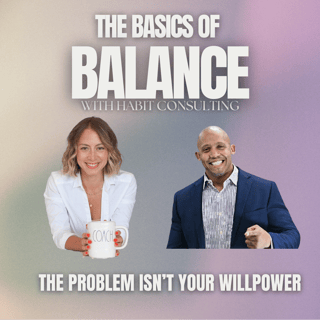
Speaker: All We have a very special guest today, my friends. We are here for another episode of The Basics of Balance. My name is Ariella, but I have Tess here with us. And I'm very excited for Tess to just have a conversation as another coach who does specialize in helping busy professionals um and really what it means to help them stay consistent and see changes and you know things like that. um as it relates to their health and their fitness journey. But also when you're on the go, it's not as easy. When you're busy, it's not as easy. And so I'm really excited for this conversation because I don't know anybody who's not busy. And so I do think that she's going to be pretty valuable in terms of just, you know, shedding some light on some, maybe some helpful tips that we can all just kind of keep in our back pocket. But um I've been talking for too long to introduce you. Tess, thank you for being here. um help us just kind of learn a little bit about you and who you are. Who do you help? How did you get into the practice that you now, you know, own and whatnot? And let's let's hear a little bit about you.
Speaker: Yeah, thank you for having me on your show, Ariella. I'm excited about the discussion we're going to have. um I'm based in Miami Beach um and I work with clients who are mostly professionals and business business owners um who just have very demanding schedules and they're not always working from one place and they need help and accountability and some support on their behavioral changes. So i have a nutrition background. I was actually practicing as a nutritionist for many years um after graduating from NYU with a master's in clinical nutrition. But then I switched into coaching um on health and wellness because I really wanted to help people um on a holistic level. So it's not just talking about nutrition, which is very important. but other things like sleep, stress management, movement, social connections, all those things are important um in regards to helping us actually live healthily. um And I got into the field because I have a family history of hypoglycemia and diabetes and in fact I was diagnosed with hypoglycemia in my 30s and then that's when my doctor said to me um it perhaps it would be wise to start making some changes um to your lifestyle particularly in my diet um so that I can help to prevent developing diabetes in the long term which I thought it was important because I haven't seen my family members who had to live through this disease. So i I started doing a lot of research and got interested and I decided to go to NYU to pursue a master's so that would have the qualification, to help people in this field um because food is so important to us you know we eat every day we enjoy it but it's also a necessity to keep us alive um so I think it's you know really good to actually um give people that awareness to know you know what to eat and what to do but other things like sleep you know as I said are also very important
Speaker: Definitely. I love asking that question because everybody has a reason for why we do what we do. You know what i mean? Like our our background, our experiences, they shape our perception of, you know, what we chase as humans. And so I love hearing, you know, your specific experience in terms of you had you had education, right? Yeah. You had education, you had experience, you were dealing with some, you know, health scares, we'll call it with the hyperglycemia. And, you know, you really used that for your benefit to really make some lifestyle changes that I'm sure are part of the reason as to why you're so passionate about what you do now. um I would love to kind of hear...
Speaker: So touch a little bit more about the clinical side of things, but also the coaching side of things, because a lot of times, um you know, in the clinical side of things, that's a little bit more of a um of a diagnosing process.
Speaker: framework, if you will, right, versus the coaching framework. And so I would love for everybody to just kind of hear what your take is on what the biggest difference is since you have experience in both of those fields. And they're, I feel like they can be related, right? I feel like, you know, coaches and um You know, nutritionists and and whatnot, they can work together. But in your words, what do you think are the biggest differences and why do you love coaching as as it relates to kind of getting away from that clinical side of things?
Speaker: Yeah. With nutrition, and you know, in terms of um being a nutritionist, very often people want a plan. So they come to a nutritionist and they say, well, I want to lose some weight. So give me a diet plan that I can follow. um So I won't deviate from it and I know what to do. So from you know every day from morning to the evening, um I can just follow follow it. And then I would achieve my goal of losing, you know, 20 pounds. um But with coaching, it's really to do with the mindset. um So you're not following something, but it's actually helping you to um to have the awareness and actually to have the knowledge about when you eat something or when you do something, say if you don't have enough sleep, you're sleep deprived, what is actually happening inside your body? What is actually doing with you know with the whole system? um And I feel that with coaching, it's also more important because it helps you understand, but also it changes the way you look at everything.
Speaker: um So it's not just following instructions. and And actually getting you actually more motivated. So in a way, um it becomes more sustainable. Because with a lot of diet plans, as you know, you know you can download it from the internet. you know you don't yeah You can just say, oh, I want to lose 20 pounds. What how what do I have to do? Then you can die from download the diet plan and you just if you follow it strict, um Quite often, you know you can achieve your goal. But the problem is that it doesn't take into the the plan doesn't take into account of your preferences, you as a human being, you as an individual, um your personality, your preferences, um your lifestyle, your family background. um and your family situation, ah whether you're living alone or you're living with a partner or you're married with children, young children. And also you know whether you eat at home a lot or you don't, you know if you're on the road a lot, you're traveling, attending conferences. And the other thing is also family background. do You know, you see some, your culture really is important, you know, how what you're brought up to do um and your beliefs. um And so with coaching, you all those things are taken into account. And so it helps you to understand that wherever you are, you can make those choices. You can make those wise choices. And because otherwise, you know, you're going to give in to temptations or you just end up sitting at home and,
Speaker: you know, by yourself and follow a diet plan, which is not much fun in the long run. um You're going to get bored. And so a lot of people find that they can follow the plan, they can lose the weight.
Speaker: And then when they finish, they go back to their old habits. And then they put their weight back on because the the plan they downloaded hasn't taught them how to look at things differently.
Speaker: Definitely. i think it's important because, you know, I think sometimes people want a diet plan. They want something to follow. But how is it helpful when you go out to eat with your friends? How is it helpful when you are not in your home with your you know regular staple foods? Right. Like you mentioned this actually earlier um when you were talking about your background and whatnot. And, you know, something that I think that a lot of people forget, especially in like the diet culture frame of mind, ah the optimization culture that we're all in right now, which is like so exhausting, is, you know, we can't forget that having healthy relationships is also part of living a healthy lifestyle. And there is a time and a place to enjoy yourself, quote unquote, but enjoying yourself, number one, doesn't necessarily mean automatically opening up the floodgates and just eating mindlessly. And also, number two, we can't denote how important it is to simply have a meal with your friends and your family where you're just like having great conversation and connecting with those people regardless of what you eat. You know what i mean? So like somewhere on those two polar opposite ends of the spectrum, that's where we're trying to get you to land as a client, right? Like context matters. The reason why most diet plans don't work is because of it everything that you just said, which is basically context. Yeah. The context of every single day could be very different. So what works for you on a Monday might not work for you when you're at the soccer field all day long on a Saturday. You know what mean? So I think sometimes we want the information, but we also can't forget that, like you said, you can download a diet plan. Why is that still not working for you? Let's talk about that. Yeah. You know what mean? Like that's what a coach is going to help you kind of like connect the dots. You don't need more information. You need to know how to implement that information and understanding that it's not a one size fits all. And the answer one day might be different the other day. You know what mean? So, yeah, I mean, i it's interesting that you say.
Speaker: What's resonating with me a lot, at least as it relates to like clinical versus like coaching side is a lot of people are coming to you for tell me what to eat. Tell me what to eat, but they're not necessarily there for behavior change. Am I hearing you correctly? Yes, that's right. Yes. I think a lot of times they don't understand it's actually to do with the behaviors, you know, what they're actually doing. They think it's just, oh, I just don't know what to eat. But a lot of it is whether, you know, you feel you always, you know, you have to have a dessert after dinner when you're sitting in front of the TV. To me, that is actually a behavior.
Speaker: It's not that, you know, you you have to have the ice cream afterwards. You don't have to, but somehow it's just become a habit. So you have it even when you don't necessarily care for it, you don't really need it, you don't particularly want it, but because it's something you do every night. And so we look at those behaviours and say, you know, what are the ones that you want to keep and what are the ones that you want to take out? And perhaps there's some of them you can tweak a bit to help you achieve your goals.
Speaker: Well, and I think too, you know, how how did you build the routine and behavior of having a dessert every single night? That took time and repetition, right? And so you can unlearn habits just like you can learn habits, right? And it's not going to it's not going to be comfortable until it's your new normal. But the only way to make it your new normal is time and repetition. And that doesn't necessarily mean fighting against the grain.
Speaker: And when I say that, I mean, you know, it's not saying I can't have this food. It's, well, do I really want this food or am I just doing it because that's what I've historically done? It's, you know, slowing down to pay attention to what do you enjoy about this? Like I personally, I was just telling a client this the other day. i personally,
Speaker: find a lot of value in at nighttime working into my day, I like to munch and watch TV. That is something that has a lot of value to me. And I don't want to give that up. And so it doesn't matter how dialed in or disciplined I am. it doesn't matter if you know what goal I'm chasing at the time. I'm going to protect that time at all costs. You know what I mean? Obviously, if you're out of town or, you know, you got to eat with friends. Okay, that's different. Those are the exceptions to the rule. I'm talking about the majority of the time that has value to me. So for me personally, i will eat very lean throughout the day to make room for that because that has value. Because getting from me or getting from point A to point B, meal to meal, whatever I can, you know, put your blinders on a meal can just give you sustenance to get you through the day versus, okay, what actually has value? So for clients like that,
Speaker: are you do you really enjoy what you're doing or are you just doing it because that's what you've historically done and that's just what you do and it's like okay well why do you enjoy it let's get to that yeah yeah exactly as you say you know slow down and just think about what you're doing and be more you know just be more mindful about you know your habits what you're actually doing on a daily basis as you said to rather than just eating mindlessly um or you think oh you know but why am I not working out? or Why am I not getting in in you know in my workouts? you know in And what's happened? The whole week's gone and you know I just haven't been able to get a workout in. But you just think about you know how you can actually plan it. you know And if you really want to do that, you know how you're able to you know just perhaps go for a walk at lunchtime and just run the block. um and And just be more mindful and actually just think about what you're doing. if it's important to you.
Speaker: Bingo. If it's important to you. Yeah. I think sometimes we get stuck chasing the same goals without thinking about that. You know what i mean? I think historically, especially as females, and I'd love to hear your thoughts on this, but I think historically we have been inundated with the, the ideology of, you know, you want to be skinny, you want to be small, you want to look a certain way, you want to be toned. And so that creates goals that we might not realize are not necessarily in alignment with the lifestyles that we have, right? Like you might have historically chased that goal, but you might not necessarily care about that goal in the phase of life that you're in. But because you've historically chased it, you think you have to continue to chase it and you don't realize the cost associated with chasing that goal in the current phase of life you're in. And, you know, I think it's worth asking yourself, is it worth it? Is the juice worth the squeeze? Because if the answer is no, now we're getting somewhere. Now we're having honest conversations. We don't just have our blinders on chasing a goal that we have outgrown, but we haven't paid attention to realize
Speaker: I don't care if I weigh five pounds heavier or my biggest goal right now is not to be as small as possible. I'm trying to build muscle as I get older and later in life, or I'm training for a triathlon. And that has my goal, you know, focus as of right now. It's like, are we just kind of mindlessly going through these goals or are we actually paying attention to, is this something i truly I truly want to chase? And I'm, ah am I okay with the changes required in order to reach that? What do you think about that?
Speaker: Yeah, absolutely. Yeah, you have to feel that, you know, the goal is actually realistic and it's something that you can actually get to. Otherwise, as you said, it's going to drive you mad if your lifestyle actually contradicts what you can, you know, what your goal, you know, will actually entail. um But at the same time, as, you know, as we said, you know, you really have to understand, know, you have to understand you can have a goal and perhaps it's a goal that your friend, um you know, wants to do too. But does it really apply to you?
Speaker: And what is the why behind it? what you know Why do you really want to do this? Because it's not you know just, but why yeah why do you want to lose 20 pounds? you know What does that mean to you? And really start asking yourself those questions. And otherwise, you know you want you know you might try to do change everything to achieve that goal. And then as you said, you know you just drive yourself crazy because you don't really understand the why.
Speaker: The why is so important because that's really the motivator. Well, the why and also... Number one, why is that goal important to you? But also how is losing 20 pounds going to improve the quality of your life? You know what i mean? like Like, okay, what is that going to make an impact in? Is that going to make an impact in how other people perceive you?
Speaker: Is that what you're after? Is that your why? You know what i mean? And I think a lot of times we just assume that if we were to, you know, weigh a certain amount, oftentimes our goal weight is tied to a time in our life where we felt more in control. Okay, and we're actually chasing that. We're chasing a time where we were happier, where we were maybe more accepted. We're chasing a time when things didn't feel so chaotic. And that is our way human you know in human nature to make that connection and say, oh, if I were to just weigh this, like I used to weigh back in the day, I would basically be in that same frame of mind. And I'm sure you have these you know situations too where it's like, okay, listen, we have reached the goal and you're still not happy with your appearance. And there's a reason for that because it's not really about the weight loss. It's not really about that. And, you know, I do think, again, you know, if you want to chase a specific aesthetic goal, the more disciplined or I should say the more um strict of goal, the more disciplined you're going to have to be. And it's so exhausting to be one foot in, one foot out.
Speaker: Like it is so exhausting to be in that space where Monday through Friday you are on it. And then you are so restrictive Monday through Friday that you have to open up the floodgates when you out of town or on the weekends. And you keep yourself on a hamster wheel. You feel like you're putting in a lot of effort, but really you're not because of the other side of that coin, right? That's kind of canceling everything out. And so you're not seeing the changes that you feel like you're putting in effort. And that is exhausting. And that is frustrating. And it's like, get in, get to work and get out, get out and move on with your life. Let's talk about maintaining what you work for. That's where the sweet spot is, you know? And i think a lot of times people forget it has so much less to do with your willpower and it has so much more to do with your habits And the choices that you make every single day, like you've mentioned sleep a few times, if we're not getting enough sleep, well, then we are going to be hungrier the next day, period, we're going to want to eat more calories, period. um and And that's what I mean by it rarely has to do with your willpower, it more so has to do with the choices that you're making throughout the day. so
Speaker: You know, food, yes, it's going to make a really big difference in terms of your overall health and whatnot. But what do you think about, you know, sleep, stress, workouts, and human connection? Like when you're dealing with your clients as a busy professional, I would assume sleep is really hard to find time for. i would assume they're stressed. I would assume it's really hard to find time to work out when you're traveling all over the place.
Speaker: And let's be honest, human connection, if you're super busy, you probably just want to go home and tune everyone out. But you have a family and you can't do that. So what, in your opinion, like how do you help people navigate through those variables?
Speaker: um They are all interrelated. know First of all, if you don't sleep well, you're going to be more stressed. And then you probably have less time and less time. patience for your family and friends.
Speaker: um And on the other hand, if you're stressed, you're going to not sleep that well. You know, so they really, you know, they are completely interrelated. um And, I think you know so sleep is a problem, it's issue. I think it's an issue actually for a lot of people. It can be even more of an issue than exercise and food because it's something that people, it's often overlooked and it's something people think is just not that important because they hear all these famous people or leaders out there who claim that they only need four hours sleep a night.
Speaker: And then they say, oh, but you know I function so well. I'm a high achiever. Look at me. I only need four hours sleep. um They might feel that they yeah they might think they only need a few hours sleep, but at the same time, we don't know how they actually...
Speaker: what they are actually taking, what they're doing to actually keep the energy up. They might be having a lot of caffeine throughout the day. we We have no idea of that.
Speaker: um And the human body, you know, the sign that shows that, you know, we do need between seven and nine hours of sleep. It's just the way it is. Because that's when your brain does all the work that it doesn't get to do throughout the day. um it gets to remove all the neurotoxins that the brain accumulates throughout the day. And that's when it does all that. So if you deprive yourself from all those hours of sleep, you're going to deprive yourself from all that work that needs to be done. um
Speaker: and um And at the same time, as you said, if you don't sleep well, you're going to be hungry, you're going to crave for things that you normally wouldn't. But at the same time, I also think that if you are tired, um you wake up with low energy, you are going to be less disciplined.
Speaker: You're going to be less likely to continue you with your health practices. You know, you're go you're not going to say, oh, let's, you let me just go and work out now. You're tired. and you come you you You really can't be bothered. You know, you feel cranky and the whole day just starts off on the wrong foot. um And so forget about working out, you know,
Speaker: being you know tolerant and patient with your colleagues and friends and family. um and And yes, you're going to be hungry because you need the energy. So you need a quick fix to you know give you that sort of like perk up thing. oh you know that and And you're going to crave for things and and things that you normally wouldn't if you're not tired. um and But the problem with sleep is that it because it happens at the end of the day, um so people don't think about it, And then when the night comes, there's there are always more emails to check. There are more always more things to do. And perhaps there might be something that people more enjoyable that people consider doing, like watching another movie. um But sleep is important. So you have to prepare for it and you have to plan for it just like everything else. It doesn't just happen when you can barely keep your eyes open because, you know, it's past midnight and you have only a few hours before you have to get up again. um You know, you need to be
Speaker: disciplined, you may have to be prepared for it. And you have to, you need to fit it in with everything else. There's no, there are no shortcuts. You can't say, oh, I will make up for it at the weekend. It doesn't work that way. As I said, the brain needs to do all that work every night. So it's not going to wait for the weekend. You know, it's going to suffer. your the quality of life is going to be suffer if you don't get enough sleep and that's the way it is um and so sleep habits are really important if it's important to you if your goals are important to you i love that you said that so much like i'm going to probably say that like an obnoxious amount of time so if it's important to you because really at the end of the day if your goals really matter what are we doing to reach your goals okay you might think that sleep is low-hanging fruit because it's not something that quote-unquote moves the needle in terms of other variables that we assume moves the needle more like getting in a workout or, you know, eating a certain way or anything like that. No, sleep is the foundation. And so if your goal is important to you, know from working with the the very diverse group of people that I work with,
Speaker: much like yourself, I'm sure, it's not the easiest to get in more sleep. We're not talking about the exceptions to the rule when your children are waking you up in the middle of the night or you have an early morning flight. We're not talking about those times. We're talking about the majority of the time when you do have control over when you turn the TV off, when you do have control over when you put the phone down. we The majority of the time,
Speaker: when you have control over the situation. There's obviously going to be times that are outside of your control. And the more consistent you are, the less those inconsistencies matter. Right. However, you know, kind of going back to they they hear things like, oh, you know, I'm only running on four hours of sleep and or, you know, a friend is. And so if they can do it, why can't I? Number one. just because you you can doesn't mean you should. Okay. And they are going to have to deal with the repercussions of that at some way, shape or form. It will catch up to them in some way, shape or form. They're going to have to deal with that.
Speaker: Let them deal with it. You do what you got to do. Okay. because you're going to have to deal with the repercussions of that as well at some point we are going to come to a crossroads you know what i mean like your body can only do so much with what we give it and if we're not giving it the basic fundamental building blocks like getting enough getting in enough sleep excuse me then we can't be surprised when things don't work we can't be surprised when we are not motivated um to work out or, you know, eat a certain way.
Speaker: It's the same idea as, you know, when you eat a little bit more food, right? You're like coming off of like a deficit, for example, going into maintenance. When you eat a little bit more food, you naturally move more because your body has more energy, right? And it's and it's naturally looking for ways to stay active. Well, the same can be said when you're not sleeping. You don't, you might not even realize how much more energy you know, sedentary you are simply because your body is trying to conserve energy, like from a basic biological response, you know? Um, and again, has less to do with your willpower, has more to do with these habits that really affect your ability to show up. So we can think that sleep is low hanging fruit, all we want, that it's not something that moves the needle, but it really does affect every aspect and every, you know, uh,
Speaker: way of us pursuing our goals and just living a healthy and happy lifestyle like wanting to make human connection because you're rested versus dreading it you know what i mean like those little things really affect um you know your quality of life and it's your stress stress level as well you know if you're tired you're going to be more stressed and then if you're stressed um again you you're going to crave for certain foods and um And, you know, you have less patience and, you know, for anything else. And so, and, you know, stress is actually important to manage and you have to do what you do. And um really when you are sleep deprived, you know, your stress level is going to be elevated. in way it cannot be helped. and And so you need to know, you know, what, you know,
Speaker: how you know how you're feeling. And you just give it a try. If you have, know try and have a couple of more hours sleep and see how you feel the next day. you know You might be surprised that you have so much more energy and you might actually look at things quite differently.
Speaker: Oh, absolutely. Like the grass is going to be greener. Yeah, it's going to be. And I think it takes time. i think it takes time for those experiences to create such a ah ah mindset shift, if you will, to really use those experiences to try to continue to get more sleep. Like, for example, like enough times of you. You know, getting in enough sleep and then all of a sudden not having a great night of sleep. Okay, you're going to feel the difference and you're not going to want to feel like that again. So what can I do to not feel this way again? Those experiences are what make those intentional choices and those intentional choices start to become your reasoning for continuing to try to make it happen. Right. um
Speaker: what what specific tips do you recommend to your clients in order to get more sleep? Because I think it's all fine and dandy to say, sleep is important, you know do these things. And you know I have some tips such as, you know keep a notepad by your bed instead of your phone to write you know your thoughts down instead of your phone and you know little things like that. But what are some things that you suggest to your clients, especially who are maybe traveling that Really have a hard time with sleep routines and hygiene, you know, like I would imagine flying all over the place. It's not easy to have a yeah routine. um So what are some things that you suggest to your clients to help them get more sleep?
Speaker: um Well, I think having a regular um workout routine would help. But um make sure you don't actually work out too late in the evening. That that can be helped. um But if you you feel that if you work out on a regular basis, then your body is more tired at night. So that's really important, you know, to have getting got that into as a habit. um But I would say um try and actually...
Speaker: Well, depending on, you know, how your schedule is, but you need to prepare for your sleep. So, you know, have a wind down routine. So you don't, you know you can't expect that, you know, I'm just watching TV or answering phone calls, um scrolling on social media, um answering you know emails. And then as soon as I turn everything off, I would just fall asleep right away. It just doesn't work that way. Your body needs to be told that, oh, you know, now time, you know, it's time to rest. So you need to have a wind down routine, whether it's for 30 minutes, preferably an hour. If you can have that, perhaps it's more difficult when you're actually traveling and dealing with different time zones. But if you're at home, you know, try and give it an hour, have a bath, do some breath work and turn your phone off or put it away. You know, and just don't start a conversation because with the phone, you know, even if it's a text message, it can be stimulating and you never know what that message might be about. um It could be something that could be upsetting or something that's just stimulating and you start having, you know that conversation and now your brain is wide awake.
Speaker: You know, it's not relaxing. It's not actually getting into that sleep mode. So turn it off or just put it in another room and just say, look, this is time to get ready for sleep and read a book, you know, a real book rather than, you know, from a Kindle. Again, because you don't want to be looking at the device. um And, you know, you find that that's more relaxing that will actually take your mind off. perhaps solving problems, you know, dealing with work, you know, um and and just put you in a different mode.
Speaker: And I think that's really important because people feel that, you know, a lot of people, what they don't do is that they think, oh you know, all day is very busy running around all day, and you know, dealing with children and everything, work.
Speaker: And then time is, you know, they look at the clock and say, oh, my God, it's 11 now. It's time to go to sleep. Let me quickly go into bed and turn everything off. And then they find that they're still wide awake.
Speaker: And their mind is like, you know, full on. it And they say, oh, you know, but it's like my engine just won't turn off. and That's why, because you haven't slowed it down.
Speaker: um You haven't wound down, you know, and then how can you expect the engine to be revving? And then the next moment it's just gone. you know, like silence, that's that's not going to happen. So I would say, try and have a wind down routine. Do something that's relaxing, something that you enjoy.
Speaker: Well, and also to use your phone to help you set up that system. Like, for example, if you are running around, if you're a busy parent and time gets away from you, set an alarm to start winding down. use Use technology to benefit you. Like, it's not natural. So you're going to have to use some you know extra tools to help. establish that routine and you have to be really intentional at the beginning until it's more normal. And sure, then you can back off a little bit. Right. But set an alarm on your phone to say this is time to go into bed or read my book or at the very least turn off the TV or whatever the case is. Set an alarm. OK, you're not going to remember. It's not, you know, your routine. So what can we do to change the status quo? Set an alarm or nowadays,
Speaker: I mean, obviously you can bypass this, but you can set different time limits on your phone. For example, every day at 7 p.m., my phone is on do not disturb. I can obviously turn that off whenever I want to and choose what apps and, you know, whatever, you know, can bypass that, if you will. However, that's my way of cutting down some of the noise. Yeah. You know, obviously, I'm sure you can appreciate this. We wear a lot of hats in the coaching industry. You know what i mean? We have a lot of, um you know, people are reaching out and, you know, we have to kind of put boundaries in our way to, you know, really protect that time and that headspace. Right. So put some time limits on your phone. Yeah. put some do not disturb limits on your phone to protect that right because at the end of the day that's what's in your control you can't control when someone texts you you can't control what that text message says and unless you are in the driver's seat of your journey in in order ah in order to set up good sleep hygiene and good routines you are basically at the mercy of other people and that's not okay Like that that is not okay, right? you We're not going to get anywhere with that. So um yeah, use your phone to help set up some of those systems. You know what I mean? Like it's 2026 at the time that we're recording this.
Speaker: Exactly. I love that. I love that. And I do think too, I would love to know in that line of logic, and we kind of talked about this when we talked just like a few weeks ago, but in in terms of right now, a lot of people are talking about being intentional, right? Being intentional that has a lot to do with your your habits and the environment that you are creating and your sleep hygiene and, you know, all of these things, right? Being intentional. Well, I think a lot of times being intentional can also easily cross over into like an orthoxia frame of mind. And for those who are maybe listening, that basically just means an obsession with your food. Okay. So yeah being an intentional with your food and wanting to make sure that you're in the driver's seat and you're controlling what what's coming in, what's going out for healthy reasons is not the same as I don't know how to eat without logging my food. I don't know how to eat without weighing my food. I have to eat the same foods even when I'm out of time. You know what i mean? Like there, it turns into an obsession, right? And I think sometimes some people that don't, that might use tools like logging, for example, without, them without healthy ah intentions behind using that tool.
Speaker: can turn into an obsession. Absolutely. Especially for those people who are maybe bordering on like eating disorder tendencies and things like that. However, I do think that a lot of times tools used correctly, such as logging, can actually just simply shed light and give you awareness as far as how your choices are adding up to give you that kind of awareness that you can then use and put into practice when you're not logging intentionally, right? So I definitely don't think that something like logging is inherently good or bad. However, that depends on the person. But with that frame of mind, what are your thoughts in terms of like how something that's intentional that starts off as good, how it turns into like orthoxic and like, do you have any tips in order to maybe not be so um strict, maybe not be so disciplined? And like, again, kind of going back to the whole
Speaker: Healthy relationships are also part of living a balanced lifestyle. And sometimes an untracked meal is good for the soul. And sometimes an extra glass of wine, even though technically alcohol is a level one carcinogen and it's bad for you. And and yes, valid. However,
Speaker: If it's going to allow you to have an an amazing connection with your best friend, is that really the end of the world? You see what I'm saying? So like in the optimization culture, if you will, where do you find that line between being intentional and like, I don't know how to function without obsessing? Yeah, um I think balance is the key.
Speaker: You know, so it's that it's that word balance. So, you know, as you said, you if you get too obsessive about it, then you become a kind of neurotic, you know, because then every moment you think, oh, you know what, from the moment you wake up to a moment you go to sleep, you think, you how am I, you know, with every meal and everything you put, know, everything you put in your mouth, thinking is this good? this Is this not bad? I better to write it down. And then you look at it at the end of the day and you just just think, oh, wow, this is what I've done. And, you know, I bet, you you know, I've been a bad person. And so you start to, know, punishing yourself or, you know, having all these negative talks and they're just not healthy. And it's really balanced. Logging, you know, your food intake can help you initially to give you an insight about what you are doing and, you know, give you the picture about, you know, because sometimes, you know, we are not actually aware that we might be overeating certain things. Or we might be more driven to certain um foods that we like. But then you can start seeing the frequencies and and the amount. <unk>t um But I would say, you know, don't, um you know, don't obsess about it. And just, you know, you don't have to be write everything down, not all the measurements. And it's just a you know ah general picture of what you are doing. um
Speaker: it's yeah Apart from food, the other thing that people can get a bit obsessive with is sleep because now they have tracking devices. I wear an aura ring myself and a lot of my clients do too. And they find the app actually quite useful because it gives you ah the the insight about what you're doing or what you're not doing on particular nights and how it might affect your sleep and also your heart rate. And and and I really like it too because I just want to see when I'm asleep what do you know what my heart is doing and how much, even though you you know you think, oh, I've slept for six hours or eight hours um but what about you know the different stages of sleep and that's really useful but at the same time I can see that some people might just find that you know the um the results might be upsetting you know if they get too obsessive about it they might say oh boy you know i yeah I want to have very good scores every night and then one night the score's not so good and then you know you've
Speaker: kind of in the morning, you just get upset and it affects you for the rest of the day. You know, but don't, you know, it's just a guideline. You know, sometimes it's just something to give to you an idea or what you're doing. um But you use it wisely. A good way of using an aura ring or sleep tracker um is for example you know you might you know you can see oh you know if i have one glass of wine that evening what does it actually do to my sleep does it affect my REM sleep and what about my heart rate because it's not just about the sleep it's your heart rate too because you want your heart rate to slow down when you're actually sleeping at night you don't want it to stay elevated because that's not the idea And it's really good to actually know that.
Speaker: Or if you have a very late dinner, a heavy meal, what does it do to your sleep? You'll be surprised. um And it actually affects your heart rate too. um And so, you know, use that just to gain an awareness um rather than actually is um don't punish yourself. You know, if if one day, you know, you don't do well or um you know you've eaten something that normally you wouldn't um you know it we're all humans you know we do things sometimes that we know that might not necessarily be good for us um but just learn from it you know these are all experiments um you know they are not um you know
Speaker: the end all be all things, you know, you don't have to follow it strictly. um You can deviate from it. And sometimes, you know, you might just want to enjoy yourself. um But be be mindful. I always say it's a balance. If you know that you're going to go out with your friend on a Friday night, um Then perhaps at the beginning of the week, you try to balance it out and you think, okay, I will stay at home and I will prepare my foods and I will cook you know accordingly because I know I'm going to be out on Friday and perhaps even on Saturday. And so, you know, just make it up for that. um And it's the same when you're actually traveling or when you're on a vacation, you know, you can do the same as well. and I know. I enjoy traveling and when I'm away, um you know, I don't, uh, deprive myself from the local cuisines and all the good things that you get to try, but perhaps you say, okay, um, I, you know, I, uh, had certain desserts yesterday. So today, I'd be good. I, you know, I won't have those desserts. Um, and perhaps in a couple of days I'll have another one. Um, but don't, you know, but the mindset that, you know, think, oh, um,
Speaker: But I'm on vacation, so now you know I don't care anymore. But you don't want that because then at the end of the vacation, after a week or two weeks, you have you've done a lot of good work that you've actually put in into place. And now you have to go back and redo all of that again. and and And then you feel bad about yourself. And so you know the balance is the key.
Speaker: Well, and also, you know, you go and you open up the floodgates. Do you enjoy eating that food? Totally. But do you also enjoy what that does to your digestion when you're traveling?
Speaker: Again, where where is the intentional choice? Like no one's saying don't eat the food. And arguably logging your food shows you how much of the quote unquote bad foods you can genuinely fit into your day. And you remove those quote unquote bad foods from the pedestal that we're putting them on. um You know, and a lot of times when we when we label foods as good and bad, if we tell ourselves we can't have something, all we're going to want to do is fixate on that thing that we said we can't have. And then when we're in front of that food, we're going to open up the floodgates. And that's how, that's the the tall tale sign of We are being too restrictive. Your body's biological response is to ask for more if it's not getting enough. And so if you are in a restrictive lifestyle, then you are always going to be fighting yourself, you know, versus learning. Like you said, it doesn't have to be forever.
Speaker: But for a period of time, learning how your choices are adding up so you can see, oh, wow, I can have that piece of cake. And you don't have to feel guilty about it. And it fits in your day. And over time, when you allow yourself to have the cake and the pizza and, you know, having the foods that you enjoy along with the foods that support your goals and your overall health, that's when you start learning what balance can look like. And then when you go out of town and you take a few minutes to plan and prepare for, i am going out on Friday. And so let me handle myself differently at the beginning of the week, not because I have to, not because I want to be good or bad, but because I don't want to feel...
Speaker: not great. You know what i mean? Like I want to feel my best. And so those start to become the, the intentions behind your actions, those experiences over and over again, you know? um and I, and I think too, everything is data.
Speaker: Everything is data, whether it's your aura ring showing you your sleep score or your food log showing you what you're eating. It's data. It's how you use that data. That is where the secret is right. Or where the sweet sauce is like I love, i absolutely love. It's one of my favorite parts about coaching.
Speaker: When somebody does their check-in and they tell me, you know oh man, i really like i just I lost control and I ate a little bit more than I should have. And we're not talking like an astronomical amount, but you know for them, maybe a couple hundred calories over, right?
Speaker: And one of my favorite ah parts of coaching is when they eat a little bit more, quote unquote, and then they weigh themselves the next day and either number one, their scale has not changed at all. Or two, it's dropped slightly, right? Or maybe there's a slight increase depending on what they ate. Don't get me wrong. However, more often than not, when you're super consistent, like that one day genuinely doesn't do anything. And I love being able to make that connection to help give yourself so much more grace. Like it does not have to be. as, ah you know, extreme as you think, like you're allowed to be human. You're allowed to quote unquote mess up. You know what i mean? And again, the more consistent you are in what you're doing, the less those things matter at the end of the day, you know? And if you do decide to like, you know, go crazy and open up the floodgates, then I want to know how you feel. And we're going to talk about that. We're going to talk about that first and foremost, because you don't feel great right now. And that is what we need to remember the next time that you go out of town and you want to eat whatever you want. Enjoy yourself, right? But maybe that's an opportunity to, you know, use your log as your guide, but let your body have the final say. Use your log as your guide to say, what am I falling short on?
Speaker: How much fiber have I had while I've been out of the country? what What choices can I make to support my body in that way? Not necessarily to show me what I can't have and to limit me and to show me that I can't have an extra, you know, whatever. But where where am I falling short so that I can fill in the gaps? How can I make that or how can I use that data to make an educated decision in the future? That's all it is. That's all it is at the end of the day, you know? Yeah.
Speaker: Exactly. And I think, you know, I would say the same with um exercise and regular movements, you know, because you will feel a certain way after you've had the workout. um and And so, you know,
Speaker: just notice how your body feels and how you can incorporate into your daily schedules. um You know, whether it's going to the gym or, you know, doing a physical activity that you enjoy with a friend or simply just going out for a walk after dinner. um All those things really help with, you know, with your energy level and the way you feel. um Because you will notice that, you know, sometimes you think, oh, I don't really feel like going out for walk. Oh, I don't really want to go for that workout.
Speaker: but then afterwards you feel fantastic. And so you know next time when you feel that way again, when you just think, oh, i don't you know I have other things that are more important than I do, just think about that, that the last time when you've worked out, how great you fit you felt. And so that would motivate you you know to go along and and just go and get a workout. And um this exercise is important. you know Even if you're making you know really good dietary choices and you're sleeping enough. But ultimately, um you know, exercise is one of the things that we can do to actually keep our health in check. Besides, it's not just the physical, but it's also the mental aspect of it. And then it will help you to sleep better. um It will help you to manage stress. And besides, you know, there could be some activities that are really fun that, you know, that are actually enjoyable. And it will help you to actually, you know, perhaps make wiser food choices. You know, when you actually, then you would be more focused on fiber, you know, in the protein intakes because you, you know, now you're building muscles. and And so you want, you know, you're more conscious about having those those food items. And so exercise is another thing that, i you know, I coach people with. um And, you know, you know, and it's important to actually just make plans for it as well, you know, because
Speaker: It doesn't just happen. you You know, you won't, you know, throughout the day, you don't just, you know, busy your way you know with all your busy work and everything, you just it doesn't only, you know, come up to you and say, oh you know, I'm in the gym now. I can go out and work out. No, you have to make it happen. You have to fit it in. And then once, you know, you you actually get that into your routine, you feel that, oh, you know, strange. Why am I not feeling that great today? Oh, I haven't worked out. You know, you actually start having that mindset. because it's become one of your habits that you do and it's something that you look forward to. um And so, you know, um I would actually say, you know, try and see, you know, perhaps, you know, especially even when you're traveling, you know, when you're actually on a business trip or something, it's hard sometimes to get a workout in, you know, because,
Speaker: you know, the gyms are not so accessible, even though, know, a lot of hotels now have gyms. But if they don't, you know, use the stairs, for example, because every movement makes difference. You know, instead of taking the elevator, you know, use the stairs, or even when you're parking somewhere, perhaps park a bit further away from where you have to go. So you have to walk there. And just have that mindset that, oh, it's good to move.
Speaker: That's what our bodies are designed to do. Oh, absolutely. Absolutely. mean and And the thing is too, it's like, if you don't feel like going for a workout, use the data we're talking about to determine at what level you're showing up. So like, for example, if you didn't sleep great and if you have ah if you're wearing a whoop or a ring or something like that, and it your sleep score is horrible, Okay, well, then maybe you use that data, that super helpful data to say, okay, I'm going to choose to not push myself today. And instead, maybe I'm just going to go for a walk.
Speaker: Maybe instead of my lift, I'm just, I'm going I'm going to make a different decision based on the data that I see. You know what i mean? Like, and that's not a bad thing. You're still designating time for the habit of moving your body. The action might be different, but we can't, you know, ignore the fact that you're still trying to keep that momentum going. And that's what we're looking for. We're looking for that intentional effort, keeping momentum going so that you're not stopping that and making it harder for you to, you know, start again. Right. So it's like, use, use some of the data that let's be honest, we're all using in some way, shape or form to help you make that kind of decision. All movement has value, but not all movement is created equal. And so if you had a lift plan for today, maybe you shorten that lift and you don't do the whole thing. Maybe you just don't lift as heavy intentionally and you just go through the motions. Same thing.
Speaker: workout can be adapted and handled differently based on the very real context of your life. You know what i mean? There is no one standard fits all. We have to be okay with it might look different every day and that's okay. Are we checking the box? You know, not every workout is going to be your best workout, but are you showing up? Yeah. Are you showing up? And that's what matters. Like even people that are traveling, um you know, like you said, it's so hard to have to find some way to, you know, stay active, you know, whether you get a day pass or your hotel just doesn't have an option. It's like, OK, cool. So maybe when you go on vacation, we use that as an opportunity to say, listen, we're not even going to necessarily try to get in a workout as much as we're just going to stay active through steps. That is the plan for the entire week. And so maybe with that plan, and we really are intentional with Lifting weight before and after. So we are working that into the plan to say we're going to push when we can because we know we can't next week. And then when we come home, we're just simply reinforcing that habit. We didn't take the easy way out. We didn't fall off track. We were aware that you were going out of town. And because
Speaker: we are aware that you're going out of town. We're being realistic at the end of the day. We're making it sustainable and fitting your lifestyle because, you know, exercise is a fantastic way to de-stress. But is it really de-stressing you if you're stressing about missing your workouts? That defeats the purpose. You know what I mean? So there are going to be times when you're not able to be as consistent as you would like to be. That doesn't mean that you're falling off track. That doesn't mean that you're failing. We just have to find a way to adapt instead of quit. And, you know, anything is better than nothing. And consistency doesn't mean 100% every day. Your effort is all we're looking for. And your effort's going to change every day based on Did you sleep?
Speaker: Did you travel? Did you all of these very real variables? We are not robots. We are humans and we are affected by the variables that we go through every single day. OK, and we are just really hard on ourselves. um I do think, too, you know, exercise.
Speaker: done the right way is something that can help certain people heal their relationship with exercise and food right so you know if you are looking at exercises ah of something that you have to do rather than man i love how i feel after i do it and it's something i get to do well that's going to change your your ability to feel motivated to show up right um and also if you are working out to earn your food versus if you're working out to put the food that you're eating to use, that's a very different intention, right? Like if you're trying to build muscle, well, then you want to eat as much as you can within reason to stem to help ah rebuild that muscle that your workout is ah damaging, right? ah Repair and rebuild all those muscle fibers and whatnot. So it's a yin and a yang. They all start to kind of work together. So kind of just learning to look at exercise and nutrition as They go, they work together, and your habits are kind of what um tethers the all of that together, if you will. um
Speaker: Then we're starting to create a healthy relationship with food and exercise in your body instead of a toxic relationship as exercise is something you have to do. And you feel guilty if you miss a workout or two, or you have to eat these, you know, certain foods and you can't eat these bad foods. But really, at the end of the day, when you learn different tools to show, you know, you can. And actually, if you have that candy bar and tomorrow you go on the leg press and you realize that you PR'd on your leg press because you had extra food, you see what I'm saying? Yeah.
Speaker: I'm not going to go off on any more of that kind of tangent, but let's be honest. yeah It matters. Okay. Like how you approach things matter. yeah Um, so, you know, I would love to hear you've kind of mentioned this, um, a couple of times, but, you know, when you are dealing with, you know, people who are traveling a lot, um, whether you're out of town or, you know, you're on a business trip or anything like that, you know, what, what is the number one or two things that you can maybe suggest in order for them to feel proud of how they handled themselves while they're gone? Like, what are some very like real and basic,
Speaker: tips that maybe you work with your clients that um that maybe you can offer here that's like, you know, how you can kind of stay tethered to structure without, you know, letting it be a fear for all, but also boxing yourself in at the same time?
Speaker: Yeah. um I would actually um suggest to them to focus when they're eating out, you know, in terms of looking at the menu or making choices, actually focus on getting adequate protein intake. And so that is really protein focused. So every time they you know they have a meal, first of all, they will say, okay, what kind of protein can I have first? High quality protein.
Speaker: And then everything else, it could be something that they would think, oh, maybe something local cuisine that they can focus on. But at the end of the day, they always they can always say to themselves,
Speaker: I think I've, you know, I keep, I'm keeping up with my protein intakes. You know, I'm not having term too much carbs because that's easy to do, you know, especially when you're traveling. And, and so they will say, Oh, I get enough proteins. And, and, and then when you start, when you actually focus on proteins, you're less likely to eat things that your body doesn't need. So, you know, you got it.
Speaker: Yeah, exactly. So, you know, you, then that way is a good lead. you know It leads you to actually make the right choices wherever they happen to be. um you know I tell them that even when they're at home, when they're not traveling, um but when they're actually on the road, I think that's more important. Because very often, you will start seeing a lot of bread or pasta or rice. And then if you forget about you know how much high quality protein you need, then it's easy to get distracted.
Speaker: You know, because then, you know, especially with some countries, they tend to be quite, the cuisines can be quite carb heavy. And then you think, oh, then you start filling yourself up with all these things.
Speaker: And then you don't have room for the protein anyway. And then you forget about it. um So I think, you know, that is important. um The other thing is actually um in order to actually feel proud about themselves, it's actually making sure that they get enough movement in, you know, and it doesn't matter. As you said, you know, you don't have to go to the gym. You don't have to find a gym, even though a lot of places they do have local gyms that you can get day passes. And I do that a lot when I'm traveling. But just get more movement in, you know, make sure that you're moving on a daily basis, whether it's going out for walk or just, you know, just move.
Speaker: You know, anything that, you know, you can find doing. and And then you will feel much better, you know, at the end of your holiday or at the end of your business trip that you are, you know, you're still having some form of exercise. You haven't gone for a whole week with doing very little.
Speaker: okay Well, and again, you're you're coming back from that trip and you haven't stopped that momentum. We are simply just, we slowed it down, but it's still rolling. You know, it's still there. And the reason that's so important is because an object in motion stays in motion, right? And so when it's it's a lot harder to get something started from a dead stop than it is to just simply keep rolling, right? And so we don't want to necessarily stop everything. We don't want to turn that light switch on and off. We want to turn that dial up and down, okay? And so when you're out of town,
Speaker: what can you do even if it looks differently right can you you like all of these things that we've been talking about and then when you come home we turn it back up again you know and it's it you're not falling off track we're just simply ebbing and flowing you are living your life you know and your fitness journey is therefore fitting your life it's not becoming your life you know exactly like it's not turning into that obsession like we were talking no but it's still part of you It's part of you. Yep. Absolutely.
Speaker: Absolutely. Well, Tess, this has been so great. um Thank you so much for taking time out of your day. This is an amazing conversation. um i feel like we need to have another one of these conversations because I have so many other questions that I want to talk to you about. Absolutely. But I would love to kind of just hear, um you know, from you. um how How can people find you?
Speaker: I'm going to put like your your website and things like in the caption and whatnot so that people can find you. But how can people find you? Who is like, you know, someone who you really, um you know, love to work with? Who's your clientele? All of that stuff. How can we kind of get in touch with you?
Speaker: Yeah. um You know, if you feel that, you know, you want some support and some accountability, which can be very important, especially when you're developing new habits, um you can find me on my website, which is glowwithtest.com with one W. So G-L-O-W-I-T-H-T-E-S-S. And my social media handles are all the same, glowwithtest. So you find me on LinkedIn, Facebook, LinkedIn, and Instagram.
Speaker: And on my website, um there's some free resources that you can download, you know, like a wellness tracker, um a travel guide and sleep track, um sleep tips that you can download for free. So take a look at them. And by all means, sign up for my monthly newsletters as well. You get some tips and inspirations.
Speaker: Absolutely. Absolutely. Well, this has been great. I appreciate you so much. Is there anything else that you want to kind of like touch on before we kind of sign off? Yeah, I would say I would suggest even though if you're actually um trying to you develop some healthy habits, um you know, don't overload yourself with you know trying too many things at one time because you would just feel overwhelmed. um Try one thing and then see how it goes with you. If it works for you and if it's going well and it becomes part of you know your lifestyle, then go on and move on to the second, you another one. But don't try you know doing four or five things that one in one go because you feel overwhelmed and then you just say to yourself, no, I'm not good at this. i don't know Perhaps it's just not for me. So give yourself um time and be patient.
Speaker: I think that's great because at the time that we're recording this, it's like the end of October, beginning of November. Holidays are right around the corner. New Year's resolutions are right around the corner. And so, you know, if you're listening to this around that timeframe,
Speaker: we don't want to overhaul your life. yeah We don't want to go from not working out to waking up at 5 a.m. every single day. You know, like Tess said, you heard it from the expert herself. Like Tess said, choose one thing. What can you do? How can we practice that every single day? And if it's not something we can practice every day, then maybe we need to find something else. You know, maybe we need to adjust that or maybe work up to that, build up to that point.
Speaker: Yeah, absolutely. Well, thank you so much, Tess. I'm so glad we were able to have this conversation for everybody else. um You know, I will put her information in the in the caption. That way you can get in contact with her if you have any questions about, ah you know, anything that she said or want to get want to work with her specifically. You'll have that in there. And until next time, everybody, this has been a great conversation. We will we will do it again soon. Have a great day, guys.
Speaker: Thank you.