Become a Creator today!Start creating today - Share your story with the world!
Start for free
00:00:00
00:00:01
Avatar
17 Plays18 days ago

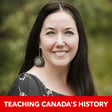
Michel Blades (Ranch Learning Centre, Lamont, Alberta)

Finalist in the 2021 Governor General’s History Award for Excellence in Teaching

For more information about the award visit  CanadasHistory.ca/TeachingAward

The  Keeping Tobacco Sacred project, started by Michel Blades at the Ranch  Learning Centre in Lamont, Alberta, is a reconnection to land, culture,  language, and identity for youth growing up in government care. Inspired  by the Truth and Reconciliation Commission’s 94 Calls to Action, this  project is ultimately a grassroots answer to the assimilation of  Indigenous people that resulted from the Residential School System and  the legacy of their children. The process of learning to grow, cure, and  prepare tobacco from seed to offering provides students with a daily  connection to caring for oneself as well as the life of another.  Additionally, in acknowledging the length of time it takes to grow  medicines, it reinforces the importance of positively connecting the  mind, body, and spirit to protocols, language, teachings, ceremony, and  elder prayers.
Recommended
Transcript

Introduction to the Podcast and Topics

00:00:00
Speaker
Welcome to Canada's History Podcast. My name is Julie Richards and I am this year's Nobleman Scholar at Canada's History Society. Over the past month, it has been my pleasure to chat with the 2021 Governor General's History Award Excellence in Teaching shortlist. Listen in as the teachers and I discuss their wonderful and inspiring projects teaching during the pandemic and how to keep students engaged in history.

Meet Mikkel Blades-Bird

00:00:22
Speaker
Thank you for joining us today and welcome to Teaching Canada's History Podcast. so let's dive right in Can you introduce yourself and tell us a little bit more about um your classroom or where you teach? ah Sure, this sounds great. Happy to be joining you today.

Challenges in Traditional Schools for Boys in Government Care

00:00:36
Speaker
um My name is Mikkel Blades-Bird and I am a teacher at the Ranch Learning Centre out of a classroom just outside of Lamont, Alberta.
00:00:47
Speaker
um Our classroom is a very unique environment. that was created a few years ago. All of our students are boys that live in government care.
00:00:58
Speaker
And um there started to be a bit of a trend that um the boys that all are residents of a group home just outside of Lamont Alberta um would attend a school within the town of Lamont um but they all came with very unique considerations um some of them were healing from addictions some from abuse some were um offenders of abuse, some had brain injury, um heightened emotional states, and they didn't often fit very successfully into the high school or the junior high

Creating a Tailored Classroom Environment

00:01:41
Speaker
environment. And um the same pressures kept happening over and over for them that they would be getting into trouble, they would be heading to the office and they would be um incurring suspensions or
00:01:54
Speaker
even marching towards being expelled for just escalating behaviors. and And none of this was their fault. They came into government care um for various numbers of reasons and the system wasn't working for them. So Elk Island Public Schools partnered ah with Alberta Education and Correction Services Canada to create our classroom. um It is an EPI program and education placement in an institution.
00:02:24
Speaker
um So we do have our classroom on site at a ah rural group home. And we are three teachers. We're three teachers in one classroom for about anywhere from 10 to 15 students. We've been ah as low as two or three. And then the the program just rebuilds itself again. um And all of our students ah come from various locations all over Western and Northern Canada. So we've had students as far as um we have North and Yellowknife join our program. And we have had students from British Columbia, Alberta, Saskatchewan,
00:03:03
Speaker
Manitoba. And I think that's, that's as as far as we've gone so far. um But we are, ah like I said, three teachers that um are on site for about 10 students. And within this program, we, we seek to reconnect our students to um indigenous culture, ah land-based teachings, and basically helping them navigate their journey through government care as young as grade five and all the way up to grade 12, just helping them to find themselves, um hopefully keep contact and reconnect with their family or learning their language, um various other aspects.
00:03:51
Speaker
Wow, that sounds like a very impressive facility and and program um and very important work as well.

Growing Tobacco Project: Inspiration and Benefits

00:03:59
Speaker
um Could you go into more detail about your project and kind of how it connects?
00:04:04
Speaker
ah Yeah, for sure. um The project is what is called Keeping Tobacco Sacred and um where it can be a very specific explained project. It also very much crosses over into so many other areas of the work that we do.
00:04:22
Speaker
um Keeping Tobacco Sacred started when I actually was doing my master's work down at the University of Calgary. And um the first cohort, that program that I took down there was an Indigenous education, a call to action.
00:04:37
Speaker
ah cohort. And one of my instructors, Yvonne Poitras Pratt, at the end of our are two weeks of intense ah work, she gifted each one of us with a single tobacco plant that her and her husband actually grow at home.
00:04:53
Speaker
And um I carried my tobacco plant from Calgary to Edmonton and i have a balcony garden. i I fostered it the best I could. And if anybody has ah grown tobacco before, it's ah a bit of an awkward plant. It grows however it wants to grow and um most likely should be in the ground. But ah mine was potted and it grows into flowers and the beautiful yellow flowers eventually turn into seed pods. And once you have a seed pod, you have hundreds of seeds. And so I, of course, I carried these plants into September into my classroom and continued on with the growing. And We are fortunate enough also in our classroom to have tower gardens and tower gardens are an aeroponic system of growing where you have a water tub that is attached to a tower and the water is um carried up the tower to water plants that are growing out of little shelves in the tower.
00:05:55
Speaker
And we continued this project along and the group of students that we had that year um were very enthusiastic about growing and learning about different things that um you can do with plants and sustainability and ah growing food and and different aspects. So we we decided to also incorporate medicines and um what is important from the land

Integration into Science and Cultural Implications

00:06:25
Speaker
that um has has come through natural law and the teachings of elders for protocols and and things that will take these students into ceremony in a good way.
00:06:40
Speaker
um So we we sort of crossed over all of this work into science, of course, learning about plants, learning about growing plants. and the different stages of growing. And with this becomes success in growing and failure in growing and what happens and what what can you do as well as what trauma looks like on plants um just as much as we feel it as humans.
00:07:05
Speaker
And um all of this this work came in to be this project and and turning it back into the health benefits of ah what the plant of tobacco is to people versus what it is in society today. And that often comes in the form of cigarettes.
00:07:24
Speaker
um We also saw a need a few years ago. I noticed that um in ceremony, especially feast, if if young ah boys were asked to help out with feast, they were given an offering of tobacco that was in the form of a cigarette. And I watched them. I watched them kind of play in their mind with what they were going to do with this, whether they were going to do the break off the filter and go return the tobacco to the earth, or if they were going to sneak off and smoke it.
00:07:52
Speaker
And i knew that within a school system, there had to be a better way of um offering making these offerings and the the mentality behind it.
00:08:03
Speaker
um And also within this, that we we saw an ease of... um how elders were being asked for prayers for very heavy things. Our whole system is burned in right now with um the legacy of the genocidal assimilation of people through residential schools. And elders are being asked for prayers for such heavy things that elders are getting tired.
00:08:29
Speaker
And the growing of tobacco slows this process down because you have a whole season of growing before your plant is matured enough that you can cure the leaves, you can dry the leaves, and you can make it into an offering.
00:08:44
Speaker
So those are the other thoughts that we we help the students make connections to. um Just so there's those ideas of you don't just grab some cigarettes off the shelf and say, hey, pray for me for this, I need this, I'm i'm hurting. When um the the positive energy that you carry that needs to go into every bit of growing a plant and how long it takes a growing season. And of course, in our lands, we are on Treaty 6 land, also known as Alberta. um Our growing season is very different. um If you want to grow outside, you grow from
00:09:21
Speaker
maybe April if we're lucky, maybe October if we're lucky. um And so we did have to move our growing seasons inside as well. um We did have the plants in the towers, we had the plants in pots, um but also that fostered a ah ah new outlook for the boys that they needed to be at school every day. They needed to make sure the plants were watered every day or ah at least observing what was going on with them if there was something happening.
00:09:48
Speaker
um if we needed to make changes or like I said, success and failure and growing as well. but That's really amazing. And um reading about your your project, it really came through how important this work is and how how much people ah parttakeing or participating in the project really get from it. and You said that the when you started, it was ah the group of boys were really interested in the plan specifically. Do you think that you'll continue this project? or is it kind of specific to this one group? No, for sure. We have continued it along um and it does um flourish and it does settle a little bit. um We have um sort of branched out. We do grow other things, lettuce, um ah Swiss chard, other things that we often have salad days at school. So just having that visual every day of something growing. And like I said, the attachment to it, if,
00:10:47
Speaker
Oftentimes kids that are struggling with emotional regulation are struggling with a love for themselves. And so um finding that connection back to loving yourself and putting that into loving something else, whether it is a person, an animal or a plant.
00:11:04
Speaker
and being able to come to school today to see something that sort of anticipates plants can't talk. They do have energy frequency, but um ah something that is expecting you to be there every day. And actually one of the other important parts of our classroom is we do have three ah classroom cats that come every day. So it's the same mindset ah with the cats that ah that come to school every day is that if if you don't feel you can love yourself or be nice or loving to other humans today, that possibly ah you can do that to an animal or

Beyond the Classroom: Culture and Personal Growth

00:11:40
Speaker
a plant. And um it is ongoing. we We do continue this work.
00:11:44
Speaker
um And it, like I said, it's important to be able to connect to things that sometimes the system has disconnected for a lot of these students. um They don't know sometimes where they can smudge, where they can have, they they even can ask to smudge or connected to pieces of their life that, you know,
00:12:08
Speaker
they're very quiet about and sometimes it takes weeks, months or even years. um Within this classroom, we have had students for I was fortunate enough to teach one student for six years. So you see that student through their ups and downs.
00:12:23
Speaker
um And sometimes it's it's it takes weeks, months, years for them to speak of um all of a sudden, I want to learn Cree. um My family speaks Cree. Well, we didn't know that.
00:12:37
Speaker
six months ago, we didn't know that a year ago, but now, um, they're, they feel confident that they can speak of these things. Um, and it's just helping them feel like they have somewhere to be a belonging, um, and that they, they can, um, bring out pieces of their identity that maybe the system isn't supporting right now. And, um,
00:13:00
Speaker
ah this project is actually launching a bunch of other little projects that I think, um, have to do with, we we do have a boy that's ah a powwow dancer. Um, and he brought his regalia that he had made himself, um, to our classroom and that we're going to be helping him to, um,
00:13:20
Speaker
make more pieces of it. um We also, um we do bucket drumming, which is marching towards making, we're going to be making hand drums and powwow drum this year. um And some of these boys have never had the opportunity to do these things before, even in their own family, even though it's a part of their own family. So um just, just the confidence that, that small pieces can bring such as growing a plant. So it's just growing a medicine that is used in ceremony. Yeah, absolutely. That sounds it's I feel like I keep repeating myself. It all sounds so amazing and so profound and um and yeah, truly just really important um to be instilling these these qualities in in these students.
00:14:04
Speaker
um You have sort of talked about this, but was there a specific inspiration or um that brought about this project?
00:14:13
Speaker
Yes and no. I actually, i think if I think back, um we were reading the novel Fatty Legs ah by Margaret Pokiak-Fenton. And if you know the the book, um it is the true life account of Margaret as she was taken to a residential school up in northern Canada.
00:14:34
Speaker
And the gift that that book gave gave our classroom is And within that book, she has ah placed actual photographs, historical photographs of herself and her family um as at that time when um she was taken to or she decided to go to residential school um and the journey she made back and forth um when she she wanted to go back to see her family. And the topics and the conversation that came out of doing that book um really helped our students to.
00:15:09
Speaker
to come to a realization that it's okay to not be happy about living in government care. um a lot of times emotions get really suppressed and it's okay to, to be able to take a look at the system from the outside and say, wait a minute, you know, like I I'm part of something. And um you you see the light bulb go on for some of them sometimes, and it's not easy, but it's the time that you can, you can help them out. um The other aspect of our classroom that's oh more unique probably than anyone is that each one of our students comes every day with at least one or two adult caregivers, child and youth care workers, and they're present with the youth just because of very heightened emotional states that our our youth carry as well as sometimes suicidal ideations and destructive behavior.
00:16:03
Speaker
um And so within our classroom, oftentimes we we not only are three teachers and and ten students, we are three teachers, ten students and about ten other adults. And so to maximize on that and and for sure the the concept of intergenerational groupings, we really do tap into everybody in the room.
00:16:22
Speaker
And um as you know, within our country right now, um it is the adults that are marching towards ah learning a new history. um Kids are are learning about it in school already. They know and they're not happy about what they're hearing about the residential school system. But it's the adults that are um learning about things for the first time because we didn't learn it in high school or we didn't learn it in school at all. It was a it was a closed topic.
00:16:48
Speaker
And so what pieces of of that brings to the group as well? And, and like I said, they're just, um, that, that first group that we had had a real connection and, and a need to know more about treaty, about Indian act, um, about what's going on with all of these things and how they came to be. And and we do, we break it down. We we've taken a look at the treaty documents. We sit there, uh, I printed it off and, uh, we take a look at the original one. You can't

Hands-On Learning and Emotional Support

00:17:18
Speaker
read it.
00:17:18
Speaker
Most people can't read it. And so conversation out of that, um, And then what the treaty document actually says and and what um obligations are being met today and what aren't being met today. And it really gives kids a sense of power to know these things um as they march forward. And no matter where they go, whether they stay with us for a few weeks or months or they're they're with us for a few years, um we're hoping that we at least can give them that that sense of empowerment, of knowledge, of of understanding and knowing
00:17:52
Speaker
what has gone on with ah political aspects, as well as cultural aspects, as well as um personal aspects, and how how this all comes to be for them to go on to their journeys. that They grow up in our program sometimes.
00:18:08
Speaker
um they're They're navigating themselves almost like adults, even as a 14 or 15 year old in the system. Yeah, that that kind of knowledge is so essential. And, and you're you're totally right when when you said that even like adults are just learning that now.
00:18:23
Speaker
um Because it wasn't it wasn't taught for a very long time. And it wasn't brought up at all. um So what do you what do you think is the greatest impact of your project?
00:18:35
Speaker
um I think the greatest impact, ah it really actually depends on on the student. We have some students that are really loving growing things and they're really loving um connecting to that end of things, but also being able to go outside and look at what's on the land, connecting themselves to the land and saying, hey, I know what that plant is. I know what this plant is. um Or let's try this plant outside to see what what it it will do.
00:19:03
Speaker
um For others, it's a lot more quiet. They don't want to be as hands-on with things. And sometimes that comes even with what I talked about earlier about um not having a care for themselves. And it's hard to have a care for other things. um So it it takes time. It takes time and patience. I think the greatest impact is just being able to offer a differentiated aspect for each of these students and allowing them to do it in their own time. um
00:19:38
Speaker
It's not a you need to have you you need to have a checklist that you completed all of these things for this project and you'll be getting a mark on it. it It's it goes way beyond that. we We can pull things out of the curriculum and out of the program of studies. from science, from social studies, um from a lot of different areas to make sure that we have those taken care of. But it's it it's what goes back to each student.
00:20:03
Speaker
um Like I said, ah we off we also um have focused our work on ah the work of Dr. Martin Brokenleg and his circle of courage and the four aspects of mastery, belonging, independence and generosity.
00:20:18
Speaker
And um bringing those four things um as sort of what can we grow for each one of our students in those ways? um Currently our systems, we do great at the mastery part for sure.
00:20:33
Speaker
That's our grades. That's our, you know, achievements and all of those kinds of things. But are we doing a good job of fostering independence? Are we doing a good job of fostering generosity? Are we doing a good job at fostering belonging for each one of our students and these students for sure?
00:20:50
Speaker
are way more vulnerable within that just because they don't go home to our family every night and they have either jumped around in the system or, um, they, they just, they, they don't know where they do belong because oftentimes there isn't even a home for them to think of, to going back to.
00:21:10
Speaker
And, um, that's a whole other aspect every day when they walk in the classroom. So I think just, um, giving a connection, connection to things, whether it is our classroom, whether it's learning, whether it's caring, and whether it is just the plants, the plants themselves.

Innovative Methods and Understanding Colonization

00:21:29
Speaker
Yeah, absolutely. that that's so That's so important beyond beyond grades, beyond um like traditional education systems. um So how do you keep your, or how do you try to keep your students engaged in history? How do you try to make it relevant?
00:21:45
Speaker
um Well, it is sometimes sort of walking away from the the pages in the textbook, um using bits and pieces of it, of really like a mystery or a story.
00:21:56
Speaker
um Like I said, the Margaret Pokiak-Fenton's book, Fatty Legs, um we started that off by by just showing the pictures, the real life pictures from that story and having our students, um what do you see here? What's in the pictures? And what do you think's going on? Where is this taking place? All of those kinds of questions. And it was really interesting to hear some of their responses as they're guessing as what kind of story this is going to be and where it's taking place. And it's, it's just taking a step away from reading line after line and paragraph after paragraph in a textbook. Um, it's just being a little bit more creative with what you do. Um, and like I said,
00:22:39
Speaker
um kids aren't too young to take a look at a treaty document. Kids aren't too young to, um, understand, uh, things about residential schools. Orange shirt day. Um, that's a hard day. It's a hard day in our classroom. it's It's very difficult to talk to, um, kids that have been taken away from their homes about kids that were taken away from their homes and some died.
00:23:05
Speaker
And, um, it's just But it's important to be truthful about it and to not um wait to tell those things. or um That's one thing about kids that ah that live in government care is that they need to know they need to know exactly what's going on all the time.
00:23:24
Speaker
And um i think that's only fair that they understand why things are happening to them, why things are happening in this country and what has happened.
00:23:35
Speaker
um it It was even more difficult these past weeks, just before the end of the school year, when um for sure the news came out of Kamloops. And now, of course, it's it's all over the country now with residential school sites and common graves being found.
00:23:53
Speaker
um with children. And um some of our students right now are as young as 10 years old, and they want to know they want to know what happened to these kids. Um, and it's conversations that you just have to take the time to have, whether it's sitting in desks or whether it's in a circle, uh, where everybody can share how they're they're feeling about it.
00:24:14
Speaker
Um, I just think that, um, history for sure, um, needs to be explored in different ways. Um, not necessarily the ways that we were taught history. And that's just the acknowledgement of colonization, right? Uh, we're all colonized, um,
00:24:31
Speaker
And it doesn't mean that it was good for all of us. You have to look at what ways, um what ways does colonization make our systems work right now? And like I said, it's schedules, it's grades, it's achievement, it's titles, um it's status, putting people into groups, labeling them. And what can we do as educators to take a step away from that, um just to let let kids who are stuck within an institution-based system see things in different ways.
00:25:06
Speaker
Yeah, absolutely. And um it's so important bringing history to the present like like you've done. um Yeah, well well, thank you so much for your time.