Become a Creator today!Start creating today - Share your story with the world!
Start for free
00:00:00
00:00:01
Avatar
28 Plays1 month ago

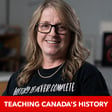
Alysa Ferguson (Juniper School, Thompson, Manitoba)
Finalist of the 2024 Governor General’s History Award for Excellence in Teaching
For more information about the award visit CanadasHistory.ca/TeachingAward

The Truth and ReconciliACTION plan is an inclusive initiative that unites Indigenous and non-Indigenous students, Knowledge Keepers, Elders, community members, organizations, and School District of Mystery Lake representatives. Developed by Alysa Ferguson as part of the school's land-based learning program, participants engaged with and delved into authentic learning experiences with a hands-on approach. The program's primary objective was to fortify students' pride in their traditions, deepen their knowledge, and foster a stronger sense of place and belonging within the school community on Treaty 5 Territory. Following the Indigenous medicine wheel, the program aligned activities with the seasons, though adjustments are made based on students' inquiries, curiosity, and interests. Through this approach, students explored Canada's history and truths, aiming for understanding, healing, and personal growth to empower them as present and future change makers.
Recommended
Transcript

Introduction to the 2024 Governor General's History Award

00:00:05
Speaker
Welcome to another episode of the Teaching Canada's History podcast. I'm your host, Brooke Campbell, and today we are speaking with the finalists of the 2024 Governor General's History Award for Excellence in Teaching.
00:00:16
Speaker
Created in 1996, the award recognizes innovative and impactful approaches to teaching Canadian history. For more information, visit canadashistory.ca slash teaching award.
00:00:28
Speaker
Today I'm speaking

Interview with Elisa Ferguson, Kindergarten Teacher

00:00:29
Speaker
with a Elisa Ferguson, a kindergarten teacher in Thompson, Manitoba. Thanks for speaking with me today, Elisa. Thanks for having me, Brooke. It's nice to finally meet you and speak to you and have this opportunity to share some of the things I've been doing. I'd just like to take a moment and acknowledge that I am speaking from Treaty 5 territory.
00:00:47
Speaker
Thanks, Elisa. Why don't we we dive right in. Can

Juniper Land Base's Truth and Reconciliation Plan

00:00:52
Speaker
you tell us more about Juniper Land Base's Truth and Reconciliation Plan, or Reconcili-Action Plan, I should say, and what your students and you have been doing as part of this?
00:01:04
Speaker
So this project actually started about nine years ago. My first land-based group from kindergarten is actually going into grade eight this year and their big buddies will be graduating from high school. So we're really excited for that to see where this takes them.
00:01:22
Speaker
um It all began with me and a teacher, Kelly Tate, when we had big buddies and we were really noticing a disconnect between the students.
00:01:33
Speaker
They really had a lack of empathy and compassion towards one another. So we went to our Indigenous consultants at the school board and we sat down with, was Loretta Dykoon at the time and Elder Ron Cook.
00:01:47
Speaker
And we looked at the pieces that were missing with the students. And what came out of that meeting was we really noticed the kids were missing a sense of pride, a sense of belonging, and a sense of culture of their traditional teachings, right?
00:02:02
Speaker
So with that in mind, we started our journey into truth and reconciliation. And with the pride piece that I'm gonna speak on, we really found that you had to go backwards and actually to grow and go forwards.
00:02:19
Speaker
And it was really difficult as teachers to place us in really uncomfortable positions. um We knew nothing. We were no longer the experts.
00:02:30
Speaker
We were no longer in lead. And we were really relying on others to help us through this journey. So

Cultural Connections Through Elders and Knowledge Keepers

00:02:39
Speaker
when we started it, we had to pretty much unlearn everything we thought was true in order to learn everything that was true.
00:02:48
Speaker
And we didn't really realize all these pieces until we really had a reflection piece afterwards. So with our consultants, we started bringing in and elders and knowledge keepers to start speaking their truth. So our first year was a lot of listening and learning.
00:03:05
Speaker
And we had elders coming in and speaking about their experiences in residential schools. We had them coming in speaking about their life on the trap line. We had Elsie Clemens speaking about being lost on the Barrens and telling her story on the Churchill train.
00:03:24
Speaker
And actually having that story stolen. And these kids were so engaged and hung on to every word the elders were saying. It was something new and it was coming alive. And there was this little spark in their eyes.
00:03:37
Speaker
And when these people were coming in, we noticed a lot of kinships and relationships building. So they were calling these people Grandma Frances and Granny Willow and Uncle Dom.
00:03:48
Speaker
And we saw this really great connection happening with kinships and this sense of family developing in our school. And the thing we really found with that is now this group is no longer alone. They have family, whether they go downtown. Some of these members are from outlining communities and surrounding areas.
00:04:09
Speaker
And they had familiar faces that were just there to love them and hug them and listen to them and share stories with them. So they had cheerleaders wherever they were going. And I really think that contributes to a lot of the success we've had because we continuously invite these people in now to build those connections and have those relationships within our school and communities.

Teachings of the Medicine Wheel and Traditional Practices

00:04:33
Speaker
So with that piece, with the kinships happening and the going backwards and learning truths, we knew we needed to put some things in place that brought in culture and ex exposed them to traditional teachings.
00:04:49
Speaker
So we looked at the medicine wheel. And the medicine wheel, if you look at it has a very natural flow of seasons. And September starts in fall. So we always start with the residential school.
00:05:04
Speaker
teachings and bringing in people to talk about it if they're comfortable. And we looked at different areas within that medicine wheel. So what plants do we harvest that at that time and why?
00:05:20
Speaker
And where do we find those plants? And what medicines do we make? And we looked at the animals and we studied the animals during that time. So fall would be about moose season and deer season. So we were bringing in those animals into the classrooms and we were showing little five-year-olds how to cut up a moose how to cook a mousse, what the mousse tasted like.
00:05:44
Speaker
And we started documenting some of the data with that. And we asked our kids, how many of you have tried mousse? And back then we didn't have a really um great attendance. So there was about 43 kids that day and 23 had put up their hands that they had tried moose. Now moose is in our backyard. It's a traditional food of this area. So about half our kids have had it.
00:06:10
Speaker
And then we asked, well, how many of you have tried elk? And 11 out of 43 had tried it. And we asked, well, how many of you have tried deer? And seven out of 43 had tried it. So we knew right then that our work was really important and And our role was we needed to expose these kids to as many opportunities as possible.
00:06:29
Speaker
So we kept following that natural path of the medicine wheel. And we went into winter and we showed them rabbit snaring and rabbit skinning. And we brought in caribou and caribou meat. And we even ended up taking the kids out on the ice for ice fishing.
00:06:49
Speaker
which was a really neat experience to have them connect and get that sense of land with their their teachings. And we

Community Engagement and Cultural Experiences

00:06:59
Speaker
started taking them to community events such as the fur table. So now they're witnessing live history happening. They're watching people that are their aunts or their uncles or their neighbors from surrounding areas bringing in their furs from the trap lines and exchanging it for money.
00:07:17
Speaker
And they were understanding the whole concept of how this happened and how the process went. And they're seeing these big white fur bags, the old bags they bring the furs in And these trappers are now coming over because they'll be, oh, that's my niece and that's my uncle. or or nephew, and they're explaining how their year went and how many rabbits they got or martens. And it was really neat experience. And the kids were getting engaged and touching them and looking at them.
00:07:50
Speaker
And when you go to those community events, now you have local people who have used those items to make things like mittens and toques. and jackets, and the kids are seeing the relationship between the furs and how they're used. So then we had some really great in-depth conversations on that.
00:08:10
Speaker
And then going into spring, we do things like goose camp, where the kids would get to learn about goose hunting with Uncle Calvin, and learn how to go get the geese, and wring their necks, and run back with these little fake Cabela's pop guns, but they're learning gun safety, and We'd bring geese in and they'd pluck the feathers. And then, you know, the grandmas and the aunties would teach them like what they use the feathers for and how to do it and how to singe them. And they would roast the geese. So they get to try roasted goose and goose soup. And another great activity they really liked in spring was tapping the birch trees and trying the mineral water from it.
00:08:51
Speaker
So that was always, always fun to do with them, especially the tree unit. And then we went into summer. In summer, we would identify the medicines and the plants out on the land. And we'd take them to a community event that started up in Thompson, in Indigenous Peoples Day.
00:09:10
Speaker
So they were getting exposed to dancers and the music. and people from all surrounding areas would come in. So they're getting to see people from outlying communities as well.
00:09:22
Speaker
And one of my favorite ones is the fishing. We always go to Liz Lake and we teach them different activities. But my favorite one is the fishing. My husband helps me with that one. And it was amazing to see because I had so many letters this year from kids in grade three and four that had never been fishing before.
00:09:40
Speaker
And they were sending me letters saying, thank you for taking me. And we do have a lot of kids in care. So this might be their only experience of a camp or going out fishing.
00:09:51
Speaker
So I thought that was pretty neat. And that reminded me why i do this work and why it's important to continue on with this programming. Because it is some of the kids only experience to some of these cultural things.

Exploration of Indigenous Identities and Community Dynamics

00:10:03
Speaker
And i i really do hope that changes in the future.
00:10:07
Speaker
And I have expanded the program because of that reasoning. So i do teach land-based to four classes now, K to four. And I also recognize that a lot of kids come into our school that haven't had these experiences in the older grades.
00:10:23
Speaker
So I try to throughout the year do school-wide events. so we do our own Juniper fur table. So they are getting exposure. the older kids to what the fur trade was and what it looked like and what you'd see and all the reasoning behind how the furs are used and how it's processed.
00:10:43
Speaker
And they get to do hands-on engaging experiences with the meat and the food with that as well. And we're doing a whole week of Truth and Reconciliation with the school.
00:10:55
Speaker
And then we always have other events throughout the year. just to tie everything together. So it's a really great program and I've seen a lot of positive impacts with it. Yeah, I can imagine there's so many conversations and explorations taking pla taking place with all of this. um Can you share how your students then are able to to think about history and think historically throughout this work and through all of these activities?
00:11:30
Speaker
So there's a lot of deep thinking, I think, with every activity, and it's hard to go through each one. So with five-year-olds, I think a really deep thought for them is when we first started this project, a lot of kids didn't know what the word Indigenous meant.
00:11:50
Speaker
They didn't even know that they were Indigenous or they didn't self-identify that way. So they went through this whole process of who am I? And I thought it was really neat to watch them grow and their thoughts and their thinking behind this because they're exploring for themselves and not being told who they were.
00:12:12
Speaker
they're coming out with this identity. I matter because or I am a hoop dancer. I am an artist. And they were discovering for themselves who they were.
00:12:25
Speaker
And that was a really neat thing to experience. And I will not... ever want to take that experience away from them by telling them who they are. They got to experience it for themselves.

Importance of People as Resources in Learning

00:12:37
Speaker
And when they really found their own identity, I found that they expanded out. It was like a ring. And now they know who they are. And they're looking at the people and their world around them.
00:12:50
Speaker
So now they're thinking, And they're understanding why some of the dynamics are happening in our community. They have a deeper understanding that identity has been lost and culture has been lost. And we do have a large homeless population and we do have a large population of people with addictions, but they have a greater understanding of why.
00:13:17
Speaker
And when we go out in public, I find there's more compassion and empathy to our community and the people in it. And they're taking those teachings of how we are all related and how we treat others and elders, and they're meeting them with open hearts.
00:13:37
Speaker
And they're so instead of saying, look at and name-calling, they're, how can we help? So they're looking at what they can do instead of focusing on the problem. And I i think for five-year-olds that this is really deep for them.
00:13:54
Speaker
And it's as simple as a lot of them just decorating little tiny lunch bags and they're filling out shampoos and soaps and we're delivering them to them. And they get to write little positive messages and pictures that they want to send to them to brighten up their day.
00:14:15
Speaker
So I think there is a lot of deep thinking in different areas, but I think for five-year-olds, that is probably the biggest one i have noticed as a teacher.
00:14:28
Speaker
and And with, you know, you you're talking, you have very young learners in your classroom. um What resources do you like to use then to support your teaching and and their learning and how do you like to use them?
00:14:42
Speaker
Well, when we first started, um you could go to Google or you could look for books, but there honestly wasn't much being published or out there at that time. It was just kind of on that cuff where it was starting to bring in Indigenous authors.
00:14:59
Speaker
And we weren't really trusting of the information out there. Now that we're unlearning everything we thought was true, you kind of question everything now that you're reading.
00:15:11
Speaker
So with knowing that, I know our greatest resource was people. People came and joined our journey or were on our journey, but they were the ones that really made it rich.
00:15:24
Speaker
And they're the ones that really enriched our learnings and teachings. they They are the heart and soul of the program. it It's a collaboration. It's not one person doing the work. It's Many people on different levels. It's people in the school district. It's people in your school. It's the people like the students, families and the community members. So just to name a few, Cindy Blackstock and her calls to action.
00:15:56
Speaker
They were a wonderful resource. We bought the calendar and we went through all the historical events and it has a very natural flow to it. And the kids just took to the spirit bears.
00:16:08
Speaker
They learned about Jordan River Anderson and all these timelines I never thought that five-year-olds could grasp. And it was amazing to see. um Another one was Jamie Black.
00:16:22
Speaker
And she talked about the red dress movement and how it moved her when she saw this dance overseas. And if you haven't heard her story, I highly suggest that you listen to her story because she talked to the kids about how your art can influence anyone around you and it can just expand outwards because her one movement has gone worldwide.
00:16:50
Speaker
And that's one piece of art So we can, one person can make a difference just through art. And then we had people like Hilda Anderson, who really advocated for the calls for justice with Murder and Missing Indigenous Women and Girls and Two-Spirited Plus.
00:17:08
Speaker
And she came in such a loving way and talked to the kids. And lots of our families are impacted by this subject. And lots of my kindergarten kids are were impacted by this subject.
00:17:21
Speaker
this topic So it and it's really heavy and she did it so wonderfully. and it's it's really important because that resource is a part of their healing. And she showed us how to how to help them move forward and help them on their journey of healing.
00:17:37
Speaker
So that was really important. And then we had people like Granny Willow, who came in and was teaching hoop dancing and gentle teachings of Good Wolf and Bad Wolf. And all those kids when had those lights off and they're doing the eagle formation and the butterfly. it was just to see them with their excitement. they I didn't have one complaint. There was no issues.
00:18:02
Speaker
And of course, there's always too many people to list, but a few of our elder and knowledge keepers were Loretta Dykoon and Elder Ron Cook, Michelle Taylor, Katie Morris, Alyssa Anderson, Cheryl Antonio, Elder Ellen Dale. they They're just, they have so much knowledge and so much compassion and kindness towards the kids that we can't thank them enough.
00:18:28
Speaker
um Constable Cleveland with his Moose Hide presentations he would come and speak to the junior highs with. And I think when you look at those resources, you got to remember it's not something you can find in a book. This isn't something you can Google. This is real life history. It's like books coming alive in front of you. So you have zero behavior problems. The kids want to be there and participate and are fully engaged It's a not something I can provide for them. So I love that it takes a lot of people and collaborations to to make this project successful.

Program's Impact and Student Activism

00:19:11
Speaker
You've already shared some of the insights you've had into the impact of this work. Can you tell us a little bit more about how this project has impacted your students and and your community?
00:19:23
Speaker
So this one was really hard because I had to think about on a five-year-old's level. And I felt when I was doing a reflection the other night that, you know, my my kids and the students in our school, they are change makers.
00:19:39
Speaker
The biggest impact is they are leading the way. And I came up with some examples, I was just thinking, that really stuck out in my mind, right?
00:19:51
Speaker
as a teacher and I had this one five-year-old and he would not write his name. No, he refused to sit there for hours. He just did not have any interest. When we started doing this program, he couldn't pick up that pencil fast enough.
00:20:06
Speaker
And he was writing detailed plans about how he imagined Canada and what he wanted for Canada and how it was going to look. And those dreams and those hopes were just, they were coming to life. And he had so much enthusiasm and motivation to learn It was just so wonderful to see. Like this kid used to take a self-portrait and scribble his face out with a black pencil crayon. And now he's drawing the Canadian flag and asking how to write I Love Canada.
00:20:38
Speaker
It was just it was amazing to experience. And then you watch the kids that are learning the calls to action. And they're learning how to resolve conflict in a peaceful way.
00:20:54
Speaker
how to go about making change, how they're writing letters to the government, how we're doing water walks. And it's just so nice to see them take those steps and be part of the solution and want to see positive change for their school, for their community, and even the people around them.
00:21:17
Speaker
I had a five-year-old girl that um after one of the lessons, she came back the next day with some pictures and she wanted to share something. Oh, and I always get emotional at this one.
00:21:30
Speaker
um She wanted to share how murdered and missing Indigenous women and girls impacted her family. And she told her story. And all my kids listened with an open heart and very kind souls.
00:21:48
Speaker
And the one little boy at the end said, how can we help you on a bad day? And I thought, wow. He didn't focus on anything but how to make a positive impact on that child's life.
00:22:05
Speaker
And she said, you know, um when I'm having a bad day, I like it when you tell a joke. And he said, oh, can I tell you a joke? And they all hugged and it was so heartwarming to see. And I'm like, those are the citizens I want.
00:22:21
Speaker
They listen with an open heart. Do not judge. Have nothing left to say, but how can I help? I recognize. I hear you. How can I help?
00:22:32
Speaker
those are Those are the kids i want in my school and community. I thought that was such a powerful moment as a teacher. And it was it's one I'll never forget.
00:22:43
Speaker
That is for sure. And I see these kids grow throughout the years. And I don't always see all the changes in my class, but I see these kids joining student council.
00:22:53
Speaker
And like I said, they're helping the homeless and they're helping the healing centers and they're raising monies and they're looking at being part of the solution. um Those kids that I taught what regalia was and we did our first round downs together and learned about the music and the steps,
00:23:10
Speaker
We just started our first powwow group at Juniper, and I watched those kids that I took to the first Indigenous Peoples Day dance at it.
00:23:22
Speaker
And now they're gifting what they've been given back to our community. So I can't wait for this first group to graduate and see what they do and how they impact further into our community and surrounding areas.
00:23:41
Speaker
Thank you so much, Elisa. Those are um such touching, I think, examples. and And as you said, really, really heartwarming and and moving and really showcase, I think, the work that you've been doing. And thank you so much for for sharing this project with us today.
00:23:59
Speaker
Thank you for having me and allowing me to have this opportunity.