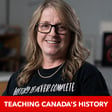
Introduction to the Podcast and Award
00:00:05
Speaker
Welcome to another episode of the Teaching Canada's History podcast. I'm your host, Brooke Campbell, and today we are speaking with the finalists of the 2024 Governor General's History Award for Excellence in Teaching.
00:00:16
Speaker
Created in 1996, the award recognizes innovative and impactful approaches to teaching Canadian history. For more information, visit canadashistory.ca slash teaching award.
Alma Bernier's Innovative History Project
00:00:28
Speaker
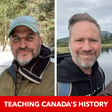
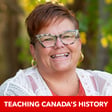
Today I'm talking with Alma Bernier, an educator in Winnipeg, Manitoba. Thank you, Alma, for speaking with me today.
00:00:36
Speaker
Well, bonjour, Anin. It's good to be here. it's finally It's nice to finally hear a voice and a face for all the times that we've been communicating via email. It is. It's so nice. I love this part of the of the award process.
00:00:49
Speaker
Will you share the project that you have developed for for your students and maybe give us an overview of some of the main steps involved?
Inception of the Project with Indigenous Events
00:00:57
Speaker
um Well, our project started with ah a small smaller unit and it ended up turning into a much bigger unit.
00:01:06
Speaker
I guess in the in a sort of the a way, i the students kind of directed the direction the unit ended up going into because... um we were We started off in September with all our ah different Indigenous events like MMIW and Orange Shirt Day.
00:01:27
Speaker
And during that time, we had there was the election as well. So we looked at issues in contemporary history. Canada. um And i had to take um outcomes from the various grades because I did have a four, five, six, seven, because 50% of that time was English and 50% of the time was an Indigenous language, which was Anishinaabeg Mowin Ojibwe. So we ended up talking about all the things
00:02:01
Speaker
that have been happening lately, including the election when Wab Kinu got in as the first Prime Minister ever for our country, Indigenous Prime Minister.
Walk-back in Time: Indigenous History
00:02:12
Speaker
So we started talking about that. And what our unit did is we ended up taking a walk back into time.
00:02:20
Speaker
So we looked at everything that happened. in September, October, and then we walked backwards and we said, okay, well, you know, why is everybody so excited?
00:02:33
Speaker
You know, like we were, they were kind of looking at it and and it was the first time they ever were really interested in the politics of anything around them, which was really exciting.
00:02:45
Speaker
And so we did a walk backwards in time, and that was basically how we did our our entire unit, all the way back to pre-contact, which pulled in a whole lot of outcomes from the different grade levels. and the different units that you could do, which made it really um amazing because then we started following the UDL model that was developed by Jennifer Cates.
00:03:11
Speaker
And so we went back and we looked at all the things that um were direct in direct relation to why it was such a wonderful time that he got elected.
Students' Personal Connections to Indigenous Issues
00:03:26
Speaker
And we looked at all the issues of why MMIW was there. So we went into a kind of like a 5W thing and, um, Then they started doing all the research and we started looking at different websites and we started looking at different numbers. And then at one point when we were sitting doing our inquiry, I had asked students because we got they got in. We started getting into a deep discussion about the missing and murdered of of North America, of Turtle Island.
00:03:59
Speaker
And i had simply asked a question of, does anybody know of anyone um who has gone missing or has been, you know, murdered? Or the part that really struck me and made me want for them to really understand about everything that's happening around them during their time.
00:04:26
Speaker
And it made me really want them to understand everything in their lives that has happened to their families as well.
00:04:36
Speaker
So I asked that specific question then... then Three quarters of the classroom had their hands in the air. So three quarters of the classroom of the children knew someone who was missing, knew someone in their family who had been murdered.
00:04:55
Speaker
They had aunties, they had grandmothers, and they had, you know, extended family people and stuff and and friends that their grandmas and their mothers had. So it was really, really opening to see that stuff have impacted them that much, you know, at such a younger age.
00:05:17
Speaker
And I thought, well, you know what, I don't know how much we're actually doing for our curriculums anywhere to actually bring light to all the issues that that are happening in our our own country, our own backyard, our own homes, and and our our students, our children need to learn the history.
Learning Pre-contact Indigenous Governance
00:05:38
Speaker
So then we started our history walk and we walked back into time and we looked at different issues and why these issues. And then we got to residential schools. you know And we kept going back and we talked about that. And I myself had gone to residential school as well. So I gave them a little snippet of what I knew as well.
00:05:56
Speaker
And I actually had four elders come in as well. And they talked about their experiences and stuff. It was really a wonderful, wonderful, like just an amazing unit that we did. And and we went and and um we went all the way back to a pre-contact era. And we talked about how how we had a government, um how we as Anishinaabe people had our own kind of currency with trade, how we had...
00:06:31
Speaker
our ways of traveling and our ways of communicating with each other and how families were like the dynamics of the families and the clan systems. So we started getting into the clan systems and the clan system is basically a whole form of governance.
00:06:50
Speaker
And it also was a ah piece that guided people where, you know, like they knew who, whose clan was who, where they lived. So it was kind of mapping out a whole lot of stuff as well, visually.
00:07:06
Speaker
And as we moved back, we started talking about how land, the treaties came into play. So that was another one that kind of linked to that. So every unit, we every little unit, we made into just a ginormous unit.
00:07:21
Speaker
And it made its own links to everything. And it was it was so great that the kids... We had a map of Manitoba. I'm still seeing if they have one from Ontario and Saskatchewan, but in and the map of Manitoba that I got from MFNRC, it has all the names in the Indigenous languages, the Dene, the Cree, the Dakotas, the Oji-Crees, Anishinaabe, Ojibwe.
00:07:46
Speaker
And the kids started identifying which first nation they're from. So once we started doing that, we so we started folding in the language.
Exploring Indigenous Ancestry and Culture
00:07:55
Speaker
We started folding in the language and we started doing our sharing circle.
00:08:00
Speaker
And in that sharing circle, they were able to start identifying who they were by saying if they were Anishinaabe, so that means I'm an Indigenous Aboriginal female teacher and woman. And then if they had their spirit names, which was something they started getting into is is finding out if they had their spirit names and they started bringing them in. And then they had to identify their plans,
00:08:29
Speaker
along with which First Nation they're directly related to, so where their families came from. Because at first they didn't understand, um oh, where are you from?
00:08:40
Speaker
And I would say Mimio Zipin, which is Barrens River, Manitoba. But I live in Winnipeg. so And the kids were getting they had ah this sense this false sense of, oh, where are you from? And they'd all just say Winnipeg.
00:08:54
Speaker
Every single one of them. So then after the unit too, that they they learned which First Nation they're from, which was really nice. So now as we do our sharing circle, they start sharing all those little pieces.
00:09:06
Speaker
So we decided to put Winnipeg Indigida, which means I'm from Winnipeg. So then they started looking at what does Winnipeg mean? Because then they saw all their First Nation communities in the language. So they we started looking at all these other places, these cities and stuff. And we started looking at that. The kids also were able to see who was from where. And there was quite a few of them that had there were little little blocks on the map where there was quite a two or three of them that were from the same place. So they were all interested, which got them talking. about their own friends and relatives in each of those places.
00:09:43
Speaker
So it really engaged the students like 110%, 200%, would say, in the whole unit. So we kept going. We talked about trade and gift giving and and all the treaties. So it was such a wonderful thing. When I sent in my um examples of pictures, it was so hard to pick. because I had so many of them and the kids were so engaged completely the whole time. So basically the unit took about two months.
00:10:14
Speaker
It ended up being about two months and it was such a wonderful start to the year so that they started doing social, those grade sevens that I had started doing social studies in the other classrooms and they had that background information.
Developing Empathy and Social Justice Perspective
00:10:30
Speaker
when they started doing their units and they had that extra insight, which was such an an awesome thing because I know one of the other teachers had mentioned something to me and I said, yeah, we we went through all that.
00:10:41
Speaker
And the kids knew by the end of the unit, they knew the reasons why we had MMIW. They knew all the negative impacts on Indigenous people.
00:10:53
Speaker
And they knew about abuses and they knew about, you know, the and we even did a sock drive at one point we did. um But this was last year. But I mean, we talked about it this year about our homeless. Right. And we talked about the homeless and sometimes why are they there? Like sometimes it's not a choice or sometimes.
00:11:14
Speaker
you know, maybe the older ones that were there have gone to residential schools and these and we talked about all the effects, right? then it gave them again, another empathetic view on people around the, you know, the areas that they live in and stuff. It was wonderful. I just loved it. I'd do it again. Yeah, it's a very personal project for for you, for your students. And I think it's so great that you started with talking about current events and issues and then going backwards in time to give that understanding and to help guide that inquiry that you described.
00:11:52
Speaker
Can you tell me more about how your students were then able to to deepen and strengthen their historical thinking through all of this? Well, the one the one thing that I remember is a couple of the students were talking and unfortunately one of them had met up with somebody who had a different view.
00:12:12
Speaker
And um so this particular student decided to, um I guess, school them on how the history line went and what happened and why Things are the way they are.
00:12:27
Speaker
So and that made me like I was I had to run to the principal. I was telling them this and that. And it was so amazing. And the fact that the kids are not angry about it. Right. You would think like if.
00:12:43
Speaker
I mean, you go to the adults and of course kids are so resilient. You go, to you tell them, you teach an adult this new stuff. And then, you know, that anger comes up with the kids. It came out in such a way that now they're, they're these new little advocates we have. And, and,
00:13:01
Speaker
They do it with a great sense of belonging and and identity now. And that makes all the difference. So if anybody was to bring up a conversation on any of the stuff that they've gone through, they're confident in walking into those conversations and And they have been talking about stuff in and amongst themselves as well, right? Which which made it concrete in my mind that, wow, they did get it. Like, we did it. We really did it. Like, they're starting to think in a historical aspect and and able to bring all that information in to a contemporary place that we all live now.
00:13:43
Speaker
It was wonderful. it was so great. And it's it's so nice that, you know, they can walk out and and if they see, ah they said, even after we started talking about the homeless, they were walking and they were, you know, they'd see them, they'd say, oh, every time I see them, i I give them a coffee or a sandwich or.
00:14:01
Speaker
So it there was a lot that were doing that now. So it it was giving them that almost a social justice kind of feeling. lens to look through now, which is really good.
00:14:12
Speaker
And like I said, in our country, we need to start doing that more for our kids, all kids, not just one group of kids. um We need to start teaching everybody who they are, where they came from, and the history behind who they are.
00:14:31
Speaker
And once we do that, can you imagine what kind of country that we'd have for future leaders? And we did. And then some of the kids did say, I'm going to be prime minister. You know, I'm going to be the principal of this school. And it wasn't just any, any jobs. They were choosing jobs of leadership and that changed their thinking. And it made me so proud.
00:14:52
Speaker
That's exactly what I was just going to say was you must be so proud. These are incredible stories and anecdotes that you're sharing. What resources do you you know go to or rely on then when you're when in your classroom and when you're talking about history and supporting your students' learning?
00:15:12
Speaker
Well, our first resource is always the elders, right? so And with respect to them, i always we always take their stories and they listen and they get to ask questions. So that's their first kind of interactive piece of resource that we use and Then we go into the films.
00:15:31
Speaker
I do have the the seven fighter Seven Fires DVDs. And I know using DVDs now is not... It's hard to find a DVD player in a school these days because everything is so digital.
00:15:46
Speaker
But we did we do have those Seven Fires DVDs. We listen to them. We pull them out in the order that we were doing it, not in the order that it was there. So we use those and um they were great. And i mean, i always say the older the resource, truer it is, because as things start being added these days, things are a little bit changed. It's through that.
00:16:15
Speaker
What do they say when when when something's told, it'll be told in another way the next time and It's like the game we play in school, telephone, right? You start off with one thing and you end up with another thing. But basically, we used the older the resources, the better for us to understand. And we did have um an elder to Peter Atkinson who talks about the clan systems as well.
00:16:41
Speaker
So we we used a lot of the elders for our stuff. We used the DVD films and some websites we got about certain people that we were looking at.
00:16:52
Speaker
So say for Wab Kinu, we Googled him. So we used Google a lot to Google people who we who were interested. out and in their contemporary time.
00:17:04
Speaker
And we looked at information, right? and And then we also went to government websites as well. And the kids were, the thing about the websites too, and we were talking about the whole thing when we were looking at resources is that how do you know a web website is true?
00:17:24
Speaker
Like, how can you trust a website? So we were combing through everything. And um the kids were actually looking at everything. And now they're the way they go on to the webs now is that they go, oh, well, is this information actually true?
00:17:39
Speaker
Who's the edit? Who's editing this web page? When was it last updated and all those little details? So it was nice to see them starting to do that. I mean, as adults, we rarely do that anymore because we kind of we're living in such a fast world. We don't even look back to check those little things. Right.
00:17:56
Speaker
So all those resources we did. We read books. There was a book on Tom Belanger, an Indian remembers it's called. And he had a memoir that was typed out into a book and published.
00:18:12
Speaker
And we read all his stories. And this was in his first words, right? And first person. So we read the whole thing of how they used to travel, how they used to camp, where they would stop, what they would do, how far they'd go and by foot or dog dog team. And it talked about people in those areas.
00:18:31
Speaker
So, and the ones that he talked about, I knew as well as a teacher. So I can confirm that those, all those details were true as well. So we did our best to find what we could to help us in what we did.
00:18:46
Speaker
The one thing I did not do is I didn't go into the textbooks. My idea with that was we grew up with the textbooks and in the textbooks they didn't have the the the other point of view in them. So I i kept those aside and um i we learned the point of view that was never taught to anybody.
Integrating UDL Model for Enhanced Learning
00:19:09
Speaker
So, and it was really interesting and and the kids just loved it, like I said.
00:19:15
Speaker
You've already touched on the importance of this work, but can you share a little bit more about the impact that you've seen it's had on your students and and on the community?
00:19:26
Speaker
When we did all our sharing, they they made wampum belts too as well because we had one of our cultural advisors, Jason Parenteau, come in. And he brought in a wampum belt from Roseau River, First Nation.
00:19:43
Speaker
And we were talking about wampum belts and we Googled the wampp different wampum belts and what each wampum belt meant. So the students decided to make their own wampum belts. And they decided to, what did their wampum belt really stand for?
00:19:59
Speaker
What did it mean? Who are they gifting it to, right? Or is it ah or is it a wampum belt for their family? So each of the different students were coming up with their own ideas.
00:20:10
Speaker
And all those ideas, I could see... the whole unit coming out onto these wampum belts. It was so amazing. I think I did send in some pictures of those wampum belts at that, at that time too. Yeah. So some of them were talking about, oh, this one is for my football team. There was one, one there that said rods.
00:20:33
Speaker
And um then there was others that said um there was two people on it and that's for me and my family. And then there was another one that, um, There was another one that did a river and some flowers, and they said that was for their home community.
00:20:52
Speaker
So everything that they did with the wampum belts kind of solidified the idea for me that the kids had done a lot of learning and they took in that learning and now they're able to show me what they've learned.
00:21:07
Speaker
And um that, you know, that impact just on them alone. just is something that, you know, now they can carry forward. And imagine the conversations and the work that's going to come out of these particular students that we went through this project, what kind of answers and what kind of outcomes they're going to have in their future years in, you know, involving social studies, even science and ELA. And like the impact was so great. Like the students,
00:21:39
Speaker
Loved it. The parents loved it. You know, they were so proud that they now they're now their children know where they came from. They know they live in Winnipeg, but they're not from Winnipeg. They know that they have a family clan. They know their names if they have a spirit name.
00:21:55
Speaker
And a lot of the parents are starting to ask if their children can get their spirit names. So next year, we do have a project starting where we're going to bring elders in or send the parents out to go for ceremonial naming.
00:22:10
Speaker
And it's it's it's good too. And i then the kids now know their identities, right? And they know the language because the language and identity, who we are the culture and the language go together hand in hand. You can't walk a path without separating them.
00:22:27
Speaker
And during that whole unit, they were learning all these words. They were learning the word for treaty. They were learning words for gift giving. They were learning words for their gifts. grandparents, their great grandparents, their parents, like everything.
00:22:42
Speaker
So we threw in the language as much as we could, and it was very repetitive. So they remembered a lot. And then at one point they did do classroom treaties as well. And they decided, you know, they actually had treaties. They started at the beginning, then they revised their treaty and they changed it. And they compared it to how nowadays people are going back and looking at the treaty rights and they're trying to change some things that were put in there.
00:23:08
Speaker
And that was just the greatest thing ever. for them to even do that. I mean, their minds work in in ways that sometimes we we lose that child thought, that playfulness, that that wondering, right? Because they're there they have that, they always have.
00:23:26
Speaker
it was such a good It was such an an amazing long unit. And to make them in in these huge chunks, these huge amounts actually makes such a big difference. And that's what you learn through that UDL too, is that they're not little units. You combine all these outcomes and you make this one enormous unit.
00:23:45
Speaker
And it worked so well for all the different levels that I had in my classroom from four to seven. Oh, and the one thing I told the students about our whole unit, I sat there and I said, you know,
00:24:02
Speaker
do you realize that in this, in our classroom today and yesterday and the day before and that, and when we first started, I said, do you realize that you guys are getting a universal university level education on indigenous issues and history here today?
00:24:24
Speaker
And it's true. And they sat there and they were in such awe that they were so proud of themselves. Um, And they were they were just beaming and they were smiling and they thought that was just the greatest. And I said, it's true.
00:24:40
Speaker
It's true. You should give yourselves a pat on the back. Yeah, I can only imagine the ripple effects of like, you know, you think about one one individual student, let alone a whole classroom, but one individual student and what they've learned, and how that's going to go and further, you know, the conversations that they have in their in their lives as you've already as you've already shared. It's just so so beautiful.
Sharing Knowledge and Cultural Education
00:25:07
Speaker
Yeah. Thank you so much, Alma, for for sharing more about this this important work and telling us more about your students in your classroom. Oh, no problem. i'm I'm glad to do it. I'm glad to share. i always say, even with the language and everything else, it's our duty to share everything.
00:25:24
Speaker
right? And like the language too, it's not just one person's to keep, it's for you to share. And that was the gift that the creator gave us as well as every, all our knowledge and stuff too. So I shared that with the kids, sharing it with you and hopefully that um others can follow suit as well because it it does make a ginormous difference, huge difference.
00:25:50
Speaker
Thank you. Miigwech.