Podcast Introduction
00:00:05
Speaker
Welcome to another episode of the Teaching Canada's History podcast. I'm your host, Brooke Campbell, and today we are speaking with the finalists of the 2024 Governor General's History Award for Excellence in Teaching.
00:00:16
Speaker
Created in 1996, the award recognizes innovative and impactful approaches to teaching Canadian history. For more information, visit canadashistory.ca slash teaching award.
Introducing Heather Howell
00:00:28
Speaker
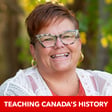
Today I'm speaking with Heather Howell, a special education teacher for students with disabilities in Burlington, Ontario. Thank you, Heather, for speaking with me today. Hi, Brooke. Hi, how are you today? I'm doing really well.
History & Horticulture Project Overview
00:00:39
Speaker
um Can you tell us more about your classroom and the project that you've designed for your students?
00:00:45
Speaker
Sure. um I am located out in the Burlington area and the our project is connected together with both history and horticulture. The Burlington area is, it used to be known as like the Mellon capital of Canada.
00:01:00
Speaker
So just in terms of the Burlington area has been you know involved with horticulture for thousands of years from both our indigenous treaty partners that have been um many, many different First Nations have been in this area um that have planted, you know, from things from corn, beans, as well as tobacco, and and also kind of used our rich ah land in terms of being around the waters, as well as our forest.
00:01:28
Speaker
So, and then when many of the people up coming here as the Empire Loyalists that actually settled in the Burlington area, they also ended kind of bringing a huge of horticulture history.
00:01:41
Speaker
So I am actually descendant of one of the first settlers in this area. And my family did have affirm just up on the but our areas, what we call the Escarpment, and also down in the Burlington area. So my great grandparents were actually celery farmers in this area. So it's kind of like it's my, this project is is is important in terms of our connection to to our area.
Heritage Kitchen Garden Collaboration
00:02:09
Speaker
We are doing a project, a horticulture project together with our local um museum. We call the Ireland House Museum. And the Ireland family and were a family, one of our first settling families in the area of northern Burlington.
00:02:25
Speaker
And they actually had a very large area. And our school actually was on the original land. It was actually the cornfield um of the Ireland House family.
00:02:37
Speaker
And so our project is actually in many ways kind of giving back to our community. So there's a connection together with that historical family. At the Ireland House, we were involved in working on what we call a heritage kitchen garden.
00:02:52
Speaker
So many of our our our families, our settler families, would have actually had um a kitchen garden you know close by to their you know either and two their their summer kitchens, where they could actually kind of grow um run out and pick some beans, et cetera, that they would need for the night or for the
Student Involvement in Gardening
00:03:13
Speaker
dinner, et cetera. Or they'd have other kind of places like potato patches, et cetera, where would they they would have other staples.
00:03:20
Speaker
um with our With our project, our students are actually kind involved from, you know, from right from the start to kind of the finish. So kind of working on choosing what they're going to be growing to kind of do dealing with the harvesting.
00:03:34
Speaker
So some of the first things we'll end up doing is my students will actually kind of, they were learning about some of the, you know, some of the different vegetables that would actually be used. um by some of our historical families, but also kind of things that they want to be able to grow. So my students like growing like watermelons and strawberries is a very you know popular choice, right? um But so they end up using um just kind of a just one of our typical gardening catalogs from one of our local um seed houses. This is William Dan Seeds.
00:04:05
Speaker
And they're given a ah list of, you know, what are the six different things they're actually interested in growing. for both their gardens at the school. So we have small little tiny gardens, but we have the historical garden up at Ireland House. And Ireland House is just about a 10 minute walk away.
00:04:21
Speaker
with ah you know With the choosing the seeds, they're involved in actually for some of the seeds, we're going to be kind of raising them under grow lights at the school starting in March.
00:04:31
Speaker
And then we're gonna be planting everything out um starting in May up at Ireland House. But we're also involved between that time period We're involved in just kind of looking at some of the different things around our historical garden. So around Ireland House, there's a number of different artifacts, like some of the hand plows, some of the old wheels, some of the hair harrows, et cetera.
00:04:54
Speaker
um Understanding just in terms of what they would have used in the past, as well as kind of like, what are some of the things that we're going to be using?
Teaching Social & Motor Skills
00:05:02
Speaker
um So we're involved in the preparation of the soil at the Arland House and then, course, getting into the planting.
00:05:08
Speaker
um So we're improving on our planting methods, right? um So my students, you know, will you know it one of the important things we um about our project is we're learning about teamwork responsibility.
00:05:23
Speaker
And so they're working together as a team to kind of plant things in, you know, kind of and in the different sections to be able to help the plants grow. um and and making sure that we're respecting each other and kind of listening to each other.
00:05:37
Speaker
Do people need tools to be passed over, et cetera? Passed on, I should say. Many of my students are on the autism spectrum. So um being able to kind of use different social skills is is very, very important for them, um as well as you know learning how to actually kind of use gross motor as well as fine motor skills within the tasks they're actually doing.
00:06:01
Speaker
My students range sorry, this is kind of out of order. i should have mentioned this at the beginning, sorry. My students, they range in ages from 14 to 21. Our program is a little bit different from from high school students. Our students have cognitive to disabilities and physical disabilities.
00:06:21
Speaker
um So they could be having disabilities such as being on the autism spectrum disorder, Down syndrome, mild intellectual disabilities, cerebral palsy, et cetera, or other, you know, other, I guess, kind of cognitive issues.
00:06:39
Speaker
And with ah with this horticulture program, they are learning science, but in applied science, and they're also learning job skills.
Educational Benefits & Skill Development
00:06:47
Speaker
And so, you know, we are, you know, the one of the big goals for our program is to actually make sure that students are actually working towards things that they can actually do later on in life.
00:07:00
Speaker
So this could be job skills um as well as kind of cognitive, so you know, I guess kind of academic cognitive skills. So which such as math and literacy um as well as the interpersonal skills.
00:07:13
Speaker
So this this project that we're we're dealing with actually kind of pulls in all of these different things in an applied ways. So with literacy and and math, so for instance, math, my students, they would be involved and measuring out the garden. Like how you know how many, you know, how many square meters do we actually have?
00:07:33
Speaker
How much can we actually fit into this into this area? How much soil would we would we need for this for this particular area? We'd be using numeracy skills, sorry, literacy skills. So literacy skills would be things like for on a package of beans, right? Reading all the different, and you know, steps and instructions on the back of the packages. Our interpersonal skills are involved in sharing of tools, kind of, you know, what are the next things we need to actually do? And job skills that would be connected to, you know, looking around what needs to get done. Have we left any you tools behind? The steps that you actually need to be able to do to get the tools from the shed to kind of putting away the tools, et cetera.
00:08:16
Speaker
So it's a very involved, it's a very involved project. And I was just, I guess I was just out, you know, later on, I kind of in June, After planting, where we would do, I guess, ah you know the first bit of harvesting.
00:08:31
Speaker
And we continue on actually doing the harvesting. And I just finished coming out from the garden this morning. So we had about 13 pounds of we have our tomatoes, hot peppers. And what else did we harvest today? Zucchinis and cucumbers.
00:08:46
Speaker
so So lots of different things that we're pulling into the garden. But potatoes are, you know, other products we've been bringing in. Lettuce. um broccoli was the other thing that i also brought brought in
Community Impact & Food Bank Support
00:08:58
Speaker
today. So, and all the different foods that we're actually harvesting ends up going not to the Ireland house or to, to our school, but it actually goes to our, our local charity, which is the Burlington food bank. So we are the i kind of like one of the gardening areas for the Burlington food bank. So for the supporting horticulture gardens for the Burlington food bank.
00:09:23
Speaker
That's amazing. I love that that community connection. And, you know, it just it's just, it's so fun too, right? On top of this being this really holistic and and hands-on learning experience.
00:09:34
Speaker
I know you you weave lessons about history as well throughout this work.
Historical Thinking & Learning
00:09:39
Speaker
Can you share more about what aspects of historical thinking your students are really able to deepen through throughout this project?
00:09:47
Speaker
So this, the aspect of historical thinking, we talk about continuing, uh, continuation and change. So um we'll talk about kind of just in terms of what if what did they actually use in the past um in terms of harvesting, um plant you know kind of tilling the soil, what are some of the the crops that they actually would have been planting at the time and how has it actually changed to now?
00:10:14
Speaker
um So I'll give an example in terms of for my students, if we're going to actually kind of improving the soil using you know kind of some type of fertilizer, what are what are we actually using now? So our students are kind of seeing me or and have actually used at the school, they've been using a liquid fertilizer that we can buy at Canadian Tire, et cetera.
00:10:33
Speaker
But what did they use in the past? And we talked about at ah the Ireland House that how they would have actually had animals. What are the animals actually produced? Of course, manure, right? And this is actually what they would have used um within the soil to actually ameliorate the soil.
00:10:47
Speaker
um So in the same thing with some of the equipment. And we've gone down as ah as a class, we've actually gone down to the Joseph Brandt Museum, which is the sister museum to the Ireland House Museum.
00:10:59
Speaker
And at Joseph Brandt Museum, they actually have like a beautiful display of horticulture ah in the past in Burlington. And they actually have some of the, you know, some of the pieces of equipment that we don't use, like like a scythe, right? Or um a hay rake, et cetera, that is mounted on the on the walls, right?
00:11:16
Speaker
And so these students my students can actually see what did they use in the past, right? What are we using the present in terms of tilling the soil? So We use, one of my students loves using something we call U-bar, right, to be able to till the soil.
00:11:30
Speaker
And we also have equipment, some of the kind of the Harrow's equipment that are still there just, you know, on the property of the Ireland Hubs Museum. So with my students, i we don't we're not using the standard kind of history textbooks and
Hands-on Learning with Local Resources
00:11:48
Speaker
My students, many of the students have difficulty in terms of um in terms of literacy, right? many you know some A couple of my students are nonverbal. um So our our my historical ah project, it's it's a very hands-on type of stuff. We're learning through kind of like seeing and doing versus kind of doing a lot of the writing that your typical history class would actually end up, you know, learning about.
00:12:13
Speaker
Yeah, that ties really well, I think, into my next question, which is talking about what resources then do you like to use to help support this? You know, you can talk more about the hands-on elements, but what else can you, what else do you go to when you're trying to to supplement your your lessons or whatnot?
00:12:31
Speaker
i know um you know, You know stuff I would love to kind of actually use a lot more was more of the historical sea catalog. So my students have actually seen some of the historical sea catalogs down at the down at the Joseph Brandt Museum. We had a chance to actually go it to the back to the archives to be able to see some of the things.
00:12:51
Speaker
um I'm hoping that we'll actually have a chance to be able to go to the Canadian Centre for Horticulture you know History. um which is over at the Royal Botanical Gardens. They have a amazing collection of sea catalogs from many of the different seed houses um around Canada and and beyond places that, have of course, have disappeared.
00:13:12
Speaker
And so it's being able to kind of use sea catalogs as one of our primary tools, but it's also kind of using what do we have actually on the property of the Arlind House Museum in terms of the tools and seeing some of the old pictures.
00:13:27
Speaker
and actually with you know the house itself, um and also kind of going down and seeing you know the archives down the Joseph Brandt Museum, as well as seeing the display at the Joseph Brandt Museum of of Horticulture and in Burlington.
00:13:40
Speaker
It's neat. I know one of my so my students kind of, there's a nice picture of all of the young men that used to work at the Ireland House, so it's the farmhands, and um you my students kind of, just in terms of the you know relations,
00:13:53
Speaker
you know, those young men in the photos are basically the same age as what my students are. So they're doing it. So it's it's kind of like it's a return to history, right? um So they can kind of, you know, associate that, that they're, you know, they're on, they're on land that's kind of producing food. But, you know, the the people that were working on the land were the same similar age as them.
00:14:15
Speaker
Yeah, i was gonna say it. So I think it's so cool that they're, they're doing this on site. You know, it's not just the gardens at your school, which is amazing as well. But going and doing this on the, you know, where this would have happened ah with people their age, like all of that just really cements so much connection and and learning.
00:14:33
Speaker
When you when you take a step back and you look at the project as a whole, what impact would you say that it has on your students learning and and what are some of the outcomes that you've seen for for them, but also for for your community?
Connecting Students to Community
00:14:48
Speaker
I think, I guess the importance of our project is our students actually being connected to their land. You know, we are, we're on, know,
00:14:59
Speaker
you know history You know, historically, the the place where we're actually kind of we' working on this garden has been worked by, you know, by people for for thousands of years. And died so they're they're kind of getting rooted to the environment that they're actually, you know, where they're living in and understanding that people have been here before.
00:15:19
Speaker
um and just in terms of, you know, kind of giving back to their community. So there's there's people that have, you know, built their school, et cetera, right? And so now they're actually kind of also giving back to the the greater community through their, vol you know, it's it's essentially kind of a volunteer work. it's It's coursework, but they're also volunteering because the food that they're producing will actually kind of go to the food bank. So it's a win-win situation. um They're giving back to, you know, to the family and so in some ways, like,
00:15:48
Speaker
weird convoluted ways to the family that actually own the land. i know at one point in time, they're learning to different skills. They're producing food that food then goes to the Burlington society, the Burlington society ends up kind of giving back to them. So it's,
00:16:03
Speaker
And so they the students kind of are able able to kind of gain that rootedness within Burlington. But I guess the other things that, you know, what they love and they really appreciate is being able to kind of get out, move into a different scene. So they're not stuck at school, in a classroom.
00:16:22
Speaker
They're moving around. They're actually kind of getting to be able to see their neighborhood and seeing kind of what's going, you know, what's going on the neighborhood. They're able to kind of see new people. So we'll end up having so many of the, you know, some of the people that work at the museum kind of coming in and checking out what's going on, the neighbors within within the area.
00:16:40
Speaker
um So the next door neighbor to the Arland House, you know, he'll come over and see what the kids are, know, what are doing. And the same thing with
Parental Perspectives on Student Growth
00:16:47
Speaker
visitors. Every once in while, they'll be visitors to the Arland House. they're from the local area or they'll be from outside of Ontario in outside of you know outside of ontario in you know, they'll see kind of like what's going on. So it's a, it's a neat, you know, it's a really, really neat project. And um for many of the parents, they're grateful because their students are you know, their students are getting a lot of good exercise, but it's also giving them skills. And our, you know, our parents are really, really hoping for our students who actually kind of really gain some of those important life skills and job skills for when they do graduate from our program. So this is, definitely kind of building up a lot of those you know this those different skills that they actually need.
00:17:30
Speaker
Thank you, Heather, so much for sharing more about this project and the the wonderful work that you've been doing in the classroom and in the community. Thank you. Thanks, Brooke.