Introduction and Awards Background
00:00:05
Speaker
Welcome to another episode of the Teaching Canada's History podcast. I'm your host, Brooke Campbell, and today we are speaking with the finalists of the 2024 Governor General's History Award for Excellence in Teaching.
00:00:16
Speaker
Created in 1996, the award recognizes innovative and impactful approaches to teaching Canadian history. For more information, visit canadashistory.ca slash teaching award.
Introducing Christopher Martinello
00:00:29
Speaker
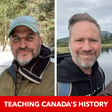
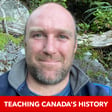
Today I'm speaking with Christopher Martinello, a high school teacher in Richmond Hill, Ontario. Thanks for joining me today, Christopher.
Wendat Village Educational Program Overview
00:00:35
Speaker
Hi, and I'd like to thank you very much for spending some time with me today to talk about our our project that we're running at our school.
00:00:44
Speaker
Well, why don't you tell us more about that project then and you know provide us a bit of like an overview of what what you have designed and what your students are doing. Sure, thank you very much. um Our project is the Wendat Village Educational Archaeology Outreach Program.
00:01:00
Speaker
And over the years, students have been able to engage in cooperative and interactive learning to complete the project's steps. ah Before our school opened in 2003, archaeologists excavated a major Wendat Village archaeological site on the property dating to the 1450s. They pioneered a program in which they invited local students to participate in the excavations in an inaugural project to combine archaeology with learning.
Hands-On Archaeological Learning
00:01:30
Speaker
When our high school opened its doors, we sought to continue the spirit of this focus and center indigenous history and archaeology in our school community. We've introduced a new course in archaeological studies, which has run since 2007.
00:01:46
Speaker
And also with students in our Canadian history courses, part of classroom learning for students has enabled them to cooperate in carrying out multiple parts of our project.
00:01:56
Speaker
After detailed lessons featuring Wendat culture and history and the nature of the archaeological site on which we sit, Our students engage in hands-on kinesthetic and experimental learning lessons in which they recreate indigenous technologies, such as the atlatl spear thrower. That's one of the lessons in our project.
00:02:18
Speaker
They then get to test out these devices on the school's field in an example of experimental history. Students have contributed to the planning of a scholarly article on this lesson that has been published by the Ontario Archaeological Society in an issue of their publication, Arc Notes. Our students also took initiative to reach out to a Toronto Star reporter who covered a part of our project and featured it in an article in the Toronto Star.
00:02:45
Speaker
Also as part of classroom learning and deeper extension thinking, our students planned and actually constructed a museum gallery display case with a range of artifacts and reproductions of the type excavated at the Wendat village here, with explanations of their historical significance.
00:03:04
Speaker
This museum is situated in the main foyer of our school and has served as a centerpiece for visits by parent councils and school board directors and superintendents to promote awareness and education about the ongoing importance of acknowledging that we are on Wendat lands and what that means for our responsibilities in reconciliation.
00:03:27
Speaker
Also, as part of classroom learning, the students planned and designed one page entries for our school's yearbook with text and photos featuring the Wendat Village Educational Archaeology Outreach Program A different one-page entry is used on a four-year rotational basis so that each graduating student in our school community would have copies of each one.
Student Projects and Community Impact
00:03:51
Speaker
Our students also contributed to a school-specific land acknowledgement that focuses on the Wendat village site upon which our school was built. This was also done in collaboration with our school board's Indigenous community partners and our land acknowledgement is read each day. during the morning announcements.
00:04:10
Speaker
um As an extension of our classroom learning, one more activity our students wanted to participate in is the application to the Ontario Heritage Trust to establish a permanent historical plaque on the grounds to commemorate the Wendat village and the educational outreach project.
00:04:28
Speaker
In this step, our school community has been collaborating with Wendake, the contemporary Wendat community in Quebec, To our great pleasant surprise and honour, our application was successful. It was approved by the Ontario Heritage Trust in February of this year.
00:04:45
Speaker
We're in talks with them for the next steps in erecting a provincial historical plaque on the Wendat village site where our school is. All these steps have taken several years and our project sees our students graduate from high school and new students come from their elementary schools. And I think we're all really pleased at the students' engagement in the classes and interest in seeing the project develop.
00:05:10
Speaker
Projects like these really encourage cooperative learning and it's great to see the students learning from each other's experiences as they go. Thank you for sharing that overview of all the different activities that your your students have participated in. um looking Looking a bit closer at all of this work, can you tell us more about the aspects of historical thinking that your students were able to utilize and deepen throughout this project?
00:05:38
Speaker
Certainly, thank you. um To help plan our project and for use in its lessons, I commonly draw on the historical thinking skills featured in the Historical Thinking Project at historicalthinking.ca.
00:05:52
Speaker
I like to incorporate historical significance using primary source evidence, identifying continuity and change, understanding historical perspectives, and have students consider the ethical dimensions of historical interpretations.
00:06:07
Speaker
For historical significance, when our students design and construct their own atlateral spear throwers, they learn about the very advanced understanding of physics that indigenous peoples had and have. Some of the scholars whose resources we use, like physics professor William Perkins, suggest that indigenous peoples of Turtle Island, North America, brought this technology to its very apex.
00:06:32
Speaker
Indigenous hunters could use this technology to successfully hunt megafauna like woolly mammoths 10,000 years ago. As environmental resources change over time, so do people's adaptive technologies.
Learning Historical and Indigenous Perspectives
00:06:45
Speaker
And students were quoted in the Toronto Star article indicating an understanding to that effect.
00:06:51
Speaker
Students are also encouraged to articulate understandings of historical significance in planning and writing the descriptions of artefacts for the project's museum gallery.
00:07:03
Speaker
Getting students thinking about why technologies and economies were and are important effectively fosters a deeper understanding of significance. In using primary source evidence, our project draws on archaeological site reports of the Wendat Village dig from the Ontario Archaeological Society and Archaeological Services Incorporated.
00:07:26
Speaker
This makes learning about the Wendat Village not only direct, but presents a very local dimension to learning history that is sometimes difficult to develop.
00:07:37
Speaker
A very important historical skill to feature is the identification of continuity and change. Our project centers the archaeology Wendat culture from the 1400s, but we take care not to historicize Wendat peoples. We lead students to understand that Indigenous cultures not only existed in the past, contemporary Wendat culture is vibrant and working in collaboration with our school board's community partners and the contemporary community at Wendake continues to stress to our students that Indigenous peoples um continue to thrive. It's an important step in our responsibilities in in reconciliation.
00:08:20
Speaker
noticed that historical skills can of course be directly taught by teachers but i'm really interested when students develop those skills in organic situations that are not necessarily planned one quick example i can give is when students in our project worked with our school board's indigenous community partners i know i mentioned this in the written components of the entry for this project but I'll just quickly mention it here because it really stands out to me as an example of how students can take on renewed historical oral perspective and understand more about ethical dimensions of historical interpretations. Really quickly, i had a student with some Indigenous background And in a quiet moment working with one of our community partners, she whispered to him, I have some Indigenous background in my family.
00:09:14
Speaker
And our community partner, a knowledge keeper of the Oneida of the Thames, whispered back, that's great. Why are we whispering? And the look on the students face showed an immediate perspective change. um And in further questions and discussion, we explored why, for example, historically, people may have whispered about having indigenous background and heritage.
Resource Diversity in Learning
00:09:41
Speaker
And it led to very rich discussions of ways in which indigenous peoples are marginalized and our ongoing responsibilities in reconciliation.
00:09:53
Speaker
Thank you for sharing that that anecdote and that story to demonstrate the the learning that's taking place. um What resources do you use to support teaching and and learning history and how do you use them?
00:10:07
Speaker
Sure, thanks. There are some Canadian history textbooks we use in class and for extension work in the archaeological studies course we pioneered. There are actually no textbooks prepared for it. So I gathered a large collection of articles appropriate for high school level um and the topics at hand. I read them carefully and generated follow-up questions for them to focus student learning. They came from sources like Canadian Geographic, National Geographic, Archaeology Magazine, and a variety of books. um These are mostly used for homework readings. We usually go to Good Minds for books. That's an Indigenous organization based in the Six Nations of the Grand River in Brantford.
00:10:54
Speaker
But in class, I prefer to use more hands-on resources, like reproductions of artifacts and interactive games and simulations to teach things.
00:11:05
Speaker
For example, reproductions of potsherds and stone tools can help students learn about many things from WEDAT technology to traditional gender roles to subsistence strategies. Interactive games I've designed help teach concepts like consensus building in Indigenous governance systems.
00:11:27
Speaker
But even more importantly, our students have had the opportunity to work directly with our school board's Indigenous community partners, like I mentioned, and experience hands-on interactive learning sessions with them that center art, culture, and some teachings around things like traditional medicines and plants.
00:11:49
Speaker
um These are done usually in school, sometimes during class time or in a part of the day for which students need permission from other teachers to attend, which has never been an issue. um I think that by using a diversity of resources, books, articles, simulations, games, experiments, interactive learning sessions,
00:12:12
Speaker
we can better incorporate the different intelligences that students bring to the table and allow them to draw on their strengths in multiple intelligences and differentiated instruction.
Leadership and Cultural Awareness
00:12:25
Speaker
That's a hallmark of of our project to allow students more opportunity to choose activities and projects and learning, you know, encounters that that allow them to draw on their natural intelligences, whether they be verbal, visual, kinesthetic and and a whole the diversity of those things.
00:12:48
Speaker
When you look back and you reflect on on this project, what impact has it had on your students learning and what have been the outcomes for your community?
00:12:58
Speaker
Great. um Some of the outcomes our project have been is to to encourage our students to take some leadership roles inside and beyond our school to continue to learn about Wendat and other Indigenous cultures and and help make others aware of our ongoing responsibility to reconciliation, partly inspired by the Wendat lands on which our school sits.
00:13:26
Speaker
I think our students have really learned a lot about indigenous cultures and history. And I recall one example in particular in which a well-meaning teacher not involved in our project suggested, for example, putting up a collection of traditional Haudenosaunee masks around the museum gallery um that's displayed in the school's foyer.
00:13:48
Speaker
a student from our project politely suggested that actually those masks, some of which may belong to the traditional false face society, are not for public display. And instances where they have been featured in books or publicly are actually examples of of colonial appropriation and it would not be ah appropriate to to engage in. So we're very happy to see That response from from our student. Aside from student learning, I'm really happy to see students who have graduated return as volunteers and contribute to the project.
00:14:26
Speaker
In some cases, enhancing the museum gallery display. Some of our students took leadership roles on the school's student councils. and launched initiatives like the Indigenous Artists Puzzle Challenge, in which about 160 students worked together to assemble puzzles featuring Indigenous art.
00:14:45
Speaker
These puzzles ah will eventually be mounted around the school with their accompanying bios highlighting the Indigenous artists whose art is featured. They also initiated the Canadian Library micro gallery in which they wrapped more than 50 books in fabrics sponsored by Indigenous artists in collaboration with them as our school's contribution to the Canadian Library.
00:15:10
Speaker
This art installation project serves as a memorial to missing and murdered Indigenous women, girls and children students from our project continue to make impacts beyond just our school and in the wider community.
00:15:24
Speaker
For example, they wanted to initiate the project goal to make that application to the Ontario Heritage Trust to install the historical plaque on the property at our school to commemorate the Wendat village.
00:15:37
Speaker
Over time, a reason for this is over time, we had been hearing from parents and other community members that they were completely unaware of the school's placement on the grounds of a Wendat village.
00:15:49
Speaker
And the students wanted to help the community and the general public become more aware of both the Wendat village site and our ongoing role in reconciliation.
00:16:00
Speaker
because of that. We're really happy to have heard this year in February that the Ontario Heritage Trust has accepted our application and we're working in collaboration, like we mentioned with Wendake, to move forward on this.
00:16:12
Speaker
And our students have also gotten involved at the township level, um municipally, when they noticed that a municipal walking path had been built through areas that include pioneer homesteads and farms.
00:16:27
Speaker
There are signs to honour the pioneers and colonial landowners through the walking path, but nowhere are there signs that acknowledge the Indigenous presence on the land.
00:16:39
Speaker
Our students are continuing to work with the municipality and engage politicians at that level to include those acknowledgements.
Future Plans and Closing Remarks
00:16:48
Speaker
So overall, I'm really happy to see this kind of leadership that the students have taken on.
00:16:55
Speaker
This project has been many years in the development, and one aspect aspect of it that I really love is that it's not yet completed. We're continuing to collaboratively plan ways to continue learning in and with our broader communities.
00:17:11
Speaker
And i think I can speak for the students in saying that we're really looking forward to seeing where this takes us. Thank you so much, Christopher, for sharing these examples and for sharing this project as a whole with me today.
00:17:27
Speaker
Thank you. And I'd like to to thank you very, very much for the opportunity to provide more information on our project. And I'd like to say if there's any more information that I might provide or questions that people may have, please feel free to reach out and I'd be very happy to provide more information.
00:17:44
Speaker
I know the students are really excited to be moving forward with things like the historical plaque and collaborating with Wendake. So I'd be really grateful to stay in touch and share any other information that people might want to know.
00:17:57
Speaker
Wonderful. Thank you again, Christopher. Thank you.