Transcript
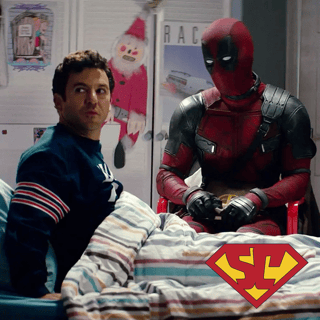
Speaker: Guys, I'm about to pass out. There's no air in here. Ta -da! You must be Pete. Merry Christmas. It's Kevin Bacon. He's not a loser. He's great. We don't hate him at all. What'd you do?
Speaker: What? What did you do? We got you Kevin Bacon as a present. You got me a human being as a present. What better gift for the guy who has everything than an actual human living person? This isn't a Christmas gift. This is human trafficking. It was mostly Drax's idea. It was. Hey Pete, I gotta stick up for these guys because to tell you the truth, I am totally stoked about the whole thing, man. You used your powers on them, didn't you?
Speaker: Maybe. I can't remember. Get Kevin Bacon out of the trance now! Trust me what you really are. Dude, calm down. I'm not gonna hurt you. That's a talking raccoon. I'll kill you! Don't ever call me that! Whoa!
Speaker: Craglin, prepare the Bowie for his transport back to Earth. I can't. Mr. Bacon, I am so sorry. This is really embarrassing. I know you're worried sick and your family is too. We're gonna get you back home immediately. I am Groot. Oh, suddenly you thought it was a bad idea all along. I am Groot. Dude, I literally just saw you wheel him out in front of everybody. Gonna let you go, Kevin Bacon. Don't run.
Speaker: Go get Kevin Bacon. I've got him. Don't kill him. You cannot run me, Bacon! Welcome to the Superhero Cinephiles podcast. I'm your host, Perry Constantine. Welcome in a new guest. And this is kind of a unique one because we have someone who has actually worked on some of the superhero films that we talk about and we love watching. And that is Rick Ives. Rick, how you doing today? Hey, I'm doing great, Perry. Thanks for having me.
Speaker: Thanks for coming on. I was really excited to get your message. And even though it's April, March, when this episode's coming out, we're going to be going back to Christmas time a little bit here when we get to the discussion. And why is that, Perry? Why is that? Why is that? Just because I am very bad at planning stuff. I mean, why are we doing a Christmas episode right now?
Speaker: Because, you know, you asked if we could do a Christmas episode. So I thought, OK, let's go for it. Let's do it. And you also worked on it as well. And yeah, that's a good reason why that's the good reason. But anyway, before we jump too much into talking about the movie or the special, why don't you tell people a little bit about yourself?
Speaker: Uh, sure. So my name's Rick Ives. Hey everybody listening. Uh, nice to meet you and nice to meet you, Perry. You too. Um, I've been working in the industry for 12 -ish years. Um, I work in post -production, so I'm an assistant editor at the moment. I've also done dailies. I've worked on set in visual effects department. I've done a bunch of different stuff.
Speaker: For the last six years, I've been working for Marvel Studios almost exclusively. I'm still a freelance contractor, but I know enough people now there that, you know, I just kind of roll onto the next one whenever I'm finished. So I've worked on the very first one was Thor Ragnarok.
Speaker: That one was on set. And then I went to Invengers, Infinity War, and Invengers Endgame. That was in post -production. And then I was kind of off Marvel for a little bit and then ended up becoming an assistant editor when Disney Plus shows started. So I can't, honestly, I can't even remember them anymore, but Loki, Falcon Winter Soldier, Ms. Marvel, some Hawkeye in there,
Speaker: I think that's it for stuff that's been released already. And then a couple more. Well, so today we're talking about the holiday special as well. Yeah, exactly. And not MCU related, but also Disney Plus related says you were a system daily system engineer on the Mandalorian as well. So that's funny. I worked on the Mandalorian. We were doing dailies.
Speaker: where I live in Georgia. We ended up sending our gear to LA where they shot season one. And I was on like three or four phone calls to help support that. And that was it. I very rarely get a credit for anything that small. When it came out, I'm a huge Star Wars fan. I was watching the credits looking for my friends and I saw my name and I went, hold on a second.
Speaker: Yo, I got a Star Wars credit. This is amazing. I started texting people. How am I on this? He said, oh yeah, we did a little favor for you. And I said, no, thank you so much. That's incredible. So I did very little work on that one and somehow got a credit, but I hold it very proudly. The opposite has happened for me where I've done so much work on a project and then no credit for that one. So mostly you do editing work then it looks like?
Speaker: So the editor is the one who puts the puzzle all together. They're the artiste in the room, you know what I mean? But they have a whole staff that supports them. So they'll have a first assistant, sometimes two first assistants, and a couple second assistants. They'll have an apprentice.
Speaker: We'll have PAs. That's a production assistance. And right now I'm sitting very comfortably in the second assistant role. So I work a lot with dailies. That's what they shoot right out of the camera. So most of what I do is look at the footage they shot yesterday. We go through and make sure everything is there. Nothing's missing. It's all named right. We do some stuff if they shoot in slow motion. We do some stuff with the script.
Speaker: Make sure everything's really ready so that when the editor sits in the chair, they know where everything is. They know nothing's missing. It's very easy to find what they're looking for at the push of a button.
Speaker: And I'm guessing because you're doing the dailies, then you're seeing the raw footage, the stuff that's all still with the green screen, no effect. So how surreal is it when you're watching one of these things on TV or in the theater and you're seeing all the finished effects compared with your memory of it? Yeah, I've been working in this industry long enough now that it's not really shocking because you know,
Speaker: what you're going to see at the end, like you're envisioning it when they're looking outside a spaceship window or, you know, when people are doing the funniest. I tell you what, the funniest thing to watch of all of it is the Doctor Strange and all the magic people doing their magical spells.
Speaker: Without any magic happening. Yeah, it's hilarious. And they have choreographers like dance choreographers that help them figure out almost a language with their fingers and their hands for what spell is what. And they're all choreographed so they know what they're doing. It's not random. And when you see a whole group of people doing that together, it's so funny. But you know, in your mind, this is going to look fantastic when it's done. It's just not yet. Yeah.
Speaker: That was one of the things that was really you know, I'm it's funny every time I think like I know all the magic of filmmaking is kind of dispelled there's something I learned that you know still kind of like I never even realized that and I think Brie Larson was doing an interview which he talked about like dealing with like the gesture coach of like how to fire I'm like What they actually have coaches do that. I thought it was wild I couldn't even believe that but it makes sense right you want to get to look a certain way you want to make sure it doesn't look like just people and
Speaker: throwing their arms around randomly waving around. Yeah, that'd be terrible. And also, you know, the MCU is unique in that it's telling a story over what are we at, like 10 years now?
Speaker: more than that, yeah. A long time. And they want the kind of continuity to match, you know? So Dr. Strange doing magic should look different than Loki doing magic, you know? Right. And you want it to be consistent from film to film. Like, you don't want it waving like this way and then doing it completely different in the next movie.
Speaker: Right, right. It's the same with how people fight. It's the same with how their weapons work or how they fly ships. You know, all that stuff gets decided. It's crazy how much, you know, work and effort, talent go into each, like even the smallest details. But that's what makes it unique, I think.
Speaker: Yeah, absolutely. So overall, what's it kind of been like working with Marvel? Is it you enjoy working there? Do you enjoy doing all that? Doing like seems like you've got no shortage of work with doing with them. Yeah. Thankfully, they keep coming down to here where I live, which is in Georgia. I think I mentioned that I love it in Marvel. I was a fan before I started working on this stuff. And I'm still a fan. And I go watch every movie before, you know, when it comes out.
Speaker: And I'm there for even the shows I work on, you know, the day it comes out. I told them I'm here until you kick me out the door screaming because I love this stuff. Like any job, it could get tedious and boring, especially when your job is sitting at a computer pushing buttons. But even on the times I was working nights at like 2 a .m. by myself in an office, like, yeah,
Speaker: But look at this. Look what's on my screen right now. Everybody wants to know what this is. And when this comes out, it's going to be worldwide. And people I haven't seen since high school are going to watch this. You know what I mean? Yeah. And I just pinched myself. People would kill for this job. So hang on real tight.
Speaker: Absolutely, yeah. So that sounds like none of the magic has gone out of it. Like, you still fanboy out about this stuff when you get to see it. Oh, totally. Oh, yeah. And you know what? A lot of us do, especially when we're going over scripts for the first time on a new show or something. Did you read this page yet? We're kind of watching it the same way everyone else will be watching it 18 months from now.
Speaker: That's awesome. You're also a filmmaker yourself, and you just came out with your own indie film. It says you mentioned here. Why don't you tell people a little bit about that? Yeah, thank you. That's what I'm trying to get out there, because everyone knows about the Marvel stuff. But I've been editing. I want to be an editor. It's a long road to get there. Part of it is you have to have proved that you can edit to let them. So they'll let you do that kind of stuff. So in my spare time, I edit indie features, and I've been working with these guys out in California.
Speaker: for a number of years. I've cut four, I think, features for them at this point. And independent budget, low budget stuff, which has done pretty well. And at one point, I was like, you know what? I kind of want to do one of these because they're doing it. Why can't I? Yeah, yeah.
Speaker: I started writing scripts because I wanted to be a better editor, understand why scenes go where they do and what makes a good character and what makes a good scene and how do you keep motivation and how do you keep momentum going, all that stuff. And so I had started writing scripts kind of for fun and then I had one that I liked and I pitched it to these guys that I had been editing for like, hey, can we do one with me?
Speaker: Why not? And they liked the idea. They liked the script and they helped me produce it. And now it's out for everyone to see. And we're so proud of what we turned out. So it's called Solid Rock Trust. It's a bank heist movie. It's got a twist. So this is a bank heist movie that takes place in a single room.
Speaker: But the room is not in a bank. And there's no other characters except for the one that we're watching. And her name's Maddie. And the hook is she's controlling what's happening in the bank because she's got a whole bunch of cell phones on the desk in front of her. And she's talking to all the different people who are doing her tasks. And she also does all these different accents and languages. So all the people she's talking to don't know they're talking to a single person. They think like it's a whole team.
Speaker: And everything that happens in a bank heist still happens. So we've got gun fights and double crossings and lots of surprises and twists and turns. But we only watch it from her perspective. So she's like the woman in the chair controlling all this. And we get to know everyone and everything that's happening just based on what she's hearing. Wow. And so far, it's been really well received. Everyone who's watched it really likes it.
Speaker: I don't think, did you mention the name of it? Yeah, I did. It's called Solid Rock Trust. Solid Rock Trust, okay. Yeah, it's really unique spin on how to do an indie movie. And I know it's a tough sell. It was like pretty much every step of the way. How do you do a movie with one person in a room sitting at a desk? And I tell you what, it never lets up. Something changes every couple minutes and keeps you guessing. And there's a lot of things going on and it challenges you to try to keep up with it, I think.
Speaker: Now you sent me the link to the trailer, which we'll have on the website for people to check in the show notes. But why don't you tell people really quickly where they can find the movie.
Speaker: So right now, in America at least, it's free on Tubi. If you're anywhere else in the world or in America, you can still rent it on Amazon. You can rent it on Google Play and YouTube movies. And in June, it'll be on YouTube for free. So it'll get in a little release there too. And then
Speaker: It will be on more platforms as we go forward. My distribution company kind of rolls out, you know, a certain way. So at some point, it'll be on Roku channels and I don't know, Plex, you know, all the different spots. Hopefully Amazon Prime at some point. And you can watch it now. Just type in Solid Rock Trust 2B and you'll find it like immediately.
Speaker: And if you're like me and not living in America, I'm in Japan, then you can also just use a VPN to access 2B as well, which I've done on occasion. That's right. If you guys watch it, leave me a review somewhere on IMDb or Rotten Tomatoes and let me know what you think. Yeah, absolutely. And we'll have those links in the show notes as well.
Speaker: Now me being a writer, I just kind of want to talk a little bit of shop about this. So one of the interesting things about me as a writer is one of the most enlightening things was starting to work as a letterer in comic books. And it gave me a, and now starting to do some artwork, it gave me a better understanding of how to write comic book scripts. Now you being an editor and then breaking off into writing.
Speaker: How did, you know, the your the skills you learn from editing, did that have any sort of influence at all on the way you think when you're writing your screenplays? Oh, yeah, totally. I think a lot about transitions, like how does this scene end and then how do we get into the next one in an exciting way? A lot of times a scene will just kind of end and then, you know, three weeks later or whenever they shot the next scene and there wasn't a lot of thought put into like, how is this going to flow?
Speaker: And I think a lot about that. I think a lot about what's what are we coming out of? Like, what was the emotion of the scene before? And then what are we going into next? I tell you what, though, I feel like I've had an amazing education just working on Marvel for so long because we read those scripts and you can see what a really good script looks like, you know. And again, a lot of indie movies, I think, slip into this habit or
Speaker: pitfall of having long scenes of dialogue where nothing's happening. And it's like, do the scene. I can see it right now. He chopped this part off the beginning. He chopped this part off the end. It could be half the length. So I tried really hard to avoid doing anything like that. That being said, I know I'm pitching you a movie that is all dialogue in a room.
Speaker: But the idea was that even though that's what it is, something is still changing. In fact, part of the hook is she has a clock on her desk that she has to reset every two minutes because her phone calls are not allowed to be longer than two minutes. So that was sort of on purpose to like, I don't know, make something, you know, a ticking clock in the movie is always exciting.
Speaker: But it was also an exercise for me that I'm not allowed to write any scenes longer than two pages and it has to end there. And if I'm not fitting it into that, it doesn't matter. She has to hang up the phone. We got to move on to something else. So it's sort of an exercise that ends up being part of the propulsion of this movie that keeps pushing, pushing, pushing. Yeah. Does that answer your question?
Speaker: Absolutely. Yeah. And I was nodding along to a lot of stuff that you were saying there, because, you know, I think, as writers, a lot of the big concern that I think most of us have is how do we write stuff that's long enough, right? You know, we got to put more words in and
Speaker: And sometimes we forget that sometimes you have to make it a certain length, but everything has to matter in that length. You can't have just a whole lot of padding in there. Interesting. I find I struggle with getting it short enough that I overwrite. But you're saying that in comic book writing,
Speaker: have to try to get enough in there to make it the link that it needs to be. So I'm primarily a novelist, although I've started, I've done some conical work and I'm starting to, but with a novel, right? You've got a word count target you're trying to hit and it's usually like no. Oh, see, I didn't even know that. I thought you could just write it. Yeah, yeah.
Speaker: I mean, it's as long as you want it to be, you know, I mean, you can certainly. Yeah, yeah, there is it. A lot of it depends on what kind of book you're writing. Like if you're writing more literary fiction or something like that, it's a little bit more freeform into how long or how short it can be. But if you're doing stuff and especially if you're going traditional routes, like they've got like set word counts and stuff that target word counts that they want to hit because
Speaker: But like me, I'm a indie published. So for me, but you still want to try to fit in the conventions of the genre. So I write primarily urban fantasy these days. And a lot of those books, they'll fall between the 50 ,000 to 70 ,000 word range for a lot of a lot of the novels coming out. And what's that in page count? It varies based on based on trim size, based on font. But basically, you're thinking about roughly
Speaker: Mmm, maybe 175 to 250 pages somewhere in that range for those something like that So so that's kind of like the and like different genres will have different expectations like if you're writing epic fantasy They expect something that's like over a hundred thousand words, right? Yeah. Yeah. Yeah So there are a lot of different expectations that you come with the what the audience expects and all that kind of stuff with comic books It's it's um, because you're
Speaker: probably the most words you can fit it you want to shoot for like less than 30 words per panel or so depending on how many panels you have on per page but you also want to make sure you time like the page turns and all that kind of stuff and you know each comic book issue is only like 22 pages for a full issue if you're going like short stories then it's like you know you're looking like six to eight pages so it's it's a lot more
Speaker: In some ways, I find writing comics a little bit easier because I like focusing on things like dialogue. I hate writing description, but in other ways, it's more challenging because it's like, okay, I can't just go on for pages with two characters talking or something like that. Right, right. Interesting. Let me ask you this.
Speaker: I wonder if you have the same thing as me when you're lettering in a comic book. You're really focused on every word over and over and over again. That's what we do in editing. And that's something else that's taught me a lot about writing is every word is going to be important on these. So you really need to make sure you're getting the bang for your buck. Is this conversation, is this line of dialogue?
Speaker: really important? Is it essential to the plot? Is it essential to the character, you know, for some reason, or is it just kind of like fluff, you know? So yeah, if I'm lettering something that I wrote myself, then I'll just be then I'll think like, Okay, do I really need this? Or can I rephrase this? I do some rewriting as I'm lettering when I'm looking at the the art pages and seeing like, Hey, what can I fit in? Where do I have to move stuff around?
Speaker: When I'm lettering stuff that other people wrote, then it's usually, I'll have to talk with the editor or the writer if there is no editor. And they don't have to say like, look, there are too many words for this panel. Can we trim this up a little bit? Can we move some of these words to another panel?
Speaker: go with you have to go and sometimes you know they're just like we kind of need to do it all like this and I've had things I've had times where I've like struggling to arrange things in just the right way so you could still see not cover up too much of the art because especially with indie comics you have a lot of you know
Speaker: writers and artists who don't have a lot of experience working this format. So you'll have something where the writer has written a lot of dialogue or for a panel and the artist has drawn it so that there's like no room in the panel. Yeah, yeah. Yeah. So you have to it's a it's a it's a juggling act, especially when you're when you're an independent letterer. It is much easier when you have that editorial control and you can go back and say like, okay,
Speaker: I wrote way too much dialogue for this panel. I can trim some of this out. Or this page is looking pretty blank. I really should put some more dialogue or some sound effects or something in here to make it so people aren't just wasting money on empty pages.
Speaker: Right, right. Well, you're just making my point that how important it is to understand like all the steps. Exactly. And the whole process because you really need to understand as a as the artist, you need space for the words and you really need to understand as the writer, don't fill it up too much because we don't want to cover the art. Yeah, yeah. That's one of the most important lessons I learned from working on comics now in all different areas is
Speaker: You really got to think about what you're putting in for other people. You can't just make it someone else's problem. Yeah. Right. And it sounds like you've had very similar experiences in a different way with working on your films, too. Yeah. Well, it's specifically this one. It's funny because I was all I was the writer and the director and then I was also the editor and still I was mad at each other role. You know what I mean?
Speaker: I go to the other room and I'm like, Oh my God, who was this director? They totally screwed this up. How am I supposed to get from here to here? Oh man. Cause no matter how much experience you have, there's still going to be points where, man, you missed that one. I did. Um, I directed it. I directed a short film when I was in university and I definitely had that. Cause I was, I was, um, it was based on a short story, a friend of mine wrote, but I wrote the screenplay and then.
Speaker: did the and then directed and then editing as well. And we it was like only like a 10 12 minute movie, we shot it over the course of like two and a half days. And, and it's all basically set in the same location. There's one tacked on epilogue in a different location. But one of the things we noticed is
Speaker: one of the actors like we told him you know, we're the same clothes both days because we're gonna be shooting in the same place and The one of the actors his he's had a collared shirt and it was kind of unbuttoned a little bit on the first day He wore a white t -shirt underneath you could see the neckline on the second day. He didn't wear that that when I'm in the editing room like I
Speaker: Oh, motherfucker. Because by that point, she linked. Well, that's why you have a script supervisor and a and a and a wardrobe department. But yeah, the same thing because I was I was the wardrobe. I mean, I didn't come up with the costumes for my movie. We had somebody do that, but she wasn't on set. So I was keeping an eye on that. And I was also the script supervisor. And it's like, dude, any movie is a continuity nightmare. Yeah. Yeah. It's scene shooting right now.
Speaker: Where did they just come from? Does she have blood here on this one or not on this one? Or is this thing on the table moved to here at this point or not? And man, that's the kind of stuff people will notice. And you really want to do a good job, but at some point you find a losing battle. How can you ever keep up with it? Yeah, it is. And especially if you're coming from a novelist background, you don't really worry so much about that kind of stuff because you don't have to worry about
Speaker: Like you have to worry about like if you make the character's eyes the same color throughout or stuff like that. Right. Well, the nice thing about writing is you can always just go back and change it. That too. Yeah. Yeah. Yeah. Yeah. Um, yeah, it's a lot harder to do that when it's already got the film filming finished. Um, so anyway, uh, now I want to talk a little bit about, cause you said you were a fan, um, even going back before this stuff. So what kind of got you into, into Marvel or into superheroes or comic books in general? Oh, I just love movies.
Speaker: So what was kind of like your your introduction to comics or to superheroes or what any of that truthfully, I never read that many comics when I was a kid. As a teenager, I started like digging into them from the public library, you know, the bigger stuff.
Speaker: So I could read more than just one issue at a time. But I was just always real into movies. I loved everything. Sci -fi, horror movies. I loved adventure movies probably the most. And at the time,
Speaker: video stores were still real popular so we would get DVDs for family movie nights and I kid you not I would watch every special feature on every DVD that we rented because I just had to know how are they putting this together like I wanted to see the behind the scenes stunts and I wanted to see you know what the script looked like and I just wanted to know all of it um so I always knew that I wanted to work in movies in some capacity when I was in college that's what I wanted to do and I kind of gravitated towards post -production because I really like
Speaker: piecing the pieces together like a big puzzle. I have a good time doing that. And I think I'm pretty good at it and patient enough to deal with a tedious, you know, workload of that kind of thing. And I just want to work on big stuff, man. I want to work on something I could be proud of that I could stick my name on and 20, 30 years from now, I can say, Oh, yeah, I worked on that one. Oh, yeah, I worked on that one. And
Speaker: I mean, you can't go much higher than Marvel stuff because they're consistently putting out two or three big projects a year. So look no further. But I just really love what they're doing.
Speaker: There's laughs, there's stakes, there's great action, great visual effects. They're getting more experimental now, I think, that they're on Disney+. I mean, you can look at Werewolf by Night and it's like, whoever thought you would watch an hour -long black and white monster movie that's under the Marvel umbrella, you know what I mean? There's something for everybody. If you like magic or if you like sci -fi or if you like more,
Speaker: down to earth action movie type stuff i feel like you know they have all of that available to them so yeah absolutely that's one of the things i've always said that marvel cut because for a long time when they were trying to do superhero movies they
Speaker: They tended to nail the first movie, right? Because the superhero origin story, it's very easy to understand. It's very easy to get into the hero's journey structure. And it's easy to reach a white audience that way because you're looking to connect in a way like this person can now do this thing. Isn't that great to be along for the ride with? Yeah, go on. Yeah.
Speaker: But then after that, you know, sometimes you've had, you know, really good second movies like Spider -Man 2, X2, Batman Returns. But other times it's just kind of like, okay, we did the hero's journey. Now what do we do? And there's kind of that, whereas Marvel seems to kind of crack the formula and say like, well, let's not look at superhero as a genre itself. Let's look at superhero was kind of like window dressing for these other genres. So you've got like the
Speaker: the space opera stuff with Guardians of the Galaxy, which we'll talk about today. Like you mentioned, Werewolf by Night, you've got the black and white classic horror angle. You've got heist movies with Ant -Man and all sorts of things like that.
Speaker: You've got like spy movies and you've got spy movies and you've got it's crazy. Yeah. You really can go into any genre that you want and just say, well, I mean, but we've got a superhero in this one. Yeah. Even like even like the I mean, I loved Spider -Man Homecoming because it's basically like a John Hughes. It's like a John Hughes made a superhero movie. Yeah. Yeah, totally.
Speaker: that's what's so fun about it and then then you've got the Avengers the Avengers movies to cap them off where it's like all these people you know let's put them all together on the page because it's so right and it's just man I still remember what I was like when I mean I was working on it so I couldn't talk to anybody about it but I'm sure you had the same experience going to see that if Infinity War in the theater
Speaker: when Guardians show up and the Avengers are here and Ant -Man's here. And man, all these Dr. Strange is here. It's crazy. Like, I can't believe that they're all just here at the same time. It's so wild. Now it feels it feels like, oh, yeah, we're used to that. But yeah, yeah. I mean, I still like I still remember seeing Endgame in the theater and when
Speaker: when they're building up to the big Avengers Assemble moment, I'm just like, I'm sitting there on the edge of my seat, I'm like, it's coming, it's coming, it's coming, it's coming. And then he says it, and I'm just like, yes! And my wife is just looking at me, I'm like, what is wrong with you? We've been waiting for so long. Yeah. Oh man, that's one of my favorite scenes of all the MCU. I just love it so much. Not because everyone shows up, but just that moment where it's like, we are the Avengers, all of us. We are the, and we're here to make right what was wrong, you know?
Speaker: Well, so the you'd mentioned to the Disney Plus stuff and I WandaVision was really surprising for me because it's you know, we're we're doing this really weird kind of sitcom me slash sci fi slash magic mashup together was and it was it was so much fun to watch and you know, speaking of those moments when when white vision appeared like I freaking out and my wife was doing something else at the time. She's like, what is it? What is it? And I'm like, it's
Speaker: I'll tell you later. I can't explain right now. And later she's like, oh, I want to see that episode because she had been watching it with me. I'm like, okay. So we go back and we watch it. And then to get to the end, she's like, I don't get it. I'm like, you can't. That's funny. I have the exact same experience watching that show with my wife, except it was when
Speaker: What's the guy who played the same role in X -Men as her brother? Oh, Evan Peters. When he showed up, I freaked out like you freaked out. What does this mean? I can't believe it. It turned out to be kind of a slap in the face, but still. Yeah, you can still get that stuff.
Speaker: I think going back to what we were talking about on how they could do different genres or how do they follow up a really good first or maybe even a second movie. And the trick is,
Speaker: to explore different things. Not everything is world shattering stakes. Sometimes they just go off on a side adventure and maybe it's not the biggest thing that's ever happened, but it's big to them. It's big to that character. And that side adventure can explore a lot of things about who they are and where they came from and parts about their character. What's the animated show? What if does that really well? You've watched those.
Speaker: Or it's like, yeah, this is different. Yeah, it means nothing. But when you see T 'Challa as the same person, even in a completely different environment, to me that says something about who he is at his core. So even though this story might not matter, it's like, yeah, but look at what his character is.
Speaker: And it's the same on a number of characters. Same with Steve, right? Even when he was the skinny guy and his girlfriend Peggy became the super soldier, they were still in love. It didn't matter. You know, it wasn't about that for them. It was deeper than that. And same thing, even though this story might not matter in the grand scheme of things, you find out interesting things about them. Oh, yeah, absolutely. You would never learn, you know, those kinds of things if you just stuck to Avengers movies only, you know.
Speaker: Well, also, too, along those lines, the Guardians is a is a perfect example. And we can use this to segue into talking about the special, because the first movie is very much kind of like that, that world ending threat type of thing. It's I feel it's much more plot driven. And while the second movie has those kind of stakes as well, it feels a lot more personal. The real driving force of that movie, it's not so much, you know, egos trying to take over the universe. The real driving, the real thing that makes me watch that movie over and over again, why I think it's
Speaker: a little bit underrated is just all the character work that happens in it. Right. Right. Because it's not. You're right. I mean, they always throw that stake in there like if we don't do this, you know, nothing's going to be the same. We have to stop. Right. Blah, blah, blah. But you're right. The real core is of that story is, oh, man, this is where I come from and it might not be that great. So who what does that mean for me? Who am I? And also that whole thing about. Yeah, yeah, sorry. Go ahead.
Speaker: Now, I have to decide if I'm him, if I'm that son or if I'm somebody different. And then now that brings in the other father relationship. Right. So which father was my real father? You know, who's my father? Who's my daddy? Yeah. Yeah. Well, so and just like the idea of what it means to be a family like that whole rockets, whole journey. And that is is one of my favorite parts of that movie, how he goes, the change he goes through in that, too.
Speaker: I think this is a really good segue into talking about the holiday special, which this is another one you worked on. Hang on there for a second then, Perry. I got a surprise for you. Don't pause me.
Speaker: All right, Merry Christmas in January, the filthy animal, or March, whenever this comes out. Yeah, we're recording in January, but this will be coming out in March, probably. I got the Christmas mug. I got my Star Wars Christmas sweater. Got my Santa hat for you. And the Santa hat, yeah. Let's talk some Christmas stuff.
Speaker: Great, awesome. So you got some behind the scenes experience working on this. So what was it like working on this and then seeing it in its finished form?
Speaker: hilarious. Those guys are so funny. Every single part, every single role, all those actors are just so dialed into those characters. And it worked so well because the script was that way to begin with too, you know, like the banter between them
Speaker: I try to write stuff like that and I can't. So James Gunn just has a knack for coming up with that kind of stuff that's funny, but it's also character -driven humor. And we could spoil, are we spoiling this? Yeah, yeah, we can spoil it. Okay. I read that script a year before it came out. And when Kevin Bacon shows up in the script, I couldn't believe what I was reading. Kevin Bacon on this. And I was so bummed when all the trailers had him in it.
Speaker: Oh, you should have saved that. Surprise. I had not even thought about that. I read it not knowing. Yeah. Yeah. I had not even thought about that aspect until just now when you're talking about reading the script. And I'm just like, Oh my God, you're right. That would have been such an amazing reveal if they had just kept the Kevin Bacon stuff a secret. Yeah, yeah.
Speaker: Um, but I mean, it's great. You, I have to just think about all the stuff. Oh, I knew the music. I heard the, all the music before it came out. There's two original songs in the special. Um, once at the beginning, once at the end, that's from the old 97s. I don't know. Do you know that? This is the first I'd heard of them, uh, was no, I'd never heard of them before, but I remember that.
Speaker: punk, like a rock band in the nineties that were pretty, that a couple of pretty popular songs. Okay. Um, I remember, uh, so catchy, man. And we were singing that like to ourselves and I would play that scene over and over again, just so I could hear that song. Cause I knew as soon as I'm off this project, I won't have access to this media anymore. And I'm going to have to wait until it comes out with everyone else to put these on my playlist, you know, but.
Speaker: Yeah, I remember watching the watch the special like, I'm not a big music guy in general. So I don't pay too much attention to music unless it's something that really grabs me or is something that I recognize. So especially with the Guardians, you've got that whole
Speaker: you know, that built in expectation of like the awesome mixes from the first two movies and all that. So when I heard a lot of songs that I didn't really recognize, the first time I watched it, I just kind of glossed over it. But everybody afterwards, when it came out, everybody was talking about the music. So this time, when I rewatched it, I made sure to pay a lot more attention to the music. And yeah, you're right. I'm just like, oh, wow, these are actually really good songs. These are really well done.
Speaker: They're funny, they're well performed. Kevin Bacon's a pretty good singer. I think he's in a band anyway, so maybe that's why I think I could go with that. But yeah, it's fun, man. They're great, and they're gonna be on my Christmas playlist for the next 10 years at least. Every time he comes up, my wife is like, wait, why do I know this song? Yeah, because this was a Guardians Christmas special song. I think James Gunn had talked about that this was sort of an homage
Speaker: to the Star Wars Christmas special, right? Did you read any of that? I had heard something that sounds vaguely familiar. I'd never seen the Star Wars Christmas special, so I only know it by reputation. Right. It kind of hits, I mean, here's the thing. It's funny to watch because it's bad, but it gets boring so quickly that it's not even fun anymore, you know? That being said, all this stuff is in there. There's like musical numbers and like weird tangent
Speaker: side quests. It's sort of wrapped around not really Christmas. You know, in Star Wars, they call it life day. But basically, you know, we know what it is. There's whole sections in that movie where there's no English dialogue. It's just Wookiees like grunting on each other. That's right. It was like the Wookiee version of Christmas or something like that. So it's funny that he wanted to make this a musical and like got those songs in there. And yeah, that was great. Yeah.
Speaker: And I'm not sure if, um, I'm really, maybe you know this, maybe you don't, but I'm not, I was wondering about what the genesis of this was because the, um, you know, the, the, the Halloween special, the with werewolf by night came out, you know, back in, uh, in October. Um, so I was wondering if maybe you know this, maybe you don't, but if this was James Gunn had the idea for the holiday special and then Marvel's like, Hey, let's do it. Also one for Halloween as well with werewolf by night, or if it was.
Speaker: Marvel came up with the idea of doing the World by Night thing and then James Gunn's like, I would like to do a Christmas one with the Guardians. I actually don't know where it came from. There might be some clues if you watch. There's a behind the scenes featurette of Werewolf by Night. Did you watch that one? I haven't seen that one.
Speaker: It's real interesting to check out. It's not a typical behind the scenes featurette documentary. It was made by the director's brother. Oh, it's really a documentary about the two of them and their love for film and how they were doing this since the time they were little kids. And it goes over his career. You know, he was
Speaker: He wrote music scores. He was a composer for a lot of Marvel stuff. And I believe that he was just approached by Feige and said, hey, if you wanted to do something, what would it be? And that was the thing he picked. He wanted to do a werewolf by night because he was a fan of monster movies and he was a fan of, you know, the monster stuff in the Marvel universe. And I think they just said, OK, so I don't know. I'm guessing maybe they were interested in doing some
Speaker: not series things that could go on Disney Plus and it worked out that way. That's my guess, but I really don't know like who decided that it went or if we're going to get more. Hopefully we do. I know that's that's one of the cool things about this is that these are, you know, they're not full movies. They're they don't they don't require. They're just, you know, these short 45 minute to an hour specials that. Yeah. And it's another commitment. And you can still tell a whole story. You don't have to follow, you know, like nine episode season or something.
Speaker: Right. Yeah. Yeah. And it works so well. Like if this was even if this was a full movie, I think maybe even that would have been there would probably been some padding in there. But this is it's nice and lean. It moves really quickly. Same thing with Werewolf by Night. It's it was a lot of fun to just, you know, sit and watch for, you know, for like under an hour. It's almost more of a graphic novel instead of a comic book. Right. Where it's just a standalone thing.
Speaker: Yeah, I'd say even maybe like, you know, like those old one shot comics they used to do or something like that. It's just like this one issue story type of thing. And absolutely, yeah. And it really kind of fits in that in that format. And also, I love that they focus it on Drax and Mantis because Mantis to date, she hasn't had a lot to do with these movies. I mean, she just came into the second movie and right. It's weird how it feels like she's a part of it already. And in reality, she's only been on screen for like
Speaker: Four and a half. Right. Yeah. Yeah. I mean, she only just joined the team at pretty much at the end of that second movie, because, you know, for most of the time, she's working with ego. And then she was in the infinity war for a while. And she was. Yeah, she popped up in it a little bit. Right. She pops up there. She pops up in an endgame as well. And she pops up in in Love and Thunder at the beginning there. But, you know, we haven't really gotten a whole lot of, you know,
Speaker: real spotlight on her like we have with the other Guardians. So it was really nice to see her as, and kind of surprising because I was expecting based on the previews and just what we'd known of the other movies that Star -Lord was kind of going to be the anchor of this. So I was really kind of pleasantly surprised to see that Mantis and Drax were really the anchor of it.
Speaker: Right, right. It's just fun seeing those two together, too. And I know Batista's come out and said he's tired of being dragged just because of the makeup commitment. You know, it's like hours to get that stuff on and hours to get it off every day. But man, he just cracks me up. Every line of dialogue that he says is so funny. And you're right. Watching them together, especially like the fish out of water stuff in L .A., because we haven't really seen them on Earth. Yeah, I mean, right.
Speaker: just yeah just that brief because they weren't even there in infinity war they were on um on uh on titan the whole time so we only saw them on earth at that end scene basically and then that's basically that could have been anywhere i mean it's just a exact terrain of of burnt you know grass so it's fun to see them at a real location flying around like what is this does kevin bacon the king you know these things they don't understand how it works
Speaker: And they really shot at the Chinese theater there for a day or two. I remember they did that. And they were like pictures leaking online. Oh, they're shooting Guardians of Galaxy 3 over here right now. That was a great sequence. I love that sequence when she sees the guy dressed as Captain America. And she's like, Steve!
Speaker: Yeah, did you get that go buts killed I did I I don't think I got it's the first time but I definitely caught it this second time and the the what I think it was like the last shot of that sequence when they're Mantis taking pictures that you that for the side there's a direct speed nothing about So good
Speaker: What else did you like about that special? Oh, Kevin Bacon. Kevin Bacon was just amazing. Like, Kevin Bacon is, I feel like he's kind of underrated in some ways. Yeah. And it's, and he's just...
Speaker: I love the fact that he's able to, I mean, he, you know, he's mostly known as more of a serious type of actor, but it's cool when he does like these little things where he's just, you know, kind of having a fun time. Like, I think the best thing I can think of. Yeah, yeah, yeah. I think the one that really springs to mind is, well, first he had done another James Gunn movie. He was the villain in Super. And there was a little bit of a bad aspect of that. I do not remember that. I only remember Rainn Wilson and, uh,
Speaker: and Elliot Page. Yeah, yeah. No, but yeah, he was in that too. And I we had done that episode on that. And, you know, it's, it's funny to go back and watch that after seeing how much gun has matured as a as a filmmaker because
Speaker: You can pair it up to Guardians or Peacemaker, and it's a little bit of disappointment, because even the writing is not as strong in that as his later works would be. But Kevin Bacon is just on point in that. And there's one great scene where he's going to Rainn Wilson's character and having breakfast with him and telling him that your girlfriend's left you and everything like that.
Speaker: and she's with me now and it's just he's at the same time he manages to both be like you know a total asshole but also really kind of oddly friendly at the same time yeah yeah
Speaker: And that's like a kind of thing that I think only Kevin Bacon can really pull off. Another one of that is, do you ever see crazy, stupid love with Steve Carell and Julianne Moore? So he was in that. He played like the guy that Julianne Moore is cheating on Steve Carell with. And he also had that same kind of aspect in that movie, too.
Speaker: Oh, OK. Interesting. Yeah, he's definitely I think underrated is a good way to put that because you've seen him be dark and scary and also sad. And of course, you go back to Footloose and it's like Kevin Bacon dancing, man. Mm hmm. What's better? I love that. They just they just had so much like great stuff, like meta humor. That's what I that's what I loved. Probably the most special was talking about actors and how lame they could be.
Speaker: I'm not realizing that he's just an actor, thinking that he's actually basically a superhero on Earth. Well, yeah, I do love that because it's something that... Because now that I think about it, I realize that he's right. He never really said that it was a movie when he was talking about Kevin Bacon in the previous films. He was just talking about how there was a great hero named Kevin Bacon and all this.
Speaker: Part of me wonders what the character of Star -Lord really knows or thinks. Does he realize that was a movie or was he too young to put that together? He must understand that. I think that's a good point. I think it's just maybe he's just told these stories so much that it's just become
Speaker: You know, like when you're in his mind. Yeah, yeah. Yeah. Like I'm I mean, I know that's how my dad would get when he would tell stories about like, you know, his past or things about his dad or so. I think that's that's kind of an aspect of it as well. Or is it get to the point that he uses that story like as a motivation for himself or to teach other people a lesson? And he's done it so many times that he just lets it live almost as a myth.
Speaker: I think, yeah, there's because I mean, there's yeah, because there's the whole thing in in the second movie where he talks about how he told everybody that David Hasselhoff was his father. And and we're to the point where he even still has the the torn out magazine picture of him in his wallet. And then at the end, when he when he's given the the oddly beautiful eulogy at Yondu's funeral, when he says, you know, you know, David Hasselhoff kind of was my my dad in a lot of ways.
Speaker: And yeah, I think yeah, I think there is something to that that he's and I imagine it because he spent all his life in space basically and his probably didn't have enough time to form as much strong memories about like his family and all that so it's kind of mixed in with
Speaker: you know, the stuff he knew as a child. So I think there's definitely something to that. He idealizes it when he remembers. Right. Yeah. Holding on to the music that he does. The biggest laugh I remember for Guardians 2 was the Mary Poppins line. Yes. Yeah. Or he tells him, you look like Barry Poppins. He's like, is he cool? He's like, yeah, he is. I wonder if the same kind of thing, like he just lets them
Speaker: hear these names and it doesn't mean anything to them but he like puts meaning on it for them and then you're right he just never tells them the truth so they go about thinking oh this is like real because that's the world they come from people do save the world or people do save the galaxy so right yeah yeah
Speaker: I mean, I remember when Infinity War came out and there was some discussion about, I can't remember if it was the Russos who said this or someone at Marvel was talking about that scene when the Guardians first appear and they're playing the song and, you know,
Speaker: Gamora is kind of like singing along with it and Groot's playing the video game and all that. And one of the ideas was that Peter is kind of like infected the rest of the Guardians with the things that, you know, he had always told them about Earth. Yeah. Yeah. And you also see some of that in Guardians 2 when Rocket's always interested in playing Quill's music. And he even says like when they're breaking out of the ship, he's like, you got any of Quill's old songs here?
Speaker: Yeah, that's funny. Good point. Man, see, I think a lot of that is just James Gunn having a real grasp of what this is and who these characters are and, you know, like what's happened to them in between the movies. Yeah. And it makes so much sense, too, because I think about, you know, what it was like for me growing up, what it was like for what it's going to be like for my kids growing up, because, you know, I grew up in a house where, you know,
Speaker: My parents didn't care about comic books or sci -fi or anything like that, but my dad loved James Bond. And so that stuck with me throughout my life as a result of that. Whereas my kids, they're gonna grow up with all this nerd shit around them everywhere. They are already being exposed to superhero stuff a lot more than other kids in the neighborhood are.
Speaker: Yeah. And then when they're adults, there'll be something new out there for them to get nerded out over. Right. Exactly. Yeah. They'll only remember, you know, tangentially the superhero stuff that my dad was obsessed with. Yeah. Yeah. But it is kind of that thing where it right. But is that thing where, you know, they it's it becomes part of their their background almost. I think you kind of see that with Quill and the Guardians here, too.
Speaker: which is why they have all this this high opinion of Kevin Bacon. And then they find out the reality that he's just an actor. They get so angry. OK, so what did you think was going to happen when Quill opens the present with Kevin Bacon inside? And that your seat like waiting or did you have? Oh, man, a pretty I had a I had kind of I it played out pretty much how I expected.
Speaker: the whole thing. It's like, you can't just kidnap a person and get wrapped up as a president. That little aspect. I thought that it made a lot of sense because as much as Chris Pratt plays Quill as kind of
Speaker: you know, loose and, you know, goofy and all that. He is also in a weird way, the moral center of the team and kind of like kind of grounds him. So his reaction is pretty much what I expected. It, you know, that he'd be like, you know, kind of horrified about what they did. It's funny that. It's yeah, you're right. It's almost like he's the dad to this whole family. It is. Yeah. Yeah. And all of them are children and none of them realize
Speaker: about consequences or what's allowed or what's not allowed or what's too far. And he has to be the one to tell them, no, this is not okay. Oh, one of the things I did love is I'm not sure if you've ever read any of the Guardians of the Guardians comics, especially like the Dan Abnett and landing run that these movies are kind of inspired by. But one of the things I got a kick out of is that Cosmo is there.
Speaker: Yes, yeah, yeah, totally. I'm not going to talk about Cosmo with you. Film me another question. OK, fair enough. I'm going to give you some territory that was a little dicey for me. OK, fair enough, fair enough. We don't want you to spill anything and get you in trouble. But I just that's just as me as I'm just going to leave it on that, saying that I just love seeing that Cosmo was in this and even had kind of that little rivalry with Rocket.
Speaker: It seems like Gunn really has read all that stuff because he throws that kind of stuff in all the time, like when Howard the Duck shows up or when the watchers show up. You know, all these things are just throw away jokes that it's clearly he knows. He knows like there's more universe here. And he knows we know that. And man, it's just fun to plug that stuff. Well, even in Guardians of the Galaxy 2, when he had the movie poster with Nathan Fillion as Wonder Man, that kind of stuff. That's another deep cut there.
Speaker: And yeah, so I love seeing Cosmo in there. I thought it was funny seeing Jack Groot too. Oh yeah. So if you've watched the other, if you've seen anything from behind the scenes before, you know, that's just a person in a motion capture suit. And you get really used to seeing somebody just dressed up, you know, in the pajamas with the dots on them and stuff.
Speaker: But you never really know what they're going to look like. And that was a surprise to me. I thought he would be kind of tolerant, skinnier like that, because that's how we know once he's full grown adult. Yeah. I remember people actually complaining about that online that, you know, about what they did to Groot. I thought it was it was kind of a neat little way to kind of differentiate because first we had.
Speaker: You know, we had the original Groot in the first movie, and then we had Baby Groot in the second one. We had Teen Groot in the Avengers films. And now we're getting, you know, young 20s. Vin Diesel Groot. Vin Diesel Groot. Yeah, I guess like maybe this is like him in his early 20s, like hitting the gym too much or something. Yeah. That's good stuff.
Speaker: Um, yeah, it's funny. It's, it's strange to get, that is one thing that's different. Working on my job is you get used to seeing the stand -ins, you know, it's not Bradley Cooper and it's not Vin Diesel there. Obviously it's other people, you know,
Speaker: Rocket is played by Sean Gunn, his brother. Right. Yeah. Yeah. And Sean's obviously a different part in the Guardians franchise, too. So he's like there physically as well. But it's funny watching him like he crawls around on his knees and stuff to be rocket. So the eyelines are right. Yeah, I've seen some of the behind the scenes stuff with him like crawling around and all that.
Speaker: That was another thing, I loved that scene when Rocket says to Kevin, he's like, don't worry, we're not going to hurt you. He's like, that's a talking raccoon. And then Rocket's like, I'm going to kill you. It's just great, man, that every character is so well defined that when you hear a line of dialogue, even without the voice actor, you would know who said that. Yeah.
Speaker: And that's what makes those jokes work is I believe rockets sensitive about that. And that's exactly how we would act. It's been so well defined. And I could be wrong, but I believe they'd said that with Infinity War, they actually had Gunn do like rewrites on the Guardians dialogue just to make sure it sounded authentic to them. Yeah, that's right. He did. And I don't remember him ever being there, but it did feel like I was on set for some of that stuff. It did feel like a Guardians movie right in front of you.
Speaker: It did. And there's more dialogue than made it into the final movie, which is sad because some of that stuff is just so, so funny. Oh, man. Because I don't think any of that stuff was on the the edited scene, the deleted scenes or anything like that. I would love to see. No, I never saw it again. Maybe you never will. But there's just a real clearly defined way that he writes his
Speaker: team banter i guess is what you call it everyone's playing off everyone everyone has something to say you know and it's all funny it all comes from a a place of character that's what makes it great well so i i liked that you know it's talking about sean gun i really like the the role that kraglin played in this because it it it served a few different purposes you know obviously there's just the very plot purpose of getting them to to go off to earth and find kevin bacon but
Speaker: There's also this it tells us a little bit more about shows a little bit more about this cuz he's no longer than anyone else in that team now and so it's nice to see that that kind of reflected a little bit that almost like kind of brotherly aspect they have.
Speaker: Yeah, because right at the start, you get to see them, you know, young Quill, and they're doing like some Christmas tradition stuff together, maybe new Christmas tradition stuff. So you're right, they have had a long relationship. It's almost like they're trying to fill that hole that Yondu left, you know?
Speaker: like maybe it's not gonna be the father figure, but it could be like a brother figure that you're seeing. Yeah, well, that's one of the things I liked about the second movie is that end scene between the two of them when, you know, when Praglin gives him the, the, the Zune that says that Yandu wanted you to have this and then, you know, and then Pete gives him the Yandu's arrow. And, you know, it did feel like a big moment because it's,
Speaker: this aspect of, you know, they both lost a father here. Right, right. And both of them viewed him as a father in different ways. Exactly. You're right. That doesn't make sense really well. So I could take I didn't catch that before. Thank you. I credit really goes to gun because he's able to I really realized this when with on my second rewatch of Peacemaker, we covered it on the show is just like
Speaker: Uh, on first watch with, with something that gun does, I think you're very focused on kind of like the surface level stuff, like, you know, the witty banter and the, you know, the, and the situations and all that. And then when you're watching these things more than once you realize, Oh wow, there is a lot of really intelligent.
Speaker: really thought out character work I play here. Right. Right. That's what makes it great because you can watch it again and you find more. But even without even without watching it the second time, you feel that there's a subtext going on all the time that they're not just people saying lines, but they're people speaking from the heart in some way, you know, that they're lying. What they're saying is specific to them and nobody else can say that stuff.
Speaker: Um, let's see. Any other things you really wanted to mention here about, uh, the Christmas special? Um, let's see. I think we talked about pretty much all of it. It came in at a good length, right? Do you give this a thumbs up, thumbs down as a Christmas, uh, entry into the Christmas cannon for movies? Oh, I def like, um, so I gotta give a little bit of, uh,
Speaker: disclaimer here, I am not a fan of Christmas movies. Like, Oh, get out of here. Yeah, I I've never been a big Christmas fan in general. So like, you know, my favorite, I like the Christmas movies that don't feel like Christmas movies like die. Okay, and then return. So, or even like, I mean, the closest I come to like having a Christmas movie that's an actual Christmas movie that I like is probably National Lampoon's Christmas Vacation.
Speaker: or Bad Santa, right? So it's like these, you know. People who hate Christmas. Yeah, yeah. But you know what, I thought this was, I mean, for someone who hates Christmas movies and thinks they're very kind of hokey, I thought, I really enjoyed this. Nice. So I will say that. It's an easy entry into your Christmas. It's an easy one, yeah. Because it's a small list anyways. That's okay. How about you?
Speaker: Oh, yeah, I love this one. I don't know if I'm going to put it on every year, but you could definitely revisit the one this one, especially because it's not a full thing. You know, it's like what you said, it's a one shot. So, yeah. You know, in a weird way, this is almost fits in with a lot of the Christmas movies where they work just in the background. Like you could have this on and kind of check in, check out. Oh, absolutely.
Speaker: And I mean, that fits with everything Christmas, to me, what Christmas movies are. Like you don't need to sit and watch the whole thing. No, absolutely. I think, yeah, you could easily have this on when you're like in the background wrapping presents or have it on the background of Christmas dinner or whatever kind of stuff you're doing. I think, yeah, I think definitely you could do that. And even like we were talking about the music too, because again, I'm not a big fan of Christmas music, but I could see myself playing these songs around Christmas time.
Speaker: Yeah, totally. Yeah, you got it. Well, also, this is kind of related. It's not specifically about this, but I'm not sure if you and this has just come up in the news recently, coincidentally, like I think yesterday or but I was reading this article and Gunn said actually that he felt that Rocket was really kind of like the the main character of the the Guardians franchise. And and I realized when I because Rocket has been my favorite character in these movies.
Speaker: I think he was kind of like my favorite, even going into them too. Cause I read the, I loved him in the comics as well. And, you know, I think, you know, Bradley Cooper does a wonderful job in all of them, but I really started thinking about it. I'm like, yeah, Rocket really does go through a lot of growth in these movies. I'm not sure if he had any take on what he had said about that.
Speaker: Let me think about that. As someone who has only seen parts one and two in the Christmas special, I think I would still vote Quill as the main character only because he's the
Speaker: He's the one that we identify with the most, I think. He's the earthling thrown into a weird place and everyone else seems to like come into his sphere of influence. And I think him and Rocket are like both sides of the same coin though. Absolutely. Yeah. Yeah.
Speaker: Like they have very similar paths in that they don't really know where they came from. They never really had a home. And now they're part of this family and they're both sort of the captain of the ship and they both are very capable of doing the same things.
Speaker: And in that way, they're really similar. And even their character types are similar, you know, like they're both kind of wisecracking and no nonsense. And they're both goofy and and make jokes, but also they don't like to get messed with. And they don't like people messing with their family. You know what I mean?
Speaker: Um, so it is fun to watch them kind of fight for that spot. A lot of times they're at odds with each other in a, in a loving way almost. Um, and when they hurt each other, they really hurt each other, you know, family members hurt each other and they have to come back from that. Um, but maybe that will change in the future.
Speaker: I also think it was, what you said there really reminded me of the first and second movies how you're right, they both have those similar backgrounds. And one of the things I think that they kind of diverge a little bit on is,
Speaker: Peter almost seems like someone who's always searching for a family, whereas Rocket seems to be more like running away from the idea family. So I thought that was another interesting dichotomy I realized. He's the one who's most reluctant to be a part of this. And he's the one who's the last person to put his hand in the circle. And he's like, fine. You know what I mean? Yeah.
Speaker: Yeah, because Quill is the one who wants to be there and he's happy with what he has and he doesn't want to change, right? He wants Gamora back and he wants all these things. Rocket's the one who's like,
Speaker: This is all going to end because it always does. And I think I want to get attached because I think that really. Yeah, and I think that really comes to a head in Endgame when he has lost them. And one of my favorite scenes in that movie is when he and Thor and Asgard and, you know, he he reads Thor the riot act, right? And he's telling him, like, you know what, I need you to get it together so that I can get my family back.
Speaker: right and you know after you know fighting against the idea of having a family so long and then having it once he finally starts to accept it having it torn away for him um and we didn't get to see a lot of him in this he just you know appears you know basically in a few scenes here and there right yeah um so i'm really interested to see what they do with him in the third movie and seeing how his character grows or even starts off in that movie compared to what happened to him in endgame yeah you're right because
Speaker: Character -wise, when we last left him, he had just decided, you know what, this is going to be my family by losing them. Right. So it's going to be good. Yeah. And also on the family aspect, the whole idea of Mantis and Pete being siblings, what did you think of that as kind of like the through line of this?
Speaker: It's been so long since I found that out. I almost forgot that it was in this special that that reveal happened. Did we not know that at the end? No, no, no. I mean, all we knew is that, you know, she had said that she was raised by ego. So I think but there was never any sort of
Speaker: I don't remember any sort of even hint that she was one of Ego's children. Got it. Yeah, it's interesting. I mean, it makes sense. And it doesn't feel like a retcon to me, right? Because, oh, yeah, she was raised, so I couldn't be that. I wonder when he decided that that was going to be the case. I think it's...
Speaker: Fine. It adds a different dynamic to where they could go with that relationship in the future. Yeah, I think he reacted the way he did, right? She was so worried about telling him and then it turns out he gave the right reaction. It's sort of like
Speaker: When you're afraid to talk to something, you know, have a serious conversation with a loved one because you don't know how they're going to react. And when you finally do it, it turns out you may have been worried about something you shouldn't have been because their reaction is what it should be. Right. They love you. Right. Yeah. Yeah. No, absolutely. And I think it also I also don't know if I call it a retcon because there wasn't anything really before to
Speaker: Right. One way or the other. Yeah. Yeah. So it was a little bit like, oh, that's interesting. And I think about it does make a little bit more sense why she ends up sticking with the Guardians and why she ends up helping them in the first place. Because it's not like that turn made no sense in the second movie, right? She's you know, there's this whole idea of
Speaker: She's started to develop a bond with these people and she's worried because of what she knows what's coming. So it made sense in the context of that movie, but now that you find out that she's actually Peter's sister, it adds a new dimension to that, I think. Why did she have to tell him now, though, I guess? Because how long has it been that they've been flying around? It's been a few years now, actually, yeah. That's a good point. This is the moment.
Speaker: uh maybe that's just because we need it we need to see it yeah yeah um but i i like the reveal nonetheless i thought it it worked for and it adds that other dimension to
Speaker: mantises motivation throughout this. And I gotta say like, Pom Clementeff, it was great to see her really kind of shine in this and really kind of like, I mean, you know, we already know Dave Bautista is great as drag. We've seen him in, you know, two movies, we've seen him, you know, I just saw Glass Onion recently, he was great in that as well.
Speaker: Yeah, so it was really cool to see. And her interactions with Drax in the second movie were some of my favorite scenes in that movie. So it was nice to see a little bit more of them and to also see Clementeff really kind of get a chance to shine in this special.
Speaker: Yeah, because it's weird. We were kind of talking about that before. She hasn't had that much screen time and yet she kind of feels like she's always been there, you know. Yeah. Yeah. And you're right. This time we got to see her angry for the first time, right? She never really got there before and kind of mean sometimes. Even though she's an empath, she's got her own feelings too to get on.
Speaker: Yeah. And that's what I think is the nice thing about the Disney Plus stuff is not only does it give us the chance to do these one -shot things like the holiday special, but it also gives a chance to focus on these other characters. Because I think if the special had been focused on Peter,
Speaker: It may have been kind of a missed opportunity because we get Peter all the time in the movies. So being able to focus more on Mantis here, just like WandaVision got to focus on those characters. We got Hawkeye being able to focus more on Clint and see more of his life and more of what he's like. All of this, I really like that these shows are giving us a chance to focus in on these characters who maybe don't get the spotlight in the movies all the time.
Speaker: So as someone who didn't read a ton of comics, isn't that kind of the model? Has it always been that way? Like you'll have another character and they'll get like a short run of issues, but it's not like long ongoing stuff.
Speaker: It varies, there have been different, like it really kind of depends on what the publishing landscape is at the time, but you've definitely had things like that where you'd have like, you know, a Hawkeye limited series that ran for like four or six issues or something. You had the Vision and Scarlet Witch series, I think they had two of them actually that were like each like 12 issues a piece or something like that. Other times you would just have like, you know, instead of, you might have like an issue or something in the regular Avengers comic devoted to like one character or like a,
Speaker: Like one of my favorite ones is Hawkeye and Ant -Man teaming up together. And it was just like this one issue story, which is where the famous scene in Civil War comes from with him shooting Ant -Man on the arrow. And sometimes you'll get like those little spotlight issues focusing on one or two characters. It's a mix. Sometimes you get like whole titles or limited series. Sometimes you just get like a spotlight within the title itself.
Speaker: OK, yeah, I mean, I think it's great. It's it's fun because if you're just a fan of the movies, you can still just go watch the movies. But if you want that supplemental content, it's there for you. Right. Gives you a deeper understanding of the characters and their relationships and all that. And it's not necessarily required. And I wonder if they're going to keep keep that up. Yeah, I think Dr. Strange without having seen WandaVision and still kind of get, you know, what had happened. Right. Yeah.
Speaker: Or you could watch Black Widow and and you get the little stinger to Hawkeye, but you can actually skip Hawkeye and probably go straight to Thunderbolts where she's going to be in next. Yeah, it's it's or like, you know, we saw Kang it in Loki and now he's going to be in Quantum Mania. You could probably watch Quantum Mania without seeing Loki and still get the gist of it. But if you've watched Loki, then you're going to be like, oh, yeah, that guy, remember him.
Speaker: Right. You have some more context that. Right. And I do wonder, and I don't know the answer to this, but how much are the shows going to be important to the movies and vice versa? It's a good question. Yeah. Yes, we'll see. Yeah. So far, they've all kind of been disconnected anyways, you know, in a way, their origin stories, even for a hot guy. I mean, I know it takes place after, but in a way, it's kind of an origin story again. And also for for Kate as well.
Speaker: And for her, right. Yeah. So it's easy to tell. Keep those disconnected, right? Because there's no reason for them to be together yet. Right. Yeah. It's going to happen when there is more tissue there. I don't know. We'll see. Yes, I do. I kind of like in this phase of Marvel so far to kind of like it feels very similar in idea, at least to phase one, where we're just kind of like.
Speaker: it get being introduced to these characters, right? Yeah. So we're getting introduced to all these new characters or characters that we didn't get to see a lot the first go around. So we get to see more more of Wanda and Vision, we get to see a little bit more of Dr. Strange, we get to be introduced to new characters like like Shang -Chi and, and Ms. Marvel and all these other ones. So it's, it'll be really cool to see, because
Speaker: Once we got that first, when we got at the end of Iron Man, we knew where that first phase was going. We knew it was going to Avengers. Then once we got Thanos at the end of that, we knew eventually we were going to get to the Infinity Gauntlet. And now we know we're eventually going to get to to Secret Wars. But there is also kind of like it's this fun period of discovery where they can, you know, go off and explore these different areas. And I'm really excited about that. Good. I'm glad you feel that way. The big complaint I've seen online is, oh, none of it's connected anymore. There's no direction.
Speaker: know though it's kind of like you got to set these you got to set these up so that it means something more when they show up again later you know well also I mean like I'm also a fan of the idea of even though it's a shared universe not everything has to be a chapter in a larger story it is kind of fun to just have these stories taking place in this same universe and maybe having some connective tissue between them as opposed to you know watching
Speaker: you don't have to watch Shang -Chi to be able to understand multiverse of madness. And I think that's fine. In fact, I think that's actually better. And you're not putting that much pressure on a lot of the viewers. But I think it is also, I like it. I like it. I think there is the people who, I mean, it's the internet, so you're always gonna have people who complain no matter what. But I think it's fine. I mean, I'm enjoying it. And I give Marvel a lot of leeway just because
Speaker: I grew up a Marvel kid, and they've had such a good track record. I remember growing up as a kid, the closest thing we had to a big budget Marvel movie was the Generation X TV film. I'm really excited that we're getting this stuff that is done by people who actually seem to give a shit about the comics and where they came from.
Speaker: They care about where it came from and they care about making a good product so that they can write doing this Yeah, I mean you can quibble here and there about you know some stuff about it, but overall I Enjoy a lot more of Marvel than I dislike so I'm I mean I'm always gonna give and I'm always gonna give Kevin Feige the benefit of the doubt because for my money he is Barely steered me wrong up until now. So I'm gonna I'm here for the long long haul and
Speaker: Totally. You and me both, brother. Awesome. OK, Rick. Yeah, thanks so much for coming on. And why don't you remind people once more where they can check out your stuff?
Speaker: Yeah, thank you. This was great. My movie that just came out, The Bank Heist, that you're going to want to check this out. It's really good. It's called Solid Rock Trust. You can watch it free on 2B. You can find it on Amazon Prime. Oh, sorry. No, Amazon as a rental. You can find it on Google Play and YouTube Movies. It'll be on more places soon. But check the show notes because that link in there will be updated with all the different places you can watch it. Plus the trailer and all our social medias if you want to keep up with us.
Speaker: That would be great. I'd love for you guys to check it out. Awesome. And if you can, if, you know, I don't want you to say anything, get you in trouble, but is there anything you're working on now that you can talk about? I can tell you not Marvel stuff that I'm working on. That's fine.
Speaker: I just finished a documentary, which is following one of the first American skateboarders in the Olympics, the 2020 Olympics, which actually took place in 2021. His name is Jake Elardi. So that was in Japan, right? Yep, yep. You were there for him.
Speaker: I was in Japan, but I was not at the Olympics. Nobody, well, nobody was. This documentary is so cool. It's like part skate dock and part, you know, Nat Geo's sports documentary feel good stuff. And the cinematography is great and the music is great. And it's real good. Like small town kid makes good story. Hopefully when that comes out, you guys keep an eye out for that. Do you know around when it's going to be coming out?
Speaker: I don't, I don't. I edited, I was the editor on this movie and finished it a year ago, but they had so much trouble with the Olympic brand. So I figured out how to make that work. So I believe it's coming out this year. Hopefully that'll be soon. And then if I have free time, I'll be trying to shoot another movie this year. Maybe we could talk about that next time. Yeah, absolutely. I was just about to say, you know, come back on next time you want to talk about something.
Speaker: So Solid Rock Trust was a bank heist and I wanted to take all the rules of a bank heist and kind of flip them on its head and still serve you everything that you, that you need from one of those movies, but do it in a way you've never seen before. I think that's my goal again. And we're going to try to do hopefully a horror movie with the same premise. I mean, not a prison or a room, but the idea that we have these tropes we need to hit and we're still going to try to hit those, but we're going to do it in a way that is fresh. So very cool. Very cool. Okay.
Speaker: We will and thanks so much for coming on and we'll have to have you come back on again to talk about about that stuff when it when it when it's ready. Yeah, thank you very best of luck.
Speaker: Thank you. And that does it for this episode of Superhero Cinephiles. Superherocinephiles .com is the website, SuperCinemapod on Twitter and Instagram. And remember, if you join the Patreon group for as little as a dollar a month, you can get these episodes a week in advance. And you also get access to the Book Club episodes, which is about once a month. We do an extra episode about comic books and graphic novels. Thanks so much for listening, and we will talk to you next time.
Speaker: If you enjoy the Superhero Cinephiles, then you'll also love my companion podcast, the Superhero Cinephiles Book Club. All my Patreon subscribers get access to this exclusive podcast where I review superhero comics and graphic novels. Not sure what comics you want to read next or what you should dive into? I've got you covered on that. I'll be doing reviews, recommendations, and also talking to you about useful entry points
Speaker: If you're interested in reading some comments but don't know where you should start, plus you'll get access to all episodes of the main show a week before everyone else. On all of this for as little as just a dollar a month, all you have to do is go to patreon .com slash supercinemahot and you can sign up at any subscription amount to get started. Thanks so much for your support and please don't forget to rate and review us on Apple Podcasts or wherever you get your podcasts.
Speaker: Thank you for listening and as always good night. Good evening. God bless.