Become a Creator today!Start creating today - Share your story with the world!
Start for free
00:00:00
00:00:01
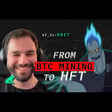
Insilico Terminal Podcast Episode 17 - Mazino image

Insilico Terminal Podcast Episode 17 - Mazino

E17 · Insilico Terminal Podcast
Avatar
0 Plays1 second ago

In this episode, Mazino shares his journey from blowing up early spot bags in the 2017 era to becoming a disciplined, consistently profitable trader. We dive into how simplifying everything - cutting leverage, focusing on level-to-level price action, and journaling relentlessly - became the turning point. Mazino explains his evolution from swing trading into day trading and scalping, how he uses DOM and order flow as context rather than a crutch, and why patience and psychology matter more than theory. We also discuss building confluence, managing risk, compounding small edges, Hyperliquid and on-chain perps, journaling techniques, mentoring newer traders, and why slow, boring consistency beats leverage-fueled hero trades in the long run.

00:00 Intro, Mazino’s background, getting into crypto around 2017

03:34 Becoming profitable, removing leverage, simplifying trading and rebuilding fundamentals

08:54 Evolution of trading style, swing trading to day trading to scalping with size

12:17 Risk management lessons, journaling, confluence, leverage mistakes and psychology

19:22 Scalping execution, DOM reading, liquidity, exits, and managing fast losses

26:04 Market cycles, spot investing, evaluating projects like Solana and long-term views

34:27 Journaling process, scalping notes vs swing analysis, adapting to changing edges

43:05 Building a desk, working with quants, automation ideas and on-chain finance

49:05 Why he started posting on CT, free education, mentoring and common trader mistakes

55:02 Insilico Terminal features, execution speed, advanced orders, server-side algos

59:00 Closing thoughts, patience, compounding, gratitude and wrap-up
Recommended
Transcript

Introduction of the Episode

00:00:13
Speaker
Welcome to and new episode of the InSilico Terminal podcast. And also Happy New Year, the first episode of the new year.
00:00:23
Speaker
My guest today is Mazino. How do you actually pronounce your name? Yeah, Mazino's fine. Mazino's fine. Yeah. That's a good one. So could you tell us who are you? What do you do?

Mazino's Crypto Journey

00:00:38
Speaker
So who am i ha So I started with with crypto, I'd say around 2017. It was actually a little bit before with a friend. And then I i developed a bit as ah as a trader in the last almost 10 years now.
00:01:02
Speaker
And basically, I'm full-time trading and I used to ah be, let's say, a spectator in the city space for many years with another account.
00:01:17
Speaker
And for some reasons, maybe I will tell you later, probably, I made a new one and just started becoming more active, mostly because I wasn't really liking how the space has turned ah in the last few years.
00:01:35
Speaker
So I was like, well, maybe it's up to me also to try to shape the space in the way I want. um Well, because at the beginning, of course, I was clueless.
00:01:48
Speaker
I was an absolute donkey. So we had a friend of mine. We we got into crypto and started buying all the shit coins. Of course, Bitcoin and Ethereum, too, which is probably one of the best performing assets.
00:02:03
Speaker
and And we blew so much money. and And we were broke. So yeah those were all our savings. And then in maybe 2019, so a couple of years of being unprofitable, I would say trading spot, spot only, vaping into all the ICOs. Well, I found in Silico a trip and started following him. Not really interacting, just MPC, but all the stuff that he put on CT and, you know, his Telegram later,
00:02:43
Speaker
They were kind of a breadcrumb trail ah for people to follow. And so that's what I did and started studying and really dived in through the rabbit hole.
00:02:58
Speaker
And I think I developed my own knowledge and and became profitable finally. which per se is not easy.
00:03:09
Speaker
I believe it took me years. And years later, and just decided to, you know, become active in the space to provide what others did for me, like Trip and others, just provide free education.
00:03:25
Speaker
You know, then it's up to people if they want to keep studying and learning by themselves, but at least I lay a foundation. Of course, I cannot compare to Trip and other people. Their orders of magnitude ah better than me, but i do my my little part here.
00:03:46
Speaker
How long did it take you to become profitable or since when would you say you are profitable?

Strategies and Profitability

00:03:51
Speaker
So excluding the first two years where i just didn't know shit, I think six months to a year.
00:04:02
Speaker
i um Especially because i had to get rid of leverage. I barely use leverage unless it's for the risking, so for trading in smaller positions.
00:04:16
Speaker
And never big, of course, than my actual, you know, portfolio, a specific portfolio. for a specific thing, and i had to fix a lot of mistakes and really go back to basic.
00:04:31
Speaker
And once i went back to very simple stuff, that's when it clicked. And that's when I could also start to add some complications into my system, but only the necessary ones, because anytime I complicated everything a little bit too much,
00:04:51
Speaker
I started losing money again. Okay. So it was very long progress, process. And um so I would say, yeah, probably a year until I fully understood what went on.
00:05:07
Speaker
I'm very interested if you could like walk us a bit through the process because um i I've told you before, ah for me it has been very similar. like I found Trips content a couple of years ago and then just like went from there. and At the beginning I was very intrigued. like I've been also been in crypto since 2017, but it was more for like a technological and ideological aspect and whatever. And then I never really thought about trading.
00:05:31
Speaker
And when I started to learn to learn more about the market, um I got very intrigued by everything that you are able to learn about the market and there's like a wide variety of things that you can study and and see like TPO and normal charts and indicators and everything like that.
00:05:50
Speaker
And Trip has a lot of content that is said like very breadcrumb-like, as you said. um So I'm curious, like how did you take in what he kind of gave you, i guess? And what did what did you try doing with that? And how did you like develop throughout that to get to a profitable stage eventually?
00:06:13
Speaker
All right. So, well, the thing I love about Trip is that it treats everyone like a retard. And then that's what I did to myself. Okay. Like just dump it down, dump it down until you can find the baseline.
00:06:29
Speaker
Mm-hmm. And the that was basically price action. Like the most basic level of price action is level to level trading.
00:06:40
Speaker
Okay. I just did that for it for months. until ah you start seeing the patterns, when the ones that sometimes you find on the technical analysis manuals. I'm not suggesting ah anyone goes out there and just rely on the technical analysis patterns because that's the path to prediction. But, you know,
00:07:04
Speaker
Understanding why certain things form, ah why price reacts to certain levels, how volume can can support a certain movement or you against it.
00:07:18
Speaker
And also liquidity can be an obstacle obstacle sometimes and and how we can profit off volatility, for example.
00:07:30
Speaker
And of course, you can just sit on the chart all day, or you can also read some books. For example, the ones that you you can find online, and like the very famous ones, they're good.
00:07:43
Speaker
Then of course, you need to maybe dig deeper. Sometimes you need maybe a... you know, a scientific paper, okay, or read some reports.
00:07:54
Speaker
And i I lack some of the skills, ah like, you know, that that very specialized statistical knowledge. So later, and also these days, I'm trying to find a quant, like ah I'm working now with a person, probably she would join later. I'm setting up my little desk because I like to do the analysis. Then I mostly play Bitcoin and Ethereum, but understanding the market in general helps you create your own model in a way. Nothing too complicated. Everything is so simple, but you go from the general to the particular, so specializing into something.
00:08:36
Speaker
And that's that's what I did. Then when I when i was confident in my level to level trading, ah I added little bit of the market profile, which is something that I really enjoy.
00:08:50
Speaker
And that's that's when I transitioned from swing trading. to day trading ah because i feel more comfortable just opening and closing my position in one day.

Trading Approaches and Lessons

00:09:03
Speaker
It's less stressful, helps me to relax at night and also gives me time to do other things.
00:09:11
Speaker
and And then I went to lower timeframes. And that's what I do mostly these days is sculpting. So it it was a process.
00:09:22
Speaker
Okay. And you know, when there's an interesting move, I open a swing. And when there's something interesting on a day trading side of things, I do day trading. Now I'm mostly sculpting probably because I have a little bit more size now. So sculpting returns are more, let's say, satisfactory.
00:09:40
Speaker
Because when you make one or two dollars because you have a hundred dollars, a thousand dollars per portfolio, of course, it it feels underwhelming. ah But nowadays, to to people that approach ah trading, I kind of recommend scalping.
00:09:55
Speaker
Because the compounding power is superior and also the losses are relatively smaller because that the the levels are very clear when it's called.
00:10:07
Speaker
So, yeah, that's an evolution, I would say. So you mostly use like price action and the level to level stuff while swing trading on like higher timeframes and then you evolved onto using the market profile and other stuff to like go more into day trading and scalping basically.
00:10:28
Speaker
ah Correct. For sculpting, I don't really use profile. um I use a little bit more like liquidations, price action, of course, liquidations, order book, the DOM that you have in the in the terminal.
00:10:42
Speaker
It's amazing because you can just place orders on there. And honestly, the DRM is my main tool um these days. But again, it came very late in my thing my journey, ah trading ah directly on the book.
00:11:02
Speaker
Because the moment you turn off you turn off the chart, it feels very uncomfortable. So it's, it to me, is using the right tool for the right job.
00:11:16
Speaker
Okay. Yeah, you can kill a fly with a flamethrower, but you'll probably burn down the house. And like, that same as, you know, scalping with Mario Profile. or using the footprint on the one-minute chart.
00:11:31
Speaker
it's It's just not the right tool for that job. If you're in the on the one-hour chart, then by all means, use the footprint. um If you look at the daily composite scenario, then yeah, market profile. It's just what I like to do and what I try to tell to other people like in my Discord or it's just Don't overcomplicate that shit because it's already difficult. yeah you
00:12:02
Speaker
I know it looks cool when you post like crazy charts on X or like with a thousand tools on there, but chances are you don't need it.
00:12:12
Speaker
a yeah Yeah. If you want to do it for cloud, do that, whatever. But when it comes to money, you want to do it in the simplest way possible because the shit is hard.
00:12:26
Speaker
So, yeah. You mentioned, ah gain like, when you gained more confidence in your price action trading, what what was the process like? Like, what were some of the mistakes maybe that you made during that journey that you, like, learned from? Like, did you use too much? You mentioned using too much leverage, like, home learning risk management and all of that kind of stuff. Like, what helped you improve there?

Lessons from Leverage Mistakes

00:12:50
Speaker
Yeah. So, well, first thing, yes, stopping the the use of leverage to increase my, let's say my portfolio synthetically.
00:13:04
Speaker
That was the first step because that point, your losses are not that tragic, I would say. Because, you know, if you're 20, 30, 40 leverage, like a 1% move, your stop is a 1%, that's a big loss.
00:13:20
Speaker
If you use leverage in the retarded way, which is like you have 100 bucks and set leverage 10 to just trade more. hoping that you'll find that incredible swing that will make you a lot of money, chances are that's not going to happen. Yeah, if you're lucky or if you're a genius, but if you're in the middle of the bell curve, that's not going to happen.
00:13:43
Speaker
So that's that's the first step. Just trade on 1x leverage. there's There's a reason for that. um Or if you want to trade 10 bucks,
00:13:55
Speaker
and you have a hundred bucks you know portfolio, then set 10x leverage, it doesn't matter if your stop is at 1%, you're still going to lose like that amount of money. um So that's the first step. Second was, at that point, I got more comfortable And you can just, ah you can just, you know, trade a support. Okay. If you see a bounce on the support, just you can just open your position and be more comfortable with that. And then you can actually journal everything like why it went well, why it went wrong.
00:14:32
Speaker
a And you learn way more from the mistakes because when you're right, like you don't really look back at your trade, right? But when you're wrong, Okay, there was the volume went sideways or just, you know, market participants were not interested in in pushing price here.
00:14:51
Speaker
ah Simple things, but then you start to understand the tools that you have. What would they tell you? So, and really the simple tools like volume, like, yeah, liquidations, for example, that's very useful.
00:15:06
Speaker
ah Liquidity, like a heat map, for example, or the book Heatmap, or or even the books, if you want to just read, you know, ah the DOM.
00:15:19
Speaker
How did participants react to the certain level? And you will find way more Confluence with that. Like I will have one, two, three things. When they converge at that point will be a very good trade for me. I can still lose that trade.
00:15:37
Speaker
But statistically, it's going to be a good trade. And the moment you find the confidence that increase the probability, trading is just about probability. Like, there there is no trader out there that wins 100% of their trades.
00:15:51
Speaker
But there's a lot of traders that just win 30% of their trades, but they're very fucking profitable. there Why? Because the the loss is controlled, but the upside can be very big on that.
00:16:03
Speaker
So, and by the way, 30% is a very good statistic. So, ah like, I feel that the environment now is kind of toxic because you see all the secretions on people, hundred twenty five x leverage, posting insane returns, so by any means, like, good for them if it if it's a real position.
00:16:28
Speaker
um But I don't think that's healthy for people that get in and just blow their accounts trying to do the same thing. Yeah. So yeah, i I was like, okay, enough with the bullshit.
00:16:40
Speaker
like he And I also stated clearly, like, if you see me using leverage, it's because I'm using less risk on more. the And then people can listen or not, it's none of my business. But at least I try to to help someone.
00:16:59
Speaker
What do these confluences look like for you? Like how how did you discover them? I guess through journaling and just like spending time at the charts. Like what does your strategy particularly look like? If you don't mind sharing that. Yeah, yeah, yeah. So, well, as for confluences, this is not my discovery. Like you you always hear people talking about ah confluence of these, confluence of that. mean, I was like, okay, confluence of what?
00:17:25
Speaker
So I want to see, for example, limits starting to hit and starting to up appear ah when we near a support, for example.

Scalping Strategies

00:17:36
Speaker
that's and the and And then when you look at the DOM, for example, on the terminal, you can see people rebid, rebid, rebid, rebid.
00:17:46
Speaker
And when they start rebidding, like that's the real order flow. Yeah, you can use the footprint, you can use other tools, but the real order flow is just there. it's talking you to you. Just look at it.
00:17:57
Speaker
are Are people bidding? Are people that lost their bid going on on market orders? Okay, there is support for this move. So we can get at least a few pips there.
00:18:10
Speaker
So if you're a scalper, for example, you can get a few pips there. And where is, don't know, where's another cluster? Where's the volume the ask? Where'd the ask get hit consistently? Where's the ask wall?
00:18:23
Speaker
Okay, let's front run that shit. Let's be smart because if I set a limit here, it's not going to get filled probably ah or not completely.
00:18:33
Speaker
So we can just front run that stuff. and So these are two confluence points. like You know, on the support, for example, so it's it's very simple.
00:18:46
Speaker
The price start moving, but, you know, there's a fake out, there's a boot trap. So the only way to read that is actually looking orders, for example, and volume. Volume per se is not enough sometimes because retail can do a lot of stupid shit and they do it generally all together.
00:19:07
Speaker
So that's not enough. But the bids there, if there is a large participant ah coming in, you're going to see it on the Dom.
00:19:18
Speaker
And that guy is not going to sell it for cheap. maybe Maybe they're doing just a few pips, but they're in.
00:19:29
Speaker
And their inventory at that point is there. So you can just ride with the big guys instead of standing in their way.
00:19:40
Speaker
that That's just an example of a scalping situation. like I did it it took a few scalps today, some I won, some I lost. But the one that I got were mostly because I was looking at big guys. If you go and look at the heat map today, which is January 6th, during his ah Asia session, was super crowded.
00:20:06
Speaker
Someone got in. You can see it on the heat map. Someone got in ah during the as Asia session and just, you know, fill their bags.
00:20:17
Speaker
So any little dip, you could long it and make a few pips someday. And of course, is and not talking about the swing today because my memory not does not go that far back in time, but that it was very clear today. So just look for that guy.
00:20:36
Speaker
ah just Just see their orders because they act very kind of mechanically, you same order size. If you have a T size, for example, ah you you can see their orders, same size. They will buy here, sell there.
00:20:53
Speaker
And they repeat the pattern because even algos, they're made by people. So the sad things are much simpler than one thinks.
00:21:02
Speaker
What does it look like on a trade like that when you like exit for a loss, for example? like when When do you know like this is a position I no longer want to be in? I'm i'm just like leaving this?
00:21:15
Speaker
ah On a scope, I'm going to know very quickly in a matter of seconds. Sometimes before I set my stop. Just from like the the reaction of the orders and like how the DOM looks? or Not only, but often yes, from from the books. Because maybe there's a large V-pivot there.
00:21:37
Speaker
Okay. A nice pivot, for example, if you use any good pivot indicator or ah let's say there there's a very good one from Isidico, for example. um Any pivot there is going to have a reaction. Of course, there's going to be a little dip often, but then when we regain that pivot, you want to see the bids coming in.
00:22:03
Speaker
I'm talking about long. If I take that long on the dip, because I want a better entry since we were talking a few pips, and price goes through the pivot, then I want to see the bids there.
00:22:17
Speaker
If I don't see the bids and price comes against me, stop is going to be maybe 0.05 sometimes.
00:22:29
Speaker
Because I know that I'm wrong, absolutely wrong. um Other times, maybe I was right, was not confident in my move, but on a scalping situation, I know pretty quickly. On a swing is a little bit more difficult.
00:22:45
Speaker
ah Maybe you need a larger stop because maybe someone's going to sweep for liquidity. Okay. And maybe you didn't wait for that sweep.
00:22:57
Speaker
So you need to use a little bit of intuition to set your stop slower than what that projected sweep is going to be. um Or just wait for the sweep at that point, just smash the buy or sell button.
00:23:13
Speaker
It's easier. It's easier on a long sweep, but still smash the button after the sweep and you will make some tapes just Worst case scenario, because people got liquidated and the booker is thin.
00:23:30
Speaker
So like the the price is going to cut through it like butter. And then later, when when liquidity comes back in, you can reassess, oh, was it a fake out?
00:23:43
Speaker
But still, there are a few pips there. ah Downside is you need to stay on the chart. And if you're like chronically unemployed like myself, it's easier.
00:23:54
Speaker
Otherwise, is for, you know, people with a job, responsible people, that's that's a little bit more complicated. than Maybe day trading or swings are easier.
00:24:08
Speaker
So do do you mostly trade is just like mean reversion even on your swings? Uh, no, on my swings, uh, it, it's, uh, Well, 50% is mere reversion, I would say.
00:24:23
Speaker
But then, you know, when where you see those glorious pumps on Bitcoin, which is all with I haven't seen many recently, ah but, you know, in the like 2020, it's like after, after like the COVID dump, COVID crash,
00:24:45
Speaker
Those days were glorious and of course, he just it was an easy mode. and I admit it. Those were an easy mode. You could just long anything. And that's also when I made the most return because you could buy Solana for 10 bucks.
00:25:01
Speaker
Yeah. And just hold. um The good old days, yeah. Yeah, or anything. I wouldn't say they're not coming back because if this is really a ah bear market,
00:25:14
Speaker
then VTC can go really low. so ah And then it's going to run again. But these days, yeah, a swing is more of a mid reversion for me.
00:25:29
Speaker
ah And I'm not one of those guys that said, oh, I sold the top in my spot packs. No, I sold way before the top. like But there was still 15 or 20K going before we were at the top, but it was good.
00:25:44
Speaker
I don't talk spot much. I mostly talk perps because those are everyday... ah Things that you can do for a buying spot, that's something that I do DCA all the way down.
00:25:59
Speaker
And like very, very basic strategies, nothing complicated, just TWAP or DCA, or regular intervals on the way down. That's that's the simplest thing.
00:26:12
Speaker
If you're far from all-time high, it's a good time to buy. Do you have

Long-term Investments and Market Cycles

00:26:16
Speaker
like a longer term view as someone that is now mainly doing sculpting and day trading and stuff?
00:26:22
Speaker
Like where we are in the cycle, if the cycle still exists, if we're in a bear market, all of that stuff that people care about? I'm not one make predictions. um Sorry, I interrupted you. I'm not one to make predictions.
00:26:36
Speaker
um Spot ah for me is ah is a long term thing always. There are the obvious runners for me because when I lost money in the ICOs, then I had to learn how to read a good project.
00:26:52
Speaker
And let's say with Solana, at that time I was not investing in ICOs anymore, but in Solana I saw something. And even if I'm not a big user of the Solana infrastructure,
00:27:08
Speaker
I now didn't do any meme coins or anything. yeah But I saw potential, as same as I see today. It's not financial advice, but same as I see today for hype.
00:27:22
Speaker
the I see a large potential for that. And I really spent a lot of time researching infrastructure, the ecosystem, what are, you know, the long-term possibilities of that. It's not just, ah a DEX.
00:27:41
Speaker
It's much more. Like Solana at the time was not just a swap. ah You know, now we have, I think, lighter rounds on Solana also. No, I think lighter is an Ethereum layer too, actually. ah the All the meme coins and the trenches, ah there was potential for that. Hype, same thing. There's potential for more. I don't know.
00:28:06
Speaker
If other decks, and I'm not going to name names, but I don't know if other will have the same potential because revenue is hard.
00:28:17
Speaker
And I see that almost as a stock of a business. So is it underpriced, overpriced? that's That's what I see. And I have my own model for researching spot.
00:28:31
Speaker
And tokens, and there's not many ah that are valuable in my opinion, but there is a lot of tokens being released. So I think it got even harder than it used to be ah in terms of finding good runner.
00:28:46
Speaker
ah I would say something i I never talk about, but one of my the things I'm good at is really looking through this stuff. Because I always start from the, okay, I'm going to get scammed.
00:29:00
Speaker
Now, now, now let's prove that I'm wrong. Like prove me wrong. And so I could still find some nice things. ah But yeah, there's mass adoption. So it's, ah it's harder.
00:29:17
Speaker
um So, like, your opinion, you don't really have that, like, you're looking at new perp taxes and stuff like that as stocks, as you said. do you have, like, Hyperliquid is probably, like, your main thing right now that you're looking at. do you have ah much of an opinion on all the or the other ones? Like, do like, take a look at them? Do trade on them? Do you think taxes will take a lot more market share this year, for example, from taxes? Or what's your outlook on that?
00:29:46
Speaker
So, it depends on how sexes will will will behave, in my opinion. Because,

Trust in Exchanges

00:29:56
Speaker
you know, I mean, I'm one of those guys that lost a shit ton of money on FTX. So... I'm sorry, dude At that point, I was, oh no, dude, so it was half of my portfolio and was like, was money for me because i grew up very poor and those were money for me.
00:30:14
Speaker
ah But, you know, shit happens. learned a lesson. And I e tried always to take anything I'm not trading on my my own storage and like with good OPSEC.
00:30:27
Speaker
And... And... ah The Dex, well, you know, it started with Uniswap, the idea of like, you know, something on chain. think one of the first, like Uniswap, Sushi, all those swaps, like they were the origin, and as I see it, the origin of what is now hyperliquid, lighter and so on. So, ah you know, on chain, self-custody.
00:30:59
Speaker
removes one worry, makes new ones. Yeah. Because you can lose your keys, ah you can get robbed and so on. ah But at least it depends on you and doesn't depend on others. right Mismanagement, just crime, things like that. Hacks. You know, Mt. Gox.
00:31:19
Speaker
Mt. Gox was hacked and almost killed crypto. yeah Because it really ah took away like trust from the system.
00:31:30
Speaker
and And, you know, now we all assume Binance is safe. um I don't mean to say it's not safe, but or other. So if they prove they can be trusted and some of them them, in my opinion, can be trusted. um then good, but every day you have a shady she exchange that doesn't release funds and that's complicated. in the KYC can be a double-edged sword because if that gets leaked and and if you're a major player or even like yeah like a few thousand bucks, but you're in a country where that thousand bucks is money, that puts you in a dangerous spot.
00:32:13
Speaker
So it really will depend on If the centralized exchange can provide safety, in my opinion, then they will continue to try. Otherwise, we'll just begin another cycle of of the decentralized exchange, and which which I use.
00:32:32
Speaker
use both. Uh, and now I'm trying new ones. I will probably try lighter because scalping with no fees is easier, of course, yeah especially when you're making really few pips, but you're making like 70, 80 trades per day.
00:32:50
Speaker
You need that 0.1%. point one percent Yeah. uh, so um and But Hyperliquid is very good. You have all the staking, all the DeFi options that i that i really love for, you know, just letting, not just leaving the stable coin sitting in the wallet. You can just take, you that one or two percent for a year.
00:33:14
Speaker
ah It's better than nothing. And Hyperliquid made it very accessible. Because it was a shit show when we first started. You had the rug pulls, you had everything.
00:33:27
Speaker
yeah I lost so much money there. too like It's a constant battle like against that. But at least they have auditors and everything now. So it's like a little bit more democratic, I would say.
00:33:41
Speaker
I mean, it could always happen. Imagine if Hyperliquid got hacked today. I feel like that be kind of devastating all of us. Yeah. Yeah. Yeah, of course. Of course. I, I just trust their layer and also the fact that community can check, who but community missed a lot of shit. So, heck, because, ah some things are not easy and, you know, crime is always the step ahead. So yeah, ah you're absolutely right with that.
00:34:09
Speaker
Hmm.
00:34:11
Speaker
I want to talk a bit more about your journaling process you mentioned earlier, because I'm interested in what exactly you look for when you're journaling. Like what do you look for in statistics and also in like what do you personally think is worthy of noting down and helps you improve?

Personal Journaling in Trading

00:34:31
Speaker
Okay. So I will try to make it like to pre digest the information because my journaling works for me, but it's all over the place. If you take a look at it, you do, you cannot make sense of it. So I have, for example, my little like paper, okay, just a notebook.
00:34:52
Speaker
It just, you know, I take notes of what the price is, just the last few ticks when I'm sculpting, just pi the 10s, the 30s, the seventy s and so on And why I have my little like acronyms just for what it looks like.
00:35:09
Speaker
Like youre you write it down physically into notebook? Yeah, most of the times I do because i i don't have to open a spreadsheet there. And when I'm sculpting, I don't have time for that. So it's just hotkeys with one hand and the other hand is like...
00:35:26
Speaker
That's just a notebook. Interesting. But don't know if it's like bid, rebid, it's just BRB. So B-VIC rebidding constantly. So that's my reason for taking that little trade. um And for sculpting, it's just like that. It's like Morse code almost. Yeah. I just take notes of why I took a trade. and if I see something that used to work,
00:35:51
Speaker
um And then it's not working anymore. You know, strategies expire most of the times because change in algorithm, change in whatever and market maker strategies, this stuff expires. But it's also easy to find a new one on because the patterns are pretty much the same. It's just going to be somewhere else.
00:36:12
Speaker
And, you know, on the DOM, you have ah you have ah a market profile, so like a volume profile ah for the trades. So you can calculate your own value area and the extremes, and you can just fade those ah or just, you know, find the support and resistance where you have high and low volume nodes, right?
00:36:32
Speaker
um So my notes on sculpting are like that. And then I go over those at the end of the session, just like five minutes to see if I did something incredibly stupid and then write it down properly on a spreadsheet.
00:36:48
Speaker
If I didn't do anything incredibly stupid, it's going to be an okay day. Even if I lost some trades, that's fine. ah For swings, there's going to be much more speculation. Where's my entry point? Where's my target? If I'm near a version, where's the mean and why did I take it? ah like there's going to be a lot more lines on the chart. There's going to be some market profile involved. So maybe I look at I don't know, I have a support or resistance here. We're inside the the volume profile, the large volume profile value area.
00:37:24
Speaker
ah We're losing it. We're regaining it. ah Market profile. Are we inside outside value area? Can we speculate that we're We're going to do a so-called 80% rule, right? We're a side value area, we regain, then we just roll through it. So when I have three, four things that match, then I'm going to take a trade on the daily a swing.
00:37:49
Speaker
But nowadays, i I need a lot more confidence to take a high time frame trade. ah Maybe because I ah satisfy the the urge to to to be productive by scalping. It's not an urge of trading,
00:38:07
Speaker
okay Because I can absolutely not trade. ah But that's my source of income, so I need to really stay on the books and and be ready to take an opportunity. Yeah, the swing is just going to be that 5% or 10% potentially that that that you make.
00:38:26
Speaker
But you can make that in a few weeks with much less stress their honour with good scalping, right? And people peace on 10% these days, but 10%, that's compound, right? That's compounding power.
00:38:44
Speaker
I mean, making 10% is a lot better than losing 10% as well. I feel like most people just lose money. Yeah, for starters. Even if you just make any money at all and then just like compound it very slowly, it's already pretty good.
00:38:56
Speaker
Yeah, this is like a I don't know, I blame i blame that that the high-leverage screenshots when you tell someone, oh, well, today i made 3%. I mean, I'm quite proud of a two percent that 3% that's paying the bills in a day. like that's That's good money. And then you tell someone, they're like, oh, what the fuck? That guy made Yeah, but dude, ah he did the difference is that I didn't use any leverage. So i I'm quite relaxed when I do that, right? Yeah.
00:39:30
Speaker
Well, leverage takes away the relaxant. The risk of ruin is like way lower if you just compound slowly with smaller gains. Yeah. Like i I never blew an account e after I stopped using leverage.
00:39:44
Speaker
yeah It's impossible. It's physically impossible. Okay, it is possible, but you read really need to be stupid like and not close it, not say any stuff.
00:39:57
Speaker
how How long have you been like dependent on trading as your only income source? Did you have like like a job that you quit at some point? or ah yeah the I had a job and it was a profession.
00:40:07
Speaker
like i'm I'm not going to dox myself, but it was one of those professions that people say, oh, wow, you're doing that. ah Which I hated. It was crap. yeah I like pick those three or four. ah I hated it it was crap, and I don't think it's going to last forever considering AI and and so on, all and or it's not going to be that good. yeah um I used some revenue ah from my first real good wins to
00:40:43
Speaker
start a couple of businesses. So that's not my only revenue anymore. see. But it's my main source of income trading. The businesses are there. They they support themselves. ah They're a nice rotation and Sometimes maybe i had to add some money, sometimes i I can take some money from the business, ah but it's just about differentiating things, right?
00:41:07
Speaker
And also the businesses are very different, ah completely different sectors. And now I'm trying also to make my own desk, I have my own quant, I do my own analysis, I also consult for others.
00:41:20
Speaker
I also try to help others, like with Discord and on X. And of course, some opportunities come from that as well. So I'm just trying to differentiate because, you know, maybe tomorrow I lose my hands and I cannot trade anymore unless we have some neural link or something. Yeah.
00:41:36
Speaker
and say yeah I think so psychologically it can be very difficult and it's always like good to have just like multiple sources or multiple potential sources of income at least. a I think the the stressful part is like when you're doing something high risk, at least for me, just solely trading was was was killing me because anything can go wrong.
00:41:59
Speaker
Anything can go wrong, even on a macro level, you know wars and stuff like that. But I mean, I guess you can't really like defend yourself that much against something like that, even if you have a normal job. No, true, true. That's true. That's true.
00:42:11
Speaker
But I just wanted to differentiate and honestly lowered my stress and also added some variety to my life because maybe I can go to a to a physical place instead of staying at my and my desk.
00:42:25
Speaker
I'm still unemployed because I'm not not employed by the businesses, but I'm just a little bit more relaxed, which which feels better after some time.
00:42:38
Speaker
It's not a huge amount of money, but still you have those little breadcrumbs again coming in that makes you feel better if you have the bad pay at the desk, right? Can you tell us a bit more about how you're trying to like build a desk and working with the quad and like trying to automate your stuff?
00:42:57
Speaker
Uh, yeah.

Building and Innovating a Trading Desk

00:42:58
Speaker
So, o I picked a student, like a student in statistics, financial statistics, specifically, uh, because, uh,
00:43:10
Speaker
This person has a good understanding of the basics of the math. Of course, they don't teach them much in terms of of practical applications, but, you know, I can give them something to play with. I can give them some books or some articles that they wouldn't find in their environment. And, you know, maybe you give them something and then you tell them, well, you know, open Defy Llama, open um one of these many tools and have a look at it or, you know, Pendo, try to try to mess with that stuff.
00:43:50
Speaker
And they realize they can apply what they learn, but they have a lot more fantasy. If you go with a student, there's a lot more fantasy. And they have no experience. And I try to work with people with no experience, not practical experience, because it's easier to start and in a certain environment rather than forgetting all you know.
00:44:12
Speaker
You know, ah I used to kind of partner with it with a trader from TradFi. The guy is like 55 or 60, like much, much, much older than us.
00:44:23
Speaker
And... And he was like, oh, when the where the circuit breaker coming in. Dude, there is no circuit breaker. We don't do that here. Yeah, we don't do that here. We just watch it burn. ah So, yeah, you know, right? And the guy turned pale. Like, I'm not touching that. That's the fun part. Even short, right? yeah ah So, yeah, these the kids, the babes, i like I call them, the they don't have that preconceived notions. So ah they they they can just roll with it and have a little bit bit less danger.
00:45:03
Speaker
little bit less sense of danger. So yeah you could just let them go. It's a high risk environment anyway. So i we are all risk takers. ah And what I'm trying to do is just to have them apply their own their own ideas, their own strategies. Of course, i I check them the first few times. Then if I see they're autonomous, just go. You you have a certain funding, you take your own percentage. ah If you find something cool, keep me involved, of course. like do Do you work with like multiple people or is it just one person?
00:45:39
Speaker
So I tried with two, didn't work out because they were too busy with uni. Now I have a new person that I'm training. How do you find them? Is it just like friends of you or?
00:45:50
Speaker
ah No, they were all random stuff. One, I met two, I met them online. Okay. And some like discourse and telegrams. ah This one.
00:46:04
Speaker
Well, it was a very strange coincidence because, as you know, i live in a different country from my nationality. I met a person from the same nationality totally or randomly at a business event. Yeah.
00:46:21
Speaker
And i was like, oh, what do you do? ah Um, like, financial statistics, excuse me. Like, that's pretty fun. Here, here. Yeah. So, yeah. So I tried to get this person involved. Yeah.
00:46:34
Speaker
So it was a coincidence. And, um, Yeah, let's see how it goes. I'm not ready to throw this person like into the to the big mix, but when they're ready, they they will also join a little bit more actively my my my channels, let's say.
00:46:53
Speaker
So you' you're going to focus on letting them do um stuff like Pandal or stuff like that, for example, on-chain things and like less of what you're doing discretionary right now?
00:47:05
Speaker
ah yeah Yeah, because that's where I lack the most of knowledge. So when things get more complicated, because let's say Pendle is not that easy, and also you need to correlate a lot of stuff okay to to trade yield. yeah okay That's like...
00:47:28
Speaker
you If you want to just ape or gamble, then by all means, just just set up an account, trade. But if you want to do it like consistently and with ah with a positive outlook, you need to correlate a lot of different instruments ah and maybe there's different layers of, you know,
00:47:49
Speaker
uh, staking and so on. And like, you need to see how the underlying asset is behaving. So it's, it's finance. It's real finance.
00:48:00
Speaker
So I need someone that has like, like would read all pans yeah, no, me, me, I'm honestly just a trader. It's not easy, but it's not rocket science. ah because there's people dumber than me making a lot money. So they're not that dumb, maybe, actually. and Maybe I'm the dumb one. But but still, ah it's not rocket science. ah That stuff is a little bit more complex if you want to do it. Like yeah real option trading real option trading requires a little bit more knowledge than just buying putter calls.
00:48:35
Speaker
So why why did you decide to come to to Twitter since you've just been lurking for a long while and now you're like making content, creating your own community and sharing quite all high quality articles and stuff like that?
00:48:47
Speaker
What made you decide to do that?

Sharing Knowledge and Resources

00:48:49
Speaker
Oh, just passing it down. Like what Trip and others did for me. Uh, I just, just want to pass it down because I'm less stressed. I'm more, I'm less focused on myself at the moment.
00:49:06
Speaker
Um, so that is something that I, I wanted to do, like I see newcomers, they come in 99.9% they blow their accounts.
00:49:18
Speaker
And you know, usually their kids, they're desperate for money because and maybe they have a bad situation at all or in the country, whatever. And they blow their accounts and and they go back where they're from with, you know, a few hundred bucks less. So i'm I'm just trying to put all the material that I have, all my notes out there, of course, refined into those those articles. and Do it my way.
00:49:48
Speaker
Okay. And if they if they want to listen, if they want to learn, I'm there. Then of course, there are some people that were literally begging me for mentoring. So that's, I wouldn't call it education. That's like a service. But as for the education, everything, in my opinion, should be free because it was free when other people gave it to me. Right? For a trip, everything had to be free in terms of education. and so that's what I'm doing because otherwise you just set a bywall and you're going to do it not a natural selection against the people you want to help.
00:50:21
Speaker
right So that's that's my main goal. And of course, there's the donkeys and you cannot add everyone. ah They will read it and just ignore it. Other people, they they come to me with questions and I try to help as many as I can. Now they they're becoming more. So that's why I did the Discord because yeah I cannot just stay on the DMs. And they're all the same questions. So I could just do it in one go.
00:50:47
Speaker
what What do you see like people struggling the most with or what is like what are the most common mistakes that people make? Psychology.

Psychological Mistakes in Trading

00:50:55
Speaker
Psychological. They know all the fucking theory.
00:50:58
Speaker
they They know more theory than me at times. They're like, oh, but the Vanna in that moment was... I'm like, dude, like... And then I aped. Hey, dude, if you aped, i cannot help you. like I longed into resistance. I just wait. Just wait a moment. Like, you were all sad. it was all cool. But you are not patient.
00:51:23
Speaker
Or, a you know, you're in the middle of nowhere between two levels. ah There's a guy I'm mentoring and that's a common mistake he makes. And I kind of came to the realization that is he he was not just waiting. I told him, no, you're forbidden to touching the buttons before you're close to a level and you'll see that your profitability will go up. Yeah.
00:51:46
Speaker
Because you're just long and short in the middle of two levels and nobody can can predict that. You have 50-50. So I think it's psychological. It's about patience. ah It's about, you know, Jim Dalton says, let the market come to you.
00:52:00
Speaker
yeah it That's it. i Wait for the level, see what happens. If it was what you were expecting, then just follow through with it. Which case scenario, you you're wrong, but at least you have the thesis for that.
00:52:14
Speaker
Rather than just, you know I think it's going to go up. I think it's going go down. Like, and then click the button. that sir That's, too irrational. Why do you think people are struggling with that too much?
00:52:28
Speaker
So much. I think it's a mix of excitement on taking the trade and that's, leverage makes it worse. And then they close in panic, of course, like one tick against them and they close in panic and they they're in leverage again. So they lost them more than they should have on the trade.
00:52:48
Speaker
Maybe a trade that wouldn't have been invalidated if they just were on 1x leverage and they set a healthy stop. Because if you're trading with, I don't know, a thousand bucks, close against you three bucks is not a problem.
00:53:00
Speaker
But if you're leveraged 10 100, the sticks, they're going to be huge. on on your total position, right? On your total margin, sorry, on your margin.
00:53:14
Speaker
So, yeah, that that's why ah the psychology is out of control when when you when you put yourself in that situation. But as soon as you turn it off, in my experience,
00:53:26
Speaker
yeah There's peace, there's no noise. And then you can focus on the level. Because you're like, ah, fuck it. It's just a thousand bucks position and make a one buck. But if you make one buck consistently, it's like, you know, 1% or consistently.
00:53:43
Speaker
That's going to be a lot of money after a thousand trades. Like millions.
00:53:49
Speaker
But people don't have that patience. Yeah, it makes a lot of sense. i've I've talked about that a lot already with people on this podcast, I feel like. And also there's like, I always say... and The next trade won't change your life, but the next 1,000 trades will create broad-battery or whoever invented that. But that's always something that I think about a lot.
00:54:11
Speaker
that Every trader should put that sentence like on the on a post-it, on their screen, and just keep it there. Because you need to make it to the 1,000 trade. yeah Absolutely. And then that's going to change your life. Absolutely.
00:54:26
Speaker
I'm curious, um since you're quite a huge proponent of the Terminal as well on the Terminal podcast, like what what do you like the best about what i like your favorite or most used features apart from the DOM maybe? Or what is also something that you find is like lacking or what you would like to see added to it?
00:54:46
Speaker
you have any thoughts? Okay, so as for what I like is the speed. I always get failed. I never know get filled. and Just that the execution speed for me is important because as I move to sculpting, you know, you can trade on Binance Interface or whatever. if you're doing a swing trade, it doesn't matter if you sleep or if you, you know, skip a few seconds.
00:55:14
Speaker
But when you're day trading or you're scomping, your entry becomes vital. And you need every single fucking tick. So the terminal is super fast for that. You set the odd keys and you you don't even get confirmation if you want. You just smash the buttons and like buy and sell very quickly.
00:55:33
Speaker
ah So that's first thing. Second, the advanced orders ah that that you guys have. And I know the more are coming and the server size ah server side, commands you can just set all these advanced type custom types of order and conditional orders.
00:55:51
Speaker
I just listened to the Dennis podcast. Very excited for all the features. And so that the flexibility and the fact that it's really basically institution-grade material.
00:56:06
Speaker
And it's free. yeah i Terminals are not free normally. I

Appreciation for Insilico Terminal

00:56:11
Speaker
mean, you guys get paid by taking a little share of the commissions. And if you have profitable traders and big traders that like you, you grow. And that's how it's been going because you have a great product.
00:56:24
Speaker
okay um something Something I don't like. No, it's just something that you're fixing, actually. I don't know. If I have a TWAP, I need to and he did to leave the the the terminal open. yeah, yeah. Now, server-side execution, that that thing is solved. That was my only issue, which is not a big issue. It's just, you know, ah mute mute the laptop and turn off the screen and go to bed. Yeah. Yeah, maybe when you...
00:56:55
Speaker
when you When you cannot leave the the desktop open or you need to travel with the laptop, that's a little bit trickier, but fuck it, we don't have to trade every day. right So it's just, yeah, that part, I think i think it's huge upgrade, um especially when you add some complications that the terminal will load their custom themes, custom functions, orders. It's very good.
00:57:23
Speaker
and also the awesome sound effects i love that supplies i just use like the the the default one like the clicking sound but it's just very satisfying to like hear when when your order has been filled yeah i i hate admit that i use the sound just yeah mentally no nowhere in scaling no no well i'm scoping it's like therapy for me I think for like, especially for scalping execution is just very important without like glazing ourselves or whatever too much. But if you're like using the the exchange UI, it can be a lot more difficult to really nail all your lower timeframe entries and stuff like that.
00:58:05
Speaker
Yeah. It's impossible. It's impossible. And the slippage is just, you know, endemic to slippage just because the the execution speed, even if you click the button a right moment, there's a lot of orders in queue and then you're going miss it. I rarely sleep, you know, when I do larger orders. I think zero slippage probably if you trade up to one lot, probably on good liquidity, probably zero slippage.
00:58:36
Speaker
nowp Above that, you're going to have some probably, but not much.
00:58:44
Speaker
I think that's good point to wrap it up, I guess. That's like we discussed bunch of different interesting things. um Do you have anything to say at the end? Any words of wisdom, anything you want to shill?
00:58:59
Speaker
i love your GMs, so shh. Thank you. I'm always waiting for you I see what you pulled out of the hat today. also, I want say thank you to Trip from me. it doesn't give a shit, I'm sure, but I had to do that sooner or later. it Yeah, yeah i can I can do that. He doesn't really like the same thing, but I'm also very grateful for for everything that he's put out. I know he doesn't care, but have to get it off my chest.
00:59:32
Speaker
Yeah, we appreciate that. Thank you very much for coming on. I hope thank you everyone enjoyed the the first episode of this year and many more good ones to come. and Goodbye.
00:59:44
Speaker
by