Russian-American Confessions: Jamison Firestone on Putin’s Russia and a Criminal American Dad

“My brothers always think: what would Jesus do? And they do that. I think: what would dad do? And I do the opposite.” — Jamison Firestone
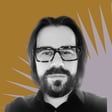
What do you do if your dad was a multimillionaire conman, crack addict, and owner of New York’s most expensive brothel? If you’re Jamison Firestone, you transform yourself into his antithesis. You go to law school. You go to post-Soviet Russia and establish the country’s first independent foreign law firm. You employ Sergei Magnitsky and befriend Alexei Navalny. You transform yourself into one of Vladimir Putin’s most vocal foreign critics.
It’s quite a story. His memoir, Rule of Lies: My Wild Ride Through Chaos, Corruption, and Murder in Putin’s Russia (HarperCollins, June 4, 2026), is both a Russian and American confession. As an old friend of the show, Peter Pomerantsev, says: “This book is NUTS! — in the best possible way.”
Yes, Rule of Lies is nuts. But it’s also the best kind of contemporary history. Firestone arrived in Russia in 1991, at the very moment the KGB hardliners rolled tanks into the streets and kidnapped Gorbachev. He watched, within days, as the Russian people confronted the tanks. He saw Yeltsin emerge as the hero, the Soviet Union dissolve, and the promise of a free-market democracy consumed by mafia groups, corrupt officials, and the structural lawlessness of the transition. In 1993, Yeltsin shelled his own congress. In 1999, on New Year’s Eve, he got on television, wished everyone a happy new year, and resigned — handing the country to Vladimir Putin in exchange for a pardon. That, says Firestone, is how we got to Putinism’s kleptocratic rule of lies.
Firestone’s Russian memoir is also the Magnitsky story. He employed an accountant called Sergei Magnitsky, who uncovered the largest tax theft in Russian history, was arrested on fabricated charges, and died in pre-trial detention — probably murdered by the same corrupt officials he had exposed. The Magnitsky Act, the Magnitsky sanctions, the Global Magnitsky Justice Campaign — all of it connects back to Jamison Firestone. And, in a way, back to his dad, Richard, the New York City crook who schooled his rebellious son in the value of obeying the law and telling the truth.
Five Takeaways
• The Criminal Father Who Taught Him Everything He Needed for Russia: Firestone’s father was a brilliant, charming man who turned out, when Firestone was 15, to be a multimillionaire fraudster defrauding investors and the IRS. Indicted, his father went a little crazy: became a crack addict, bought New York’s most expensive brothel, started hanging out with loan sharks and contract killers. Firestone spent his late high school years learning to talk to contract killers — respectfully, to make them laugh, to say no and not get killed. That skill, he says, turned out to be exactly what he needed in Russia in the 1990s, when everyone was mafia. His father taught him crime doesn’t pay. He believed it.
• Arriving in Russia at the Moment of the Coup: Firestone arrived in Russia in 1991, at the very end of the Gorbachev era, during the opening of the Soviet Union. Within days, KGB hardliners rolled tanks into the streets, kidnapped Gorbachev, and declared the reforms over. Then — the extraordinary thing — the Russian people stood up. The tanks backed down. Gorbachev was released. But the hero of the day was Yeltsin, not Gorbachev. The Soviet Union dissolved within months. What followed was a chaotic, disorderly transition in which democracy got lost: every