Transcript
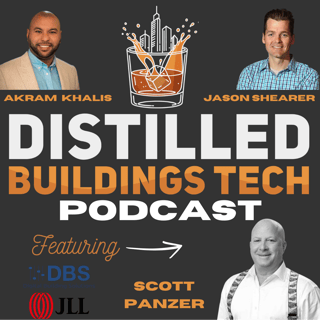
Speaker: everybody, welcome to the Distilled Buildings Tech Podcast. Where smart buildings are shaken, stirred, and data-driven. I'm your host, Jason Scheer. I'm your host, AK.
Speaker: Love it, yeah. Thanks for having us. My name is Justin Fields, unofficial host of Sip and Security with my esteemed colleague, Mr. Dave Abbott. Dave, welcome to a different and unique episode, right, in conjunction with two of our favorite people. So thanks for having us.
Speaker: A little cross-collaboration here. It's good stuff. excited for this. yeah Excellent. Yeah, a little little cross little crossover event. Thanks, you guys, for having us. I know we've been talking about getting together for a long time, but getting getting four busy people in technologies calendars to ah to to sync up is definitely ah definitely a challenge.
Speaker: um So looking forward to this. um So as you guys know, like the this the the genesis of Distilled Buildings Tech um in this podcast is kind of AK and I sitting around a bar in Amsterdam really, really late at night one night, um you know, and said, Hey, like, you know, we should, we should start a podcast and smart buildings is the domain that we play in. And of course we had to do something that was, you know, that was whiskey or or spirit. So that's kind of where distilled came from. What was the, what was the Genesis for, for Sip and security?
Speaker: i think Dave, between you and I, like kind of a special project through work of, Let's let's do something different. So I think Dave and I went to market together, focused on security, sassy, zero trust, all that fun stuff through work.
Speaker: And I think it was more of a challenge to do something differently, because when when we started working together during the pandemic, we would give hundreds. people, presentation, kickoff, so on and so forth. But it was like no one else was on camera but Dave and I. And we were literally just having you know a nerdy technical for Dave conversation, you know sales conversation for me. and And people loved it. They're like, you guys are just like two guys having a conversation. And then i think that challenge turned into like, let's do something. And actually, Dave, it was your idea to do bourbon.
Speaker: Yeah. Well, our calls would end up, we'd finish the training and then Justin and I would stay on and just keep talking. And then eventually, I think at one point we started opening a bottle if it was near the end of the day. like, well, I might as well record this. It's basically a podcast. So yeah, shoot, that was two and a half, three years ago at this point. It's been a minute since we started. 21 episodes earlier, right? so Awesome. Yeah, awesome. That's awesome.
Speaker: Cool. Well, I think the the other the other thing that like is in common, so we're we're both technology podcasts and then the, you know, the bourbon and the spirit side. So so I think just like on the Sip and Security podcast, on our podcast, we always give our guests sort of a like dealer's choice, right? it we We definitely prefer bourbon and whiskey, but like we've had people on AK in the past where we've had um ah geo from, know,
Speaker: from molex like we drank grappa with him well you found grappa i struggled to find grappa at my liquor store yeah we've had ah like vodka sodas like all all kinds of stuff but um i think since all four of us like we're everybody likes whiskey here right oh yeah oh yeah for sure so um so what's in everybody's glasses tonight who wants to start what are we opening What are we opening? yeah yeah's start guess ah I think we've got to first establish two. We're remixing this together. we we are coming to the table with two bottles this time around, right? so Yep. I think all starting with what are we cracking open? was really saying, look, I've got a bunch of stuff open, but I need an excuse to open something new. so I've been sitting on this guy for a couple years now. It's the Sam Houston 15-year
Speaker: um I don't think they're all that rare, but it's probably $100 or so bottle. And I figured, why the heck not? Let's crack her open. It's been on the shelf. 103 proof. I'm looking forward to it. ah You know, it's got a really nice dark color to it I mean, that's real dark. so That's real dark. So 15 years, and it's been sitting around in those those ah wooden barrels for quite a while. So here we go.
Speaker: Justin, how about you? What you got? Well, i went with... It's it's called Growbrook from... from Iceland. So I had ah at a recent business trip to Oslo and then went through Iceland and I'm like, god I got to come back with something. So the Grobrook is how you pronounce it. And a little bit like eight year, 40% alcohol, right? 80 proof. um it was so It was, you know, from from being around the world and so on and so forth. It was just something that looked interesting. So um I did rip off the label earlier, but I have not cracked it open yet.
Speaker: And again, on our podcast, i think, Dave, i think we're like I don't think we've ever repeated a bottle. So again, any excuse for opening a new one, i think we're down with. So this is going to be my my first choice of the day.
Speaker: Nice. Did you get to spend any time on the ground in Iceland or was it just a passing through the airport? Just passing through the airport in, uh, in Iceland, and a little bit of ground time in, um, in Norway, which is pretty cool. So.
Speaker: Excellent. How about you guys? AK, what you got? I got first time trying Penelope and I'm a Penelope sucker. So ready to go. Old fashioned.
Speaker: This was gifted by just Jason. Jason sent me this and he's like, you got to try it. So I'm looking forward to it. I want to really try it. I think it's a <unk> neat drink. an old fashioned and in a bottle from phil up Penelope. This is the first time I'll have that. And what I did was the usual.
Speaker: orange smoked in a little slight maple syrup. It's ready to go. Looks amazing. I was really surprised with that, um, with that bottle. and And I'm sure we all have the, um, the, the local shops that we go to that when something interesting comes in, they call you.
Speaker: so So, like my guy called and said, Hey, like you said, you wanted, think it was for the, um, think they got the valencia and ak you said and we already got those they got the valencia the f cancer that and then that premix and pound i mean like i've had the bullet premix and a few others and sometimes they're you know so so but i think the penelope one is really really good yeah what you got um So this is this is this is a gift bottle as well. so And this bottle has a little bit of a story. So AK sent me the Penelope ah Chapter 1 Cigar Series.
Speaker: I've never seen that before. It is. it's It's pretty good. So we were in Savannah at Realcom, I think. And we were at some whiskey bar.
Speaker: And yeah you go up to the bar and you're just like staring at all the bottles. like There's a bottle with a P. that jumped out at us. We're like, what? like We've never seen that before. They're like, oh, yeah, it just came in. you know like like Like last week, they haven't even opened it yet.
Speaker: um So we tried it there. And then I think it popped up at your bottle shop um yeah just ah in the past month or so, AK. Yep. like This is it. It flew out of the shelf. I don't think they have it anymore. Oh, no. Yeah. Yeah. yeah there yeah But the the good thing, so it's it's labeled as cigar series number one. So that, then I guess, tells us that Penelope is going to do more of these.
Speaker: Well, and we've covered this on our podcast, but the story around Penelope, you all know their acquisition price? $105 million dollars from MGP. yeah And they were only around for five years. And it was all MGP product.
Speaker: I mean, talk about the value of a brand. right? That's unbelievable to me in five years to build a hundred million dollar brand like that. Yeah. this The distillery is less than five miles away from my house.
Speaker: Oh, that's so cool. i love you I love it. I think we with Jonathan Lumley. So he owns a store up Maplewood, New Jersey and came from the, you know, kind of came from the industry he talked a lot. We talked a lot about that as well of you know, whiskey and spirits kind of going, seeing in the same pattern that you've seen in like wine and, and like craft brewing that it's the spirits are still important, right? Like the, the product is important, but like the branding and the marketing and the stories and things like that, um, are pretty interesting from some of these brands.
Speaker: Yeah. Pretty amazing. Cheers. Cheers guys. Yep.
Speaker: I should have brought it up. I didn't think to look at it. so This bottle, the barrel date oh gosh' blinding out was ah April of 2006. Oh, wow.
Speaker: That's pretty cool. but It must have sat on my shelf for four and a half years then because it was bottled in 21. It was 15 years and six months old. um yeah that's why i say It drinks hot.
Speaker: You can tell that there's a ton of flavor in it. Yeah, that this Penelope is 101, so it's a pretty, ah pretty hot, but it's super, super smooth. Yeah, I almost pulled out the Penelope on this one. I was thinking, you know, when I picked up some new bottles of AK, I was thinking of you because I think when when we hosted you on our podcast, I think you had Penelope then as well. And I think we talked about that story. Yeah. Rio.
Speaker: Yes, that's right. Rio. Yeah. Yeah. Yeah. So ah I almost pulled that one out for this one because I haven't opened it. But that would have been three of us with Penelope. And I would have been like, Dave, like what are you doing? Odd man out. man all so Penelope would have to call you, Dave, and sponsor you.
Speaker: Dave's the odd man out. Dave, you you're you're a neat whiskey drinker, right? Like no ice, no water. yeah Yep. Just drink it straight up. yeah But I will say, if I'm having something that's barrel-proof, I will throw Ice Cube in then. Once I cross 110 proof, I'm like, all right, let's got to cut cut this down a little bit. yeah yeah Yeah. So how is it? I think this is actually, like again, I think you said yours is really smooth, right? And again, I think Penelope overall has always been a smoother experience.
Speaker: a smoother drink. Um, this one's a little bit lighter, no nod not, not a, not a big burn on it, but super tasty. So Jason, what do you think?
Speaker: It is, it's, it's what I remembered it when we had it in Savannah. I mean, it is a, it's just a, a well, well-rounded, easy drinking. um it's all, it's all, you know, those, those bourbons that are, or whiskeys that are,
Speaker: um you know over 100 proof but tastes like something that's 80 proof. yeah dan It's like a a dangerous whiskey. yeah this This is dangerously smooth.
Speaker: Walnut butter, the walnut bitter and vanilla de maraca, rye and bourbon whiskey. Wow, it just tastes cinnamon crunch. yep the best the best thing about that bottle is um i think it's like 37 or 38 percent so you can put it in the freezer and it won't it won't freeze so a lot of pre-mixes that are like lower ab you know lower alcohol content you can't do that but man you put that thing in the freezer and it pours like syrup into into a glass like that's so good yeah so i picked up a bottle of uh
Speaker: from Costco, the Kirkland brand, old fashioned. And it surprised, like for a 20, 25, where you are, 25, $28 bottle. twenty five depending on where your twenty five twenty eight dollars bottle Big bottle.
Speaker: Super, super good. um my My son, who's a bourbon you know individual, again, of age, um even though how young I may look, right? so And we've talked about this, but he's- Yeah, your 13-year-old son? Yeah, my 13-year-old son. He loves bourbon. No, but he ah he's like, that this is you should pick up another bottle. This is really good. And it's you know for the price, just for, for the I think, for the quality what you get. It It's a decent drink. So um I'm sure Penelope might be just as good. AK, right? It is.
Speaker: Yes. And Trader Joe's has the same. This is my a third brand I would say I tried by far. Like it's just the way pours and drinks and dangerously smooth. no I'll tell you what, I was inspired by ah one of my sales leaders on the security side, Mark Marriott. he He's big in white Russian season this time here year. He loves white Russians. Not really my speed, but i looked into ah alternative options. I found though the white buffalo and you get buffalo cream and you mix it with coconut rum and you put toasted ah coconut shavings on the rim.
Speaker: We crushed two bottles that in a day at Thanksgiving in our house. It was an absolute hit. So highly recommend it. Two parts of the buffalo cream and then one part of the coconut rum on ice. So good.
Speaker: Buffalo cream is ah is like is a trace a trace product? don't think i've had that. Yeah, so it's a bourbon cream by Buffalo Trace. Yeah. I just picked up a bottle. Super good. Good with hot cocoa. Throw some coconut rum in there and it just pops.
Speaker: Wow. Nice. Is that like a like a different version of Coquito? Or nowhere near? I don't know what that is. okay What is that? It's like a the Spanish Puerto Rican drink. It's rum, coconut, a little bit of eggs. Dominicans in Puerto Rican make it.
Speaker: little bit of cinnamon. I was not throwing eggs in this. This is little more drink-based, but yeah, it might be similar. Actually, question for for you all. I think, Dave, as we look at some of the stats on our podcasts and like you know the most viewed videos, because again, I think for the most part, it's been bourbon. But we did one guest speaker who brought rum to the table. And ironically, that episode has the highest views of all of our podcasts.
Speaker: um I think he was just sending it to his family so that he'd get invited back. I think that's what it was. Just circulated around. So fun fact, AK, when you and i were at one of the numerous events in Vegas and we were walking from Bellagio to somewhere else, um that individual, Fred, actually like interrupted our conversation like jokingly or not, but he was the individual. i don't know if you remember that, but he was the one that yeah they had the rum, the highest...
Speaker: um view counts in any of our podcasts. But for Jason, for you and AK, what do you think from like a popularity perspective? like what ah is it I know you guys are you guys do primarily bourbon side, but are there other drinks that are pretty popular amongst your guests?
Speaker: think it's a mix because we've had we kind our guests pretty much bring their own drink. We might drink bourbon with them, but you know it's been a mix, right? Yeah, i think I think it's been a mix. Like I said, probably 70% bourbon, but there have been a couple of um there have been a couple of you know vodkas.
Speaker: um I don't think we've had gin yet. um We have had a couple of NAs, right? so So doing like you know like mocktail type type stuff.
Speaker: um So that's been that's been interesting. Yeah. How many episodes are you guys at? 13 or 14. 13, 14. You guys have been out on a faster pace than we have. I mean, what's the journey been like? I know, Jason, especially for you, you like tinkering in a lot of the tech stuff, and AK, you're no slouch on the engineering side either. I mean, what's it been like from platform side and experiencing different tech from one and on? It's all Jason's.
Speaker: Oh, man. So, yeah, i mean, so so I'm i'm ah ah i'm ah i ah like a master researcher, right? I always tell people that I see all the projects. Tinker and researcher. um So it was it was actually a lot of fun to like to research the platforms. um I've done a lot of, you know, video production for for work and for other like third party projects. So a lot of the gear that I had.
Speaker: um I was able to to to reuse, but finding a you know, finding a podcasting platform that was easy was, think that was our biggest thing was how do you how do you not make this another full-time job?
Speaker: Yeah. And i know like other, bit you know, content creators and podcasters, a lot of times like they'll outsource, and you know, editing and like all the creative stuff. I kind of find editing a little cathartic, right? Like sitting in front of, um you know, iMovie and, you know, trimming and doing all that kind of fun stuff, adjusting levels. I'll just do that like on the couch while the family's watching TV or something. So it's been, yeah, the the the the product and platform side was fun. And then AK was the master of, would say like branding and websites.
Speaker: Nice. I got to say, Justin's the master of it all. I'm just the ugly pages show up to the thing. and i show well I'm usually the guest bringer. I'll be weekly traveling around. and Oh, you like bourbon? You got to join the podcast. Come on the podcast. We set one up after. But Justin is certainly the mastermind behind all the branding, the website, the editing, all of it. So I got to give him all the credit. I mean, Justin, what's it been like for you? What was your journey through all this?
Speaker: Honestly, a lot of learning, Dave. I think obviously we've been in it together from the beginning and I know we both have extremely busy schedules. Like I think to Jason's point, the editing has always been cool. um You know, not a huge uplift for me, right? Working on the Mac and, and you know, doing everything on the Apple side is as relatively sort easy. From the merch perspective, it kind of gives me that creative, like not not work type stuff so I can... um you know, do something creative with my brain, which is always fun. And like I said, you know, i was showing you guys earlier, like with the the mugs that we're doing and and the, the, the merch that we're wearing the website, it's just all, it's just using different parts of my brain. So I really enjoy it. Like I'm already thinking, I'm like, ah, what could we merge together? Like, do we do a joint,
Speaker: joint sticker for a laptop or something i don't know like you all that fun stuff but no it's been it's been fun glasses could you have like a sip and security distilled buildings like limited edition glass yeah i know i showed i showed this y'all before but like these are like limited edition bottles of like our branded you know bourbon and whatnot so uh 24 of them that were made Um, and then, you know, it was just like, you know, opportunity chance and let's do something cool with it. Um, again, at Dave, we're at, I think our next episode is, uh, is coming up later this week, um, which will be episode 22. and it's been what, two and a half years, I think Dave, that we've been doing this.
Speaker: Um, We're on a study about once a month type thing. I mean, it's tough. and Jason, you opened with us about busy people and even us then working with the guests. and We've had people that have had a punt on us multiple times. and it's It's challenging to find when you carve out an hour, but then you don't need to be in meetings afterwards, right? Because you don't know how long the podcast is going to go We've got to keep it in 45 minutes, but if you've had a few of these, you probably shouldn't be meeting with a client after.
Speaker: Yeah, it might be really entertaining. So, but yeah. No, it's it's it's been fun. It's been a cool ride. And I look forward, like, honestly, it's way overdue for us.
Speaker: ah for us four to get together. So, you know, I appreciate Jason, you and AK like pushing us to be like, let's get some time on the books. And I, again, it's been a, you've been trying for about a month, if not longer.
Speaker: um so excited that we got this to work. And I think Dave and I are even challenged with some of the guest speakers that we're looking to bring on for our next podcast to get those schedules bait.
Speaker: It's just, you know, it's that time of year. And actually i think Christmas this last year, Dave, we didn't do an episode the year before we did a holiday edition. um but I think that tells you how busy we all get.
Speaker: um and actually a little, if I may, a little plug. So Dave, Dave and I have another podcast coming up later this week. um Dave, fun story. Do you want to tell the story about, Dave, it was what, maybe a month ago, Dave calls me on a Sunday, like on my cell phone. Dave never, like Dave will call me, but never on a Sunday, never on my cell phone. So Dave had the story you get like you're, you're at, you're at it. You're at a partner event in Orlando. ill yeah yeah
Speaker: So, uh, we, we held a a training dedicated to a partner around security, bunch of engineers, like 30, 40 in the room. And, we're out after and talking about drinks and bourbon comes up and everything. And, um,
Speaker: One of the engineers says, oh yeah, no, I actually join a ah podcast from time to time and you know we'll talk engineer. like Oh, that's so cool. And you're like, Bourbon, you should join our podcast. And she's like, oh, what is it? And we go, oh, it's Sip and Security. She goes, oh I love that.
Speaker: Like, yeah, it's a neat concept. She goes, no, no, no, I love that podcast. I was like, what do you mean you love that podcast? She goes, I listened to that podcast. You're telling me that's you? Like, yeah. So then I'm wondering, wait, how do you not recognize me if you listen to the podcast? But she pulls out Spotify and is following and has listened to the episodes. Like, holy crap. That's amazing.
Speaker: So first fan of the wild that I didn't know before and meet them in natural conversation. That was pretty cool. So I immediately had to call Justin after and now she's going to come on the podcast as a guest. That's awesome.
Speaker: That is cool. For fun. so It's growing. We're getting there, right? It's a little so but true. You guys specialize in security, and we we try to dabble into the OT space. and Maybe I'll throw one out there that's cybersecurity, OT-related. So how do we feel about what are the challenges that we see in the OT stack that um you can you can relate to in cybersecurity? Yeah.
Speaker: right, AK, I got to pause you because we're getting into it. I got to go into the open bottle. Oh, okay. Here we go. like where the answer to point I was like, I looked this up. research All right, ah real fast. I got this bottle of Old Raleigh, and the bottle itself looks sick. It is an easy drinker, 46.5%. I'm pouring a glass, and then, aka I'm answering your question.
Speaker: I'm going to do the same. And while Dave's pouring, Clark & Co. Enstrom's Toffee Bourbon. So if you're if you're in and around Colorado, this is from the Western Slope, which is the western side of the state.
Speaker: um Compliments of my father-in-law who lives there. sits it's ah it's ah It's only 70 proof. Super smooth. It reminds me of Christmas. And as it is December, I'm going to be pouring this one. so If you want to answer AK's question. Also the comparison of that Sam Houston, this is wildly different. It's only a couple percentage off, but like, man, this is so much smoother. That's super rich in flavor, but it drinks hot anyway.
Speaker: So intersection of security and OT let's dig in. I love it. Um, Genuinely, I think the biggest thing that we always see with clients is the age old problem of segmentation, right? Like how do i only let these things talk to who they should talk to? And that's it. And it's so hard to profile that. It's so hard to know. Most manufacturers don't know.
Speaker: Most manufacturers just want to be able to say, hey, give me DHCP. Give me an IP address. Let me talk out. I need to call home. Let me talk to my neighbors. They don't really define all the particular ports, protocols, and specs that are needed to be allowed.
Speaker: And if they do, it's really hard to ingest that as an IT professional and who's owning that, who wants to enforce that, where it needs to be enforced. Man, segmentation is the name of the game.
Speaker: It's a lot harder on the OT side because I'm not dealing with human identities anymore. I'm dealing with different manufacturers. It's really hard to know who needs to talk with what. that's That's a good sta answer. Now, your take, Jason.
Speaker: Well, I mean, I think the thing that that's what we always hear, right, David? But like, but, but there's not, i don't think there's there's not a silver bullet for how to solve it.
Speaker: You know, like, we like Cisco, like we have, you know, I send it out to policy, like, like, we have ways to solve it, but there's not necessarily like an industry standard approved way to, you know, to, to like nip this one in the bud.
Speaker: Well, so to that point, you know, you could be on this reference architecture, go Purdue model, do all the things where you got all the expensive equipment and put all the hardened policy on top.
Speaker: But that's super expensive. It's not easy to swap in and out of, especially in twenty four seven facilities when needed. Or it takes years of planning ahead of time. I even look at Cisco and how they were building our buildings. And we went, yeah, it was a rush it was more of a rush drop. We couldn't do the full SDA the way we wanted to. we We had to do more of a traditional network because we didn't have the time to plan at all. That's all valid. It's real life IT. And so I think... um You see these new vendors out there and some get gobbled up like air gap networks is a good example. wither They're coming out hot saying everything's slash 32.
Speaker: You go to our DHCP controller. We define the profile and who you can have access to what and talking. The problem is now you just create a single point of failure. And not only that, there are certain protocols that don't play well with just a slash 32 that says, oh, I have to call home.
Speaker: They need to be able to talk louder. early So now you start making exceptions for like a slash 27 and I can talk to certain neighbors. And yes, I'm not a bit with it. But the point is, it's like there's all these concessions that have to be made with some of the newer stuff that advertises the silver bullet.
Speaker: And then you look at a real world scenario and go, oh yeah, that's only going to solve like 60, 70% of my environment. And now I got to do all these workarounds and I just created more risk and complexity. And you think it's it's more, me see the manufacturers would, in my opinion, I think will always follow whatever the client or IT is specifying. yeah Is there a specification that IT is putting forward for the OT product that says, yeah here's what you need to follow. Go ahead and follow it. Don't call home or call home only 443. Do it eight or two that one ax whatever the spec is for an OT device so they say they can make follow the same protocol as a laptop, right? Or as an IT equipment where it should be the same. It should be identified, provisioned ahead of time, or isolated until it's identified, and then provisioned afterwards.
Speaker: I think the fun part of it, Dave, is like um what we've talked about in previous episodes is like its identity is what it comes down to. Right. And it's just a different persona that we need to be aware of and that we need to actually go into Jason's point is like we need to define the standards within the industry.
Speaker: um Because I think, you know, the IT, OT worlds traditionally never talked to each other, with each other, segmentation, et cetera, et cetera. Now that the worlds are, you know, converging, just like back in the day, you know, when, you know, ah voice over IP, you know, it's just like voice on ah on a network, you it's never going to happen. right You had to develop the standards and you know at the end of the day, you know identity is like the the the core aspect of that. So regardless of what it is, what's the identity?
Speaker: you know I think we have tools that we leverage. you know ICE is a great example to validate you know it is what it is. you know And then you can you can you know make rules based on the identity of of the specific asset. um like Identity, I think, is the core of all of all security, right? it's it's It's just, you know, are you who you say you are and are you what you say you are from ah like a physical and or virtual person, if you will, so.
Speaker: yeah Yeah. AK, do you have an intermission drink, AK? Sure. Thank you. I'll bring it
Speaker: back. So this bottle, age 10 year, won best rye of 2025.
Speaker: this year. Clearly you could tell I actually enjoyed it. I couldn't tell. It looks practically fit. Yeah. And honestly, it's it's ah it's a really, it's a mixed feeling for me because bourbon is okay, but rye and for for this bottle to actually, you know, get up there and and make it in 2025, I'm looking forward to another, to another trip.
Speaker: actually I think that's a good excuse to go buy another one, if anything. so i just yeah and this And this was not planned, but I have ah i have a rye as well. it's no it's actually it's actually another It's actually another cigar series. So um rye, um and it's a blend. It's a rye blend.
Speaker: um One is Madeira casked, another is rum cast, and then the third blend is ah naranja cast um that's a pretty pretty good I think it's pretty o yeah 62% that's barrel yep have some burn to it good for these cold nights oh yeah yeah so we we talked we talked it so cheers guys so something new to celebrate our ah are or crossover episode and then something old from the cellar
Speaker: Cheers. Cheers. Cheers. we we talked about like we talked about like identity, and and there there have been some novel like industry and standard approaches to that, right? Like IETF came up with MUD or like the manufacturer use of uses description.
Speaker: But standards bodies create something in that you don't really see you know adoption within the industry or within manufacturers.
Speaker: Is that kind of like a sticking point, do you think, Dave? Yeah. Well, I think it goes back to life cycle of devices, especially in the OT environment. I mean, we cycle through our phones every two, three years, right? We cycle a laptop every three, four years. But when you get in a niche environment, especially manufacturing, especially in healthcare, especially in industrial systems, ah you start to run into equipment that's been out 10, 15, 20 in And and
Speaker: the refresh on that so expensive or not available and they need to then custom order a whole new slew of equipment that they just keep it. i mean, there's there's plenty of Windows XP that's still alive and well in certain healthcare environments, which is scary.
Speaker: So you i think you have to just come to that realization of it's it's not always going to be a widespread ah protocol from a device perspective.
Speaker: But if you can bring a technology that can help with that profile, help augment that when you don't have a recently developed device or something that received a software patch, let's be honest, most OT devices aren't getting patched ever.
Speaker: yeah So then they're not receiving some of the, or they're not sending that type of information like MUD. If you have other technology that can help profile properly, to me, that's why cyber vision was so critical with Cisco.
Speaker: because it helps augment things like ICE from an identity side and who can talk to what, but for OT specific environments, profile that, understand proper traffic, that's huge. And and it's trying to meet, I think our customers where they are, rather than saying, hey, you need to run all device compliant to this IETF standard.
Speaker: Yeah, good luck. Like, do you know how what many millions of dollars that's going to cost to refresh all that gear compared to, hey, as you refresh, you should make that part of your requirements from your manufacturer moving forward.
Speaker: But we need to meet you where you're at and still help you with the right visibility and profiling. as far as possible with current technology and capabilities. So we seeing like, like in RFPs, are we seeing those types of hard specs around, you know, thou shall support MUD or PX grid or like some, some framework that at least sets a bar, you know, for, for, for a customer's deployment. think that's a question for AK. I don't sit in that as much because on our security side, we're not getting into the the building specs and RFPs.
Speaker: we're not We're not seeing that as well because unfortunately the the building environment just knows the static approach. So they get to performance and it's usually like physical performance of products.
Speaker: Rarely it's IT performance. So like the you know electrical code, for example, is divide or even the building code, like you have the vision 26, 25, 27.
Speaker: those barely call out any IT specified standards. and And I think it's just lack of getting there to have a product that says, here's the specification that's required.
Speaker: So probably it were we're years away from that. I think it's going to be up upon the IT professionals to say, here's the MSIs of the world that are going to come into the work to the some of these conversations that says, in order for me to integrate your space, Mr. Owner, and you want that specific look and feel, you need this kind of product. And consultants usually are really good at that because you know that's how...
Speaker: they bring value to the ecosystem. So they can come in and say, here's here's the standards that we live with and we should be able to adopt that. Yeah, DIV27, so for folks that haven't haven't heard of like the CSI master format, DIV27 is what covers communications, right? And it's a huge, broad, like it's everything from phone systems to networks to Wi-Fi, like anything with you know like IT t technology associated with it. And I believe cybersecurity is kind of like just like buried in DIV27, right, AK? Yeah.
Speaker: Yeah, it's rarely mentioned as a performance. It's usually like a second thought. Yeah. It's almost like from from ah from a built environment standpoint, it's almost like that we need like a separate separate division for cybersecurity maybe, you know, because it touches it touches a bunch of other components within within a building.
Speaker: Honestly, I think, sorry, go ahead. I was thinking historically, like it's been up to the the owner or occupier right to to develop their standards. And now that you're you're having this converged infrastructure of OT and IT, t now it's it's muddied the waters. right So although it's buried in div 27, I think we're on a path to where it's going to be unburied. It's going to become more prevalent of you know, of honestly, of technically savvy individuals asking the questions of like, hey, I believed in i believe in this converged infrastructure, but my number one concern is security, right? So how's it being addressed? And AK, to your point earlier, it's going to take the consultants to like to enforce and develop the standards of like, hey,
Speaker: this is This is what the industry is moving towards. This is what we recommend. This is what the manufacturers, so on so forth. you know And honestly, in my opinion, that needs to happen sooner than later um because the convergence is happening now.
Speaker: It's been happening. Yeah. Yeah, we're seeing like, if you if you look at the industry and how it evolved, we always looked at the general contractor as the you know the individual is the firm that's going to build the brick and mortar. Like they're going to physically do something for you.
Speaker: what we're missing or what's coming is the IT t general contractor. There's no IT in the general contractor. To them, the general contractor just makes an envelope, puts widgets in there, close the doors, yeah have one-year warranty. Time on budget. Yeah, go go until the minute, it right?
Speaker: Yeah. And usually it's all physical. And we're not where what we're seeing is that shift of general contractors having some IT background that says, here's what I need to build for you. in order for My warranty is not only one year of the building not falling apart, but not getting hacked or having an ability to put product in there not beyond what you just when you open the door and go on and that's the crossover between IT and general contractor or whatever that whatever that field is and I think we're just you know call it ITGC for now until we until there's a new field what's the upside for the general contractor that focuses on building to accept the risk on cyber though I mean that that's a hard aspect and Unless you're bringing in a totally different division or a different consulting group, because if they're coming in and say, by the way, I also provide a warranty about cyber liability for a year or two. i mean, theres there's significant downside and risk for them, unfortunately.
Speaker: i think that's the reason why to shy away from this and just say, hey, we're bringing this in cybersecurity. You got figure out to secure because it's not on us. It's shifting responsibility. Yeah.
Speaker: 100%. think it takes owners and occupiers that says, this is the building I want. isn Go build it. And that building consists of a crossover. It might not be you, Mr. GC, but it could be you plus another entity.
Speaker: And you guys have to collaborate the same way the architect, and the new EP, and the lighting designer corll collaborate. Same way the EC and the Love Wolters contractor collaborate. you know At the end of the day, we're building one single thing. It's a building.
Speaker: Yeah. Yeah. So you got to change buyer behavior. Because I don't know that the general contractor is necessarily to want to show up and offer that level of added risk.
Speaker: But if the buyer starts demanding it, now we change behavior. But I think they have i think the gc has to be aware of the risk. But also, i think from a but from an owner-occupier perspective, they also need to be aware that the long-term support of said infrastructure, of cybersecurity, and OT, is their responsibility. So I think that there's an awareness from a GC perspective and an ownership, whoever that may be, whether it's ah a cybersecurity organization, whether it's in-house, external, whatever it may be, um that needs to be understood and considered up front. I think if anything, the conversation around security within OT and IT, t the conversation needs to happen sooner versus post-op.
Speaker: Right. So I think we've all talked about that shift left. Right. Even when we get involved from an IT perspective, when it comes to design and and all those other aspects, security is the same way.
Speaker: We need to understand, you know, even from a physical security, from a virtual security, from an OT security, IT t security, all that needs to be understood going in. And there needs to be understanding from a GC and then an acceptance from from a provider um to to assume that responsibility. But again, don't i don't it's not it's not developed yet. So I think that at some point, once it's developed, that that will be the standard is – If anything, cybersecurity, IT, t um OT, right, all have a seat at the table early on when we talk about designing of a building, because at the end of the day, they're going to be the ones responsible for supporting it. Mm-hmm.
Speaker: And AK, I was just looking up, like there there is a Div 28 that is, you know, classified as electronic safety and security. But we when we when we look at that, we typically think about um access control, video surveillance, right? Like physical security. So so kind of back to the back to the building specification, you know,
Speaker: I almost think that that cybersecurity needs to have its own division so that it like stands on its own and it's not just glossed over. They don't do like div 27. There are there are like subsections. so like Within and within every single division, there are like there are subsections.
Speaker: but that might be that might be an industry like solution to cybersec security in the built environment and then we throw Generative AI and AI into the machine. man. i knew we were like 42 minutes in and everybody said AI. Yeah, we were so close. say was No, but that but that is't that is like a good topic because it's like I see like the, you know, sort of like the good and bad of it, right? Like we're going to see generative ai used a lot from like a bad actor or a threat actor standpoint, right, Dave? But like how can we we think about
Speaker: we think about you know profiling and segmentation, like how do you see, I'll just say AI generally, right? Like AI being used to accelerate that side of it, yeah threat to threat defense, I guess.
Speaker: So, well, yeah, there's there's two sides. I think i think the real one we we see is as more vulnerabilities are released, as we know about more problems out in the wild, um people are able to exploit them faster.
Speaker: the AI is usually not finding new vulnerabilities, not yet at least. I mean, we will get to that point soon enough, but bad actors are able to exploit vulnerabilities at machine speed. So as soon as a CVE comes out, boom, like people are already taking AI and and starting to leverage it from an exploit perspective.
Speaker: um I think from a you know practitioner standpoint, net network and security operations, A lot of it's trying to just augment the the manual daily tasks and be able to correlate events and incidents to any level of anomalies and then stitch that together.
Speaker: It's such a powerful story to talk about an AI security operations center or that AI SOC where it's stitching material or anomalies or detecting things that don't require as much tuning as they did before.
Speaker: and be able to pop up like, Hey, you got a problem here. We need to start taking action. And as you start trusting it more, you're now able to have that actually take some action. The biggest thing, a lot of people i don't see talk about right now is they just assume, Oh, the AI sock I'm getting from a vendor is secure.
Speaker: Problem is there's a heck of a lot of insecurities in AI itself and the models and the training and prompt injection, et cetera. And so if a certain vendor hasn't done their property diligence and you introduce that that AI into your backend infra and security team, it now has unfettered access to all your environments. And soon you start trusting and you give it read write type action, that gets really scary really, really fast. um So I think one, you got to do supply chain diliencet due diligence. you got to really make sure you understand when you're buying these types of tools, you know, who they're coming from. Do they have a trust and and governance and risk framework around their AI that they're providing embedded in the tools you're planning to use?
Speaker: But then also recognize you kind of can't go without it because the bad actors are using and they're moving at machine speed and scale. we We frankly can't rely on humans to keep up with this it becomes a battle of ai versus ai just scary post-apocalyptic conversations but like that is where this is all headed whether you like it or not it's just make sure you're doing due diligence beforehand yeah and and there's so that that's like the technology side do you think that there's adjustments that will need to happen on on the policy side as well to kind of like
Speaker: almost give us a little bit more time, you know, like just around like CVEs and disclosures and things like that. Like a big, a big thing in cybersecurity has always been like transparency, right? Like good actors disclose early and document and blah, blah, blah. But do we need to like blur that line a little bit just to, just to slow things down?
Speaker: I don't think so. I think you got to be open and transparent as much as you possibly can. As soon as companies start hiding stuff and they try to do it around good intention, but their own vulnerability that's being exploited in the wild, they're only hurting the good guys, quite honestly. Because the bad guys, they're sharing all that information on the back end channels and forums, and then they're ingesting that anyway.
Speaker: The good guys, so they don't know about it It's a problem. So you need to have the early and honest. The policy solution is like maybe even like, you know, more transparency around around vulnerabilities. As soon as you know something that's materially impacting, you need to be publishing about it and constantly every hour providing updates.
Speaker: ah You know, I'll say like I look at a Cloudflare as an example. And when they had the outages they had recently, they did a full-outages. Plural, right. Yeah.
Speaker: of I mean, you need that type of transparency up front all the time. And then the good guys can use their AI to quickly scrape, where am I vulnerable? Where do I have issues?
Speaker: and and And start thinking through mediation steps then. Even if you don't have the cleanup quite yet, you're you're at least thinking about how is this being exploded in the wild? What's the type of traffic activity I need to look for?
Speaker: we we cannot live in a ah world of withholding information due to concern about, you know, what a bad actor might do with it. The the good guys need to know about it.
Speaker: Yeah.
Speaker: Interesting time to be living. Thanks for the AI topic. There you go. We had a have to we had to drop. yeah Yeah. You just immediately went quiet on it. I was like, yeah, I know where this is going. Yeah. It's AI conversations end in Terminator, right?
Speaker: Pretty much. They do, yeah. yeah
Speaker: Good stuff. I had to give myself another pour of the second round. um Super good. Yeah, I think the old Raleigh is the one for me. This Sam Houston, it's got good flavor, but I might need to throw it on a cube even though it's only 103 proof.
Speaker: My brother-in-law would love this stuff. I know that. Yeah. it Hot on the tongue. Yeah. Yeah. Now on that note, Dave, um I think early on, I think Dave got me more into bourbon than, than ever before. I'm thinking, I think I said I'm probably at like 45 or 50 bottles of my collection now. And I think when I first started, I i probably had five or six um for, for the group here. Dave, what do what do you think you're sitting at now?
Speaker: So I've produced, quite honestly. Well, i I say that. There's ah there's probably 20 that I like sit on or slowly collect. yeah In terms of things that I'd put in an active distribution, I'd probably have another 10 or 15.
Speaker: So I don't have a huge collection. And honestly, this is where like my brother-in-law spoiled me because he is ah just an avid collector. And every time I go to this place in Roanoke, he has 20 or 30 bottles open and probably 10 of those I haven't had before.
Speaker: And they're just every time it's like, all right, let me try this, this, this, this. So for me, the hunting is not any any fun anymore. Cause like, I've had it all. like just And I didn't have to pay for it. So that's kind of the best hookup to have, right? It's kind of like the best boat is the one that you don't own your friend's own. Sadly, I'm the one that has the boat. So you trade off in that respect. He gives me the bourbon, I give him boat access.
Speaker: nice that's awesome jason how about you uh probably about the same probably like 20 or 30 bottles and and we have a a liquor cabinet um that that has now been restricted to like a one-in-one-out policy right so before before anything else policy you know i know right before anything else they can you know can go into the cabinet something has to come out both for my my side of the liquor cabinet and and my wife my wife's a big um is a big gin fanatic and and cocktails. So yeah.
Speaker: Nice. AK? My collection is very small. I'm fortunate I have a brother-in-law that is he's bottles and bottles deep. So i keep mine to a short 10 bottles, but I get to enjoy quite a That's the hookup. That's all you need, right? That's all you need. That's who you know. yeah That's it.
Speaker: it's it's very It's very small on my side, but usually i don't have to worry. you know been It's been a good 15 years so far, and he's been in the industry since. so i I enjoy every every moment I can.
Speaker: We went from wine to spirit, and it's ah it's a nice ride. I love it. i used to So my different office layout, I used to showcase the different bottles in my old desk. um And the thing is you couldn't see it like when I'd be in meetings and whatnot until I like stood up and the camera adjusted and you see just this shelf for full of alcohol. um Since I have the new office set up, I have have a pantry top shelf that has ah maybe a dozen, maybe more bottles. I have our island that has a section that has
Speaker: maybe 2000 bottles. And then I have like above our refrigerator that has the mixed spirits of bourbon, ton of wine, and champagne, lots of tequila, lots of rum, lots of vodka.
Speaker: um there's probably a hundred bottles of just different types of, of alcohol within there. So we, I think we're spread out pretty decent and we, and so I don't know, like we, we have basements and in Colorado. I know some parts of the country don't have basements, but I miss i miss having a basement so much. It's the best thing ever. Right. So ours is unfinished. And if you're right below my office, there's this, there's this kind of this pop out where I want to do like a hidden bookcase.
Speaker: that opens up into like my bourbon you know cellar right bourbon wine i just imagine literally a table for two with my my desk mini with nothing but bourbon and old barrels around me to where i'm gonna host you know podcasts and whatnot but that's awesome one can dream right one day one day it'll happen love it
Speaker: So let's fast forward in five years. but we How do we see buildings and how do we see them evolving from, I guess, from a an infrastructure standpoint?
Speaker: And then there's a second pace to this question, but I'll start with you, Justin. think years from now, five years from I think the standards will be developed.
Speaker: I think the the integration of OT and IT t from, honestly, more from an IT perspective, assuming all the responsibility for OT, like support, you know structure, so on and so forth, it's all going to be merged.
Speaker: um I think it's going to be a very kind of a fast and furious type road to get to the five-year mark, but i see the dust settling um and again, standards created and and everything on that front. So it's, it's, it's going to be, in my opinion, a faster transition from when we saw VoIP, you know, join the network sack and whatnot. um It's going to be challenging, but it's going to happen. So.
Speaker: Yeah, i think it's, i mean, we, we, we touched a little bit upon bond AI, right. And, and one, one metaphor that we use, like when we talk to customers is around autonomy and autonomous buildings, right? Like in a lot of other parts of our lives, right? Whether it's transportation, and consumer space, like we all know, like consumer space, like moves so much faster. yeah um Like my, my home is, I would say infinitely smarter than like most, you know, most offices. um So I think that, I think that a combination of,
Speaker: you know, AI acceleration and like, like younger workforce coming into the office, they're going to have different expectations of what, what happens, you know, when they walk into a conference room or into, you know, into an office. um But, but the, the key there, and we talk about this a lot, the key is like the network is the foundation, right? Like it is the common palette or platform that all of these different systems can, can ride on top of. Yep. So,
Speaker: I think even though sometimes like you know networking, whether it's access you know access switching or or Wi-Fi, like it seems like maybe not the sexiest thing in the world.
Speaker: like It is you know it is like the least common denominator that everything can ride on top of. I think we'll see. There's going to be ah an explosion of PoE devices and endpoints. um yeah We're starting to see that in the and the consumer and prosumer space.
Speaker: I'm a big, like we talked about podcast gear. um i use a lot of Elgato gear and even like Elgato is starting to make like PoE microphones and you know and hubs and things like that.
Speaker: um There's even a, and um ahll call we'll call them like a network startup. um They're you know years behind Cisco, but they have a PoE like NAS, like ah like a two and four disk NAS that runs off of 60 and 90 watt power. So I think that we're going to see like a proliferation of you know of devices that, you know one cable for for power and data um to to leverage the power of the of the network.
Speaker: Which means that if it rides on the network, you can protect port by port. Right. Amen. Yeah. I think it gets really interesting when you think about power distribution and where it sits within the building, right? Cause right now it's just copper going everywhere. I've got, you know, I've got my switches in a singular spot potentially, but when I think about the IT space and where my IT t rack is, and especially i started doing some local AI, right, I use the unified edge.
Speaker: I'm eating up three are you plus all the power that that consumes. I've got all these switches that consume power for all the POE. All of a sudden now my breakers need to live within whatever that it closet is and not in some other their facilities space. So yeah that where the power origination comes from is going to be really interesting no design decision over the next few years.
Speaker: And AK, we see that a lot with, um, sometimes back and forth with with electrical contractors and MEP firms, right? Oh, yeah. it's Now it's the new design of the smart building and how can it incorporate devices that are not on the network that were not on the network prior to that? yeah Like the simple example of a conference room has been modified and changed, I think, just in the past two years that i've ever seen.
Speaker: Typical conference rooms used to have dedicated circuits for regular power and then IT. t Now it's one simple network and you can connect everything on on there.
Speaker: Everything from like the VAV or like the HVAC equipment that's providing like zone level control, the shades, the lights, you know all the video conferencing equipment, even um even convenience power. right I think that you know USB-C has become so ubiquitous that Like, why do you need that that that three-prong in the US? Why do you need that three-prong plug like in a conference room table to connect that big, nasty you know like like power adapter that you haul around to? Yeah.
Speaker: I like how you use the word simple AK, right? that The simple network. Yeah. It's extremely complex, right? But the complex piece, fellas. Yeah, that's right. That's right. It is simple, right? We'll handle the tough stuff. So I love it.
Speaker: Cool. Well, this this has been a good conversation. I'm glad that i'm glad that we all broke out a couple of different bottles to celebrate, ah you know, kind of going into the holiday season and us finally getting together to do ah to do a crossover episode.
Speaker: Love it. Hey, I'll take the excuse to open a new bottle. Thank you for having us. This is a fun crossover. Absolutely. We'll do it again, but not after, you know, a year of planning. So we'll do it sooner than later, but that means we're big time. That means we're making it right. So, which is a plus. So again, Ace Common, thanks for having us. We really appreciate the the invite and thanks for coordinating. So.
Speaker: Absolutely. Definitely. Cool. like and Like and subscribe on all the Distilled Buildings Tech podcast ah channels, Instagram, YouTube, and the same thing for Sip and Security. And we will see you guys next time.
Speaker: Cheers. Cheers.