Become a Creator today!Start creating today - Share your story with the world!
Start for free
00:00:00
00:00:01

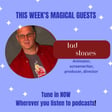
Episode 53L Steve Lee

66 Plays1 year ago
On this week's episode we sit down with Steve Lee, a sound designer and archivist who has worked in the tv and film industry for over 30 years! From his work on a Goofy Movie and The Nightmare Before Christmas to founding the Hollywood Sound Museum, Steve had so many amazing stories to share with us you definitely won't want to miss this one!
For more on Steve's amazing career check out his website HERE
For more on The Hollywood Sound Museum click HERE
DISCLAIMER: We are not an affiliate of the Walt Disney Company, nor do we speak for the brand or the company. Any and all Disney-owned audio, characters, and likenesses are their property and theirs alone.
Recommended



Transcript
Podcast Introduction
00:00:02
Speaker
Welcome to Sharing the Magic, the podcast that takes you on a journey through the enchanting worlds of Disney. Each week, we're joined by a special guest, whether they're a magician creating moments of astonishment or a Disney expert sharing the secrets behind the magic of the happiest place on Earth. Together we'll uncover the stories, inspirations, and behind the scenes tales that bring these worlds to life. So, get ready to be spellbound and transported to a place where dreams come true.
Meet the Hosts
00:00:54
Speaker
Hey, everyone. Welcome to this week's episode of the Sharing the Magic podcast. Matt here, and I'll be one of your co-hosts this week as we invite another amazing guest to share their story with all of you. But before we introduce him, let's say hi to ah my friends and fellow co-hosts. First up, we have the Goofy Doop himself. Jeff, how are you doing, Jeff? I'm doing good. And they call me the Goofy Doop because I I've been studying Bill Farmer's voice for a long while. Oh, gosh. Oh, gosh. No way. along with us. We also have Lisa. Hi, Lisa. Hi everyone. I'm super excited to be here loving the sunny weather. It sounds like some of our crew is not having great weather. So I'm loving our sunshine here in wonderful Indianapolis. Well, someone who usually likes to rub the weather in our faces on tonight, Brian, what's going on?
00:01:47
Speaker
A little stormy this afternoon. Just got got to say we're in the same boat. You are some scattered storms rolling through, but it's still Orlando, so.
Guest Introduction: Steve Lee
00:02:01
Speaker
He always likes to make sure to tell us, hey, I was at Animal Kingdom this afternoon before I got on with you guys. so I went to the dark side yesterday, so we'll not not mention that. Well, okay. Well, that's funny. my My family and I went to Legoland up in New York because it's about half an hour from us. So we visited an ah an alternate park, but it was just because it was half an hour away. ah Rounding out our crew, we have Rachel and her background is ah is a nice shot of Disneyland there as well. So how are you, Rachel? I'm doing well. I do not live in California, but I like to visit California. I am in the Panhandle area by all the beautiful beaches. um We do go to Disney dis't World a lot though. Kind of hot here, not as hot as Orlando, but nice and sunny today. We stayed inside and saw Inside Out 2 at the maybe theater today. so so I hear it's awesome. it's It's pretty good. We enjoyed it a lot.
00:02:55
Speaker
Well, everyone listening can tell we are very excited to get into our conversation with our
Working on A Goofy Movie
00:03:00
Speaker
guest tonight. He is a sound designer and an archivist who has worked in the film industry and TV industry for over three decades on some pretty amazing projects to name a few. A goofy movie, The Lion King, Nightmare Before Christmas. just a few of the Disney films he's been on, not even getting into things like Apollo 13 and other blockbuster hits. He's also the founder of the Hollywood Sound Museum, which we're going to definitely want to talk about that a little bit later. So Jeff, I'm going to let you introduce our guest because yeah you teased it a little bit. so Well.
00:03:33
Speaker
Well, when we talk about sound and all that, I mean, we know we're going to get into recordings and we're going to probably talk a little tech as far as that stuff. I assume we don't have to. But the goofy voice that the voices are going to come out. So, you know, oh, gorgeous. Nice to have you. Let's Steve Lee. That's really good. Thank you. That's really nicely done. Well, thank you. Yeah, bill Bill was such a sweetheart. And it was I had so much fun on a goofy movie. That was probably the most fun I've ever had on a picture. And the the wonderful thing, the most wonderful thing about it was that Bill and um Jason Morrison would hang out on the dub stage because I think they were just as eager to see the film as anyone. And that's sort of, you know, your first sneak peek at it when you we're getting the soundtrack final.
00:04:23
Speaker
And they would hang out all the time. And so, you know, we'd have dinners with those guys on the dub stage when we were working late and it was just, it was just wild. Yeah. how I have stories. one I want to hear them all. i really but I remember seeing it for the first time in the theater with my dad. My dad took me, and everyone has a story. All of us millennial films. Well, let me stop you
The Wilhelm Scream Phenomenon
00:04:50
Speaker
right there. What's really funny is I love that film so much, and I love talking about it, but I do feel really old, and generally I feel old twice.
00:04:58
Speaker
because it was, you know, 95. And I have no concept of time. I think it was just, you know, last year that I did it. But I start hearing these these people that you when I lecture, I tell them to just look at my credits and Goofy always comes up. And there's always somebody who comes up to me and says, um the first part is, oh, my God, a goofy movie. I much must have watched that thing so many times. And I, yeah you know, I'm very happy to hear that. And then they say, yeah, I wore out that video cassette. So many. yeah And I'm like, OK, you didn't even see it in the theater. You watch it. I just feel really old hearing all these people. Well, it's and Steve has made a comeback. You know, it's so funny. I know. Hasn't it? It's so crazy. What are you fantastic?
00:05:44
Speaker
Yeah, seeing all the cosplaying and all the the recreations and all. There's t-shirts coming out or like, ah you know, you go on my Facebook and it's just like goofy movies, goofy movie. And people are, you know, I remember um the big one for me was driving down the street. You know, i it was like a day after I did carry Disney karaoke. So I was like, well, if you need a break from water, le on you know, and rocking it, of course. And I look around and I'm like, people are
Career Inspiration and Disney Influence
00:06:13
Speaker
saying along. And it was the darndest thing. I was like, wow, I thought this is Disney karaoke night. I thought nobody would. Everyone in it. That was. a say And then I'm like, the next day I'm driving down the road and I see someone like mowing the lawn in a power line shirt. And I'm thinking, what's going on? You know what I do? I do this this little thing. It's a little self gratuitous, but I love doing it.
00:06:36
Speaker
If I'm in a bar that has one of those digital jukeboxes where you can get the app, i'll I'll play one of the Tevin Campbell songs yeah and see if any of the youngins in the bar react to it. You will. I know what that is. Oh yeah, nine times out of ten, definitely. Yeah, absolutely. That is cool. My son loves it. He's seven years old and he watch he likes to watch it all the time. When we had the pleasure of having Bill on an episode, he ran right over. He's like, oh gosh, that that's goofy. That's Pluto. I can't believe it. It's it's a great movie. But you you teased us a little bit there at the beginning. You said that you had a love of Disney before really getting to work with Disney. like What was that like, I guess, growing up? Where did that love come from and did that influence your career or did it just happen to be like a happy parallel?
00:07:23
Speaker
Absolutely. Well, first of all, I grew up loving movies, ah specifically genre films, like fantasy and science fiction films, because my dad was a writer and consultant on films like that. He was a physicist at Caltech and he had this sort of side hustle where he would read scripts and you know consult on them like, you know in the year 2024, this will be possible and this won't be, and that kind of thing. So I would, I grew up following him to meeting us on studio lots and all that and watching all of these old classic science fiction films, you know, War of the Worlds, Xavier stood still, all of those things. So I had this love of film. And of course, you know, growing up in Southern California, we went to Disneyland all the time, ah almost at least once a year and then more as I got older. And, you know, once I started working, I i like and I had a little bit of income. I was like, you know, annual pass and all that stuff.
00:08:22
Speaker
But I mean, going back to the earlier days, too, I i carried around a little tape recorder with me everywhere I went and I would record film audio and I would record the rides at Disneyland. And it was a time very early on where I started realizing that all the studios had different sound effects libraries and they would reuse these sounds like there were a bunch of Disney sounds that I would hear. Like, for example, the dog in Mary Poppins was the same dog that's in Pirates of the Caribbean with the you know, with the key in his mouth. And, you know, those whimpers. or recorded for Mary Poppins. And and that was that was sort of this realization that you know it's got to be somebody's job to save sound effects and be a sound effects librarian. So I was like, you know that's what I aspire to. And ah sure enough, when I was in college, I was like pursuing sound jobs and I got hired at this company.
00:09:13
Speaker
And I was there for 30 years. And I always kept one foot in the sound effects library where I was hired originally, because it's really important to know what's on your palate, you know, what what they've done and all the sounds they've saved and all that. And so that when you're on a new film, you can help the sound editors and the sound supervisors pull sounds that they need really soon and and decide what film what sounds need to be recorded or created fresh for that show. So it was, yeah, my my my love of Disney really did sort of set me on a path with that and, you know, with my upbringing, with my father watching all these films, those were like two of the major influences.
Wilhelm Scream Documentary
00:09:53
Speaker
So, yeah.
00:09:54
Speaker
I, okay. I, I'm going to get ahead of myself. I wanted to ask this question a little bit later, but you did bring up this idea of reusing sounds and I had no idea about this until we started getting ready for this episode. And I don't know if it's the Wilhelm or Wilhelm scream. Wilhelm. Yeah. Wilhelm. And I, so right before we got on, I was, you want to I'll tell you my story. What is the Wilhelm scream? Okay. Steve's got a story. Let's go. i I sort of, you know, it's, well, I'll just tell the story. I'm listening to all these films and I'm a big fan of Warner Brothers films and I noticed that there are
00:10:30
Speaker
Well, first of all, all the studios have their own like scream libraries and and guns and winds and all this. But there was one scream in particular that I heard in all of these Warner Brothers films, all these westerns. The one that I really it really stood out was there's a movie in 1954 as a giant bug movie back in the day. They we were all doing giant bug movies, you know, the radiation worries and all that. There's a movie called Them with giant ants. I swear every army guy in that film dies with the same scream. And that's one of the instances where I first noticed it. And it's it's in all these westerns. It's in the Green bew Berets, the Wild Bunch, all these old Warner Brothers films. And then ah when Star Wars came out in 77, I heard it again. And I'm going, OK, this guy knows what this is.
00:11:23
Speaker
And ah long story short, it started a correspondence between me and Ben Burt, the Star Wars sound designer, and he became a friend and mentor, and we would exchange little sound effects trivia and all that. And I started compiling this big list of all the Wilhelm films, which he had done too. And then when I started working, I started working for a friend of Ben's, Richard Anderson, who had a shop in LA with two other sound designers, ah Mark Mangini and Steven Flick. And I started with them like in 88 around in there. And, you know, we did a ton of movies and I would like Richard already did this because he was he was one of the ones who sort of, you know, brought it back with with Ben. ah Richard and Ben both did Raiders Lost Ark and there are a couple of Wilhelms in it. But when I was working with those guys, I was I was just, you know, strong arming the Wilhelm in every every show that we did. even more than they had already started. So by the early 90s, it's in all of these movies that I kind of like you know slipped it in. There's one in Goofy Movie. I mean, you'd say it has no business being in a Goofy Movie. Now we don't know which part. In the middle of a big musical number. there's was both well And then I put the list online. you know this This new thing called the internet.
00:12:38
Speaker
And i I compiled this list and I put it online. And that's really when the dam broke and everybody knew about this, this screen. And Ben kind of got a little upset because it was like this little in joke that he did with Richard. he He accused me of starting a cult, really, which is true. But cut to just a couple years ago, I get a call from a documentarian and in New York, a woman named Anna Quinlan, who says, hey, I'm doing this documentary on this screen. and And you seem to be the guy. And at first I was a little dubious because I i felt bad about, you know, taking away the thunder from Ben and all that.
00:13:17
Speaker
But ultimately, Anna andnna had a really good take on the thing and had a really good idea. So I ended up sort of co-producing this documentary, which is going to be released later this year on specifically on the screen and screen.
Authenticity in Sound Design
00:13:31
Speaker
And hopefully we we want to expand on it to make it a feature and talk about some other sound effects. But that's all yeah, that's that's that's basically the story. ah Like I said, i had I honestly never really even thought to like, because I know like the story with Disney animation is sometimes they'll reuse scenes in the background and stuff. and Sound effects too. i It's the same thing, right? Yeah. I mean, I haven't, I haven't talked about it here, but one of my biggest influences and I learned very early on with my fascination of Disney from the beginning when I was a kid was Jimmy McDonald, who was the sound effects
00:14:08
Speaker
guru at at Disney and who created all these wonderful sounds and built all these fabulous props. We actually have one in the Hollywood Sound Museum, one of the the props that he made ah to make sounds, custom sound effects that he could perform. That's part of the magic of the sound of Disney is the performance aspect of it. you know It's not just a sound effect recorded and then cut in. He would perform it much like Foley, like the way we do footsteps and things like that. It's a very specific aspect of what we do. But he would make these elaborate contraptions or have three or four of them with a bunch of guys yeah to perform them in a picture. And it really really created this distinctiveness for for them specifically.
00:14:52
Speaker
So i got I was a huge fan of of Jimmy and his work, and I got to meet him once. I wish I talked to him more, but I met him in 91 when they rededicated the stages at Disney, the town stages. That's so interesting because I, you know, in voice acting, you know, they say there's voice act, there's voice acting and voice acting and that acting part is very important to voice acting and it is the most important part. But I, you know, I could see almost part of that sort of overlapping with. sound things like sound effects because you know if you think voice acting versus voice acting voice acting would be like well here's the formula for this donald duck or whoever you're doing right yeah but when you're but can you sing the national anthem as porky pig you know there's there's a different you have to have
00:15:42
Speaker
There's there's ah to authenticity. There's emotion. And I imagine in the world of sound, you know think about authenticity, emotion. There's probably like, okay, well, you know we all know what a ah car sounds like as the tires are screeching or you know when you're falling down the stairs, whatever it is. But then there's, there's I imagine, I'm i'm sure you're gonna have something to say to this. there's a difference between, well, here's how it sounds and here's the project. How would that tire screech sound yeah or putting, put you know it in other words, invoking emotion? Oh, sure. No, absolutely. With voices and sound effects, it's it's the same. yeah We will pull elements that we think are good for building a piece of sound design for a particular moment.
00:16:34
Speaker
Very rarely do we just have one catch all sound that we just put in and it works. When I was starting out, I was working in the sound library, like I said, and I would talk to the picture departments of all these films while they were assembling their first cut of the films that we would be doing eventually.
Reflections on Disney Sound Projects
00:16:52
Speaker
And they'd have a list of sound and some of them that that were a little less experienced than others. Would say, okay, we have this scene where an elephant jumps into the room and goes through a window and breaks a table and ends up in a swimming pool. We need a sound for that. Yeah. Yeah. was My joke would be, okay, I have one, but it's in mono.
00:17:12
Speaker
ah But no, they they you know you pull a bunch of sounds for that moment. They wanted one sound and that's just not how it works. it's not But but just just working day to day, you don't want something to sound. yeah You're going to start recognizing these sounds even more than I did when I was a kid. So you want to start building something new and creating new things and going out into the world and recording new elements and things like that. And with ah with voices, it's very similar. I mean, when one instance that comes to mind, I was at Imagineering and they were doing some voice casting. I'm not going to give away too too many details because so I think I saying I wouldn't talk too much about it. But there was a very distinctive voice that needed to be recast. And we ended up having two actors who were like the top two picks. And one of them could do the voice absolutely perfectly.
00:18:06
Speaker
But he couldn't instigate his own performance. you know he He could copy it and sound absolutely perfect. But you gave him new copy to read and he couldn't do it. And the other guy was pretty damn good. yeah But he could read the phone book as that character. It was it was perfect. yeah So we ended up casting him. Yeah. See, that's it. It's something that a lot of people have to think about when they're doing, you know, I can do voices. Like, I mean, you obviously, you know, you can do Goofy really well, but you can, you know, you know what's in the character, you can act as Goofy. Yeah. And that came from a Goofy movie because that was Bill's most prolific role. I think that Goofy is what I based. Oh, no, absolutely.
00:18:45
Speaker
because they made him act. they It was a dramatic role. Absolutely. There's a documentary out right now that ah talks about the the whole relationships in the film and all that. It's about the characters more than anything else, which is how I rationalized not being called for that. but but but Anyway, it's fine. i yeah yeah i I'm not bitter at all. Well, you should be on it. you know But, you know, you get you get my point. I mean, I do. There's always a performance aspect and there's something you've got to make these things. You know, the word I always use is indigenous. You know, these these have to be created for this thing to make it really special. Yeah, that's ah that's a I like that word indigenous. that that agrees with a lot I use it mostly when I talk about Foley because that's a performance aspect of the sound effects. And that's it's made for that moment.
00:19:36
Speaker
It's created for that particular theme. I'm going to steal that if you don't mind, because I think it's OK. Yeah, sure. i'll send I'll send you an invoice. I put it on my tab. but So, Steve, I have a question for you. You're was also the writer, historian, obviously a huge movie buff as well. Enjoyed the films. And it sounds like you guys grew up together. Really, you know, you had the opportunity to grow up being that huge movie buff from start to, you know,
00:20:11
Speaker
Well, it's really funny because my mom hated science fiction films, so i was I would go with him to these films. and and there was even a ah um I remember distinctly one night around the dinner table when I was like 11 or 12, and my sister was five years older than me. I will never forget this, where she basically said, okay, I've given you two kids, they're both of age now, so you don't have to take me to this crap anymore. it and That's how I got to see all these wonderful films.
Influential Films in Sound Design
00:20:41
Speaker
And it's funny you brought up them. That was one of the first movies I had ever seen when I was a kid like that. It's scary when you're a kid. Yeah. Yeah. But ah so I guess my question is, you know, with your dad so passionate about some of the same things, you so passionate as well. And you focused on sound so much.
00:21:07
Speaker
Is there a film that represents to you like the Picasso of sound engineering like is there a film that really just speaks to they couldn't have done this film better to you? There are a couple specifically science fiction films. ah One of my dad's favorite films, and it's become mine, is 2001 of Space Odyssey, which is amazing sonically. I mean, it's got these beautiful pieces of music, and it treats space correctly with no no sound in space, which makes it really dramatic, like the scene where he reenters the airlock and the starkness of no sound on the track until he floods it with with oxygen finally. it It really helps make a point.
00:21:54
Speaker
Obviously, there there aren't very many science fiction films that follow that same scientific, you know, truth that there's not much sound in space, and just dramatically they have to put something in. Which brings me to the second one that really made an impression on me, and that one's, of course, Star Wars. You know, Ben Burts were creating all these sounds from scratch. And it's really this brilliant philosophy that he went out and recorded elements to build these wonderful sounds and creatures and things like that. And he also raided studio libraries and found some of these historic nuggets of things like the Wilhelm and other sounds that he used, like the TIE Fighter sounds in the Star Wars franchise was actually it came from an elephant roar that he found at 20th Century Fox. It was for ah an old Errol Flynn movie.
00:22:41
Speaker
And it just had this distinctive roar that he said, oh, that's a perfect spaceship pass by. and But but that gives that film this complete distinctiveness, you know, the indigenousness that I was speaking about for Star Wars. It's like, except for a few classic films that only, you know, geeks like me would recognize, it's all brand new and it all makes this world believable because of that. I think those two films really did shape my sort of Now, did your did your dad have a favorite film overall for himself that, you know, that just has sentimental value to you as well now or? Well, 2001, definitely. Because I would I would go to see that with him whenever. And and even now it's it's occasionally there's a brand new 70 millimeter print that's been making the rounds. I've seen it twice so far, which is it just absolutely beautiful. and they They remastered the the audio track.
00:23:36
Speaker
and And there was one print, I think it might be the one that I'm talking about. that they When Kubrick ah died, they found a complete, un-shown 70 millimeter print of 2001 in like his attic. And it just hadn't been sounded. It had the magnetic stuff you know on the film, but they hadn't recorded the track on to it. And so when they did, they were able to put the most recent remaster on that. And then they were able to you know sync up the digital version for screenings, too. So so silence in space is really silent now. There's not even you know film optical hum or anything like that. And he hiss and it's just it's just amazing. But my dad and I would always take an opportunity if we saw that it was running on film somewhere to go to go see it. And I still do.
00:24:27
Speaker
Amazing. Jeff's very disappointed, by the way, Steve, that Goofy was not your Picasso of sound. you know i don't say When people ask me, you have to ask me what films I worked on. that are that occasion I mean, the man ever with I Goofy, no questions, hands down. I'll talk about my philosophy on that film if you want a little bit. I mean, I i would love to. yeah Being a huge fan of Jimmy McDonald. Yeah. I wanted to make it sound as much of a goofy cartoon. you know yeah the great you know His demonstration cartoons that he would do the how to how to ski and all that. you know i Yeah, I love all those. yeah Yeah, I really wanted it to sound like one of those. yeah But there are parts of it that are very much like a ah real film. you know There's real drama in it. There is, yeah. So I couldn't go fully that route.
00:25:18
Speaker
And also, I was competing against the the sound effects supervisor in the film that I worked with is Dave Stone, who came out of Hanna-Barbera. And so there are a few Hanna-Barbera sound effects that have sneaked its way into a goofy movie. um um And I would always try to find the Disney version and swap them out. and that fuck But sometimes he would get to them before they got to the stage. But, uh, but yeah, I, I, I really, that was my first really big film that I was, I was the sound effects designer. So I really, I put a lot of you know attention onto it and I was on very early while they were still assembling it and trying out different sequences. yeah I was working very closely with the editor, Greg Perler, who's a great guy.
00:25:59
Speaker
we had worked with him on Beauty and the Beast, and which was the first big Disney film that I got to have a little hand in. wow And on that on Beauty and the Beast, Mark Mangini, one of the supervisors, he and I actually got to Jimmy McDonald's sound effects library and were able to liberate certain sound effects that we that we wanted to use. yeah And that was ah that was a real big deal. And Mark, Mark saw that I was enough of a Disney squid that I i might be worth something on this film. You know, you come with me, kid. You can help me out. So that was that was really fun. Well, you opened my mind at Jimmy McDonald. I got to look. I got to. I want to study him a little bit because he obviously had an impact on you. And I think that's seemed like a pioneer, you know, yeah of what he did. And so I think that's interesting.
00:26:50
Speaker
You said, you know, when you're talking about a goofy movie, you know, it seemed like you had a really good understanding as far as what this movie is and the heart of it. And you and you mentioned a little bit about just now, a second ago, shaping sort of how you do the the effect, the sound around the ethos or the pathos, even the heart of the movie. Yeah. Well, you have to burn it to do that. Yeah. I mean, you're working for someone who's telling a story. In this case, it's the great Kevin Lima was yeah a really fun guy to work with. I really enjoyed my time ah working with him, him and and Greg Perler, the picture editor there.
00:27:30
Speaker
They were the two the two guys I reported to early on, even before we had a sound supervisor assigned to it. I sort of brought the show to the shop, yeah but I was still sort of the librarian. I hadn't really risen up yet, and they gave me a chance to do that with that film. Yeah. And I would sit in with the editors and watch early sequences and provide sound effects. And so I really got to see that film evolve um yeah for over over a year almost. And and it was it was amazing. It was really fun. I mean, i I grew up knowing the process a little bit, but to be there that closely. yeah And of course, you know we we had worked on
00:28:08
Speaker
ah Beauty and the Beast and the Latin. And those were those were great fun. The the great Don Vaughn, producer, was very, very sweet to all of us and and he's a very dear friend. He was actually on my ah one of my sound podcasts talking about his ah his philosophy and and what was going through his mind when he hired us, you know, crazy people. Uh, so that was really fun to get that side of it from him. But, uh, but yeah, it, uh, goofy was just, it was just such a sweet film too. And, uh, yeah, I just, it just, it was just so much fun. I don't, you know, I'm trying to know you gave great insight. and i And I think my question, it wasn't just goofy. It was, you could use films that i'm set you've, Oh sure. Well, it's different.
00:28:52
Speaker
Every film is a different beast and that sort of makes makes the whole thing fun. is that you know You could be working on a science fiction film one day and then you know a few months later we're working
Sound Recording Anecdotes
00:29:03
Speaker
on a Western. you know that It's just really, really fun to sort of get your mind into that kind of world. Does it ever suck you into the world? I mean, you said it feels good to have your mind like, oh, you know, the way a good story draws you in. Yeah, it can in a good way and ah and a bad way, too. I remember there's there was one film we worked on. We worked on this side ah Patrick Swayze film called Point Break. And I remember ah Steve Flick was the supervisor. And like even before we really started working on it, before we really saw it, we knew that it was a surf movie.
00:29:37
Speaker
And Steven had me go and collect every recording of Surf known to man. I was listening to Surf for weeks and weeks, and we had an editor cutting background, is Joel Valentine, working on the different layers of Surf. where at that time you can't even turn on your faucet without getting triggered. well we even We made our own recordings of the film. One really great session was with Steven's brother Donald. donald flick They had to record new seagulls for the film.
00:30:10
Speaker
And I remember a very interesting session really early on a Sunday morning at Malibu Beach with a bunch of loaves of bread as they tore into little pieces and put on the ground next to a microphone. And oh, boy, did we get recordings of of yeah it hit the Yeah, it took a lot of editing, though, to get the single, you know, a single vocals separated. But yeah, that was pretty funny. That's it. That's another question is like, what's the craziest thing you've ever done to get a ah recording? You know, like you get and there, there's some fun stories and I'm i'm i'm trying to finish a book to on some of them, just my my life yeah wrangling wrangling sounds.
00:30:57
Speaker
One instance comes to mind. We were working on a film called ah The Green Mile. It's for Frank Darabont, who is a brilliant director, a really fun guy. If you're just dropping these names, I don't know. amazing Green Mile ever heard of it? Yeah, it's some movie some movie c called. Well, you know, it's funny. we're We work in these little dark rooms and we're isolated from everyone. And then we come out months later and we start, you know, like, especially for a Disney film, we hear these songs over and over and we don't think much about it. We do the work and, you know, oh, it's a beautiful film. I hope it does well. And then a few weeks later, the entire world is singing those songs that we were hearing in our little chamber. You know, yeah it's just really surreal.
00:31:39
Speaker
But anyway, i I came to work really early one morning and I saw there was one car in the parking lot and ah the studio the lights in the recording studio that we built were were on and I sort of crept in. I didn't know if anyone was working. And there's our sound effects recordist, Eric Potter, who had like, he had like a transformer and he had all these wires and he had things stuck in the electrical plugs and he had a microphone. He was like making these zaps and things like that and says, Oh, good s sleep. Come on in. Can you keep your hand on the power cord? And if anything happens, just rip it out of the wall, please. He was recording stuff for the um the electric chair in a green mile, just new electrical zaps and things like that, and was doing a few things that, yeah, they weren't yeah weren't OSHA approved.
00:32:27
Speaker
um okay you know So I like to say that, yeah, I saved your life on that show, didn't I? Nothing really bad happened. there was There's a great story that ah that Richard Anderson, who I mentioned before, who worked with Ben on Raiders, he he almost got him so he almost got killed on Raiders of the Lost Ark doing fire fully for the scene in in the Raven's Bar where they light the the little the bottle of whiskey and it travels down the bar and all that. Yeah, were recording they were recording little fires for that in the Foley stage and they Richard's leg got fired. And you'll be able to hear that in the Hollywood Sound Museum. They were rolling through the whole thing. Wow. I remember hearing that story. I do.
00:33:12
Speaker
Yeah, it's it's been told a lot. yeah I do have a question for you. Kind of tying it back to Disney a little bit. Do you think that um Disney movies, um does anything make them special from a sound design perspective?
Sound's Role in Storytelling
00:33:26
Speaker
you know i get but yeah Maybe you worked on live action versus animation or oh there's a difference. Yeah, no, and definitely. Like I said, the the magic of Jimmy McDonald creating those props, um it just has this sort of um distinctive magic. But it really depends on what the film is. It's interesting, you look back in some of the old Disney classics, like, you know, but Peter Pan or Cinderella, Snow White, those, there aren't that many sound effects.
00:33:56
Speaker
um And now we cover everything, you know, but all the footsteps are in there and every little thing. I think back then it was mostly because they're sort of inventing the medium and also the old optical soundtracks of the day couldn't hold as much information. You couldn't put a lot of detail in it and actually hear it in the theater later. So you had to be careful. But it sort of has this little charm ah to it. i actually I actually use clips from Disney movies sometimes when I'm teaching to like you know put in sound effects. I was talking to Gary Rybstrom, he was a big supporter of the museum. He did Jurassic Park and Toy Story and all these big films.
00:34:37
Speaker
I just saw like like a week ago, I saw Fantasia. they They were running a new print of Fantasia at this little revival theater. And I texted Gary and I said, you know, if I win the lottery, I want to give you the Rite of Spring segment and I want you to cut all the Jurassic Park dinosaurs to the Rite of Spring. And he just he sends back the the worried emoji. That says it all. But I always think about that sort of thing, because you know there's no there's no sound effects. It's all a musical sequence. And you know you hand that to some yeah you know a different you know three different sound designers, you're going to get three different wonderful tracks, hopefully. But you know everybody's approach to it is a little different.
00:35:20
Speaker
Steve, you you mentioned just a moment ago the Hollywood Sound Museum. Yes. I know that is something that is very passionate, you know, project for you and something you're very involved in. One of the quotes that you start with the website popping up is George Lucas has said sound is 50 percent of the motion picture experience. Yeah, both George and Steven Spielberg have said that. Yeah, you know, and and I think that, you know, that obviously speaks to the impact of the role you bring to to film or whatever projects you work on and your career field does. I'm curious as people come into that museum or have the opportunity to talk to you or if you're speaking to a group
00:36:06
Speaker
Is there a favorite trivial fact that you like to share or a story that you tell more often than others, like your your one kind of key point you always touch on when you have the opportunity to speak to someone that may not fully understand how important that role is in film to have adequate sound? Well, that's a very interesting point you bring up. ah Sound has always been sort of a mystery to a lot of people, even really experienced filmmakers. and There's a certain amount of of education and hand-holding with certain directors that that come in to finish their track.
00:36:50
Speaker
and don't quite know how we do it or what we do or anything like that. And so it's it's it's fun watching them learn if they really care about the craft and are telling a serious story and want to use every trick they can to to make it great. Sound is always fun to see, you know, ah see their reaction to it as it goes along and we're able to help them tell their story in ways that they didn't really imagine. ah the The whole museum thing, which I have to point out, it's we're still in our infancy. We just got an office. I'm just putting up some of the props. We're not going to have everything up immediately, but we finally have a meeting place that people will be able to come in and hear these stories ah through our programs and things like that. So I appreciate you bringing that up. But anyway,
00:37:35
Speaker
Yeah, it sound is like one of the last things that gets put on the film. And because of that, we kind of get shortchanged a lot. You know, a lot of the budget is gone. A lot of the schedule gets eaten up because something took longer than it did. And we have less time than we thought we would to make this track. And it's really unfortunate because it's such an important part of the film. Like George said, it's 50 percent on some films. It's even more, I think. And yeah, there's just sort of there's an awareness of what we do and what we can do to help the
Hollywood Sound Museum
00:38:09
Speaker
story. I remember once I was working on a film not too terribly long ago. I've told this a couple of times, but it it does and makes a good point. This one woman had this had a scene and she stayed. It was a big scene with a bunch of characters. It was like a mystery and all the of the you know accused of whatever this crime was. or They're all in this room together.
00:38:29
Speaker
And it's this big master shot and it's this big gorgeous room. It was a live location. It was a real location. And there was this big window. And in the middle of the take, one of the lead actresses suddenly just looks out the window for no apparent reason and nobody else did. And the director wanted to use that take at that moment because of the performances of everyone. She said it was the best take where everybody was hitting their marks and she wanted to keep it in one. And she said, if if there's anything you can do, or or she's or she didn't she didn't ask me, she just said, you know I don't know if there's anything that could be done. And I said, i i I'll try something. And I went away and working on the sound effects. And I showed her the scene again. And I cut a really loud obnoxious bird squawk right at that moment outside the window. And it at least gave that woman you know some some reason of looking you know for out the window.
00:39:27
Speaker
And my director, like she she almost fell to her knees and said, oh, my God, thank you. That's perfect. And, you know, sound can can fix little things like that. That's just one example. Joe Dante tells this great story about gremlins, about how ah there's one big stop motion shot in gremlins where you see all of the the, you know, like a hundred gremlins walk out into the street at night and is a really complex shot. And the animators were halfway through the shot when one of the lights blew out. And they can't just change the the bulb because it'll suddenly change the lighting of the scene because no bulbs are exactly the same. So it would call attention to it itself.
00:40:12
Speaker
And they were all in a panic because the shot took like three days to animate. And they they didn't have enough time to start over. And they called up Joe. Joe, who is like this brilliant filmmaker from the low budget school of filmmaking, Roger Corman, he knew all the tricks. He said, oh, no no, just start again with the light off and I'll have the sound editors cut in a big glass crash right at that moment. And they said, OK, and so Richard Anderson, who was the sound editor on the show, cuts in this light bulb bursting at that moment and works perfectly. It it even adds to the character, to the story that the Grimlins did something else in the middle of this thing that was destructive. It worked perfectly. But, you know, these are things that you learn through experience. And some of these filmmakers don't quite know that sound has that ability to really help your story along in ways that you might not even think of.
00:41:01
Speaker
And that's, you know, one of the reasons I created the museum is to start sharing these stories and give people ideas and stimulate yeah ah their their
Disney Parks Sound Design
00:41:11
Speaker
creativity. And also, I think sound just on its own, just like, you know, radio and now we're in this age of podcasting and audio books and all that, I want to kind of put more life into creating stories told. completely with sound. I think that's an interesting way of entertainment that is available to everyone. You can just download something in an instant and we're always looking for content. So that's something I want to I want to do more of too. So did I answer your question? I don't know if I know. i thought it was great it's okay you When you were mentioning, you know, trying to figure out what to do with, you know, why she look out the window. The first thing that popped in my head was Wilhelm's screen.
00:41:52
Speaker
like ah you know I'm sure it crossed my mind too, but I just don't do that anymore. um ah but A gunshot would have been good too, but nobody else. Why didn't anyone else turn? You have to consider all these different things. and I mean, you brought up ah a great point where and I know we've been talking a lot about movies, but, you know, the use of sound really everywhere can really enhance the story. and And as a Disney fan and somebody that goes to the parks and stuff, I got to ask you, yeah I have a feeling that, you know, this being your area of expertise that no matter what you do, if you go see a movie or if you go to a park, your brain just automatically is drawn to the sounds that you hear. And it probably affects the way you experience these things.
00:42:36
Speaker
Yes and no. um i I try to enjoy things like yeah anyone else. Mostly when I start noticing the sound design is when it's not quite good or there's some weird thing to it that makes me Oh, that didn't quite work, did it? A little jarring. Yeah, an ADR line from Mars, you know, that just doesn't match that character anywhere else in the film, you know, things like that. But, you know, I do I do appreciate the artistry of all this, and and especially as you say, like Disney and going to the park.
00:43:09
Speaker
The sound design at the park is just amazing. you know don Not just the music entering a different land and hearing different music, but in the rides themselves. I mean, I you know i i love those sounds. I have a huge library of all the Disneyland sounds. And one one of the things when we had rather stressful days, ah Eric Potter, that recordist I mentioned before, he he worked in the library with me for a good time. if If a day was really, really stressful, we'd we'd pour ourselves little drinks and we would turn off the lights in the studio so it was illuminated only by the equipment. And I'd put on the blue Bayou crickets and frogs and like and sort play that for, you know, 20 minutes or so so we could just chill for a moment.
00:43:52
Speaker
But just creating a mood and and with with sound and music, when you're on those rides, it's like you're you're there. you know that's they've They've created that moment. and you know The Haunted Mansion is my all-time favorite. and Just all the sound effects and strange things that the Jimmy and the crew, ah you know Buddy Baker's music and all that stuff was just fantastic. I was, I was going to ask if you had a favorite example of the best use of sound in
Disney's Sound Innovations
00:44:21
Speaker
the Disney parks. Is it, is it that right? Oh gosh. So I guess this is where you would be splitting being a fan and then being like, you know, this, yeah your career. Is it the haunted mansion or is that more of the fan side? And then as there were like another one, you're like, wow, this is really, you know, they all have great moments. They all have fantastic, I want to mention more than others. ah Pirates is great too. Like I said, the Blue Bayou is just, you know, I'll always try to hit ah the, you know, the the restaurants there. The Blue Bayou. Yeah, yeah, the Blue Bayou. Just to hang and just listen to that.
00:44:56
Speaker
But yeah, I just, it's the mood that they create. I mean, they knew what they were doing. They knew all the elements that they would know. I mean, Disney was so innovative with that sort of thing. And, you know, realizing with with Steamboat Willie how much of a um an important thing sound was. and And I mean, you know, even the name audio animatronics, you know, they they start with the track, they start with the audio and animate from there. It's funny because the office that we're in, I haven't mentioned this yet, but you all will appreciate this. ah The office that I ended up with, I'm actually subletting space from a dear friend of mine ah next door at a place called Monkey Land Audio. They were they were leasing this this building that I'm in, but they had a bunch of free rooms, so I'm subletting them from them. We're on Flower Street, about two blocks from Imagineering.
00:45:46
Speaker
And it's it's always fun to just take a walk down there and see. And and about, oh, like a month ago, I remember I was up really early. I was working late and I was taking a walk at like three or four in the morning, and which isn't really safe. I've seen coyotes in this neighborhood. But anyway. All these big flatbed trucks were leaving Imagineering with big tarps covered up with stuff getting on the five heading south. And I was like, they're shipping some stuff. It was probably the new, the new incarnation of ah the splash mountain thing. But I don't know. I have no idea. I don't want to know. I just want to go and enjoy
Preservation of Disney Sound History
00:46:27
Speaker
it. But it's fun being sort of getting some of that energy from down the street where they made all this wonderful stuff. Yeah.
00:46:34
Speaker
Yeah, that's awesome. A few episodes ago, we had Joe Harrington on. Oh, yeah. Oh, Joe's marvelous. Joe is the keeper of Jimmy's props. there is There's a closet down the street at 1401. ah where where Joe has become the ah the custodian of all of Jimmy's props that survived. you know ah They were all at the studio for a long time, um but a lot of them got thrown out just because they didn't know what they were.
00:47:07
Speaker
And Jimmy and, and ah you know, the late great Wayne Allmind, you know, we were a little amount of dumpsters and, you know, saving what they could. It was really tragic. Which is another, you know, reason why we need a Hollywood Sound Museum. A lot of this stuff is just getting trashed. You have a lot of analog tapes that are being thrown away because, you know, why do we need them? We've got them on digital now. Yeah. my I mean, it was funny because Joe kind of started his conversation with us in a similar fashion that you did when you told us you used to walk around with the tape recorder. You know, you were younger and and capturing all these sounds. Steve, I think that'd be a great little part too. If you have those tapes, include that in the museum. It be it would be really cool to get you. have So that would be awesome. I would love to hear what you got. I recently discovered my my logs for my old cassette library.
00:48:01
Speaker
I've got hundreds of them and they i dutifully, you know, here I am 12 years old doing a job that I would have, you know, 12 years later. Yeah, no, I knew it was important and I walked all this stuff in different ride-throughs with different, you know, some, you know, the earlier in the morning I get there, the less people, so I could actually hear some of the rides and things like that. I actually have one of my prized recordings back in the day was actually a ride through of the Haunted Mansion where I was the only one in the elevator. And so you could hear everything. It was just really nice. I couldn't imagine that. And then I got the track, so I didn't listen to it as much anymore. But it's fun.
00:48:44
Speaker
and That is awesome. I would i would love to ah to see if you and and Joe had maybe some of the same sounds as you were going to the parks. If they they jumped out to you at the same time, that's really cool. Well, Joe's a really good guy. He's ah yeah, he's he's amazing.
Recording Unique Sounds for Films
00:49:00
Speaker
It's funny when I was watching the um the Leslie Iwerks documentary on Disney Plus, there's one shot of Joe riding the um ah what's the the Cars Land, ah the ride, the the racing ride. I can't remember what it's called. But to thanks.
00:49:21
Speaker
ah radio springs radio spring Yeah, yeah that's it yeah there's there's like one ah static picture of Joe writing that and I know that he wrote that thing like dozens and dozens of times with his laptop locked down getting all the levels or everything right. I mean, I just can't imagine. you know doing that sort of thing. That guy's guy' got a constitution of steel. adam just you know and And to concentrate on just the sound while you're going on this thrill ride over and over. it's just Yeah, Joe's chose that's great.
00:49:53
Speaker
Steve, I have a question for you. Please. Since you brought up ah Joe, he did the Raiders of the Lost Ark ride at Disneyland. Oh, sure. um I believe. And when i took for one um one of several you yeah but I took my son for the first time, we were listening for those sounds on that ride. Now, I noticed on your, your history, you worked on Not Man Before Christmas. and yeah And that is his favorite movie ever. He wants to do stop animation. Are there any sounds in that movie that we could listen to or listen for that you kind of threw in there? Money, you should say that because I just we just ah put up a glass case at the entry to the office because we're sharing this office with Monkey Land Audio.
00:50:40
Speaker
And their fully proper room is like one of the first rooms that you see as you come into the entrance and you go through the hall. And we're actually turning it in and into when it's not being used, of course, we're turning it into one of our exhibits and having this little, you know, the Placker that talks about Foley and all that and there's a glass case right in front of the door That has a bunch of hero Foley props that I've that I've saved through my career and friends have given me and things like that And that's where one of Jimmy's props is is on a lower shelf there with a plaque
00:51:13
Speaker
But one of mine that I put in there are the dice that we got from Hollywood Magic on Hollywood Boulevard to record for Oogie Boogie. When Oogie Boogie rolls the dice, um Richard Anderson popped these big sort of oversized dice and We were rolling them and throwing them around and all that. And when they're bouncing around in the skulls of the ah the skeletons, my parents were were i i live you know I live in Burbank and my parents live in Santa Monica. And I remember once I was sort of house-sitting for them while they were away in Europe, and I used that as opportunities to go and steal
00:51:52
Speaker
sound effects props from from my old childhood home. And I found this pair of wooden salad bowls. And that's what the the dice are bouncing around in um when they when they get thrown in the skeleton's head. So that's that's one thing I remember from that show. that That show was fun because I was the sound effects recordist for Richard and I recorded a bunch of miscellaneous stuff and I did some miscellaneous vocals for it. I'm i'm um the grunting of the Easter Bunny. totally Richard, Richard and I do a bunch of the ghosts that come up out of the the graveyard. Oh, nice. That's cool. um So they're a bunch of miscella and the little bugs that run around. I would do little vocals, little bug vocals, and then John Pospicel, our sound designer, would take him and speed him up and do it.
00:52:36
Speaker
So i'm like I'm like the voice of the the the mayor spider tie that runs around is his neck. And that was a fun show. Working with Tim tim Burton was just a lot of fun and really open to us doing crazy, weird things.
Innovative Sound-Music Blend in Films
00:52:52
Speaker
Although that show was kind of tough because Danny's music would always dwarf anything we did. And they were fights on the dub stage about the the levels of the music and everything. That could be a whole other podcast. I know. Oh, yeah. So I i kind of want to piggyback off that. So when I watch a goofy movie for the millionth time at 3 a.m. in the morning or for the million. yeah Yeah. Is there any sound effect when I'm watching that movie that either a you enjoy
00:53:24
Speaker
or or one that I can go, hey, that's, that's, uh, you know, but there are so many in there. Okay. So many moment. And they relate to like real life moments when we were working on the film. and Can I tell you one of my favorites? It's the keys, right? So it's so Like it before, so there's this transitionary moment that goes from sound effects into this, you know, um, on the open road yes and, and it goes.
00:53:54
Speaker
And it's the tailpipe and and the keys jingling, but it overlaps with the musical. And and when I would see that, I'm like, that was so brilliant because it's like, there's this natural overlay between, it's not just, here's the music, here's the sound effects. yeah it's It's this beautiful, natural, and if someone who's sang karaoke this song a million times, i i in my head, every time I start out, I go, Yeah. Well, we get the music tracks very early ah when we can. um And since score not as much, but the actual songs, I mean, obviously they have them done, they're animating to them. So we have those tracks very early on. So we were able to to cut sounds to the cadence of the song, even you know knowing it started. That was a tricky one too, because there's a real change right there. Yeah.
00:54:49
Speaker
And that lining up a real change because yeah usually we we have 10 minute reels and then they make AB reels, which are two of these 10 minute reels. And when they join them up, we have to sonically match the two tracks and we have to think about that. We have to anticipate that. And that one took a little bit of effort. I know that took about. That was brilliantly done. you Well, there's there's a lot of foley too. The keys were foley, but we cut them so that they were perfect. But so they were recorded fresh. and The little vocals and things like that, we were cutting. There's one that pisses me off. There's a cough that they added that really that wasn't there initially. You won't hear it on the soundtrack album. But some of the stuff was done early enough that it's actually on the soundtrack version.
00:55:32
Speaker
It's probably where it's like yeah, watch a Mac or you'll be getting told I'm in no hurry to 65 and it's like there were a couple of things that we didn't get in there I think we're too out there like I remember when the the gloved hand comes up out of the limo we wanted to have like ah um We have these crowd shears concert crowd cheers that we were gonna sneak in a little bit of that We didn't we didn't get that in There's some things that just sort of interfered with the music. So we couldn't we couldn't do it or we had to fight for him or just sneak him in just a little tiny bit. But but that the the muffler pop in and the keys jingling and like that's that's brilliantly done because it the it's so seamless. You know, i the one thing I remember in that sequence was I tuned but i Jimmy McDonald had my I keep backing up the story.
00:56:21
Speaker
The cartoon sound effects library all had, all of the different studios had had cartoon sound effects and they all sort of came up with the same sort of sounds and they ah all had their own versions of them. And this great comic sound that a lot of the studios had was a tube doing, you know, those big poster tubes you'd get and you pull the top off and then go boom, you know, this wonderful sound. yeah And everybody had their own version and Jimmy had a bunch of them and some of them were tuned. But I had to retune a bunch of them for open road when they went just before the Wilhelm moment actually When they hit like three road cones in succession, I tuned each one of them up on a hill Yeah, yeah, so they so it would sound interesting and it would work with the music
00:57:06
Speaker
That's one of my contributions. And that big wood crunch was um mostly a Jimmy McDonald crunch. Jimmy had this wonderful trick that he would use when he needed a wood crunch. He would he would get a bunch of those. I i don't know if you see them anymore, but when you're driving um you know, cross-country or something, you see those those vegetable and fruit salesmen on the side of the brain. They had the strawberries in little wooden, frail boxes. yeah Jimmy would get those and dry them out and then crunch them. And they made this wonderful little wooden splintery crunch. And um there was this one Disney would crunch that I just loved.
00:57:46
Speaker
And that was one sound I could not find in the Disney library when I was going through it. I know it's there, but yeah they had a very, they had a card catalog initially for finding sound. So it was kind of tough. It's not like today where you can just go on a computer and just find them. You had to look it up and know exactly what you were looking up, either the title or the name they came up with. And they had categories too, like wood, but I just, I quit trying this damn wood crunch. So I remembered from my childhood listening to all these movies over and over that it's in Alice in Wonderland in the clear at the end of Walrus and the Carpenter. yeah The time has come, crunch. And so I stole it out of that.
00:58:29
Speaker
It's a Disney film. I could get away with it, right? But i I sweetened it though. It's also at the end of the film when he comes crashing through the the awning of Roxanne's house. um um Sweet. Well, I know that one. Two by fours and things like that.
Ownership and Creation of Unique Sounds
00:58:44
Speaker
that's But that's the Jimmy, and those are two instances in a Goofy movie where I use it. Jimmy Crunch. And there are a couple of other Jimmy things that I tried to... when When they're having their argument just before the big car moment where it rolls down yeah the the mountain. Stupid as vacation. When they stop and Goofy is up there at the railing just sort of looking out and Max goes up to the car and he kicks the tire and sort of a little cloud of dust comes up.
00:59:12
Speaker
yeah I cut in initially, there's a real there's a real tire kick that was in Foley that they performed. But I cut in, there was a sound that I always loved that Jimmy did. It was a vocal that Jimmy did. It was a sort of poof, vocal poof. It's in the air in Mary Poppins, but it's this great, you know, kind of sound. If you listen really, really carefully yeah to Max kicking that tire, there's just a little taste of that, that vocal. Kevin Lima kept, you know, no, and no, lower lower, it's too obvious. so lower And I'm standing next to Tom Dolly, effects mix. cup and But it's definitely, it's definitely. and
00:59:56
Speaker
I can't wait. OK. All right. And I think that goes into Lisa's question because, you know, you had a sound effects, you know, like like what? Well, go ahead. Lisa's your question. So I was just wondering, you've made so many sound effects. You talked about the Jimmy sound effects. Who actually owns those sounds when you create them? That's a fascinating question. Sounds that have a signature. that are just completely identifiable with a certain thing or a certain franchise. I mean, yes, they're they're owned by that studio and by that franchise.
01:00:35
Speaker
And sound designers who have, you know, any brain at all would never use them for something else. You know, if you heard the voice of R2-D2 as some other robot, you know, you'd be murdered by the fans. You just don't do that. yeah But technically, the sound effects are copyrighted within the work that they were made for. As elements, unless they're really recognizable and you could make a case, we we use sound effects over and over again freely. and there's some There's some certain restrictions on certain things like vocals ah before the late 50s or early 60s, I think it was, that that are protected. But yeah, we we used use i mean we build a library. It's our livelihood. It's our palette that we make things.
01:01:27
Speaker
And, you know, unless you're a real obsessive like like me or some of the others in our craft, you're not going to recognize a door close or a gunshot or something like that. And so we'll use that stuff all the time. The signature stuff, you know, it gets a little tricky. Like I said, I would use the Disney effects within a Disney film. because that's what you expect and that's what you hear. And you'd want to make something new, something fresh. That's something I'm always advocating is to young people coming up in this craft to, you know, they they go to Best Buy and they buy the editing equipment and then they go online and buy a sound effects slide or library and suddenly they're a sound designer. Well, you know, yeah go and record stuff, you know, record your own library because that's what you're really going to get known for.
01:02:12
Speaker
Uh, so i'm always spouting that philosophy and it's true. You just you want to record new stuff all the time I hope that answers your question. That's like great advice too for like the next generation like go go get your sounds There's still stuff out there like don't just buy a soundboard and keep reusing the same stuff like oh, absolutely Which is great. Yeah, because you hear the same stuff over and over um And just it just makes sense And also to go out and record it while you can. we have We have this big joke that things that are broken make more interesting sounds than when they're working properly. And so, you know, you you don't fix your car yet. I haven't recorded it yet. You have to go out and record it while it still sounds that way while I character. Ben Berg tells this great story about how the the flat he was staying in in London when they were shooting Return of the Jedi. There was a guy who was working on the road and he had like a jackhammer thing.
01:03:11
Speaker
And it wasn't firing right. And it made this really weird sound. And and Ben ran out and said, no, wait, don't fix it. you Give me just two minutes, please. And he ran and back and got his recorder and recorded. And it's in the speeder bikes when they're like changing gears or something like that. That's awesome. but you got You got to get the sounds while you know, when you hear them. So I'm always, you know, having a little plug in on my phone to record stuff or a recorder in my in my glove compartment so I can to jump out and record something. You are always prepared then. i try to be Not always. no but If an alien abduction happens, you'll be the first one to have your phone be like, can we have another take on that? That didn't sound bigfoot. You'll be the first person that's like, I know hear what his voice. It doesn't matter if he exists or not. I had the first recording. I'm going to use it in a movie.
Future Projects and Podcast Closing
01:04:03
Speaker
Yeah, exactly. i Mark Mangini tells an amazing story when he was working at Poltergeist. He had this great idea that he would go out with some parapsychologists and try to record real ghosts. He'd go to like ah you know one of those
01:04:18
Speaker
those nighttime you know ghost hunting things and he had his recorders ready and he was like, i'm you know imagine imagine the ad lines on the poster, you know, poltergeist with real ghost recordings. you know Mostly he just got a lot of white noise, just didn't get any. yeah ah We're gonna totally have to have you back because I feel like there's more stories that we know you had I saw you had part twos on some people I thought it oh come to that so oh it and i was definite i can't be totally I Mean I can keep going now, but whatever you guys want to carry on too We got to get Barry on to talk with you because he's gonna be so that he's gonna be jealous of this episode. He's gonna be like oh and i mean is So he should did
01:05:03
Speaker
Yeah, he did so we're gonna totally have to have you come back and I'm gonna tell you right now from now on every movie I watch I'm gonna be listening to for that Wilhelm scream is i did so you know Every now and then I'll still I'll get an email from somewhere, you know some guy on a dub stage thing We just put it in a Twix commercial or you know you're gonna hear it on such-and-such film yeah It's pretty funny cool and the the documentary is coming along really great. We've got a few finishing touches on it But it'll it'll be out and probably streaming before the end of the year. So we maybe we'll have to have you back right before or right after it comes out. you tell Whenever you guys like. i Yeah, that'd be great. yeah Steve, I sent you a friendly request, too. So i'll how dare you? I know, but I want to be friends. That's OK. No, I'm totally i've I've got a pretty good online presence. I mean, the Hollywood Sound Museum dot org. You can learn more about the museum. I'm personally on Facebook. The museum is on Facebook of God.
01:06:00
Speaker
IG account, so you can you can find me, you know, please. i yeah yeah and yeah And I always get questions from young soundies up and coming, so I always entertain that that sort of thing. It's all about spreading the craft, so I'm i'm good for it. That's awesome. I see if you you teased the one pod. Do you have any other podcasts out there? that we have very Well, the Hollywood Sound Museum had one, but it's sort of it's sort of gone dark for a little while. There are like three or four episodes of that out there. um I am starting a new one pretty soon that's mostly about me and my friends, my my close friends, because as as i as I sort of look at my own mortality and it's like i'm I'm sharing all these wonderful sound stories and that's fun, but I've sort of had this sort of forest and gump life in Hollywood where I've sort of stumbled through all these wonderful things and met all these wonderful people. So I'm actually going to start another podcast in the next month or so.
01:06:57
Speaker
um about me and my friends and how I met and and um our friendship and some of the silly stories of things that we've shared together so I can just get them documented and out there for people to listen to if they if they if they so choose. That sounds like a lot of fun. Well, we'll definitely put a link to your website and some of your other stuff in the in the show notes so our listeners can reach out and and hear more about what you're doing and stay up to date on the museum um and the documentary and all that cool stuff that you have going on. And yeah, you're going to be hearing from Barry because all of us here tonight are going to tell him we got to get Steve back on. Oh, well, I appreciate that. I appreciate him asking. Anytime, like I said, share the craft, keep listening. Absolutely. Awesome. Thanks again, Steve. all clay and
01:07:42
Speaker
Well folks, that's all for this week's episode. We want to thank our guest Steve Lee for joining us this week, and we want to thank all of you for listening. Be sure to hit that follow button to stay up to date on our latest episodes as they come out. We'd also invite you to follow us on our social media platforms over on Facebook, Instagram, and TikTok at SharingTheMagicPod. Thank you all for tuning in, and until next time, keep sharing the magic.
01:08:13
Speaker
open down