Transcript
Speaker: Once they go through that and they understand the soil, they will realize that we come from the soil. And once you solve the environmental problems, because ultimately, Andrew, we're inhabitants of the larger host organism, the earth, right? And what we do to the soil is directly reflected by our condition, our ability to promote.
Speaker: This is the Home of Healthspan podcast, where we profile health and wellness role models, sharing their stories and the tools, practices, and routines they use to live a lively life.
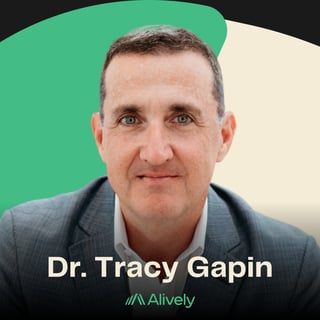
Speaker: Pat, welcome to the Home of Healthspan podcast. Thank you, Andrew. I appreciate it. I am looking forward to this conversation. To me, you are a modern day Teddy Roosevelt, and we'll get into why I think that.
Speaker: um But before you do, how would you describe yourself? I am lively on a constant journey of discovery. Love it. Okay. All right. And on that discovery, I would like to for our listeners to to give a bit of your story and evolution. So from the outside in, my parallel with you with Teddy Roosevelt is he grew up a sickly child and trained his body, right? Became the rough rider, became the the wild outdoorsman, right? And was fighting in that and then became a steward of the environment.
Speaker: as he became president. And that arc seems to, to me, really parallel a lot of your own evolution through your life. So maybe for listeners who might not yet know you, could you share a little bit about that?
Speaker: Well, the cool thing about Roosevelt is, I mean, he was a wrestler, a wrestler at Harvard. He was a catch-as-catch-can wrestler, which was the combination back in the day. of submission grappling as well as you could be pinned. So you couldn't lay on your back and play the jujitsu game, things like it just built a better animal is what it did. But yeah, for me, I grew up in Iowa. I was sick my whole childhood, respiratory illness and a lot of other related illnesses. I almost, I went into a coma for about a week in my sophomore year of high school with meningitis, spinal meningitis, encephalitis. So I had a lot of, a lot of things going wrong as a kid.
Speaker: And so I was in college, I was actually wrestling in college, still suffocating, I couldn't breathe. And i had to leave school early to take care of my mother who was ailing with heart problems. And she was a nursing director at a hospital.
Speaker: So her income obviously went down considerably, to say the least. And so I went home, started working, ultimately three jobs, and then decided I wasn't done competing, obviously. So I started training at a kickboxing and karate school.
Speaker: Well, I got good enough and I decided I was going to turn pro in kickboxing, but I still couldn't breathe. And I thought, well, I'm going to be competing against some guys that get paid to do this. I should probably figure out my respiratory problems. So I did a lot of research, talked to a lot of homeopaths, started talking to a lot of old school ag people who understood soil and read a lot of books. I i loved collecting old books from the eighteen hundreds things like that.
Speaker: So I put together a protocol that I thought was going to solve my problems. And literally from the time I started Andrew, till the time I realized I could breathe perfectly was 10 days. So, so the detox phase was already done. My respiratory system had opened up. The inflammation was gone.
Speaker: And I ultimately went from struggling on three mile runs to running 10 miles at five and a half to six minute pace. And then the sky's the limit at that point. Right? So I went to us kickboxing title and then, then, you know, the UFC starts and I go, my goodness, because of my wrestling background, they,
Speaker: literally created my sport. So that led to a UFC world title, holding that for about three and a half years and training 12 world champs, working with special forces and a lot of other folks, of course, and doing a lot of broadcasting.
Speaker: So it totally changed my life. And because of that stuff, when you make a discovery like that, you look at sick children and you say to yourself, there's no reason that these children should be sick. And you try to evangelize and tell people there are solutions.
Speaker: Yeah. So there's so many things for me here. I think it's no accident. Hicks and Gracie's memoir, right, is called Breathe or Breath, right? Like you have to be able to come into that.
Speaker: yeah um And then this week, I think just yesterday, my social post was all on my own respiratory rate. So I was a swimmer, competitive swimmer. And you would think, oh, this is really good for your lungs. This is great. You know, you're training the VO2 max.
Speaker: But you're breathing in chemicals constantly, and just damaging your lungs. And so I had no idea until I was listening to Andy Galpin talk about, oh, yeah, if if you're over 12, I'm really concerned. And at the time, I was over 17 on my respiratory rate.
Speaker: And I heard ah Boss Rudin on the Tim Ferriss podcast with his O2 trainer. And so I started training with that and I've gotten it down to low 15, sometimes into the 14s, but still way outside the target range.
Speaker: But it was a thing I've been training. So I'm personally and selfishly very interested in your 10-day protocol that that got you where you are. So let's let's dive in.
Speaker: No, that's very cool. And I just, not to go off on a tangent, but I think it's important. So all three of my daughters were and are, one of them is still a swimmer. ah One is now a coach in rowing at Jacksonville University down in Florida.
Speaker: And then my middle daughter trained herself. ah And my two oldest daughters swam for a former Navy SEAL their entire childhood. So you can imagine how hard that swimming was. And he made all the mothers cry numerous times by while he was yelling at the children. So it's funny to think back on, but My middle daughter trained herself for a full distance Ironman, didn't have anyone to train with, no coaches, nothing, never was a runner, never was a biker.
Speaker: And she trained herself. She and all of her sisters use a lot of the protocols that I've used and then more. ah She missed qualifying for the world championships in Hawaii by about a minute.
Speaker: And that was her first full distance triathlon. And this is like a nine or 10 hour race, right? To miss it by a minute in something that long. It's like, oh. But it says a lot about what, you know, the things that I learned from being sick my whole childhood and then the adjustments I made and then applying those to my children from the time they were little on what to put in their bodies to keep them optimal, you know, at an optimal performance level, totally changed their lives. So when I observed their lives, as opposed to what I dealt with, total different experience, right?
Speaker: Yeah. I mean, to to be able to not start from a deficit, right? So the earlier you can start, you don't have to build that deficit over time. You just have a great baseline that you maintain. Whereas yeah for someone like us, you know, we're having to fix things that had gone awry.
Speaker: Yes. Yeah. And yeah, so the the main thing is just being observant of what forms of elements are harmful and what converts them into beneficial, right? And that takes generally either electrolysis in modern times, but The microorganisms in the soil, you know, because, you know, when we think about geology, rocks giving off metals into the soil, well, what what turns a metal, an inorganic metal, into an organic metal or what's called a colloid mineral?
Speaker: And that takes microorganisms in the soil, right, through, and they release exudates that bond the metal to carbon. And once that happens, now it is a colloid mineral,
Speaker: that your body can truly, truly use. And the same thing with vitamins and and things like that, and the antioxidants that come from fruits, berries, vegetables that are grown, you know, the right way with not with synthetics, but with true organic and a diversity of minerals, right? A huge diversity of minerals and nutrients in the soil are super important.
Speaker: Well, on that, I am curious because this is a thing I've heard. I haven't personally said, I think you've done a lot more research on it, obviously, but you can be eating the right things, but because of monocrops and what we've done to the soil, we're not getting necessarily the same nutrients, the same minerals from our food that maybe 50 years ago we would have gotten.
Speaker: And so what does that mean for someone trying to do the right thing here? Well, what it means is that we cannot grow food that have the nutrients in it that we need unless unless we understand what nutrients. will From my perspective from many years ago, reading books like Dead Doctors Don't Lie, Minerals for the Genetic Code, things like that that are really important for people to read.
Speaker: I, from my perspective and through research, realized that the human body needs 60 plus minerals alone, two thirds of our elements. Well, when we go to regenerative ag people, and I asked the the regenerative agriculture people, how many minerals do you need to have in the soil? And they say 17.
Speaker: They say 17. And I say, well, where's the other 40? And they go, what do you mean the other 40? We only need 17 to grow plants properly. I go, well, they have to come from somewhere for me and for my kids.
Speaker: So we have to put the diversity back in. So we do know how to do that. We know that there are different mineral deposits all over the world, that have the diversity of 90 plus elements in it that we can put down on the soil and the diversity of biology, meaning the microorganisms that can digest those and convert those into beneficial elements to create nutrient dense food for either ourselves or for cattle, depending on what you eat, right? Chickens, things like that. So that everything is packed with real nutrients in the right form.
Speaker: So a lot of people think that they're being healthy by buying bananas and you know other produce at the grocery store. Well, if it was grown with synthetic chemicals, which 95% of our food is, what are they going to get from that? They're going to get at least a 70% reduction in antioxidant properties, the minerals, the vitamins, all the things that they're supposed to have just aren't there. So we we're starting in a really bad position and 100 years after the fact, really,
Speaker: we're in we're in we're in a little bit of trouble, right? Yeah, and I think, I mean, we see it across the the country and and really world. I mean, it's not just a U.S. problem. Certainly, I think it it is a bigger problem here because of how our agricultural system works.
Speaker: yeah But it can seem daunting, right? Because you think of Cargill, you think like big food, you' look, I can't control this stuff. But you said when you were doing it,
Speaker: within 10 days, you were able to turn things around. So what is in our control? What does it look like to to take control as an individual separate? And then maybe we can talk more on the system side of like, hey, here are the system changes that need to be put in place and what that looks like. But as an individual, given the world that we live in today, what are the steps we can and should be taking?
Speaker: Number one, we definitely should learn how to read labels. And I think most people that listen to you are probably pretty good at PLU codes on produce, knowing what numbers those should, what they should say and what they mean and all those things.
Speaker: That's super important. What type of water are we drinking? Because, you know, every time it rains, Andrew, the agriculture chemicals and a lot of other chemicals in our environment, you know, the nitrogens, which contain cadmium, arsenic, even uranium. You know, a lot of the the synthetic fertilizers have these heavy metals in them.
Speaker: And then the pesticides, the insecticides, the fungicides, the herbicides, which are antibiotics, end up in our water, among other things, to say the least. So know what type of water you're drinking and look into structuring devices, quantum restructuring devices that when Those molecules go in one end, they come out the other end differently. They've been broken apart.
Speaker: ah The harmful elements, the synthetics, things like that, the molecular bonds have been broken as the toxins pass through them. Super important. We can filter out a certain amount. So if you want to put a carbon filter and some other things previously, then run it through that. That's something that people can look into. But we have to know how to chelate the toxins out. So Luckily, nature, our creator, has created so many amazing things on this earth that when we put them into our body, they will automatically either allow the cell to release the toxins because, well, the cell is going to pull in whatever it needs to keep us alive, whether that's bad or good sometimes.
Speaker: So the cell, once it realizes it has what it needs, will release the bad things. So that's chelation, right? And removal of toxins out of the body. And then understanding biology, microorganisms do have the ability to convert synthetic chemicals, forever chemicals, these toxins, and break those bonds through their exudates, digestive process, and break apart those molecules of of forever chemicals, for instance, that can be harmful to us and the environment.
Speaker: So understanding that nature has created the solutions, we just know how to have have to know how to put them together. That's super important for high-performance human beings or for, you know, when we think about it, what is genetic expression?
Speaker: Genetic expression is the ability for a plant to produce a lot of really nutrient-dense fruit and vegetables or for us to rebuild ourselves correctly at a cellular level, right? So if we've repaired damaged DNA through the right elements, remove those toxins, put the good things in,
Speaker: We're going to rebuild ourselves those chains of aminos and and that roll up into the proteins we're made of. Right. So all of these things have to be put together in packages.
Speaker: And that's what we do at cell saviors and at soil saviors. OK. And so then i guess I get the principles. I don't know. Like, what is a restructuring device? I've not heard of that.
Speaker: A restructuring device uses a paramagnetic rock and other elements inside of it that create frequencies that literally ah break those molecules apart, the harmful elements, right? it's We could have, ah and I'll connect to you with people that are that are the quantum experts in those things.
Speaker: And once once you talk to them, it's it's a ah really a world-changing thing. level of knowledge it really changes your view on how things work.
Speaker: And is it you pass water through it? And like, what what is it? I don't even know an example of a device would look like. You can connect it to your water line coming in the house. So the whole house has restructured water, you can put it at the faucet level, the shower level, you know, you can you can do that. And so yeah, it's it's really neat. So it's the further you go in down that rabbit hole of health, and high performance and, you know,
Speaker: genetic integrity, so to speak, protecting our DNA and all those things, you get pretty deep down the rabbit hole. So sorry to's sorry to go there. No, no, no. I mean, this is why we do the show is to go down these rabbit holes. And so I'm thinking going back, because I don't know if something like that existed. So what year did you go back and start training? Like you were taking care of your mom and working three jobs and then training for the kickboxing. What year was that?
Speaker: Well, I healed my respiratory system about 40 years ago. Okay, 40, yeah, so we're looking in the mid 80s. Did they have restructuring devices back then? like the i was not aware of restructuring devices back then.
Speaker: No, i' there were though, there were. There were quantum experts that were it, yes. Okay, so, but I'm thinking your 10 day plan, like I'm super, super curious, because this is, you know, I get it's an end plan, but we have a before and after, like, here's where I came in, and then 10 days later, I'm here here, are the things I did over those 10 days.
Speaker: Yeah, so what I did is I assembled antioxidants, I assembled ah colloidal silver, colloidal copper, and a few other components that were very simple.
Speaker: And that's what I started taking. As supplements, these were things you could go like, you could buy. searched. and I searched and searched. Yeah. So, you know, a simple collection of berry antioxidants and fruit antioxidants. People can find those, but here's the thing.
Speaker: Micronized skins of, for instance, grapes, the seeds and and skins of grapes, CoQ10, well, they make synthetic versions of that now. That's kind of pervasive throughout the industry of supplements, right?
Speaker: Well, I wanted the skins and grapes, and luckily back then there was a lot of it out there, that was grown with numerous nutrients in the soil that allowed those grapes to have their antioxidant properties of CoQ10 and massive amounts of it, right? So go down the line of all the berries, go down the line of all the fruits and and those types of things with the antioxidant properties in all of them.
Speaker: That's basically what I put together at the time, along with the silver and the copper. It cleaned my system so quickly that in 10 days I could breathe. I'll give you a description.
Speaker: I went from breathing through a straw full of mucus my whole life to a giant crystal clear PVC tube. that's how it That's how it felt. yeah And so all the extra work that I had put in my entire childhood, trying to keep up with everybody else, because I came from a- Now it's paying dividends, right? Yeah. yeah i came from ah like I came from a community, Bettenorff, Iowa, that was literally a conveyor belt of division one athletes. Oh, yeah. I mean, Iowa for wrestling, of course. Yes. Wrestling, football, tennis, track, you know you name it. I mean, it was a ah really unique community. And Iowa, of course, full of great wrestlers.
Speaker: But I just wanted to be a good athlete. And that overpowered my illness and my settling to be sick. And I just kept searching until I found it. Right. And that's, that's really what freed me kind of from that almost prison.
Speaker: Yeah. I mean, it's, it's almost like training from altitude for decades. And then all of a sudden you go to sea level and I, I'm ready. yeah Yeah. You know, and I've been lucky enough to be around guys that, and run with ultra runners and um try to swim.
Speaker: you know, i can I can breathe well enough to swim, I just can't swim very well. Yeah, the technique technique makes such a difference. So funny. That's why say when I go swimming, you know, someone else could be burning four times the calories I am each lap because they're just so less efficient. i mean, for me, it's just like doing an easy stroll, but it means that it's way less work, right? I'm going way faster, but it's just a lot less work.
Speaker: Yeah, and the density of a body when you wrestle your entire life and play football, you're going to create a denser human being. So me floating is not going to happen. I can tell you, I will, I will sink no matter what. i' So if I don't feel like it feels like at least if I don't swim fairly fast, I'm going to sink, which I kind of do. I bulldoze through the water. Yeah. You're just dragging the legs behind. yeah thats but Most corporate wellness programs overwhelm employees with too much or they offer too little to be useful.
Speaker: Alively gets it right. We start with each employee's data and goals, then serve one clear, personalized action at a time. No noise, just real behavioral change.
Speaker: The outcome? A healthier, happier workforce. A measurable impact for your business. Visit Alively.com to see personalized wellness in action. So for today, okay, so a lot has happened in the intervening 40 years, and both for good and ill, right? Like, probably soil depletion has gone the wrong way.
Speaker: But our access, one, our knowledge, and then two, our access to solutions, right? has probably increased because there are people like you doing this research. So for someone who says, you know, like me, you know, my respiratory rate is still 15.2 or something on average. and And I don't know if I can ever get to a 12.
Speaker: But if that's something I'm saying, hey, I am concerned about this. I i have something going on. what What are the steps I can take, like very tactically, that could try to follow your kind of program that you taught your daughters?
Speaker: Yeah. I mean, here's one thing. The education is super important ah and people can go to sell saviors.org or soil saviors.org. And there's educational videos there that we have a on soil saviors.
Speaker: We have an educational video on the art and science of soil. And once they go through all that video series, which it's not super long, once they go through that and they understand the soil They will realize that we come from the soil.
Speaker: And once you solve the environmental problems, because ultimately, Andrew, we're just part of the, we're inhabitants of the larger host organism, the earth, right? And what we do to the soil is directly reflected by our condition and our our ability to perform it.
Speaker: Well, I mean, it's from dust to dust. Like we are literally right. Like our skin creates the dust. It it is circular. So the minerals, the nutrients, like everything is cycling through. We're the same atoms one way or the other.
Speaker: Yes, sir. Yes, sir. So that and then once they go to cell saviors, they'll understand the four pillars that we that we have put in place to catch people up as quickly as possible, to chelate the toxins, to remineralize the body. and get them ahead of the game.
Speaker: And once they feel that, generally across the board, once they feel that, get through the detox and come out the other side and continue to rise, right, as as their body becomes more saturated with what it needs, they'll realize and then it inspires so many people to then continue researching. And it's they they won't be able to stop researching because once they feel it, they'll understand it.
Speaker: Yeah, well, and then and then you become a proselytizer, right? Because you have your own before and after. You're like, look, I thought I was fine, but let me tell you this next level I unlocked. Yeah, and we've had a lot of people that didn't realize they had respiratory issues until they used the the remineralization process and the chelation, the detox.
Speaker: And once they got through that, they went, I feel like I'm on oxygen right now, you know? And that's what that's the way we we want to experience life, right? Yeah, I mean, it's it's the David Foster Wallace, the two young fish are swimming and the older one says, hey, how's the water, boys? And the young fish says to the other, the hell's water, right? when When you're in something, it's just your baseline. You don't have a this and that to compare it to.
Speaker: and so if every day of your life, this is how you breathe, that's normal. This is what normal is. You don't know there's another world. Yeah, yeah. And I, you know, it's it's a blessing to... You know, continue researching. I mean, i it's it's like with martial arts, winning a world title, getting black belts in numerous martial arts, things like that.
Speaker: When you get to that point, you realize the more you learn, you actually know nothing. It's never ending. it's It's absolutely never ending. So it's a it's a great experience. It's a great journey.
Speaker: Yeah. And, and moving, I guess as well, right? Cause as you learn, the world is changing too. So you're having to learn, but this an interesting thing for me. i I'd be curious with you as we identify, Oh, this chemical is bad, or this is like BPA plastic. like Okay.
Speaker: It's BPA free. And trying to explain to people of BPA free for plastic doesn't mean it's safe, right? Like we just knew the BPA because they scrubbed the rats tanks and they had that kind of plastic and it caused birth defects, but they haven't done any safety. There's no proof that the other is safer. We're just like, oh, it doesn't have this thing.
Speaker: And so we go to the next chemical and then 20, 30 years later, like, oh yeah, that causes tumors. Oops. And then you just keep moving down the line versus going the other way.
Speaker: Yeah, and on that note, the world through modernization has experienced a lot of great things. A lot of wonderful technology. Obviously, we're communicating on technology because of of what discoveries and synthesized products can do.
Speaker: All of these things, not in food, not in soil. not it It has no place in it, really, ultimately, is what we need to remember. So we we teach people how that they can grow food we don't tell them to do it we just show it more down in New Mexico, for instance, will deliberately grow food with petroleum, with oil and microbes because natural petroleum, raw petroleum, is so packed with nutrients, it's the lifeblood of the world.
Speaker: So if we know how to break that down with biology, with microbes and and fungi, and convert it into bioavailable nutrients, you will grow massive amounts of food and it will be nutrient-dense and it will be toxic-free.
Speaker: Coal. Coal is a version of oil. They are very similar. And depending on the deposits around the world, are very nutrient dense. So these are these are types, coal is part of the components. Humates, if you look up fulvic humic acids in human health and performance.
Speaker: Well humate, it's called in agriculture. Humate is one from organic growing practices that's packed with nutrients. When combined, with microorganisms to break it down to make it nutrients for the plants.
Speaker: So the earth can be converted over and over. That is the sustainable that they don't understand or aren't telling us is that the world can be recreated over and over by just putting it back on top.
Speaker: Yeah. Well, that's ah the funny thing. when we get up in arms about certain things, I do say, look, the earth is going to be fine, right? The the earth was here for a few billion years before us. Like the earth is regenerative. This is a blip on its screen. It will repair itself.
Speaker: It's humans we might need to worry about. like We may ruin ourselves, but the earth is going to figure it out. It's working on a bigger cycle than we are. And these are the principles, the the comparison between the soil and humans so that people understand.
Speaker: So weeds grow in depleted soil. weeds pull elements from the from the environment, from the atmosphere. They don't pull things specifically just from the ground.
Speaker: So different types of medicinal herbs, dandelions and you know thistles and other things, they pull unique elements out of the environment, the atmosphere, and when they die and decompose, they're putting those elements back into the soil and reef and that's nature's way of repairing damaged soil.
Speaker: Then from below, you've got rocks releasing minerals, The biology, the microbes are digesting those and converting those. So from the top and bottom, the soil is being repaired. When there's a bacterial or fungal infection in soil, in plants, animals, or even lakes, that my home state of Iowa had 14 lakes closed because of E. coli explosions, that's nature's response to digest the synthetics and elements, the toxins that we've put into the environment to fix it. So we blame the E. coli
Speaker: as the dangerous aspect when in reality, what caused the E. coli to respond that way are the synthetic agriculture inputs that we put into the environment that ran off into those lakes when it rained through the streams and creeks and things like that. So when a person gets an infection, a fungal or bacterial infection, and they go to the hospital to get an antibiotic, which means anti-life, that kills life, right?
Speaker: Instead, we have to understand that That's nature trying to digest the problem and potentially digest you because you're defective and put you back in the ground where you belong because nature does nature does not support ill health, right? that it is yeah It will not forgive.
Speaker: And sick plants give off chemistry that tell insects to come eat them and digest them. Healthy plants don't give off those chemical and energetic signals Oh, it's like the rotting fruit attracts. It's the rotting that'll get the flies and everything. Yeah. Okay. It might not look sick, but it doesn't have the nutrients for the immune function that it's supposed to have. So insects are called in by nature to digest it, break it down and start over. That's that's nature. So if we understand nature and we understand how to flow with it and use it, then we ourselves can be very healthy and our environment. So a lot of people use
Speaker: The Soil Saver is just on their lawns. they They spray it everywhere, all over their trees, their bushes, and and their grass because they want to break down those toxins. They're done using the synthetic chemicals and the toxins in their yards. They want their kids to be able to go outside barefoot and play, right?
Speaker: Yeah. It's, uh, I mean, for the grounding, if nothing else, right? Like it's, you want that reconnection with the world with just don't go grounding on a golf course full of chemicals barefoot.
Speaker: Oh my God. It's terrifying. I mean, it's the, I think based on the square of the distance from a golf course,
Speaker: you like double quadruple eight extra chance of Parkinson's or all these other things. I mean, it's in living in Atlanta where, know, there are golf courses everywhere, especially in the suburbs.
Speaker: It is Gary water supply and other things. Yeah. And just sorry to go off on this tangent, but golf courses, Brian, who runs the golf course in my hometown has switched over to chemical free.
Speaker: They're virtually almost, they've almost gotten rid of every chemical used in agriculture. And he and I started talking about this seven years ago, I think it was, when I first visited the the pole building where he runs all the maintenance and everything for the golf course. He thought he talked to me like I had three heads back then. thought i was He thought I was a lunatic. But now, you know, the conversations we're having now, he goes, it's amazing. He goes, we can do all of it without chemicals. It's it's wonderful. Yeah.
Speaker: And definitionally, of course we can, right? Like the the planet did it forever. And so you just kind of need to build around the environment and build into the environment, right? If you're trying to do a massive Bermuda grass lawn in Arizona,
Speaker: Maybe you're just not doing the right thing in the right place. like This is not meant to be here. But ah if if you play in concert with the world, then it's going to support you in what you're trying to achieve. 100%. Yeah. And so from soil to human health and everything in between, nature has the solutions. It really does. Yeah.
Speaker: That's incredible. Well, Pat, this ah it it definitely feels like what you're saying, that the more you get into it, the more you realize you don't know, the more questions you have. And so we we can't obviously get into everything on a single show. So for people who want to learn more, it sounds like Cell Saviors and Soil Saviors are the place to go.
Speaker: Yeah, yeah. So people can go to SoilSaviors.org slash Healthspan. And then if they use health 10 as their promo code, they can get a discount.
Speaker: Oh, wonderful. Yeah. testing And you'll, ah you'll obviously get credit for that. I don't know if you even do that, but you'll get credit for it. No, we, we, we try to be Switzerland. So we don't, that's great. take affiliate fees We just say, okay Hey, here's the science.
Speaker: We want you to find what works for you. Yeah. Okay. Wonderful. Yeah. I think people will feel it. I think they'll understand unless they have totally chelated the toxins, the, the,
Speaker: Elements in there are probably the best, well, the best chelators I've found in 40 years and and remineralization tools. So i think I think most folks are going to feel it. Fantastic.
Speaker: Well, we've we've covered a lot, right? Like you had 40-year program, you've trained athletes, your your own children, you're educating the world. For people who are looking for just one thing to do differently tomorrow than today, or to start today, why even wait til till tomorrow?
Speaker: ah What would that be? Take the fulvic humic acid from cell saviors to chelate the toxins out of your body and experience that first. Okay.
Speaker: Fantastic. Well, thank you so much. Appreciate you, Andrew. Thank you for joining us on today's episode of the Home of Healthspan podcast. And remember, you can always find the products, practices, and routines mentioned by today's guests, as well as many other Healthspan role models on Alively.com.
Speaker: Enjoy a lively day.