Transcript
Speaker: The thing about it that you have to fix you. yeah You have to love you. You have to respect you.
Speaker: And you have to know who you come from, who you belong And that you are a human being.
Speaker: That's one of the hardest things to accept.
Speaker: Well, hey there, sweet peas. Welcome back to Friendless. I'm your host, James Avromenko. And this week, I have the honor to be joined by two incredible guests. I spoke to Elder Larry Grant, who's the elder in residence at the Justice Institute of BC and UBC's First Nations House of Learning. And Scott Steedman, who is a publishing professor at Simon Fraser University.
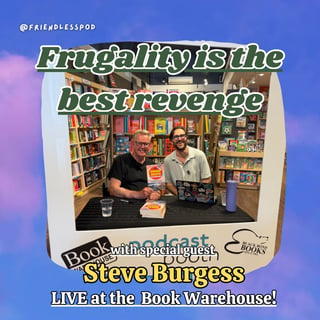
Speaker: We discuss a brand new book that they have co-authored, Reconciling, which traces Elder Larry's life across Vancouver and the surrounding areas from Musqueam to Chinatown, to UBC and beyond. The episode was recorded live at the book warehouse, so there will be a little bit of background noise, but the interview itself was an honor to conduct, and I hope you enjoy.
Speaker: Well, this week on Friendless, we are joined by two incredible guests that I have been really, really excited to to chat with. I am honored to be joined by um Elder Larry Grant, the elder in residence at the Justice Institute of BC and the University of British Columbia's First Nations House of Learning.
Speaker: He's an elder of the Vancouver Chinese community and the Muscoom Indian Band. I'm also joined by his co-author with his new book, Reconciling, Scott Steedman, who is a writer and editor and professor in the publishing program at the Simon Fraser University. um So let me start off by just saying thank you very much to both of you for joining me. I really appreciate this.
Speaker: Quite an honor. i mean, the honor is completely mine, but but but i'll I'll take it, you know? If I can just say... like We've never been on a podcast before. Hey, it's kind of cool. Excellent. I'm glad to... It's it's fun it's fun for me to be it's fun for me to be the sort of the first host for for guests, you know this This show is very gentle compared to Others, you know, so so you'll you'll be fine. right know Now that I've given my own sort of little intro chiron for you, I often like to flip the question back to my guests and say, you know, Elder Larry, who the hell are you?
Speaker: I wish I knew. ah I thought I knew. I'm a Muslim person right from birth.
Speaker: And from birth, my father's from Guangdong Province in Seimoon Village in China.
Speaker: Something that I had so much
Speaker: I think negative impact on my thoughts as a young boy. And as an older person, I've grown to respect who I am and learn to love myself and accept myself.
Speaker: yeah That's the part that was missing in my childhood, that connection to self. mean
Speaker: Created by the social injustices that were prevailing at that what they time of my youth. But today, I think today mean I think I'm beginning to be okay more recognized about the social injustice issues.
Speaker: And I attribute a lot of that to my partner here, Gott, having the nice words to to say about me and make me sound intelligent.
Speaker: i hope you want You want to give a little follow up on that? Sure. I mean, I appreciate Larry saying that, but of course, most of the intelligent words in the book come from your mouth. Like come off. Occasionally I paraphrased. mean The in interesting thing in a way is that I'm a settler by definition. My family's Scottish origin. I once did a DNA test and I'd come at 99.2% Scottish, just which is so boring. um But so I've actually, I'm a complete mongrel. I grew up in Australia. My mom's Australian. I've got a stock, another settler culture.
Speaker: And then I've actually got four nationalities. I've also lived for long periods in the UK. Damn you. London, not Scotland, but in France. So I know about colonization just from having lived with the colonizers. Of course. And how little they care about Canada, but that's it's another story. Yeah.
Speaker: but And if I could just say the other thing is i I'm someone who's very curious, a reader and meeting Larry, i was just fascinated by his story and and unraveling it, which is what we've what we've done in this book.
Speaker: Yeah. um Thank you both so much. So one of the first things that really struck me in reading the book was the specificity of the sites in Vancouver.
Speaker: You know, whether it's, you know, Musqueam, whether it's Chinatown, the Fraser River, UBC, the Swining Area. We're talking about Marine Drive and Marpole. um What is it about telling your story through place and location rather than just chronologically that sort of felt like the right way for you?
Speaker: Well, that was the suggestion of a shot. Oh, okay. That we do it very specifically in the different sites that I actually talk about. Right. and have a conversation with each other.
Speaker: And he would record it and write it and explain us as much as he can from my words. sure the words of an author, publisher.
Speaker: and And I think it really concentrates the talk about Chinatown or Strathcona. The very, very specific parts of my life are in that.
Speaker: Agassiz, Chilliwack, Moscow, Marple, Chinatown, the very specific issues happened in each location.
Speaker: and And they keep popping out. but that So he he suggested that. not knowing anything about book writing or anything like that or was appealing to younger people. So he asked me, what target audience do you think?
Speaker: And that I, at the time, was high school student. grade 10, 12, and first year, second year university. In that age, that's how we started.
Speaker: They're using that
Speaker: way of... Kind of the the framing or the... Yeah, yeah, yeah, yeah. It, uh, it created a really powerful kind of anchoring moment. You know, the, the stories sort of start almost dominoing on each other. yeah Right. Yeah. Yeah. They do they they they pop out the, every location has this very, very specific thing connected to it.
Speaker: And once they start talking about the specific area. other issues pop out. okay There, and then it goes sideways. And the audience triggers something.
Speaker: And you talk about this area or that area or that issue or this issue, it just pops in my head. It's not fabricated, and it's my truth. Yeah.
Speaker: I find it is a direct... um Where do you think those sort of, those connective triggers, where do you think they're they're happening for you? Is it, is it the stories just start sort of rolling through Well, yeah, there's different things, like,
Speaker: living in Georgia and Gore and growing up with the kids in the neighborhood saying, hey, you know that store over there, he's got all kinds of candy in a certain spot and they're watching him. it takes him to leave the back room to have come to the front room.
Speaker: It counts one to ten seconds there. So if I go in there ah and you say hi and you are the one going to buy something,
Speaker: And I'm popping in, I'm grabbing and So you've got it scouted, right? Yeah. You scout it, you scout it, you scout it, and these little things pop in. Yeah.
Speaker: It's like we're not scouting before. Right, yeah. And I know that his candy was located in a very strategic spot, you know, from the doorway.
Speaker: We go in there, I pop in and grab it and say, oh, I want to buy something, but I can't figure out what. I'll see you later. evil And around the corner, and split the candy. yeah yeah I mean, it's nice to know you've got stories for the sequel, right? You know, for the next one. I going say a couple things. First of all, the book started because BC doing some communications work. This is a freelancer.
Speaker: And they were putting up signs. Sort of the first step in some kind of reconciliation. This is like eight years ago. And they asked me they and to or to write a piece about it. my I said to them, why don't we talk to a Musqueam person?
Speaker: Which, interestingly. So they said, okay. And that's how i met Larry. i I just phoned up the the band council. We ended up walking around the campus for about four hours. And Larry just talking.
Speaker: Yeah. That's how the book ended up being structured was the same way. Like as we walk and sites and, you know, maps, buildings would stimulate his memory. Mm-hmm. I ended up with something like 4,000 words written down and then they asked me for six captions for photos. which that's going to be tai And then it became basically one of the chapters of the book. So that's kind of how the process.
Speaker: But the other fascinating thing is I went to UBC, right? As a student yeah about Musqueam, like the fact that that the this beautiful campus is right next to the reserve. It's part of the traditional territory where they used to hunt and do all kinds of other things. And no one ever told me that.
Speaker: It was not a topic of conversation. yeah So the book, in a way, for me, is an exploration of a city that I you know i grew up in and know well, and yet seeing it from a totally different point of through Larry's eyes. can give you an example it's really poignant to me. We went to Fraser Valley Heritage Park, I think it's called, and yeah in Mission, which is where it is. Okay. It was there for 121 years, I think. It closed in the 80s. So it's this is not ancient history.
Speaker: And I didn't go there, but but the reason he didn't go is well that's whole other story. We'll get into that. how get into that. But when we were there, there was no reference to it. We we had trouble finding there are actually the foundations of of the Boys and Girls dormitories there, but there's one old weather-beaten sign.
Speaker: uh saying that this is not sufficient and we're we're working on better signage yeah looked like they've been working on better signage for quite a long time but yeah and then at a certain point larry was standing on a road that kind of comes up and ends and he said we drove up this road to come and visit uh cousins and he described them leaning out the window like they were literally in prison and um as understanding that he was was seeing those buildings that don't exist anymore uh sort of you know, another layer of memory on the landscape I hadn't seen. It was very poignant. Yeah.
Speaker: Yeah. And the people running by jogging and going to get a cafe at the beautiful cafe, theyre having a coffee or whatever, they don't know about that, that, that history of of that place. um But for Larry, it's, no it's very poignant. Yeah. Yeah. And alive, you know, right. I wonder about that a lot about the idea of, you know, how do we, how do we learn these stories? You know, because, because to yeah, to run by it, it would to the, to the runner just look like a piece of land, you know? And, and, and, and I think that, you know, this, this book is just, you know, one of the pieces on that road of, of how to make people understand what, what has. The hardest part of a lot of buildings is the memories they, they trigger. Mm-hmm.
Speaker: violence and abuse the survivors. were My wife went Port Alperni Residential School and when she told me they're going to tear down Indian Residential School that was was on the reserve,
Speaker: ah they should save one part of it before. What after we want to save one of those buildings for? There's so much hurt. I said, there should be a monument then, some kind of stone cairn or something that says, this is the site of...
Speaker: They were a very Indian residential school that was built such and such a date and torn down in such and a date so that the grandkids, the great grandkids could say, oh, this is where it was.
Speaker: I heard the stories, but we don't know it was. And that's, that's what I, that's what I worry about is by, if we completely raise it, then that memory will be lost too quickly, you know? And, and if there isn't something reminding us, then it's easier to brush it aside, right? You know?
Speaker: Yeah. Yeah. But without it also then on the other side, kind of becoming a, I don't know, maybe or in itself too destructive or, right? You know? Yeah. Yeah. Because on that issue, prior to us working together,
Speaker: The federal government allocated something like $1,200 $1,500 to each Native community to do something to commemorate the closing i see in the Indian Residential Schools.
Speaker: And it wasn't enough to do anything. was just enough for it might have been enough for half a community dinner. So quite a few of the leadership got together and said, we should pool our resources and have a little conference and talk about it and understand better
Speaker: preserving the history and effects of the Indian indian Residential School. My suggestion was that at Victory Square here in Vancouver there should be beside the cenotaph another cairn to indicate the
Speaker: rights entitled to the land and what it was about the
Speaker: residential school students that never went home. Yes. Not because they didn't have a home to go to, but mentally couldn't fit in any longer.
Speaker: They couldn't recognize ah the their families, their language, their culture, all of that was memories that were very traumatic to them. Every provincial,
Speaker: like Victoria, all the capital, every capital city, and there should be one um board beside in Ottawa, on the hill, beside the eternal flame of the unknown soldier. Because we have
Speaker: survivors that don't know where to go, don't know who they belong to, and don't know why they don't know. And that's really important. They like the walking dead for me because they have no real connection to their histories yeah and who their families are. that That was my suggestion. yes The settlers that were trying to help would say, you've got a pretty radical idea. I said, well, I don't think so.
Speaker: For me, it's just normal. no These are monuments of all of the subjugation.
Speaker: said, that's what we've got to push for. yeah well And they said, well, on Parliament Hill? He said, yeah. where're Where else? where People from around the world go on exactly to the best place in the world to live, in Canada.
Speaker: But no one knows the history of the Indian Residential School and all of the acts of socioeconomic denial and exclusion.
Speaker: And I said, I'm coming from two different worlds that were both excluded in different ways. Because one side is Indian and they're not Indian. yeah So deny identity, the other side is Chinese and they were always Chinese.
Speaker: They had language, we had nothing. They had culture, we weren't allowed any. They had identity. would allow to be identified in a way that identified us as the people that we are.
Speaker: oh those those are the things that I really was trying to talk about. him And it's something that is a whole complete.
Speaker: Another story. Yeah. Whatever came, you know, you were saying you were these were these were, you know, suggestions in in kind of in committee.
Speaker: Where is that currently? is Is that still being pushed for had that been dropped? that kind of just failed. that's disappointing. Yeah. It was just something the government they wanted to say.
Speaker: No one was thinking about it. They're not going to give you anything they can do. If I can just say Larry knows more about this than me, but what what came and said was the Truth and Reconciliation Commission. I see, yes. Which interestingly came apart about, it was an act of parliament, right? said that they had Yeah. yeah it was It was a court case. Yes. yeah It wasn't the government that decided. It was the Supreme Court of Canada.
Speaker: oh yeah Oh, yeah. That's something that It's a piece at least, right? You know, but it just, yeah, doesn't feel like the, you know, sometimes for me personally, it feels like, you know, as important a document as it is, it's like, it's still, sometimes you can hide a lot of it by it being text and it being just the thing that you have to actively go out and seek, you know, whereas to have a a monument that you can't avoid, you know, and that you, you have to look at when you go to, right. You know, I think is a lot more.
Speaker: you know I don't want to say one's more important than the other, but you know they they can work in tandem, yeah right? you know and For me, wherever there's a cenotaph for the soldiers, the veterans, there should be something there for the survivors, the Indian residential and the ones that never came home.
Speaker: Famous military survivors. Yeah. Yeah. Um, um, an element that you talk a lot about throughout the book is the idea of to not belong was forced upon you, you know? Um,
Speaker: Can you kind of take us back to when that realization first truly became, you know, tangibly real for you? Not in the sense of, you know, the lived experience. Of course, that had been a part of it. But but that first moment where you reflected an understanding of what had been done to you.
Speaker: that is I know that's a big one. that be That's because trying to find this of course yeah challenging, but I know that when I was in high school, basically it became more clear. Mm-hmm.
Speaker: And when serving my apprenticeship, my mentors were military mechanics ah of the Second World War. in the or but They took care of the tank. of milkka and
Speaker: Then they talked about Canadians being Canadian and and no, we're not allowed do this, not allowed to that under the Indian Act and under the Chinese Exclusion Act, we're not allowed here, allowed there, not allowed there.
Speaker: And then customers coming in, I was very proficient on the largest crankshaft grinder west of the Rockies at that time, the largest crankshaft grinder in British Columbia.
Speaker: And the customers would come in and talk to crankshaft grinder. and And the front desk guy would say, oh, that's him over there.
Speaker: That's you. You're the guy that runs this mission. I'm the guy. oh Yeah, but you're expecting a white guy?
Speaker: oh I didn't say that. yeah yeah It's okay. I'm the guy. You're Chinese, right?
Speaker: I said, yeah. That's what they recognized me as. I'm Chinese. So things like that came and how they kept it away.
Speaker: But as a youth, shortly after the second, the bombing of Pearl Harbor, eton the Japanese kids disappeared. All the movies.
Speaker: The war movements ramped all over the place. Heroes were white guys, and the villains were Japanese or people of color, and they all spoke English. and house And around the same time, my father was upset at my mother because I could respond to Hans Komenem very easily and I couldn't respond very well in Cantonese.
Speaker: I stopped talking to him in India. see how And that between Pearl Harbor, but dad having an argument with mom, all the movies, the heroes, the white guys, the only thing spoken around us was English.
Speaker: Even though I was living in Strathcona, there was Ukrainian, Polish, Croatian, Jewish. It was all spoken in there.
Speaker: really, really a great place to be to to see the integration. But the exclusion was so strong.
Speaker: The signs in in certain restaurants, no dogs, Indians, no Chinawans. Or just the service staff walk in the store like this and
Speaker: Either you were tailed all over the place, right or they ignore you completely. That's all that sudden, wherever I go, I'm not wanted.
Speaker: But I can't change it though. That's something my mother told me. I came home from South Kona crying. What's the matter? We got hurt. You've been in a fight or what? and well No, they called me Chinky Chinky China Man. said, and no, well no, no.
Speaker: It's not so humpy-dumpy, but using Chinky Chinky China Man. I think you better stop crying. Because you are yeah Chinese. You can't change it. right You've got to learn how to talk about it.
Speaker: But knowing that part, how it excluded you from you didn't belong. there You didn't belong. It's that build-up. in that Yeah. Yeah.
Speaker: And there's no real aha moment. It just gradually comes. Yeah. And i I relate that to being an alcoholic.
Speaker: Sure. Sure. First of all, you've got to find out you're an alcoholic. Then you've got to accept it. Then what are you going do about it? Mm-hmm.
Speaker: um Are you going to fix it? You're just going to fix it. And the thing about it is that you have to fix you.
Speaker: You have to love you. You have to respect you. And you have to know who you come from, who you belong to. And that you are a human being.
Speaker: That's one of the hardest things to accept. m Especially if it's being kind of reinforced over and over and over that they don't want you to feel that. They don't want you to believe that. Yeah.
Speaker: Because it didn't matter what you were doing. ah People of color picked out a different incident.
Speaker: don't speed. Whatever you do, don't speed. Because the cops are going to see, stop and talk to you and see that you're not white. Oh, you're going to get a ticket.
Speaker: count And the white guy's not he's going to get a warning. And don't spit on the street in front of a cop.
Speaker: Whatever you do. Teenagers at that time always... chewing tobacco, but everybody spat all over the place.
Speaker: But there's a by-law that says no spitting on the sidewalk. and Don't spit anywhere near a cop, because they're going to come over and bother you. yeah ah And it's not going to bother the white guy. It's going to bother you.
Speaker: And that happened quite often. We were stopped on Hastings Street there by Sweet Sixteen, old, old Sweet Sixteen.
Speaker: okay And I'm with the the Irishman, and the Polish guy, Chinese guy, and sitting on the sidewalk walking, teenagers, you know.
Speaker: How far can you spit, you know? You know what I think? I put it in the cup. You guys stop here. You and you.
Speaker: No spitting on the sidewalk. So he was spitting too. can see him. Yes. Unreal. Yeah. Yeah. yeah Things like that. Yeah. yeah mean but That builds into something, you know, you mentioned, um about, something your, you know, your mother says, right. You know, just now you told, you know, she came home and you said, well, you better deal with it. Right. Another element in the book where you discuss your mom saying, you know, did she say, I can't remember the exact quote, but it says, uh, did that, did that break you? Better go out and do it again. Right. You know, and I'm curious, you know,
Speaker: An element of this is and a big element of the book felt like, you know, the things that your family and your parents passed to you and I'm in in kind of conflict with the things that, you know, the the culture and the government were trying to take, you know, and I'm curious, are there things that spring to mind that your parents passed on to you and gave to you that no matter what they did, the government just could not touch and could not ever kind of take away from you? Well, for me, I was just speaking on the way to the bookstore yes when I was a resident elder and cult instructor of language, doctor, well, she wasn't a doctor then, but Sue Blake did.
Speaker: Hey, Larry, there's there's a ah sir a program classroom. but i think the acronym today is a CTLT department.
Speaker: Teaching and Learning.
Speaker: Technology. Okay. great And it's about classroom behavior and ethics. and um You know, you've never taught you'd never been in a classroom teaching anything.
Speaker: It'll help you learn how to behave in a classroom. How I go, a half hour present here forty five presentation, presentation. Got any questions? and No, i' no question. can And after she was driving me home, she said, what did you learn there?
Speaker: said, nothing. I didn't learn anything in there. My mom taught me this when was little boy. yeah yeah Not as an old man teaching class. said, how to respect someone. You don't have to love them, but you've got to respect them.
Speaker: You got to respect what he knows and how he's teaching. and holdla You have to have respect for each other. You don't have to love each other. You don't even have to like each other. What I learned in the machine channel. There's a lot of stories about that, isn't there? You don't have to love anybody. but It's like my my dad running Chinese grocery stores.
Speaker: that that woman, that old woman, teach you like a dumb dog. oh How can you say, can I help you, ma'am? Oh, yes, ma'am. No, ma'am. This is a better one over here.
Speaker: You can take this one out. and You're sucking up to her because it we're just by ourselves. You're just sucking up to her.
Speaker: if we She pays the rent. She pays the rent. And she is a customer. I have to talk to her very nice and respect her and treat her properly or she's not coming back. Yeah, yeah, yeah. And that's what I learned in the trades.
Speaker: We could sit and talk and argue and yell and swear at each other, talk about politics and It's really good. Face to face.
Speaker: Coffee time's over, guys. Yeah, okay, let's go. Come on. We got work to do. Yeah. i mean the The issue talk about many times is not specifically about me, which you can perceive as against me, may not be.
Speaker: And we you don't know. well And if you don't work together, it's going to fall apart. Everything's going to fall apart. And for me, that's part of reconciliation, conciling. Work.
Speaker: on you before you connect with others. I found it interesting. i don't know if you you've necessarily made a ah direct connections, but but in telling the stories of your sober, I'm somebody, I got sober three years ago, so I'm i' a little little ways behind you, let's say, right? But the way you are you tie in that process and that sort of development of self-love for that and connect that to to reconciliation as ah as a personal um you know personal work on top of the community work. yeah um I really loved and appreciated that that that those connections. And I'm curious, I guess, where do you where do you start with that kind of thing? You know, if if someone looks up your book and and they're feeling kind of inspired, where where would you hope they go next kind of? you From the book itself? Like for their own personal, you know.
Speaker: oh yeah Oh, that's real challenging question. First of all,
Speaker: first of all Richard Badan, who was a navigator in the Royal Canadian Air Force, you have to know where you are before you know where you're going. the same thing in life.
Speaker: Where are you in life? You have to figure that out before you can actually start to move forward.
Speaker: And what caused all of these issues? Because for me, it was
Speaker: was the girlfriend I had at the time. She says, you're just an effing alcoholic. What the hell are you doing? I just, why can't you slow down? So I go in for tubes and tubebeards.
Speaker: is too is Turns into more than two. Tubebeard. It means closing time. yeah And that's
Speaker: if something that that I had never really, i had been trying to stop. Actually slowed out four years, but going in for two beers, it doesn't work. And ended up stopping cold turkey because my young brother used to,
Speaker: I'm an older brother. and Older brother says, you drink more than I do for me, and I drink a lot. you know Kid brother says, I don't even drink, I get i can't drink.
Speaker: not much And i I'm going, you guys have trouble with me being a drunk. but I'm a functioning drunk.
Speaker: right Nobody knows I'm drunk except mouth. The woman could tell, well, you're drunk. so And kid brother would say, you know, you were answering my questions.
Speaker: You were having a discussion. You weren't slurring your words. You weren't mumbling. And you were not bouncing off the wall.
Speaker: Sure. In the way you were discussing things. And we discussed these issues that I'm asking you about. I said, well, first of all, I got to get to that stage where I was before I could give you an answer because I can't remember.
Speaker: you Sure. Mine will go back to why am I drinking? Mm-hmm. As a have a youth, we didn't drink.
Speaker: We had the odd drink, but we didn't drink. Might have had a Mickey to go to a dance, but we wouldn't finish it.
Speaker: And that's why do I need to get drunk? and And whatever issues were there, right when I stopped,
Speaker: I sat, must have been two years with my mom again. Every chance I had would go and sit with her. And we just talked.
Speaker: Talk about history, talk about life on the reserve, life as kids, her life, my life, dad's life, uncles, history, genealogy,
Speaker: man
Speaker: Pretty soon they start to come out, that anchor care that she talked about. The Musqueam history of who I am, who I belong to, where I come from, the culture I belong to how I belong to that culture, who is my family.
Speaker: that Everything you do is a complete reflection on your family. You do something wrong, you put game on the whole family, not just you.
Speaker: and And you don't have to be a spokesperson for your family. Everybody knows who you belong to.
Speaker: You know that. Because if we went to a longhouse on Vancouver Island,
Speaker: Talk to the old ladies. ah I'm the grandson of Hope Calatra at Musqueam. Oh, we know who we are.
Speaker: Sit over here in the front, not in the back. You belong here in the front. I said, yeah, but we're just teenagers. You come from Hope Calatra.
Speaker: You belong right here. don't move. Everybody comes in here and wants you to move, don't move. yeah um Then they gradually, mom had said, that's your anchor, who you are.
Speaker: You don't need food.
Speaker: But you've got to love you. You've got to respect you. And that
Speaker: My journey. Yeah. Took a while. Yeah. Sure. But... All journeys take a while. Oh, yeah. it's just This one was crazy.
Speaker: For me, there's been a journey, too. and And I think a lot of it's about listening. like For me, it's... was lucky to meet Larry. I spent a lot of time listening to him. And it's taken, took us years to write the book and, you you know, pieces. So the whole time, instead of putting up my hand and explaining things to Larry, which is what us white guys like to do. The university professor for God's sake.
Speaker: I shut up and listen. but A couple of sort of side notes, but whenever I give a talk, I have notes. Yeah. Larry never does. yeah Sometimes I'll ask him, heyvin what are you going to say?
Speaker: We'll find out. yeah if And that's an amazing that sort of amazing thing. He said some things recently about how he looks at the audience and he gets feelings from them about what they're what they're interested in, what what they want to hear or what they don't want to hear. And and that's that's really interesting to me. as As I said, as a university professor, it's yeah it's cool.
Speaker: I still bring my notes. that's iy I tried that because like... I never spoke publicly, ever, as a tradesperson. Maybe in an audience like this in the lunchroom, but never ever spoke publicly.
Speaker: That was Kid Brother's job. rest down He loved to talk.
Speaker: It's on Wade Lopes. He's now my member of parliament. I was going to say, he's he this is I recognize the name. yeah yeah yeah yeah That trait probably helps the loan move for that job. yeah what I attended so many cultural events. The young person, the young adult, listens to orators.
Speaker: orator ohha beautiful origin in our language. know the ah One day I hoped to be like that.
Speaker: But I never told. And the first five years, as if I was standing in a shower, the amount of perspiration that was coming off me, I couldn't believe. yeah and That's when you were speaking in Ancaminam. Yeah, yeah, yeah. yeah It was freaky.
Speaker: but The first time UBC, my brother, young brother, says, I can't make it. I have to cancel. got to go do something.
Speaker: Can you go and do a land acknowledgement at UBC?
Speaker: I want you to speak Hon Camino. oh Yeah, I guess so. oh Yeah, okay, they go there you go.
Speaker: And I'm nervous, any it got because I'm not a public speaker at that time. yeah And
Speaker: mean people start to come in and line up. And I know the people, graduates that were gonna be there, that's why we were asked to be there.
Speaker: And in front of me,
Speaker: Auntie Irene Harris. Oh no. he Yeah, so, Auntie Irene and Mom, they could sit and talk for a month yeah he in the house.
Speaker: Never leave the house to talk for a month. One Kamina, another in Hull Kamina.
Speaker: Never once switched dialects.
Speaker: And I said, I'm going to do a landing, which went with her standing there. Then I opened up and talked.
Speaker: And she's just sitting there like this. yeah You see can see her both moving. Yes, yes. I go? Yes, yes.
Speaker: see yeah hello look be Okay. yeah Didn't go like this. So I like this. So, yeah, but it was about five years before that perspiration stopped. but It's still there, but yeah, it's always going to be a little there, right? You know, that's yeah. You've said me before that when you spoke, you, you felt your mother speaking through you or or your, or your aunties like auntie. Oh yeah. Yeah. Which is kind of a weird sensation. Yeah. good
Speaker: The words I'm using, are repetitious. Of course. And a certain words they and phrases I use, I could hear them that person. in
Speaker: speaking hankamino, I could hear different aunties and uncles or grannies talking. They would say this or that, and I was using parts of it.
Speaker: but And that's just normal in oral tradition. You have to plagiarize. yeah You must plagiarize.
Speaker: estimate could actually hear different ancestors.
Speaker: And it gets really freaky. And the hardest part was seeing them in dreams or hearing, not actually seeing specific people, seeing ancestors talking in a dream In our culture, that's something that's scary.
Speaker: In your dream, they're asking you to join. Oh, oh yeahcha okay yeah. Yes. So I'm telling my wife this. I said, um I think ah think something's going to happen sometime.
Speaker: pretty english And we talked for a few weeks. ah discussing the different dreams. I don't normally remember dreams, but these ones who are there, and said, no, they're helping you.
Speaker: They're helping you. They're encouraging you. Keep talking. Yeah. we're Okay. Yeah. Really scary. Yeah, yeah.
Speaker: Yeah. i i I was being given the time cue here. i I have thousands more questions, it feels like I'd love to hear from you about, but we're running out of time for this. But and in closing, because i i have to pick one of the questions. I guess in connection to, you know, with reconciliation never truly being finished.
Speaker: What at least would be sort of the next steps that you hope are are taken in this process, not only you know by by yourself, but by our community or and and by our country at large?
Speaker: What are some of the things you you hope to see in the near future? Well, basically, not i would really like to see... our settler community and the Indian community understanding the backstory of the Indian Act, the Indian Residential School Act, and all of the effects of social economic denial, which
Speaker: worked on both parts, not just the one side, because the socioeconomic denial is self-inflicted in settler communities where you leave your country, you leave your culture, you leave your language, and yeah and your spirituality, you leave it, come into another country, and you have to learn to belong in it.
Speaker: another country. So unless you find out all of those issues that that big human that the human really needs connection as a human being that we begin to respect each other knowing our backstory.
Speaker: So well this is something that I think the settler community are not fully aware. There are not just specific refugee immigrants.
Speaker: The whole immigration immigrant population are refugees in the sense they have left their country something better.
Speaker: And that is what refugees do, going to find something better, place to live in and exist. To understand each other more fully is really next step. Understand each other.
Speaker: It's the best I can do. that i mean a little bit Thank you. yeah yeah i I was just going to add, yeah, I mean, for me, it's about ah building bridges and, you know, I've spent a lot of time with Larry, it's been fascinating, but I'm seeing like, for instance, we did a talk or Larry did a talk at St. George's School the other day, which is yeah from the Reserve, a very posh private school.
Speaker: And the reason we did it was one of the associate principal, his daughter, got really interested in Musqueam, started going out on the Reserve and it took Larry's course and he's now speaking Unca Minam, which to me is like,
Speaker: I don't know where that came from, but it's amazing. How old was she? 16? Yeah. It's amazing. yeah And it's like it's those kind of building bridges. And for those boys at St. George's, you know they literally are your neighbors. Yeah. And yet, what do they what do they know about Muslim culture? or How many times they been to the reserve? No.
Speaker: They're rugby players. Yeah. <unk> so amazing amazing i want to thank you so much the both of you for for for coming on and and chatting with me and and the book is the book is reconciling and it's an unbelievable read i just yeah i couldn't be more honored to to have spoken to the both of you today so thank you can just add one thing please this is the i think the 24th event that larry and i have done since the book came back there are a lot of things he says that aren't in the book yeah listen yeah it was true today half the stories we got a big laugh from the crowd there yeah
Speaker: The things he said today, I'm cursing him and I'm going, to that should be in the book. larry I'm sorry. but They come out. they Exactly. Yeah. They just come out. And the hand gestures as well. Those are good.
Speaker: that's the
Speaker: And that's it. Thank you once more to Elder Larry and to Scott for joining me on the show. It was an absolute honor to speak to them and to have the the privilege to sit and to listen to Elder Larry's stories. um That was an experience I won't soon forget.
Speaker: I hope today's conversation will inspire you to maybe dig a little deeper, listen a little closer, and reflect on the importance of understanding our shared and personal histories. This week, I encourage you to get out there and pick up your own copy of Reconciling. There will be a link in the show notes, but you could pick it up at any fine independent bookstore, maybe even the book warehouse on Main Street.
Speaker: Be sure to leave the show a five-star review. Every positive review helps get the word out to new people. potential listeners and it's free for you much appreciated on my end if you'd like more friendless content be sure to sign up for the free weekly sub stack i have been posting more regularly there um i'm sending out a little weekly update of just a few ah thoughts of mine plus some pebbles of uh songs and and books to check out and things like that it's a ton of fun be sure to check it out
Speaker: That's it for me, though. so I'm going to wrap it up here. Thank you so much for listening, and I hope I will catch you back here at the next episode. But hey, as always, I'm not going to worry about that right now, and neither should you, because that is then, and this is now.
Speaker: So for now, I'll just say I love you, and I hope you have a wonderful week. Fun and safety, sweet peas.
Speaker: Amen.
Speaker: you