Transcript
Speaker: I really want us to win. And so I think we should use Every tool and every arena available to us to to do that and to do the good work and to make that impact. I don't think we should. abandon our values or work with people who are not aligned with us but I think we shouldn't be.
Speaker: as picky as maybe our movements have been. in the past. if we want to make. the change that we need. at the pace and at the scale. and is really that these moments really demand from us.
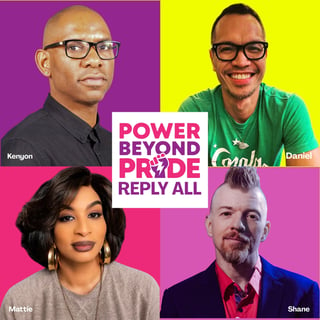
Speaker: Hello and welcome to Power Beyond Pride, a weekly queer change -making podcast bringing you voices and ideas from across our fierce... and fabulous spectrum to transform our world. I'm Shane Lucas, activist, harm reductionist, business owner, speaker, and the example everyone uses as too much. And I am Daniel WK Lee.
Speaker: poet, author, and I'm not actually sure if I'm related to Bruce Lee or not. Today's guest is someone who reminds us that activism isn't only what happens at a protest. Sometimes it's... What happens in a journal? Sometimes it's a drawing. Sometimes it's the courage to simply tell a story.
Speaker: Joining us today is Seth Antonio Laxman, a climate and trans rights activist, multidisciplinary and artist. storyteller. and corporate activism expert. Welcome to Power Beyond Pride, Seth.
Speaker: Thanks so much for having me. I'm really excited to be here. So glad you could be here. I'm glad to have gotten to know you over the last several years, and I've witnessed so many of your impressive things. that you've done for people listening that are just meeting you for the very first time.
Speaker: I would love for you to tell them. Was getting frozen custard with me at Shake Shack one of your New York highlights? Yeah, I mean, anytime I get to have shit, shit custard, it's...
Speaker: It's a highlight, I think. I'm kidding. I'm kidding. I'm kidding. I'm kidding. I'm kidding. I'm kidding. What's your second most favorite experience that you've had in New York? And how did you end up in New York? Yeah, I mean, I grew up. In the Hudson Valley. So depending on where in New York you grew up.
Speaker: either very far upstate. or in the New York City metropolitan area. So I grew up in a small town on the Hudson River. I went to school. That's what you need to call it. So just again.
Speaker: Either upstate or... really still far quite South. and then moved into Brooklyn after I graduated. So in the city for. a little over five years. Now.
Speaker: In the big city, in the big city. so and in brook was Not even in the city. Sup. Wait, Brooklyn is part of the city? It is. If you're a New Yorker, the city. is Manhattan.
Speaker: Come on, you lived there for so long and... Didn't know that. Yeah. I mean, I know that, but I really try to be Brooklyn sensitive. I really, I try to be Brooklyn and Queen sensitive and honestly, even Bronx sensitive, Staten Island. We don't even, we don't really want to. You're you're like the step.
Speaker: Whatever. I'm i'm as step as a stepchild, I can say this. You're like the stepchild that no one should really know. so so okay So what's your favorite memory since moving to the city of New York? Okay. Oh, that's such a good question. I mean...
Speaker: The first thing that comes. To mind is just trying to pick out which random interaction in the street. has been the best because I just think that's what. is so New York and What people think of as a New York story is the random conversations you just end up having.
Speaker: with strangers. I think so far the one that I'll talk about the most is how Over and over again, people keep thinking that I am Harry Potter. And.
Speaker: Oops. Two times as a joke, and then two times like they were actually... Suspicious. that I really actually could be a famous person, which I just think is hilarious. Well, you're famous to us. Now I'll be famous. Now they will know me for who I am and say, you were on that amazing podcast. I'm. Exactly.
Speaker: he yes Yes, I am Daniel Radcliffe.
Speaker: You have seen me naked on stage, I'm sure. Yes. Equus, come on. and Yeah, Equus, the horse play. oh the horse I mean, I remember he's... I mean, there there are there there are... There are worse people to be to be in the likeness of. And I think i think that's i think that's i think that Radcliffe is certainly one one to have.
Speaker: Was it strange coming from? the... I guess the the Hudson Valley to kind of get to the city. For a lot of people, they kind of avoid the city. I've met people up in Hudson Valley who never go to New York. So what drew you to New York? What's what's what? Tell your story from.
Speaker: Hudson Valley to New York. Yeah. I mean, where where I grew up, by I grew up in a town called Nyack. And so... Lots of folks. would go to the city. all the time. So I grew up going into the city. My mom when she and my grandparents moved to the States. from Cuba, lived in Jackson Heights in Queens. So we're going all the time to see my grandparents when they still live there.
Speaker: And then would come in for... plays and to see other family members, go to the museums, go to the zoo. all sorts of things. So I grew up going to the city all the time. when I was in middle school. My mom and a family friend got really invested.
Speaker: in making sure that myself. And my friend. Did not. come across as suburban kids. They wanted to really train that out of us. So they would take us into the city and like drop us.
Speaker: Alone and like... us find them somewhere else. and do kind of these just I don't know, not scavenger hunt, but sort of scavenger hunt type things. like I remember one time we...
Speaker: got dropped of and the goal was to meet them at Economy Candy. Just get there. on our own. so I spent a lot of time in the city before I went to went to college and then before I moved down.
Speaker: into brooklyn and so here Lots of folks from where I grew up and also from where I went to college end up. In New York. what One way or another. I mean, that sounds a little like child endangerment, but I, I mean, I mean, yes.
Speaker: We got a baby block. That's fine. It does. it does I mean, New York City got very Disney -fied. I'm not not saying that it's the most dangerous city ever. I watched this old Friday the 13th, Jason takes Manhattan and you're like, it looks like, I don't know, warriors out there. But like when you were a kid... like I mean, ah that's still scary. It's still a huge, it's still a big city, but you must have learned something. I was like 13. Kids at that age and younger in New York are like traveling three boroughs to get to school. So it was, it was, it was like a very dip your toes in.
Speaker: experience But it was super exciting. it was It was either that or get dropped off at the mall for the whole day. Just be at the mall. That was like the suburban option or you just get dropped off.
Speaker: somewhere. in It hadn't to make it right. to Brooklyn sort of day, so. In the center of the world, as New Yorkers like to think of it. There is no other city in the world. There is just New York. So I would really love to hear about how you kind of came into... political consciousness. I mean,
Speaker: I mean, with such a proactive I mean, your parents being, or your mom being proactive and trying to have you let you have the non -suburban experience. ah how that align How did that align or not align with that? with your kind of upbringing in terms of like how you start how you saw the world and the and And. I guess so. the politics of it.
Speaker: Yeah. I think. everybody's life. kind of has all those factors that... bring you to a place where i think you can think oh i couldn't really end it up any other way. And I think. That's definitely how I feel.
Speaker: I think primarily my family is quite. political in a lot of ways and really connected to what's going on. at the kind of wider scale. On my mom's side are from Cuba, and so they were political.
Speaker: refugees after the the revolution. And so that was always part of. The dinner table conversation is with that experience. was like and what does it mean to be an immigrant in the United States and in New York City.
Speaker: On my dad's side, there's a number of different ways that my grandparents were involved. In politics, my grandpa worked on... Bobby Kennedy's campaign, which he left to talk about. Okay. And then also really connected to growing up in the Hudson Valley, we did a bunch of environmental.
Speaker: and nature related. things see I grew up going on the clear water and doing. Great American Literature. cleanups, I think there's a really incredible heritage of environmental activism in particular. in New York and then up and down. the river. And so I've Grub. feeling really quiet.
Speaker: Connected. to that and getting opportunities to be involved. Either. activism related. Activity is the winner. being that really be part of what we did in school.
Speaker: And then, yeah. Well, actually, when talking around that. Seth, I think what's really interesting to me is obviously there's a lot of different areas you saw you could impact communities, right?
Speaker: I guess, did you in your in your in your journey to discover that impact you could have? Were there moments that you... Kind of. that one Is there even a community around? how How do you see your role in this? How do you see yourself in all of this? And what was it like among... as a young person, just trying to figure out like, okay.
Speaker: everyone else is going off to do i don't know like insurance or i don't know so Or it's studies. I don't know. I don't know. Did you feel like you were part of that movement? Did you feel like you were like, oh, no, no, I think I have a clarity about my own.
Speaker: Yeah. i think i've I think many people in my life would... would say that I have always been someone that had a lot of clarity and knew. what I wanted. I would also say that I grew up in a really creative...
Speaker: place and a really progressive place where lots Everybody's parents did really different things. and 100. So many amazing teachers that I... Could've s - start and list off all the different ways.
Speaker: that i was influenced you know through the things that they brought into the classroom to to teach us about in terms of both what's happening in the community and what's happening in the world and what are the options for what. You can go on.
Speaker: to do that always felt really wide open. To me, and I think to a lot of... the people that I grew up with and who. I'm still connected to or who I get to watch and see what they do. on Facebook. and LinkedIn and all of those other weird.
Speaker: places So. I think it's, yeah. Kind of a mix. I always felt like I... belonged with so many of the people around me and always felt like I could do my own thing.
Speaker: and like figure out what. my path was going to be. And so I feel yeah really privileged that that was kind of the environment that I was able to grow up in. Well, and I know you've worked at areas from whether it's climate justice or the rights of trans plus community members. They're movements that people don't always see going together, I guess. Why? Why do you...
Speaker: Well, I guess how do you see these intersections and how do you feel like they, in many ways, that they end up being? connected. Yeah. Yeah, I mean, I think working on Trans Rights is super personal to me. I came out this summer going into my senior year.
Speaker: of high school. And. I've been out. in a few different ways. before really coming out as a trans. man and embarking on all of the logistics of that. journey in addition to that.
Speaker: the wonderful kind of other cultural Parts of it. And so. There was a really strong culture of LGBTQ plus acceptance and visibility. in my community. And then also at school, we we had...
Speaker: it was It was actually such a great culture that... The... The GSA fell apart. because not enough people felt like they needed that space. together. They could just hang out with their friends.
Speaker: is really what we found. and We'd be like, come to lunch. They'd be like, I'm just going to do my normal lunch. with all of my queer friends over there. I don't want to hang out with... The other people, I don't know. well that that was that was part of it. But That was really where I started kind of thinking more about what does advocacy look like in that respect, right? When I went.
Speaker: through what it was like to start a medical transition, all of the steps. That went into that, what I was able to do because of the place. that I lived and grew up. Same with. all of the different legal things And that's another area of my life where I've been super privileged to be incredibly supported by. my family and friends.
Speaker: and community and then especially looking online at other folks. who had really different experiences than I was able. to have And ceiling. really connected.
Speaker: To that noticing the contrast rather than I think I feel like okay well glad That's not me. And so really wanting to to. Have that. be part of. And it might. my journey and the things that I stay.
Speaker: connected to And then. On the climate side. like I spoke a bit about the really strong heritage of that in the Hudson Valley where. I grew up. And. Really?
Speaker: I see climate as... The issue of... if we If we don't work on climate and... 6. that and make sure we have a livable future for everybody.
Speaker: to come then All of the other work. is really not going. Anywhere. right? The less stable the world becomes. the less safe the world becomes like at this kind of global. scale, it's it's going to have all of these other profound...
Speaker: impacts And so. So much of the work I think we do across issues is really wanting to bring about a world for people who are going to come after us, right? I love the phrase like... plants. the tree, even if you'll never feel the shade, or I don't think that's exactly right. But I think that's...
Speaker: how I really see the intersection of climate. with any issue. is we all live on this one planet and all of the other. pieces of social or environmental change we want to bring about. like It's going to happen here.
Speaker: We're not going to make. Trans rights on Mars doesn't really feel... All that important to me, right? But I think that intersectionality of everyone being invested in the outcome is is I think that universality is really powerful.
Speaker: I think it's important because a lot of these movements can become very insular. And so it is helpful. to think about it as, ah as ah as a again, a a a universal challenge. And that, like you said.
Speaker: Some people may not see themselves as necessarily invested, but it's. hard It's hard to elevate one area over another if none of us are here. when we're kind of stuck in this place where we can we can all at least come together to talk about that conversation. yeah Yeah, if the air is too smoky to breathe, you can't.
Speaker: Good Pride. For sure. Depends on the smoke and depends on where you're standing. That's true. That's true. but Sometimes you might already be there.
Speaker: you've watched Several paths already in terms of your work, grassroots organizing, you worked in government and. of course, now in and corporate advocacy.
Speaker: Kind of how does how has being in those realms kind of informed your internal? kind of theory of change. Right. Yeah, that's a great question. I think for me The main thing is... I really want us to win. And so I think we should use...
Speaker: every tool and every arena. available to us to... to do that and to do the good work. And so. make that impact. I think. Something I definitely noticed you know coming up in in grassroots organizing spaces is kind of a pretty stark divide.
Speaker: between the folks who are Willing. to make allies. in other spheres, right? The folks who are willing to work with. elected or with government institutions, but who are willing to work with folks in the private sector.
Speaker: and have those moments of coming together or people who really don't. See that as. the right way to go. about things and having, for whatever reason, right? I think either out of like purity politics or out of a really justified distrust.
Speaker: or a really genuine desire to to really... see that we can only make systemic change. But New way? That's fine. really how I feel. And I think that a lot of our opponents, a lot of the folks who are working on issues that don't have everybody's...
Speaker: best interests or best lives at heart. I don't think that they feel that way. And they're willing to throw down with whoever, whenever. wherever to to make their agendas. come through and I don't think we should abandon our values or work with people who are not aligned with us.
Speaker: But I think we shouldn't be. as picky as maybe our movements have been. In the past, if we want to make. the change that we need. at the pace and at the scale.
Speaker: that is really that these moments really demand from us. Well, Shakira. Whenever and wherever, indeed. I think that actually right there is a great place for us to take a quick break because I want to come back to what it means about winning. And I think you raise some really great points about the dichotomy and sometimes the purity test that lives in movements really trying to. make advancements in social justice and climate justice.
Speaker: Don't go anywhere because after the break, we're going to dive a little bit more into that. We're going to talk about corporate responsibility, a little bit more about climate justice, and how art can be one of the most powerful forms of resistance. So we'll be right back with our amazing guests at Flaxman. I'm here. I'm Shane Lucas, one of your co -hosts, along with Daniel Lee. And we will be right back with Power Beyond Profit.
Speaker: And we're back to Power Beyond Pride. If you're just joining us, we're talking with activist and multidisciplinary artist Seth. Blacksmen. So I want to shift gears a little bit and get into your artistic practice.
Speaker: How have visual journals... become the form in which your work finds shape and expression. What is it about them that is so satisfying?
Speaker: Yeah. I would say first and foremost, I love to keep. lists and Visual journals are sometimes... A really fun way to keep... A list. No, I'm... I'm mostly kidding. i would say I feel like.
Speaker: A lot of times there's so much pressure. to be like communicating things. really clearly and really explicitly and especially at work or at school where everything is an assignment and it has a due date and it has to be.
Speaker: turned in and be like something discreet. as a deliverable. I've really found for a bunch of years now that. kind of journaling and... in this way, like visual journaling is the opposite.
Speaker: of that. There's not pressure to do it every day. There's not pressure for... any one page to accomplish. something. You can have a a crappy page on. Tuesday and then make. five amazing ones on.
Speaker: Thursday morning. just because And so I really found in my practice that it helps me get. My thoughts? out in a in a different way and kind of have that record.
Speaker: of things to look. back on. I've got a shelf that's all of... original journals since I really started doing it early in high school. and Sometimes I'll go back and I'll say, oh, look, this is that's neat. Now I'm either feeling the same or...
Speaker: or different or drawing in a similar style as I was when I was 15. years old. So I think, yeah, that kind of self -expression And having it be private, I think, is another thing.
Speaker: That's... really big about it. Sometimes I'll scan pages and I'll post them or. or share them or keep them in a portfolio. but There's a lot of what's in those journals. that's That's just for me. It's not something that I make.
Speaker: for other people, which I think for a lot of artists. is a big part of their art practice, but it's not so much. Heart of Line. So when you describe visual journaling is it like a mix of text and imagery? Are you sketching? Are you just kind of whatever the mood takes me?
Speaker: Yeah, yeah. All of that. It's it's like a receipts or paper I found on the street. Blued there, and a sticker, and the... a to -do list or a...
Speaker: A thought that I'm having, or a quote. Or I'm working on a painting over here and I really like this color that I mixed and I've got way more of it than I need and so I'm going to fill. four pages in the journal with that pain. And then that's the background for the next few days.
Speaker: So there's there's no rules, no expectations. And no clear. purpose. for it. I love that because it's it's it's really kind of the... The role, especially in these days, it feels like the last decade has been very weighty for a lot of folks, right? A very heavy last decade of, I mean.
Speaker: And arguably, there's lots of history that we could talk about very being heavy, but out to the last 10 years between the pandemic and obviously... political changes, all these things. It feels very weighty. And. There's a time you've also sort of come into the role that you're in now. But these sort of journals, I think that idea to have an imagination.
Speaker: And my understanding is also humor is kind of baked in a little bit. Humor shows up in kind of the work you do. is And and that that kind of honesty, and ah yeah that kind of that kind of feeling of looking at the world and having that. Do you see the laughter as part of the resistance? Do you see imagination as something that the movement really movements really kind of need in this time? What would you say in terms of the way that... that kind of levity and i say levity i guess i'm including imagination in that really needs to be part of activism. Oh, 100.
Speaker: first I kind of... Just to be generalizing, I don't really think there's a reason to do it at all. If it's not beautiful, if it's not fun, if it doesn't... make you feel... good. And I think you can define good in a lot of different ways. And not to say that everything is to be like, ha ha.
Speaker: silly and there are really important moments for being more serious and being more than that. type of headspace, but it can't just be all that. And I think if... We end up taking ourselves too seriously for...
Speaker: too long, that's when people burnout and you end up giving more than you get back. From your work. And that's not to say it has to be an exchange.
Speaker: but more so to be like reciprocal in terms of you. Give your energy. across the full spectrum of of emotion and contribution that one can bring. And I think that art and humor.
Speaker: Performance, all of those different types of things are great ways to like fill your cup. Backup. from the activism after giving a lot of yourself. to it as well. You're also interested in reproducing reproducible medias. like stamps.
Speaker: stickers. prints. I'm curious. Hmm. how does the element of reproduction fit into your artistic ethos or at least or maybe even Your.
Speaker: your and maybe strategy is not the right word, but like how you're trying to reach an audience for your work. Yeah, I think there's a really cool... Legacy in particular with printmaking.
Speaker: And. activism. I took... an awesome revolutionary printmaking class at the People's Forum. where we talked a lot about that and how the role of Artists.
Speaker: in movement as for a long time been about getting the word out. Right. So the instructor told a lot of stories about. How, if you were going to plan a march.
Speaker: You could like design the poster on Canva and then... Print it out. kinkos the next day and then slap it all up or just post it on your story. You had to get someone to design the poster and then make all of the prints.
Speaker: and get them all out. into the world. And so I think... in the same way you want your message. in a movement to be accessible. and meaningful to people at scale. Like.
Speaker: re reproducible work of art can do. the same type of thing, right? Either a message or a slogan or a logo. It's yeah. part about building power. and reaching lots of people, which is almost always what you want to be doing.
Speaker: when you're running a campaign or or working on a certain issue. I love that because as a designer, I feel very i feel very beholden to activism that has been through.
Speaker: Varying forms of printmaking and and really... What we're talking about at some level is propaganda, but I mean, propaganda in the sense of we are encouraging people to be aware of and take action in a particular way. And yeah, I mean, there's ah amazing histories of...
Speaker: When you look at the American economic justice movements or the American socialist movements, when you look at climate work, right? I mean, I've got. I've got a shepherd fairy. poster that's to to raise funds and awareness around. climate work. and That artists being drawn into these spaces to use these tools is just, it's another way to get people's attention. And I love the organic nature of that, right? Now.
Speaker: I'm going to switch gears again. So I feel like we're, I don't know, like on the F1. I'm not sure what that is. because Seth, I've talked to you you about my book, right? So I'm going to, but my book is about an advocacy centric brand strategy. So I'm going to go into this really quick because, and maybe by the time this airs, this is out. I'm not entirely sure.
Speaker: But many companies talk about values. And in your work, your your previous work at Lush, you and your colleagues put out campaigns about anti -racism, immigrant immigrant rights, climate change, which I've witnessed in our time at and our our time as friends. And right now, again, at least in this current moment, you're razzing it up with Ben and Jerry's, which is pretty amazing too.
Speaker: Now, capitalism isn't my favorite word. So we talked a little bit about artwork and organic. Capitalism is like one of those things that oftentimes gets a lot of critique. And you talked about this sort of dichotomy in in our in our first in our first segment. Now.
Speaker: Are businesses in your mind, because you're working with these businesses, do you feel like they're capable? of being part of this solution? Are they, are... Do you ever get conflicted? about working in corporate spaces.
Speaker: But yeah, I think. I think I'm conflicted maybe a little bit less than half the time. So that's why it's worth it to stay. In it. But I... Again, i don't I don't think we have any other choice, right? We have to figure out how to make business as part of.
Speaker: door. They're not going to go. Away. And I don't think that... The things that I would want to see achieved either in my lifetime or... Shortly after, we don't have time to like reinvent. The economy.
Speaker: Before we... but Can't we get spin up a whole new economic system? Is that what you're trying to say? I think that we could, but I don't think in time, right? to prevent the climate crisis or address the really urgent needs that so many people have.
Speaker: right now that have some really clear and self -evident either policy some solutions or... That's usually the easiest way to talk about how to fix a problem is through policy.
Speaker: language And so I think that. It's not easy and I don't think that it should be easy for businesses to get involved in. environmental justice, in social change. Any other?
Speaker: issue, but then it's super necessary. because they are. part of the world and part of society. When. People hear about corporate activism.
Speaker: Some are immediately skeptical, obviously. Got a lot of. in the in the queer context for LGBT. Pride marchers and everything. You've had corporations. just fall out. And so it just pissed. boat has appeared to be just so glaringly performative.
Speaker: uh How do you build trust? working inside like this corporate system. and with an audience that at this point probably is even more sensitive to this. to kind of to value values performativity.
Speaker: Yeah. I think. It - It's... If there's any business you folks... listening. It's really just so much about each individual. company or organization. And I think it's...
Speaker: really hard and people don't. find it necessarily super useful, like the kind of generalizations around. What are the best ways to go about it? but maybe but sometimes they're helpful. I think for me, like the main one is it's like really about. relationships.
Speaker: At the end of the day, yes, it's a company. but it's actually the people who work there. Yes, it's a nonprofit or it's a movement, but it's actually about the people who make. that work.
Speaker: happen? And if you know each other and you talk to each other and you on an individual. basis have good real authentic relationships and are able to be. Transparent and upfront.
Speaker: with each other about what you want to accomplish together, or what you want to accomplish separately. how those things make sense or don't make sense. then that builds the relationship between.
Speaker: either the brand as a company brand or the brand as a nonprofit or movement. brand Because without. The people involved. The work doesn't. happen and nor would either of those entities or institutions.
Speaker: exist So. As much as I hate greenwashing or pinkwashing or... paying $500 ,000 to slap your logo on something, corporate activism. as much as anybody else.
Speaker: I also now, having been on... the inside and have projects go through or not. go through and... bear witness to the public response to either direction. always try and remember at other companies, there is somebody in there.
Speaker: Cool. Probably had to work really hard to get... that. $500 ,000 logo slap on the thing. And maybe that's like their first step or the best that they. could do. And so.
Speaker: Maybe it was. Totally not well -intentioned, but I try and give folks the benefit of the doubt. in some ways. especially I think when there is so much immediate, right? Like you were saying, Daniel, immediate negative.
Speaker: impact or distrust? How do we? check ourselves in those. defensive reactions and instead. find ways to be more open and invite and invite more people. right, into our wider movement work and goals. Do you think there's a better strategy and just kind of like...
Speaker: outright. Like... than boycotting? What is there? a Is there a. a possible engagement and say, I don't know. Coors or something. I'm not sure if they like they kind of pulled out and all their. pride marches or whatever I'm not even sure if they are a sponsor but like yeah like what is what is the what's the an alternative than just being like
Speaker: Yeah, they're kind of like the the target. Oh, you're... I mean, target corporation. Like, yeah oh, you you've you've pulled out and we're not going to we're not going to give you any business anymore.
Speaker: Yeah. I mean, i boycotts are an incredibly powerful tactic, right? In your... activists. toolkit. I don't necessarily think it's always the right tool for every. moment, nor do I think it's the first tool that we should always be reaching for.
Speaker: Right? And I... and i Looking at. when boycotts have been the most successful in... History is when they've been really well coordinated. sustained and really specific.
Speaker: And really... Yeah. target it at a... at a certain... issue, or often even sometimes like a a product within. a company. itself. And then. I think you should never.
Speaker: be using just one tactic. in your activist toolkit. Right. If we're all going to boycott. mega evil company. Inc. Great. But have we asked for a meeting with Mega Evil Company Inc. CEO or?
Speaker: environmental lead. I think when you're building a campaign you kind of want to start with the easiest things. first. And then... ratchet it up. If you start with your hardest to do.
Speaker: Thing? And you could have won with something. earlier on in that spectrum, why why wouldn't you have? have done that. Right. Okay. So in that, with that in mind, and, and, and I'm going to ask you to keep this to like one or two sentences. Cause I just want to know if we. can What is the one argument you have made to a sort of resistant?
Speaker: partner or company. that you feel was was like most effectively responded to, got the best sort of like. Oh. Okay. Yeah, well, I've had the privilege of working at businesses for whom the values and activism have been really baked in.
Speaker: and So I often get to just say the one sentence of. Here are the things that... We have for you. to take and use. What do you want? And then you kind of just let it rest and you get you let people decide, right? Are these things that we would have to offer as a brand or a company? useful to you. as an organization or as an activist. Yes, no.
Speaker: this other combination and go from there. so are you So would you say it's better to go in kind of like, here's what my... Here's what I know you're looking for. Here's what kind of, it sounds very capitalism, but we're going to go with that. It feels like here's my wares, but in my wares are like social justice.
Speaker: here my community is interested in this topic and if you want to reach my community you're going to do these things and if you don't then you're just not going to get these these these people, right? And so kind of using that as the commodity, does that make sense? Kind of.
Speaker: Kind of saying like, this is what I have to offer in this conversation to a company. Otherwise they won't be like, they'll be like, just do it because it's the right thing to do. And company's going to be like, but. I don't care. Or is it, is it really like I need to bring you something that I can package and put in a bag and like. like And that's going to get them on on board.
Speaker: Yeah. I think when you're talking about right. like i Usually I'm a company talking to the... organization. And... We meet each other and we're chatting. I get to say like, here are all of the great things that we have. that We want to work with you to utilize and leverage towards. Your goals.
Speaker: What makes sense? for you. What of these is most interesting? What of these contributes? the best to your long -term. Or, what gaps can we help you fill? that if we were, we were working together. wouldn't have been possible.
Speaker: Otherwise, and that tends to be the sweet spot. for the partners. And then... that's Also, off in the sweet spot for your... senior leadership who maybe are skeptical one way.
Speaker: or another. but making the case that this amazing thing wouldn't be able to happen without this equation. Right? Anyone can do the $500 ,000 logo slap.
Speaker: on a thing. Not everybody can run. a campaign in all of your stores across North America talking about. This issue, not everybody could make. a a Limited edition ice cream to raise awareness about something.
Speaker: that has nothing to do with ice cream. right So it's like finding what is that really special thing. And then finding the moments that. it's It works for everybody. and really, really matters.
Speaker: Well, just because it's important for our organizations to know what are ways to approach companies other than, like you said, doing the logo slop. so I appreciate that feedback because that, again, comes back for a lot of organizers. That's oftentimes how they perceive it is like, hey, we've got an event. We just want you to sponsor it. That's the end of the conversation. When what you're suggesting and certainly in your work.
Speaker: has been able to display. There are many different ways to show up and sometimes coming in with ideas and ways that companies can. bring out more awareness or bring out more. Resources. because it serves.
Speaker: a variety of causes right it serves awareness it serves their consumer base it serves all these things So thank you for that. Thank you for that. I appreciate that. Now, as we go to our last break, Seth, I've got a quick question for you to think about and you can answer it after the break. And that is.
Speaker: What is the legacy? Seth hopes to leave behind. So you've talked before about like what happens. ah In the days, on my days, I can see these things happen, but we're going to plant a, we're going to plant a seed. We're going to get a tree. long after I'm here.
Speaker: What does that legacy look like? I want you to share that. After this amazing break, we've been here talking with Seth Loxman. I'm here with my co -host, Daniel Lee. We'll be back with Power Beyond Pride right after this.
Speaker: Welcome back to Power Beyond Pride. I am Daniel W .K. Lee, and I'm here with my co -host. Shane Lucas, and we're having a great time. having a conversation with Seth.
Speaker: blacksmen Before the break, we were prompting you about your legacy. So we're curious. What? Does. Kind of what is. What is the legacy for you? What does that, what does that.
Speaker: What do you think that will look like for you? or what do What do you want that to look like for you? Yeah, you asked me this before the break and and while we were off, I think everyone should know that I'm now... having an existential crisis and thinking about my life and mortality.
Speaker: Totally. Totally fine that we... brought the interview here. and But. No, to to be real, I think for me. I'm not really There yet? when it comes to this.
Speaker: but something I've been really honored to... to have, especially in my career is so many. mentors and people who have been really invested. In me, right? As I was getting started and as I... continue to be kind of in this getting started phase of.
Speaker: my life and career and really thinking about For myself, how do I give that? to others, right? And who's going to be coming up. behind me that I could help. to laugh in. and lift up and make sure that there is a good continuity.
Speaker: right? And in our movements and in our lineage of great people who are doing. Great work. so I don't really have a vision of... One big thing. I want to do, but. I'd love to be able to look back on a body of work that I was able to be a part of. that helped other people in that.
Speaker: made a difference in that. I don't really know how you measure. make a difference. but That feels. like it was worth the time and the energy. and the resources. to make it happen. and getting to make good friends and relationships.
Speaker: Along the way A little bit existential, a little bit. kind of the simple stuff. I love it. It's beautiful. And I think it is important that you have mentors and that there are people who have guided you along the way. Are there any specific mentors or people that you you... you kind of look to, even if they're... Kind of theoretical. I'm a big. Foucault fan and I could think of bell hooks and Are there people like mentors or people who have really kind of helped shape your journey?
Speaker: Yeah. I mean... Kind of an issue that... All through school, really great. teachers who I was able to look up. I had an amazing art teacher all four years of high school, Miss Kenna, who's also the chaperone for the GSA. great Great professors. I've had a great boss now for several years, both at Lush.
Speaker: and at Ben and Jerry's. So many great coworkers and colleagues when I was. I worked at Greenpeace. That was my first job out of college. And I think in... In particular, I worked in the union and on the bargaining team.
Speaker: And that was such an amazing experience for me, learning from others. And even that kind of really solidarity. oriented space. So I think those are the main. kind of models.
Speaker: I've had. community, education. and then sort of more of those one -on -one relationships have all been really important And now you're just kicking tail. And that is that. is And so thank you to all those mentors who are who are there helping you kick tail. And I love it. But you're. You're also leaving that legacy yourself, which is really important.
Speaker: So this is the time for the speed round where we get to know you a little bit. Well, just differently, frankly, we're going to talk about some things that we don't want you to overthink the answers. We're just going to bring you some speed round questions, get to know you a little bit better and don't just give the first answer that comes to mind.
Speaker: Are you ready? I'm ready What's one word your younger self desperately needed to hear. Relax. Hmm. are you Are you getting time to relax now? No, but i'm I'm trying to find ways to relax while...
Speaker: I am. Busy. okay so Okay, so what's your, do you have a favorite way to go relax? Is it is it hiking? Is it music? Is it Spa Castle over in Queens? What's your, what's your?
Speaker: What's your way? I mean, The easiest answer that sometimes is the hardest is just going for a walk. Going for a walk. We love it. We love it. I'm a i'm a big fan. is there Is there a particular part of the city that you have come to?
Speaker: Is it the high line? is I live. I live right near Fort Greene Park, which is a great. Loop. so Nice. that's yeah just yeah going going and being in nature i think some of the bigger end of things is I love to be in nature.
Speaker: I love to make art like we talked about. I love theater. I love board games. so Lots of great. things in addition to my activist toolkit. Again, you're relaxed on, which is important. All right.
Speaker: Well, now I have a really important question. So I'm going to really put you on the spot and I'm going to say. which is more important. Cuban food. or Cuban music. um Music. The music.
Speaker: Have you got a fave? I mean, I could probably sing you every... A song on the Buena Vista Social Club. album, it's just what. Grow up with. Yeah. You know, we'll argue about who owns which foods, but.
Speaker: Caribbean food has a lot of overlap. But Cuban music is Cuban music. It has had so many influences. and has been influenced in so many ways and I think tells so much the story of the so -called America is over. the past.
Speaker: 400 -ish years. you have a favorite Do you have a favorite vocalist? Do you have a favorite of the Buena Vista crowd? We listen. We listened to the main album. mostly. And then my grandma used to have a great story of when she got to see Celia Cruz live.
Speaker: when she was young. so commercial to that vicarious degrees of experience. Love it. I'm a huge fan of Ibram Ferrer. So like there's, yeah, so there's, there's so many great artists of those eras and of that era. Amara, Amara Portudo, am I saying that right? I can't remember.
Speaker: But there are so many great people. And Celia Cruz. Brilliant, brilliant, brilliant. brilliant Dance party. Dance party. Yeah. All right, next. If. Your love had a color, what color would it be?
Speaker: Oh, this is different than what is my favorite color question. But. I think I'll... i'll make I'll maybe keep it the same because... One of my good icebreaker questions is what color are you?
Speaker: Which is again, different from a favorite color question. But. I love that really deep, rich. Dark blue, sort of like the Eves Klein. Blue?
Speaker: So they're really saturated. Yeah. like royal blue type. of color. Hmm. Very. Okay. All right. All right. I'm here for that. I think that that sounds good. If you were an object on your desk, what object would you be?
Speaker: What do I have? i've got I've got a really nice... Little notebook here. Ah, there we go. so Little notebook. Do you buy a lot of notebooks? do you like do when you go When you walk around, do you end up just stockpiling?
Speaker: No, because I have self -control and I have so many notebooks that I've written. No, I do not go around and buy lots of notebooks because I have them all. But they're future journals for you. So, like, I feel like I'd be like.
Speaker: I know, but I do. Yes, I do. And I don't, and I resist. And I use up the ones that I have. Do you wait till you're ready to start a new journal before you buy one? Is that, what's your rule? I don't have a rule, but I will say I often get gifted journals, which is honestly better because then I think about the person who.
Speaker: gifted it to me as well I like that that's beautiful. Yes absolutely. What? gives you hope. I think. that A little bit of my nile like my nihilist answer, which is, like, why not?
Speaker: Like what, you know, why not hope? Why not? it's it's Even though it's hard, even though maybe it's unlikely, even though it seems like maybe the odds are stacked. against us. I think that We are all always just one person in one moment.
Speaker: In time, and we are part of such a long... legacy and in history. At that, why not keep working on it? we If we don't... then we don't. And that's the answer right away.
Speaker: Sussanct. What's the artist you wish you'd met? Who's the artist who should bat? Oh my God, pick another one. I don't know. Yeah. Is there an artist that you're like, oh, I wish I had had a chance to meet?
Speaker: i' I'll go for recency bias, which is Alexander Calder. I saw great. oh Exhibit retrospective of his. work that had lots of photos of his studio. that I hadn't seen before. And I would love a studio tour.
Speaker: caldera studio tool Yeah. I feel like, is it going to be in a mobile? I feel like they should, if you're going to do a Calder studio tour, I feel like they should be able to, it should have, it should be like a ride. Yeah. A hundred percent. in a mobile and move around the space. And that's really awesome. That would be.
Speaker: That is the only way I feel like you could do a technically Calder justice, right? A little bit? Yeah. Well, he had all these other machines and moving sculptures. And in addition, and lots of 2D work in addition to the... to the mobiles so i think yeah it it could be like a very mechanical experience.
Speaker: Did you see the, they brought it to New York. I missed it this last time, but they had this apparently amusement park. that they did and it was they called their yeah yeah right yeah Yeah. And so.
Speaker: he Maybe he should have joined joined that. It would have been really had Calder in the middle of all that. you would read I'm trying to remember who are the artists that were involved in that, that you had. Oh, gosh. Why am I playing a herring? You had so many incredible artists who were involved in this sort of.
Speaker: 1960s or 70s or no, it might have been later than 70s. But they did this theme park, right? yeah And then they had the rides and stuff there. There are all these theme park rides, done a herring theme park ride. And you're like. I can think of a herring theme park ride, but it would not be appropriate for families. So it's a whole nother. That is a whole nother ballgame, but apparently they did it. So it was a thing.
Speaker: So I called her. i Why not? We should do. You know what? Give Disney a run for their money. And we just do art and said, you know what? Modernize the museum. Make it into a theme park.
Speaker: a little roller coaster action, a little Rothko. And maybe it's a, you go down a Rothko thing and it's, I don't know, like a water slide. I don't know. Something very miasmic. but Sure, Calder. You just do our little ride around.
Speaker: I'm for that. I think it'd be like the little But the swings, little swings. that were Totally. Absolutely. There you go. That's the. analogous ride is the <unk> You heard that idea here. You heard that idea here. Seth and I are going to, we're going to trademark that. I would even call it. know you You can get a ride on it. I would even call it a great idea.
Speaker: Hire him immediately. You are actually, or you actually studied geography in undergrad, did you not? So, what is your favorite geographic feature?
Speaker: and My favorite one to say is an isthmus. Yeah. yes Yes. Mess. Oh, very nice. that That's a... And can you share with the class what an isthmus is? Because I'm not sure everybody knows what an isthmus is. It's I -S -H, I -S -T, I'm going to test spelling. I -S -T -H -M -U -S. Yeah. it miss It is a little sticky out piece of water that is surrounded in a little. Little land, like water on all sides.
Speaker: It really probably doesn't even deserve its own name, but it has one. And so therefore, because you asked me, it is now my favorite. I love it. I know. I think that's great. And it does give a run for archipelago, right? Like it does.
Speaker: Like there's some really great geographic terms. So with that in mind. What is the one trait that... is sort of an exciting, like... Is a personality like green flag for you? Like something that just is like very attractive for you? Like what's one personality trait that you're really drawn to?
Speaker: I always notice it. When. Not when you're in a restaurant, but when you're in like a food court or something, if people clean up after themselves, or do you leave? Like your trash. For like.
Speaker: somebody else to clean up after you. Oh, we like the responsible considerate types. Yeah. There we go. Yeah. I love it. Absolutely. And I'm going to. Finish up with... What does Power Beyond Pride mean to you? That's your whole that's your whole thesis statement. with the Hub with the Pod. in the last 30 seconds.
Speaker: I think you know The obvious one, right, is like we need to build power beyond June or April or whenever your pride. month is. But I think that what I like about the premise that you guys have built is that There's more too. queer people, LGBTQ plus people. and what they do and what they bring to the world beyond.
Speaker: like their visibility. and beyond. their identity that has been marginalized or they just happen to exist in a place and in a time where and identity.
Speaker: is marginalized. So I think lovely kind of vision for How do we see each other as whole people and honor all of the parts? of ourselves. More. Equally. then maybe we have been taught that we should.
Speaker: Absolutely. Love that. I love that. Love love love love that Thank you, Seth, so much for being here. Also for showing us that activism doesn't always look like a megaphone. And it takes a lot of different forms. Sometimes it's like picking up a...
Speaker: A journal. Sometimes it's planting a seed and again, waiting for... that tree to sort of grow. And sometimes it's sharing the truth of who you are in rooms where you can influence decision makers and you can influence companies, you can influence. leaders and that's really powerful again thank you thank you for bringing that in We're out of time for this podcast, but we hope you'll join us again.
Speaker: So we would love to have you back. We have led many more things to to talk about. and many more frozen custards and stuff to go grab in the in the city. So we'd love to have you back. and I'd love to let people know where they might be able to follow you or or be able to connect with you and and follow your work.
Speaker: Yeah, I think from work. Work, work type things, LinkedIn. Classic. place of fun masking corporate cosplay. that More stellar art things Instagram, which I, yeah, can give.
Speaker: Do that and then we can link it in the show notes. awesome what's your instagram handle It's a bunch of letters in a row that is not easy to pronounce. got it that sounds very long Eight letters. it's just not It's just not going to be fun if I say much letters out loud in a row for you, right?
Speaker: It's not a friendly handle. and learning I'm learning this moment. Fair enough. Fair enough, fair enough. I'm your co -host, Daniel W .K. Lee. And you can follow me at Strong Plum on Instagram and at Upscrolled.
Speaker: And don't forget to take up space and laugh loudly. Love deeply, protect your peace, tell your story, and don't let anyone convince you that your existence is up for a debate. You are worthy.
Speaker: And now I'm your other co -host. I'm Shane Lucas. I'm a harm reductionist, an activist. A speaker. Also a person who buys way too many records. And you can find me. Follow me at shanelucas .com. ah You can check out my second TED Talk about values. which I really encourage you to do. You can go to that at saveyourspark .com. And you can also check me out on greatidea .com. You can find me on all the social channels accordingly.
Speaker: Remember to subscribe and get your friends to subscribe to Power Beyond Pride or wherever you get your podcasts and check out our site at powerbeyondpride .com. Power Beyond Pride is a project from A Great Idea, a queer -owned design and content agency. Learn more about them at a great idea .com.
Speaker: This episode is produced by Shane Lucas. That'd be me. Maddy Bynum is the project developer. Thank you, Maddy. We love you. Our editor is Jared Redding. Thank you, Jared, for editing all of our things. And support from Ian Wilson. Thank you, Ian. We're both part of this podcast. Awesome. host team. And we invite you to send in your questions and comments at powerbeyondpride .com.
Speaker: You can check out episodes each week. We look forward to Queer Changemaking with you next time. So please. Join us. Thank you from all of us. And thank you, Seth, so much again for joining us for this episode here at Power Beyond Prime.