Transcript
Speaker: We have made our spaces intentionally exclusive. to the point that sometimes we turn on each other in that exclusivity. It's dangerous even if it's just...
Speaker: a small misunderstanding. And I think... Sometimes we're a little too quick to dismiss each other and lean into that culture of exclusivity. It can sometimes get...
Speaker: a little French Revolution on ourselves, where now no one is revolutionary enough. And then the... No one's left.
Speaker: Hello and welcome to Power Beyond Pride, a weekly queer change -making podcast bringing you voices and ideas from across our fierce and fabulous spectrum to transform our world. I'm Shane Lucas, harm reduction activist, bodily autonomy freedom fighter, owner of A Great Idea, and terribly in debt after Record Store Day because I have no self -control with my collection.
Speaker: Every week we spotlight activists. artists, advocates, and visionaries across the LGBTQ community. who are pushing for equality not just for some of us but for all of us I am Sean Aaron. He, him, his. I am a nonprofit leader and storyteller working to expand care.
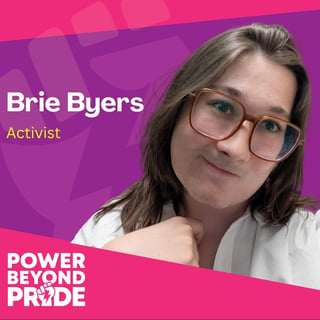
Speaker: visibility and access for trans men of color, We are your co -hosts on today's ClearCast journey. So excited to see you, Sean. It's such great to spend time with you. I'm excited to see you too. What? Today's guest is giving art, intellect, rebellion, tenderness, and truth. So please welcome to the podcast, Huck Reyes, Filipino -American writer and photographer. Huck is the co -founder of Southeast Workers Collective, a mutual aid group by and for sex workers in the South.
Speaker: Huck, welcome to the show. So excited to have you here. Hi, thank you so much. Just a note. We should update that bio because that collective is no longer.
Speaker: ah doing. Things. I don't think, but we can, we could maybe do another take on that. like If you want to send another. I could send another intro blurb. Well, I'd love to hear, is there is there did it change recently? Was it a change in organizing?
Speaker: I'm trying to remember. I'm trying to even think how you would have gotten... Did I? if if I sent that or did you just look that up? But that that maybe a couple of years ago that that kind of.
Speaker: Faded out, you might say. so easy it brings a question Is it hard to organize our in the South? Was that one of the challenges? I would say that the challenges that I find.
Speaker: ah It. Regardless of location or...
Speaker: There's just a lot of organizer drama sometimes. And I feel like this is... A huge hurdle for organizing in. Just in general. Whether it's queer organizing that I'm doing, whether it's sex worker organizing that I'm doing, whether it's just leftist organizing, there's just so much infighting sometimes. And unfortunately...
Speaker: Well, we don't have to go into the details, but... no is absolutely sharing yeah if you're i'm I'm comfortable keeping this in conversation. It's part of the reality.
Speaker: Of organizing when, when people talk about organizing at community levels, it is a clumsy process because we are trying to bring a lot of people together in the moment. So I'd like to come back to what organizing looks like, because I think that's, that's really part of our, one of the conversations here, but I'd love to. First of all, how's your spirit today? How's your spirit in the current moment? And maybe you can share a little bit about what you're working on right now. Oh yeah, totally.
Speaker: but So I... Well, I would love to uplift the collective that I'm. currently organizing with called BSWWS, BIPOC Sex Worker Writer's Space. That's been doing really well since 2024. And yeah, my spirit today is doing well. I've had a wonderful weekend. Sean and I were talking about that a little bit. I got to see some avant -garde theater. ah Yeah. And I went to...
Speaker: I got to get out into the countryside a little bit yesterday and hang out with queer, sexy folks. who are also navigating what we just talked about. the The internal conflicts that come up and then what...
Speaker: that transformation can lead to. So the gathering I was at yesterday actually came about because of Another. break within another organization. And so... It's...
Speaker: It's kind of interesting how It might not even necessarily be a negative thing that that groups. don't work out sometimes because it just leads to another transformation. It leads to another iteration of of the work and and something that maybe is a better fit. and So.
Speaker: It... Kind of an interesting conversation that I'm sure we can touch on more. But yeah, I was out in the countryside yesterday, which felt great. And yeah, it was.
Speaker: it's it's been It's been a good weekend so far. Yeah. So for people who are listening, who don't necessarily know who you are, and you talked about transformation, you talked about. things breaking off and folks going to do their other things but like for people who don't know who you are tell us what got you to this this part in your life
Speaker: Thank you for that question. Hi, listeners. My name is Huck Reyes. As Shane mentioned, I am a Filipino -American, Filipino on my mom's side, both Tagalog and Ilocano, and on my dad's side, we are. of Lee.
Speaker: English and Scottish descent. Working class. Midwesterners on that side. And I am originally from Oakland, California. I am... a writer, a photographer, a community organizer. I've been a sex worker for about eight years. Speaking of other transformations, I'm...
Speaker: kind of renegotiating my relationship with sex work. I just got top surgery in December, which is right. So many transformations. And I'm working on archival projects. I'm working on a book. And I live in Atlanta.
Speaker: And... I... Love drinking yerba mate. That's me in a nutshell. Shout out to Oakland, California. John's coming in from Oakland. So we're shouting out a lot of those California vibes.
Speaker: And I just love... How can you sharing so many places that you're engaging in the world from community organizing to creativity to all of this? and I think it's it's so powerful to think about all the ways they intersect and that they have these sort of... abilities to fuel each other. I'm curious when you think about the identities that you shared and that you bring into the room.
Speaker: um Like how those senses of identities have shared the way you see beauty struggle in your storytelling, like how you're sharing some of those and thinking about them. And when you kind of realize that writing wasn't just something you did, but rather something that was kind of central to who you are.
Speaker: yeah thank you that's a great question I think that... The way my identity is. influenced my work is in the... hu the neither here nor there aspect of a lot of my identities, being biracial, being bisexual, being...
Speaker: Trans. Or being a sex worker, even there's a there's a neither here nor there aspect of a glorification and a stigmatization at the same time. And all of these really have kind of.
Speaker: distilled my focus into those in -between spaces, into the... highlighting. of an anti -binary thinking, right? And so my work has really gotten into the crevices of places that...
Speaker: People. don't know how to define. All the time. um and so Through my photography, for example, I do a lot of double and multiple exposures, working with 35 millimeter. So really getting into this sense of being multiple places and being in a place that's not easy to define all at once.
Speaker: and could you repeat the second part of your question Well, first of all, I want to say that just sounds like queer. Oh, everything you just described there is fundamentally in that great beautiful gray.
Speaker: magic to me, magical space of queer, right? Like it's just absolutely redefining. the certainties of essentially a black and white world or a very concrete this or that, right or wrong. It is that beautiful. So I just want to, first of all, say yay to all of that. And then my other question really is around how you so started. My understanding is kind of centering your writing as you think about, you mentioned working on more text -based work and trying to bring more of that into your work.
Speaker: what defines you as a storyteller. or story sharer is a term I use a lot. So I'd love to hear how you started to... Bring that. focus in ah you know a little bit into your creativity? Well, I've always been a writer. i think the first Some of my first memories of...
Speaker: connecting with my own voice or finding my own voice are just childhood memories. i i been writing since I can remember. I've been keeping journals since I was a child. I was always encouraged in elementary school as a writer. and So I always, I think that my...
Speaker: sense of being an outsider. In multiple ways. actually is is also what led me to... The page? It's where I could. Make sense.
Speaker: of anything that was going on internally was on the page. And it was always just a... personal practice to keep me from going completely insane.
Speaker: i And... And then. Through go - I haven't gone to college. i've I've gone to a lot of community college, but... I... I've never graduated from any university. And.
Speaker: But through going to community college and developing a more serious relationship with my own writing. And also just traveling and continuing to write while I traveled. That's kind of what...
Speaker: pushed me to... Take it more seriously, of course, encouragement from my friends and my peers and my loved ones. Also, encouraged me to continue to develop my voice as a writer.
Speaker: But it wasn't really until recently that... And I think this because I didn't really go to university that. I didn't have the connections or I i don't even understand how the literary world works.
Speaker: but but So which is really hard when you're a writer and you're like trying to get your voice out there. You you can develop your voice. You can go to to. to peer. to peer groups. You can go to community groups.
Speaker: But getting into the literary world is very difficult. um And so recently I've been... Just trying to find more opportunities that can support me through that. and being an activist and being involved in community organizing that has been kind of an alternative way for me to access spaces that have the institutional resources.
Speaker: to help me get into the literary world and actually get my voice into the spaces where well we' where I want it to be. So, yeah, writing has always been a part of my life. And I think just through the community organizing is where I.
Speaker: been encouraged in a more specific way to use my writing as advocacy and to and more recently in our research and writing about histories. specifically sex work. worker histories and and how that is a type of advocacy as well. so Long answer, but...
Speaker: yeah i love I love it because it has somebody who... Did spoken word for years while I was doing activism. There was such a history in... the mixing of performance and literary. And then we've had on the show, we've had people like Matilda Bernstein Sycamore, if you're familiar with their work, is just absolutely fire.
Speaker: at breaking a lot of gender norms, a lot of a lot of structures and strategies that... Basically, they positioned as a very oppressive. publishing system tends to reinforce, right? You sort of closing a lot of the doors.
Speaker: And so i I appreciate you sharing that, how how this journey is. is is framing for you like how you how you're how you're looking at it as a as ah you have to kind of work with it, but also fight it. And maybe we can change it.
Speaker: Yeah, totally So we even through your text or even through a photography, I love how you talk about the the double exposure. I used to be a photographer myself. And so why do you think everyday moments deserve artistic revenge?
Speaker: Mmm. Oh, that's a beautiful question. And specifically to my work, too, because I love finding the beauty in the mundane. That's one of my driving themes. my i've hugely influenced by the 20th century.
Speaker: documentary. street photography artists from We're really... pioneering that genre. And. I think that everyday moments...
Speaker: deserve. artistic revenge, I think is how you phrased it. Because there is... So much. potential for relatability and connection across all walks of life in just everyday moments.
Speaker: And. It's... I feel like it's a lot harder to get people to come together over. complex theoretical ideologies sometimes. But when you can bring together people through art, that's just an everyday moment.
Speaker: One of the. Artic. in exhibitions I did recently. Well, a couple of years ago was. It was. It was for... An Asian -American. artist exhibit in Atlanta. It was for the Lunar New Year a couple of years ago. And I focused on hanging my photographs.
Speaker: I did an installation where my photographs were hung between ah Pieces of laundry. Now I had the little lingerie. Clippy. hanger where you clip all your little pieces of lingerie to hang dry them.
Speaker: And... It was so relatable first for Asian community because we stay. Air drying. so much of our laundry. You go to, in the bathroom in any Asian household, you will see the little plastic clippy thing with everyone's socks clipped to it. And.
Speaker: And so I really just wanted people to. Come together over something as simple as... Hang drying your laundry. Or... Sometimes you're just broke, like you don't have a dryer.
Speaker: or whatever, or you don't want to pay the dryer. So you just wash them and you bring them back to your house and hang them up. And so. The artistic revenge within that. I think. is great because...
Speaker: It brought people. down into the material life. That is something we all share. We all gotta wash our clothes. And it showed that sex workers also wash our clothes in the sink and hang them up to dry sometimes. and Having no different photos in between those also. i That's part of my revenge too, is I'm like refusing to frame and matte any of my photos anymore. I'm like, no.
Speaker: we need to We need to come out of the frame. We need to be more. tactile in our experience. with quote -unquote two -dimensional art.
Speaker: So, yeah, thank you for that question. i I think that there's just it's such a rich site. a for connection across walks of life. because everyday moments are...
Speaker: Almost. Y -you... I don't like using the word universal, but... and we can really People can really come together over everyday stuff. mundane stuff. And that's the beauty, I think. Sorry to interrupt. I was going to say, are there artists that really... I think of Diane Arbus, right? i think I think of artists who you mentioned kind of... chronicle the street, you chronicle those day -to -day pieces. Before we go to break, I'd love to know if there are...
Speaker: Any artists that you think people should be paying attention to now? or artists that you've experienced that. People missed especially when we look at queer artists of the past some that were overlooked and that we're trying to uncover now.
Speaker: Or just artists that you feel, maybe an artist that... really informs your own work. Yes. I'm terrible with remembering these names, but there's like photo books sitting in front of me. oh you know what Lee.
Speaker: What's her name? Lee. She was, what's her name? Lee. That's who. I'm going to Google that right now. Well, she was just like...
Speaker: Known as Lee. And. Kate Winslet just played, Lee Miller, thank you. okay i Oh, yeah yeah, yeah, yeah. She's had a real resurgence and in conversation. Yeah, so I...
Speaker: this And this is thing is... I completely missed her. like even in the know my own interest and in... mid -20th century photojournalists.
Speaker: I completely missed her. But. Then I discovered that her work had been up in an attic for decades until her son found it. so But what I like about her work was that she came from...
Speaker: She came from modeling. Right. And she kind of flew under the radar as a photographer because of. what happens when you're like a hot lady and you do modeling and then you're like oh I also create images from my own vision.
Speaker: It maybe doesn't go as noticed sometimes because you've already had a career as the muse, not as the... creator, right? And so Her work was just stunning to me. She has this cynical, surrealist eye, especially when she started doing photojournalism and in during World War II, um and that her images wouldn't. they wouldn't publish them for a long time because they were so striking and they were so truthful. And they were so weird, the way she would capture.
Speaker: Absurdity. in highly intense, like inside highly intense moments. that's it's just I think it's uncomfortable. and But I do appreciate art that is a little bit uncomfortable, too.
Speaker: So Lee Miller. I'm going to think of the names later too, but I'm i'm terribly bad at names.
Speaker: I imagine she would have a field day in the absurdity of the modern. world and the modern politic. But I think we're going to take that discomfort and absurdity into the break. And come back after this break with more incredible conversation. We're here with Hug Reyes, who's just an absolute inspiration in the work that you're sharing and and really creating at ah at an organizing level as well as as well as an artistic level. So when we come back, we're going to dive in activism, sex work justice, and why community care is revolutionary. This is Power Beyond Pride.
Speaker: Stay well.
Speaker: Welcome back to Power Beyond Pride. We're here with the brilliant Tuck Reyes. I'm your co -host Sean alongside Shane Lucas. And now it's time to talk about what happens when art meets action. And so you mentioned earlier when we were going through your bio, and you mentioned about ah the evolving and changing nature of organizing. And I've been, Shane has been around a little bit of organizing. I've been doing some organizing myself over the years. And I know how fragile it can be. now you want to Talk a little bit more about that shift and change and how things kind of ended up where they are now.
Speaker: Yeah, sure. Thank you. I feel so humbled to be called brilliant, but yeah. it's I think... What happens a lot of the time is folks are already struggling.
Speaker: when they come into the movement. And. It is so hard to... Stay cool and collected. When we have.
Speaker: All these external struggles and you're trying to do the movement for. An intangible goal sometimes, right? I think. the the work can be so long -term in nature.
Speaker: that People get caught up. in Instant gratification. Sometimes for what. success looks like.
Speaker: i' I don't know if I'm really in a place to to come out with a diagnosis of our... social movements, but it can be really hard to sustain each other. When we're all... a little bit dysregulated from... surviving out here.
Speaker: It's... it And. One thing I find, too, is is at least in queer spaces, We have made our spaces intentionally exclusive.
Speaker: to the point that sometimes we... turn on each other in that. Exclusivity when When something... feels like it's it's dangerous, even if it's just...
Speaker: Ah. a small misunderstanding. And I think sometimes we're a little too quick to dismiss each other and lean into that culture of exclusivity that we built for reasons of safety.
Speaker: and very valid reasons. It can sometimes get... a little French Revolution on ourselves, where now no one is revolutionary enough. And then it's.
Speaker: Oh, no, you know, and. No, no, no one's. And then. No one's left. Yeah. And so. I don't know what the...
Speaker: the the so I don't know. what the solution is necessarily, I have. ideas and I have hopes that we can all. still work together, even if we don't necessarily. always like each other.
Speaker: I love you saying that because I think that's really one of the key things is organizing that I certainly it took me a little while to learn throughout the movement. is that.
Speaker: There's a big difference between the people I want on my Christmas card list and the people that I'm going to organize with. And that when there's an idea of a shared goal or something that we need to accomplish. We don't need, we don't need to be besties. Like it's great. I love, and I have many colleagues that i'm'm I'm close with who I've been organizing with and people for whom I'm not. Right. Who who maybe we have different faith identities or different identities and experiences that that just are not.
Speaker: are just not, they're not going to work. socially, right? And I think sometimes there is this space in organizing because it is so vulnerable. And I think that... The courage that it takes to show up in these spaces is so is so powerful. and i have enormous respect and and great appreciation for people who bring that courage into the room. And for people who think of themselves or don't think of themselves as organizers, it's one of the things that ends up being one of the bigger challenges because here I am.
Speaker: My experience is real and it is. it's usually involving like you said trauma that brings people into the room of some format right you If you did not experience the injustice or witness the injustice or personally identify as someone who has been the result of that injustice.
Speaker: You're usually not in the room at some point. And so all of that courage shows up in the room. And it's all trying to work out all of that relationship at the same time. I'm curious where your courage, like when you think about the courage that brings you into the room and into this work, like where where do you think that... courage really stems from.
Speaker: Mm. It stems from the Black trans women sex workers who show up. All the time for everyone. And they are struggling.
Speaker: the most a lot of the time. That's what I think about when I say, what am I going to? Stay for. It's because of... mostly Black trans women sex workers who've Believed in me?
Speaker: And who... are still doing the work. through so much hardship. And not getting hardly anyone showing up for them either. If we're being real, even within like queer movements.
Speaker: And so I always just try to like name. That. Because. It has been. So influential. And just black feminists in general have really have have been the people who have.
Speaker: showed up for me. When. I need to be checked. Yeah. And done that in a way that's like. look, you have a lot of potential and like you are needed in this movement.
Speaker: And... we're going to sort some shit out too. And so I just feel like there's... A lot to be learned from from folks who don't always get the recognition but have been showing up for decades.
Speaker: and holding the movement together. ah By just still showing up and through the most hardship and saying. And just being really real about it too.
Speaker: Okay. That's like whatever your drama is. Hmm. We're going to have to put it aside because this is the real work and like other people just have like there's people with like real material needs right now that we need to.
Speaker: put aside whatever else is going on so we can just get the work done. So that's where a lot of my courage comes from is just. It. The example that's been set. by a lot of the my co -organizers and mentors even, I would consider some of them.
Speaker: because it's it's yeah like both of y 'all have have done organizing enough to know that it's not pretty a lot of the time. It's not glamorous a lot of the time. Sometimes it's just like really tedious, unsexy work.
Speaker: You got to keep meeting with people. You got to keep showing up at the city council meetings. You got to write letters. It's not the... glorified.
Speaker: Here I am. the revolutionary star. Well, it is and so... That's where my courage comes from is just really grounding in. in in the grassroots, like boots on the ground work that I see a lot of.
Speaker: See a lot of folks out there doing in the trans community and in the sex worker community and in the black community And then folks are at those intersections. So yeah, i just want to shout that out. Well, thank you. No, I think, I think again, when you talk about the the legacy and And just because this is so tied to the to the work that I've been doing the last 30 years. yeah Again, shout outs all the way from Marsha. Johnson, obviously leading a lot of the movement, but Monica Jones, who's also been around here as a guest, that kind of Dora show.
Speaker: He's a phenomenal friend and colleague who I adore. And shout out, Kanyan. We love you. And people like Sharmus, we've lost over the years. And Ms. Major. Many, many of the many and many of the people who, like you said, have have carried.
Speaker: the heaviest of lifts and and ah and and carried a lot of that work. And honoring them is is absolutely part of part of that, which is, which is again, you've made sex work part of the of the conversation. and Within that, like sex workers are often excluded from mainstream LGBTQ plus conversations.
Speaker: And so. Why? If you were talking to our communities at some level, like what is your argument to make sure that sex workers... are continuing to be part of this conversation in spite of...
Speaker: The pushback that we're we're hearing, and again, there's some transphobia loaded in it, right? Where we're people are like, can't you just... can't Can't we just be approvable people? Whatever that means. in in society, sex workers and and people with trans experience are undoubtedly two populations that have been.
Speaker: maligned often to create space for a more heteronormative model. What is your argument for trying to keep... our communities and the and the robust beauty of them.
Speaker: as vast and and full of its multiplicity as possible. Well... The arguments are already there, I think. Within a... greater LGBTQ movement. It's the...
Speaker: walking the walk. after you've made those arguments because I see a lot of places where or Or if you even ask personally to organizations. LGBTQ organizations specifically. Oh, are do you include sex workers? like Are you friendly? like cho like You know, most people, if you ask them one on one.
Speaker: Oh yes, of course. They'll say, right. um But when it comes down to it, they won't put it. in text on the front page. that they support the decriminalization of sex work, that they...
Speaker: want to center sex workers. So I think. No, there's still that stigma out there. There's still so much stigma, even within our... lovely progressive communities.
Speaker: And I think the argument for... Continuing. to Push. for more radical inclusion and radical visibility.
Speaker: is... Like... They're not. gonna like you're not like separating yourself from sex workers and trans people, it's not going to save you. is's Right? It's...
Speaker: I think it it might be. Some type of... Deep human. reflex to try to self -preserve, right? I can't necessarily blame people for wanting to.
Speaker: be able to access resources that they won't be able to access if they say. We're down with sex workers. i I also am a grant writer and know you've got to kind of like wiggle into the mold sometimes. just to get the resources.
Speaker: And so. How do we even change the stigma in the culture? Well, you can't change it unless... You start. Breaking out. against it, right? And once that becomes more of a cultural norm...
Speaker: I mean... It's just, it kind of like reinforces itself it unless you really break those cycles, right? because If you don't talk about it more than. it The culture doesn't change. Right. But. You also need the resources to be able to Fund the the containers for changing. things so But.
Speaker: Like you said, sex workers have... always been at the... at the forefront of these these movements. and A lot of the times. Well, this is actually what I'm writing about in In this. book upcoming I'm talking with some editors currently, that really positions... historical analysis of queer communities.
Speaker: and trans communities and sex worker communities and positions it from the viewpoint of sex workers throughout history. And we start to see these. the roots of certain movement ideas coming from sex workers themselves before these ideas even conceptually existed sometimes.
Speaker: I'm pioneering this idea of proto intersectionality, which I've been finding examples of. in 18th century brothels where This is the place where we had trans... Girls, what you might...
Speaker: They might have identified differently at the time. Language it always shifts, but... You see, repeat. instances where in court testimonies They're saying, oh, well, I got dresses from from the girls who worked at the brothel.
Speaker: And if you... continue to pull those threads, you can see these sites of proto -intersectionality coming from the the culture of sex workers. Right. It wasn't like we stepped into a movement.
Speaker: where these ideas... already existed, but... Through the lifestyle and through the culture of sex workers, these ideas started to take on these very... Early.
Speaker: iterations of those concepts. Anyway, I could get real nerdy about that stuff, but that's the argument in the book that I'm writing right now is that. These movements owe a lot.
Speaker: To these. Two sex workers. Because sex workers since the medieval period have been out here with a political consciousness with. ah awareness of being an outsider and an awareness of being connected to other marginalized groups. um And I just think that's fascinating. and part of where I'm jumping into.
Speaker: My role in the movement, I think, is... You know, you kind of shift roles. You're like, well, where's really my place in the movement? And that's that's my role right now is is getting into the history and using history as advocacy. so We've always been there.
Speaker: A little bit. I mean, I'm out here for it. Everything you're saying is... is is Yeah, I'm here for it. yeah and I love you talking about the history because we always have been here And we always will be here.
Speaker: right and so that brings me to some current day stuff right of like when we talk about sexuality and like why do you think sexuality is still treated as a taboo even in supposedly. progressive spaces.
Speaker: Christianity. but that' That's my simple answer. Wee! Now I take the post -Christian. A secular world. Mostly, at least in places like Canada and United States. but we still really embody a lot of...
Speaker: Christian. Values? if you will, even though we don't see them as such, even the value of... Rooting for the underdog. Now that's very Christian.
Speaker: Framework. the meek shall inherit the earth the first or the last shall be first and things like that But there's still that Protestant purity culture. especially in the United States.
Speaker: Where even in progressive places... The. Okay. Be. The taboo of...
Speaker: One, deviant sexuality, I think is still there, even though we might not see it, right? And a lot of the... this this is These are ideas that I'm still working through, right? but I think a lot of the stigma around sexuality and around sex workers.
Speaker: does come from. value systems that work in an in -group, out -group kind of way. Right. And.
Speaker: Sex workers disrupt a lot of... those values, right? Because...
Speaker: Even though people... want to who theoretically believe that they are supportive of sex workers, I don't think they understand what that would really mean, right? It it means...
Speaker: looking at the world in different ways. and We're not always as ready to do that. as we might believe we are. um And... Yeah, I think that there's still the legacy of.
Speaker: strict. not strict, but just deeply entrenched value systems that do go back to certain aspects of Christianity. And also just...
Speaker: Misogyny. What? You gotta name it. It's there, right? I mean, it's so many of the criminalization laws. are steeped like... male bodies or...
Speaker: Cis male bodies have rarely ever been the subject of control. by legislation, by systems, right? There's always been. and aggressive.
Speaker: control. of trans female bodies and of and of and of and ah and of cis. female bodies. Cis women. And that is the legislative control, right? That's the history. So yeah, as as I appreciate, I mean, all of what you said around pleasure and Puritanism, a hundred percent. Like I, again, I.
Speaker: I love hearing you share that. And then misogyny. Yeah. I mean, undoubtedly the history of. of sexual criminalization. Well, it's interesting because Throughout the...
Speaker: throughout Christian history. Women who were sex workers could do things that other, that... Other women couldn't. If you were a brothel madam, you could own property. You could be seen in public.
Speaker: If you were. A sex worker versus if if you were not a sex worker, you were either at home at your dad's house. or you were at home at your husband's house. And so. There's this.
Speaker: persecution of sex workers as almost like a third gender of themselves. because they were the only women who could. Be out in public. They're often called public women. in the archive. And so...
Speaker: I think this also created that strain between women's rights movements and the sex worker movement. Because sex workers always had this. content this very conditional, but still more freedom.
Speaker: than women had historically. Because they could be. Talking to men who weren't their husband. or their father. They could be, and they had a group identity too that they could leverage. against We had sex workers petitioning monarchs.
Speaker: directly and winning. as far back as the 1300s. And so there there's always been this culture of transgression and of political consciousness among sex workers. and i think that I don't want to say they're jealous, but... Yeah. Just kidding.
Speaker: It's always been a very...
Speaker: contested relationship between sex workers and other movements because of the stigma and because of the culture within sex workers. of asserting ourselves constantly because we've had that.
Speaker: identity of the out -group reinforced so much over history. I could go on and on. on this tangent. so Thank you for all of that. So let's take a short break here, but don't go anywhere. When we come back, the gloves are off and the fun things begin. It's time for Power Beyond Pride, our speed round of questions.
Speaker: Well, welcome back to Power Beyond Pride. We're still here with the incredibly talented and insightful Huck read. And I'm here with my amazing co -host, Sean Aaron. We're having a great time talking about...
Speaker: activist movements, the amazing things that happen when a lot of courage shows up in the room and then people go, oh no! And all of these things that make up what organizing is on the ground. But now it's time to... Loosen the collar, stir the pot. And you know what time that is? That is the speed round time.
Speaker: So the speed round, this is where we get to ask you some random questions. We don't want you to overthink your answers. Just the first thing that pops into your head. And you ready? Let's go. Okay, cool. Yeah. Cool.
Speaker: First question. Morning person or midnight menace? Midnight Menace. Yes. 100%. When it's bedtime, I start doing Kung Fu.
Speaker: What is your favorite city to disappear in? No city, New Mexico. You know, the sound that you mean on the kind of ne like. a just Yeah.
Speaker: Nameless. Town on the map, New Mexico. Do you have a wolf howl? Do you have a coyote howl that you you throw out? That seems like the appropriate thing to do. that Yes. A hundred percent. Yeah. Oh. I got one. Which is sexier, intelligence or confidence?
Speaker: Intelligence. yes We love a good tapio section. What is one song that understands your soul? Hmm.
Speaker: I... Um,
Speaker: <unk> I was just listening to it the other day. Because I'm a i'm i'm a i'm an old school fool. And so I love early red hot chili peppers. Peace.
Speaker: andnna men and pen and penit and I'm on a roller coaster, but I'm on my feet. Come into me, baby. Let me on your shore. I'll be coming back, baby. I'll be coming back for more. Oh, what is that? It's the...
Speaker: Adel. Here we go now. Right. yeah why yeahre That's going to kill me now. i yeah I'm stuck in it. No, it's the it's the blood sex magic. to Soul to squeeze. Soul to Squeeze, yeah. Soul to Squeeze. That's the song, right? That's the album, right? what's Yeah, it's on that album, yeah. and i um all got the oh sos I was, yeah, I was making a nostalgic mix the other day. and i Where I go, I just don't know.
Speaker: I might end up somewhere in Mexico. Oh, there we go. I might end up somewhere in New Mexico. And there you go. You got got all that stuff at the same time.
Speaker: all right so me cutti so there's no harm in that and yeah you got a little Free Filipino karaoke just for you. I love it. There we go. We're going to do some karaoke together. I love it. Okay, well, awesome. i and we We love that. Give it away, give it away. Oh, that's what it is. Give it away, give it away now, right?
Speaker: No? That's a different song. That's a different song. Good job. As the, as, as, as the elder, I feel like i crawling back into my red hot chili peppers catalog. All right. I love it. with The good dance song for your soul. The last thing that made you cry.
Speaker: ha ah Just now, earlier on the show, when I was talking about the the trans women sex workers who are my colleagues who have inspired me so much. What?
Speaker: So that, just thinking about their incredible work and how incredibly held and seen and believed in that I feel in a lot of the presence of my colleagues. Ha ha How's that? We love it. We love it. laughter is here We're all here for it and to share it with you.
Speaker: So the opposite of crime, what is the last thing that made you laugh really hard? um My partner, Max. He's always roasting me, which makes me... laugh so hard he's he's so he's actually a bit younger than me And so he's always roasting me for my age, which is hilarious because he's actually energetically the ancient one.
Speaker: But yeah, no, my partner Max always making me laugh. I love it. Is soft kiss or long stare? Long. stare.
Speaker: but every couple like I don't like soft kisses. they We're going to go. I love it. Brilliant.
Speaker: What emotion do you like to photograph? Confusion. Mm.
Speaker: I have to ask why. Well, what about them?
Speaker: Well, I think it's intriguing for the viewer. I think that confusion looks different on different people. I think that there's a lot of... Like it hooks you into a story in a photograph, a photograph being a single moment.
Speaker: If someone's got a look of confusion, I think it brings the viewer into... ask questions about who this person is, what they're looking at. what's going on for them, who they are, why are they looking that way?
Speaker: So yeah, I love. Expressions. Confusion being one of them that draw the viewer into. that moment and make them stay in that moment a little bit.
Speaker: Love that. There's a lot to unpack in that, that I think is just cause I think queerness is in some ways kind of built in that. And again, we talked about gray space open and I feel like.
Speaker: that know Hearing you share that really feels like it's living beginning into that space too. What emotion do you hide best? Neediness. I...
Speaker: I break down when I even consider that I have needs. So I'm very much a... Daddy type. I'm always trying to provide. and show up and I'm overextending. And then as soon as someone's like.
Speaker: What do you need? I'm like, oh, I'm fine. it So. We want to tell you to get in touch with your needs to find a space for that. Oh, God. um'm I'm still working on it. Make Yeah, I'd probably say just a lot of the...
Speaker: femmes in my life who are um lean into their... They're like... Amazing goddess healer. I'm not taking this, I don't have needs attitude from you, sir. oh Who really just drop in to the moment and...
Speaker: So of my friends, my friends who know me and see me and. aren't going to take that. I love it. I love it. No, that's good. Gotta have friends. Usually femme. but but What is one word that describes your love life?
Speaker: Max is probably listening. One word that describes my love life. Nonconformist. I... there why I love it. and What did you a great word. What a great word. There we go. i that I'm going to.
Speaker: I'm going to have to think about that. I love it. It's it's a lot of room for our exploration in it, is what it sounds like. And I love that. if you're light If your life is a poem, What would its title be?
Speaker: Oh gosh. Mm -hmm. My life. were a poem. What would its title be?
Speaker: Keep. hands and arms inside the vehicle. Her arms and legs inside the vehicle at all times.
Speaker: There we go. It's got to be a safety warning. I need to if the title. of the poem of my life. it's It's got to be a safety warning. Yikes.
Speaker: Peace. If joy had a smell. What would it be? The redwood forest floor. yeah Bringing us back to that current California there, Sean.
Speaker: Mm hmm. Thanks for bringing us back to that California. With a little weed, like a little weed smoke drifting through.
Speaker: this song This sounds like an event happening on the West Coast. That'll be really lovely thing out there. Getting out there to the words. What does power beyond pride mean to you? Power beyond pride.
Speaker: That phrase. The phrase of this lovely or the title of this lovely podcast. I was thinking about this actually. To me it means... Action.
Speaker: After. declaration, right? And walking the walk, right? so Putting those things in motion, getting that momentum.
Speaker: Taking that action. After we've... declared. ourselves and affirmed ourselves. what is the what What is that transformational energy? What is that kinetic energy that comes out of being out and loud and proud?
Speaker: Where does that kinetic energy go now? Right. And that goes into. power which generates movements right and generates transformation so that's what that means to me Beautiful.
Speaker: huck This has been such a beautiful, rich conversation. We thank you so much for being a guest here. So thank you for sharing yourself with us. Tell people where they can follow your work. or support your projects and stay connected.
Speaker: Absolutely. I'm going to shout out my literary collective that I'm a co -founder of. We mentioned it a little bit at the top of the show. BIPOC sex worker writer space. um On Instagram, we are BIPOC. Dot. S -W -W -S.
Speaker: You can also find us on Substack. BIPOC SWWS. .substack .com And our website is also... BIPOCSWWS.
Speaker: Org .com. One of those. um And yes, we finally got another grant. So we're going to have programming coming up again soon. We had a little bit of a winter into early spring break. But yeah, that's where you can find us. We do paid.
Speaker: writing workshops for BIPOC sex worker writers. We pay BIPOC sex worker writers to write for our blog. We are gearing up to do sponsorships to send BIPOC sex worker writers to writers' residencies and conferences, etc. So lots of cool stuff.
Speaker: Come check us out. Be in touch. Yeah. Thank you. I love it. though Thank you so much. And can people follow your individual work as well? Oh, yes, absolutely. Studiohuck .net.
Speaker: is my photography website, but there's also links to my socials and other things there. So yeah, that's studio. Huck, H -U -C -K dot net.
Speaker: So many amazing things that you're working on. And and again, I love i love your you're sharing your personal creativity, helping others and supporting others, bringing that creativity into the world. It has been such a joy to be able to connect with you, Hawk. And I just want to extend my my my... the biggest gratitude and heart for the work that you're doing and keeping so many conversations in the center.
Speaker: of of of people's minds. So thank you for joining us this week. We hope you'll join us again in the future. We would love to stay in touch with you. I'd love to. Yeah. to to to learn more about what's going on and transforming this world, which is really amazing.
Speaker: I am your co -host, Shane Lucas. You can follow me at shanelucas .com or through A Great Idea. and through all of the social channels there. You can follow ShaneLucasCom, ShaneLucasCom, all one word across all the digital.
Speaker: platforms by the time this airs. So that's exciting. And I look forward to to talking with you soon. And I'm your co -host, Sean Aaron. And you can follow me and the work that I do on Instagram at themboys.
Speaker: ink that is d -e -m -b -o -i -s -i -n -c Remember to subscribe and to get your friends to subscribe to Power Beyond Pride on Spotify, Apple Podcasts, or wherever.
Speaker: You get your podcast and check out our site at powerbeyondpride .com. Power Beyond Pride is a project from a great idea, a queer owned design and content agency. You can learn more about them at a great idea dot com.
Speaker: This episode is produced by Shane Lucas. Maddie Bynum is the project developer. Our editor is Jared Redding and with support from Ian Wilson. And Sean and I are both part of this podcast awesome host team, and we love all of our co -hosts. And we invite you to send in your questions and comments to all of us. at powerbeyondpride .com.
Speaker: Check out our new episodes each week and we look forward to queer change making with you next time. Thank you from all of us. Power Beyond Pride.