Transcript
lpaltiguzman: Welcome to the Energy Vista podcast, a podcast on energy issues where we make experts great again and contribute actively to the public debate and policymaking around commodities, the geopolitics of energy and trade. I'm your host, Leslie Pelti-Guzman. It's June 11, 2026.
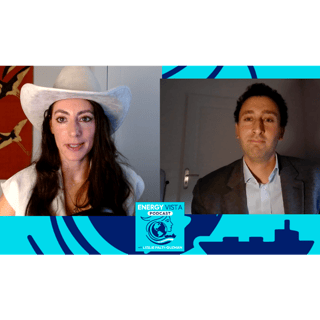
lpaltiguzman: and time for a new Energy Vista episode. Today, my guest is Daniel Benahim. Daniel previously served as Deputy Assistant Secretary of State for arab the Arabian Peninsula Affairs and National Security Council Senior Director for speech writing and strategic initiative initiatives and Special Assistant to the President.
lpaltiguzman: As Deputy Assistant, part of his initiatives and work included diplomacy, the end of regional wars, efforts to bring jailed Americans home safely, the evacuation of almost 100,000 Afghan allies through the Gulf, arms sales, semiconductor exports, commercial diplomacy, and competition with China in the Middle East.
lpaltiguzman: So I couldn't think about a better guest today to discuss the Gulf. um the future of the alliances between the different countries, the relationship with the United States. So I'm very excited to have Danielle. Hi, Danielle.
Daniel Benaim, MEI: Hello, you left out one very important detail, which is that we're both graduates of the Fletcher School at Tufts.
lpaltiguzman: Oh, tell me.
lpaltiguzman: Of course, this was going to be left for the personal trajectory, but I'm very happy you mentioned that because this is how we met and almost years ago. twenty years ago or no, more than 20 years ago then.
Daniel Benaim, MEI: Mm-hmm.
lpaltiguzman: So yes, and but i'm I'm very happy we we kept in touch. um So in my world of energy and commodities, right now everybody is focusing on the fate of the threat of hormones and whether energy flows are going to return fully free or whether some new mechanism, formal, informal emerge.
lpaltiguzman: um But I would like to step to take a step back with you and look at the different positions right now that the different countries in the Gulf are adopting. And we knew that before the war in Iran broke out again, there were already some tensions, notably between the UAE and Saudi Arabia, because of their various geopolitical positioning, and notably you know with Yemen and other countries. um So does this ah war and the outcome of like the stalemate of the negotiations right now, is it bringing the Gulf countries closer together to have a common strategy on how to deal with Iran and the IRGC, which remains in power? Or do they have different approaches, um maybe not public and
lpaltiguzman: um and that will remain over time, like with a growing divergence between their their politics.
Daniel Benaim, MEI: Yeah, well, Leslie, thanks for having me and and hi to your audience. um Before this war started, you did have a kind of growing divide between Saudi and UAE as a kind of fundamental regional ordering force to really take hold. Detentions had been there for years and in some way,
Daniel Benaim, MEI: they were muted by the wars that happened after October 7th, when the leaders agreed that whatever their differences, they should find ways to work constructively together. I think ironically, a ceasefire in Gaza and a period of relative calm on Iran is the moment when this boiled over, only to be followed by one of the most disruptive and and wild periods ah of of you know regional history.
Daniel Benaim, MEI: um I think, unfortunately, Gulf unity is not really in the cards in the wake of this war. The divides that the Gulf states came into the war with have persisted. And in some cases, there have been some new some new and deeper fissures within the region. I think Iran set out at the beginning to target the Gulf states to drive a wedge between the Gulf and Washington.
Daniel Benaim, MEI: I don't think that worked terribly well, by and large. But what it did do.
lpaltiguzman: ah To this point, okay can I, and in between parentheses, and that's, I think, very important to note is that you mentioned that Iran is trying to create a wedge between the U.S.
Daniel Benaim, MEI: Mm-hmm.
lpaltiguzman: and the Gulf allies. Is it the reason why some Gulf countries have been hit the most by missiles, drones, and other less? So I'm thinking about the UAE was the most targeted.
Daniel Benaim, MEI: who
lpaltiguzman: Also, to some extent, I think Bahrain and Kuwait, but much less for Qatar, Saudi Arabia and Oman, for instance.
Daniel Benaim, MEI: Yeah, look, I think they're trying to create differential incentives to different countries. I think they looked at the UAE, to the surprise of many, because the UAE had been very conciliatory as their number one target. and Frankly, the UAE took more ordinance than Israel from Iran over the course of this war, which is staggering, let alone more than their neighbors. And I think that was in part because of the Abraham Accords, in part because they felt that the UAE had the most to lose based on the strength of their model of economic development.
Daniel Benaim, MEI: um And because the UAE is right nearby, Riyadh is hundreds of miles further. ah you know So I think they chose the shoreline Gulf states because they were easier targets. I think the the fact that the UAE had Israeli forces there during the war was was part of probably what...
Daniel Benaim, MEI: encouraged the Iranians to try to create a fissure and to deepen the divides that they were seeing. But they've hit everyone. They did a hundred, you'd know better, but they did a tremendous amount of damage and revenue loss to Qatar. They hit Omani ports, despite the fact that the Omani foreign minister went on CBS News the night before the war basically pleading for u.s diplomacy instead of war they still hit oman despite oman not really hosting american forces um qatar hosts uh more u.s s forces by far than uae and and they were hit much less uh so it's yeah
lpaltiguzman: so that can yeah So that's interesting, the relationship between hosting a base from the US and being hit the most of the list, right? Because Qatar is hosting bases and they have not been hit as much as other countries that are hosting US base.
Daniel Benaim, MEI: I think they've been trying to give each Gulf state, with the exception of UAE, reason to restrain itself and to to try to create incentives for them to diverge from Washington.
Daniel Benaim, MEI: And they've occasionally had success because Washington has been pushing for, at various points, kind of escalatory approaches to Iran in targeting Iranian infrastructure. where the retaliation would come against infrastructure in the Gulf.
Daniel Benaim, MEI: And in those cases, I think that threat of Iranian retaliation has driven a bit of a wedge and has caused Gulf states to either advocate for either advocate for Washington not to take those actions or in some cases even withhold support for the use of their territory to do that.
Daniel Benaim, MEI: So there is a bit of a wedge there, but I think the deeper wedge is, frankly, between the Gulf states.
lpaltiguzman: Yeah.
Daniel Benaim, MEI: Oman has emerged as the most conciliatory toward Iran and the most eager to kind of pursue deepening dialogue with Iran on various issues. UAE has kind of set itself apart in having flipped from being very solicitous of calm with Iran to taking a view of kind of resignation that they need hard power, from Israel and America to resist Iran without really having a plan for how that hard power is going to bring about the changes that they want inside Iran.
Daniel Benaim, MEI: And I think in the middle are Saudi and Qatar and Kuwait. Bahrain is maybe closer to UAE on this point because of their...
lpaltiguzman: yeah i may have a Yeah, I may have a different view than you on Qatar and the attacks by Iran.
Daniel Benaim, MEI: ye
lpaltiguzman: I think it was orchestrated, very targeted and limited attacks on Ras La Fan. And I think Qatar energy,
lpaltiguzman: The government knew about it ahead of time and they have selected together potentially the targets to transfer mix on mobile. I think it was much more, you know, premeditated and arranged and, you know, could market. So yeah, we we also received the heat and 12 million tons in a year of LNG.
lpaltiguzman: in the big picture is is not a considerable loss, especially as we were heading into a glut market and this glut will eventually happen.
lpaltiguzman: um So I don't think it's ah it's a big loss for Qatar. But i think...
Daniel Benaim, MEI: Well, that's interesting because as i and I mean, the experts at at my institute, at least, had talked about up to $100 billion of lost revenue.
lpaltiguzman: Yeah.
Daniel Benaim, MEI: But I realize this is an area where you're certainly an expert and I'm not.
lpaltiguzman: And you know I think it's a calculation. um The force measure was triggered by this attack you know even more. And you know when the country triggered force measure, you don't have to pay damage, I mean, compensation for the missing cargoes that you don't deliver to your long term contracts. I mean, there are a lot of different reasonings that we can consider.
lpaltiguzman: um But I agree. I think you know this Gulf unity is a myth in a way because you know we both remember very well the Gulf blockade right like between 2017 to 2021 where the US led blockade against Qatar actually um divided the region also. And actually one of the chief accusation this blockade was that Qatar was too close to Iran.
lpaltiguzman: um So that's kind of interesting because iran it's not the first time that we see divide in the region because of Iran.
Daniel Benaim, MEI: Yeah, look, I think that the Qataris were quite angry to be struck as they were by Iran, and I took that as sincere. And I think that they also have a major enabling role in the operations of the U.S. military during this war, so which they they keep fairly quiet. So I think they they indeed have tried to, over time, play this role, and they're continuing to do that as a mediator alongside Pakistan.
Daniel Benaim, MEI: I think yesterday there were Qatari officials in Tehran trying to create the bridging proposal to lead the parties to the end of the war, while both sides are essentially trying to test the limits of provocation of each other without undoing the diplomacy that I think both are trying to see succeed.
Daniel Benaim, MEI: So Qatar certainly is playing that that intermediary role and engaged in a kind of mediation which which both requires them to have relations with Iran and reflects the fact that they do have relations with Iran.
lpaltiguzman: Yeah. And I think along with Oman, Qatar is one of the most willing party potentially to accommodate Iran and pay a fee if needed to go through the straighter formulas.
lpaltiguzman: um So where do we stand now? in Because each of those countries are, most of them are big exporters of commodities and they will need to find a way to continue their business and have an outlet via the Strait of Hormuz for now, even if, you know, over time, they will try to diversify and find alternatives and the buyers will certainly diversify too and find other alternatives. But for now, theyre how are they thinking about dealing with Iran and the IRGC? And do you see and different approaches here?
Daniel Benaim, MEI: Yeah, I do see quite different approaches across the Gulf. I think, look, all the Gulf states in one way or another, were engaged in a kind of big effort to modernize and diversify their economies.
Daniel Benaim, MEI: that required regional comm. I think about it as kind of four legs of a stool, what they were all trying to do.
lpaltiguzman: next
Daniel Benaim, MEI: Diversification beyond beyond oil, well, except for Qatar, which has an endless supply of gas. But diversification, globalization for their young people to have a kind of more normal life and to bring international investment in. All of them were pursuing detente with Iran, which while it failed, actually lasted for two and a half years after October 7th, which was kind of striking and surprising, frankly.
Daniel Benaim, MEI: in many ways that there wasn't that that ah that it was as durable as it was. And then all backstopped by U.S. military deterrence. And I think all of those legs wobbled one way or another. um Every part of that template of how the Gulf states have been thinking about their modernization was called into question. And they're all still trying to answer it. They're all still internally soul searching as to what it means. But I think when it comes to Iran, they've taken somewhat different journeys.
Daniel Benaim, MEI: I think for Saudi, I was in Saudi a month ago, there are still hawks and doves in the Saudi system. And they they're forthright about the fact that it's it's this is a kind of moment of policy reformation.
lpaltiguzman: Mm-hm.
Daniel Benaim, MEI: But I think where they are landing is they're making a journey from a sense of outrage at being bombed and working with the United States toward a kind of realpolitik view of the problem where they are most focused on their own interests and believe that others are not taking full enough account of those interests.
Daniel Benaim, MEI: And so they're trying to achieve the regional calm that they've been relying on for Vision 2030, working closely with the United States on defense issues, but also pushing for a kind of diplomatic resolution that opens the strait.
Daniel Benaim, MEI: That doesn't mean that Iran is not their enemy. They clearly are. They they reportedly retaliated, and I have no reason to doubt those reports militarily.
lpaltiguzman: Yeah.
Daniel Benaim, MEI: um you know, they they're they're not going to be happy if we sign a deal that that provides Iranian funds for things that threaten the Gulf states. But they're really looking to to stay out of war and to avoid a situation where more Iranian attacks on their critical infrastructure in this period when both sides are kind of inching toward a deal doesn't do what they would consider kind of needless damage to their own economic prospects.
Daniel Benaim, MEI: you know And on the other side of the spectrum, you have UAE, which I think just was so shocked by this sort of fundamental threat to its its model, which is a million Emiratis and about 10 million foreigners and not merely kind of basic labor, but experts, investors, businesses.
Daniel Benaim, MEI: They saw that model under a fundamental existential threat from Iran. um
lpaltiguzman: Thank you.
Daniel Benaim, MEI: and didn't see a particular value in trying to to sort of calm or mollify Iran because of how hard they'd been hit. And so instead turned really to Israel, the United States, Korea, France, and others outside of the region, who outside the Gulf and outside of the the region in some cases, who were the most capable defense partners to deal with a kind of what they began to look at as a hard power problem.
Daniel Benaim, MEI: And I think you know they they don't want to... you know there's a lot of talk about finish the job, which you've heard Lindsey Graham say, and I think a lot of Gulf states have said things like that privately.
lpaltiguzman: Bye.
Daniel Benaim, MEI: There's not really a definition of finish the job that that comports with any near term U.S. policy strategy that's being considered. There's no finish the job. There's no once and forever after in the Middle East, usually.
Daniel Benaim, MEI: ah But I think what the UAE means when they say that is that they think that other countries are a bit deluded in trying to mollify and buy off Iran when they've seen Iran's aggression and coercive force.
Daniel Benaim, MEI: And so they're just have decided they can't live peacefully next to them and are content to bide their time and work with the countries that are willing to work with them to find a way to achieve a more lasting solution over time.
lpaltiguzman: Yeah. Yeah. In terms of your point on delusional, I think, you know, countries that are ready to pay a toll for the threat of Hormuz and accommodate Iran, I think they are misleading themselves because, you know, it starts with a fee, it doesn't end with a fee.
lpaltiguzman: And you're a friend today, you're not a friend tomorrow. And it's, you know, endless exhaustions for their economy and the global economy.
Daniel Benaim, MEI: Yeah.
lpaltiguzman: um But, you know,
Daniel Benaim, MEI: Well, Leslie, I think I agree with you about that. And I think, you know, it's um it's look, they're in an impossible position. I had one friend from a small Gulf state say to me, three minutes is a very short time unless your head is underwater.
Daniel Benaim, MEI: You know, if you're getting nothing out and your whole revenue model depends on natural gas in the case of Qatar or oil, in the case of Kuwait, you may have a rainy day fund. but you're essentially grinding your your economy and society to a halt by your inability to export.
lpaltiguzman: Yeah.
Daniel Benaim, MEI: So I do think countries will be willing to pay Iran. I think you're right that... it's not likely to be the kind of pure, unpressured, uncoerced egress that you had in the past, because I don't think Iran can ever, we we well, the you know, the idiom is you never can unring a bell once it's been rung.
Daniel Benaim, MEI: Everyone has seen that Iran can exercise this coercive power. So as long as the regime is there, there's very little that can be done to demonstrate that they can't. So I think, yeah,
lpaltiguzman: So, um yeah I mean, it's interesting, like over the past two days, we heard more about this kind of light version of Hormuz freedom, where you have the US Navy and,
lpaltiguzman: um
Daniel Benaim, MEI: Yeah.
lpaltiguzman: guidance of commercial tankers, so um and including some oil tankers and LNG tankers that have passed, transited safely, going dark, so turning out their AIS signal, like their transponder, which is risky, right? like it's it's It's going dark, um and risking more potential collision. and ah but the So the U.S. has been ah providing this kind of safe passage through the Omaniyah route.
lpaltiguzman: And it's a way, of course, to trickle the fraction of their exports. But while there is stalemate in the negotiations and while um the US you know is not budging for now on the toll and paying in some ways Iran, you alleviate a little bit the global oil and energy market to yeah know on the margin.
lpaltiguzman: But we could see a situation where that continues. I don't know why you know i would have been President Trump. I may not have posted this about this on True Social yesterday because it was low profile and now you know everybody knows about it and now Iran may pay more attention to it. But um we're definitely in interesting times where I think countries are trying to find alternative ways to um well, first not to agree to all the concessions that Iran is asking for and and negotiating with forces. We saw like the past few days, we've seen a lot of like many strikes. So I think it's not over.
lpaltiguzman: And so coming back to what you were mentioning about the UAE, do you think that at the beginning of the war, when there was maybe more hope that there could be a complete regime regime change, meaning the end of the Islamic Republic as we know it, and the IRGC, not in power any anymore.
Daniel Benaim, MEI: Mm-hmm.
lpaltiguzman: Do you think the UAE was even more willing to take the side of Israel and and the US and turn the page and um and you know rethink all the alliances and now the motivation has declined because there is still many unknown on the future of what what holds for Iran?
lpaltiguzman: and So how do how do you see like this change maybe in perceptions? and um And it's a question of deterrence too. like um Do you think, because there is a lot of propaganda, right? And both of us were trying to filter through the noise.
lpaltiguzman: and But what what is the the state of US deterrence right now versus Iranian deterrence?
Daniel Benaim, MEI: Yeah, look, it's a great question. I think the perception is vitally important. And I think just to be blunt about it, the perception across the Gulf is that the U.S. went into this war without a serious plan for how to conclude it successfully and has not taken adequate account of the damage that the war would do to the Gulf.
Daniel Benaim, MEI: And even now, in pursuing these kind of improvisatory efforts to jawbone a diplomatic agreement, has not really, has not really taken account of the ways that escalation will impact the Gulf states.
Daniel Benaim, MEI: And I think that's a frustration that's shared across the region. I think what's different is that the UAE leadership, and again, these are societies where a few leaders can really dictate the orientation, and the orientation can switch quickly, ah as it did in the UAE when they went from detente with Iran to this kind of ah hardened, you know hard power opposition.
lpaltiguzman: Mm-hmm.
Daniel Benaim, MEI: um and could flip back. um I think their sense is that they need to they they saw which partners were able to help them in the face of this Iranian onslaught and that that was formative.
Daniel Benaim, MEI: And so in some ways it made them more resolute, even if they weren't sure that the countries that they were working with were able to stop every Iranian attack. i think you know ah It's become a bit of a truism in this discussion, but certainly deterrence failed when it came to fighting, preventing Iran from attacking the Gulf. But I think defense succeeded where it came to actually preventing a lot of the worst kinds of damage over the most sensitive facilities.
lpaltiguzman: And would you say that the countries that are hosting the bases were like much better off having the U.S.
Daniel Benaim, MEI: um
lpaltiguzman: nearby with a base than without in terms of defense?
Daniel Benaim, MEI: Yes, in some cases. Look, the UAE has the most advanced indigenous capabilities and and they have help from outside.
lpaltiguzman: Hmm.
Daniel Benaim, MEI: you know but But country by country, I'd say it's different. But the fact is that the U.S. s basing and the U.S. military capacity building and the U.S. sales over time as a package was a big part of why Iran was not able to simply hold at risk everything they wanted.
Daniel Benaim, MEI: Now, it's also true that Iran did not, I think Iran has taken a calibrated approach, even despite all this aggression, where they could have done more.
lpaltiguzman: Yeah.
Daniel Benaim, MEI: They could have hit the desalination plants or the energy, the oil pipelines and other things, because you know they they are also trying to achieve a political effect with violence, just like Trump and Hegseth are.
lpaltiguzman: Yeah. And we should add, yeah. Yeah.
lpaltiguzman: Yeah, and we should add that Iran didn't target just the US bases and this country's and infrastructure, strategic infrastructure, infrastructure but also the civilian infrastructure, hotels, right? And yeah.
Daniel Benaim, MEI: Definitely. Oh yeah, no, so a civilian airport in Kuwait, just like a few, few, but week or two ago. No, what Iran has done has been horrific.
lpaltiguzman: Yeah.
Daniel Benaim, MEI: And I think it was very counterproductive in pushing the Gulf states to be closer to America, where it was more effective on the margins was in reinforcing some of the existing divisions within the Gulf and maybe restraining America a little bit when it came to to some of the more escalatory tactics.
lpaltiguzman: Mm-hmm.
Daniel Benaim, MEI: but But look, Iran is trying to restore deterrence.
lpaltiguzman: Yeah.
Daniel Benaim, MEI: They had air defenses. They had forward deployed proxies in Hezbollah and Iraq and the Houthis. They still have them in Iraq and and to a lesser extent in Lebanon. um You know, they had their nuclear program. The nuclear program was set back a year ago in the military strikes by Israel and then briefly by America last June. It was set back from really nearly at the threshold to a state of kind of non-enrichment with with a serious problem of loose material.
Daniel Benaim, MEI: But that kind of deterrent idea is is more distant. The proxies have been systematically weakened since October 7th in a variety of different ways.
lpaltiguzman: Mm-hmm. Mm-hmm.
Daniel Benaim, MEI: And the United States and Israel have both ravaged the Iranian air defenses and shown that they have freedom over the skies. Now that that can change over time with the injection of other capabilities into the theater from China and others. But, you know, the the fact that they have that ability means that Iran is looking for ways to achieve deterrence ah for its own territory and for others. And so that's where Hormuz comes into the picture. This becomes a way that they can tell others not to attack them. And even a way that they can try to achieve deterrence for Hezbollah in Lebanon, which is what they're trying to do by
Daniel Benaim, MEI: trying to pair these conflict theaters together.
lpaltiguzman: Mm-hmm.
Daniel Benaim, MEI: so So I think Iran is trying to expand, reclaim, expand their idea of deterrence. And they do really have the world by the throat when it comes to the straight.
Daniel Benaim, MEI: And then over time, this is a very devastating weapon and tool. But we're similarly trying to restore leverage by blocking their access through the strait and also making sure that they can do as little as possible to threaten it.
Daniel Benaim, MEI: And also, i think, trying to both prevent Lebanon from destabilizing the diplomacy and avoiding a really direct bright line connection between these two theaters of conflict, which is, I think, what the Trump administration is trying to do.
lpaltiguzman: Yeah.
lpaltiguzman: Yeah. No, I think the US blockade of the Iranian blockade was genius in terms of negating Iran, you know, just its ability to send exports of oil, but also to to direct the flows and
Daniel Benaim, MEI: Yeah. Yeah.
lpaltiguzman: And so I think it's it's really um impacting its economy right now. So we'll have to see what's happening in a couple of days, weeks, in addition to all the other economic warfare that the US is imposing on Iran. I wanted to go, yeah, and on the Hezbollah, um what's interesting, how many you know billions Iran has spent on Hezbollah? I mean, there is maybe also um a reason why iran is linking the Lebanon war with the the other war. And actually, everything is linked since October 7, in a way
lpaltiguzman: um but um It's because they have invested a lot in this proxy and it's one of the most potent group, terrorist group in the region, the military wing of Hezbollah.
lpaltiguzman: And they may see um that a ah real ceasefire between Israel and Lebanon who put at risk what they have built for so many years.
lpaltiguzman: And, um and, you know, Iran, that as you mentioned, which is present in in Gaza, via Hamas, Hezbollah, Lebanon, Iraq, with the militia and other places, is shrinking in terms of potentially their influence, if you know depending on how things go.
lpaltiguzman: But um that would be, you know um i think, a nightmare scenario for their IRGC and what they have been trying to build for so many years.
Daniel Benaim, MEI: I think they've in many ways badly miscalculated since October 7th. They had a partner in Syria. They lost their partner. Their most capable ally, Nasrallah, is dead. um you know The Houthis have been somewhat chastened and somewhat more independent. They still have a very strong foothold in Iraq.
Daniel Benaim, MEI: and they lost a generation of their leadership um in in the midst of these strikes. And so I do think that they've been, in important ways, they've they've been dealt a lot of blows.
lpaltiguzman: Mm-hmm. Mm-hmm.
Daniel Benaim, MEI: I think this particular war, the equation of assets and liabilities, um I don't think it's quite so favorable, personally. Because they've shown that they they've taken this theoretic threat to to attack the Gulf states and to attack the strait and made those threats real and shown their coercive power and the inability of the United States and others to really circumvent them fully.
Daniel Benaim, MEI: And I think that on the other side, there were grandiose claims made at the beginning of the war about what the war would achieve from regime change to removing missile stocks to causing a kind of diplomatic capitulation that just haven't been met. So I actually think Iran comes out of this war paradoxically a bit stronger. And, you know, the Denny Sentrenowitz, the Israeli former intel analyst, you know, has written about the fact that this war solved Iran's succession problem for it by by putting in place Hamunai who would never have actually been allowed to take over the country on behalf of the IRGC if his father had been alive.
Daniel Benaim, MEI: so So I see the ledger of this war quite differently while acknowledging that we won't fully understand how it plays out until Iran has a chance to settle after this war and we see kind of what's left from the wreckage and and what the state of the Iranian economy is and what choices its leaders make about its position in the region.
lpaltiguzman: Thank you.
lpaltiguzman: yeah Yeah, for me, it's still too early to judge the war and the outcome. And I mean, I think it's not the end of the story. I wanted to go back on Saudi Arabia. We we hear a lot about, you know, Israel pressuring the US s with this war.
lpaltiguzman: But when we look at the Gulf countries, they have successfully, i mean, you know, as we can read in some newspapers and reports sometimes, manage to convince the President Trump to de-escalate, to not retaliate.
Daniel Benaim, MEI: Mm-hmm.
lpaltiguzman: Can you talk a little bit more about the relationship between the Gulf countries and the US? And um what's next? Are we going to see the US leaving the region at one point? um And what what do you see some changes around the location of the US bases in in the Gulf countries?
Daniel Benaim, MEI: Yeah, so such good questions. I mean, first of all, when it comes to the the Gulf and the United States, Trump has a real affection for these guys. It's very clear. He chose his first trip to go in May to Riyadh, Doha, and Abu Dhabi.
lpaltiguzman: Is it just the gold and the beauty?
Daniel Benaim, MEI: and
Daniel Benaim, MEI: I think the gold doesn't hurt. The beauty the family business concept that family business and politics are mixed. Seems to be an appealing idea to him. um But look, I think he he fundamentally wants good relations, has invested a lot in having those good relations, as have the Gulf states invested in various ways.
Daniel Benaim, MEI: um And so ah they matter to him. And MBS in particular is somebody, Mohammed bin Salman, the crown prince of Saudi Arabia, where Trump has really cultivated him. And I think they've had one vision since the beginning, really, despite all their differences, of what they wanted Trump Middle East policy to look like, ah which involved normalization with Syria and Ashara and the principle that there should be no more failed states, even if they don't like where where the guy has been for the last 15 years, a ceasefire in Gaza, ideally some kind of diplomacy ah toward a two-state solution, and and basically staying out of war with Iran.
Daniel Benaim, MEI: and and creating some kind of diplomacy that would defang Iran. That was what they wanted. And on the other hand, I think Israel wanted something different. And so for the last year and a half, they've had a kind of tug of war over Trump. Now it's a bit different because Iran's actions in the Gulf kind of scrambled the equation a little bit for for some of the Gulf states.
Daniel Benaim, MEI: But, you know, I think MBS won out when it came to Syria and the U.S. s policy on Syria. On Gaza, it went back and forth, and the Israeli strikes on Doha ultimately led to the ceasefire, which the Gulf had been asking for, and there's been a kind of seesaw effect.
Daniel Benaim, MEI: But on Iran, Trump decided twice to really embrace the use of force against the advice of all the Gulf states. And as far as I can tell, despite some stray news reports, it really is all the Gulf states, whose basic attitude is not Iran is our friend.
lpaltiguzman: Yeah.
Daniel Benaim, MEI: It's Iran is our adversary, and what we don't want is for you to kick a hornet's nest and walk away. We don't want half measures. We don't want you to to leave an Iran behind that is antagonized, radicalized, and just capable enough to coerce and menace us and make our economic plans impossible.
Daniel Benaim, MEI: I think, unfortunately, that fear bears a close resemblance to some of the the possibilities for an end state to this war, as far as I can tell. And I think that's concerning to them and to us.
Daniel Benaim, MEI: However, there's a kind of paradox at the heart of the way that the Gulf has approached this. And Anwar Gargash, the Emirati presidential advisor, put it very well. It was Iranian missiles. We may not have wanted this war, but it was Iranian missiles that attacked us and American soldiers and forces who who helped defend us.
Daniel Benaim, MEI: And that clarity at the end of the day, combined with the kind of intensive effort by the Trump administration, carries a lot. So that even as I like to say, if in every strategic studies center in the Gulf, there's the discussion about whether this is the beginning of a post-American Middle East.
lpaltiguzman: Mm-hmm.
Daniel Benaim, MEI: In every defense ministry and royal palace, there's a recognition of what our defense partnership has meant against the Iranian threat here. So I think that the U.S. is really poised to continue. There's no ah great alternative. China has barely used its leverage against Iran, despite the fact that the closure of the strait will destroy demand that China will need for its exports around the world.
Daniel Benaim, MEI: ah Over time, they've barely used their leverage with with Iran, which I think is enormously disappointing to the Gulf, who had viewed China as potentially and having the ability to deliver Iran to an outcome.
Daniel Benaim, MEI: They haven't yet. ah
lpaltiguzman: Mm-hmm.
Daniel Benaim, MEI: You know, they the Russians, I think, are tied down in many ways. the The smaller powers, ranging from kind of Korea and Canada and France and and England, you know, to Ukraine, Israel, India, Pakistan, Turkey, are all additive and have genuine value add to the various Gulf states when it comes to defense or economic modernization or tech or infrastructure, but none of them is a substitute.
Daniel Benaim, MEI: for the US as a kind of chief external balancer and the most capable defense partner and tech partner with whom they've sunk decades and decades and billions and billions to create these interoperable systems.
Daniel Benaim, MEI: So, you know, there could be an idea of Gulf unity, but I haven't seen it.
lpaltiguzman: Yeah.
Daniel Benaim, MEI: ah to to kind of go it alone against the world, but I just haven't seen it. There could be a detente with Iran collectively, and there's a little bit of that.
lpaltiguzman: yeah
Daniel Benaim, MEI: But you take all these different ideas together, none of them really work. And so you're left with this feeling of a kind of return to the United States. You know I heard this joke recently that that said that Adam and Eve were in the Garden of Eden together, and Eve was, you know, Adam was noticing that Eve was growing irritated and frustrated with Adam.
Daniel Benaim, MEI: And Adam turned to her and said, what's the matter, Eve? Is there someone else?
lpaltiguzman: Yeah.
Daniel Benaim, MEI: ah And there's no one else the for the Gulf, really. There's no obvious alternative to United States. So I think they are kind of in an uneasy position with us. Now, when it comes to America in the Gulf, i that's a different and interesting matter.
Daniel Benaim, MEI: I think that Trump recognizes the value of these partners, their success and their societal transformations. He gets how important that is. He wants them to invest in the United States. He sees their global influence and he wants them to be with him.
Daniel Benaim, MEI: And that has all kinds of benefits when it comes to future competition with China, from AI to potentially even the strength of the dollar over time.
lpaltiguzman: Yeah, but if I can cut you here, I mean, these countries like to hedge. Maybe they don't want to pick between the US and China. And we try to, as long as possible, to accommodate both sides.
Daniel Benaim, MEI: Yeah, I think you're right. I think they do like to hedge. And you know it's not an accident that like the son of the ruler of the UAE went to Beijing during this war, Khalid bin Mohammed. um They want China, they they do like to hedge and they do, they're not eager intrinsically to throw in with one side.
Daniel Benaim, MEI: They're also, there's no one size fits all. Some countries are more skeptical of China or Russia or vice versa.
lpaltiguzman: Yeah. Yeah.
Daniel Benaim, MEI: But I think they're willing to accept the terms broadly of American defense partnership that really comes at the exclusion of certain kind of defense relationship with US adversaries like Russia and China.
Daniel Benaim, MEI: they've proven willing to accept that. And on tech, we're trying to create a similar template in many ways, where at the very cutting edge of the of the tech ecosystem of chips and the the kind of highest end AI stack, we're trying to create the arrangements that that will achieve something similar of a kind of US-led tech ecosystem.
lpaltiguzman: Yeah.
Daniel Benaim, MEI: That's a lot more of a close run affair because we're just, you know,
lpaltiguzman: good
Daniel Benaim, MEI: China, despite not having semiconductors to export, does have a whole lot of tech capability and areas where they really have a genuine lead from robotics to, you know, certain kinds of AI implementation and deployment. So I think that's a tougher business, but but there too, of course, countries are going to hedge. And frankly, if you look at the kind of decadent political system of the United States at the moment, ah from this sort of current hyper-personalist approach with its shortcomings to a very serious lack of clarity about who what the next president's attitude toward the Gulf will be, whether it's J.D. Vance, who is much less internationalist and invested than Trump and much more unsentimental about every country in the world, or a wide range of views articulated by different potential Democratic aspirants.
Daniel Benaim, MEI: It's natural that they will be trying to take care of their own interests. The question is, what is that effort mean for the interests of the United States and where does it conflict with what we want to do together?
lpaltiguzman: And in terms you know, it's it's a bit too early to to look at the future of the alliances in the broader, you know, MENA region, but do you see any new axis or alliance between Pakistan, Turkey, Qatar, Saudi Arabia, and Syria?
Daniel Benaim, MEI: Yeah, look, it's interesting. I think this is a lot of this is hype. um
lpaltiguzman: Hmm.
Daniel Benaim, MEI: It's, you know, again, it's this kind of addition versus substitution question. I think Saudi Arabia is working closely with Pakistan as a mediator. And I think it kind of shocked everyone that Pakistan was given this choice.
Daniel Benaim, MEI: You know, India, certainly, which just had a bunch of its sailors killed in the Gulf of Oman. And which had a very hard 2025 with Donald Trump, I think, was as astounded as anybody to see generals in Pakistan suddenly become the chief conduit to Iran while they're simultaneously trading with Iran and alleviating economic pressure on Iran and maybe accepting some Iranian aircraft, etc.
lpaltiguzman: Yeah.
Daniel Benaim, MEI: um So I think that Pakistan's role here was a real surprise, but it is a country that's trusted by China and by Saudi Arabia, and that makes it a very, and by Iran, and that makes it an interesting player, and apparently by Washington, or at least by the by the president.
Daniel Benaim, MEI: So sort of
lpaltiguzman: Although they've been hosting some planes apparently, right? Iranian plane.
Daniel Benaim, MEI: Right. I mean, I think this is a very unusual choice. um
lpaltiguzman: Yeah.
Daniel Benaim, MEI: But, you know, you and I have had many discussions about the other usual mediators in this situation, whether they're in Doha or Muscat. And those guys were hit by Iran and were not particularly eager at the outset to volunteer, although both of them have since been trying to do their best to fill in as mediators over time.
Daniel Benaim, MEI: um So look, I think there there is this grouping. The foreign ministers of these countries meet. Each country has different capabilities. Turkey has an excellent drone manufacturing and defense industry and their own their own kind of regional networks.
Daniel Benaim, MEI: um ah Pakistan has a great air force, a very capable air force that had a serious military standoff with India and showed itself to have some capabilities. um you know and And sometimes you know as they look to to forward deploy into Saudi Arabia for for maybe kind of a nebulous mission or or the Saudis look for for deployments into Sudan, like there may be all kinds of areas where these countries can work together.
Daniel Benaim, MEI: But I think really first and foremost for the Saudis, ah you know Washington is the kind of key partner here. Turkey is a sort of like a la carte option here or buffet option like that they can choose from where Washington is unavailable and that that holds some views that that they might agree with that are different from ours. But like we've seen these countries be at total loggerheads as they were in 2018 after the killing of Jamal Khashoggi. And we've seen them lately work more closely together. I don't think that this is a tight alignment. The Saudis...
Daniel Benaim, MEI: have criminalized the Ikhwan and Muslim Brotherhood inside their country, and the Turks have supported them in various settings. And they may find a way to work together in a place like Syria, where the Saudi doctrine of no-failed states, and we're going to work with central governments, however imperfect, meets with the Turkish doctrine that they've been working with these guys for ages.
Daniel Benaim, MEI: irrespective of their their ideology or or in some cases that kind of drew them to each other. So, ah you know, there are going to be areas of serious overlap, but I don't take too seriously the idea that this is a real alternate regional order. It's just a kind of pressure valve for the challenges of Washington playing the role that it's historically played in a very fractious and kind of region with multiplying complexities and fissures.
lpaltiguzman: Yeah. Well, Daniel, thank you so much for this fascinating conversation. i need i need to bring you back because we already you know spent a long time right now today. So I want you back and we'll discuss more about your personal trajectory in the next episode.
lpaltiguzman: And I'm sure you know it's not the end of the story, as I mentioned. so we'll have much more to discuss in the next episode. Thank you.
Daniel Benaim, MEI: It never is. as They say that the most deluded words in the Middle East are happily ever after. So there's it never ends. And I'm always happy to talk to you, Leslie, and i look forward to the next time with your your audience as well.
lpaltiguzman: Thank you.
lpaltiguzman: This episode was recorded on June 11, 2026. This is Leslie Peltie Guzman saying good day and good luck.