Transcript
Speaker: We can now prove what we kind of have always known. When you eat food that comes from a certain system that is healthy, when the system is healthy, then the human system is healthy. But you can see that that's a layer beneath what actually lives on the panel of a food in the supermarket, right? That is beyond country of origin. That is beyond nutrient panel. That is beyond ingredients list. And so you kind of can't really understand it till you see how fat and happy the cows are, right? How do you prove how fat and happy my cows are? Hello and welcome to the Regenerative Design Podcast.
Speaker: I'm your host, Mathieu Mehuys, and in this show, I interview the leading authorities in the world of regenerative practices, people who do good and do well. Are you a person that cares about your environment and our planet, that wants to leave the planet to our children to be something that we can be truly proud of, to enjoy for many generations to come? But are you also a person that believes we can do all of this and do good in business? I have really good news for you.
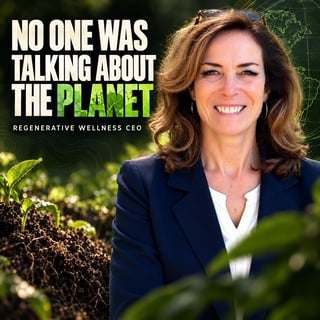
Speaker: You're here listening to the podcast that is all about making our planet a better place and making your business more successful. Enjoy the show. Welcome to another episode of the Regenerative Design Podcast with your host Mathieu. And today we have another great guest. Her name is Melissa Baer.
Speaker: um And Melissa is a serial entrepreneur. She is also an athlete. She has played a rugby, soccer, a professional athlete. And she's now, she's also a um yeah, she she's a farmer too.
Speaker: And she also has several businesses and she's now focusing also with her business on how to bridge the gap between technology, marketing and branding for regenerative projects around the world. So that's really ah exciting.
Speaker: So Melissa, I'm very excited to have you on the show. Welcome. How are you doing today? I'm good. I'm excited to speak to you. i'm Nice. Yeah, I'm looking forward to so digging into it. Exactly. Yeah, we already talked offline. We should have almost recorded everything. But yeah, let's share it with our listeners. like okay give me a Give me your backstory, like where did yeah all of this start? And then we'll go deeper from there.
Speaker: Of course. um Yeah, thank you for having me. And um any opportunity to talk about this stuff, it's sort of, ah it' ah I describe it as something that ah it it chose me as opposed to me cho choosing choosing this sort of passion, right? So um my I grew up in a family. My dad was a visionary and my godfather, so one of his really good friends, um was a naturopath. So they my dad decided to convert the farm to organic in 1986 out of this kind of ah emerging awareness that we can't keep doing what we were doing.
Speaker: and still And he started having, I was born at that time. And you know you start to become aware of the impact that you're having. on with what you're with what you're sort of doing in your day-to-day life um and he obviously became very aware especially with his friend being in the health field and and that connection between soil animal and human health right And so I guess I really had no chance. It was always, I was always going to be brought up in this sort of like um forward thinking ahead of its time, you know, kind of way. So I i describe it to give you kind of a sense. I described my upbringing. I had like, on the wall the the wheel of um nutrients and you could track if a lack of calcium in the soil what would that mean for human health if if that came through the supply chain and and where does that end up and what sort of illnesses or ailments does that contribute to
Speaker: And so the kind of soil food web is in my DNA a little bit. And it it's quite a funny experience because now in life, I ah have it sort of in my my bones, right? I forget that I know stuff, um but I operate in the world like that's the truth, right?
Speaker: Oh, yeah. It's the norm for you. Yeah, that's right. So that's my and blueprint, if you will. That's very cool. And then moving forward... um If my dad kind of went rogue and became organic in 1986, I started to realize that the world was really not set up for people like my dad, and it was not set up to really serve. And we were starting, if you think of that globalization period of time,
Speaker: And you can start to see there's a major disconnect. You start to see that at that point, a one generation had never actually set foot on a farm. Prior to that, there was people who were, you know at least you had grandparents who had a farm. But we were starting to see people less and less connected to to where their food comes from.
Speaker: And the negative consequence that happens when you don't consider yourself part of the food system, or you don't consider yourself part of nature, how choices change, how awareness change.
Speaker: And what I also observed is in that same period, so you have your globalization happening, and then you also have the way that you farm food. changing. So not only is the way that we're farming food changing, the ah it's happening all over the world. So now someone's in ah in a retail shop faced with buying coffee from, um you know,
Speaker: in Indonesia or, you know, South America, meat from New Zealand, milk from Canada, and the context is gone, right? So this is like a ah completely different way to the way the human had made decisions about food or connected and fueled themselves before, right? It was much more of a I walk around the place I buy i get food from and I nourish my body from the place that I walk around. So the disconnect really ended up, you can see it now, right? And this was sort of prophetized by my dad and the people that I grew up with, that this would end up being that we would have illness, we would have um you know chronic disease because...
Speaker: The way the global food system is set up, it's not really set up to help you connect and to help you understand the context and to actually help you make good decisions, right? um So now we have what we have, which is um ah poor poor farming systems that are set up to optimize for a volume-based, opaque value chain. And...
Speaker: ill health from humans, right? And so how do you actually break that down and have it return to more of a ah system that reflects all the good types of characteristics that we used to have before we lengthened the supply chain and before we created a lot of distance? So that's that was my next step as I set up a business going, hey, how do I do this? How do I set up a business where in the business world, it makes financial sense to do the right thing?
Speaker: And so that was my um my foray into my first company 17 where I started selling grass-fed organic beef um from my dad's farm and then from many other farms to consumer.
Speaker: And that was still ahead of its time because there was really no like consumer demand, right? And so my life is kind of themed by the fact that i have become an accidental expert in how do you actually...
Speaker: take the right what's the right thing for the planet to do and then how do you actually market that to the and and how do you create awareness and get the early adopters and then bring them down the funnel so to speak into actually becoming champions so that was a kind of phd in how to do it the hard way That's amazing because it's it's like a really, really essential part in the whole food chain of regenerative farming and probably other regenerative businesses. Like, okay, you got a good idea and you got an amazing product, but the whole system is disconnected. People don't know what good food is. They're not aware of it. How do we make people understand if they ba buy like a steak that is double the price, it's actually going to reduce their...
Speaker: and mental fog and yes healthcare care bill and yeah it'll make them actually probably make them more wealthy because they'll have better focus and like how do you get to understand that? Yeah, that's very interesting.
Speaker: Because there was really no like um problem, if you will, ah with the You know, if you talk to anyone in my local city where I was selling into, there wasn't a breakdown. There was no problem to solve, right? And so there was no demand as such.
Speaker: But what I found was the early adopters. So the people who had gotten to the point in their life where their health was so at risk that the medical model didn't have any options, they had to turn to food.
Speaker: And I started, ended up with this massive audience of people who are just fed up with um the options that they had. And in a weird way that um you would you would have the experience of such an acknowledging um when people who are, you know, on their in their Crohn's and colitis and cancer and all the like ailments that you wouldn't believe. And they come in tears to you and shake your hand and give you a hug and say, your meat is the only meat that we can eat.
Speaker: It's like, you know, just kind of stops you in your tracks and brings you to tears. Right. And you go, Oh, that's why we do it. Right. And just even that connection, that energy exchange doesn't get to happen in the value chain. Right. And so yeah,
Speaker: you can see that farmers are in the global food system and and i experience it here in new zealand so um kind of poignantly is they don't really see where their role is right as soon as it leaves the farm gate there's no feedback mechanism there's no one acknowledging them for what's good and what's not good about what they're doing right and so the loneliness the disconnect the meaning the you know, is all is all really gone, right? and the And, you know, we I don't know if it's, I suspect, maybe true everywhere else in the world, but the kind of suicide rates of farmers are quite high. And and like, we can't keep that is a sign of an unhealthy system, right?
Speaker: Oh, yeah, it is and people And there's sort of like consumers kind of go, well, that's not my business. Well, it kind of is your business if you want to eat, right? And so you do you concern yourself with that? Well, possibly someone has to because that is the – You can eat, you can then maybe we end up in a world where you have all your food and it's made by robots. I don't want to live in that world. No, yeah, same. yeah.
Speaker: That's very interesting. i don't already see, like, I have to put you in a room with a few people that I met in Canada. That'd be amazing. Actually, someone I met, I interviewed very early on the podcast. He's also from Ontario, close to Toronto. And he has ah like he has crazy systems of um revitalizing water and creating microbiology. And he has people came coming to his farm with stage four cancer and and and he's like, okay, I'll put you on a diet of my food and you'll see yeah things will get better. Sometimes the damage is already too much, but at least you can stretch some people ah before they pass away.
Speaker: So he's been working with a lot of that. And it sounds like cute you're doing that too, or you did that in in Waterloo or in Canada. And so I also find it very interesting. Canada is kind of an interesting case, too, because for some reason they allowed the GMO like it's such a rich culture and think you really value food.
Speaker: But then they they passed the GMO bill. And now in Canada, you can take any plant and change it. um genetically, whatever you want to do. You don't have to do certification. You don't have to do anything.
Speaker: um And then if if a farmer wants to be organic, he's just like, I'm not going to do all the bad stuff. I'm not going to use GMOs. Then he has to get certified and do all the paperwork. Like, and what a world is we are we living in? What what world is what that we're living in? So that's that's sort of the, like, the coal face that I kind of grew up in, right? And so we, I mean, I can remember screaming matches of being at farmers meetings with my dad, and you'd have the Monsanto people who are the farmers who were like, no, you have to do it this way. And and then my dad being like, you know, so it it was very tense. And that's, you know, um I was a child, right? So it's just more imprinted as a...
Speaker: a moment of like, oh happen this is not good. Right. And so I agree with you. I don't know what the wisdom or lack thereof um caused the genetic modification to be accepted.
Speaker: um i kind of my own paradigm and my own principles are that um I think when you start to agriculture specifically is one of those domains that if you tweak anything, you actually create a much more um kind of ripple effect than than can be known in any laboratory research facility, anything. You cannot understand um even compounding toxicity. right so Okay, glyphosate in this and this dosage is fine, but when you're eating food in every day from every place, that and now you've got this compounding toxicity, that can't not affect your lymph. your you know There's just no way.
Speaker: And so um how do we understand that when the laboratory doesn't have that ability to understand what that that sort of made little micro change is in the in the big, bad world? And so i implore people to take a precautionary approach when you're dealing with hyper novel concepts um in the food systems, especially because it's one of the only areas that touches every aspect of the human and human natural planet lived experience and so when we're messing with that we are taking pandora's box and ripping it open and there's no way you put it back right yeah so i agree and i think even like the gmo per se is not really the problem like plants you can modify them they will always return to their original form i think but it's just the amount of chemicals that now can be used while these plants
Speaker: kind of survive because even the GMO plants if you spray chemicals on them they they survive but they're like super unhealthy so yeah just making it yeah do you want to you want to um eat food that is just surviving like yeah but this is again an example when if you can kind of um I guess, empathize with the end consumer who doesn't really understand this. And so they're getting kind of like bombarded with conceptual, you know, if they're even aware, getting um bombarded with conceptual, um, academic papers and, and, everything's confusing. Like, is it this or is it that? And, you know, what do I believe? And how, and there's, these people are credible and,
Speaker: And these people are credible, but they' it's conflicting. So how do I make a decision, right? And so if you don't have like a you know, seen it yourself, then you're very at the whim of kind of the latest, greatest version of the truth, right?
Speaker: This podcast is brought to you by the Garden of Your Dreams Masterclass. Are you struggling with finding the right tools and tricks for your garden? Are you lacking the confidence to be a self-sufficient gardener?
Speaker: Do you sometimes get overwhelmed by the lack of knowledge and time you have to actually do gardening? Then the Garden of Your Dreams Masterclass is for you. Yeah, but it is changing.
Speaker: I think there's some movements in... Yes. Actually, it will probably come from the US too. They just released their like nutritional um yeah advisory and it just turned around the the pyramid pretty much, which is maybe a little extreme too. It's like, oh yeah, that was before and now it's the complete opposite. yeah but um Yeah, they're doing some really good stuff to to make, ah it seems like changes that will go through the whole value chain.
Speaker: that's well and I wonder too, like just to be a bit of the devil's advocate. Oh, yeah. Is that the way forward? Do we just go and change it? Because I think we're not, that's a bandaid, right? Okay. So for most people that will probably work better, but when you kind of, um, when you really think about it, that's still not enabling the end consumer to make a choice for themselves.
Speaker: And so they're, they're still at the whim of an authority to tell them what there is to do and not do. And that actually still is, we don't have a free market. We don't have an audience enough that is able to make, is educated enough to can make decisions enough for themselves, right? So we actually don't have the um components of of what we actually need to um make changes in the world. that's true.
Speaker: Sorry, just the... and i'm sorry just a No problem. We were getting like really nice lights and changing colors. That's right. it's going to be out Perfect.
Speaker: Thank you. We'll
Speaker: cut that out. Yeah. We still don't have it. It's just now flipped to the other paradigm. Yeah, which is another extreme. And then that's going to piss off a lot of people too. And then you're going to keep having like ah yeah camps.
Speaker: And in reality, nothing's changed. Nothing's changed with the end consumer because they they actually still are not able to make a decision. So we still don't have the ingredients that we need to really fundamentally shift the value chain and start to drive good incentives. Yeah. for how farmers can be rewarded and how farmers can understand what the consumer wants and how the, you know, there's still not the ingredients there that we need to make that change.
Speaker: Yeah, that's true. And so I feel like that's getting more already towards what you're currently are doing, but I'm still curious to understand, like, so you grew up as little girl on this farm in this environment already, like way ahead of its time with your father being this visionary. And then um at some point in your life, you said, okay, I'm going to do something with this or what exactly happened?
Speaker: Yeah. I don't really know if I, if I actually was that conscious of it. I am. No, it's just like a logic choice because you're born it. Well, dad was sort of like, we need to make the farm make money. Like, come on. And it was, you know, in my, like, teenage girl mind, it was my job to do that. So we needed to make a business model that made the farm make money. And so I sort of set about doing that. And we spoke a little bit about my dad's kind of ahead of his timeness. And he put me in a lot of business courses. And so I got a lot of training from a lot of people. Yeah. um whose names you will probably know but um you know around how do you do marketing in you know and how do you actually create a funnel how do you create an offering that you know and how do you get people from awareness to to action and um so I was 15 learning about these kind of really like um
Speaker: I would call them cutting edge kind of thinking around how business is done. and And then at the same time, learning kind of the mainstream model. So I was in business class and in high school, and then I took business in university and very quickly kind of outgrew the university. I found I would go back to university and kind of go, what are you guys doing? Because this is not... And so it's another broken system. Yeah, yeah, exactly. it was, it was just starting to be broken when I was there, but um yeah, so that was, so i then said, okay, well, I'm going to just do this because obviously the farm needs to make money. So how do I build a model? How do i build a business model that it actually has the, the, that every has every actor invisible or otherwise. And I call the invisible actors, the land, the farmers or, you know, they're invisible to each other. Consumers are invisible to farmers, right? so how do I have every actor actually benefiting from this transaction and in the now and the longterm and if it's big, right? So you can sometimes have it be that everyone benefits and when it's small, but when it starts to become big, do they still benefit? And these are the questions that i had to, and that I asked myself inadvertently or with some divine intervention. I don't know, but
Speaker: at sort of 15 to 17, I was thinking this way is like, how do I build this model? And um yes, so that was sort of what we, and yeah, well, I guess like when you're brought up in that sort of soup, right? That's the way that you approach it. I didn't have a name for it. It's now called regenerative, I guess, in the version version we were holistically managed back then. But anyways, and so. what's in a name? so Yeah.
Speaker: So that was the first kind of foray. i then i did a few things. I started agriculture tourism. So I realized that there was an educational piece, this this consumer education, this bringing people back home, this bringing people to right to the farm was was necessary.
Speaker: And it was, it was i i think if you even speak to people who attended, it was quite a transformation, a transformative experience for everyone involved. Yeah.
Speaker: it was the hardest thing I had done. i was, um slightly illegally producing food on the farm to eat and serving it. Like i had, I didn't have all the kind of like checks and from the, the region, the food safety. so I kind of was skirting under the radar and,
Speaker: And I was cooking five course meals and I was marketing this to people and having people come to the farm and producing this experience that I don't even think I could do now just because of all the regulation. Right.
Speaker: And giving people the experience of milking cows and feeding horses and collecting eggs. And, you know, there's just this like connection and, and the way I describe it and there was this one, one specific, and and I might be mushing groups together, but,
Speaker: People would turn up and you'd have these sort of women in their like white jeans and their stilettos turning up to the farm. And you can see the like kind of discomfort and fear in their eyes of this like, who brought me to this weird thing? Like I've heard it's something I need to do, but like, why am I here kind of thing?
Speaker: and And they're all strangers. So they didn't often turn up as a group that knew each other. And so you kind of have like 10 to 15 people who don't know each other. And then you're putting them in a very uncomfortable situation that they don't know about.
Speaker: um They've paid a decent amount of money to be there. So they're kind of like, right, what is this? And i take them on the farm tour and i and I take them through every aspect. And my concept was like, I'm to take them to do chores and then I'm going feed them food and we're going to have this like community experience.
Speaker: And I cannot describe the... the the change between when they turn up and I have to give them gum, like rubber boots or gum boots to actually go and do the thing to the end when no one wanted to leave and they were all friends and they had had this, they were just kind of like deer in headlights walking out. Like, I can't not know this stuff now, Melissa. Like, how do I now operate in the world where you've just like shown this big giant spotlight on all the things that I didn't know I didn't know?
Speaker: And so that was like the, that was a very rewarding, i always felt exhausted, but like spiritually filled up after those, because you're, you see the light bulbs go off in these people's eyes, right? We have like discourse. They, they have the freedom to, cause it's a small enough group to like ask me questions and go, but what about, and, but this is what someone else says. And so you really are like picking apart and starting to get to the real,
Speaker: um change making right um so that was really fun um well again right ahead of your time like farm tours is like trending now it is now it's all the rage right and then um and then uh and then i did um selling raw milk to people which is also illegal um and and Well, now I'm out of it, so what are they going do? Statutory is, it's all gone. But I think I felt really passionate about it. One, I love cows. I feel cows are sort of, cheekily, I think they're the key to the future of the planet, which is... sometimes controversial but yeah you can talk more about it or i agree with it honestly yeah um and so jersey cows are wonderful um but also i felt really strongly that there was not even an option for people to find this health-giving food called unpasteurized milk and there was a whole lot of research that was starting to come out around
Speaker: like highlighting that we didn't know really why it was super health giving, but we knew that there was something about it. So whatever happens in the pasteurization process, it changes something or homogenization. It changes something that the human biome goes, I don't really know what this is. And suddenly the milk that we know in the supermarket would be inflammatory, create you know lactose intolerance. And we didn't really know why.
Speaker: And, and we didn't really know why then when people had raw milk, they didn't have the lactose intolerance because there's really no kind of like obvious reason. There's no enzyme in there. There's something about it that then makes the body be able to digest it.
Speaker: And so I felt really passionate that the market and the regulation was set up so that there was, you couldn't free, you couldn't actually access this. It was, it was impossible.
Speaker: And so I set out to go, well, this should be available for people who want to choose this. Sure. There's a risk, anything that's alive, there's a risk. um even vegetables, right?
Speaker: And so if you're ah eating food that's alive, you have to know that. And so I felt really strongly, and I did a lot of thinking, but if someone's making the effort to come out to the farm to bring their own bottles, to pay what I was charging, there's an active intent there.
Speaker: And so there's not, you don't kind of get this, oops, I accidentally ran into some raw milk in the supermarket and I didn't intend to, right? That's not, that was not ever going to happen. But it was, it was really a passion of mine that, that people would, that there would, that this was an option um to access, you know, like it kind of feels like a human right to, to be able to have access to food that's grown on the land. That's health giving, right?
Speaker: um So, so yeah, that was the, um, That was that. And then, yeah I moved to New Zealand and I realized that there's a role for technology and data to play in this and kind of went from a very hyper-local food system to to the longest supply chain in the world.
Speaker: and Nice. And started to explore... What are the challenges and and why do we have you know kind of the consequence of the value chain and what does that look like in the farming area and what does that look like on the business models? And again, New Zealand's different. yeah You touched on it before. they abolished They abolish subsidies, right? So we have very different and now we're in global and then global trade and how does that affect it? so It's quite a case study to go move from a hyperlocal system to a country that sells to, on average, 80 different countries with 80 different market requirements, different free trade agreements, um you know all the financial consequences that that go around that. And then being an island in the South Pacific as well and being the furthest away.
Speaker: Yeah, that's super interesting. I just want to dive a little bit more at in the case of New Zealand to understand better. So they abolished most farming subsidies in the 80s. I think they were producing vast amounts of sheep that would go exported to Middle East. yes And then in the Middle East, they said, oh, we only want to have live sheep. And then yes that was like a logistic nightmare to get living sheep to to the Middle East and have like barns there and slaughtered. that So yeah it wasn't working. And the government said, okay, this this is like a and really bad business. So we're just going to stop it.
Speaker: And it actually makes sense. And that's what a lot of countries should look into because it's like even the European Union subsidies are the highest. It's like 80% of the budget of the European Union goes to subsidies and farming.
Speaker: wow And it's because they don't want to do pro protectionism towards all the other stuff. and they have yeah It's a big geopolitical thing. So the question that I would want to ask ah or if you know about is, does New Zealand have very protectionistic laws that cheap food doesn't get into New Zealand?
Speaker: Or a bat produced food doesn't get in? You'd think, but we are, um we we're not the, you're you're not, we're not the European union, right? So we are dependent on trade.
Speaker: yeah And so um actually a really good example is pork here in New Zealand. um We have really high standards for animal welfare and we have, so the pork um industry is up in arms, right? Because,
Speaker: New Zealand's pork is some of the best in the world in terms of um largely raised outside. um all the kind of It's illegal to have them in any kind of crate or you know situation that any other country would have.
Speaker: yeah And yet we import some of the most most amount of pork ah in the world. That is produced probably in Belgium because Belgium is where I'm from. Spain, Canada. Yep, that's right.
Speaker: So we import all of that and it's cheap, right? um But then in Belgium, they don't have they have super low standards because it's super industrial.
Speaker: yeah Some of the pig pigs never see daylight, only when they're born and only when they go to the slaughterhouse. They just stay in like, it's like concentration camps. Oh, but like yeah, that makes me a bit sick. Yeah, sorry about that. but No, I know. What people should be aware of. and They should be aware of, right? and and and that's um And weirdly, you know, if ah you know if if I kind of i feel passionate about how do you make like kind of reasoned decisions beyond the sort of standards and certifications is how do you actually, you just have to know that, right? You go well, this is the standard in this country, this standard in this country, like this is the legal thing, right? And so you can reasonably make a kind of jump to go, just if you're going to try to be a better human and to do better to the planet and be animal welfare, like just don't eat pork from this country. Right. And, and that's like a trying to simplify the decision-making.
Speaker: yeah um So yeah, that's an example of like not protectionist. and We, we end up to get free trade agreements or to get trading agreements. We end up, um,
Speaker: I guess, accepting a lot of um product in as well. People want to send us stuff. And so we have lots of imported goods. We don't have really a protectionist kind of, there's really not a lot of things that we protect.
Speaker: ah But then there the be the buyer the buyer is more aware of it and says like, I'm i'm going to buy local or? No. is it no so this is, again, that New Zealand, um I guess, consumer.
Speaker: It's a little, because in New Zealand, as I described before, at some point, less and less people had spent time or been aware of farming. In New Zealand, we are on a big farm. So there's still quite a lot of awareness around farming.
Speaker: you know And there's a little bit of a ah ignorance, arrogance. We kind of assume that the food that is produced, that we're getting from the supermarket is is healthy. Now, that's a big generalization. You're just kind of like, oh, but it probably comes from Steve. down like There's one degree of separation, right? And so you don't have – you just don't have the same consumer ah awareness or challenge of trying to – procure good food. and Whether it's real or perceived, and there is this assumption that, oh, well, the meat from the supermarket is probably from Steve and the milk from the supermarket is going to be from Joanna and it's all fine. I'm i'm all good. And I'm always going to have food, right? And I'm always going to have access to this. And
Speaker: So we don't really have this um awareness or this need to be more conscious about what we're putting in our mouths. Sounds like lot of countries.
Speaker: Yeah, it's it's probably like a, I would say it's perceived. I don't think it's real. I think there's a lot of things I could, um i was actually on a plane yesterday with with a woman and we were we were sort of talking out of school a little bit because like there's probably a whole host of headlines that I could share about New Zealand's agriculture, which would really, if it was validated and and it and it is would bring down a lot of the kind of like trust that New Zealand enjoys at the moment around green and clean.
Speaker: And so, and they're starting to see the cracks in that because, for So for example, in a subsidy world, you can kind of reward behavior that you that you think is is good practice.
Speaker: In a not subsidy world, you have to regulate it. And so now there's this completely different stick versus carrot. and the And so that really changes how how farmers operate. And it is very much you just do whatever you get paid to do. and it's not very high that bar.
Speaker: And if you're not paid to actually take care of the land, and if you're not paid to make sure your animals are nutrient dense, you're going make sure they get them, you know, legal starvation amount and ensure that, and you're not going to take care of your soil because you're just going to put heaps of synthetic nitrogen on it and water it and irrigate it and then ship the most amount of volume of animals out the door because that's what you're paid to do.
Speaker: And so it really creates this like highlights that farmers will do what they're paid to do. And so you have to kind of go, what are you paying them to do? And so there's a different um reward mechanism if it's subsidy versus if it's if it's sort of free market. yeah And I do think on the other hand, though,
Speaker: um We struggle in the global food chain, I guess, because we don't have subsidies. And so farmers have to make the money their own way and, you know, all of the things have to be profitable.
Speaker: And so the in in a way that makes food much more expensive and or perceived to be expensive because while in the subsidy world you're still paying for it, but it just doesn't come out of your bank account, right? It comes out of your taxes. And so you kind of don't see it. You're not aware of it. um and And so as a result of that, um I think the way that – The cost of food of say in New Zealand is actually more of the real cost of food, kind of different to the rest of the world. And, and I don't, but however, it's still not, it's still a smaller fraction of a household budget than it was 10 20, 30 years ago.
Speaker: Yeah. So there's lots of advancement. makes sense. Right. So I think people... So just getting rid of the subsidies doesn't really solve the issue. There has to be a more active approach and in stimulating for um better quality and probably consumer awareness and and and the work you're doing ah around branding. So...
Speaker: let's Let's talk a bit more about that. like yeah Where does your business fit in and what what are the problems that your clients have and and how do you how do you solve them? um like The problems that they say they have. So let's say um there's It's very complex, right? when you're When you're in New Zealand, you have all sorts of businesses. You have the the exporters, which are not really the brands. They're the processors, they're ingredients. So you sort of see in New Zealand, we have a ah very ingredient focused kind of commodity approach. Mm-hmm.
Speaker: which has a consequence, right? Which means that you are effectively in a volume business and you are not rewarding any kind of ah characteristic beyond red meat, white milk. Yeah. And so there's no reward mechanism. Yeah.
Speaker: Now, some of those companies will say, well, the but the buyers don't want it. And the the brands, the Mars, the Nestle's, the, you know, don't want it. And that is an interesting um interesting statement. And here's why.
Speaker: Because we have a finite supply of product. So in New Zealand, we have a big farm and we produce x amount of meat and X amount of milk and X amount of, you know, whatever. So we are never going to be a volume play, a big, like, kind of.
Speaker: so we know What do you have her and on the farm? How big is it and what is it? Well, I'm just thinking New Zealand is, as ah as if you think of New Zealand as a big farm, so like a country as one big farm. You're referring to your own farm. but No, no, no. um ah As one big farm, then then actually there's and there's a finite amount of products we can sell as a country.
Speaker: So as a result, we actually don't have um we don't have an ability to grow, so we don't really have much more volume we can provide. We also don't have um a need to get more sales. So we're not asking the questions, how much, how better can I serve you? Or how can I get some more business? Or how can I take business off of the other guy? where And this is ah broad brush strokes, but you will start to see in our sales teams, because we're ingredient suppliers, we don't actually ask these questions. So the the information that comes back to say, what does the consumer want? Is largely informed from a question that was poorly asked, which is,
Speaker: what do you want? And the buyer will say, well, want red meat. Like what a silly question, but because we're not actually in a competitive place and we can't actually provide even more information, product or in a different way, the question doesn't ah get asked. We struggle just to keep up with the the small volumes that we can survive supply. And so that's kind of the like the challenge around how do you determine what actually is the problem is you really have to ask better questions. So where where I'm working now is a little bit further down the train.
Speaker: the sort of supply chain in in the brands, the ones that have a bit more consumer facing is you can see they're increasingly wanting to get more farm data and an understanding of their value chain.
Speaker: And now that may be because of this carbon reporting, that that sort of like sustainability compliance. But what becomes more possible is that there's a whole lot more ways to grow when you see the the what's what's actually happening on the farm. You see new product opportunities. You see differentiation opportunities. You see, um you know,
Speaker: as you and I know, like there's a sort of abundance of characteristics of on-farm types of practices. How do you create growth and differentiation from that supply pool?
Speaker: And that's where the using data, enabling, making it super easy for farmers to meet compliances, automating a lot of those assurances, And then taking that evidence through the value chain to to then say to a ah kiwi fruit producer, hey, do you know that 10% of your growers actually meet this retailer's requirement and you don't sell to them? Here's this opportunity for growth.
Speaker: And, you know, that kind of a thing. So it's sort of taking like what I did at a small level, and then just doing the same thing, but at ah at a much bigger data informed kind of kind of way.
Speaker: Well, and that's what supermarkets or you focus on on farms that do direct marketing or it's a blend of people? Yeah, it's a blend. It's interesting because we're right kind of in the throes of that at the moment of like, where do we actually, where's the first kind of like place that we can make this really change? change We started with the regenerative verified farms.
Speaker: And because they have um a ham data, actually, they've got indices and they measure data and they sort of are are making a difference as now I have things that I can share and that can can actually be utilized as characteristics and differentiators and stories and, you know, kind of like ways to sell to premium brands.
Speaker: Is that related to what Patagonia is doing with the regenerative organic? Is it like a similar approach where you ah certified to give that access to consumers?
Speaker: Yeah. So regenerative organic is another certification. um And so there's, there's, and then what you quickly learn is the farmer is faced with this, like, which one do I do? Because which one has the most consumer awareness, which one has the most, you know, and ah one sort of like,
Speaker: thing I see and I observe, which I don't really understand is certifications don't do a great job of educating consumers. And so consumer doesn't actually understand what the heck, what is the difference between r ROC and Savory Institute? Yeah.
Speaker: If you ask the average consumer, no idea. So you have six different organic certifications and regenerative certifications on the shelf. That's already targeting a very niche customer. And then to try to differentiate amongst that, there is really no understanding, right? And so this is the challenge of those sort of like, I would call them ambitious brands or the ones that are doing the conscious sort of approach is,
Speaker: you really haven't done a great job of what's in it for me. and And I think it's kind of weirdly exciting because I've known this for a long time, but we've never seen it play out in real life that um that there is no understanding of what these certifications mean. And so for a long time in the global food system, the certification was the kind of like analog best tool we had to communicate trust, virtue, goodness, Yeah, now we're seeing that started to crumble, too, because like kind of me or organic yeah organic and start to know that. And so it's like, oh, what the heck? I'll just buy
Speaker: Yeah, there's there's a massive decline in organic and in Europe because it's like standards were not upheld. Yeah. Also that the the price difference is is too little for farmers to keep justifying to pay all the paperwork like And that even my brother, he yeah we have ah um mobile hen houses like chicken tractors for farm-raising on pasture land. And we decided not to do it in organic because we have or my brother has a strong brand. yeah um It is organic, but we don't certify it because then the consumer would have to pay 10 cents more just for a...
Speaker: for for a symbol on ah on a package. And which they already have built. So what you've done is self-certifies essentially, is that kind of like you've got that brand that has that trust, but in a, in a, in a weird way,
Speaker: you one you've shortened that supply chain and two you've um spent a lot of time effort and money to build up that that trust and that relationship right and so the certification kind of and when we when growing up my dad started it up if you can tap into it immediately yeah yeah so exactly so the certification the organic we had to like it was still a cottage industry really in canada and so we would have a it was a sort of, I'm not sure what it was, EcoCert or something, in and we would sell soya beans to the European Union.
Speaker: um That was before the Canadian organic standard. And so the um the the the whole certifications quite changed quite rapidly when the Canadian government got involved and created a ah standard. And I observed and was, I can tell you where i was standing when all of a sudden the the rules were different, the interaction with the auditor was different, There was no kind of conversation about continuous improvement anymore. It was like, he is the police and we are the accused. And you can nothing good comes from that. Nothing good would come from that. Right. And so then we were like, is this really worth it? But in that long supply chain of European Union, it wasn't Union Europe to um Canada at the time, that was the only mechanism for trust that that we had. Yeah.
Speaker: um And there's still sort of a ah ah role to play in that. But ah increasingly, I kind of um radically feel like we're into a post-certification world. And what does that look like? And increasingly, i think the world of LLM search, large language model search, and people having wearables and having this precision understanding of their own bodies um is starting to change how food is purchased.
Speaker: And so I don't think certifications stack up in that and no certification that I have seen has has tried to even address that or make it relevant to kind of the the consumer as we currently understand it.
Speaker: Oh, yeah, that's a very good point. Because as I understand it, and correct me if I'm wrong, it's like, okay, You can follow a kind of centralized certification body, which will give some trust to the consumers, but then it's very bureaucratic and costs a lot of money. And then the consumer has to be like, okay, I have to justify myself that this is a and more expensive product that should be somewhat better in health quality. but The news also says or there's some conspiracy that yeah whatever.
Speaker: And and some it's true, like some products in organic are even worse than chemical products. So that's even more confusing. So then you go to the supermarket and you just buy the cheapest because it's all confusing. and Because it doesn't make anything.
Speaker: Even so that when they go to the supermarket, ah they there's so much different things with different labels that they get so confused that they go past the fresh and and yeah good stuff and just go straight to processed because it's like, oh, processed, it's always the same.
Speaker: And so that's also what a lot of supermarkets have used um as like ah psychology trick. Like if you enter most supermarkets, what you come in first is like the good veggies and the fruits.
Speaker: And there's a lot of it. And it's also like different types. So they want to give people a good feeling of like, oh, I'm going to pick one tomato. Now I feel really good that I have something good. And then they walk on to all the granola bar section. Yeah. That's how supermarkets are are intended to to confuse people i agree to then buy process because process has more margins. It's easier to store. um yeah yeah the The list is long why supermarkets want to sell more processed. Well, and if you're if you're thinking about getting into a food business, you're not going to think about getting into like the tomato business, are you? That's like, you're going to go, I'm going to make this fancy, high-performing energy drink because higher margins, ingredients, you know, like, hello, and it's a clearer value proposition. Whereas... yes
Speaker: ah you kind of like I touched on before the global food system doesn't is not set up anymore to actually reflect what is going on right you have your and what do you have your ingredient your sort of ingredients list your nutrition panel country of origin that's it and what you really know and what we really understand is that farming practices are so changeable and diversified across the world so Tomatoes are not tomatoes anymore. And, you know, oats are not oats anymore. And so that's starting to now become very obvious. And the reason I guess I'm i'm involved with a professor friend of mine and he's, he's starting to make, he's one of the first to make this link in the world between and finally dud it at a, at a,
Speaker: proven it at a blood consumer, like a human level. So he's made the link between soil, plant, animal, and then humans. And he's done that for meat and milk. And if you farm it in certain ways, and he has been able to prove that if you farm in a more He doesn't call it regenerative because he's a scientist. So he says, if you farm in these ways. um nutristic Yeah, like holistic nutrition. ah And, you know, they've reduced synthetic fertilizers by 50%. And he's had a hard row to hoe, really, because the university is like, if you don't make money from your dairy farm, um you have to pay us. So basically, they've set this like major constraint to do proper science.
Speaker: And so they have to make money and they have to produce milk and they have to produce certain volumes and they have to do that. And so they're trying all these things and they've managed to reduce synthetic fertilizers by 50%, increase the micronutrients, increase productivity, reduce milking days. The cows are so fat and happy, like it just makes you so happy. And and then ah that on top of that, when they feed that milk and meat to humans, they're They have now tested at the blood level the the markers for disease, and they are drastically different and drastically reduced. So we can now prove what we kind of have always known when you eat food that comes from a certain system that is healthy. When the system is healthy, then the human system is healthy, right?
Speaker: And that's now starting to be proven, but you can see that that's a layer beneath what actually lives on the panel of a food in the supermarket, right? That is the invisible part of, and that's where all the good stuff lives, right? So how do you communicate that over distance? That is beyond country of origin. That is beyond nutrient panel. That is beyond ingredients list. And so that,
Speaker: How do you manage? And you kind of can't really understand it till you see how fat and happy the cows are, right? How do you prove how fat and happy my cows are? Branding and marketing. Exactly, right? And so how do you how do you do that and how do you prove it and how do you build the trust? And I think that's that's massively shifting. and And that's kind of what I'm here to do is how do you, in this new world where information is rife, the good, the bad, the ugly,
Speaker: how does How does a brand interact with their supply chain and their consumers to build trust and be able to drive the sort of beneficial outcomes for the planet that we all say we want? um but haven't been able to really achieve because of sort of perverse business models, the global food system that actually rewards mostly the middle and not the ends. And so this is the like radical shift that that that I'm looking to enable and through data and technology. Well, that's super interesting because i i think like a lot of people say like, oh, but consumers are not ready to pay more for their food. And and I want to challenge that because
Speaker: You see that the well the healthcare business is very expensive. ah People are spending a lot of money in on on their healthcare, especially in countries where where the government doesn't support it. But then the biggest growing industry and in the food or health space is supplements.
Speaker: Like everyone is eating shitty food and then they've spent like several hundreds a month on exactly on supplements. Where it's like, hey, let's just shift that money yeah into just eating the healthy milk, the healthy whatever. If you're vegan, healthy...
Speaker: natural plant produce. You hit it right on the head. You absolutely hit it right on the head. And so I think, you know, you asked a better question there, right? So I think the consumer, the brands and the sort of exporters really need to ask better questions and going, okay, what is the context of the consumer? What are they spending their money on? Where is the kind of solution? So there's a lot of identity that we can solve because I want to be a healthy person. So how do I provide product that serves an identity? That is That is a very real thing. You know, Apple company serves an identity. And that's what these kind of supplement companies and biohacking and all that stuff, they really good at that. But then in the actual food industry, that's lacking. So I'm very curious to that. And also pointed to is that the consumer has a breakdown called I'm not healthy or I want to be healthy. And they're currently serving that with food.
Speaker: apps and and supplements. And so then you kind of go, well, there's a big market in the world for that. And if you choose to, you can create a product that addresses that in a new and better novel way called food. ironically And so to say that there's not a market and exactly what you said to challenge that notion that consumers won't pay more for it.
Speaker: um We really, have I think it's just a failing. It's just kind of like highlights a failing of marketing, failing of business is that you just really haven't done a good job of making it obvious that you're the solution to the problem. Yeah, exactly. And yeah, I fully ah agree with you because it's like, oh, it doesn't work. So we're not going to bother trying. Well, okay, then it's definitely not going to work. Because also on our on our own farm, we see that we have direct consumer programs. So people can order on the on the website and once a month it gets delivered to their home. yeah And we collaborate with other like other like-minded crazy farmers that are going against this tree.
Speaker: yes and it's not big it's like we only we we need like ways to scale it but we have about like 60 boxes of and some people order quite a lot and interestingly you would say like oh but then it's kind of like a luxury because it is more expensive but then i remember when when it was coveted i would i was on the farm and i would do the tour of like the delivery bringing the boxes And you see a variety of people, like even in insulin areas where people are living more in like social housing. We had quite a lot of deliveries there, obviously also very expensive houses. But it it wasn't like ah ah that I was only driving to villas who... I agree. That is exactly... your
Speaker: You was so, so hit on the head. That was my experience with on the farm in Canada. And so i I have this juxtaposed narrative of they won't pay, but also this lived experience that people will pay and people will drive six hours to come and buy food and they will go out of their way. And so I'm kind of like, how can those two realities be true at the same time? And which one is it? And yeah maybe they're both true. They're both true. And you got to pick the one you believe in most to pursue. That's right. And I think you have to kind of go, okay, well, what is the characteristic or what is the truth about those people that are buying that? What are they looking for? And and if we're not looking for, um if we're not starting to dig further into that and go, oh, that maybe warrants more investigation, yeahp then then we're really not doing the plan as a service, ourselves a service, our business a service, right? But I don't know why people are not more curious about what drives the social housing person to buy meat directly from a farm
Speaker: And care about that. Like, why are we not asking that question? Don't ask the premium consumers. Like you kind of go, sure, surplus. Obviously they have the ability, education and means to do that. But why is this person doing that? Right. And so yeah to me, it really is the world and that your results are a function of the questions you ask.
Speaker: And you have found some answers on that because I think I have a feeling that it's it's also this and ah you probably talk a lot about that. We can now include like Marsha and Marsha's work and she's like the greatest marketing sales. She's like a powerhouse. and she connected to both of us. Yeah. But it's like about like sell them what they want, like figure out what they want and sell that. Like I see a lot of farmers are farm to table. They they try and make it like look nice and boutique style. and And that's all good. You should keep doing that. But what why do people actually buy it? um
Speaker: yeah and And can we put like maybe it's like and They found on TikTok that if you eat red meat or raw milk, it's good for breastfeeding, whatever. I'm making stuff up. So you put in your package, like this is breastfeeding quality milk or something. and And farmers don't dare to do it oftentimes. Are you that or or to make bold statements about their product?
Speaker: Yeah. So in ah in a small domestic supply chain, you can be a lot more rogue, as I've learned. And you can say kind of whatever you want. And there's not really a lot of consequences that will come to you, especially if you're in a farmer's market. You can, you know, so so if I had my time over again, i would go out the gate and make claims. And, you know, because there's not really, there's not really ah like a ah legislative stick that can come and say that, right?
Speaker: and And I learned that the hard way when ah a whole bunch of other organic people started to copy me and they would just say they're organic. And i was like, well, that's rubbish. You're not. And then they were like, well, what's anyone going to do about it? And so i so as a small farmer in ah in a domestic supply chain, absolutely.
Speaker: Make claims that are consumer oriented. Say whatever you can about what problem you solve for a consumer. In the long global supply chain, there is a lot more regulation.
Speaker: And to the point where and the FDA will not let you put a different nutrient panel on your meat product. So you cannot, if you can prove that your meat is more regenerative and has more nutrition, you can't change your nutrient panel. they You have to put the meat nutrient panel on it. And so that's really prohibitive around what you can say and what you, and so that's why I feel really passionate about data evidence proof because that's the protection against um making false claims right and so we need the people to push the boundary we need the brands to be bold we need people to go out and kind of like say these things um even if it's just in their marketing because otherwise we will never get the movement towards um right and i think that's what i observe in the global supply chain having come from small local is that the whole thing is optimized for like just past the post, right? Just so yeah meet the meet meet need. and and you can't And so the consumer cannot see inside of that vast sea of food options who the good guys are. And even when you look at New Zealand's meat and milk and you put 5,000 farmers into a vat or into a crate, right?
Speaker: There's good guys in there and not so good guys in there, but you cannot differentiate, right? And so the whole global food system is just set up to not see the good guys and not allow consumers to see the good guys. And so that's kind of where I feel very passionate. a system that doesn't have the ability to see good actors is not going to be a ah assist a good system for very long.
Speaker: Mm-hmm. Yeah, so it sounds like that with your business, you're also made the decision to to go and let's say play with the big guys and and step into the global bigger guys. Yeah, yeah, yeah. I think it's... um and it's a Yeah, it's it must it's it's it has to be because the this some people are saying like ah supermarkets are evil and none that, but that's like, it's not about the supermarkets, it's the...
Speaker: the way they are using it. So we have to also change. like A supermarket is a good system. like It's a yes so something that works. you go It's convenience. like We all want convenience and hyper convenience now, like pre-made food and all that. yeah So um you have to, if you really want to get like regenerative on a big scale, we have to tap into those now there's ah there's a few There's a few things. And I learned this actually in my trip to London. There's there's supermarkets and there's supermarkets, right? So I'm working with the, so for example, in the, I'll just go back a step. So the processors are actually not incentivized to differentiate and make,
Speaker: you know, like kind of go niche products, right? Because what that means is they're all their volumes and all their kind of like margins will be eroded because it's not in their best interest that two farms have really high quality meat and then 20 farms don't. And so then what that means is then everyone will be like, well, why don't you give me the good stuff? Right. And so there's sort of like, wait, I need to make this all look the same.
Speaker: So that perceived or real, I have questions about that. But then you go to um the retailers and retailers, there's different models. Some retailers are, I'll take brands and put them on my shelves and be the showcase of um go the showcase of brands. And then there's other retailers who are like, I'll have my own brands.
Speaker: And they they consider that those ones that have their own brands, it is not their best interest that there is unique and differentiated products. Because if the if the consumer has more loyalty to a brand than they do to the retail brand, then the power of the retailer's business is gone.
Speaker: And so if the consumer's coming in for a special blue cheese um brand that is the best in the world, and it's not on the shelf, they'll go.
Speaker: And the retailer knows this. And so they they really need the consumer to be to but to be the solution of like, I'm everything to you. I have all the things you need, and you're gonna come to me, you're gonna walk in my door, because when you come to me, I have everything you need.
Speaker: If that is different and they're relying on artisans, small volumes, you know specialty products that the consumer starts to love and they're not on the shelf, then the rest of the retail's model goes away.
Speaker: So they they know. Some retailers are probably going, no, we're going go away from that model and we're just going to keep focusing on things that we can produce or we can yeah um source in large volumes that are all the same. Yeah. And then there's probably some supermarkets and I'm guessing you're working with those that say like, no, we we want to be known for we have that cheese that you can't find anywhere else.
Speaker: That's right. And so then they are, they are the model of relying on other brands power. So then they're, they're in the business of stocking the coolest, sexiest foods that are ever, that ever was. Right. And that, that, that kind of model is like, Oh, well those incentives are actually organized in the right way. Right. So you go, okay, well let's work with those guys because they um want to celebrate and lean on the brand power of other brands. Right.
Speaker: yeah And but that's probably more the American model. I do see the the sort of like, when I see, and you can see in a, like in in the UK, it's a very hyper saturated market. And so it's cannibalistic behavior. It is, um there isn't.
Speaker: not a lot of room for wiggle, right? And so their margins are super thin and they're working on, like they need the consumer to come in and buy lots of things at that one shop, right? And so that that's the kind of, you can see how it starts to change all the behavior of what what people, what consumers, how consumers behave and how retailers behave and what what types of things they reward in the value chain.
Speaker: Interesting. Yeah, very interesting. So I think you'll be coming, you'll be you'll be becoming a also ah like a supermarket designer and rebranding the whole supermarket. Yeah, there's change coming. And yeah, if people are, if if we start to get into this LLM um world and and precision kind of recommendations for me on Tuesday with my health and my dietary requirements, supermarkets really have a place in that. And they're not really looking at how they how they have a place in that. So, um Oh, yeah. So that's what's going to happen. We're going to be like super tuned in to because that's another super fast growing industry is the the health monitoring with what is it? Our rings and and and what the wearables, right? Yeah, wearables. So that data is going to be used to tell you, OK, here's your shopping list of the week. This is what's right. Like and every week is going to be different.
Speaker: So that's possible right now, but what's missing is that no that you need a translator. You need a farmer's daughter to translate what is healthy to how does that meet your, I didn't sleep very well last night, and here's all the other things I know about me, right? So that's where data and AI and ontologies can come in, but that's that's that's a big job. So that we have that's why we're developing the health farming ontology, which then helps people translate.
Speaker: um agriculture data into human health data. right And that matching is actually the thing that's needed to um make the difference. But that's a big gap at the moment. And the reason why you don't have your kind of whoops and aura rings making recommendations, because they're completely different data sets. And to do that at scale is like, you have to get the the academic papers and half of them don't agree. And so how do you build these ontological frameworks that actually make that translation possible.
Speaker: Nice. And so is that what you're focusing on the most with your clients is or are you working actual Yeah, well, actually we're building that in the back end. We're building that in the back end because we don't, no one kind of knows that that's what's missing yet. But there is this articulated function of I need to meet reach more consumers. How do I do that? And so we're building the kind of data engine and the platform to to make that possible on ah on a scale and through technology.
Speaker: Nice. Wow, I love that. I think we could keep talking for hours about this topic. And we like haven't even talked about rugby and all those things. So that'll be for another time. Another time. But I want to i want to start wrapping it up. so And and um I want to end with asking you two questions. like One is, that what what is the best piece of advice you can give to farmers who are ready to and do more direct consumerism or however you call that. That's my first question. And my second is like, if you want to do a shout out to people that might be listening and how they connect can connect with you or what are you're actually looking for in your in in in the collaborations or people, then we can use that too. um So for farmers ready to make that leap, um a couple of things. Already in the process of and yeah struggling with volume volume. So you're always going to struggle with with volume. so if you're one farm, that's the... the have I would implore people, and wish I wish I did,
Speaker: have a think about how you grow um and beyond your own sort of farm. And is that more products? Is that more farms supplying? And then once you do that, you now have the challenge of, is my farm's product the same as the next farm's product?
Speaker: And what I learned is that it doesn't have to be the same, but make it visible how they are the same and different. And what what I ended up with in Canada was that I kind of had lots of different customers and I had five different farms and they all had different growing practices and I kind of became this matching function.
Speaker: And so i kind of lean into the diversity and go like, well, these guys finish on oats. These guys are fully grass fed. The meat profile is different that, you know, and I would just match them with the different people, the the chefs, the health requirements, the, and that was my kind of function. I was a one woman spreadsheet algorithm. kind of thing um So I kind of go, don't fight against the diversity of these different growing situations, lean into it because that's the beauty, right? For every growing system, there is actually a consumer and it's, it's magical when you really start to allow that to be possible, you just need to make it visible. Yeah.
Speaker: What it also does is actually brings awareness to the consumer as to how different these different types of systems are, which I think is needed just as ah as a general statement. um And then um where am I at? um I am looking for yeah brands that are interested in growing, um brands that want to reach the consumer more effectively, and brands that want to differentiate using their supply chain.
Speaker: So people who are in new product development, people who are in kind of that marketing area, um or, and often we hear marketing kind of struggles to get information from supply chain because they're like two different two different departments in ah in an organization. So we bridge those we bridge those gaps to to make it more coherent so that you can start to address more consumer needs more effectively using your value chain. and So yeah, that's the, I'm keen to find who are the brands in the world really looking to do this with data, we're really looking to validate, really looking to push the, and look, go beyond certifications, right? Cause they're expensive even for brands and they're expensive for farmers and they're confusing for consumers. So how do you really cut through the noise and, and make a statement and, and in doing so make the planet better.
Speaker: so Yeah, that's very cool. And I think you, you, Should have a conversation with my sister because our farm has grown and she stepped in the business a few years ago and she's doing the marketing and sales and events. I loved it.
Speaker: Yeah, actually all the things that you talked about that you did on your life, like we yeah we're doing on our farm and gardens. Well, i I'll make your deal. I'll come visit you and we'll just have a chat. Oh yeah, perfect. That's great. Yeah, we can definitely arrange that when you're... Are you often in in the UK No, I usually am sort of stateside America and yeah, it's interesting.
Speaker: European Union with more subsidies, America with more free market, kind of more just totally different types of approaches and not one better, but you see the difference around the nuances of how that does or doesn't change behavior of both consumers and farmers.
Speaker: yeah No, I agree. And I think it's a good lesson to see like, okay, if you remove the subsidies, that's not going to solve the solution or solve the issues. It's like because everyone You could start blaming it's the it's the European Union or it's the government or is the regulations that are too strict or this or that, but actually it's about every farmer taking his own responsibility or even business owner. um Because if there's people that want to get in the food industry, I think there's there's a lot of opportunities, just like my sister decided to join the farm.
Speaker: I think a lot of a lot of farmers need that support to be able to get the right price for their product. I think there's even if they're doing it in a way that the consumer wants. Yeah.
Speaker: Well, I sort of served as the the marketing function for a lot of farmers, right? And I think that would be like, it sounds like that's what your sister's doing too, right? Like how do you, how do you ah because as soon as you're a farm and you want to sell to the consumer, you're now, um whether you know it or not, you're into a whole lot of different business, right? You're now into a different business. So it is, how do you structure that in a way that you can do that?
Speaker: with the margins. and And I think that's where I got really excited because I was like, okay, to grow and to make more of an impact, I need volume. i need to do this, but I can't kind of do this. There's a lot of constraints. And so i start to get a bit more of like a curiosity around how do I do that at scale? I guess if I were to fast flash forward, just to end it off, I kind of envisioned in the future, you know how you have the, the toothpaste aisle, you know, in toothpaste, you got like every which way you can clean your teeth. Right. And so we came from,
Speaker: baking soda to um the toothpaste aisle, which is massive and all the different price in all the different packaging and all the different charcoal or you know fluoride or not or bottle blah, blah, blah.
Speaker: and And that's kind of how I imagine the egg aisle is going that way a bit as well, right? You have all the different ways of, and that's kind of how I imagine food is that with more visibility of growing practices and and that kind of thing that we will have different price points and and slightly different, like sense different, but you just pay for what you can and you endeavor to um move up to a higher healthy you know farming practice. right like that is It's free, it's open, it's there's no shame in it. It's no you know it just making visible what the different price points are yeah and what different growing systems are. and and Then you assign a price and if the market pays, then there's demand. right There's sort of this really then a magical thing that can happen, but without visibility and optionality and choice.
Speaker: then it's not actually a market. exactly Yeah, That's true. It's interesting. I see a lot of like ideas of of how to brand it. like You could have eggs in the egg rayon that says, don't buy the other eggs. And and that's like the premium egg because the other ones are making you sick. That's right. So that won't Don't buy the other eggs, Brent.
Speaker: You know what? You're right. We should we should bring Marsha into the farm and we should have her magical brain ah you know, bring her to Portugal and she'll like, and and bring me, we'll together, we'll completely transform the farm. Yeah, exactly. And the messaging and the, yeah, anyways. Totally. Thank you so much.
Speaker: No, thank you very much, Melissa, for coming on the show. It was a joy. We'll continue this amount of time. and Yes. Thanks again. Thank you, matt too. I loved it. Talk soon.