Transcript
Speaker: Thanks for tuning into the Loser Kid Pinball Podcast. I am Josh Rupp with me, my co-captain. Scott Larson. Scott, we have the legend George Gomez on with us today. I'm so excited for this. But before we get going, if you want a fallout or you got a fallout and you got an ACDC pre-mail.
Speaker: Yeah. Where did you get them from? Yeah, contacted Zach and Nicole Mini at Flippin' Out Pinball. I got my fallout l LE and I got an ACDC coming too. So I am super excited. I'm doing a wholesale changeover on my... on my and I guess my pinball basement. But some some are going into storage because I never sell anything. But I'm really excited for all the games coming.
Speaker: I'm excited for you, man. It was so great to come over and play Fallout. Speaking of Fallout, man, it's just such an epic game. And i i attribute some of it to the epic man that's behind everything, the CCO over there, George Gomez, because...
Speaker: but I swear you're part of the secret sauce that just keeps Stern, you know, going and doing great. So I try, I try. There's some fallout stuff. Maybe you guys haven't heard. don't know if you've heard this story, but about a year before we launched the game, I got a call, a random call from an old friend of mine, Matt booty, who's like the number two guy at Xbox. Right. Yeah. And Matt and I worked together at, um, at Midway.
Speaker: And, you know, I hear from Matt from time to time. And and Matt says to me, hey, i'm I'm doing an all studio summit in Chicago. Every Microsoft studio is coming to Chicago.
Speaker: and um And he says, I want you to be my fireside chat. He says, you were one one of my mentors. i want you to be on my fireside chat. and I was like, awesome. Yeah, let's do it. So we line this up and he sends me the guest list. And on the guest list is Todd Howard.
Speaker: And and I so I said no, I said hey Matt, I don't know if you know this, but I'm I'm working on fallout and he goes. No, I didn't know that. He says I'll put you next to Todd at dinner.
Speaker: So I'm at dinner at Matt's table. With Todd Howard across from me or the Call of Duty guys down, you know, at like the it's basically the who's who of all of the big um Microsoft video game studios and So I tell, ah I'm telling Todd and, and, and I said, you know, Hey, you know, we'd love to weave in like some of the game elements from the game proper into the pinball machine.
Speaker: And he goes, man, he says, I want you to make the game I want so you can have access to whatever you want. So that's how all of those audio assets and video assets and all that stuff happened. And I said, oh, I said, Todd, you're going to have to have a conversation with the Amazon because, you know, my deals with the Amazon. And he's like, there's no problem. He says, I, you know, he says, I'm, um'm you know, I'm the guy on, on fallout. So, um so, you know, and that like fell out of the sky, right? right Now you say to yourself, you I was telling, he says, you know, it's, this is how karma works, right? Like like a relationship from a long time ago, opened some doors unexpectedly.
Speaker: many years later right so um i came back here to the studio and i said guess what we're going to be able to do whatever we want these guys look at me like what do you mean this is i do todd howard but so um You know, and everybody's the licensing guys did not believe me. They were like, they were like, come on. I'm like, no, no, no, really. It's really going to happen. That is awesome. Well, and what's awesome is like, too, i know that you guys are just doing your job, but like pinball itself has had such an impact on the world. Like even we we talked about this last we had Steve Ritchie on is like, you guys were just making Mortal Kombat to make an arcade game.
Speaker: But look at how much that has turned into its own beast and cultural impact and just all this. It's funny. Cause it's just like, you guys were just setting out to do your job and, and it's done leaps and bounds to change how the world views stuff. You know?
Speaker: Well, i mean, I think, I think, you know, a lot, I think I've told you, or if I haven't said it to you guys, I've said it to a lot of people. People ask me about some of the stuff I did early in my career, like, you know, Tron and spy hunters, stuff like that. and I said, honest to God, I had,
Speaker: no idea that people were going to be be still talking about that stuff, you know, 45 years later or whatever. I, all I was trying to do was make something I thought was cool. I didn't really, you know, I was whatever, 26 years old. I just want to make some cool stuff. I really didn't know anything. And I think you just approach the product from the standpoint of let's just make something amazing that we like and you're going to be okay. You're going to, you know, it it all works out.
Speaker: Well, George, just in case you're wondering how big of an impact it is, this is in my game room right here. Well, you know, I'll happily autograph it for you if you want. No, absolutely. i I mean, Tron is one of my – that's absolutely one of my touchstones in my life.
Speaker: So that the fact that you have – I wonder if I can show you here. I have all kinds of stuff I have. Let me see if I can do this. Sure. So I get Tron stuff all the time, and I got like – Before she passed away, i got this from Cindy Morgan.
Speaker: um well Oh, wow. i and i have a and And the reason she sent me this is at the Tron premiere, she signed um my whatever they call it, my program from the Tron premiere 1982, whatever.
Speaker: and so she remembered and and so jerry jerry thompson saw her jerry thompson our sound guy bumped into her the thing she says you know i work with a guy and and she's she remembered so she signed that to me and i have both i have the one that she did in 1980 whatever it was 83 or something and i have this one and people send me you know i got this for like i got this for my birthday and And so, you know, who knew? i sculpted the real version of this with my hands.
Speaker: um you know, back in the day. And now, now this is ah at you know, for sale over at, at Disney. Well, okay. There is a guy actually here in Utah who does restoration on arcades. And what they actually did is he recreated the um yeah the controller for Tron because he couldn't, he couldn't find an effective replacement.
Speaker: Yeah. So he actually like re-engineered this whole thing. And even, Yeah. I have the, I have my, you know, my original stuff, the carvings, the drawings, all that stuff somewhere in a box.
Speaker: That's amazing. Yeah. Okay. Before I actually had, I'll have to send you a link of it, but I actually had a Tron that I had customized.
Speaker: I had, I had chromed it out. I had put everything into it and you know, I, and I did sell it on, i sold it to a, to a collector. It was great. And that's certainly one of the most requested remakes. If you guys ever put it on the list, I'm sure.
Speaker: You know, we're trying, we know, we hear, we hear, you know, people, Tron's very requested. Of course, Batman 66. Batman 66. We can talk about that. i mean, it's just, I think you know that the you know the licensing environment has changed pretty radically in the last couple of years.
Speaker: And so everything is way more expensive and way more complicated. And we bump into it all the time. And so we just we'd love to do it. We just have to figure out a a good way to do it.
Speaker: Right. You know, even even like people that we would have worked with back in that era are just not there anymore. and no one is, you know, everybody wants to do a new deal and the new new deals are very different.
Speaker: You know, we're going to try. It's not impossible. It's just harder. I know we have a three instant ah purchase for Lord of the Rings when that ever makes it up into your list. So three, I can, there's probably like three, at least 3000, dude. I'm talking three within a mile of my house. Oh, gotcha. Gotcha. I'm not talking like three in Utah. I'm talking like, like, like all my friends around here is like, Hey, but they keep asking, Hey, when's Lord of the Rings going to be like, I don't know, but it's, I'm on the list.
Speaker: Yep. Yep. That's what I keep, I was telling George before we got on the mic is Batman 66. I swear I get asked once a week, ah is it being remade or would it be similar to like a dark night situation where you take the layout, but you have to do it to a new Batman theme, like a Batman lot has made series.
Speaker: Batman 66 again, and i'm i I'm clearly not the only voice. The the entire company gets, you know the you know, a lot of people get their way in. But my recommendation is don't change a thing.
Speaker: My recommendation is you put it on Spike 3, you add expression lights, you use the big display, keep everything else the same. I wouldn't mess with the play field. I wouldn't. i mean Maybe I would, you know, I'd go through it and do the usual Like when we do a vault, you know, we do a like a reliability pass where we talk to, you know, we talk to the tech service guys and go, hey, what broke? Tell me what broke.
Speaker: Tell me what we can make better. And i would I would improve all that stuff, but I wouldn't change the layout. I wouldn't change the art. I wouldn't change. any of that it's maybe really polished the code a little bit like you did with metallica and these other remakes maybe but it's like you know it's like epic climbing you know it's pretty good oh yeah oh yeah it's like epic climb it's like what do we go i mean it's like ah like on metallica and um a remaster and you're gonna see on acdc there are new things and you know we added new things and stuff but it's not you know it uh and and there was a
Speaker: an opportunity to go to like both of those games are dot matrix games so and they were on a different platform so that's more or less why that was done why that you know why we we we do that um but uh on um you know you're gonna see it on acdc you know josh did great job and and and always always with with respect to the original stuff oh yeah definitely So well speaking speaking of this too, I mean, what's some of the changes we can see that storm is going to be implementing for 2027? Just kind of here moving into the future. Changes. um
Speaker: You know, I don't know change, you know, changes. We were constantly trying to improve, but I don't know that, you know, I'm not sure what changes we, ah other than, you know, continually st trying to make, trying to improve. There aren't any like yeah no radical architectural changes of,
Speaker: much of anything um i do know one thing that one concern that people have had is they did see a price increase with fallout but that was very much you guys said that was kind of a test we can talk about that right it was there still was a price increase with acdc are we still i mean inflation happens material raw materials and and we had not you know we hadn't i don't know i think we hadn't raised prices in like four years or something five years i can't remember it's been around godzilla like i and i'm thinking of the last time you raised it i think it was a around a long time ago and um and so that yes there'll be that there may have been price increases but they're not like the fallout situation is like we always start with what's the cost of goods and then you know
Speaker: You know, we need a profit margin on the cost of goods. So that's how we get to prices like that. And and in the case of fallout, you know, Keith came in and and said, hey, I really want to do all this. And and they, if most of that development cycle, I think you've heard this, but most of that development cycle, they were being held to the standard.
Speaker: uh targets on bills and material and stuff and they were and and clearly bumping into them and there were moments in time when the mini playfield wasn't in where the this wasn't in that where that was in and and and you know i mean the conversation was can you really but you know can we do can we do a game without the vault no we need the vault put many playfield back in you know so um As a matter of fact, i think you know I think Harrison was a little frustrated as we were taking stuff in.
Speaker: it Today was in, tomorrow was out. It was like back and forth. But eventually, you know it's like i just we took a look at it and said, you know what? why don't we you know There's been the conversation, it was an experiment. Yeah, it was an experiment because it it's got the kitchen sink in it.
Speaker: so But the reality is that we said, and there was a lot of conversation about what do we do about the price? And and what should it be? And it's like, let's treat it like everything else is like the cost of goods drives what we have to charge. And um and we we did it. And, and you know, and the idea is not every game is going to be that way. Not every game is going to be, you know, so it's going to go, you know, some games are going to go, you know, they're going to have less content, not necessarily be worse games, just less just less content. I mean, think about this.
Speaker: What would I add to a Deadpool? ah Like what? what would I add? like not So not not yeah not every game, not every game needs at that level of stuff.
Speaker: It's like if you get to fun and you get to amazing with less, then you're good. So I don't, I don't, I'm not a big fan of everything has to have one for one you know stuff it just doesn't make sense to me it doesn't it's never made sense it's it's not how i've ever designed right if it's like i've never said oh my last playfield had x number of gadgets my new one has to have that many gadgets i've never done that i've always i i'm driven by the theme i'm driven by what do i want to make and sometimes um
Speaker: You know, sometimes some are heavier. and so Look at Batman 66. You talk about Batman 66. I think I put the kitchen sink in Batman 66. That turntable alone has got all these different play modes.
Speaker: And, you know, i've got ah I've got that crane in there. Those were super expensive mechanisms. So... Oh yeah. Well, and that's why I think, I think that's the other thing too, is people look at fallout and they didn't, I didn't hear balking. Like they were, people are always going to complain about price increase. It just is what it is, but they saw the value under the glass for what was being asked. I think you've done it in the past, like Batman 66, Elvira. I think when people see the value for what's under the yeah glass, you won't get as much pushback either. Yeah, I agree.
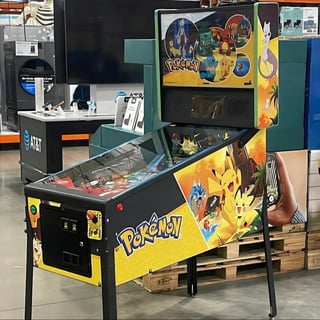
Speaker: i agree. I mean, I think it's part of the curb appeal of the game. And I think that, I think it's important, but I don't, I'm not, gonna put stuff in just for the sake of putting stuff in i'm gonna i don't believe yeah you know i think stuff you know it's got it's you know i think it has to be elegant it has to mean something to the theme has to mean something to the game well and and like to your point deadpool i point to pokemon i feel like pokemon's it it does have some good mechs in there but it's not over the top you know had the same kind you know i had the same thought right like it's kind of like and
Speaker: Not every game is like the, you know, Pokemon is a very different game from Fallout. It's about different things. it's it It works differently. And and the the things it does are about the things that fit that theme.
Speaker: um You know, it I was telling somebody the other day that i we have this we had this little score thing going on. It's been so long since I played Pokemon for score that my score was like ridiculously to low. Everybody's going to get my badge.
Speaker: um because I've been collecting Pokemon. I've been like so focused. I play the game and I don't care about the score. I just want to collect more Pokemon. So um so it's sort of like changed my mentality about how I approach this game. now i i don't i won't you know i I wouldn't play a Deadpool that way, I play a Pokemon that way.
Speaker: Games are different and that's what we love about them, right? So you're actually broadening what you're doing. We're trying. Yeah. But by having like a a more budget friendly version versus even a high end with Fallout. And actually, yeah i'm I'm on record saying that I was surprised Fallout wasn't more expensive with all the stuff in there. How are you addressing all those different things? Because that seems challenging to try to get both ends of the market.
Speaker: you've heard us say it before we're all about growing the market right we're all growing we're all about growing pinball our growth arc is dependent on on more growth in the market period so um the pokemon the the the costco tar you know first of all the the titles that you'll see at costco are are more family friendly generic uh in in the in the generic to the notion of you know they don't they're not going to be hardcore like it is unlikely that you will see fallout at costco um but you know if you look at the titles we've picked for costco jurassic park star wars pokemon those are big audience titles
Speaker: So they're going to get somebody that maybe is a Star Wars fan or Jurassic Park fan or a Pokemon fan to look and consider that product. Those new people may not know that about the other product. We've had a lot of people that bought Costco product that then traded up after owning Costco product for a while, traded up to the big games.
Speaker: um And that's exactly what we'd love. um and so i think that it's all about growing that market i think you know think when you think it into like go to a costco and hang out at a costco and just look at the crowd in a costco and you see families you know you see you know mom and the kids or dad and the kids or or so You know, you can you can imagine that certain titles are better suited for that environment than other titles. And by the way, Costco knows their customers really well, and they have a lot to say about what those titles would be.
Speaker: So, yeah um you know, I think a lot of it is driven by and Costco does a tremendous business in Pokemon, period. not just pokemon pinball pokemon period right star wars period right so when you have product lines that are complementary you know you've got star wars toys in the in the toy aisle you've got star wars towels and star wars pajamas and stowers lunch boxes and so you know you sell star wars stuff collectibles and images and you name it then of star wars pinball machine sure fits
Speaker: Well, it's an amazing audience to tap into and even brought I mean, that's not free marketing because you guys obviously have a deal worked out, but it's, you're tapping into an audience that might not otherwise be looking for pinball. So it's a brilliant strategy on that side as well. And the content creation stuff, holy cow, if you don't believe me, go look at Costco and content creation, millions and millions upon millions of views just because Costco's Costco, it's crazy.
Speaker: Yeah. I, so i think when you see those, when you see those kinds of products there, it's all about growing the market. Um, really. So one question i had to, now that you've brought up Pokemon or I brought up Pokemon, whatever and Godzilla, have you seen a bigger push into the Asian market as well? Because these titles, like even Godzilla has the Japanese speaking mode, which is amazing. I didn't know if that actually helped through the market and those areas as well. Asia, Asia has been tough.
Speaker: Um, not a lot of traction there. um we've seen. We have more interest from um from companies like you know you know like Nintendo, like you know like ah you know the the all of all of those products.
Speaker: um All of a sudden, people are paying attention. But in terms of the actual market, how many games we sell there, very small. I figure as much as because with their living, you've you've said publicly before that 70% of your business is now.
Speaker: Yeah. And so, you know, those homes over there are as is expansive as well. we We have it here in the West. And also I think that you watch, it's a cultural thing that's new to them because you go to, you know, I go to CES and I watch, I watch people from all over the world come up to the machines.
Speaker: And I noticed that, oh, You know, Western Europeans have seen these before. They know what to do. But but I also see i see, you know, the Asian demographic walk up and not quite, you know, it's a new thing to them.
Speaker: It's like, so how do i interact with it and what does it mean to interact with it? Which is curious because Pachinko exists, right? So, um and it's not like they've not been there before, pinball, but it's just never taken, it's just never taken hold it's taken hold in a small, smaller way, I should say.
Speaker: So when, when you're looking back at Stern, so you've had a crazy growth over the last 10 years, you know, five to 10 years. Yeah, I've been with them 15 years and I, you know, I, I, when I started,
Speaker: I think there were 35 people in the factory and nine people in my studio and maybe another eight people in the front office. yeah Okay. But you' you've basically seen the the second renaissance of pinball.
Speaker: I want you to talk about some of the high points when you're looking back to say, this this was a touchstone here. This was a touchstone here. This is what we learned from this.
Speaker: The rise from the ashes, right? So I was ah you know i was a consultant designer to the company. when I did games like Lord of the Rings and Sopranos and the Dark Knight, I was outside the company. I was i was um basically bringing my designs into the company. with the Lehman Brothers financial crisis, the company almost went out of business.
Speaker: and um and And a lot of companies almost went out of business. I was working at Midway Games and I was out of a job in December of 08. And and like a month earlier, Gary, Gary Stern had told me there isn't another consulting game for you.
Speaker: So um so the world was in a different place and and the company was on the verge of of just she's seizing to exist when um Gary's Gary's current partner, Dave Peterson, stepped in and decided to fund the company.
Speaker: um And that that began the growth arc of the company but a lot of things changed the business philosophy was for business philosophy and strategy were substantially revamped and so um you know a lot of things happened in in a lot of different areas because mr peterson wanted, you know, ah you know, he wanted to be more business focused in terms of how we how we did our day to day operations in every way.
Speaker: And um my involvement with the company was because, you know, they they needed to grow product development. um One of the very first things I did was I had to get two teams happening simultaneously so that we so that we had continuity of product.
Speaker: I was still working at Incredible Technologies when, and I had already done the deal, but I had to finish the projects I was on. And I called, you know i you know, Gary said to me, what do you need? And I said, I said, we got to have another design team following up. At the time, they only had, John Borg was the only one was left.
Speaker: And I, so you know, i I said, he said, what do you want to do? And I said, I want to go get Steve Ritchie. And I called Steve, he said, hey, come to work for me. I'm going to do this. And And you know let's get started, let's get going. and um And so I started started building, putting all the pieces together.
Speaker: but the But the very first thing was we gotta get content to be a product. and And in those early years, you know I was still like, I was designing games, right? I was in the midst of Transformers um when I started. So I was designing Transformers and and putting the studio together and and and trying to run the show.
Speaker: so it was about like can we get you know can we get when we you know we finish a game and and if if you don't have that continuity if you know that continuity you're going to wait a long time before you see your next game so um so you know you talk about ah some of the landmark stuff uh iron man iron man was a landmark game um it you know it's it was it was part of the rise from the ashes um And, you know, I mean, there's there's games you can tie things to. ACDC was a strong game early on.
Speaker: um So i think I think, you know, we we got into a rhythm. The company's always been self-funded. So the business of the company is what allows the growth of the company.
Speaker: there's and And so I think that that that arc, but I'll tell you that, that Mr. Peterson said, you know, We're going to we're going to do this.
Speaker: And in 10 years, this is what we're going to look like. And he wasn't that wrong. He says, if we do these things, if we do these things in 10 years, this is what we look like.
Speaker: And and that's what we've been doing. Has it been kind of shocking too to see these last six, seven years to see pinball explode with COVID and just not having, yeah. You know, we were, but, but honestly we were doing fine going into COVID.
Speaker: I mean, COVID was, was impactful, but we were doing just fine ah going into COVID. And when when you talk about the Renaissance, I think that we were a part of the Renaissance.
Speaker: The Renaissance is a lot of the things we did street teams, right? Stern Army tournaments, get stuff happening, get the conversation going, social media.
Speaker: All these things are the things that happen as part of this arc of growth. And everybody thinks the Renaissance happened. I think we made the Renaissance happen. I think, you know, um it like who would have done it right? If you look at look at at the time.
Speaker: You know, J.J.P. was like, I don't know, that three years between games or something. I don't know. You know, you you don't I think it it was taking them a long time. we were like becoming, you know, we were like getting a cadence.
Speaker: So we were constantly introducing product into the market. We were going out to the street. We were setting up tournaments. We were talking that we were we we had we didn't have much of a dealer network.
Speaker: We had to build a dealer network. um So there's a lot of stuff that happened. It's it's not just us. We were pivotal. You got to make good games because people got to want what you're what you're selling.
Speaker: So I think we were pivotal. I like to say that the growth of my studio is the growth of the company, but I think that um the success of my studio is the success of the company, I think.
Speaker: But a lot of things, we were working every angle. And I think all the guys at the top, you know, where everybody was working their piece of it. Operations was working their piece of it. How do we figure out how to make more games because the designers are designing good stuff and people want more games?
Speaker: How do we make those games cost the right amount of money? How do we sell those games? What's the throughput to get those games to market? How do we advertise those games? How do we get people to know what's happening?
Speaker: Uh, so, you know, social media focus, licensing focus, operations focus, design focus, uh, business focus, right? Like, you know, you gotta make the games cost X so that we can charge this much so that we can make a profit so we can afford these things.
Speaker: Um, you wanna hire more people? Okay. You can't hire more people if we don't have more business. yeah So it all, it all built on, on all that stuff.
Speaker: Yeah, it's funny because we did, we just did pinball expo and I was in on the seminar with content creation and one of the people asked like, what do we need to do? Start getting millions of views on pinball. And I said, ah well, Stern does half a million to a million views a month on pinball, just on YouTube alone.
Speaker: I mean, I don't think the question is millions of views because between content creation and Stern and other manufacturers, there's millions of views on pinball a month. I'll tell you that ah I can't share the insider connected, um, numbers, but if I could, it would, they would blow your mind. you you would look at pinball a little differently when I, if I told you the number of people that we have active on insider connected, um it's, it's impressive and it's going to be more impressive.
Speaker: it you know it it's continuing to grow, right? Which is awesome. and I mean, we just saw kind of the media from this week from you guys showing Meg the Stallion playing Iron Maiden and yeah kind of talked to zach Zach about that, Zach Sharp, and he said, yeah, we were down there and the Iron Maiden game's all signed.
Speaker: like It's really cool that you guys did this because it's, it's being donated to charity. You've got, you know, you've got Iron Maiden who got inducted sign in it. You've got make the stallion. He said he got to meet Wu Tang clan. I mean, it's really cool. Touchstones like these to see that pinball is in a place that it can do this stuff. Now, speaking of coming from the ashes, you know, we have to keep going in that direction, right? More pop culture, um, interactions, um, more it's got to become even more mainstream you know it's it's far from mainstream now it's got to become mainstream right let me look at this few days ago i was one of the
Speaker: bazillion people that that bought and downloaded GTA. Right. And look at this phenomenon that's going on. Right. And oh i had, I had to like last night, my GTA became playable at midnight.
Speaker: I had to like, Oh man, I got to work. Wow. Okay. I, I just love that George Gomez is home playing GTA.
Speaker: there There are games. I, I really like games that, that, I i buy just because I want to stay in the know and i want to I want to see something new or whatever. So I have a broad library of games and I play all kinds of stuff and it's just, I mean, but it's nature my job, right? I mean, it's like I have to so that I can effectively talk to somebody about, you know, hey, you should look at this because I think there's something there that we can maybe work with. um So it's just, it's just that. But I think, I think I'm looking forward to, I'm a big, I'm a big campaign mode guy. I love the storytelling.
Speaker: Same, yes. it's a You know, for me, it's like, I don' i really don't, I like I'm not, you know, it's like I have a bunch of guys here. um ah Chuck Ernst is, you know, he's a battlefield guy and he's, you know, he's in there with hundreds of people fighting. I'm like, that's not me. I'm, you know, I would like get me a Call of get me a story mode that I'm like, you know, I want to go. I want to work my way through because it's like it's kind of like reading a book, right? Or watching a film, except that I'm playing a role to some extent.
Speaker: in the outcome and how things happen. And so that's what I enjoy about it. So if you ever want a job at Stern, you know, you can go apply and the way you can, when you're playing GTA, you can tell, honey, I'm just doing work on you, sir. It's okay. Yeah. Yeah. I will say that you hear it now. The Grand Theft Auto is the next release from Stern. It's coming out.
Speaker: Well, think about this, you know, um the guys that made fallout, right. Um, you know they all They all grew up with the video game. Oh, yeah. Harrison was telling me you know he was like coming home from high school or something or middle school and playing GTA or playing Fallout. you know So so they sort of knew you know they knew it. Keep, raise his hand. It's like that one. but Yeah. Yeah.
Speaker: So Stern does obviously a lot more quantity of pinball than a lot of others. Um, when there is an issue, it's a little more predominant. And i think with more recent games like transformers and fallout mechanically having more under the glass, i some issues of Megatron, a little of that man.
Speaker: Um, what is Stern doing to kind of just make sure their products a little more resilient for the home, ah ah home and location. Right. So I think, um, You know, when we when you talk about changes, right, like a lot of things like like when we screw something up, we we deconstruct it, right? We deconstruct the screw up and say, you know, how do we how do we how do we prevent that from happening again? Or how do we make that better?
Speaker: And we're we're never going to be perfect, but we're constantly looking at ways to improve and make stuff more reliable. um we We do a lot of times it's.
Speaker: It's not that we didn't test it. It's that we, you know, the test didn't really reflect how people use it or, or the environment or, you know, it, it, it something was different from the way that, that it's actually happening out there.
Speaker: Um, so yeah, we're not, we're far from perfect. We, but we always look and we always, we always continue to work at it, but you're right. You know, when you, when we get something wrong, like, you know, we're, we're making hundreds of these things a day.
Speaker: And so you you know, you're talking about it, like you put a lot of bad ones out there real quick. yeah How does Insider Connected affect your ability to get feedback in real time? I'm sure there's a lot of options with Insider Connected, to whether or not it's people interacting with the games, signing in, high score chasing, Pokemon hunting. it's it's It's more, um so we have we have this this data and we have to query it and and we have to ask, we have to we have to come up with intelligent
Speaker: queries that basically say, you know, like, ah you know, what scores are people getting to or what, you know, ah how many Pokemon or is the average player getting or something like that. So it's not happening in like, it's not necessarily that the data is being collected in real time, but, but it's that our ability to, to interact with the data is, is a whole thing in itself, right? Like we have to, you know, run queries related to, and, and So when we were building it, I i've used to say all the time, this is going to touch every piece of the business.
Speaker: And everybody looked at me like i was from Mars. Well, guess what? It's touching every piece of the business because now there's like a bunch of stuff. Questions from sales and marketing. There's questions from operations. There's questions from the business side. There's questions from engineering and design. And so so the folks that manage that stuff get requests.
Speaker: to get data and that and then that data comes back and then we look at we look at stuff we and maybe it's a trend or maybe it's a comparison or maybe it's just plain old like how many or you know what's happening right you know when when i was talking like early on when you know when um we were talking about venom and i used to say i used to tell people i said man somebody like Like, please, somebody get these numbers out because the operator, the earnings numbers on Venom were really high.
Speaker: and And yet, like it wasn't having it wasn't in any attraction with the with the community. But the reality was that if you had a Venom on the street, you were making money with the Venom.
Speaker: And it was like, ah whatever it was, whether it was the leveling up or whatever it was, and I could see the numbers. I could see the numbers. You know, it's like the the same thing with like like a Deadpool, right? The reason Deadpool had the life it had, i think, was because it was killing it on the street, right? and and And so people would discover it on the street, play it on the street, get hooked it on the street, and then go home and buy it.
Speaker: So I think there is some of that relationship. i'm mean I would call you guys out on something, though. <unk>phons so So you guys make a correlation between the number of games you see on the street and the number of games sold to the home.
Speaker: And very often, you're way off the mark. Really? Okay. Yeah. And so it's like, because because thematically thematically, the street sometimes absorbs more or less.
Speaker: And so, and I can't tell you why. I can just, I've listened to a couple of your speculations about, can there really be this many Pokemon out there? And so I i just say, i say to you, I say, when you when you when you do that, when you use that as a data point, just be careful. You might not you might be way off the mark.
Speaker: Definitely. Well, so I guess it's easy to say then, like the the home to to street ratio isn't as cut and dry as 70-30. It's not as predictable. It's not predictable buzz as as I've heard you guys use that a couple of times. And so I was like, I said, next time I talk to those guys, I got tell them sometimes they're way off the mark. Sometimes you're spot on. but And I can't remember. I can't remember what, what game it was. Maybe it was, but I can't remember what it was, but I think Venom catches a lot of crap. Cause I think there's still Venom LE setting out there distributors place. So I think there's a lot of that, like, well, then do great. Cause he's at least didn't sell through and it's right. You know? Yeah.
Speaker: i I actually, i I'd take a venom. Yeah. I think it'd be fun. I actually think it'd be a lot of fun for the kids. Like, because the the challenge with a lot of these games is that um the first time you walk up, it can be a little overwhelming. So yeah my daughter, she is actually really into pinball right now. She's 12 years old.
Speaker: Wow. And she is dominating medieval madness because she, because she understands it. you know and and that's always the challenge and so you know i have my i have my classic row so you know i have i have monster bash there and i have medieval madness and i have the the straightforward games and then behind me you know i have the the more advanced ones where you have to know the rules and you have to know the shots uh but this is where when you look at creating you know creating a collection of games that you're playing in your arcade
Speaker: I need to have that mixture of the, the, the low, ah the low access ah knowledge that you need to play a game versus the high access knowledge. And, and so, and this is the challenge when you're making these games, how do you decide, you know, which ones are going to be the, the deep ones versus, I don't want to say shallow, but I want to say easy to understand very quickly.
Speaker: So every, I think, I think all the good games have, um, the whole easy to learn, hard to master thing. um And i think I think if you, some are easier than others, you know, I mean, like you talk about Monster Bash and by design, um you know, when we sat down to make it, Lyman wanted, hey, I don't, you know, I want something I can just walk up to and play and I don't want to spend a lifetime, um you know, playing through it
Speaker: And so there are sometimes that is a philosophy from the get go, but I'll tell you that a monster bash is challenging to me. um you know, to play off the to to get all the way through it um And I think that ah I think we always everybody around here we craft.
Speaker: You know, we talk about the designing from the button up right from the start button up. And so that's why a lot of times when you see us go out at, you know, dot eight five code and and people are complaining and I'm like, the the game's been out two days. There's no way anyone's played true.85. You know, like, like the, like well what they, they got to that wizard mode already. How, you know, how did that happen? So, um so I think um to to get back to your question, we try to put stuff in there.
Speaker: ah Philosophically, we try to put fun stuff. that's readily accessible, you know, on on Fallout, it's it's ah it's Keith's ah multi ball on the monster, right?
Speaker: That's like, you know, just keep hitting on boom, multi ball. um You know, there's a lot of our games, this, you know, mouth, right, just keep hitting on multi ball.
Speaker: And, and so and, you know, mouth is like smack dab in the middle. Yeah. And and right in the, you know, what we call the bozo zone, like because novices flip early. So that's where the ball goes when they flip early. They're afraid to lose the ball off the end of the flipper.
Speaker: So they flip. They tend to always flip early. And so I always I always have that in my head. Like Brian Eddy has that in his head when he, you know, um he defined it early on. Right. He defined it with attack from Mars. He said, you know, this is where they flip.
Speaker: And so you got to put a thing that's going to do something right away, and you know, because that's where it's going to go. And and so I think we try to do that. And and then then, of course, it's much in from my perspective, it's way um harder to design for the expert because I have to keep I have to weave things together to make things interesting for him.
Speaker: Right. Look at ah the layers in Bond. Right. Oh, yeah. that's Yeah. You know, but there's also that rocket, you know, which you can just bang on and something's going to happen. That center shot. You know, when I ask you to lock balls, it's right up the middle.
Speaker: So you're going to get a multi ball. We've, uh, we've seen Stern do in the past SLEs, you know, super L E's and whatnot, you know Batman 66 Beatles, Elvira, just to name a few, what is kind of the stern criteria even to even say, Hey, we're doing a super L E for this game. And what, uh, what kind of, but what makes it worthy of that title?
Speaker: For intents and purposes, we've really done it once. i mean, you can, some people say the Elvira was another one, but the, but it was the 30th anniversary of the company. It was a special game.
Speaker: um and And that's why we did it. And that's not to say that that's the criteria, but it does. We do we do talk about it from the standpoint of, um is it you know is it is it a game that is worthy of this? And then the other thing the other thing about this is that we're sensitive to the market.
Speaker: So it's kind of like, I brought out an SLE right now. i don't know you know i'm getting a lot you know i mean people are even even with the fallout pricing um you know you're you're set you're essentially reaching a little bit well and i i guess yeah if you look at there's only been one super le from stern but i guess i i even can categorize bond 60th i mean that was kind of that same that was yeah yeah you're right no no you i you're you're 100 you're right um bond sixtieth um So Bond 60th, the thing that happened with Bond 60th is, um I'm sure you've heard this, the licensor said, i want we want an old school game.
Speaker: and And we said, you know we can't make the Cornerstone an old school game. we you know We just said, we're not going to sell enough of them. And and so um that's how that happened. And and and then we said, well, you know it's like it's it's a really small run.
Speaker: um It's an expensive license. it's um and And it's like, you know if you if you're going to make only a you know a really small run, then they they have to cost some amount of money because the cost of goods is going to be way higher. Well, I i still have my Beatles. you know you You can put that in that category because 1964 games with a super expensive license, got to make the numbers work.
Speaker: Do you think if, cause I see more and more of the smaller manufacturers sell direct. Do you think that making an SLE and then selling it direct from Stern would help kind of help towards hype with certain themes and product releases and stuff like that? i Maybe. um I think the boutique market is interesting to us.
Speaker: Like, like one of the things that you're, that you saw in Pokemon, talk about the Costco product. And so derivatives are much easier when they're just that.
Speaker: Right. Like yeah when I took I took that play field and said, OK, I think I can convert this pretty easily into a Costco product and I can leverage the art. I can leverage the approvals.
Speaker: Right. Which is huge. And I can you know, I can leverage the code base, which is huge. Right. So that's why that Pokemon is kind of like a pro light.
Speaker: Right. So it's like you go, OK. I got, so I have a, I have, so that, that play could work in the other direction also. i think that that maybe that's, maybe that's a boutique play. I'm not sure. I, you know, I don't, I, you know, i look at the boutique business from the outside in, right. Cause I don't consider what we do that.
Speaker: So I look at, you know, I look at JJP product as boutique. I look at spooky as boutique. I look at um barrels as boutique.
Speaker: And the some of the things they do, i just they they don't make sense for us business wise. Right. um Like a like those those those um barrels titles, they don't make sense to us in our environment, in our, you know, our market, our business.
Speaker: it's, it, it would be really hard for me to just say, I'm just going to do 500. Every time I do, you know, it costs a lot, right? Oh yeah. Oh yeah. So a question when you're talking about like broadening the things. So this is something that I've, I've wondered myself, you're seeing a lot of other companies getting into classic remakes. And so you know, you have,
Speaker: your, your game monster bash. I own, yeah you guys didn't make it a medieval madness. However, had the medieval madness I own was made in a stern factory. And so when you have all these other companies dipping their toes in that classic remake, so to speak, it, it,
Speaker: does it make sense for you guys to consider doing something like, i I know that other companies are doing it, but it's, it is certainly, there's certainly a demand for that.
Speaker: There's, there's some of the fields turned electronics line, you know, yeah we've talked a lot about that. yeah Some of those games sell for ridiculous money still yeah nowadays.
Speaker: Yeah. and And there's a, and they have fans in the building. I mean, we have, we have a bunch of them here. um You know, and i like I know Keith owns a bunch of them. We have, you know, the the conference rooms here in the building are all named after old Stern Electronics titles. And like in big game, we have Keith's big game. And in and in um in Flight 2000, we have Tanya's Flight 2000.
Speaker: So the games are here and we talk about it from time to time. But it's it's like, you know, how many would we sell? And so I don't know. I don't, the remake market is, it's interesting. I don't, I don't, maybe there's some hybrid there for us, but I'm not sure.
Speaker: It's not real clear in my head what, what that play would be. Yeah. But even if Stern got into, and I know this is not, this is not a Stern product, but. you know there's a huge demand for a New Adams family or even an Indiana Jones, the you know the yeah the Williams one. And so and i this is me, again, looking outside in, I think there would be a lot of demand for something like that if you were able to do it.
Speaker: Yes, but no, because I mean, look at Chicago Gaming. I mean, how many of those have they made? And so you have to say, oh yeah you know you have to say, am I going to devote that level of effort for that outcome.
Speaker: It's the reason that private label is so difficult, right? We get approached all the time, you know, you know, hey, can you make, you know, can you make ah this game or that game by big brands?
Speaker: And we say, like, I take a, take a team out of the mix to do that. What's the, how can, how can the, how can the pay, how can the payoff at the back end possibly match the,
Speaker: the roll of the dice of somebody hitting one, um you know, on a new title. So I'm glad you brought that up because I've always wondered about this because you guys have done, I think recently was Mountain Dew. Yeah. And then before that you did like the escape from the megaverse, the Bitcoin thing. So how does that work out? It's a very tough play, um meaning that those brands pay a lot of money. And then, and then on top of that, we have to envision there's some,
Speaker: some marketing or advertisement upside for us. And, and it, and sometimes we, you know, sometimes we do it and take a flyer ah and see what happens, but it's very, um you know, it's, it's, it it's hard to make it make economic sense.
Speaker: Gotcha. Gotcha. So there's a lot of us armchair CCOs sitting at home and we talk about how, you know, for example, stranger things, we would just put the rest of the seasons in there. because there's only two. it What prevents Sturm from doing some type of, of update like this? Or is it licensing? Is it?
Speaker: Some of it is. Cost prohibitive. What, what is it? um some Well, some of it is, some of it is licensing and some of it is, um, how do I recover that the development costs if because you guys don't want to pay for it. So how do you how do i recover that?
Speaker: How do I recover that? It's like so everybody talks about, you know, like remember years ago when we launched Insider Connected, all the freak out about the downloadable content. Oh, you know, next thing you know, he's going to be charging me for multiballs and DLC micro. Right. Yeah. and and And so you have to look at the the markets where that makes any sense are like exponentially larger than ours right, so you say you know X box can do that right um you know a valve can do that. Andrew Ph.D.: Like on steam, you know but.
Speaker: But um could we do that? I don't have that audience. So like what am I going to make? like What? $100,000? $50,000? What are we going to make? And like you said, then you're devoting a team to that.
Speaker: yeah Whatever it is can be working on. it Yeah. thing that we we We do talk about um extending the life of games And we do talk about it. and And sometimes you see us add content to games that are for all intents and purposes done.
Speaker: Some of that's passion for, you know passion ideas from the teams. Right. Like you've seen us add, you know Jaws stuff. You've seen us add different, you know, bond stuff, you know, like some of that's passion stuff from the teams or it's related to an anniversary or some derivative of that that we can, you know, that where where we feel like, okay, we should do something with this.
Speaker: But it's, it you do have a development cost associated to it. So we have to get something back from it. and And the development cost is also an opportunity cost because who's doing that update?
Speaker: It's more than likely the guys that worked on the game. And if that's the case, why aren't they working on their next game, right? Gotcha.
Speaker: It's complicated. Sounds like it. Yeah. Come on. All of us are. our all was yozy Yeah. We know how to work this company. Yeah. I know. I know.
Speaker: I know. I've heard. your ball is easy Yeah. think I'm getting shirts. Speaking of, speaking when a design process and stuff, how does st Stern figure out the process for matching up a theme with its designer?
Speaker: Oh, it begins with um so we so we have meetings where we talk about all the available properties, all the things that um either from the outside, we're being, you know, we're being asked to by people to consider their title as as a stern pinball or or a lot of times, you know, the licensing arms of of an organization, whatever it is, Disney, Universal, etc.
Speaker: They have, you know, i mean, how they make, you know, how they create revenue for that, for the brand is to go shop the brand as as licenses. So, you know, we go to the licensing show, we come back with a bunch of ideas from different people.
Speaker: We put them all in the mix. But the reality is that I really want people, i can't i can't make it 100% of the time, I can't have 100% of the people on ah on a game being passionate about that particular title. But I i certainly want to start there.
Speaker: So I want I want I want designers and and and engineers and developers making things they really want to make because the stuff's way better. Right. Because the guy is passionate about it.
Speaker: Like I didn't have to. No one had to. No one had to tell the Fallout guys about Fallout. They knew all the stuff that beyond the stuff they saw on Amazon. They knew the stuff from the games. They had played the games.
Speaker: That's the same thing. You know, no one had to tell me about Bond. I it was a passion thing for me. So who who I'm not the only guy that could do bond, but certainly so designers raise their hands.
Speaker: It was like, you know how want to do that. I really want to work on that. um And and I try whenever possible to put people with with titles they really want to do.
Speaker: And so it's a combination. There's there's marketing does analysis, right? They come to us with. You know, this is the demographics of the of this particular brand. This is how many you know, this is whatever, how much money the movie made or how many it installs of this thing. This is stuff that's happening in the brand new stuff that's being launched.
Speaker: So all that stuff gets looked at and and considered. The other thing that plays into this is what's the product mix for the year? So I don't want to do three rock games in a year. I don't want to do two rock games in a year.
Speaker: I want to I want the mix of product to because even though like everyone might might play all these different games, not everyone's going to own all of those games. And so I need to address different parts of the market. Somebody that bought Fallout might not have bought Metallica.
Speaker: Somebody about Metallica might not have bought Fallout. So um i need to have a mix of product that addresses you know we we the other thing we do in that mix is we want something for everybody we want a family-friendly title we want something that mom's going to let it in the house and it's okay to do one that maybe mom's not going to let in the house it's okay that's you know walking dead and maybe mom's not going let that in the house but there's an awful lot of walking dead um hardcore fans that want it and so
Speaker: So it's you know it's it's that mix of a year when you look at a stern year and look at the titles that the mix of titles in that year. That's what you got to think about there's there are exceptions, you know, there are there are years when you say oh that's to Marvel titles or that's to some you know.
Speaker: um Music titles, but it's not it's not every year. Yeah, so when you're considering ah like the the games in your catalog, so so let's not talk about remasters of other companies. You're talking about your own companies.
Speaker: What games stand out? like You don't even have to say titles, but when you're looking at a game, what stands out to say this deserves to be remastered? This deserves to be re-engineered and brought to the light?
Speaker: So that that's a big decision. Yeah, it's a big decision. Demand from you guys is a big one, right? So demand from from you guys, and you know, look at the ACDC.
Speaker: um I don't know if you probably haven't seen the game, by the way, they they just hit the line and and people will be seeing them soon. And the you know the band was on tour, with really difficult to get to them when they're on tour. And then they come off tour and they're tired and maybe they don't want to pay attention to you because they just came off tour. But um so you'll see the marketing soon and and and certainly the games just hit the line. So you'll see the game soon. But so you look at a title like that and you say, well, this was a super successful title for us.
Speaker: And imagine if we bring this to. our latest technology so you can put it on the 18.5 HD display with concert footage, more music from the band, you know, more stuff. We can refine some of the things that maybe were a little crude in the in the original game.
Speaker: We can add more stuff. We can, you know, somewhere there's, oh, there's some notes from Lyman, stuff that he wanted to get to that that he didn't get to. Okay, let's let's see if we can get that stuff in. So,
Speaker: That's the conversation on the, in the case of Metallica, Metallica reached out to us and said, you know, we love what you did in 2012. Can you guys do it again? We'll give you more music. We'll give you more speech. We'll give you concert footage. You're going to say no to Metallica.
Speaker: you know ah Right. So, so, you know, you get, you know, James Hetfield doing promos for the game. Yeah. Yeah. We're doing it. So it's like, um I think that,
Speaker: that that plays into it. And, and of course, demand from you guys, you know, when you guys, we listen to things like, you know, Hey, you know, you make us make us more, ah more of this, or can you, what if you brought this back?
Speaker: You know, everybody imagine some title they wanted brought up to new, you know, now you get expression lights and you get an 18 five display and you get a better speaker system and you get better code and, you know, come on. um And another crack at the art. And look at the artist, the the Metallica artist that, that you know, um he did a bunch of gig posters for the band. And that's how we found them. And look how beautiful that game came out. Right. And and you got, you know, you you also have John Borg going, oh, hey, I want to do that UV light thing with Sparky.
Speaker: And, you know, you have all of that stuff. So.
Speaker: So sorry, it reminded me of two two more questions I have and and then we kind of go together. um It's been rumored, i don't know if you can confirm this or not, but Godzilla is getting close to surpassing the numbers of Adam's family and how it was built for that. Is that true? Yeah.
Speaker: but And then. i mean, it's, you know, it's going to be there one day. It's going to be there one day. That's impressive. And then, wow. we Scott and I got arguing about this on an episode or two ago. yeah ACDC and Metallica have sold a lot of numbers. First off, which one has sold more? And then second off, can you kind of tell us maybe the top three or five best-selling Stern games of all time?
Speaker: So Godzilla's the best. You know, there's games from the old days that sold a lot. like Star Wars was up there. John Borg's original Star Wars were way up there.
Speaker: um And the original, um i want to say the original Jurassic Park might have been a big number. I can't remember now. um In the modern era, it's hard to say. ACDC definitely sold a lot, um but it sold a lot in its time, meaning that I'm not sure the ACDC number would be as impressive today as it was in, you know, 2012.
Speaker: did a Did ACDC outsell Metallica? that that Because that that was my argument. Yeah. okay All right. yeah My argument was I thought the Metallica had sold more, but. Well, so now, ah okay. So yeah now you got me thinking because.
Speaker: the new Metallica has done really well. Yeah. Oh, yeah I was thinking before the remaster. So this was like, what? So before the remaster, definitely ACDC was the winner before the remaster.
Speaker: um and now um And now this is really interesting because you got two remasters coming into the mix. And so we'll see what happens. I think that if you missed out on an ACDC or you want an upgrade,
Speaker: um because i because I guarantee you the new one is nicer than the 2012 model, um then i think you know I think it's time to... And I hear, you know by the way, Batman people call me all the time, and then DM me, you know, hey, I have a deal on a Batman. Should I buy it? Because are you going to come out with one next year? And i always say I always tell people, I said, just buy it because i don't know when i don't know when any of this is happening in it or if it even is.
Speaker: I'll tell you there's some surprises in there that games that you wouldn't imagine were big runners, but but they are. And so um we made a lot of Deadpools.
Speaker: Yeah. Well, you have a little bit of a whiplash too, where sometimes a game is released. It doesn't catch traction immediately. And so you move on to other things and then people wake up to it. yeah And then there's this ah this demand for the game that can't be fulfilled just with the numbers. And and we even talked about people are screaming about ah Ghostbusters. and And I said, well, the challenge is that it initially sold well and then it had to drop off. And so they moved on.
Speaker: But people find the product, they they like the theme, and so they still want to buy them. And there's not as much as there probably could have been just because people, they you know sometimes the supply is is less than the demand.
Speaker: you know you know You bring up an interesting point. the um And I've talked about this a little bit because you know i people say to me, like you were asking earlier about um remakes.
Speaker: You know, I like I think Monster Bash was done. i think like like I mean, I'm happy that there's a new generation of people that are getting Monster Bashes and they've got tweaks in them and stuff like that. But the game was pretty done.
Speaker: and And and I don't you know, I'm i'm happy I still own my original because I really you know, I I don't need any I don't need anything else in in that. And I think you can say, you know, I would say i would argue that you can say that for um a lot of things. Like, you could I think you can say that for Ghostbusters. I don't know that I would, you know, I i would, it's almost like, you know, you bring it into a remaster state, but you don't, I wouldn't, you know, I don't know that I would like radically change it or,
Speaker: you know, how do I, you know, this came up like Universal Monsters, right? Like we were talking about Universal Monsters and everybody remembers fondly, you know, what I did with Universal Monsters.
Speaker: But, but I said, yeah, you also got to remember that it's, it's a pretty well-regarded game. so are, are you going to be compared? You better be radically different. You better be like so different.
Speaker: Because it's it's like saying, um you know, it's it's like the film remakes, right? And i'm I'm not sure how much luck they've had with those. Yeah.
Speaker: Okay, Ghostbusters, I'll tell you. Fix the Scolari targets, fix the ramps that that that reject and and eliminate the flipper gap. Well, okay, wait a minute. So the flipper gap's an interesting one. Yeah. So it's a beloved game. Yeah.
Speaker: With a ridiculous flipper gap. Yep. And don't you think I should leave it the way it is? Oh, man. I, I could i not. think what mods are made to close that that gap and put a center post in. I i think it's, I don't know. yeah I say from the center post in leave, if you're going to leave the gap, put a center post in. Cause then at least you can take the center post out. If you want to keep that gap. i don't know. Maybe it's, I don't, you know, when, when, like if the game was like really hated or you know, it it didn't have a following or whatever I would.
Speaker: and And for whatever reason you were going to remake it, i don't know that you would if if it did if it if it was like that. But then I might consider the flipper gap. But I now I'm thinking to myself, a bunch of people learn the shots with the ridiculous flipper gap.
Speaker: And I'm going to mess with that. okay it It would be a different game. I totally get that it would be a different game.
Speaker: would it would It would really be a different game. You know, you know. Yeah. This is what you do. There's a big enough fan base. There's enough people with deep pockets with that game. You start over with it. You give it to Keith Elwin. You let him and his team design it and you take it to the bank.
Speaker: I think somebody has that. I've heard rumors that that somebody else has that. Somebody else has Ghostbusters. um Wow. i've I've heard that. I don't know. i don't know how true it is. Somebody, ah you know, I think it's.
Speaker: It's not, you know, I don't know. I say if it if it was in Stern's wheelhouse, you don't remake, you don't do a remaster version. You just, you give it to a new team. do it and Yeah. Kind of like star Wars where you have the two different designers take a different, a different shot at it. Yeah.
Speaker: Yeah. Interesting. Yeah. Yeah. And George, thank you so much. Okay. Here's the question we always ask. What are the questions we should, we should have asked that you're like, why didn't they talk about this?
Speaker: I thought I thought you were to me about we had about like I think there's like 150 actually precisely 150 users had um issues accessing insider accounts like about three weeks ago because we changed the authentication system and it's fixed now and they didn't lose any other stuff. But i I thought that was one of the ones you're going to ask me.
Speaker: I thought you to me about the crossbow issue on On Walking Dead. and walking yeah like that yeah Yeah, which people are are are having issues with. and And so I'll tell you that it' it's it's not a um it's it's not a code thing. So we're you know we're going to make some changes to the code to make it easier for for those things to get dialed in um But it it it's a combination of things. It was an opto that was miswired and
Speaker: and and some alignment issues in how they left. Because as as usual, some people don't have any issues and some people do. so um But it's not like a software bug anything like that. it's We are going to make changes to code to make it easier to adjust.
Speaker: Awesome. If you want to get a hold of us, we are LoserKidPinballPodcast at gmail.com. We're at all the socials at LoserKidPinball. If you want to check our Silver Ball swag, we've got some stuff coming up for that. And yeah, Scott, give us our last words. All right. HDDC coming out. Looking forward to it.
Speaker: Yeah. Thanks a lot, guys. he Thanks for having me on.