Transcript
lpaltiguzman: Welcome to Energy Vista! a podcast where we make experts great again and contribute actively. to public debate and policy making around commodities, the geopolitics of energy and trade.
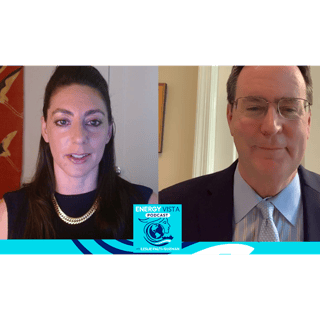
lpaltiguzman: I'm your host, Leslie Peltier -Guzman. It's November 6th, 2026, and time for a new Energy Vista episode. My guest today is Ambassador Jeffrey Payette, a career diplomat who now serves as Senior Managing Director for energy and critical minerals.
lpaltiguzman: and was Assistant Secretary for state of State for Energy Resources from 2022 to 2025. and previously served as ambassador to Greece and Ukraine, among others.
lpaltiguzman: senior roles in the US State Department. um So Jeffrey, last time we spoke, actually I will call you a regular now, it's the second time you are joining me at the Energy Vista. podcasts.
lpaltiguzman: um We discussed a lot about EastMed Gas and EastMed Energy, actually, cooperation and regional integration. and we spoke about the strategic role of Greece.
lpaltiguzman: And since then... ah the The geopolitical landscape has become even more complex in a way because we have two wars going on. um that are both for shaping the global energy markets. They are also um Changing the way we perceive civilian energy infrastructure. um because many of them have been under attack.
lpaltiguzman: And we see also that the transatlantic energy relation is also has been very chaotic. and One of the big questions that I've been exploring with my ener energy list analysis has been also and to look at how US LNG is being perceived in Europe.
lpaltiguzman: And... um it's It's been interesting to see recently the intellectual gymnastics that some European commentators have been making. as they have observed that the Trump administration was um Trying to create an up aperture and opening towards resuming potentially. imports of Russian natural gas into Europe.
lpaltiguzman: and scratching their head because for years they've been saying that the only overarching objective that the US was to sell more US LNG into Europe. And so we've seen many paradoxes, many contradictions also in the relationship. And we'll we'll discuss some of that.
lpaltiguzman: Um... And today, I think you know what's going to be interesting is to examine also what Ukraine has taught us about energy resilience and maybe thinking ahead about what... post -war reconstruction could look at.
lpaltiguzman: um and so I'm very excited to have you back and we're going to start to dive in right away into the US -Europe relationship. and So...
Geoffrey Pyatt: Great to be back.
lpaltiguzman: No. Thanks. So when you look broadly at the Europe -US relation right now, How do you assess the energy relationship today? And we just had the midterm elections in the US.
lpaltiguzman: a big defeat in a way for the Trump administration that has lost. both chambers. of Congress. um You know... We're trying all as experts and analysts to rationalize why You know, the Trump administration has been trying to give those incentives and carrots to to rush out.
lpaltiguzman: It might be very difficult to wage war at the same time that are impacting so much the in energy markets. And. If there is another round of attack, do you think that some of this opening was in a way to keep one front quiet?
lpaltiguzman: ah while having you know kind of um more ah relaxed diesel market and and trying also to...
lpaltiguzman: basically negotiate with Russia for the Ukraine peace deal. and try to have more hopes on one side while another side is still at war.
Geoffrey Pyatt: Let me unpack a couple of different questions there. And what I'd like to start with, Leslie, is. Some context on the transatlantic economic and trade relationship. This is the biggest economic relationship in the world. between the United States and the European Union in terms of the overall volume of trade, in terms of the investment flows in both directions.
Geoffrey Pyatt: but also in terms of all of the converging strategic interests. a lot of the signals from this Trump administration. in contrast to the first Trump administration that I served in.
Geoffrey Pyatt: have. created confusion around that and we can talk about the whys But at the end of the day I think for companies and especially for companies in the energy sector.
Geoffrey Pyatt: where investments are measured in billions of dollars with ROIs that take decades. uh There is a... long term focus on how to grow and sustain this partnership.
Geoffrey Pyatt: and whether it's you know big european energy companies like total or bp or vestas who have enormous investments here in the United States. or American energy companies like GE Vernova.
Geoffrey Pyatt: Chevron, we talked about the EastMed. um All of our nuclear companies the pro the the degree to which Westinghouse looking at a next generation of nuclear sees.
Geoffrey Pyatt: europe and especially central and eastern europe as the most important market after North America. All of these reasons. argue for us to have a much more constructive partnership than we do today and to get through some of these trade differences.
Geoffrey Pyatt: And then when we get to the the issues that you and I care about around energy and especially gas. important to remember two things. One, this has become a hugely important industry for the United States. and you know s and p has done some good analysis of how large LNG exports have become and will become over the next five years.
Geoffrey Pyatt: on track to become the second largest US export by value. I'm doubling. volumes by the end of this decade. um and bigger than a lot of sectors that get more headlines, in at least in Washington, D .C.
Geoffrey Pyatt: um entertainment. movies, television, agriculture, corn, soybeans. LNG is bigger than all of those. And most of that product, the majority of that product.
Geoffrey Pyatt: is going to European consumers. And that will be the case for years and years to come. So we have a huge interest as America. and making sure that our customers are confident in our reliability.
Geoffrey Pyatt: but likewise for Europe. which has made a strategically very important decision to end its dependence on Russian gas. um There is also a strong interest in the success of America's industry.
Geoffrey Pyatt: we have ah We have a stake in each other's success. So that's point one. Point two. on the question of Trump diplomacy. I'm as confused as anybody at this point.
Geoffrey Pyatt: But I would make two observations. One. It seems that Jared Kushner and Steve Witkoff imagine that by doing energy deals with Russia, they can moderate Putin's behavior.
Geoffrey Pyatt: That's not going to work. And of course, for many years, this is what we heard from Germany in particular. And during the first Trump administration, I worked with Secretary Pompeo and Vice President Pence and many others.
Geoffrey Pyatt: to convince our European allies. that it was a terrible idea. to continue developing Nord Stream 2 and to continue deepening that energy dependence. um That.
Geoffrey Pyatt: notion on the European side ended in February of 2022 with a full -scale invasion. And I think one of the things. that has been encouraging in recent weeks as some of these ideas have burbled up, reopening Nord Stream 2.
Geoffrey Pyatt: pushing Ukraine to resume Russian gas transit. bringing Novatek to invest in the North Slope of Alaska, all of which are terrible ideas, by the way. um One of the things that's been interesting is that Europeans have said.
Geoffrey Pyatt: We don't care. we're not going to go back to buying from Russia again. And that's come from President von der Leyen. It's come from Maloney. It's come from the senior most levels of Europe's leadership. And I think it reflects an understanding.
Geoffrey Pyatt: that for europe The outcome of the war in Ukraine is going to be the decisive factor in terms of the continent's future security. And it is.
Geoffrey Pyatt: perverse and contradictory. for Europe to be on the one hand Providing Ukraine with billions of euros of support to sustain its economy, to pay for the cost of the war.
Geoffrey Pyatt: And at the same time. be subsidizing the Kremlin's aggression Bye. continuing to purchase russian energy and then the last point that i would make here um As you say, we've just had a very consequential election.
Geoffrey Pyatt: And. there there's going to be um i'm Very strong. congressional democratic voice in both the House and the Senate. Congress in recent years has passed a number of laws which constrain executive action in this area.
Geoffrey Pyatt: The CAATSA Act Countering America's adversaries through sanctions. um the end of russian energy imports. law passed in 2022.
Geoffrey Pyatt: And of course, the Graham Bill. which was passed just a few weeks ago. by huge majorities. of Republicans and Democrats. So. The fact is, I think most of these ideas that have come out in the press.
Geoffrey Pyatt: um are unlikely to succeed diplomatically. But if the White House were to to try to push them forward. I'm not sure you would find any commercial takers.
Geoffrey Pyatt: because especially with the Democratic Congress. Any company that would, for instance, invest into the Nord Stream 2 pipeline. would have to know that the day after that news came out, they would get a subpoena from the House or Senate.
Geoffrey Pyatt: asking them to come and explain themselves. and explain how their actions were consistent. where the intent of Congress is expressed through CAATSA. and the Graham Bill. So. um I think.
Geoffrey Pyatt: If you pull the lens back a little bit. The... Bottom line, strategic interest between Europe and the United States is to continue to build confidence. in our energy partnership, our energy alliance.
Geoffrey Pyatt: and to recognize that in both countries, you're going to see continued growth in both energy demand but also the desirability of growing all forms of energy supply.
Geoffrey Pyatt: wind, solar, battery, geothermal, nuclear. And gas, especially gas, is a replacement for coal. of which there is still too much being burned in places like Poland.
Geoffrey Pyatt: So there's ah there's a lot for us to do together on these issues. um And. some of these recent suggestions with Russia. are not helpful to any of it.
lpaltiguzman: Yep. Very interesting way to lay out for background and context, all those different pieces. Um... Yeah, I tend to agree. I don't think for Europe... who has agency, as you mentioned, to decide if they are going to resume or not imports of Russian natural gas.
lpaltiguzman: I don't think anything will happen before. a settlement or a peace deal between Russia and Ukraine is happening. I think there is potentially more question mark afterwards.
lpaltiguzman: knowing that some long -term contracts with Gazprom have not been to see all of them terminated. And also we have... consequential elections in Europe in the coming years. So that would be important to watch.
lpaltiguzman: um Do you think like from the Democrats perspective, if there is so much emphasis on reducing inflation, reducing the price of energy in the U .S. domestic market?
lpaltiguzman: there is kind of in the background this idea that Maybe there will be a prioritization of lifting sanctions. um So... the U .S. sanctions that are still in place against Iran versus lifting the sanctions on Russia, that there is this idea that we cannot have both at the same time in place.
Geoffrey Pyatt: I think so. And I think there are two reasons for that. One is. The United States is in a fortunate position that we are so energy abundant. We have. Huge volumes of additional gas. And, you know, we've in the Biden administration, there was this debate about whether LNG exports were growing too fast and that was going to disadvantage. US domestic industry, raise the cost of gas.
Geoffrey Pyatt: We've had a really important. Experiment. since February with the closure of the Strait of Hormuz and the loss of Qatari volumes on global markets.
Geoffrey Pyatt: that has produced a predictable increase in costs in Southeast. Asia. in Europe. But it's important that throughout that time. The price of Henry Hub has been flat.
lpaltiguzman: Yeah.
Geoffrey Pyatt: So we've...
lpaltiguzman: you know three dollars per million btu yeah
Geoffrey Pyatt: got And it's it's demonstrated the resilience of America's supply there. um I think it's clear that for a future Democratic administration,
Geoffrey Pyatt: And even for the Democrats who are going to take play take power. in Congress in January. The number one issue is affordability. And I think every decision that the Democratic leadership is going to face.
Geoffrey Pyatt: is going to be viewed first through the question of how do we explain this to American voters. And if there is. one signal that American voters sent. On Tuesday, it's that they're tired of paying $6 a gallon for diesel.
Geoffrey Pyatt: They're tired about the inflation in the price of groceries that's come from increased costs for fertilizer. for fuels. um They want to see.
Geoffrey Pyatt: Economic. and price stability. And energy is fundamental to that. So I think you're going to see a very different debate in Congress compared to what we saw during the Biden administration about how to think about energy producers.
Geoffrey Pyatt: And then also very, very important. that the Democrats have been very successful in places like Texas. Texas, America's... largest fossil energy producing state.
Geoffrey Pyatt: is now controlled across the board by Democrats. The governor, the congressional delegations. the the railway commission which has the local regulatory authority. All of those are in the hands of Democrats now.
Geoffrey Pyatt: So those that the way. a debt A Democrat. in Texas is going to look at these energy issues. might well be very different from the way a California Democrat.
lpaltiguzman: Yep.
Geoffrey Pyatt: or a Massachusetts Democrat would look at them. And I think that's going to affect the debate in the party as well. Um, I think you're also going to see a very healthy.
Geoffrey Pyatt: refocusing of the US domestic debate around renewables. Because the fact is, for the past two years, U .S. policy has been wildly out of step with the rest of the world. The rest of the world is saying we need all the energy we can get. We need it inexpensively. And if we can get a significant portion of that energy.
Geoffrey Pyatt: From wind, solar. batteries renewables generally. Why wouldn't we do that? And ah the risk that I've always worried about is that we Hang on to...
Geoffrey Pyatt: A coal industry, which is 100 years old in the United States. And we miss the energy and industry of the future that China is building. with its vertically integrated.
Geoffrey Pyatt: domination of technologies around batteries, around solar manufacture. and around next generation storage. So. um I think there's a... You know, this is a very healthy development for American policy.
Geoffrey Pyatt: And I think it's also going to be a very dynamic time. in terms of how we're able to reposition the United States. as the partner of choice for countries around the world that are dealing with the same challenge because what we the our advantages that we have are A very abundant domestic resource.
Geoffrey Pyatt: um a very flexible capital market with an unmatched ability to marry up technology with. um with with capital. And.
Geoffrey Pyatt: a relatively flexible. business creation environment where you can grow new companies and new businesses. taking advantage of all the innovation that's happening in the energy space.
lpaltiguzman: Yep. Yeah What you mentioned about Texas is completely true. and ah Often in my conversations with overseas you know. colleagues and and contacts.
lpaltiguzman: I stress the point that Texas is actually producing a lot of renewables too. But I think, ah you know generally speaking, there is going to be this...
lpaltiguzman: above all energy discussion. Coming back to the fray. you know, in a way I think that um, some previous democratic administration had a tendency to maybe want to shorten the lifespan of oil and gas in the US and investments around it too fast.
lpaltiguzman: Maybe now there is a recalibration within the Democratic Party that understand that. for job creation for the and display our US power abroad for economic growth oil and gas are important as well as all the other energies including nuclear or geothermal and all that.
lpaltiguzman: Um... yeah You mentioned partner of choice. How do you react when Europe tells you that... They think that they become too dependent on US energy and US technologies. We want to diversify a away. like way for me you know if we look solely on the gas side and LNG side.
lpaltiguzman: you know I've always um You know. um against this idea of equating Russian dependence with us dependence right like the us is full of private players Um... and actually us energy the molecule follow the market right so it's a price signal if europe pays more u .s energy will go there if asia pays more it would go there i mean it's less um um
lpaltiguzman: there There is less way to weaponize, in a way, the energy, and I think the US has shown it has been highly reliable as a supplier. um I think there is anxiety, but it's like perception of what. could happen in the future more than based on reality. so you know, beyond natural gas also like because of um US Technologies.
lpaltiguzman: um that are hard to replace. that create maybe some... discomfort in Europe. um on being too dependent. What do you say?
Geoffrey Pyatt: So I think you put it really well, Leslie. And the other only two points I would add are. First of all, This is true whether we're talking about technology companies or energy producers or energy transporters.
Geoffrey Pyatt: Our companies all compete with each other. They don't take direction from the government. the way is the is the case in Russia where the Russian state can decide. as Gazprom did in the run up to February of 2022.
Geoffrey Pyatt: to restrict gas flows. in an effort to weaponize that resource. or as China has done. with its controls on gallium and germanium and graphite and rare earth magnets.
Geoffrey Pyatt: All of which... all right possible because you have a highly centralized state. US companies are the opposite. They are also uniquely flexible. And I think it's well understood in Europe. And I lived through some of this as an ambassador in Greece.
Geoffrey Pyatt: that American producers, American energy producers demonstrated extraordinary flexibility. when Russian gas supplies were cut off. And I think there there's benefit to that. And then the last observation I would make is,
Geoffrey Pyatt: because our economy is open. you know some of the biggest clean energy producers here in the United States domestically are European companies. It's investments by total. It's investments.
Geoffrey Pyatt: by BP. It's investments by Repsol. Um. and ENI. So. You know, this is a completely different kind of conversation and in both of our In both of our economies, in the EU and in the United States, we have elections.
lpaltiguzman: yeah
Geoffrey Pyatt: You mentioned upcoming elections in Europe. which could change the political balance of power. But you're not going to see a fundamental interruption. of the way the societies are organized, of the regulatory function of the state.
Geoffrey Pyatt: of the demand for good corporate governance and openness and transparency in corporate accounting. All of those things provide surety. and they also mean that we're going to continue to grow that economic partnership.
Geoffrey Pyatt: um Even through the... the you know, the vagary they the variances that come with an election cycle.
lpaltiguzman: Yep. I would add another example that came to my mind also, if you compare... you know, Gazprom in Russia versus all the different US LNG players in the US.
lpaltiguzman: Um, you know When you have a state -owned company that takes its orders from the state and acts as a foreign policy arm, and to conduct also you know the national and security interests of the state. Like when you have a project that...
lpaltiguzman: um Next time to startup. or withhold supply. or goes into maintenance. You have more question mark when it's all concentrated in one state -owned company. Like in the US, if it's happening, well, all the other companies are not.
lpaltiguzman: doing the same strategy. So I think it gives much more.
Geoffrey Pyatt: rush to fill in the market. They'll try to take advantage of that.
lpaltiguzman: Yeah. and yeah if you have high prices right now in the spot market there will be an economic interest for them to produce and export as much as possible because they are economically driven most of all.
lpaltiguzman: um Great, so let's move to Ukraine because you spent a ah lot of time also looking at this country.
Geoffrey Pyatt: Great.
lpaltiguzman: And. um So you know what has been very interesting for me in the past two years is, in a way, um Now attacking civilian energy infrastructure is off -limits.
lpaltiguzman: And there used to be maybe a kind of taboo before around some of the infrastructure, even around nuclear. power infrastructure. um So... What do you think are the important lessons about defending and maintaining in our an energy system during wartime?
Geoffrey Pyatt: So really important question. And I think it's ah also important to remember that this began in Ukraine in. almost exactly this time of year in the early winter, late fall of 2022.
Geoffrey Pyatt: when we first began to see Russian attacks on Ukrainian energy infrastructure. Putin's intention clearly was to use this. as a weapon And in many ways, I think it foreshadowed Iran's actions after.
Geoffrey Pyatt: February 28th and the start of the war in the Gulf and Iran's targeting of Cuttery Energy. facilities of refineries in Saudi Arabia.
Geoffrey Pyatt: all of which continues to this day in one former.
lpaltiguzman: And tankers. and oil and gas tankers.
Geoffrey Pyatt: and And tankers as well. And all of this, I think illustrates, first of all, as you said, Leslie, that the taboo is broken. And any... country now has to think about energy security as part of its national security and defense strategy uh, i think one of the one of the things that was shocking to me and to many ukrainians was when you saw the first Shahed attacks into the Persian Gulf from Iran.
Geoffrey Pyatt: including attacks on American military facilities, on the American embassy in Saudi Arabia. The version of the Shahed that the Iranians were using, was relatively prehistoric compared to what Russia is deploying today in Ukraine.
Geoffrey Pyatt: So you have seen the Russians develop steadily more lethal versions of this weapon. with jet engines, with stealth capability, with autonomous capabilities.
Geoffrey Pyatt: with um low visibility. Um, coatings with bigger payloads. And I think... One of the lessons for the Gulf is.
Geoffrey Pyatt: Looking to the future. there's going to have to be a much more systematic focus as there has been in Ukraine since 2022. on how to harden against these threats.
Geoffrey Pyatt: There are some assets that can't be protected by hardening. and ah an LNG liquefaction facility is probably the best example because it's so big and so expansive.
lpaltiguzman: You cannot bury it on the underground, is it? for sure
Geoffrey Pyatt: But when I saw, for instance, the Iranian attacks on... The pumping stations. for Saudi Arabia's east west Pipeline network.
Geoffrey Pyatt: That is the kind of thing that you can think about protecting. And so Ukraine has taught us a lot of lessons. Ukraine has made massive investments since 2022.
Geoffrey Pyatt: in a multi -layered system of defense. So you have seen investment in. gabions and sandbags in concrete sarcophaguses if you go to Ukraine today and you travel around almost every big electricity transmission substation.
Geoffrey Pyatt: is encased in what they call a level level two protection. which is a heavy concrete. sarcophagus with anti -drone cages and physical protection.
Geoffrey Pyatt: but then reinforced with Close in. anti -aircraft capability with... counter drone capabilities. um the gulf is going to i think have to learn some of these lessons ukraine of course has been the world's most Effective proving ground for counter drone technology.
Geoffrey Pyatt: So relatively inexpensive systems to defeat. those slow low moving first generation. iranian shahads um But you've also seen another big lesson that the Ukrainians have taken.
Geoffrey Pyatt: which is decentralization. so national security has created a strong incentive for Ukraine to move away from big Soviet era.
Geoffrey Pyatt: gigawatt scale power infrastructure. to much more highly decentralized infrastructure. So just like the internet it becomes self -healing um that's one of the remarkable things about the past four and a half years is exactly how resilient Ukraine's energy system has proven to be.
Geoffrey Pyatt: even against this relentless campaign of attacks. The last observation I would make, and as you know, I work closely. with Ukraine's largest private energy company DTEK. I chair DTEK's advisory panel.
Geoffrey Pyatt: And it's been really inspiring for me to get to know the company better. but also to see how even in wartime, DTEK is continuing to invest in new energy infrastructure.
Geoffrey Pyatt: They recently inaugurated. 500 megawatt wind power operation in mykolaiv oblast which is right up against the front line oblasts Um, But also.
Geoffrey Pyatt: All of the innovation that has done been. done, for instance, in the area of battery storage. So. In much of the world, Grid -scale battery storage is a complement to the variability of renewables.
Geoffrey Pyatt: But in Ukraine, grid scale battery storage has also been a way. to facilitate growing exports and energy. um exchange with the rest of the european nsoe grid So it provides that rapid stability stabilization capability.
Geoffrey Pyatt: which allows Ukraine to import power from the rest of the European grid. at times of stress. without creating risks and dislocation for other European markets.
Geoffrey Pyatt: So it's a really interesting set of lessons. And I think. It also goes to the question of How? other countries dealing with difficult adversaries and and the gulf countries fall into that category because of iran I would argue that some of the Northeast Asian countries also have to think about the same.
Geoffrey Pyatt: Um,
lpaltiguzman: Yep.
Geoffrey Pyatt: But there is a clear lesson in terms of. the need to incorporate hardening and resilience into energy infrastructures.
Geoffrey Pyatt: in a way that as you said, nobody thought about in the past.
lpaltiguzman: Yeah. I mean... Geoffrey... Clearly we need hardening the infrastructure, but it comes with a cost. So eventually the consumers are going to pay these extra costs. to... make the energy grid more resilient. and And...
lpaltiguzman: And potentially. um war -proof um of those kind of attacks. um Is there another way? Maybe...
lpaltiguzman: Maybe it's too too wishful thinking, but... um Thinking about a ah diplomatic... arrangements. Or... ah yeah negotiations, especially are around the energy infrastructure, that seems the most dangerous to protect nuclear energy infrastructure, infrastructure as many more countries are thinking about this kind of... procedure.
lpaltiguzman: like how do you think about having still some hope for some concertation between countries to Avoid attacking. avoid on the narrative press return.
Geoffrey Pyatt: I think it's a little bit like the old... Reagan administration -era expression, trust but verify.
lpaltiguzman: oh
Geoffrey Pyatt: um of course you know everybody wants to see some path towards Renormalization of relations. for Iran with its neighbors.
Geoffrey Pyatt: for Russia with its neighbors. But I don't think markets. or any country is going to. Assume that that alone is enough. And I think in some ways, I mean, this is the story of the Gulf.
Geoffrey Pyatt: Because of the US Navy, you have much larger volumes of crude oil now moving through the Strait of Hormuz. But markets. are pricing in a risk that wasn't there.
Geoffrey Pyatt: on February 27th. because they know that the regime in Tehran hasn't changed. and there's always a risk that that That. um supply again is stopped.
Geoffrey Pyatt: uh and i
lpaltiguzman: Absolutely.
Geoffrey Pyatt: and I think the same applies in the European context. It would be. extraordinarily naive, for Europe or the United States. To go back to the Merkel policy.
Geoffrey Pyatt: To say. We're going to... build economic ties with Russia and expect that that's going to make Russia turn into our best neighbor. um This is why it's so important that Ukraine is successful.
Geoffrey Pyatt: in its national defense. Um, But at the end of the day, everybody should want to have. Russia reincorporated into the normal community of Naples. nations.
Geoffrey Pyatt: but that can't happen based on existing behavior. And I think, you know back to my critique of some of the... the Witkopf -Kushner ideas. um We're only going to be successful in our transatlantic diplomacy with Russia.
Geoffrey Pyatt: To the extent Putin is forced to bear the cost of his military failure and Russian forces are clearly Frozen right now on the front line. and to the extent that Putin doesn't imagine.
Geoffrey Pyatt: that he's going to be handed some kind of future get out of jail free card Based on. a desire to speed an end to the war. There is nobody who wants an end to the war in Ukraine more than the Ukrainians.
Geoffrey Pyatt: But there's only one person who can make that happen. And that's Vladimir Putin. And he could end the war with a phone call.
lpaltiguzman: so but based on what you just said if there is a war settlement. ah peace agreement between Ukraine and Russia. You're not against the idea of reintegrating Russia in the economy.
lpaltiguzman: trade um relationship with Europe or you think that it's It's gone forever. in some dimensions.
Geoffrey Pyatt: I think that it's that's up to the Europeans. But and it's going to take time. Um. I think the reintegration in some scenario is inevitable. I think it's unlikely as long as Vladimir Putin is in charge. And in fact, You only need to look at Russian actions in the past few months.
Geoffrey Pyatt: um the nationalization and seizure of Nestle's assets. Nestle is one of the... the handful of international companies that stayed in Ukraine. when others exited after 2022.
Geoffrey Pyatt: But at the end of the day, they are subject to. a regime which is becoming increasingly unpredictable. And Putin simply chose to hand Nestle's assets to one of his cronies.
Geoffrey Pyatt: And I think for the big global energy companies, ExxonMobil. BP. who walked away from tens of billions of dollars of of investment when they exited Russia.
Geoffrey Pyatt: um they're not going to be ah in a hurry to reallocate capital back into that market. especially when they have other new opportunities in Venezuela, in Iraq. Um,
Geoffrey Pyatt: And they will. They will be looking for changes. in Russia's behavior. and the most important change is stop the invasion ah of of Ukraine.
Geoffrey Pyatt: um Countries change. Governments change. But... Putin has so distorted Russia's relationship with its neighbors. through the invasion of Ukraine through the occupation of Crimea and eastern Ukraine the abduction of children
lpaltiguzman: yeah
Geoffrey Pyatt: The terrorist attacks on
lpaltiguzman: Yeah.
Geoffrey Pyatt: infrastructure and aviation assets elsewhere in Europe I mean all of this is not going to be wished away
lpaltiguzman: Yeah.
Geoffrey Pyatt: And. a couple of energy deals isn't going to make that be forgot.
lpaltiguzman: yeah I mean, the trust is broken. for sure. and So Jeffrey, looking ahead to 2027, and we touched on Europe, on Ukraine... on a little bit on the East Med, the Middle East.
lpaltiguzman: Do you expect any major energy diplomacy breakthrough? peace deal that would change again the mapping of energy trade flows.
lpaltiguzman: Or do you see it' instead like more fragmentation and... Ah. more risk to infrastructure.
Geoffrey Pyatt: So... The most important strategic development is this super cycle of demand growth. that the world is going through and how that demand growth is being met.
lpaltiguzman: And you're mostly thinking about data centers and electricity demand?
Geoffrey Pyatt: That's true.
Geoffrey Pyatt: Our demand, but but also cooling. yeah We don't pay enough attention to the implications of a warming planet. Look at Europe this summer. and the growth in power demand that comes from rising temperatures.
Geoffrey Pyatt: Um, from what the International Energy Agency calls the electrification of everything. um that When I go to India, it's always a good reminder for me. You don't see a lot.
Geoffrey Pyatt: of electric cars in India, but what you see a huge growth in is electric. Motorcycles. electric three -wheelers electric buses So and this is a country of 1 .4 billion people. So if a lot of those 1 .4 billion.
Geoffrey Pyatt: decide that they want to electrify their motorcycles, that's a lot of battery demand. So and the power demand that sits underneath it. So I think. This is going to be This is going to be the major strategic factor. I think.
Geoffrey Pyatt: I hope. especially with a change in power in Congress. You're going to see. it increased united states focus on rebuilding partnerships and i think It's significant. that the Trump administration.
Geoffrey Pyatt: You can see even now. Um, An emphasis from the Trump administration on rebalancing some of our traditional partnerships. our most America's most important energy relationship is with Canada, of course, by far.
Geoffrey Pyatt: our largest energy trading partner. And you can see from Jamison Greer, our trade representative from the signals. ah from both Ottawa and Washington.
Geoffrey Pyatt: a realization that we need to get out of this current phase of of of hostility and figure out how we get working together again. um I think. on the two big conflicts.
Geoffrey Pyatt: In the case of Europe, the most important thing that will happen in 2027 is the phase in of the full. end of Russian energy trade, including the end of Russian LNG. And that's now written into European law. It's clearly going to happen.
Geoffrey Pyatt: I think in the Gulf. A lot depends on developments in the next few days. Is there another round of military escalation from the United States? um And then.
Geoffrey Pyatt: How? How quickly are. The other big Gulf countries, the big Gulf producers, Saudi Arabia, Iraq, Qatar, UAE, Kuwait.
Geoffrey Pyatt: How quickly are they able to develop the. infrastructure, which they all clearly have signaled they will develop. in order to reduce their dependence on the Strait of Hormuz. I've said it's a very good time to be a manufacturer of pipelines and pumping equipment.
Geoffrey Pyatt: because there's obviously going to be a huge build out of additional infrastructure. to get around that Straight of Hormuz choke point. um But I don't see.
Geoffrey Pyatt: in the case of either Iran or Russia. some kind of comprehensive settlement. that gets us back to the status quo ante. to February 26 in the case of Iran.
Geoffrey Pyatt: or February 22 in the case of Russia. ah
lpaltiguzman: It seems that in both cases we would need a change of head of government or government structure both in Russia and in Iran. to to have a completely you know back to normal in a way. Ah.
Geoffrey Pyatt: you You can't put the genie back in the bottle.
lpaltiguzman: Right close.
Geoffrey Pyatt: You can't put the toothpaste back in the tube.
lpaltiguzman: Yep.
lpaltiguzman: Well, thank you so much Jeffrey for this insightful conversation. um And well, looking ahead to 2027, we'll see what kind of prediction you made will turn out. But anyway, the analysis is there and we we need it. We need really good analysis. So thank you.
Geoffrey Pyatt: Great to be with you.
lpaltiguzman: This concludes our Energy Vista, which was recorded on November 6th, 2026. This is Leslie Peltier -Guzman saying good day. and goodbye.