Transcript
Speaker: Action. Imagination is more important than knowledge. Albert Einstein. Welcome to the Captains and Coaches podcast. We explore the art and the science of leadership through the lens of athletics and beyond.
Speaker: I'm your host Tex McQuilkin and today we're talking about a framework I've used for years across youth sports and connecting and communicating with kids to get them to improve their movement. This is a an awesome tool that you can also, once you understand it, use to translate and apply these tools to teenage athletes or even professionals. I've used it from a span of my career from coaching two-year-olds all the way up to 20 plus somethings that have performance demands for them.
Speaker: So we're all about connecting. a lot of what I will be speaking to is aiming to communicate and coach kids. This dawned to me that not everyone has this knowledge. You get caught in the population that you are coaching, and you sometimes forget about different experiences as a coach. And last week, i got the opportunity to coach and lead a youth lacrosse camp.
Speaker: I was in charge of the experience, making sure everyone was showing up on time and having fun. I was the fun police, not the opposite of that. I was making sure that all the stations were fun and we having a great time.
Speaker: All around, is camp after all. And I forgot what it was like to coach youth, to coach kids. And I was working with counselors that were high school and collegiate athletes that were back for the summer. So they had a passion for the game. They had an enthusiasm to help these kids.
Speaker: but their skill set needed work. So I forgot a lot of the lessons, and that's what we're going to be talking about today, is when I took pauses and breaks to help them work on their communication, I also took notes.
Speaker: So I'm going to be pulling from those notes from the last week's camp and aim to hand them off to you. If you get the opportunity to coach youth, it is not like you're coaching teenagers. It is certainly not like we're coaching adults.
Speaker: So this is going to be my skill set that I handed off to the the coaches. They had great effort. They had great attitude. And it wasn't the knowledge of the sport that they were lacking.
Speaker: It was the language and communication on how to connect and get the kids to use the cues that the coaches were aiming to get across.
Speaker: So I was going around the different stations and a lot of observations popped up, a lot of common faults that they fill into. Coaches were leaning into, hey, don't do that, but not specifying what not to do and then not giving them a correction or direction to do.
Speaker: Then, i just like that, without reinforcing exactly what the kid did right on a particular movement or a simple, hey, not that, not not what, or go go over there.
Speaker: Go to the cone. Which cone? The yellow cone? The third cone from the left? I needed to be specific. So those are those are simple examples. You can imagine the the vagueness that a a teenager has when communicating even with us adults. Imagine now they're trying to get a kid to do something. So I called one of the coaches over and I asked him, hey, what what are you trying to get them to do differently?
Speaker: Like, tell me exactly. And this is a shooting station. I want them to shoot the ball faster. They were more worried about getting it in than giving that up. And I said, OK, faster. like Like a rocket?
Speaker: Yeah, just like that. OK, then say that. That's a visual representation that the kid knows, is aware, that it's explosive, it's powerful. That is speed. OK, let's carry it into the cues and directions. So that's one example.
Speaker: And I'm going to break down how we apply that. So the beauty of this it's going to scale whether working with six-year-olds or 26-year-olds. Bear with me. This is called coaching in 3D.
Speaker: And by the end of this episode, you're going to hear your own coaching through a completely different set of ears. So that the foundation idea behind coaching in 3D, attention is the currency of learning.
Speaker: That's the frame that I want you to hold on to. And when you are coaching a young athlete, or any athlete, you are competing for something incredibly finite and valuable, their attention.
Speaker: And the way you win that competition is through what the research calls attentional focus, the type of focus a student adopts when they're actually performing a motor skill.
Speaker: And here's the chain. Movement and words create thoughts. Thought creates action. Action over time improves learning. So if your words are vague, your athlete's thoughts and visual representation representation of the movement and the skill is vague.
Speaker: If their thoughts are vague, their actions are vague, and vague actions become habits, just not the ones that we want as high performers. So 3D coaching is an approach in this system for making your language precise enough that you direct their attention exactly where you need it.
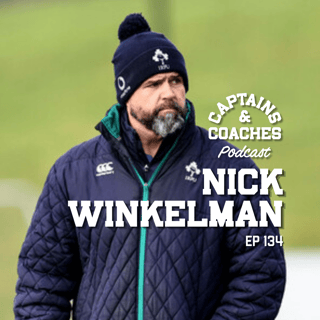
Speaker: And I got this from coach Nick Winkleman. I got his book right here, the language of coaching. And I use this to develop coaching technology. You can see all the freaking notes in here.
Speaker: I got a bookmark somewhere. Yeah. Awesome. Well, uh, I will get a conversation with Nick going, but this is the resource, the language of coaching Nick Winkleman. And he speaks to three d coaching. And when I got the opportunity to take over the education for a company called KidStrong and then revamp their certification and coach training development for kids, I leaned into this 3D coaching model and adjusted it for youth.
Speaker: So Nick, he presents three dimensions for directing and cueing. First is description, then direction, then distance or duration.
Speaker: Those are the three tools, and I want to walk through each one, give you the theory, give you the sport application, and give you the examples you can use on a field or in the weight room starting this week.
Speaker: So let's start with dimension one, description. Leaning into Winkleman's 3D model, this is how I took this framework to develop the tools to train coaches working with kids as young as two years old walking in athletic movement.
Speaker: Keep it simple. Positions, then patterns. Setup, then execution. I love this because what it does, it prioritizes foundation over motion.
Speaker: You build the position first. Where are your feet? Where are your hands? Where is your body? Where is your weight? And then you describe the movement that comes out of that position.
Speaker: A cue has two components here. A setup, which captures the hands and the body. Then we have an execution, which is the action and the verb.
Speaker: So describing a push-up to a kid, I'd say hands down, feet back. Then the execution, push or drop down, push up. Here's a bad instruction.
Speaker: Get lower. Push-up's not lower enough. That tells the athlete nothing. Lower than what? Lower how? Where where do i go So here's the 3D version.
Speaker: okay Feet wide, chest tall, then drive forward. Now the athlete has a position, feet wide, chest up, and a pattern, drive forward. Here's another one, bad coaching.
Speaker: This is for football, tackle better. Cool. 3D description. Eyes up, hips low, then wrap and drive. You see the structure.
Speaker: You're programming a mo a motor pattern, movement. You're not just motivating, you're installing a software here. And here's the critical insight from the research on this. The most effective cues are rarely technical.
Speaker: The language that actually changes how a kid moves is vivid, specific, and often and now analogical, analogies. You get it.
Speaker: If it makes them feel the movement, Before they do it, we're going to be in a position to succeed. Think about the difference between saying run in place versus knees up and stomp your feet.
Speaker: Same movement, completely different mental image. And the second one actually produces better motor output because the image is concrete and the intention is loaded.
Speaker: This is where imagination starts to come in, and I encourage you to tap into imagination and painting a picture for young athletes versus getting so specific with your cues that they may not have the coordination or mind-muscle connection for yet. The 3D framework is not just mechanics. It's a language of imagery.
Speaker: For younger athletes, for kids, and we're talking ages 5 through 12 for this this camp I was running, and this this perspective. I mean, true kids, youth sports here, this is the sweet spot. You can anchor your descriptions to things they already love.
Speaker: Animals, superheroes, video games. Crouch down like a trot a tiger. Then pounce at the ball or pounce onto the box for doing box jumps.
Speaker: Whatever it may be. All right, we called these C grips. When I was out at Kid Strong, you want your thumbs wrapped around the bars for for doing monkey bars. Monkey bars are a great visual representation too. But I want you to hang on to the bar like you had Lego hands.
Speaker: Legos. Okay, kids knew that. That means thumb around the bar. Beautiful. Okay, I want you to move through this like a ninja. Quick feet, quick eyes. so we're getting a representation of ninja, how we want them to move, intentional, with purpose, stealth.
Speaker: Same motor cue, same technical intent packaged packaged in a container the kid's brain is already wired to receive. As coaches of older athletes, you don't get to check out of this conversation either.
Speaker: We can't default to being clear. We can't say something that only makes sense to us without taking into consideration where that kid is at. So we shift into analogies, and love analogies. If they're playing a sport, the this your cues and directions should be full of analogies, especially if we're in the weight room.
Speaker: One of the most valuable tools that I have is a strength and conditioning coach. I started sport and strength coach at the same time. So I had the field to bring into the weight room, and then I had the weight room to bring into the field. We were squatting in our defensive ready position.
Speaker: okay Every kid knew what that was, they had that, And now we're going get strong and powerful in that position. So that was a great learning moment I defaulted into. But now seeing the same tools play out through Winkleman's book, The Language of Coaching, and then being battle tested by literally tens of thousands of kids and coaches going through the the training program, that's justification that, hey, this is a powerful, effective, effective and efficient tool.
Speaker: you imagine yourself coaching 15 four-year-olds or 15 seven-year-olds that's the madness of the class that this model has been tested tried and true so imagery it scales it can be specific to the different age groups that you're working with and the movements don't change feet back hands on the ground feet back okay the the principles that we're aiming to describe, hands and body position, then give them an action verb.
Speaker: valuable, and we can work into the imagination. So description is focused on positions and then patterns. How visual can you make their setup and then give them a very specific single word, verb, for their execution. Make it vivid enough that they can see it in their mind before they do it with that imagination.
Speaker: Okay, dimension two. Description. if ah This is direction. If description tells an athlete what to do, direction tells them where to go.
Speaker: In sport, direction is intent. It's the answer to the question. Where do you want them going? Mentally, physically, and tactically. This is where so much coaching breaks down and we're not clear. We have the visual in our head, but we don't give them exactly which direction to go to. I'll use the cone reference again.
Speaker: Go towards that cone over there. Not a clear direction. Go to the yellow cone at the 30 yard line, whatever it may be. That's more specific here. So we need to be even more clear with younger athletes whose attention is getting stolen all around us because we give them, ah we often aim to to give them motivation. And when they get distracted, we blame them for their motivation and their lack of intention versus our instructions.
Speaker: So then our instructions become even more vague when they're distracted. Something like, compete harder, be aggressive. Or if they're on offense, they're watching somebody and we yell, move.
Speaker: Move where? Those are not directions. Those are emotions. And emotions without direction produce effort without clarity, which produces anxiety for me as a coach.
Speaker: And then that kills the performance. They're going to make a mistake. yeah And then our whole thing is gone. So that's that's another sport example. But getting into the kids, they're allowed to make mistakes. So here's some examples bringing it into sport with a 3D direction.
Speaker: Sprint back towards the ball. close but Close space. Get on your man. Get in front of your man. Cut off the angle. Drive up through the bar. Push the floor away for our weight room.
Speaker: You are using what a frame what the framework calls the language of preposition. Away or towards, those are the directions. Through, over, around, past.
Speaker: Dodge, dip, dive, duck, dodge. Those are the five Ds of dodgeball or examples of directions in Winkleman's 3D model. Those are words that move bodies.
Speaker: So more sporting examples. On defense, instead of yelling, hustle. Close towards the ball characterrick pick and close the towards the ball carrier. On offense, move, classic.
Speaker: Give them specific. Cut through the middle. Or good time in the weight room. Instead of be aggressive, drive through the bar. That's going to be valuable tools.
Speaker: So direction gives athletes an orientation in space and a focal point for their body to move. The orientation creates confidence because the athlete knows not just what to do, but where they're going.
Speaker: And one more thing on this, because it connects directly to leadership. When you are developing captains, athletes who have to coach their teammates on the fly, the ability to give direction is one of the highest leverage skills they can have.
Speaker: Because in a game, you don't have time for technical descriptions. You need to redirect focus instantly. Ball side, close out, pick left, through the gap.
Speaker: One or two words. a preposition, a spatial cue, something to spark awareness or head on a swivel. That's direction. And the captain who can give it clearly, calmly, and immediately, that's the captain who raises the performance of everyone around them.
Speaker: All right. 3D. Distance and duration. This one's Completely underrated, especially when leading small groups of kids. And it might be the simplest of the three, but the absence of it is what creates what I call effort anxiety.
Speaker: Athletes panic when expectations are vague. They freeze when they don't know how many reps to do, where they got the direction, but what's the distance?
Speaker: So unclarity, this leads to anxiety Clarity is kind. Remember that. I've seen it. You've seen it. And the kid at the start of the drill who looks around waiting for somebody to tell them when it's over, they're going half speed.
Speaker: The player running a sprint who doesn't know how many reps are left. So she tanks rep three to survive rep five. That's not what we want to do. How many reps are we doing? Where are we going? How many are we doing? We need to be clear. What is the purpose of this?
Speaker: The young athlete, the youth athlete, they shut down early because they have no idea what the finish line looks like or how long they're going to go for this.
Speaker: So distance and duration is the answer to solve that performance anxiety for this. How far? How long? How many? Bad coaching?
Speaker: Run harder. Doesn't matter. You should be going 100% all the time. No. 3D coaching, sprint to the cone and back, or hold it for five seconds, or we're doing this for three reps.
Speaker: Ready, ready. An awesome tool at KidStrong that we used, and this was highly effective. We're going to go until I say freeze. That's the duration.
Speaker: So they know, okay, we're going to keep rolling. We're going keep playing. And I also love this because we're training parents to now in in ah help instill that the keyword freeze means literally freeze.
Speaker: And they can take this into parking lots. They can take this into a home or say they're battling with brother and sister. Freeze. It is a cue now that they know literally shut down instantly.
Speaker: So we're working on impulse control and we're also handing off a tool for parents to get them to de zip it, freeze, or or they themselves become spatially aware in a parking lot.
Speaker: Okay, because a six-year-old, that is the the clearest possible standard is the freeze. And you can give it an emphatic freeze, like ah an umpire at the home plate in the World Series. Say freeze!
Speaker: And it works the same way for a 16-year-old once they know and establish, hey, go means go, freeze means stop. And you clarify that. So this duration is important and why it matters beyond mechanics. When you give athletes very clear distances, durations, how long, how many, you are moving from an emotion-based effort to a behavioral-based execution.
Speaker: You are giving them a standard, and standards are what create accountability without punishment because now there's something objective to measure against.
Speaker: In leadership terms, this is the difference between give your best and give me two more reps. Both can be motivating, but only one can be evaluated. If we can manage it, we can measure it. No, if we can measure it, we can manage it.
Speaker: less emotional. And evaluation, it's honest, it's fast, it's objective feedback, and that's how athletes get better. So we can set these athletes up in their teenage years based off being very clear with this 3D model, especially duration and the distance of specific drills that were aligned with them.
Speaker: So now I'm going help you put all three of these together. And the the tool I used with the Kids Strong Coaches, I had them diagram their coaching cues for all different movements like they were diagramming sentences. I'm not going to make you do that because that was legitimate homework and coaches hated that.
Speaker: But was it effective? You better believe it. I had to relearn how to diagram sentences. That's the fun part. So putting all three together, and here's what it sounds like without 3D.
Speaker: So ne imagine a defensive slide drill. Could be lacrosse, could be basketball, could be anything. Play defense better. That's a complete instruction to exactly no one.
Speaker: And here's what it sounds like in all three dimensions. Okay, feet wide, chest tall. That's description, position that we want them to set up in their defensive position. Going back to what how I would use the weight room into the field and the field and the weight room. We're gonna set up in our squats in our defensive position.
Speaker: Feet wide, chest tall, ready, ready. So description, position, then pattern. Now, slide towards the ball. That's direction, a preposition. We're moving. Okay, our teammate got beat. Now I slide towards the ball. Where's the ball? Okay, I'm heading that direction.
Speaker: It has spatial intent necessary in sport. And last... go to the sideline and back this would be a a distance for if we're doing half gassers we're going to go to the opposite sideline and back this one half gasser then you're going rest for however long it takes you times three it's called 15 seconds 45 seconds here we go clear standard all right now the athlete knows how to set up where to go and how far to push on a specific drill If I was using a distance for that slide I was talking about, I want you to go through them.
Speaker: You are sliding through them. Lead with your stick. All right. So that's what confidence looks like before the movement happens. I'm setting all of this up before they are moving.
Speaker: giving them a clear representation and visualization in their head so they can picture themselves doing it before they go and do it. you've With this aim, you've given them everything they need to succeed before they take one step.
Speaker: right And I want to close with the the something that was so powerful and valuable working with youth and so many youth. And it's it's framing your movement as a call to adventure. And I want to translate this into the language of sport.
Speaker: Because within the the coaching kids, we can make them the hero. We can make the environment, the the obstacle course, you know, a a so a pirate ship.
Speaker: the jungle, just fun stuff to get them moving with intent and tapping into their imagination. So they become the hero in this moment.
Speaker: Well, this is beautiful for sports because we want them to visualize themselves as the hero. We want them to visualize the ball in their hand and they're setting up the serve in this game three set match, everything.
Speaker: So helping them understand this as a kid and then taking the same brain technology and translating into sport is going to be very powerful.
Speaker: And it's not a shame-based motivation. It's putting them in a position to to be their own hero through sport. Because this is a a extremely valuable a piece that...
Speaker: that applies well to 3D coaching from a technical tool and takes it now into a transformational one. For young kids in a gym, that the call to adventure is making an obstacle course a hero's journey.
Speaker: Pirate ships, jungles, the floor is lava, you're gonna stay on the objects, off the floor. um You know, the the rope climb, we're swinging across the mountains, or it's a rope bridge that we're walking along this tight rope.
Speaker: and We can't fall into the the pit of alligators. The balance beam is a rickety bridge over a canyon. You exaggerate risk, you ham it up as a coach, making it fun, and suddenly that six-year-old who was hesitant now steps into bravery.
Speaker: Because the story, bravery is the only option. and they are the hero. They start to ignore the world around them and if anyone else is watching them. And that is awesome.
Speaker: Same brain, same dopamine, same motivational system, but now we can take that and add in sport as the story for the athletes we're working with.
Speaker: So understand the the the power of this is for kids and now take it to your athletes. Instead of lava, it's this is the final 30 seconds of the fourth quarter.
Speaker: Instead of the the mountain, the rickety bridge, this rep decides whether you're a starter or not. This is your opportunity. Show me that we can get you going come game time.
Speaker: Instead of a hero's quest, this is where this is where champions separate from everyone else. Never underestimate the heart of a champion. Rudy T. Your athletes are not too old for stories.
Speaker: We want to often default to to to pressure and shame in these moments, but I want you to help understand the power of story for athletes.
Speaker: Help them see themselves as the hero and take push out the crowd and focus on the moment and what they're capable of doing. Your athletes, they're never too old for story, especially we're working with teenagers. They're still in love with the these different movies. um And Spider-Man that's coming out in the summer. So, yeah, lean into youthfulness that they still have.
Speaker: the The need for meaning, challenge, and identity. Just like that hero's journey, the stories that they love, they can be that hero. The need to be the hero of something is still there. Let's help them find it.
Speaker: And that it it doesn't age for human beings. Even in the college level, I've applied this and it's worked. It's not, it it just gets expressed differently.
Speaker: So, take the same imagination and apply sports for their moment. And when you can tie this into a drill months and months away from the season, then we start to take into delayed gratification and making practice and reps more meaningful right now and making sacrifices now, making effort now for one or two more reps for what they have upcoming this season.
Speaker: So call them to adventure, raise the stakes, name the moment, be the narrator of their best performance. And this is going to help them practice visualization and be ready for their moment.
Speaker: There's one more thing I want to leave you with, and it comes straight from this framework and story and hero and reps. It's helping them understand that there is no failure, only feedback. Lean into the hero's journey.
Speaker: and the the trials and the tribulations of famous stories or characters that they feel connected to. I always aim to ask, who's your favorite superhero? Then I have a point of reference to bring into this where I can talk about when Spider-Man failed and what that meant. And he kept he kept coming back or he turned that tragedy into a powerful moment for him to rise. to the occasion.
Speaker: So ask questions like that. What stories are they into? So when they do fail, we have now a representation, an imaginary story that they've connected with that we can help show them that there is no failure. There is only feedback and it's all part of their story, their journey to the top.
Speaker: And this isn't just a feel-good approach. This is how elite performance psychology a plot is applied to youth and teen athlete development.
Speaker: When you use 3D coaching, you create something called a fast learning loop. Cue, attempt, feedback, adjust, repeat over and over. Every single rep is data. Mistakes are information, not identity.
Speaker: That's how confidence is built. not through protection from failure, but through a system of language precise enough that the athletes always know what to try, how to try it, and how to evaluate what happened after their rep and their movement.
Speaker: So the next time you're standing on a field, in a gym, or in practice, and you're about to say, come on, hustle, or move, ask yourself three questions. What does good look like?
Speaker: That's your description. what do you want where do you want them going that's your direction how long how far how many that's your distance three questions three dimensions one athlete who just got whole lot quicker That does it for our show. Thank you for tuning in Check out Winkleman's book, The Language of Coaching there. This is dense. this is 3D literally just one little section in there that i really was passionate about and found a connection to two youth. Definitely want to podcast with Nick.
Speaker: It's going great time. Thank you for tuning in. If you like what you heard here today, be sure to like, subscribe, rate, and review. I encourage you to sign up for the newsletter for more in-depth notes, stories from the field, application strategies, all that good stuff that I got going out there.
Speaker: Simply head to newsletter.captainscoaches.com. There's a lot on the the website. I've got education in there. I've got training in there, all that good stuff. So thank you for tuning in.
Speaker: We'll let you go. And thank you for helping us raise the game. See you next time.