Transcript
Speaker: efficacy Self-efficacy is the belief that I can do something. regardless if I do or not. So it's not outcome based, it's process based. And you hear some of the best coaches talk about trust the process, it's all about the process. But if the kids believe that they can, if they decide to, they have a shot of success. And then hope, hope is them understanding their agency in this and then seeing the pathway to accomplish whatever it is. So if we can instill self-efficacy and hope, now of a sudden,
Speaker: they can be optimistic about their future. Not Pollyannish like, oh, I'm gonna manifest success like in The Secret. That's not what we're talking about. Realistic optimism is based on the conditions right now and my skill sets and my resources, this is what's actually achievable. And I can.
Speaker: Not that it will happen, it absolutely can happen. That's what makes it realistic. Welcome to the Captains and Coaches podcast where we explore the art and science of leadership through lens of athletics and beyond.
Speaker: I'm your host, Texel Kulkin, and today I got a very special episode for you. Last week I spoke at the Soldiers to Sidelines Summit and I represented both the sports of lacrosse and coaching strength and conditioning.
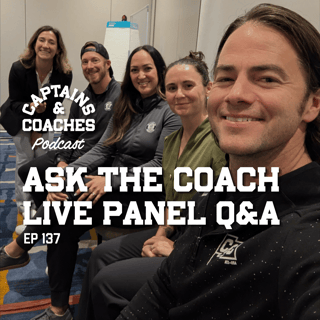
Speaker: This episode is filmed before the lacrosse segment started for the summit. All the coaches gathered early, were hanging out in the room, just talking shop, and then the CEO founder of Soldiers to Sidelines, Harrison Bernstein,
Speaker: joins in on the conversation coach wellner gets the idea this needs to be a podcast out comes the camera on goes the microphones and here we are so handing you this conversation it's not a lecture it's not a presentation it's a conversation we got john bastie the head coach of sacred heart university brian wellner defensive coordinator for notre dame university Chase Ireland, the coordinator, operations director, coordinator, something awesome and powerful. He's a great goalie. He's joined with us.
Speaker: Ben Harrison Bernstein, and I couldn't script it better myself. One of the lacrosse soldier coaches who was at the summit attending to learn. He showed up early, saw the podcast going on, and then joined in to the conversation.
Speaker: This is an awesome episode. We get into the coaching crisis at the youth and high school levels. We're talking lacrosse challenges that coaches are facing and the value of investing in education, self-development, especially as a coach. It's not all about the X's and O's, and that's what we explore in this conversation. so Very excited.
Speaker: Pull up a chair, grab a seat, and join us for this one. It's one to remember. Without further ado, let's hand it off to boys. Ready, ready, and ready. Well, welcome to the Soldiers to Sidelines Lacrosse Roundtable. And Harrison Bernstein, thank you for starting this whole organization, bringing us into the fold. And we're always happy to give back. So, ah shout out to Harrison.
Speaker: And we were in our lacrosse room prepping. Harrison came in here and started to share some experiences, challenges of current coaching in the current day.
Speaker: And we're like, why don't we just do little podcast? So here we are. Roundtable, ah well, first let's do the roundtable so the people that are only listening can put a name to each voice.
Speaker: John Bossie, headman's lacrosse coach at Sacred Heart University in Fairfield, Connecticut.
Speaker: Ryan Welner, assistant coach at Notre Dame. Chase Erland, assistant coach at Johns Hopkins University. And Harrison Bernstein, founder and CEO of Soldiers to Sidelines, career sports performance coach and football coach.
Speaker: Sweet. And what we want to talk about for while? Well, it's just interesting where, you know, i I believe that coaching is one of the most noble professions that we can participate in, you know, outside of serving in the military. And I think military service and that experience can be a great foundation for coaching. So like our...
Speaker: service members can continue to serve our country as a coach. ah So what does that look like? Many of our soldier coaches through Soldiers to Sidelines coach at the youth level, the high school level, and then some of them are working to get to the collegiate level. So there's coaching on a volunteer basis because you want to invest in your community. And then there's coaching where I want this to be my primary source of income in my career. And what we were all just discussing is what does the complexion of a career in coaching sports look like today versus 10 years ago and 20 years ago? Because as we all see in the news right now,
Speaker: Collegiate sports is going through a lot of changes with the advent of NIL agents are getting younger and younger Conferences are restructuring reforming. There's just there's just a lot of change happening right now So what does that mean to somebody who's thinking?
Speaker: Hey, I want to get Into a career of coaching. Where do I start? What does it look like? What can I expect? So I think with that ah Maybe I'll turn it over to one of you guys if you want to pick up a mic. Like, like what should we expect um if we want to make coaching a career?
Speaker: I mean, I'll start first of kind of mention one of the points you hit of the the youth sports coaching. And I think personally, like that is ah a reason that I was able to go to the places I was with my playing career personally of, you know, i had tremendous youth coaches and youth educators who taught you to play the game for the right reason, taught you life skills on top of that. um That is, in my opinion, the the most pressing need for quality coaches and especially lacrosse, sport lacrosse. I'm sure it's for other ones. um because nowadays with all those you know factors of there's a lot of different things pulling you in collegiate sports the money you know playing time everybody wants it to be right now my youth sports coaches you know really taught me the values of being a great teammate of working hard and then your rewards gonna come of like loving what you do and not in you know the money or or whatever will fall after that's where I think you know getting into that youth circuit right now is is crucial for our game specifically but I would say youth sports in general. So, yeah.
Speaker: I think that's a very interesting take, your take on youth sports in general. I think all of us, enjoy when we have the opportunity to work with like the middle school and youth kids. We don't often get to give that to them at all. We're dealing with 18 to 22 year olds or we're sitting on a side and recruiting 14 to 17 year olds.
Speaker: So the opportunity to actually engage with a young man or in these cases are boys that like want to play the sport, have a genuine joy. They can't think of anything else. It's not about a payday or college scholarship or an end result. There's no transaction in that.
Speaker: um and And I remember, I think we all do, the coaches, and we've talked about this, the coaches that you have, I can remember every coach I had in my life, every one of them, in any sport. Doesn't mean they're all great, but each of them had an impact on me, some way, shape or form. And that that I think is what's lost in today's society in general, probably a whole different topic, but like the coaches are impactful and and that's why we, I don't wanna speak for these guys and yourself, but that's why we all got into coaching is to like impact somebody's life. There's no better,
Speaker: There's no better reward than getting invited to somebody's wedding that you coached. Like that's when I, and the ones I don't, I'm disappointed in because I feel like, man, I didn't i didn't hit that. You know, like I missed the mark with that kid and that's a majority. You know, I'm talking about getting invited to the minorities.
Speaker: So like, I don't know, that's how I weigh coaching. Like, did we get invited to Johnny's wedding? Shit, excuse my language. No, we did not. All right, that's a bummer. I obviously didn't connect with that kid, so.
Speaker: Yeah, how I look at this is a lot of the way into coaching is based off how you were as a player. So then we look at soldiers to sidelines and you're aiming to educate as a coaching as a second or third career and empower them and then find placement opportunities for them.
Speaker: So me breaking into the coaching field as a division three athlete, I was telling coaches earlier, I couldn't get a lacrosse coaching job because they just looked at where I played and that was enough of screening that they're not interested.
Speaker: So then I found it into the strength and conditioning world. Well, I got hired from my alma mater and then took over the strength and conditioning roles. And that's where i learned how to coach, is through Division III athletes, because they weren't strong enough for me to hurt them.
Speaker: That was a good thing. And then got the opportunity to jump up to Georgetown University. so But it started with D3, and we got a few D3 guys in here. So that's it doesn't matter where you start. You get still got to learn how to coach. It's as much of a skill as anything. so If you didn't play anywhere, go get as educated as you can, network in-person events, and that's where all the jobs come from.
Speaker: Yeah, and I'm gonna turn this over to John. This is where you can pick up where, to your point, Tex, I think that's the problem with coaching and the way that the pathway into this profession was set up, it was through playing. But playing sports has nothing to do with coaching. And just because you played it at a high level,
Speaker: does definitely does not guarantee that you have the skills, this the high human skills and the and the knowledge to influence others to do what we want them to do because they want to do it. I mean, this is to be the ultimate coach. You have to have a great understanding of sports psychology, of emotional intelligence, of how to communicate um both verbally, verbally, both non-verbally and through written and illustrative abilities. You have to draw a play, right? This can't just be based on my resume. And one of my biggest things in coaching is i always raise a red flag when a coach backs up his reasoning to do something based on his resume.
Speaker: oh, but I was this role in this other place. Well, that's not explaining why we are doing this. And that's where you can start to see the gap in the skills of what it takes to be a great coach. So Tex, I know you, I consider you a great coach. And it's because you've developed those skillsets outside of playing. It has nothing to do with that. And so now let's just pass this ball over to you, coach. John, what what's your reaction to that?
Speaker: There is something to do with how you've been taught when you are a player to whether or not you want to become a coach. The one thing I was writing down on my phone when you were, I was writing down a couple of things on my phone with what people were saying and, um you know, the drawing the play thing.
Speaker: Anybody can sit down and draw a play. It's how can you get your guys to understand why you're doing the play, why you're joining the play, and then can you communicate with them so they understand what their jobs are in a specific second when they're out there?
Speaker: And then have you done a good enough job in preparing them for a situation where if they shut a guy off or they press out here and you're not and you didn't talk about that in the meeting in the huddle, now how can they adjust?
Speaker: in that split second in order to either make that play that you drew up work or something else out of that that they've learned. And I think it all, it's based on everything that was just said between the youth coaching, you know, the youth coaching thing is crazy. One of my really good friends at Sacred Heart, our strength conditioning coach, him and I talk about youth coaching all the time. Youth coaching is a mess.
Speaker: Because these guys all think they're in the final four and they want to win a championship on a Saturday afternoon in Brantford, Connecticut, when it's like Johnny can barely tie his shoes. Like this kid forgot one cleat at home. He's running around in a cleat and ah and a and a croc.
Speaker: And it's like, can we just get him to not fall down? Like that's what your job is. And he's not going remember. And he's not going to remember. Yeah, he's not going to remember. this fight He wants to hang out and have fun and play football. And like, but these guys, and then you look at the way some of them present themselves, some of the youth coaches on the sidelines in flip-flops or no shoes. It's like, how am I going respect you if you're on no shoes in the sideline running up and down, yelling and screaming at me when you don't know what you're talking about? And so I think I didn't mean to go down that negative road, but like that's part of it is like youth coaching is the ultimate is the ultimate um place to be if you really want to learn how to be a coach, because it's all about relationships.
Speaker: And that's what I've kind of learned in the last five or six years about doing this job is we could sit there and we we were just spent 15 minutes talking about man down. It's I could put in the perfect man down. Ryan could put in the perfect man down. He could teach his goalies the perfect thing to do. But if our kids don't believe in us, they're not going to do it.
Speaker: And so, and how do you get them to that spot? You get them to that spot by making them understand that you really care about them as people. and And like, that comes from discipline. That comes from instilling discipline, from holding people accountable. Because if they believe, if a kid or a player believes that you're doing it because you ultimately care about them as a human,
Speaker: They're going to do it. They're going to listen to you. They're going to make sure that they're not doing something stupid on the weekend. They're going to make sure that or if it happens, they're like, Coach, I messed up. right, great, you messed up. Here's the consequences. But you're a better man now because you owned up to it. And you trusted me that I was going to approach the situation the right way because of the relationships and all the work we put in on the front end. So on the back end, I can now hold you accountable because you already know i care about you.
Speaker: So now like we can do the hard film the hard stuff. and I believe that's what 90% of coaching is about, forming relationships. So Johnny does just invite you to his wedding.
Speaker: Or if he doesn't, It is what it is, right? and And I feel the same way. I have the same reactions, dude. and and And I see like kids, guys, pictures on Instagram at their wedding. I'm like, oh, thought we were like tight when you were here. But that's cool, I get it. you know But um it's all about relationships from youth to youth level all the way through to college. And now you see like the Giants, from new york the New York Giants.
Speaker: They're getting roasted because Harbaugh's standing up there and is like, this is the New York Giants. Like, and standing in front of his rookies and all the guys on the team like, this is the New York Giants. This is the New York Giants. And these idiots on sports radio are like, they're ripping him for doing that because it looked it was cringeworthy. I'm like, you have no idea.
Speaker: He's trying to build a culture. He's trying to reform relationships with his players so they know this is the New York Giants. There's history here. There's a way we present ourselves.
Speaker: And it's like, it doesn't matter if you're John ha butugh Harbaugh or Joe the Plumber who likes coaches basketball on Saturdays because he loves basketball and he loves coaching. Like, it's all about relationships.
Speaker: Everything. Yeah, I mean, I want to jump in in terms of, no, like the relationships part is is you as a coach, the my understanding and and how I view it sometimes is you have to know that your coach wants to have that relationship. So you you're going succeed in life as a young man coming into this. And I'm in interesting spot. I'm 26 years old. I've been able to coach now three years, of three classes of my own teammates. So I stayed on at the same school that I played for. and
Speaker: That's been the biggest thing I've seen is after those kids have graduated, even in a year or two out is like, coach, those tough conversations that we had or that we had as teammates, like when I go into my meeting with my boss or when I go into, you know,
Speaker: whatever avenue i'm I'm in in the workforce, let's just say, like, I feel pretty equipped to have that conversation. I present like, hey, this is why, you know, I i believe I'm worthy of this X, Y, Z, or I did my job this way.
Speaker: And I'm able to handle, you know, criticism and and kind of add some more conversational points, right? That's one aspect of it. The second one is, if, you know, again, at our programs, like,
Speaker: making sure they understand the why, i think we've mentioned that before, of you know the little details, showing up early, putting hard work in. Because another point that I get from you know my own teammates or guys I've coached now is like, coach, you'd be surprised at at how many people are just like here to punch a time card and and then leave, or who who don't show up on time, who don't have their stuff buttoned up.
Speaker: that's pretty cool for me to hear that's like okay i helped instill some values that that is preparing them for success in life that's another huge part of it as well especially in the sport of lacrosse i wish you know we're making millions in the uh the pll maybe maybe in a couple years but um you're gonna have to work at you know a different job right and and so that success for your career path or whatever you choose uh that's a pretty cool feeling knowing it's like you're giving your kids you know step up in life and that's a that's a pretty cool feeling so I wanted to just go back on something about what this whole um organization does.
Speaker: I've been very fortunate in my career to talk to a lot of soldiers that um want that are either want to coach or the biggest thing they say. And I think as players, the biggest thing we miss from playing from playing is the connection of the team and being in the locker room and like hanging out with your boys. Right. And and think about soldiers.
Speaker: um their number one thing every single soldier says that they miss when they get out is that connection to their team, that connection to their unit, that connection to the guy next to them that they were doing whatever with.
Speaker: um This is way to the perfect way to continue that feeling is by coaching. It's the perfect way to to to to continue that togetherness, that sense of of of failure with the guy next to you so you can get better, you know, and and the the struggle that you have to that you have and that we have on a daily basis, whether it's teaching a little kid at a catch and throw or teaching five-man rotation and on a man down or teaching goalies how to stop a 900-mile-an-hour friggin' shot from 15 yards from All-Americans. Like, that's all part of it, but the part the best part of it is you're part of something bigger than yourself.
Speaker: You're part of something way bigger than yourself. And you know what's way bigger? The end of mine, I think, for all this coaching and what Coach Wellner was talking about, wanting to get invited to their wedding. Like, what what are we doing? And I think ultimately when you boil it down as coaches, we're investing in the long-term psychological well-being of all of our players. So, like, that's ultimate. So now let's backward induce. Like, how do we get to that? So...
Speaker: Where Soldiers of Sidelines stands right now, um we talk about providing a renewed sense of purpose and well-being for the service member so that he can continue to serve his country as a coach by positively influencing the kids they coach, so positive influence. So I've been spending this past couple years trying to determine what do I mean by positive influence? When we say that, what is that? So I've come up with a definition after... ah a lot of research and just now completing this master's degree in positive psychology at Penn, you know, we're going to start to measure this.
Speaker: And so if the end in mind is long-term psychological well-being, I feel like that is a component of two critical things. One is realistic optimism, right?
Speaker: ah And resilience. And there's different components that that create realistic optimism and and resilience. So Two of those things are self-efficacy and hope.
Speaker: And those are two traits that we can develop trait might not be the right word but these are two uh skills right self-efficacy is a skill a mindset hope is a mindset uh that we can develop um that will lead those kids hopefully right to having better realistic optimism resilience so what is self-efficacy self-efficacy is the belief that i can do something regardless if I do or not. So it's not outcome based, it's process based. And you hear some of the best coaches talk about trust the process, it's all about the process. But if the kids believe that they can, if they decide to, they have a shot of success. And then hope, hope is them understanding their agency in this and then seeing the pathway to accomplish whatever it is.
Speaker: So if we can instill self-efficacy and hope, Now all a sudden they can be optimistic about their future. Not Pollyannish like, oh, I'm going to manifest success like in the secret. That's not what we're talking about. Realistic optimism is based on the conditions right now and my skill sets and my resources. This is what's actually achievable. And I can.
Speaker: Not that it will happen. It absolutely can happen. That's what makes it realistic. From there, self-efficacy is one of the known protective factors of resilience. Like this, it's so important. So then how do we get to do this? Let's go back a little bit further.
Speaker: Back to what coach was just talking about. John was saying it's about relationships. We all agree it's relationships. So for us in Soldiers Sidelines, can we teach how to create better coach-athlete relationships so that we can create better, empowering, motivational climates? There's a whole line of sports psychology that can teach how to do this.
Speaker: to instill self-efficacy and hope that will lead to realistic optimism and resilience and long-term psychological well-being. Interestingly, research also shows that as we engage in doing this for others as coaches, there's a reciprocal symbiotic benefit to our own psychological well-being, which I think really all of us in this room are chasing because coaching makes me feel good, money's just extra.
Speaker: yeah You're getting paid for this? Time out. Tex here to take a second to talk about training. want extend a seven-day free trial for my training program, Old Bull. It's the program I'm writing for myself. I'm staying active. I'm lifting heavy. I'm having fun with it. And it's flexible to move each day around. Heavy push, heavy pull, cardio, athletic strength. Moving those days around to fit my busy schedule between doctorate program, podcast, work, running a business,
Speaker: Everything I got a busy life. So do you follow along with the training program with me seven day free trial Click the link in the show notes if you're watching on YouTube. It's right here Don't want to hold you back anymore join us on the program.
Speaker: Oh, and now back to the show ready ready and break Yeah, yeah, I mean my my first thing on on I guess the relationship building right and and how to I feel like at at some level ah coaching was very much, you know, the coach talks down to the player or, you know, there's definitely that clear power dynamic. In my personal experience, right, I i have always enjoyed the coaches that kind of that that smooth out that that leveling, right, that level of power, right? And so, yeah,
Speaker: It's easier for me, I think, a little bit. Again, I mentioned I i played with some of the guys I coach, but um any sort of opportunities that you have as a coach to kind of even that you know dynamic. Now, you know it's easier when you're in the college level, and but any ways you could get involved in activities with your team, right? You hear team-building activities. You hear leadership activities.
Speaker: Activities that could be sport specific or not, but like as much as you know, if if coach hops in, you know, a game of whatever with with his team, if he he brings his stick to practices and and plays in, you know, some sort of, you know, lacrosse event, right? That's a fun way that now you're getting to know the coach at a different level, not just, oh, he's the coach. No, he's a fellow competitor.
Speaker: He's a fellow teammate. So. I'm just laughing. laughing because we we went paint falling one year yeah yeah and it was awesome and i love it but i was in there with them and one of my guys who one of our captains who i was like i mean
Speaker: come on yeah yeah come on in man yeah come on we're turning this around yeah ye but um But he, one of our guys who I'm always, from the minute he was a freshman, i was all over him.
Speaker: And we have a great we had and we still have a great relationship. And he he got me. Like, he got me and I was out and I stood up, put my hands up, and then he just emptied his entire cliff right into my back. And I'm like,
Speaker: his name is Ben. I'm like, Ben, I'm out! And I looked at him and he lifted his mask up and he started laughing. Like he had this devilish look in his eyes and I was like, oh! I get home, my wife's like, what happened? I'm like, Ben Palanchi.
Speaker: And she was like, yep, but I deserved it. like and But it was great. It was so much fun. And like, it was just those, you're right. Those stories are, it it brings everybody together. makes it so much more fun and enjoyable.
Speaker: And you gotta to be proactive. Yes, you gotta look for those opportunities and create them with the team at the high school level. If I got multi sport athletes, I can go to basketball games, I can go to football games.
Speaker: So at the college, you got to be more proactive to create those. yeah So in, I mean, there's a lot more freedom in time.
Speaker: Welcome. yeah Yeah, came for the goalie presentation. I did. it Yes, sir. Were you a goalie? I'm a coach. So when we don't have a goalie, I'm the guy that.
Speaker: Let's do it. Let's shoot up and. Wow. Quick hands and be faster than my hands. but you know Try to be, so I need to be better. So also so when it comes around and instead of just having my goalies juggle all through practice, I can give them some. real Okay. Yeah, absolutely.
Speaker: The ball comes faster I can talk about. So let's let's get in there and let me figure out what have the best way to make my goalies better. My goal is pretty good. She's second year in in cage. She had 160 saves this year. Oh, that's much.
Speaker: That's lot of opportunity. Yeah, that is. I'm here to learn. Well, Coach, introduce yourself. You're actually in the middle of a podcast right now. love you. I love you. We'll get some coaches here a lacrosse coach, as you were just describing. So, say your name, what branch of service you served in, and where you're coaching now.
Speaker: My name is Damian Butler. I coach girls across in Salem High School in Cannes, Michigan.
Speaker: Retired from the Army. i Started in the Air Force though. Switched over, retired from Army. And have been coaching off and on the last probably about 20 years between you know youth services on base and different places. First first coaching job was baseball in Korea.
Speaker: And it just went on from there. now rules I got fun baseball in Korea story. So travel teaching seminars, I went and got the opportunity to go to a baseball game. And during the seventh inning stretch and during the game, all the fans are loud all the time.
Speaker: And during the seventh inning stretch, all the fans took a seat. Both teams went out into the diamond and literally stretched together. So it was a loss in translation.
Speaker: The players went and stretched during the seventh inning stretch and all the fans took a break versus standing up in America. And the funniest part about it, the players, some of them were just smoking cigarettes and talking.
Speaker: Yeah. So that's a different level of skill. I don't know. They're having fun, but it's something. um Well, this is a good time to talk about the relationships and value that, I mean, we're presented here because we get to have these conversations, get to know the coaches, I mean, throughout the entire event. So it's important people are here. Yeah.
Speaker: So, you know, we've we've been talking for quite some time right now, and we were talking about the symbiotic relationship that athletes and coaches can have on each other in terms of collective greater psychological well-being and we all were just discussing how much we love coaching because it just it makes us feel good.
Speaker: What has coaching meant to you Damian over these 20 years that you just described like why why why do you do it? The connection with the with the players the athletes they go from kids to young adults to adults that call back and say hey we talked about this this happened or what do you think about this or what should I do or I'm trying to make a decision and I want your input like Okay, so building relationships and and you know helping each other grow.
Speaker: Because I learned from the players and hopefully the players are learning from me. How does that make you feel?
Speaker: it's It's a great feeling. like I can't put words to it because at the end of the season I want to quit. I'm just done. Actually this year, this year I told my board I'm done.
Speaker: I just want to tell you all before I tell anybody else I'm done. and they're like, oh, it kind of sucks. I let them see some feedback and I like, oh, this is odd, this is different. A few weeks, well, they'd say, okay, you can you can do what you need to do, but what you what we need from you is you have to tell the players that you're leaving, no problem.
Speaker: So I go, okay, how am I going to, I can't see everybody in person. So how do I create this text that's just going to hit home and, No one said anything to me, but I already hear the questions.
Speaker: You're going leave in our senior year. We've been with you for since freshman year, and going leave in the middle of the summer. We don't get to see. Okay, so let me just hold back and go one more time. Because there's going to be something that's going to, the negative feedback, people have things to say.
Speaker: But the fact that I know these questions are going to come from the players and the Me leaving as a coach, I mean, coaches come and go, but this team is going to be impacted because I left. And the way I leave makes a difference too. So that is a driving thing that, you know, so it's a force that can push you through the BS to get through.
Speaker: We didn't win a championship this year. There were a couple of games and I was, I had to apologize for, you know, my energy, but they know, it okay, that that's, coach will get through it. And some of it, we did that too. So we can grow together and it's a, and um um I don't have words and I talk a lot, but when it comes down to coaching, it's like, that's what, it go go get that. If you can build that, they bring their friends and I have more cheerleaders on my team than I have.
Speaker: lacrosse players, but they want to play, they want to come out, they want to be a part of it. And that thing, whatever that is, that's it. and So I sum it up, makes you feel good? Yeah. Good enough to rethink your decision to leave? Yes, 100%.
Speaker: Yeah. 100%. And that's the whole thing. I love that story because you're also highlighting the fact that it is hard. Right? It's really hard. Like you said, like you want to quit by the end of the year. And, you know, it's the relationships um that the players have with you that want to keep coming. That makes you feel good. And it's the relationships that keeps you in it.
Speaker: And what we were just describing is we were discussing, we first started this conversation. What would we tell young coaches looking to get in the space? Like, what can they expect? And now you're kind of bringing that up. What are the challenges that we need to be ready for?
Speaker: What are the challenges that are influencing coaches to quit? And why should they stick with it?
Speaker: So Damien, what were some of the – yeah, let's go over you. like ri yai like like yeah what were like let's let's say i I'm sure there was a myriad, but like top three doesn't have to be in order. like The top three things that make it challenging to the point where you want to rethink coaching.
Speaker: One of the things I talked to my cousin who was a basketball coach, we we had a long, impromptu conversation yesterday, is the players today aren't us.
Speaker: We played outside. Like we went and played pickup basketball. We know what half court is and you know we we know how, okay, three people, that we played 21 until somebody else shows and now we play two on two. They don't do that as much anymore. you know that So how we did it is not how they do it.
Speaker: So we have to you know make that transition. Parents, um and I coach at the high school middle school and high school level. So parents are a big influence and you know you have to figure out a way to manage parents and and meet those expectations and manage those relationships because that they pay for all the things they need to be paid for to make sure that the athlete is there. So you have to manage that and everybody's not gonna like you and you're not gonna like everybody You don't know what the parent says about you at home and you still have to deal with it. So, you know, keep that in mind, manage that, and don't take things personally.
Speaker: And then, know, have your why. Because all that stuff is coming. Win, lose, they expect you to be coach. You know, like but what's next? What do we do next?
Speaker: You can get frustrated and you can, okay, give me a minute and then come back, right, this what's going on, this we get through it. Remember they're watching you. So so b be fluid and then return and be humble.
Speaker: Know how to say I'm sorry. And i was wrong about that. I was wrong about that.
Speaker: i don't know if that was three, but. Yeah, because you know know what i love about that? you This is how I know you're a good coach. You started listing the challenges and then automatically went into all the reasons why you love it.
Speaker: You're talking, you went solutions. You started with challenges and then automatically went solutions. Time out. Coach needs a coach. I want you to take a second to reflect on this past season and what did not click. Were there moments where you lost your temper, lost your cool, felt your team was mentally soft, weak, not prepared to face competition? Were there moments where they put their heads down and were not ready or accepting?
Speaker: Did they quit? on you did they quit on their their teammates during a game what was that experience like how did you manage it how did you handle it i have a course out here it's called why they're not listening coaching today's athlete where i dive into a concept i've been working on that's called social emotional leadership how do we use practices how do we use strengthening conditioning sessions to develop our leaders to have self-awareness social awareness and then have a toolkit
Speaker: to then lead not only their teammates but themselves. But it starts with you, Coach. I encourage you, check out this. My first lesson in the course is free. To find that, head to listen.captainsandcoaches.com.
Speaker: Start preparing now for next season, and everything that you're investing will start to pay off. Now, back to the show. Ready, ready, and break. It's amazing. Yeah, a couple of follow-ups because I think you touched on a lot of topics and Harrison just grabbed one, but like you're here to sharpen your tool.
Speaker: You know, like it's easy to to fall into a pattern as a coach. If something's working, you continue to go back to the well. But eventually the well, the people in the well are the ones that dry up, not the well itself. So like you being here to listen to him, but your drive and your passion speak volumes. Like I i get excited listening to you. I think it it's the reason why we all continue is gentlemen like yourself who, you know, there's There's no press, there's no publicity at the level you're at. You're doing it for the genuine love of giving back. And I think I had follow-up really earlier is you know is there a void that you're missing not serve of not now that you've you know retired and moved on, you serve your country? There's there's something to go back to you know the genesis of Soldiers of Sidelines you're looking for.
Speaker: and that's that's ah That's why I still play. We have a box league in Michigan that's coming along. and as in best
Speaker: There's very few places that you get the camaraderie of of athletics and the military. It's a very unique place. but Within the military, there's a structure. I was a know like' combat service support. I was financed. I didn't go chase bin Laden. I bought the bullets that got bin Laden.
Speaker: those you know Those guys are special forces, infantry rangers. they They treat me one way, but we all treat each other in a certain way. And it's like brother and sister type of thing. you know Defense talks bad about the offense. yeah you know The middies talk bad about the defense because they have to run all the time. And I got play defense. You've been waiting. You've been standing down here the whole time. Now got to run and pick up your man. that's all The goal is I listen, listen to me, listen to me. Right, exactly.
Speaker: Great commands. So, but at the same time, once you're talking about lacrosse players, it's like, wait, oh, go play baseball, go sit inside and whatever it may be, there's that thing that you have and the camaraderie that's that special piece, that's in athletics. And lacrosse is a really unique,
Speaker: You know, environment, you know, community and I'm hopefully I can talk to you all afterwards have something I want to ask both of you because I know players on both of your teams. yes I want to go back to something you said before coach stepped in. i'm glad you're here by the way.
Speaker: A former athletic director told me and this gentleman is extremely bright, you know, that the best leaders are the most optimistic. I never really dove into it, but you brought up that point earlier. I'd be very curious to hear your take on that, if that is how you think now that you've studied, you're getting your master's in it, I would love to hear.
Speaker: Well,
Speaker: optimism is highly positively associated with long-term academic success, ah income, and career success.
Speaker: And when we think about optimism, it's really important to differentiate between realistic optimism and unrealistic optimism. So the optimists that are most successful are realistic because it's grounded in self-efficacy and hope. Because the optimism is i can win a national championship. I can get promoted. um Not that I will, right?
Speaker: It can happen. This all is absolutely possible. That's optimistic. False optimism is that it will happen. There's no guarantee of that. Actually, the odds are against you.
Speaker: But can it happen? Certainly. And can I do it? I can do it. That's the self-efficacy. And then the hope is I also have agency in whether I choose to do this or not, what I choose to do, and I can see a series of pathways to get there.
Speaker: And then when you do it, weird how that quote unquote manifests It wasn't manifested. You worked for it and did it. And you persisted long enough to make it happen. And you know what's interesting? It might be a vision of what success looks like, but not like an objective.
Speaker: So I can be successful. like It's like I thought I was gonna be maybe like a CEO of a Fortune 500 company, right? Like that's where you start off. But then you get into it, next thing you know, like you're an athletic director at and Notre Dame.
Speaker: Right? Yeah. And then so anyway, like you you can, it's it's the belief that you can and belief that things are possible and then finding pathways to do it. And I think that's really what's so important for us as coaches is to lean into that and to our kids. Because now it's like, yeah, look, yeah we have a goal. We would love to win the conference. I'm not saying it's going to happen.
Speaker: Can it happen? Certainly. Like Herb Brooks said in the movie Miracle that we were just talking about, you know, nine times out of 10, the Soviets win this game. But not tonight.
Speaker: Tonight is your night. Now go out there and take it. That's an example of self-efficacy and hope. And that's how you inspire and get shit done.
Speaker: That was great. Damn, I was just thinking like out loud that part of our job is to inspire. part of our job is to inspire You know, you have to inspire the room. It could be playing whoever Hopkins be like, we're going to lose this game. But to your point about our coach Brooks is not today. It's the motivating factor and authentic. We haven't even talked about like being authentic to yourself. If you don't believe then your room is not going to believe it. Doesn't matter what you say. You can just read from body language. You're like this guy's a BS artist. like
Speaker: He doesn't believe I can see it in his body language. he Where are we gonna be? You know, like that, going back to what you were talking about earlier, you gotta be authentic and intentional, which a lot of coaches aren't, you know, they're just doing things because they read it in a book or they think, and that could be a hot take, like this could go down a different.
Speaker: I've always felt like if you're not authentic to yourself and intentional about everything you do, then really what are you doing? You know, and i I think a lot of coaches are misled and youth coaches. Yeah.
Speaker: to your point about flip-flops like they think it's an easy it's not easy to to be organized and understand whether you're having masters in lacrosse or whatever sport it is you have to have a plan and you got to be able to execute that plan otherwise you just show up on a field and it doesn't matter what you're talking about because what you just described is the difference between outcomes and and output right and It's really important. You're talking intention and attention is the key to success in all technique and strategy in sports, right? It doesn't matter the drill you pay. It's the intention and attention that both the players and the coaches dedicateddate to dedicate to it. And same thing with our process. So if you're intentional, that's process. the
Speaker: The outcome, like the result doesn't matter. it's It's the process. It's the intention and intention. It might not work. but I believe in the intention. we We've put thought into this.
Speaker: and And that's where the positivity, that's where the optimism lies because because we've we've built it with intention. Yeah, so the results don't really matter. It's like sweet, like we won, awesome. But then you know, you you coach won two national championships back to back.
Speaker: At the end of each of those national championships, how good did it feel? And then how long did it last before you got back to the process? Honestly, and I think back to in 23, the first time we won, like, I turned the attention right away. i mean, it wasn't, you didn't, I told the Princeton guys this year to and make sure they enjoyed that moment. You know, like it goes away so quickly because you're a competitor. You got to continue to sharpen your tools. You can't, you can't sit and bask in it.
Speaker: um And I do look back with regret that I i moved, too quickly away from the moment to enjoy really that accomplishment, which I never in my wildest dreams ever thought I would get to. I never even thought I would be a coach at that stage. So, you know, I i look back, yeah, but it turns right away. I mean, it was, we walked in the locker room in 23 and young Chris Cavanaugh was like, we're going to win it again next year. You know, like their minds are already down the field and what do we need to do to be better? How do we get back to that moment? So I think that's just, it's a natural competitive feeling. It's just like any other
Speaker: job where you know you're you close a big deal, you're looking, what's the next big deal? What's gonna keep propelling us in the in the path that's gonna make us successful? and And that's like all of us here. you know And that's why it's important to savor the moments of of the outcomes. Like, let's savor those moments.
Speaker: But the real joy and fulfillment is in the process, which is the intention and the amount of attention that we're pay paying to it. And if you can maximize that, that's when we get into flow states.
Speaker: And flow feels great when you're just, everything's just working out. I know exactly what to say. You're kind of like composed. And... I think your players, because they were feeling those flow states, that's what they wanted to retain. Not necessarily the championship. The championship was cool, but being in the moment while they while they were winning it is what we're always chasing, and we get to do it again. And it's it's right now in this moment, like, are we paying attention, and are we intentional about it?
Speaker: So how would you, is question for everyone, how would you go about reframing the dog days. We're training in July for May. So that way they have this delayed gratification and it's not, they lose attention and an intention because this sucks right now.
Speaker: Cause we don't want them disappearing. We want them present no matter what we're doing. If it's training or sport. yeah i mean I go back to, so you know the pinnacle of our sport is is Memorial Day, right? That's the that's the championship. And and i think to to your point of, we've talked about relationships, we talked to you know the overall kind of buy-in to to the vision, the team identity, all that, that's great.
Speaker: It really comes down to, and and it goes back to kind of falling in love with the process, and maybe it ties into the dog days too, but it's it's the teams that I've been on that have been most successful, you know, have gone the farthest in the tournament is really the focus was, yes, everybody wants to win. it's's It's awesome to win.
Speaker: a lot of it comes down to like, I just want to have another Monday practice with like my best buddies. Like the coaches are just like, like the senior class that they recruited and got to know, you know, over almost a decade now at at some level, like I just want to be able to coach that guy again.
Speaker: And you know, a big, a player for us this year, his name is Matt Collison. He's playing pro now. I played with him when he was a sophomore and I got to coach him, you know, his last three years of college and, you know, going into the final weeks of our season, it was just like,
Speaker: all right, you know how how do i how can I coach Matt Collison again through a you know a drill in practice? And in the guys, how do we play for the seniors to to stay and hang out and and just, you know, not just lacrosse? And I think that's like a huge driving factor. I think that's that driving factor in the process.
Speaker: Like, that yes, as soon as you win, it's awesome and you're on the bus and it's great, but you're already getting ready for the next game, you know? and And unfortunately, like, there's eventually a time where you can't,
Speaker: you know, and you and you're not, ah you know, can't go practice and and see the guys again. So one quick story on that. So following this year, follow Georgetown very closely still. So coach Warren, they won a big playoff game. There was an upset on the road and then they had a camera in the huddle and his post game speech, it wasn't anything then we got one more week with the boys practice next week, let's go. And they were so excited to then practice for one more week to play on. And it reminds me, have you guys ever read the book Green Lights by Matthew McConaughey? listen
Speaker: I listened to it Amazing book. Amazing. Amazing And great listen, because he's such a good performer. I mean, clearly he's you know an Oscar you know actor, you know but the book was awesome. And one of the takeaways that relates exactly to this, he said, be less impressed and more involved.
Speaker: And that really, so so thank you, Matthew McConaughey. Time out. Text here at train heroic headquarters meeting with the team to talk about the coaching experience that I'm able to provide for my athletes. So if you're a coach and want to put your program out there on an app that athletes actually enjoy using, train heroic's for you. I've been using it since 2014. delivering literally over tens of thousands of workouts to athletes.
Speaker: And Train Heroic allows me to provide the unique coaching experience that I want to. Uploading video, providing coaching feedback, directions, and building a community. That's why I love Train Heroic. And if you want to take your athletes where they can't take themselves, that they want to go, head to trainheroic.com slash captains and check out how you can deliver programming to them.
Speaker: And now, back to the show. Ready, ready, and written.
Speaker: That was just actually a good thing of of wisdom, you know, but yeah, be less impressed and more involved in back-to-back national championships. That is impressive.
Speaker: Savor the moment, but your team was not enamored by being impressed. They were involved in the day-to-day and that's the flow. And that's what we want. We want to play. We want to be involved.
Speaker: think that you're a Knick fan. So like, The thing, so are you. So the thing about this year's Knicks team, and this goes right on, is they, this is like the, they loved each other.
Speaker: Were they most the most talented basketball team in the NBA this year? No. And I'm not even a basketball fan, but I was involved. I'm a Long Islander. Basketball's better when the Knicks are playing in the playoffs. But those guys genuinely loved each other. And there was nothing that was gonna stand in the way of them continuing to play with each other. They wanted to go the next day, the next day. Like you could see like that.
Speaker: I tell our guys now this whole summer, I've like used that as an example. You could probably say team USA was the same for hockey, winning the gold. Like they generally loved it. what Were we the more talented team? Absolutely not. Canada was, everybody was said they would have wiped their face clean, but they didn't because these guys were like, we're not going to be denied. And they wanted to be with each other.
Speaker: You know, you can see their party and after the same thing with Knicks, like that genuine love, like nobody talks about that in the team setting. You know, we all have great teams. We've had great teams. We'd love to go in the locker room, but Are there clicks? 100%. Those teams come up short. The ones that could put everything away and love each other, that's that's it. And you can see it in that. So, like, you bring out the you you bring up the Jack Hughes goal for the Golden Goal. Like, that we broke that play down.
Speaker: The amount of selfish play by the Canadians in that entire segment from the second the shot was taken, Kyle McCart took that shot, to the second the puck went in the net the other end, it was all about selfishness. Stepping up in the neutral zone, stepping up in the offensive zone when there was no chance they were getting that puck.
Speaker: like loafing around and taking a turn instead of stopping and starting going the other way. um You know, you could see and then the USA guys, it was the opposite. It was like who was supporting each other. The drop pass and like the press forward and then the this the unselfish pass that Jack used. That was a shot.
Speaker: He could have taken that shot, but he didn't. yeah Pass it to an open guy who was in a better shot. And you're talking about ah an all-star hockey player who's in the the pile the pinnacle of the sport deciding, you know that's a better shot.
Speaker: going to give it to him who has no teeth because his teeth just got knocked out. Talk about unselfish. And like, that now, as you can see, I'm getting all jacked up, but like we took that that golden goal and we we broke it down that next whenever, after we got through the 7,000 inches of snow we and we were able to actually get back together with the team at that time. But like we broke it down and the guys were all jacked up about it because they were all, our whole team was so into that team because the the how our culture in our program, same thing with your guys,
Speaker: i I don't know your team that well, but I know Ryan. Ryan and I are really good friends. We talk about culture in our team all the time. And so like our guys, there's parallels with that team and our team.
Speaker: And the same thing with the Knicks. Like I'm texting guys throughout the playoffs because we're all Knicks fans. Most of the team is Knicks fans. And they're like, it's the Sacred Heart Knicks. and And that's kind of like we were joking about that, how similar our teams are, and that's how we've been able to build what we've built. It's not because we have we have good players, but it's not because we have good players. It's because our kids legitimately care about each other, yeah and they want their best friend who may be competing in the same position as them to be good, and that and and because they care about each other because of the relationships.
Speaker: That is a huge move. That is a huge milestone to achieve where you can ah compete and support each other. yeah honest say It's very hard to get to in a team, but that is a mastery climate.
Speaker: but like By definition, where everyone supports each other and it doesn't matter that you start or you get more touches and more playing time. to me I'm rooting for you regardless, but at the same time, I'm trying my best so that I get to play more too. And it's not a zero. It comes from the coaches. 100%.
Speaker: You're good because you're backup goalie. We create. yeah You know, it's like face-off guys. You're good because that kid who got four draws all year, he kicks your ass in practice.
Speaker: That's why you're nasty because that guy kicks your ass. Yeah. And you he knows you're better than him, but he doesn't care. He just keeps pushing you, and he roots for you. And he comes out you come off the field, he's the first guy that's there, being and you're talking face-offs with him.
Speaker: Yes. like Yeah, it and all starts with us man. It all starts with us. Can I can i just that like segue this? I actually I have to run because I have to check out of my room at 12. Okay, hold on one second, one one quick second.
Speaker: Name the most impactful coach in your life and why? start with you conference It's not he he's not a coach. He's not a he's which is funny is he's the dad of the players that played in your team.
Speaker: Gene Lacey, we worked together. we We deployed together in Afghanistan and and and adversity, was you know, army. army He looks Air Force. Anyway, yeah that we we were in Afghanistan and you know that that is where bonds are made.
Speaker: And to this day, I mean, I was 15 years ago. I can call him. And I have relationships with his sons. And because the way we worked through and that was, he he was my boss, but now hands down, that's my big brother. yeah that's yeah That's fantastic. blood dropes I Donovan any second, anytime.
Speaker: And he like he can call me whenever. and So I'm not surprised you brought that name That's awesome. Alrighty. I mean. Doesn't have to have coached you. anybody i I mean, there's there's a long list. I'm going to go with two, though. I mean, my first one's my dad.
Speaker: My dad was my first coach. He coached high school football and high school lacrosse the last 15, 20 years back in Rochester. He definitely instilled, like, and a lot of, you know, the authenticity, right? And, you know, he's an energetic guy like me, you know, if he's gonna do anything, he's gonna go ahead, he's diving in, right? He's going in head first.
Speaker: It's not, you know, just tiptoeing around. You know, if you're gonna if you're gonna get wet, get soaked, right? Go go full into it. And the second guy I want to shout out is my high school hockey coach named Mike Ferrari.
Speaker: But the epitome of of positivity and again, like getting kids at the high school level to care about team team success and principles that again, maybe in today's society of, you know, everybody's kind of maybe out for themselves or trying to chase whatever personally.
Speaker: Being able to get a group to rally around team, being a part of a high school hockey program, no matter what position, how much you play, if you ever get on the ice at all, you will get better as a human being and it will set you up for life regardless of what your role is in this program. And that's a pretty special feeling and you know I still carry it with me today. i've you know I've been to the college level, the pro level, all that, but you know, it still ties me back to to him and he's still coaching back home and I know those those Victor hockey kids are better off for it no matter, you know, again, what level of ice time or impact they have on the ice. It's it's really awesome. igo um
Speaker: My high school lacrosse coach, Ralph Portillo, he I want I'm a coach because of him. I've always wanted like watching him coach in the way he connected with me.
Speaker: um That made me want to be a coach. And I knew at that point, at first i want to be a teacher, right? And I had a couple teachers in high school that there's like three or four of them that I could go to be like, those people really impacted my life. And, um,
Speaker: You know, I think seeing my father started his own company and just watching the the the work ethic that he learned from my grandparents and my grandfather and my great uncle who were New york City firemen.
Speaker: Like just seeing the way that our family kind of just worked through time to be able to get me where I am today. Like that I think is,
Speaker: So I can't just say one. I can't just say two. i it's It's hard just to say one or two. So there's been i'm I am the man I am today, which is still evolving consistently on a minute-to-minute basis. I'm not very smart. But um i I think I am who I am today because of all the little pieces I took from all those different people. that i been My high school hockey coach, same thing, gave me a shot where I maybe shouldn't have been on the team, but it put me on the team because I worked hard.
Speaker: That was it. You know, and but like there's so many different dudes, so many different coaches in college, him being one of them that I look up to and that like I can rely on and I can talk to that and make me think and make me better.
Speaker: So learning from you today, learning from coach in the last 10 minutes, like learning, listening to stuff you're saying, listening to him the last 24 hours, spending time with him. It's been like this has been sick. This has been so cool and so much fun and so enjoyable.
Speaker: Like I feel very privileged to be here. But now I gotta leave so I can check out of the hotel. Who's yours? Harrison. got a taxi to you. I got a few. Yours too, you guys.
Speaker: Well, like like all y'all, i' I'm lucky and fortunate to have had a number of influences that got me into this. But what stands out always is my high school football coach, who was also my high school baseball coach at that time, Mike Alberg, who I i still talk to this day. hang out.
Speaker: we hang out um on occasion and and what was stuck out to me the most, i remember, you know because of him, I wanted to get into coaching. i remember just even being a sophomore in high school and he'd be leading practices and he'd have his kids out there and they were little, they were like three and five and we have our high school, we you know, we have our drill set up, the cones and everything and then like little Mike Alberg and and Kevin, they come running out, these little kids, and they're running through the cones and kicking over the cones, just like ruining the drill. So like everything's getting messed up. And Coach Albert always would just laugh and like he would like, Mike, Kevin, like, what are you doing? Like, get out of here. But he was like laughing, like, playing with them and he would play with us.
Speaker: So like what you were saying, like throughout practice, like he was a part and he was always so happy and and psyched to be there and and competing and laughing. And I was like, this guy's got the life. He's got his kids out here. They're kicking the cones. He's happy. We're playing ball like all together. And to see that adults can play and be professional at the same time was so inspiring to me. And then the the kind of guy he is, and then go fast forward to my senior year. You know, we're we're undefeated. We're playing another undefeated rival team. And
Speaker: ah it's the end of the game. It's the end of the game. And we're driving to win. We're we're losing. There's like, i don't know, less like two minutes left. We're down on the four yard line. It's like fourth and goal. He calls a play. We we roll out quarter. We throw an interception.
Speaker: ah We throw an interception and the and the kid in the end zone like tries to run it out and he gets tackled at like the three yard line. um And so it was like like the game's like kind of over, you know, and Coach Albert comes out, you know, in between the transition and he's got us all together and he's crying.
Speaker: And he was just like, guys, ah I'm sorry. Like, I messed that up. That wasn't the play. That wasn't the situation. You know, I hope you guys will some someday forgive me.
Speaker: and he was And he just turned him and walked off, like, walked back to the sideline. And, you know, at the time, i was a captain of the team. We had two other captains, and we were just like,
Speaker: You know, we we're going both ways, so now we're on defense. I was like, no, wait, it's not over. We we we can't let Coach down. du no We still have three timeouts. Like, all we have to do, we can get this ball back. Everybody, like, whatever like whatever the play is, they're going to run the ball. They have no choice. Just jump on them, and then everyone just call timeout. So we did that, like, three plays, timeout, timeout, timeout, timeout. Then they have to punt, right? And so it's like, okay.
Speaker: heartbeat, don't know, there's 40 seconds left in this game. And then ah they punt and our punt returner, another one of our captains, all statewide receiver, the ball, like he lets it, and it's just like, lets it land and it's like rolling around the game. We're like, Mike, like jump on the ball, jump on the ball. He runs, it like jumps on the ball, you know, ah because like time's running out. So now we have the ball, like the minus 45 yard line. But you gotta remember, because Coach Albert came out how and like just owned the loss and felt like he let us down, it created this swell of like, we would do anything for him because of who he is as a person. And like he didn't blame us or the quarterback for throwing the interception. Like generally, authentically, he's crying. And we're like, no, we are going to win this game. Back to self-efficacy and realistic optimism. It was possible. We had three times. It was not technically over. Unlikely, 100%. But who knows what could happen? So now we got the ball, right? And then two incomplete passes. Then we hit this, like, third down pass to, like, our all-state volleyball player over the middle. It's this incredible catch, right? Heartbeat. Then a tick, tick, tick.
Speaker: Time's running down. we have to call another play. – if we I'm a fullback. They line me up as a wide receiver. there it's It's third down with like seven seconds left. We're just over midfield.
Speaker: I'm running down the sideline. Coach, I was like, break now, break down. I get like two yards past the sticks. Quarterback throws a line drive about like three feet off the ground, four yards out of bounds. I dive.
Speaker: tap my toes in, catch the ball, force down, inbounds, out of bounds, clock stops with one second left on the clock. We have a we have a sophomore defensive end as our kicker in the mud, kicks a 48-yard field goal in the mud to win the game. And he kicks this ball. So our our whole we're on the sidelines holding hands like praying. He kicks this ball. never forget it. It goes up like this.
Speaker: flattens out but then doesn't doesn't come down it's like an angel like grabs his ball and like puts it right through and like we win it's like crowd clear and i'll never ever forget that and it's just like who he is and like that moment and it's a coaching moment and and we live it to this day you can hear how clearly i can recite this but you know i'm gonna call him and you know he he still coaches in new jersey and we'll meet in cape may and share a beer and he's like I love him. And he gave me my first coaching job. So after I graduated Hopkins, I coached for him at my alma mater. And then here I am. So Coach Alberg, over. he's
Speaker: Love it. Now I got to top it. Yeah, I got to I got to mention high school lacrosse coach. So we were a bunch of football rejects who were left off of varsity juniors on JV and our our coaches just wrote us off. But we were great friends. We felt we were leaders and winners. So then we started a lacrosse team in small town, Texas, and God put a man there.
Speaker: His name is Michael Cavanaugh from Long Island. Just a lacrosse guy through and through. And his nephew is on arrival football team. So we understood the culture that we were living through and he got our back.
Speaker: So yet thanks to him, we were always told what we cannot do and our performance was left in other people's hands. He kept on creating possibilities for us in many different ways, one through the the Long Island just banter, swagger, trash talking, and then willed us in many different ways. And we would show up on our middle school field and he would just kick people off. if They were like walking the track and say, we reserved the field.
Speaker: We didn't reserve the field, no insurance, no team dues. He took care everything, took care of us. And he would shorten the field because he would paint the field and then the rest would never measure.
Speaker: And then he's telling us this is years later. He's like, well, we only had 10 guys. I want to give us a chance. So little, little stuff like that just to create and spark a possibility.
Speaker: And then for, for number two, John Reynolds, Marymount university. He, I was his first captain sophomore year and he created autonomy. This was his first coach coaching gut job at college.
Speaker: He's like, what do you want this team to be? And so I was a part of those conversations and that's the spark of captains and coaches is my relationship with John. So he's still there at Marymount 20 plus years later.
Speaker: And I mean, the that what we started is, is, is stood the test of time. So it's, you know, you guys are college coaches, you're there for three years or 30.
Speaker: And so it was is cool. What we did is, I mean, I'm, I'm taking and run it running when teaching it no matter the sport. So yeah, shout out to those two guys, I owe everything to them. So. Coach Welner, bring us home. Yeah, yeah I mean, i I said it before, and I don't want to single out any one coach. I'm going use my group my high school group because talk about an intentional staff from freshmen. And I went to Chaminade High School in Long Island. We had to play freshman year. You had to play JV, and then you got to play varsity. just that's how they had it. It's changed now. But everybody was a part of the spoke.
Speaker: You know, my freshman coach was like the rah-rah guy. The JV coach, who's still there, by the way, was the beat you down. And I had one of those moments like kicking the can, you know, we pulled the starters out against Garden City. I thought we still had an opportunity and I lost my I kicked the freaking garbage can. He still tells that story because I was a competitor. But when you think back to that was the moment for him to teach us like, you know, you don't just keep running out.
Speaker: You didn't get it done when you needed to get it done. and You guys need to learn that lesson. I didn't realize it at the time. And then Jack Moran, who was know probably the godfather of high school of lacrosse up until last year, in my mind. But each of them, you know, that group in general and every assistant coach that they had was an intentional piece. So that's why I coached those guys. But I, from a professional, I got, I think we all probably read and want to learn about some of these amazing coaches like Tom Coughlin, his evolution when he became, I'm a big giant fan, when he became the Giants coach from where he started to when they won the Super Bowl night and day and how he had to change as a coach and as a person, what he was willing to give and get back.
Speaker: And I think about him often because I think we all will eventually have that moment if we haven't already, you know, him forming the players council to understand a little bit more about his locker room as opposed to, you know, you're late, you're five minutes early, you're still late.
Speaker: Like that, that's... that's who he is and his rules and his belief, but he needed to change to understand his team better. And the payback was him winning a Superbowl with them. And I, I think if you talk to anyone of those players, they'll say the same. So like, I'm a big Tom Kaufman. I, you know, we can say Lou, all these guys, but that one in particular, you know, it hits home.
Speaker: Soldiers to sidelines, close this out. Where, where can people go to learn more, follow, support in whatever way that they can? Yeah. Soldiers2Sidelines.org is where you come check us out. And if you're an active duty service member, you know, a mill spouse or a veteran looking to continue to serve our country, come check us out. Like, you know, everything we do is free. You know, and right now we're here at our second annual coaching summit at Vanderbilt University coming together and expanding our craft. And these are just, you know, one of the several opportunities we have for people to invest in our country to grow the future leaders of our nation.
Speaker: So come check us out. Boom. All right. Well, thank you all for tuning in. you. Yeah, that was awesome. yeah yeah that was a fun