Transcript
Speaker: race scal end Hey, this is Katie and you're tuned into Reskillians, a podcast about the hard, soft and surprising skills that'll help us stay afloat if our modern systems don't.
Speaker: I am gratefully recording in Jara country, central Victoria, where it is suddenly spring, the friskiest season. It's just filled with blossoms and nest-building birds and fat spears of asparagus in all their phallic glory erupting from the ground. I'm noticing spring shenanigans even more than usual thanks to my sit spot, to which I've been wandering most mornings before breakfast.
Speaker: The reason I'm actually keeping up with a sit-spot practice, even though I'm a terrible flake, is because I'm doing a bird language course with Andrew Turble, who was a guest on the podcast back in 2024, and sit-spotting is part of our homework.
Speaker: If you're not across what a sit-spot is, pretty much here's what it sounds like. You go sit somewhere more or less wild, could be a balcony, your backyard or a local park. Be quiet, notice stuff, repeat.
Speaker: The more days, months, years, the better. The more patterns will emerge, the more connections you'll draw. My sit spot isn't very intrepid.
Speaker: It's a patch of old pines leaning at crazed angles by a creek with a scrubby understory of elm and hawthorn fringed by tagasasti encircled by farmland.
Speaker: I perch on the side of the hill on a tree root and spy on birds, mostly. Sitting for half an hour or more in one spot might sound tedious, but I am happy to report that logging onto the living world makes social media look so beige.
Speaker: My morning news feed at the sit spot now features headlines like, a Pair of white-necked herons fined for public indecency. or magpie eyewitness to brown falcon crimes against baby rabbits testifies, or flowering tagasasti draws record numbers of nectivorous pilgrims.
Speaker: A whole world of more than human drama has opened up to me, like I'm in on some big secret. I have a little green notebook where I jot down my observations after every sit spot, and it's already chockers. And as today's guest will attest, these wild noticings aren't just a bit of light entertainment or a way to fill hundreds of notebooks, but a deeply practical and relevant data set.
Speaker: The living world is brimming with clues that can help anchor and steer our behaviour, especially when it comes to growing food. For example, when a certain thing flowers, that's your cue to sow parsnips or whatever.
Speaker: The study of these patterns and cycles is called phenology, which boils down to what humans have been doing forever and a day, as seen in local indigenous seasonal calendars, which are flexible and relational rather than fixed.
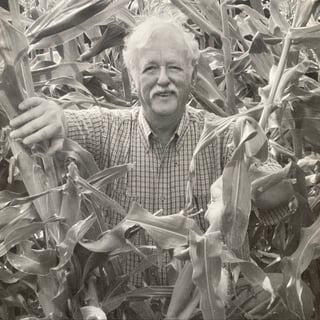
Speaker: So, here to share phenology can make you a more connected and better fed gardener, as well as so many inspiring tips for spring planting, is Duncan Cocking.
Speaker: I'm a big fan of Duncan's work because he is really quite radical, out there on the leading edge of decolonising horticulture and rewilding edible gardening, yet presents his knowledge in a super approachable and practical way. Duncan intermingles permaculture, forest gardening, low input agriculture, holistic wellbeing and deep nature connection into one delicious invitation to get your hands dirty.
Speaker: I'm really stoked to share this one with you, as we are now properly in the oh shit it is spring window of opportunity. So thank you so much for joining me, and also thanks to everyone who supports this podcast on Patreon, because Reskillience is a one-woman show, obstinately independent, ad-free and accountable to you and you only.
Speaker: I do it for the love, but your donations make the literally thousands of hours I've poured into these conversations a little bit more sustainable. So much gratitude to the Patreon crowd and the new Riskily supporters, Alicia and Helen.
Speaker: If you'd like to join our little community and get in on the backstage action, head to patreon.com forward slash Riskilyance. Or if you just want to throw some loose change in the podcast hat, also extremely appreciated, you can make a one-off donation at buymeacoffee.com forward slash Riskilyance.
Speaker: Here are some blackbirds and grey fan tales and other foresty friends recorded by Romuald Mikusek to herald the arrival of Duncan Cocking and this truly delightful and inspiring conversation.
Speaker: Enjoy.
Speaker: Have you got a cup of tea on the go? Of course. What genre of tea? Plain, bog standard black tea. White, no sugar. Nice. Okay, yeah, I've gone for a similar English breakfast with freshly squeezed goat's milk.
Speaker: Oh, very fancy. Freshly squeezed goat's milk. im I'm quite jealous of that. We just don't have room in our lives for a dairy cow or dairy goat at the moment. No room for the ruminants. Well, I wish goats for you one day because it's definitely a treat to have raw milk in my life.
Speaker: Yeah. Yeah, one one of the challenges we have is our soil is quite sandy, so it's granitic sand, and the DSE or dry sheep equivalent is very, very low. And when we moved here, the... um Previous owners had five sheep on the property and in the middle of winter, there was not a blade of grass or leaf under head height on the whole property. just doesn't support more than one or two ruminants. And as you're probably aware, one or two ruminants don't go well on their own. They're very social animals. So we've chosen to to leave the grass for the roos and the echidnas and and the rabbits and hares that are floating around and and not have grazing animals other than chickens is is our main livestock.
Speaker: m I like that you're already kind of deep in the weeds or lack of suitable livestock facilitating grass already because that is one thing that I really enjoy about your shares, Duncan, is that they get into the technical stuff and really empower me with that geeky horticultural knowledge without overwhelming my mind because you wrap it all up in story, which is such a brilliant vehicle for communication. So welcome to the podcast, Duncan. I am extremely excited to be with you here this morning, especially because spring is well and truly springing. ah I'm not sure what's happening where you are. mean, not that far away, but we've got a profusion of fruit tree blossoms and broody hens and chronic nasal congestion happening, telling me that spring hath sprang.
Speaker: So yeah, where are you and what's going down in the season? Yeah, thanks Katie for having me. I'm on Tungurung Country in Kyneton in central Victoria and right now it's beautiful and sunny outside, not a breath of wind. Ironically yesterday, the first official day of spring, although I'd argue that point, but on the first official day of spring it was windy as all get out and I usually say that at the start of September that's when the winds begin.
Speaker: So we're going to expect to see a lot more wind But yes, I've got the fruit tree blossom. My young son who suffers from bad hay fever has got some big red itchy eyes at the moment that we're treating.
Speaker: The capeweed has started flowering and that's, I record a lot of data and that's the earliest that's ever flowered. I picked some asparagus yesterday for dinner, which is wonderful to start getting out of that late winter rut of brassica, brassica, brassica.
Speaker: and the birds are all doing their their courtship thing. I went for a run the other day and got swooped by half a dozen magpies, which always makes it interesting. But yeah, spring spring has sprung and it has sprung probably, I would argue, two weeks earlier than it does most years.
Speaker: I guess every single year you're more and more familiar with the patterns or disruptions to season. And I'm very eager to get into that with you today because you are a student of the season and that's one big takeaway that I have from your your work. But before we get too far down that track, Duncan, as a very You're a very well-known and well-respected green thumb around these parts, and I'm sure even further afield. I'm really curious about your early years and your budding interest in gardening. like Is that something that was always there for you?
Speaker: Yeah, definitely. um So, Katie, grew up on a dairy farm in Micklem, which is now effectively a suburb of Melbourne. and was just immersed in nature. It's only in hindsight now um in recent years that I realised just how connected I was to country on that landscape. Like I knew every rock, every tree on the property.
Speaker: I had grandparents that were obsessed with growing things, whether it was orchids in their greenhouse or, you know, the strawberry plants and the broad beans and things like that. All my grandparents were big into to growing food and producing food. So it's it's been a part of life for me always. There's photos of me as a three and four-year-old pottering in the in the garden.
Speaker: you know As I went through life into young adulthood, I wasn't that interested in working hard. yeah know I watched all the males in my family work themselves you know' right right through almost to an early grave, just constantly working. And I didn't think that was the life for me, so I took off and and studied.
Speaker: science and biotechnology and traveled the world, went and lived in London for a few years, but always came back to gardening, even as a a gardener in London. I had grow bags on the patio there and and trying to mollycoddle tomatoes through a an English summer, which was quite a challenge.
Speaker: um And then fast forward to coming home, I spent a lot of time in corporate world life in a job that involved a lot of pattern recognition. But I would work for two years, save up, quit my job, go traveling for a year or so and come back with my tail between my legs and take a new job and but always having a garden when I was doing that. And I got to the stage in life where I realised I was really good at corporate world life, but I didn't really enjoy it.
Speaker: It was in the pharmaceutical industry and focused on making people better. And I knew that good nutrition was was a way to help, I guess, prevent illness in the first place. So I'd spent a lot of my late 20s and early thirty s saying, well, if I had my time again, I'd be a landscape gardener.
Speaker: And I kind of got to... to mid 30s and decided no stuff it'll just be one. So I looked at how to start a business and lots of marketing ideas and things and decided I would effectively become a bit like Jim's mowing for your vegetable patch. I really wanted to grab vegetables. So I would started advertising that I would basically 10 people's veggie patches for them in Melbourne.
Speaker: And so people could book me in and I'd come around every two or three weeks and sow their carrot seeds and plant their brassicas and things and weed their crops for them and let them know when to go and pick their food. And for various reasons, that that business model wasn't that successful. But what it did do was give me a great learning opportunity to see patterns. You know, I'd have 30 odd gardens across Melbourne and I'd see that all the silverbeet bolted in the same week.
Speaker: and then did some research and worked out that was due to photoperiodism. Or I'd see that, say, peach trees might be suffering from curly leaf and some clients would get me to spray them with copper sulfate or or things like that to try and prevent the curly leaf.
Speaker: And other clients didn't want those sort of chemicals in their garden yet Every spring, all the trees either got curly leaf if if it was a really wet spring or none of the trees got curly leaf if it was a fairly dry spring. So I started to learn what was important and what wasn't important in the garden.
Speaker: The hardest part of my job every time is calming my farm when I hear about 50 different tangents or and beckoned by 50 different tangents that have just arisen in someone's share because I feel like, Duncan, you've touched on so many different questions and curiosities that I have personally and that I know the listeners will be just like, Katie, ask him this. So my job is, you know, is is tricky in this situation deciding which path to take. But I really want to pick up on something that you said early on that you saw early on in your life. You're reflecting on this idea of hard work and that role modelship that you had in your family of working
Speaker: almost to the bone, to the grave, as you say. Can you unpack that a little bit more in terms of like your relationship with hard work, how you're defining that for yourself and kind of where it's landed for you in your current life? Because from the external point of view, my perspective, it seems like you work bloody hard, but can you just share a little bit more about where you've you've taken that that insight, Duncan?
Speaker: Yeah, sure. So I mull over this a lot and I'm It comes back to but what is work? You know, for me, is it writing a blog post for people to read? Is it growing food for my family to eat?
Speaker: Is it having a chat to you on this podcast? They're all enjoyable. So it's kind of, I've chosen a path in life now where it doesn't actually seem like work and reflecting back on my father and my grandparents and my uncles, you know,
Speaker: I don't know that they actually saw what they were doing as work either. They just loved growing things. They loved being connected to country. So it it probably just didn't seem like work to them. and And that's what life is like for me now too. So I'm very, very busy.
Speaker: ah cram a lot into my day. But I think by focusing on being more observant and relaxed about my approach to gardening, it doesn't seem as much like work.
Speaker: Absolutely. Yeah. And interrogating those definitions that we have, that we take for granted is a great place to start with any of these things. What is work? Is work good or bad? You know, all of all of that really basic stuff to grapple with.
Speaker: Okay. so next interrogation point. um It sounds like you had this lifelong connection with with country, this love of being in the soil with the plants that was bubbling along underneath your other um aspirations and career.
Speaker: And then you, in your 20s and 30s, eventually came kind of full circle and surrendered to that to that love and passion. that's what it That's what it sounds to me like. What was it?
Speaker: What was that script that was like, okay, even if it's quote unquote late in the piece for me to be retraining, what got you over the line? So there was definitely a pattern, as I said, of I would quit my job, go off traveling, run the money out, go back and work for another two years to save up and do it all again. And, you know, I am a very risk averse person, but I do see patterns. And I saw that pattern of, well, if I keep doing that, I'm not going to be very fulfilled.
Speaker: What got me over the line was I thought, well, I'll just quit my job and try and make a business of it for 12 months. It's not going to be any different to traveling. I'm just going to be exploring but exploring life in different ways to geographical ways.
Speaker: So I had a crack and and fortunately it stuck and it worked. I wouldn't say I'm the most successful businessman going around but the business is viable um and certainly the big hit I took in PayPacket is um offset by, you know, the the value that I get out of life and the enjoyment that I get out of life. It's certainly a lot more enjoyable now doing what I do.
Speaker: Yeah, awesome. Those, again, like defining our own success metrics. What are your KPIs? How do you know you're on the on the path? And what does wealth really mean? Like what what are the some of the moments that you might have in your day-to-day that tell you I'm a rich man, you know, rich beyond money? What are those things that affirm that for you?
Speaker: so about 15 minutes before I hit the the button to be on this call with you, Katie, I was down at the dam just watching the dragonflies zip around. um because I had 15 minutes to spare and didn't know quite what to do with my time.
Speaker: That's richness, is is being able to pick and choose what I do when. You know, when the wind is howling, I don't want to be outside. So I choose to sit inside and type a post or edit some work or do some planning about what I'm going to plant where in the garden.
Speaker: On a sunny, calm day like today, as soon as we're we're done here, I'll probably be back outside again. That's richness for me. Hear, hear. Okay, so one last kind of maybe curveball question. You mentioned you were in the pharmaceutical industry and then were developing this philosophy around food as medicine and preventative health and nourishment that comes directly from you know our relationship with what we're growing and putting in our bodies. Where do you sit on the the spectrum of Western medicine's involvement in your life versus like we can kind of totally depart from modern medicine's reach and influence? like how radical did you get Duncan?
Speaker: Not that radical. I always take medicine if I need um i've I've got a pretty good understanding of the human body and, and um you know, I'm not at all averse to to taking medicine if I need it.
Speaker: But I see a lot of modern diseases are preventable and it's not just about healthy eating. That's a big part of it. You know, our Our fruit and vegetables have lost a lot of nutrients over the last 50 to 60 years due to industrialization. So we're certainly not getting as many vitamins and nutrients and and things in our diets as what we used to, and and that is having an impact.
Speaker: But it's that connection that's really important through growing food. So I'm trying to encourage people to be more connected to their their landscapes and their their ecosystems around them, getting them out and being physically active so they're not sitting at a desk all day. And that connection, I guess, it it provides mental wellbeing. It it reduces stress and and stresses. If you look at the data has a huge impact on a lot of these chronic illnesses that people are suffering from these days. So it's, it's more than just about eating healthy food. It's about that connection and that mindfulness as well.
Speaker: Yeah. Yeah. I recently interviewed Steve Solomon, who is a giant in terms of mineralization of our food and the impact that has on our health and such a wry and witty and dry individual to boot. So it was really enjoyable speaking with him and at risk of asking you like a really simplistic question, but we'll just put clay on the wheel and and shape it as we go. But what kind of gardener are you? Like, what are some of the beliefs and the the ethics and philosophies that you have underneath, you know, your teachings?
Speaker: Oh, gosh. Um, So I would like to think that I'm a very connected gardener. i I'm an observant gardener. Back to kind of that that working philosophy, I like to think I work smart, not hard. So I'm using a lot of phenology or nature-based indicators to tell me when the right time to plant what is. i've I've worked out over all my years of gardening that there's two really critical aspects to gardening that will make or break your success.
Speaker: And one of them is genetics, um understanding know that growing different varieties or or having different courses for different courses is really, really important. So some varieties that grew well for me in Melbourne don't necessarily grow as well for me now that I've transitioned up here to Kyneton.
Speaker: Or maybe choosing land race varieties and things like that where or plants where you're adapting genetics for your garden. so So that's really critical. And the other critical aspect of gardening is timing, what you do when.
Speaker: So a stitch in time can save nine in terms of weed management. But planting your tomatoes at the right time is really critical for success. Plant them too early and they'll stagnate in cold soil. Plant them too late and you'll miss the run in this part of the world and you'll you'll just end up making lots of green tomato chutney. So understanding those two facets is really, really important. And so I use a lot of nature-based indicators to tell me when the right time to plant my tomatoes are. Last year, it was probably two weeks later than the average would would have been the right time to do it. And this year, It's possibly going to be two weeks earlier. I'm still waiting to see exactly what's happening there, but but that seems to be the way it's going forward. So it's really being connected to my ecosystem lets me see that and be more successful, which makes me a more relaxed gardener. And I think if you're a more relaxed gardener and you do have some failures and you haven't put as much effort into those failures, then they're not as big anyway. So i guess my style is yeah relaxed, observant and connected.
Speaker: m And then in terms of helping other people approach this big old world of gardening where there's 50 million different ways of doing something, do you communicate this right off the bat, like talking about genetics and variety and seasonal observation. Like is that the in or what's your in with people who are approaching gardening maybe for the first time? And, you know, common path could be to get a raised bed, fill it with some soil that you got from the landscaping shop, go to Bunnings, get your tomato seedlings, get some steaks in the ground, give them a bit of mulch and some Charlie carp, and then you just see what happens. But where do you start with people?
Speaker: It's that connection thing again, Katie. So you've got to find a connection. And one of the best ways I've connected with other gardeners is through my failures. So by, you know, posting a social media post about, oh, my cucumbers have all turned bitter this year or, you know, I failed to get a ripe tomato before Christmas this year.
Speaker: By highlighting that me, the supposed expert in gardening, fails, allows other people who maybe haven't been like successful yet also connect to me.
Speaker: And that in turn takes the pressure off people. So it's yeah it's connection through failure, I think in a lot of ways, but also connection through successes as well, sharing the successes and failures. And that helps people relax. and And that's what I want people to do is is to relax and not feel so bogged down on, you know, they've read this book on square foot gardening or that book on no-dig gardening. There's so many different ways to garden and most of them will be successful to some degree.
Speaker: So I'm not fixated on certain rules and things and and trying to show people that they don't need to follow rules and that, you know, I don't have horticultural qualifications. Everything that I've learnt has been learnt by doing and I want people to give that a go as well and realise that, you know, there are going to be some failures at some point.
Speaker: But if you can turn those failures into learning opportunities, you'll be far better. So that's, I guess, the way I start. But also by giving people some basics is really important. So, you know, starting with the leafy greens, that my whole business, Leaf Fruit and Fruit, is around this philosophy. And if you look at the logo, it's got a traffic light system of it's easiest to grow leaves. You know, you can plant some lettuce seedlings in the ground and six to eight weeks later yeah you're harvesting some leaves. Whereas,
Speaker: Tomatoes are, they're not difficult, but they're more complex by the time you sow the seeds and it can take six months from sowing seeds to picking tomatoes and you needed soil nutrition to be right. You needed pollination, you needed to beat the birds and the rats.
Speaker: So trying to simplify things and and get people to do the simple things right first before moving on to too much complexity so they can get some success and runs on the board and then they're more inclined to keep going.
Speaker: Yeah, it's it's fascinating and so clarifying to hear that in a way maybe the first step is cultivating a tolerance for failure or just accepting that things are going to work and things aren't going to work and by you leading the way and exposing yourself as someone who still fails even though you are the supposed expert, um I think that's such a beautiful place to start um from that kind of solidarity and almost playfulness of just having a go because of course as soon as you just have a go you learn so much even in the figuring of what to do first.
Speaker: So you also mentioned some terms that um it would be really cool to hear from you on their their kind of definition and open them up for people who might not be familiar. You've talked about phenology. Can you just tell us more about what what that means?
Speaker: Sure. So phenology effectively using nature-based indicators and it's not a new phenomenon. It's been around since the beginning of time So phenology Indigenous peoples of Australia, they definitely used phenology. So it might have been they'd see a bird doing a courtship ritual or something and that would be their cue to pick up sticks and move camp to over a hill beyond where some plant might be ready for harvest.
Speaker: Fishermen use it. So in Fishermen in the Port Phillip Bay, like they talk about the tea tree. When the tea tree starts to flower, that's when the snapper are ready to bite in Port Phillip Bay. And it's not that the flowering tea tree makes the snapper come into the bay. It's just that whatever environmental cues cause the tea tree to flower also cause the snapper to run.
Speaker: And in gardening, we use that a lot. We can use that a lot as well. So I use things like the flowering of the silver wattle or the nesting of the ah the the courtship behaviour of the wood ducks as a sign of when it's time to sow my tomato seeds.
Speaker: Things like the the flowering of the chocolate ullies are the time for me to transplant those tomatoes into the the garden. And that's that's useful to to help us adapt to a changing climate. So last year, as I alluded to, the spring was about two weeks later than usual. It took a lot longer for the soil to warm up and and for optimum planting time to occur. This year, things seems to be running a bit early.
Speaker: So if I just said to people, we'll go out and plant your tomatoes on Cup Day, maybe 80% of the time, for for people who aren't aware, that's Melbourne Cup Day, which is the the first Tuesday in November.
Speaker: you might get You might get that right 80% of the time. But last year, if you had followed that wisdom, you would have planted your tomatoes out at the start of November. And we had a frost, I think it was about two weeks, about mid-November.
Speaker: And so a lot of your tomato plants might have got wiped out. But by following nature-based cues, it enables you to navigate and get that extra 10 or 20% success of planting your tomatoes at the right time.
Speaker: Now, unfortunately, a lot of the the wisdom around phenology has been lost, so I'm trying to rediscover a lot of it. sorry and that And that involves a lot of record keeping. So from day dot, when we moved to Kyneton in 2019,
Speaker: I started recording data about everything that I observed, whether it was when the silver wattle was flowering, when the calistamine was flowering, when I noticed snakes out and about, just this absolute behemoth of of data.
Speaker: And I'm getting better at narrowing it down now so there's less holes in my data. And then looking at when the right times to sow tomatoes were and trying to marry up natural events that are occurring in the garden versus what I needed to do. And know I haven't always got it right, but I'm getting better at it. And and you know sometimes I've jumped from one of when I first moved up here, it was sowing tomato seeds when the silver wattle flowered, and I realised that wasn't happening early enough in Kyneton. So I've switched that now to to following when the wood ducks start looking for nest sites in the in the trees along the side of the road.
Speaker: But it's a way to to navigate this this changing climate. So questions. um You must be out there a lot to know when the wood ducks start nesting and that you haven't missed the boat. Like when are you making these observations?
Speaker: All the time. Stop making these observations. And they extend beyond my garden as well. So, you know, when I first moved to Kyneton and I told people in Melbourne that i was moving to Kyneton, they laughed at me and said, well, you you'll never grow a Christmas tomato. I was renowned in Melbourne for, you know, a big deal in Melbourne is is to ripen a tomato before Christmas.
Speaker: For some gardeners. Some gardeners don't care. But, I'm a very competitive person, so I used to subscribe to that and had some great challenges with my grandmother. And she would beat me every year. Bless her. You know, we'd unwrap our presents on Christmas Day and at the end of the unwrapping of presents, she would hand me ah a box or a bag, a gift bag, and in it would be a and tomato and she'd beat me every year. I reckon I'd i'd be able to beat her now, though. um And so people laughed at me and in Melbourne because, you know, I had this reputation for ripening tomatoes at the end of November.
Speaker: in Melbourne. I said, you'll never grow a ripe Christmas tomato in Kyneton. And I did it every year Last year was the first year I wasn't able to do it. And part of the way i adapted it was using phenology. I adapted my gardening. i I really did need to relearn gardening all over again when I came to Kyneton. It's such a different climate between Melbourne and here.
Speaker: The winters are ah colder and and more wet and the summers are hotter and drier than what they are in Melbourne. It's it's kind of if you were going to have four seasons anywhere in Australia, Kyneton would be the closest place to have that.
Speaker: Anyway, back to phenology and the silver wattle. Because we moved up here in in end of June, start of July, i was driving backwards and forwards a lot between Kyneton and Melbourne, and that's July is when the silver wattle starts flowering.
Speaker: And so I would watch the silver wattle and where it was and where it wasn't flowering in my journey, and I would notice... I was leaving Kyneton, that there'd be no silver wattle, they'd go up over the hill at Woodend and down and you'd get to Melbourne early on in in July and the silver wattle would be flowering.
Speaker: The silver wattle, I use it because it's so easy to identify as you're traveling on the Calder freeway at 110 k's an hour. It's got quite silvery foliage in that and the flowers are quite easy to spot. But then as July progressed, I noticed that the silver wattle flowering would advance further and further up from Melbourne.
Speaker: You kind of get to Gisborne. And by the time it started flowering in Gisborne in mid-July, it was also starting to flower in Kyneton. And then as i as July progressed, finally the peak or the the highest point on that that journey between Kyneton and Melbourne would end is where you'd start to see the silver wattle flowering.
Speaker: And so using those cues that I was used to observing in Melbourne would would help me or allowed me to adapt my gardening to Kyneton. So I guess in to your question about when I'm making these observations, it's all the time. It's when I'm you know doing the school run, it's when I'm pottering in the garden. and And now that I've refined my set, so I've gone from just recording absolutely anything and everything that I see and realising that I was missing a lot of data. So I'd i'd record that the Wedged-Ailed Eagles were soaring overhead in August some years, but then forget to record it other years.
Speaker: i've I've kind of consolidated that data set and starting to pick out what's important. And now I'm starting to look for those things. So I'm looking for at the moment that the Cape Weed's flowering and it actually just started flowering yesterday.
Speaker: I'm looking for dragonflies buzzing about. I'm looking for when the echidnas are active because they're part of my data set. so But becoming a ah more observant gardener has and looking for those phenological indicators has has made me a more calm and relaxed person as well. So it's a it's a way of mindfulness and it's just become part of life and made me a more appreciative person too.
Speaker: has it Has it made you a person with more bookshelves in your home to accommodate all of your notes? How do you manage all the data? Yeah, that's a tricky one.
Speaker: So most of my data initially goes into a financial year diary. So just an eight four physical diary, data or page. So there's lots of room to record things. That's where all the primary data goes. I'm not carrying that that um dire around with me everywhere though so and but i'm constantly making observations so a phone is a really useful thing they take photos so i might be wandering around in the orchard and see that the elephant heart plum has started flowering today well i'll take a photo of the the tree and a photo of the label and then at the end of the day i'll sit down and go through my phone and and look at all of those photos that i've taken to record that data in my diary so that i know
Speaker: that I don't miss it. In the past, I've used a lot of social media, so that's been helpful for trolling through and finding data. Once a month, I grab my SLR cameras to to wander around at the start of the month, and I've i've got to do it in the next day or two.
Speaker: And I wander around the whole property and I take hundreds of photos, many of them from the same position. And that forms a data set as well that I can go back. If anything, I haven't recorded. I can often see, you know, if there's autumn colour in the in some of the the deciduous trees, I can go back from year to year and look at the variation at the same time of year of how advanced the colour change was or the leaf fall was. So there's lots of different ways to record data. And then i take all of that data from the gardening diary and I...
Speaker: manually type it out into a spreadsheet. It's a six tab Excel spreadsheet, which then lets me filter and sort and and look for patterns. I've worked out over the years that one of my superhuman strengths is pattern recognition. I see patterns in number plates. I see patterns in human behavior. I see patterns in nature.
Speaker: often patterns that other people miss. So using the spreadsheet allows me to really magnify that that skill set and look for for patterns in dates and times and and events.
Speaker: Extraordinary. Does any of this kind of administrative, the administration of nature observation, does any part of it ever feel tedious to you or like you have to really push yourself or is it simply the expression of your natural inclination for pattern recognition and meticulous record keeping?
Speaker: Yeah, I've certainly got to be in the right frame of mind. that The sticking point for me, I think, is the typing of the notes into the Excel spreadsheet. The exciting part is then filtering and sorting and and looking for that the patterns. So it's, I guess, unnecessarily evil. but Kind of in an organic way, it's that typing out of the the data into the into this spreadsheet helps, I guess, me see the patterns as I'm going as well, particularly if I've got a fair way behind, like i think I'm about a year and a half behind it typing this stuff up.
Speaker: And I think now that I've got such ah a good data set, sometimes when I think, oh, I wonder if there's a pattern in that, or I don't remember seeing that happen this early in the year, I'll go through and look at my my six or seven years that's already typed up and then flick through the last year or two of the diaries and and look for the extra data to fill it out. So yeah that that bit gets a bit tedious and I guess that's why I've had to hone in a lot more on ah a tighter data set of what's important rather than trying to record everything.
Speaker: And then just other observations now are just observed and appreciated without necessarily being recorded. Yeah, thanks for sharing some of the finer details. I'm always trying to get to the bottom of or canvas people for their opinions and experiences on what does it feel like to be living into your ecological niche? And it sounds very much like this is your ecological niche, Duncan, or at least one of them. What does it actually feel like to do all these tiny things that amount to us expressing ourselves as creatures in the ecosystem and doing bloody good work. And it's heartening to hear that there are times where you have to kind of jolly yourself along a little bit and look for those hits of dopamine in yeah in the pattern recognition, in the you know the parts of the process that keep you there. So that's the reason that I try and um really tease out how people are approaching their their work or their their vocation, you know that that upwelling of something that we really naturally want to do. so that our expectations as people listening can be kind of managed in terms of, you know, there are still boring bits even when you're kind of living your dream. ah so Yeah, and and just on that, you know, pick people's expectations, I'm extreme.
Speaker: i am And I totally acknowledge that. I am just obsessed with data. I'm a data nerd. And so i I try and break things down and make things more approachable for the everyday gardener who doesn't have the time or the inclination to to do this level of recording. But also, i guess i'm I'm driven a lot by the blog posts that I write and the feedback that I get from my readers about, you know, they're happy to pay and support me to do this work so that they don't have to. That's that's really heartening to hear. And I guess that drives me a lot as well.
Speaker: So still on phenology, because it is just fascinating. I know, and I guess we can all say that it's it's fraught to tether our our food growing to something arbitrary like the Melbourne Cup. But how does how does nature know, like how do the wood ducks know that there aren't going to be these conditions in the pipeline, like so many hard frosts that might kill off the plants you're raising? Like, is nature taken by surprise? Can anything happen? Or is there some kind of intelligence that means that once those waddles start flowering, this sequence of events is going to play out?
Speaker: That's a great question, Katie. And you know what, I don't really have an answer for you other than it just does. That's the pattern that I see. And you can look into, you know, I'm big on scientific research papers and And asking why, I'm very much driven by that that one word, very simple question, why.
Speaker: So things like bird courtship behaviour is regulated by day length, which impacts their hormones. That's why your chickens suddenly it's come back on the lay and are going broody and all sorts of things.
Speaker: So there are some underlying principles and that you can look into personally. But it's so complex that sometimes I don't even bother anymore. I just accept that this is what it is. It works. So I'm going with it.
Speaker: Great. I love an unanswerable question. And just to really bring home how you're using phenology in your gardening, what are some of those connections, those markers that you look to, to, you know, this happens, then I do this?
Speaker: So a lot of them are very much centred around this time of the year. And it's not so, well, that there are some specific ones. So as I said, the the chocolate movies are when I transplant my tomato seedlings into the ground.
Speaker: When I had my first asparagus harvest yesterday, it's time to sow my carrot seeds. But I'm also looking more at trends. So at this time of the year, I'm really hyper-focused on or a lot of my observations are hyper-focused on this time of the year because it's giving me an idea of where spring's at and how that impacts my overall plan for spring planting.
Speaker: So i'm I'm looking for trends in, is the spring early this year? Is it late? And I'm not just looking at one one subset. So things like blossoming of deciduous trees you that you alluded to in your introduction about your fruit trees were starting to blossom. They're they're regulated by needing a certain amount of cold period. So they need it to be cold a bit like when some people put tulip bulbs in the vegetable crisper of the refrigerator. It's to get them to break dormancy. they They need a certain number of chill hours to break dormancy.
Speaker: And then they need it to warm up. So some of the deciduous trees are actually a bit late this year because the winter was so mild and it took longer for them to get their their winter chill hours. So if I just focused entirely on flowering of of deciduous trees, the message might get a bit lost.
Speaker: Whereas looking at the whole ecosystem from You know, plants starting to break dormancy or even evergreens, ah they kind of go a dormant period over winter, watching them wake up and and starting to flower, which provides food for the insects. So you you watch the whole ecosystem wake up.
Speaker: The insects start to to break dormancy and you might start seeing a lot of dragonflies and hoverflies and bees and things around at this time of the year. And then the birds start getting busy because they're relying on those insects for a food source and protein to to produce eggs.
Speaker: And then the the mammals, you know the echidnas, which don't go into a full hibernation, but you certainly see them become a lot more active. ah they They started about two weeks ago. And then finally the reptiles towards the end of September or early October. So I'm watching lots of different cues throughout the the whole of spring to give me an idea of how much to hold fire or how much to bring forward a lot of my planting strategies, my weed control strategies.
Speaker: and all my gardening activities to try and keep all my ducks in a line and not get too far behind as spring advances. It sounds like you're in conversation with the land.
Speaker: Very much so. Very much so. It's mostly one-sided conversation because they talk to me and I listen. But then I apply that back to my own kind of small little patch of earth where I yeah plant the vegetables.
Speaker: Yeah. Well, I suppose, you know, we probably – take for granted what we're giving off and what, what things we're emitting out into the ecosystem as well. And maybe it isn't as uni directional as we think, but, um, it's certainly, i'm just getting this sense of, you know, at once. the simplicity of of listening and responding in such a natural way, just building this this body of of data and observation that then means we can kind of move in a logical and and responsive way with the environment to grow our food and to do do the things we love to do. And it's also very complex, as you say, so complex that we can't even really get to the bottom of it and it might feel overwhelming. But
Speaker: i just I just love the the invitation to start with observation that you've laid out for us. um And don't know, do you see a lot of other gardeners, at least gardening influencers, talking about this kind of stuff or does it feel still quite fringe?
Speaker: Look, i I think it's becoming more acceptable. I mean, let's let's just go back and unpack that. but It's been happening for 60,000 years in Australia. It's been happening yes for a long time in Europe. All over the world this has been happening.
Speaker: And you probably hear, i've read Charlotte's Web to my daughter recently, and it's incredible the amount of phenology that was actually incorporated into that. When you read between the lines, you you might not realise it until you're starting to listen out and look for it It's there, and there are a lot of people who might talk about a gut feeling, Katie, of I just feel it in my gut that now's the right time to plant. And they're probably tuning in a lot more than what they realise to nature-based indicators.
Speaker: But yes, it it certainly is something that is more fringe. It's not spoken about so much in mainstream gardening media and blogs. And I think that's because it's seen to be incredibly incredibly complex.
Speaker: You've got to get the data set first before you can start looking for patterns and because it's it's very specific to your location. that Some of my data set can be, I guess, loosely adapted to where you are or maybe people in Melbourne, but it's very specific for my garden. When I talk about the calistamine flowering, I'm talking about one tree in my garden.
Speaker: And certainly if you tried to apply that, the calistamine's flowering in Melbourne at the moment. So if you tried to plant tomatoes in Melbourne, I would argue that it's still perhaps a bit too early. So I guess there's an observation that it's it's quite complex, that it's it's quite difficult and that it takes years to build up that data set. And in modern society, we're into instant everything these days. So it's it's not as click-baity, I guess, to to sell these data sets or this this need to to tune into nature.
Speaker: And so I think that's perhaps why it's more at the fringes. But it's certainly... It's enabling me to eke out a niche as a garden educator or as a writer of sharing that data with people and and for locals especially, they're they're loving having that data set there and and me, I guess, sharing my observations of what the seasons are doing and they can tune into that.
Speaker: And hopefully that's inspiring them to start recording data in their own gardens and and down the track. That data set is something that they can share with with their children or or other people in the local growing community. Yeah, being being tuned in in this way to the world around you in conversation, in that state of receptivity, does it also open you up to feel more of the grief when things are changing we're becoming intimate and entangled with with the world around us when we start being more more of a creature in an ecosystem rather than an alien perch on the sideline observing this funny behaviour. Do you feel, Duncan, like you are more deeply entangled and therefore vulnerable to to the emotions that come with a changing world? No, Katie, I feel the complete opposite. I'm an ostrich.
Speaker: And by that I mean I don't look at social media anymore. I don't look at news websites. When I get in the car, I don't have the radio or any music on. That's my thinking time.
Speaker: I am so disconnected to the great wider world that I don't, you know, people tell me what's going on in the world. So I find out the really important stuff to me, but I choose not to tune into stuff that is beyond my control or beyond my my sphere of influence.
Speaker: And by... hyper focusing on the things that are around me in my garden it doesn't leave space for me to i guess think about what's going on beyond my sphere of influence and it enables me to tune in as I said I'm using phonology to adapt to a changing climate now that's something that I'm part of but can't really influence the fact that the change the climate is changing but By using all these phenological indicators, i can be more successful. you know, where I know what to expect, but you never know what you're going to get and phenology helps you navigate that a lot more.
Speaker: So, yeah, I'm an ostrich. Amazing. I'm loving it And what would you say to someone who would accuse you of having your head in the sand? Yep. I quite like it.
Speaker: I get all the news I need from my garden. Great. I'm someone who is much more inclined to this this style of of being, as you describe. I've heard it called landscape parochialism, you know, the parochialism that can be seen as small-mindedness actually being the way that we can go really deep and forge a glorious and productive relationship with place. I'm far more like a hyper-local, hyper-fixated person like you, Duncan, but i am also a total chronic people pleaser and thinking that everyone knows something that I don't. So I also think, well, fuck, I should probably look at the news. I should probably be active in these bigger spaces.
Speaker: So it is beautiful to hear your perspective and your ownership of that. And I am wondering if you've ever thought those thoughts or if you're extremely single-minded in your ostrichness.
Speaker: I... I just look at my own anxiety and and mental health and and by not connecting into those things which are outside my sphere of influence, I'm a lot calmer.
Speaker: And that's all the justification that I need. i Yeah, the the news that I get from the garden is enough. um I've got better as whether I'm becoming more mature or whatever it is of caring less about what other people think.
Speaker: I quite like my hermit-like lifestyle, pottering in the garden and and not worrying about those sort of things. Knowing that you had such an engaged garden full upbringing and you were having tomato contests with your grandmother, in light of that that setting that you've had in your life,
Speaker: How are you approaching parenting as a complete garden geek? Are you actively trying to entice your kids out into the backyard or are you just letting them osmotically absorb your enthusiasm?
Speaker: Well, it's a bit of A and bit of B. was actually chatting to my daughter the other day i said, well, what is it that makes you want to get out in the garden? She said, well, you're paying me, Dad.
Speaker: And a bit disappointing to hear, but the truth is, yes, I do do occasionally pay the kids to come out and and help me in the garden, um but they quite often come out without being paid either.
Speaker: It's about picking the jobs. You know, I leave certain jobs that I know they're going to love doing. They love weeding and clearing out their garden beds. They each have their own raised garden bed that they get to choose what they plant in each year or each season, and they harvest it. So they love just going through it and transplanting things. I don't know what it is about kids and they they find a self-sown silverbeet plant and they want to dig it up and transplant it.
Speaker: They don't mind things like mulching and bits like bits and pieces like that. But if you get them to actually weed somewhere that's not their own garden bed, they hate it. or The other thing is you know that that that ownership. So last year we had a bit of a project to take a really high-maintenance garden that we called the Med Garden because it was all full of ornamental olive trees and grapes and roses and all sorts of plants that would survive in a and a Mediterranean garden on low rainfall. We decided were going to plant a nut grove.
Speaker: So one of the ways I got the kids involved in the garden and I pretty much pulled every single plant out themselves was by giving them ownership. I got them to do a design of the garden. And so not so much about laying out plants, but what they wanted out of it.
Speaker: And so they decided they wanted to be a BMX track to weave through it and kind of play space area. And so because they felt that they had ownership and a say in how we use the space, they were really more engaged to get in and help remove the rose bushes and things because they were going to get a BMX bike track out it.
Speaker: But it's also giving them free reign with tools and things. So I look back to my childhood and I was driving trucks on the back roads at age 14, things like that. So it's, I guess, respecting the children enough to be able to handle big, scary tools and things. so by age seven, Angus has been rid riding the ride on my one, not with the blades engaged. not allowed cut the grass, but in terms of towing a little trailer around and reversing the trailer, and I'm happy for him to use reciprocating saws and, and and small you know drills and impact drivers and things like that under guidance. So they kind of think it's fun to them. It's a bit like playing a video game, I guess, is playing around with all these these adult tools.
Speaker: So it's just being respectful of their abilities and and encouraging them to to make mistakes in a semi-controlled environment. o If only every video game resulted in a giant crop of cabbage or some other very useful contribution to the household.
Speaker: That sounds and like an amazing parenting approach. So in the last little while that we have you, Duncan, I know you've said that you don't really have gardening rules and you don't talk to people in terms of what to do or not do in the garden, but if you just set that aside for a moment, are there things that you see peddled as the way to do gardening and especially organic gardening that you don't agree with or you think are just a waste of time? What rules do you break personally and what are some things that people might want to reconsider if if they think are necessary but you're just like, duh, don't even bother?
Speaker: Yeah, that's a tricky one. um As I said, most ways of gardening will work to some degree and Every gardener is different.
Speaker: So what you want to eat and therefore what you want to grow is different. And every garden is different in terms of the space that you have to garden, the sun lights and the sun angles and the microclimate.
Speaker: So there's so many different variations. So there is definitely no one size fits all cookie cutter kind of gardening style. But I think different gardeners and different gardens suit different styles of gardening.
Speaker: You certainly see a few what I would call gimmicks touted as suited to everyone. Probably my poster child for that are wicking beds.
Speaker: I think wicking beds are great. they They do have a place. but the amount of embodied energy that goes into constructing a wicking bed, I don't think offsets the the amount of water that you might say. So for people who aren't aware of what a wicking bed is, it's like a giant self-watering plant pot that you make out a garden bed and it fills via a water reservoir on the bottom and then waters the garden via capillary action. So there's a lot of plastic that goes into making a wicking bed and and they only have a short lifespan. I rarely see a wicking bed that lasts longer than 10 years. So there's, a lot of plastic that goes into it and you will save some water, but I don't think that the actual outcome justifies the amount of work that goes into it.
Speaker: They're useful in certain situations like keeping tree roots out and things, but generally speaking, a raised garden bed with a well-set-up irrigation system will be just as effective as a wicking bed. So I get a bit frustrated when I see people saying, oh, wicking beds are the way to go, and usually it's the people who are selling wicking beds that are the ones telling you that's...
Speaker: That's the way to go. so yeah, there's lots of, anytime somebody comes up with a rule, I get a bit frustrated because quite often breaking the rule will work as well. and And that's, that's, you know, something I've learned a lot about gardening. You tell me I can't do something and I will try and prove to you that I can. I will grow avocados in kinds and tick. Macadamias in kinds and tick.
Speaker: Passion fruit in kinds and tick. Finger limes in kinds and tick. I think just give things a go and And mix it up each year. Try different things and you might find better ways to do it. Some of the my biggest successes and learning opportunities have come from mistakes or from people asking questions of why did you do it this way and not that way? Or and I've had interns in the past come in and work in the garden and they've they've done things differently to how I would have done it. And now they're the new way of doing things going forward.
Speaker: So... I'd just say throw the rules out the window. You're going to have like all of the millennials in central Victoria swarming your avocado trees. I have to know, like have you just created microclimates for those more temperate and tropical plants?
Speaker: In some instances I have. So things like the avocados have got a bit of shade protection. is actually not the cold that has killed. I've killed a lot of avocado plants.
Speaker: um and there's a couple of things that are more likely to kill them than not. I had an avocado graveyard where I planted heaps of seeds, seedlings, basically, and and I wanted to see how quickly I could kill them all to work out what killed them and what didn't.
Speaker: and So weve we planted dozens and dozens of avocado trees. We found that it wasn't so much the cold that killed them. It was either grass growing up around the trunk that caused cholera or the heat. Too much direct sunlight cooks the plants. So they've got shade, my avocado, trees at the moment have got shade cloth, permanent shade cloth, canopies over the top to protect them from the hot sun in summer but not so much from the winter chill.
Speaker: Things like the passion fruit, yes it's in a bit of a microclimate but the macadamias, They're just growing out in the open paddock. They've got no protection. People just think that they're sensitive trees, but they're actually not.
Speaker: Great. that's That's excellent news, breaking news on the podcast. I'm going to give that a go and hopefully not end up with an avocado graveyard. But if that's the case, then it's all part of the process.
Speaker: Yep, part of the So I haven't really done a thing in terms of preparing for the spring and so summer garden. And I know that every every patch of earth is unique in every location, but in general, how can we limber up for the season ahead? Like what what could we be doing? What can I be doing right now to start getting myself into spring gardening gear?
Speaker: Yeah, sure. So it's all going to happen very, very quickly, Katie. i can't tell you exactly when the the turning point's going to be, It's a bit confusing this this spring because whilst everything is moving early, all my indicators indicate things that we're going to need to be planting sooner than normal, it's also incredibly wet in central Victoria with so much rain and so it's going to be challenge to actually get into the soil and and plant things.
Speaker: But what you can be doing at the moment, um certainly starting off any tender vegetables like your tomatoes and capsicums, eggplants and the like, basil, if you've got a greenhouse or a protected spot. Now, you don't need a greenhouse. I'm actually pretty anti them. I have two.
Speaker: One was here when we moved here and I moved one up to Melbourne. So it's kind of a bit hypocritical for me to say you don't need a greenhouse, but you don't. You can use something like a clear plastic tub out in the sun or a nice north-facing window if you've got something like that to start some of those tender vegetables early. Make sure you've got your seeds all ready to go and have a bit of a plan. So, i mean, we're humans, we we work in pulses, don't we? we We're going to have ah a weekend free at some point, usually the way a lot of gardeners work is they just have a really mad weekend in spring where they they pull all the weeds out dig it all over and then plant everything and then kind of wander away and forget about it for the next month to to six weeks and then kind of remember to go back and check in but you can actually stagger things out and and that's something that my records have been really good at helping me do is spreading my workload because in this part of the world spring is nuts
Speaker: I'm already going full tilt or should be going full tilt in the garden and will be. i'll I'll just get further and further behind until I finally catch up. Usually around Christmas Eve, I fall in a heap going, ah,
Speaker: ah So you can certainly spread your planting out. So it doesn't all have to go in at once. So if you've got the time to do that, then starting with some of the earlier crops like sweet corn and things can go in a bit earlier. They're not as tender as the tomatoes. The carrots can be going in now.
Speaker: It's a great time now to be planting carrots because lot of people don't realise that if you let that seed bed, once you sprinkle your carrots on the on the surface of the soil, if you let that soil dry out even just for an hour,
Speaker: the seeds lose viability very, very quickly. So you've got to keep them moist the whole time. And as soon as we're finished here, I'm going to go out and hose my ah my carrot bed down. And it takes about three weeks for them to germinate. Now it's a lot easier to get to keep carrots moist in early September than it is in November.
Speaker: So getting in and planting your carrot seedlings now in in September is a really good idea because you get a bit more rainfall and it's a bit cooler. You don't have as much hot sun. making sure you've got all your seeds ready to go. I'm now focusing a lot more on saving my own seeds so they're all ready to go anyway but not kind of hitting November and going, oh, right, it's time to plant some carrots or whatever it is you're going to plant in the garden and and then realising that you've either got to order them or head down to the nursery and find some seeds. But also paying attention to what's happening in the garden, recording
Speaker: what you're doing when so that you're going to get better for future years at tuning into those observations. Excellent to-do list. I feel the sudden urge to unbox my seeds and see if I've got any carrots from last year that I can whack in. Are they similar to parsnips? Carrot seeds are very viable. i I recommend getting fresh carrot seed every year. But that job, Katie, should have been done back in about June, July is when I normally do that job.
Speaker: So just at the end of the year as I'm getting a new gardening go together, I'm also going through my my seeds and working out what I need to order so that they're ready now. and It's the one job I'm so far behind in my own garden this year. We've got a lot going on.
Speaker: outside of the garden um and the one thing that I have done is got my seeds ready. I have no idea where I'm going to be planting everything this year and and crop rotation, all that sort of thing. I really do need to, hopefully there's a rainy day coming up soon and I can just sit down and start drawing arrows and and shuffling the board around about what's going to go where and if all else fails, everything will just go where it did last year.
Speaker: But I have my seeds ready. listen Oops, well, I stand in solidarity with everyone else out there who is a little late to the party. i will frantically, frantically look at my seed collection and get my ass into gear. It has been so illuminating and enjoyable hearing from you, Duncan. I just, I feel like I've learned so much and I'd love to point people in your direction if they haven't yet come across your work. Where is the best place that folks can connect with you?
Speaker: Just head along to my sub stack, probably is the best spot. Otherwise, if you are struggling to locate that, head to my website, www.leafrootfruit.com.au and that's got all the links to to the various socials, Facebook and and Instagram and and the like.
Speaker: Fantastic. Yes, I'll put it all in the show notes for people's clicking convenience. And so much gratitude for joining us today. Thank you, Duncan. Thanks for the opportunity to share, Katie. That was ah great fun.
Speaker: Thanks for listening, podcast friends, all the way to the bitter end. There's no outro, only birds, because I'm all out.
Speaker: I'm all out words.
Speaker: Bye.