Transcript
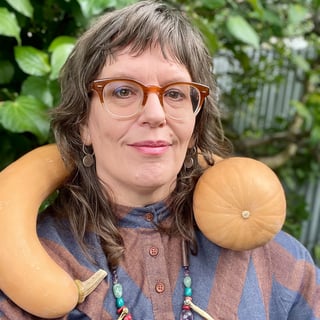
Speaker: race scal end Hey, this is Katie and you're tuned into Riskiliants, a podcast about the hard, soft and surprising skills that'll help us stay afloat if our modern systems don't.
Speaker: I am gratefully recording Jara country, central Victoria, where swallows are carving infinity symbols into the sky, swooping on a sudden explosion of spring insects.
Speaker: And I am back on the hose. After reliable rainfall all winter, the skies have now cleared, the sun is out and the soil is drying. The wind has changed too.
Speaker: It's no longer an icy southerly but a spirited gale galloping in from the northwest, trampling our broad beans and withering my baby greens. Suddenly, after months of heavenly irrigation, It's once again down to me to keep the garden hydrated.
Speaker: Earlier today, as I stood there soaking rows of sprouting broccoli and garlic and broad beans that I planted way too close together in concentric circles that seemed like a cute idea at the time, but actually make basic wheelbarrow maneuvers almost impossible, I started having flashbacks to last season.
Speaker: The great hand-watering of summer 2025.
Speaker: All last summer and into autumn, I worked a second job as a barmaid in my very own garden, pulling pints for half an acre of unquenchably thirsty clientele. I'd be out there first thing in the morning and last thing of an evening as the sun set behind the mountains and the microbats fluttered at moonrise, trying to keep so many different veggie beds and flower borders alive.
Speaker: All those hours of my life, not so much down the drain as lost to the soil. I told myself that hand-watering is like a meditation. It's a lovely way to stay connected to my plants. It's time off social media.
Speaker: But in truth, all of those hours could have been way better spent elsewhere. and before you ask, we don't have drip irrigation because that requires executive function.
Speaker: I've felt a sense of dread surfacing as I start planting and watering for another season. And I'm thinking, there has to be a better way. In fact, I know there's a better way. We're talking about it today on the podcast with Shane Simonson.
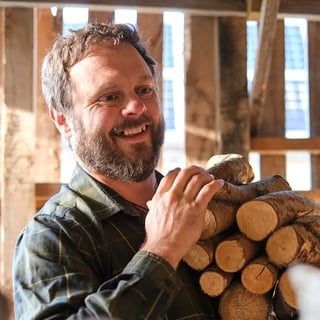
Speaker: You may know Shane from his downright geek-tacular substack, Recombination Nation, and podcast of the same name. Or the film that Jord, or Folklore Pictures, recently made with Shane called Seeds for the Future, which, as of recording this, has landed on 132,000 sets of retinas.
Speaker: Shane hangs out at the intersection of evolution, ecology, and civilisation, and is perhaps best known for his plant breeding experiments. He is determined, in a thoroughly joyful way, to design crops that actually make sense for our respective environments, that are tough as nails and tasty as fuck, that don't need mollycoddling to survive, that resist pests, outcompete weeds, and offer local communities a foundation of calories for the future.
Speaker: Over the next hour, Shane is going to tell you exactly how to start tinkering around with plant genetics to conjure up your own bespoke varieties. Varieties that you don't need to waste your life watering, Katie.
Speaker: What I love most about this conversation is that Shane doesn't just share the info, but he also speaks to the inspo, his inner spark for pursuing this work, the impacts of which will probably land well beyond his lifetime.
Speaker: Because the thing is, as demonstrated by my relentless adherence to senseless watering regimes, which deep down is just a resistance to change, all of the information in the world is useless unless we can tap into an inner wellspring of wanting to do something.
Speaker: Our personal aquifer of motivation. So I'm asking myself, what will it take to change my gardening habits? To accept that it's not just drip irrigation I need, but a whole new way of thinking about growing food, a whole new and thrilling set of plants and recipes and garden experiments.
Speaker: What might it take for you, I wonder? Before we get into it, I want to thank new patrons, Carissa, Deb, Barb and Bill for donating to the show for funding risk aliens as a community, offering me an independent and life-changing source of podcasting income. It makes a huge difference to my life. Thank you from the bottom of my heart to the risk aliens patrons. We're at patrion.com forward slash risk aliens.
Speaker: Now, please give it up for Shane Simonson led in by this lovely field recording by Nicholas Allen from Maroochee wetlands in Queensland. It features one of my favourite bird calls, the fan-tailed cuckoo.
Speaker: It's so lovely to see you briefly in the screen just now with the same awesome cotton beanie that I first beheld when you arrived on your property a couple of months ago now. So Shane, welcome and how are you this morning?
Speaker: I'm having a wonderful day. it's so it's It's sunny and dry here, but I just popped out into the garden this morning to pick some veggies for breakfast and my popcorn trial is germinating. ah like It looks bone dry out there at the moment. It looks so unpromising and things just grow. Everything's underway for the season. Well, I know an issue that you have is actually too much moisture and then things rotting. So is it nice to have a bit of a reprieve?
Speaker: Oh, absolutely. Absolutely. Yeah. El el Nino, ah bring it on. It's so it's refreshing if you if you know how to lean into it correctly. And did you say popcorn trial? Yes. Yeah. I've managed to get a few ah very strange varieties out of the gene bank and I stumbled across a Tasmanian catalogue that had a bunch of other popcorns. So I'm going to mix them all up and see if we can come up with a local land race.
Speaker: Amazing. And what is the difference between popcorn and sweetcorn? ah So sweet corn has mutations that make it really slow to convert it sugar into starch. So you've got a longer window to pick it in its like immature, juicy stage.
Speaker: They're usually pretty weak. I don't bother growing any sweet corns, and the yield's pretty low on them as well. um But popcorns have a really small and compact a grain. That means when you heat it, you get that reliable popping effect.
Speaker: And then there's flint corns, which have a really hard outer coat, which are are good for like hominy and grouls and stuff like that. And the dent corns are the ones that you usually use for tortillas and things like that. So I'm growing all of those except sweet corn. It is such a novelty to be able to ask you I feel like any kind of horticultural or life related question, and you'll just have some hot take for me right off the bat. so thank you for illuminating and expanding my world of corn and maize and that whole family already. Important farmstead related question. Have you attended to the goats this morning?
Speaker: I have. have. I've been watching the back end of one of them because I think they're very close to the first kidding of of spring. And um yeah, what do they say about a watch pot not boiling? It's it's the same for for the back end of a goat. Yeah. Yeah, they do seem to really keep you in suspense. I've had a lot of friends with goats over the years just wondering when when they're going to pop. I also milked goats before this call, which felt like an appropriate way to preempt the conversation because I know you are also a fellow ruminant lover. Yes, but particularly the goats. They they are my favourite.
Speaker: So Shane, as I alluded to, george and I came and arrived on your doorstep a couple of months ago and Jord had his camera all up in your grill for a few days capturing the wild shenanigans that are going on there on your block. And we had the best time and it's just, it was beautiful to be in that vibrancy and colour of everything that you're experimenting with.
Speaker: there So it was such a pleasure to meet you and I've been really excited to have you on the podcast because the video that Jord made, the documentary featuring your good self, is now sidling up to 100,000 views. So how does it feel to have that many people looking in on your life and your work?
Speaker: Well, firstly, I'm extremely grateful for the opportunity. i've been um It's been a long process and mostly a very isolated and lonely one. i've I've only even been sharing my work on Substack. I think it was on WordPress before that for two or three years now. You kind of beaver away on those fronts, relative obscurity, and then somebody comes along and notices and gives you a little bit of a boost, well, a big boost in this case, and it can it can really change things. So yeah, that's been really wonderful. And it's also a been a bit frustrating because there's there's so much that I'm doing here. And Jordan was so masterful in distilling out like the first step of the message that I'm i'm trying to bring to the world. So um I'm but very, very grateful for his skill on that front because yeah not many people are going to dive into the full ah onslaught of information right off the bat.
Speaker: Yeah, that's it. It's still such a beast of a back catalogue that you've amassed and so many different insights that you're bringing to people. And i I hear that accepting the little sliver that people are presented with.
Speaker: Yeah. It's exciting too. It's exciting too. There's more. There's more to the story. Absolutely. There's so much more and it's really lovely to have this extra time with you and maybe answer some of those questions that people might have off the back of that doco. My favourite comment, I think I was looking through the comments this morning and ah some guy said, we need more wackos like this dude.
Speaker: What is that broad message that you're hoping people take from your work? ah Well, probably the primary thing is that living organisms are far more malleable than people realise. And that the the ability to do that is in anybody's hands. If if you have the the tiniest garden, even if you don't have a garden, like there's things you can do on this front and on other aspects. It doesn't even have to be plant related. It's an invitation basically to participate in that play.
Speaker: I find it really playful and exciting to... to to tinker around with life forms. and You change them and ultimately they change you. and It's exciting to think about where that could lead humanity in the long term.
Speaker: And devil's advocate question, who are we to tinker with these malleable life forms? Why shouldn't they just stay the same in all their pure and holy immutableness?
Speaker: Well, even if you want to keep them the same, you can't. like Just the very nature of DNA means that it's always there's always a bit of leak and mutation and drift happening. With heirloom vegetables, this is like ah a salient example, a lot of the varieties that are around labelled as heirlooms haven't been maintained. they They need to undergo continuous selection to maintain the traits that they were once renowned for. And if you don't do that, they just kind of...
Speaker: spread out and drift and degrade. And even if you are doing that perfect maintenance of those traits, they're still going to change. So like life never stops. When life stops moving, it's dead, basically.
Speaker: So what are the reasons that we need to be doing this kind of thing? Well, ah definitely in the immediate future, by which I mean like the next hundred years, because that's how my brain works, rebuilding agricultural systems that don't need industrial inputs is going to be pretty pretty important because the industrial system doesn't look like it's going to last all that much longer. And by which I mean across a lifetime, I think those of us who have been around for a while, we we can see it creeping along in the background that the the systems we've come to sort of rely on to support us are getting a little bit rusty and wobbly and slowing down.
Speaker: And we're going to have to think seriously about building resources and cultures that can persist beyond the end of that system. So yeah, that's that's kind of the the short-term ah kind of immediate need. The longer-term thing is that we've got probably at least 50 million years left on the planet, which is going to be very hospitable to complex life, even if the the climate changes of one way or another.
Speaker: ah What are we going to do with that time if we're not going to be in Star Trek rocket ships flying around the the galaxy? we We've got to fill in all that time with something meaningful. And I think figuring out what life can do...
Speaker: is a worthy approach project. it's ah It's an open-ended kind of opportunity to to play around with what is basically like four and a half billion year old nanotechnology that you can grow in a flower pot. It's right there in front of you. and It's very easy to overlook how absolutely amazing it is.
Speaker: So how is what you're doing, if at all, different to genetic engineering? Is it is it basically that? Here's the way I often put it. So um you can invest millions of dollars in PhD-level researchers and equipment and pure chemicals that come from all over the world. to build a lab, and after working really hard for six months, sequencing entire genomes in supercomputers, you can move one gene from an organism into another one, and then then you have to fall back on just trial and error to figure out if the gene's actually doing what you wanted it to do.
Speaker: Or you can go out into the garden, and with a little fingertip, you can move... thousands of genes in an afternoon by cross-pollinating two plants with each other. So which of those is more powerful? They're kind of complementary and there are things that you can do with the really high-tech stuff that you can't do with hybridization and vice versa. I'm not anti-hybridization.
Speaker: genetic modification technology. I'm anti-industrial corporatized, very narrow agenda kind of based to GM, but I don't think it's going to be around as a technique for very long because it relies on really, really long and complicated supply chains and machinery to make it possible. Whereas the low tech methods, anybody can do that with a little bit of basic training and the rate limiting The rate limiting ingredient is just the attention. You need to pay attention to the organisms that are produced by it and be on the lookout for anything that is interesting or useful.
Speaker: Yeah, tell us a little bit more about this low input approach that you've adopted in response to this awareness that we're not going to have oil for that much longer or access to these fossil fuels, which are then propping up this very convoluted and precarious civilization. So tell us what that approach looks like in practice in your day to day, Shane.
Speaker: ah Well, I should put a big disclaimer on this. like I've been doing this full time for 10 years and i'm not it's not a finished project by any stretch of the imagination, particularly for producing all of your calorie crops without inputs. Even in a mostly hospitable climate, it's a it's a culture that took thousands of years to develop and refine and the industrial system basically blew it out of the water in less than 100 And in places like Subtropical Australia, we never had a pre-industrial agricultural system. So we've got that extra challenge. We're not just reviving something that previously was found to work, where we're kind of having to start from scratch. But um in terms of ah low inputs, just for people who are new to my work, um the crops that I grow have no irrigation. I rely on rainfall and water.
Speaker: water storing in the soil completely. um i don't bring any fertility from off the farm. I don't use any powered machinery, though I'm starting to have a few little cheats with that as my body gets older. And what else?
Speaker: Oh, no, pest protection. So the the crops have to be able to... stand up to those kind of pressures on their own. So a good example of that is that I bred a strain of maize that has high parrot resistance. So rather than the parrots flying in and taking one bite out of every cob when they're half ripe and just ruining everything, they're wrapped so tightly that you might get ah maybe 10% of the cobs. The parrots start nibbling at the top and work their way down a millimeter at a time, and then they just give up and go and do something more fun.
Speaker: this So the goal is to have super resilient crops that aren't needing to be mollycoddled that will give us a better yield and relieve us of some of the the labor and the need for input such as fertilizers and fuel for our machinery and feed local communities. Is that about right?
Speaker: That's it. That's it. And I mean, irrigation is probably the the biggest one that people who might already be doing a little bit of backyard food production find the most difficult to imagine. Like they the the things that they grow become so dependent on being watered regularly that it's this constant source of stress. Like if you forget to water or you're away for a holiday and you come back and everything's wilted. It's hard to imagine that you don't actually necessarily need to do that.
Speaker: Yeah, I mean, do you think we're psychologically wedded to that hard work? Ooh, I don't know. I mean, culture culture has this habit of falling into default options. like you just do things because that's what everyone else around you has always done and you've never seen it done differently. So, yeah, I...
Speaker: I mean, this goes way back to where when I started down this path. Like i've I've been growing plants since I was really young and I fell into collecting weird things like, you know, cacti and succulents. I had a greenhouse full of those and carnivorous plants in another greenhouse. I was a very odd little kid. And when I started taking over my mum's flower garden in the ground, I already had an appreciation for how tough plants could be.
Speaker: And that previous ah flower gardening tradition was just sprinklers. Like there was sprinklers running nonstop all all year long, basically. And that was just, you know, suburbia. That's just what it looked like.
Speaker: And then I took over the garden right before about 1997, 1998, when the millennium drought hit. And for the first time ever, there were water restrictions in in our little suburb. And you couldn't just run a sprinkler all the time.
Speaker: And I knew that ah like cacti and succulents, they don't need to be watered. It's like, wait, why do you have to water a garden? Why don't you just grow things that don't need it? So that became my little challenge. It's like, what can I grow, make a beautiful flower garden and never water it ever again?
Speaker: And just suddenly realizing that I don't have to drag hoses all over the place. I don't need to worry about turning taps on and off. Don't need to stress about things wilting. And the attitude that if something is suffering from a lack of water to the point where it either dies or it performs so badly that you wish it would die, you just replace it with something else. You keep getting little wins. You improve the range of species that you have at your disposal to solve that problem. And eventually you've got a garden that's completely overflowing with, you know, whatever you were trying to achieve, in this case, ah beauty.
Speaker: And this huge chunk of the work is gone. Yeah, it sounds like you've been afflicted by this condition known as foresight with a little bit of tolerance for failure thrown in there as well. What makes you, Shane, able to peer into the future and really clock what's coming and actually act on that today when we still have the ability to buy our digger seeds and get our seedlings from Bunnings and put in our our irrigation and live as if there's this unlimited reservoir of resources for us. Like what gives you that power?
Speaker: i I think it's a two-prong factor. um So one is and I ask this often when I'm interviewing people in like the peak oil movement, they often tend to be ah somewhat autistic or neurodivergent, which means that they tend not to get that um cognitive dissonance kind of just turning away from things. Like they they can get fixated on ah you know confronting topics and then just kind of relish digging into all of the details. so I think that's part of it. That's where the motivation comes from. On the other side, i think starting out as a plant collector, it makes me a bit of a plant snob. So that's a bit of a superpower as well. So even if I could successfully grow you know all of the standard things from Bunnings as seedlings, I don't think I'd want to. Like the idea of ah having something rare or different or unusual...
Speaker: um has always appealed to me. And once you start breeding, you can very quickly create something that nobody else on the planet has. So it's like the ultimate kind of ah exclusive, you know, velvet rope a party for one that you can make in your own garden. ah But i i love sharing I love sharing the stuff I create, though. That's even more rewarding to me.
Speaker: That is such a hack. I feel like you're you're kinking the collapse of civilisation in a way or at least like the industrialism of it, right? You're like, this feels good. This is what I want. This is what I'm into rather than operating from a place of of of fear or obligation.
Speaker: And yeah, I don't know. I mean, i I'm a bit of a foodie as well, I think, too. And being able to grow your own food and fine tune the crops that you're growing to suit your tastes. Like I'm i'm going through ah evaluating hybrid pumpkins at the moment.
Speaker: And really paying attention to the standout performers in the kitchen and rewarding them by planting more of them the next year. And yeah, I mean, that's that's a variety that I can't buy anywhere else. I've got to maintain it myself. I've got create it myself. And um yeah, being able to share that with other people is it's really joyful. I met somebody in the community just the other day. This is a little side anecdote. Never met her before. She'd never heard of me, but she's pretty prominent in town. and It's kind of odd that we'd never crossed paths. She came to visit my farm and was describing things that she liked growing in her garden. And she mentioned this obscure perennial kale from Sicily called Spigarello. And I'm like,
Speaker: I think she got that from me. she She has this thing growing in her garden that I developed years ago. I'd actually abandoned it because I found something better. But I always kind of regretted giving it up. I was like, oh, it has some virtues. But to hear that it's like it's ended up in somebody's garden and they love it through me is just...
Speaker: don't know, it just gives you most wonderful feeling that her favourite vegetables are mine and we'd never met each other. And to to project that into the future, to think that, you know, one hundred or a thousand years from now, people could still be growing and eating things that I hybridised and introduced just on one lazy afternoon. don't know.
Speaker: it's ah it's It's a very strange sensation. Yeah, that's incredible for it to come ah to come back around. So you're obviously having a lot of fun with this, which is great. But the serious side of it all is I really want to tease this out. Like, what are the implications if we don't have folks getting kinky with their seeds and hybridization adaptation?
Speaker: What would happen if we just roll along with the business as usual model of agriculture and then suddenly the taps run dry. What are we going to fall back on if not people like you breeding up these kick-ass varieties for their bioregion?
Speaker: Yeah, well, I mean, ah the bioregion part is the first thing. So plants that do really, really well on my little patch of soil in my climate won't necessarily be fit for purpose, even like 50 kilometers in any direction. There's there's a you know ah roughly 50-50 chance that they're they're worth growing. um So i think we need a, I'm hoping to inspire a network of people in in every little village that you have somebody serving a similar role.
Speaker: um ah On your scenario of like a sudden permanent shutdown of resources, i yeah that's kind of been the go-to model for what might be coming in the future. I think it's much more likely that we'll have a steady degradation in the quality and availability of things we need for everyday life. There might be the occasional like dramatic short disruption. I mean, the the the COVID shutdowns, I think, were kind of like that in ah in a way.
Speaker: um And then it kind of goes back to normal, but never quite the way it was before, like after COVID. So I think that's the kind of landscape that we're heading into, kind of a bumpy, a declining road.
Speaker: And under those conditions, I think the obvious solution for a lot of people is just to move closer to the cities or the the fringes of cities where um the availability of resources is more important.
Speaker: dependable. If you're out in a little tiny rural town, you might just get forgotten. And I mean, this is already the case, like the the affordability and the quality of ingredients that end up in remote and rural places is often a bit more spotty, unless they're able to produce them themselves. So that's what I'm really interested in is the the lives of people who are living out on the rural fringes, who have a harder time ah just buying things from the supermarket. They they may not have a supermarket in in easy reach, but they have the space. They have the space to do these experiments and they have their peculiar geology and climate that they need to develop crops that actually want to grow in
Speaker: i I would even point to the permaculture principle of um the abundant edge. And I think the same applies for the urban-rural divide, that there's kind of a sweet spot between those extremes that taps into the best of both. And I'm i'm pretty much in that position here. I'm like 130 kilometres away from our capital city in Brisbane.
Speaker: ah you know in a little kind of speck of dirt that doesn't quite know what it is. It's kind of an asteroid belt suburb in practice at the moment. There's no real agriculture here, but there's a lot of potential for things to grow. We just don't know what to grow in in this particular set of conditions.
Speaker: So let's, I'd love to furnish people's imagination with some of the cool specimens that you're developing and consuming there on the land. Can you talk about a few cool vegetables that you've got on the go?
Speaker: Well, could i could I change the question to staple crops? Because I think vegetables are lovely, but they get they suck up all of the oxygen in the room. Thank you so much, yes. Well, that's my particular emphasis because, yeah, particularly in the permaculture movement, the the veggies and the fruit, they're very charismatic. and They work better in small spaces. So, they yeah, they get all the attention and...
Speaker: you buy a bag of rice from the supermarket to kind of go with them. And I still do this. I'm not too perfect on this front by any stretch, but ah for the staple crops that I'm working with, the most ambitious one is the bunyanut. So that's ah an ancient dinosaur age ah spiky conifer that grows locally in our area. And it produces these basketball size cones with huge starchy nuts in them. And they drop all over the place most years in summer.
Speaker: And most people have no idea what to do with them. They just know the Aborigines ate them long ago. And there's a steadily evolving culture of figuring out how to crack them open and incorporate them into cooking.
Speaker: And they're just starch. they're They're not glamorous. They're not exciting. But if you don't have potatoes, these kind of are a substitute. So my big plan with those is to gather up all of the remnant diversity in ah in this corner of the world. before it's lost. Most of it's been cut down, but there's just little pockets of ah old trees with different genetics scattered around the landscape.
Speaker: And to domesticate ah species, you usually need to hybridise it with something related. And there aren't any species that bunyors hybridise with in Australia, but there are some in the other side of Gondwana land in South America.
Speaker: And particularly the piranha pine from southern Brazil is the one I'm picking because that has almost an identical climate to us. And it's a faster maturing tree than the bunya nut. So mixing those up should create the foundation for an entirely new staple tree crop.
Speaker: And it should have the potential to grow everywhere from Cairns. There's a little remnant bunya population up there that's a bit obscure, but it it is there, all the way down to Tasmania. And they could probably go into even colder climates if you hybridized in the monkey puzzle from Chile, which grows up in the snow line and is ah an extremely hardy tree. So that's ah that's my big thing that I'm hoping to kick off in What's Left of My Life.
Speaker: um My other big star a performer, staple crop, you might have heard of it as Queensland arrowroot, canna. It's ah originally a South American crop, but it was grown briefly ah commercially in the late 1800s in this part of the world. What's really amazing about it,
Speaker: is the big starchy tubers have the largest starch grains of any plant. And because of that, you can grind up the tubers in water and the starch just s sinks to the bottom in like a minute flat.
Speaker: And that makes it really easy to produce um dried, purified, pure starch. Back in historical days, it was mostly sent to England and they used it to starch their collars.
Speaker: And it was used to make milk arrowroot biscuits. Though if you look carefully at milk arrowroot biscuits now, they have less than 1% arrowroot flower and it's a different species and they get the flower from the Caribbean. So it's nowhere near what it used to be.
Speaker: So um the reason why I'm really impressed with this crop is it handles all all of our extremes of conditions during droughts it just waits for the rain without really dying back and it can be on fire or underwater and it's still pretty much as happy as ever and um you can use the tops for animal feed you can use the roots of animal feed too but yeah the the human uses i think are exceptional and this is where i think it it could be extremely useful so australia has a really really variable climate
Speaker: And you quite often get rain dry seasons turning up at the wrong time. That makes it really difficult to grow grain crops reliably because it has to be wet when you plant them and dry when you harvest them. And even if you store grain dry, it only stores for so many years before it starts to deteriorate because it's got fats and proteins and other things in it that can, ah you know, eventually the oxygen kind of messes with them.
Speaker: ah If we could have a culture that produces purified starch, once you've dried it down, it lasts basically forever. So if you're facing a climate which, you know, every decade it gives you two or three years of drought in a row and you can't grow your grain crops...
Speaker: You could have a long-term store of can of starch so that you're not going to starve. You've got something to fall back on. You've just got to source a little bit of protein and and minerals and vitamins from the rest of the system to keep your a little village fed until the rains return.
Speaker: You know, the conversation thus far is growing our fruits and veggies and heavy leafy greens, and that's all wonderful and especially to have people practice what it what it is to grow food and what that feels like and the joy of that. But I think about this too. What's actually going to fill my belly? What's the foundation of my diet if I'm not buying the beautifully biodynamic and organic rice, but that's coming down the road in a truck in a big bag, like where am I going to get the bulk of my calories?
Speaker: We're certainly not growing it. So i am really, really grateful that you're thinking about this and have brought that to the conversation and so stoked that bunion nuts have such um latitude and longitude for coverage in Australia. And they're so bloody delicious, like salty boiled potato starchy goodness. um And you mentioned canna.
Speaker: what Do you have examples of other starchy staples that that people could look at around the country? Ooh, I mean, in Southern Australia, you've got a lot more choice with um grains, particularly if you're in a kind of Mediterranean zone.
Speaker: Like I'm playing around with barley up here, hoping to find, I've just trialled a whole lot of Ethiopian varieties that I pulled out of our Australian Grain Gene Bank. They did pretty well, ah but how reliable they'll be year to year is yet to be determined.
Speaker: um What else is useful? ah Well, I mean, potatoes. Everyone says, you know, just grow more potatoes. ah That'll solve the problem. In the right climate, they can be great, but we do have relatively limited genetics available to play around with here. um But yeah, with a little bit of practice and gathering different varieties together, you can start breeding potatoes in your backyard and growing them from true seed rather than the little baby tubers that you save at the end of one crop and just put back in the dirt for the next.
Speaker: So and that's ah that's a place where it it doesn't take a lot of effort to become like ah a world expert level at breeding a particular crop. I mean, there's probably almost nobody in the world breeding canna, for example. I just got it in my head to to do it one day and and kept pushing until i I achieved a few breakthroughs. So...
Speaker: Yeah, it's it's tricky because like, I mean, sweet potato is a really good example of a crop that's been grown clonally for so long by cuttings that most of the strains and circulation are almost infertile. Like it's very difficult to get them to produce seeds, but there are people around the world who are restoring the fertility to the crop so that you can actually start doing selective breeding and developing local varieties and There's other advantages, like viruses tend to not transmit through the seed. So if you've got a population of clones that's accumulated a lot of viruses, regrowing them from seed is one way that you can shake them off periodically and kind of reinvigorate the crop.
Speaker: What about native yams and tubers? Have you looked at any of those in terms of their potential to be scaled up or is there a sensitivity around First Nations custodianship of those those plants? What's the daisy down your way? i Yeah, the murnong.
Speaker: Murnongs, yes. Yeah, they're starting to make a revival. ah I believe there's a relatively limited number of populations, remnants hanging on in little corners that hadn't been turned into sheep paddocks that have been brought back into...
Speaker: care cultivation, um that would be a beautiful group for somebody to bring as many different varieties together and start producing seed and new strains. ah That could be vital work down in the southern end of the country. In this part of the world, there were pencil yams, which are relatively small true yam tubers. i actually found a tiny little remnant population of those. the next town along and tried growing them.
Speaker: And I don't think they like my particular patch of soil. This part of the world has one of the most diverse soil profiles. Like you walk 100 meters and dig a hole and it looks completely different because the little volcanic plugs around us, all the lava that came out was mixed up and and kind of diverse. possible there. um There are some people doing a little bit of yam breeding.
Speaker: um The black bean tree has potential, ah but people need to figure out how to detoxify those enormous, juicy looking starchy seeds more easily because not everyone has a ah a creek that they can hang the ah the crop in into to to wash all the toxins away. But there has to be another way of doing that. And again, that's something that somebody who doesn't have a garden but does like toying around in the kitchen could potentially make that their project to see if they can find another way to do it. um I suspect fermenting black bean seed, tree seeds, could be a way of making them safe without needing all of the ah the running water and the the roasting.
Speaker: Cool. So I want to come back to the bunion nut project that you've got on the cook and the long termness of that. You've got this project with the bunionuts that extends way beyond your lifetime. Can you just tell us a little bit more about what it is to so to steward a project that extends so far into the future?
Speaker: I think it's a form of megalomania or something. I don't know what's wrong with me. um So i I guess it kind of helps. When I was little, i would like ah get a little tiny slow-growing cactus in the mail and pot it up and be quite content to wait for five years for it to grow like...
Speaker: a few centimetres bigger across and produce a little tiny flower and feel that was a form of achievement. So I do have definitely something a bit a bit ah loopy in my mind in terms of being patient. And maybe maybe that's the the ultimate form of that, of of of being patient enough to do a project that will take Well, I think it'll take about 100 years to do the the foundational crosses. And then beyond that, it'll just be refining. like I mean, what I've come to realize is that no matter how successful you are in life, if you don't pass what you're doing on to somebody else, then it pretty much may as well have never happened. So this Bunya project is...
Speaker: like The only way I can say succeed with that Bundya project is if i put it into other people's hands and they want to keep going with it. And that applies to everything, no matter how quick it takes to grow the crop.
Speaker: So yeah, it's it's a lesson I'm kind of learning later in life and it's ah it's getting me out of my ah my hermit phase. I'm having to branch out and interact with the community more to to get that going before it's too late. So just to be clear, the length of time it will take is because the trees need to grow and then they need to, what is it do they fruit or do they crop? Like what's the right term Yeah, bear set. Throw Yeah, it takes to years for a to start producing flowers and seeds from from its own seed stage.
Speaker: And here's the thing, though, like a lot of people hear that and they go, oh, my God, I'm not going to i'm not going to like wait that long for something to produce. And they're in the mindset of something that they have to water like every week. Like that's what their idea of growing a plant is. You have to like constantly push it along or it'll just drop dead. But because this is the right location for bunyanuts to thrive, all you have to do is get them established and then you just get on with your life and you come back. like Whether or not you you plant a bunyanut, 15 years, 20 years is still going to pass in your life.
Speaker: And it's really nice to just kind of have this ticking along in the background and you're just waiting. Like one day you'll look up and, oh, there's cones on that thing. I'd forgotten I planted that you know way back when.
Speaker: And you've you've got a reward. And from that point on, all you have to do is harvest the crop. the The perfect crop for me is something that you plant and you walk away from and all you have to do is harvest it from that point on. This is all actually really new to me and I want to ask you about the kind of knowledge or understanding that's like the bare ass minimum for people who want to play with these these ideas and actually live them in their in their garden and lives. But with the bunyanut thing, you're saying that you've planted the piranha pine and the bunyanut together and so they're going to do their cross-pollination and you're just then selecting, is that correct?
Speaker: ah Pretty much. My plan is to live long enough to get the the first ah production of hybrid seeds. And those hybrid seeds, I hope to send all over the planet to anybody who I trust to actually grow out those first generation of hybrids and begin the process of adapting that new hybrid tree crop to their local conditions.
Speaker: So, yeah, I should have time left to do that unless I have a bunya cone cave in my skull one day when i'm not when I'm not looking, if I'm in the wrong place at the wrong time. Surely the bunya would exempt you from its wrath being the human with its best interests at heart.
Speaker: It's probably one of these things that is overblown as a danger. i've I've searched the records and all I can find is that there was one old lady in a botanic gardens in New Zealand who had a bunya cone hit her in the shoulder and I think she just got a bit bruised and scratched.
Speaker: I think as Australians, I think we like to play up how dangerous life is in Australia. We've got this reputation to maintain. And I don't know, like there's there's brown snakes around here. There's jack jumper ants. There's, you know, all sorts of nasty things.
Speaker: You're more likely to die in a car crash. Seriously. Like I feel more nervous getting on the road than wading through the weeds on my farm. Yeah, we don't like to think that our hotted up Commodores have it in for us, but it is the truth.
Speaker: And it is about time that the plants started fighting back, right? Like, good on the bunnies. What are some examples that we might not realize of either foods or or critters that have been hybridized?
Speaker: Oh, well, I mean, hit here's a really good one because it's in pretty much living memory. The macadamia nut industry only happened because two of the wild macadamia species that were these really obscure little natives in tiny little pockets scattered all over the southeast Queensland region.
Speaker: A gentleman botanist, ah just an amateur enthusiast, collected two of them, put them together in his backyard, and when they flowered, they hybridised. And those hybrids are the foundation for the macadamia industry. If he'd tried to just commercialise any of those original forms, they're too highly adapted for one little patch of dirt in a rainforest, like out the back of a cow paddock. The ability to transform that organism was unlocked by that hybridisation event. But I mean, pretty much anything else you care to look at, you'll find there's a hybrid origin behind it.
Speaker: I mean, even even humans, even humans, we've recently discovered that we crossed with Neanderthals and Denisovans as we spread across the planet. And that probably helped us adapt to cold places and high altitude places in a way that we couldn't have done on our own.
Speaker: And what determines if something can successfully cross and then have viable offspring? Like why don't honey eaters and magpies cross to make like hag pies? why don't species that Why aren't things just crossing all over the shop?
Speaker: Well, they actually are. And birds in particular are notorious for hybridizing um a lot more than people realize. the The chicken, for example, is descended from a hybrid of three different jungle fowls all over Southeast Asia. Humans managed to start moving them around and and picking out the hybrid ones that were different and sometimes better. And hey, bingo, you've got like one of the most important domestic livestock in in a pretty short order. And a related thing to that, this is a really fun little story. There was a professional poultry breeder just up the road from me in the eighties when he retired, he's like, Oh, I want to do a different project. And he tried crossing brush turkeys with Australorp chickens and he succeeded. i dug up this old article from like 1990s poultry magazine that that someone had scanned and put on the internet. And
Speaker: And they were not only ah viable, they they actually like crossed and hatched, but they were fertile. He was breeding subsequent generations. Sometimes you can cross things, but then they're kind of sterile. They can't quite figure out how to make sperm and eggs and and repeat the the miracle. But yeah, these things were fertile. So there's a ah crazy project waiting for somebody to replicate. From what I can gather, he got old and died and struggled to hand them on to anybody who took it seriously. And the line's been lost. Like they they don't exist anymore. But, you know...
Speaker: then None of those are uncommon animals. And I think brush turkeys are invading the suburbs and mating the people's chickens. So maybe it'll happen spontaneously. Like if you're if you're hatching out your Australorbs and you've had a randy brush turkey harassing them and you get something weird hatch out of the nest, pay attention to it. It could be a whole new kind of animal that is perfectly suited to the Australian environment.
Speaker: Holy crap, imagine if your chicken just started making like a giant mound of leaf litter and you had to fish out the egg from the 40-degree volcano that it's created in the coop.
Speaker: That is absolutely mind-blowing. But yeah, generally, the the more closely related to species are, the more likely they are to be able to cross. But there's no hard and fast rules with biology. So even organisms that split apart, like I think with some fish, like 100 million years ago, they still managed to get them to make viable hybrids without really breaking a sweat. So you never know until you try, basically.
Speaker: And so what is the minimum dose of knowledge like about biology and genetics for people who want to start playing like horticultural Willy Wonka in their gardens?
Speaker: the The general pre procedure is, and yeah you kind of have to do this stepwise, you can get over enthused and then waste a lot of energy if you if you kind of get the order of operations wrong. So I would grow or raise an organism first, just on ah on a small scale, like just get to know how to handle it, like grow one tomato variety. And if it does okay, but you're not completely satisfied with the performance, the next step is to do a variety trial. So rather than growing one kind of tomato, grow 10 types or even 20 types. you And you can do that over multiple years and pay attention to the difference in how they perform for you.
Speaker: And if some are performing better than others, like one might be really, really vigorous, but the quality of the fruit isn't great, or, you know, they they have some flaw that doesn't work under your conditions. That's when you start looking for complementary sets of traits in the different organism So there might be one tomato that grows really well, but it doesn't taste that nice. And you've got another tomato where you love the flavor, but it's a little bit flimsy and it doesn't you've got you got to coddle it to keep it alive. So that's when you have to learn how to cross them. For some plants, you just need to let them flower at the same time and the bees will do the rest.
Speaker: Other ones, like tomatoes, you need to learn how to fiddle around with the flowers and manipulate so you get just the cross that you're hoping to achieve. And congratulations, you're now a crop breeder.
Speaker: All you have to do next is to grow out those generations of mixed up organisms, as many as you can handle, maybe get your friends to help out and look for the combination of traits that work best for you. You're basically trying to mix and match, recom recombine all of the things that are on the menu into one perfect little dish.
Speaker: Cool, that's really helpful. And when you get to that mythical kind of end point of the yummy, fleshy, sweet, vigorous tomato of your wildest dreams, then what do you do to maintain the integrity or the, I don't know, the viability of that seed? you still have to keep kind of allowing it to be boosted by genetic diversity? What happens then? Yeah, depending on the crop. Some crops, are ah their usual mode of reproduction is that they self-pollinate.
Speaker: And eventually you can weed out all of genetic variation and end up with ah like a pure line-bred heirloom. So that's one approach. But eventually it'll degrade and In the long term, your perfect heirloom might become an ingredient for somebody else's breeding program down the track because you preserved at least some of the useful traits. So i think varieties and even species themselves have a life cycle. They're kind of born through a hybridization event, and then they ah winnow out all of the diversity that they don't really need until they become a relatively perfected form. But eventually they degrade and need refreshing again at some point in the future.
Speaker: So, um and even things that you can propagate by cuttings, like you end up with a perfect clone, they'll gradually accumulate mutations within the cells that are dividing. um Or they'll pick up viruses along the way too. That's another way that they can degrade. i mean, potatoes are are notorious for doing that. So yeah, nothing is ever finished in biology.
Speaker: So it's ah it's it's a moving target, but that means that there's always more work to do in future generations. Yeah, definitely challenges my beliefs around permanence and goals and success. I'm sure there's lots of metaphorical overlays that you're constantly drawing when you're out there in the garden.
Speaker: Yeah, don't don't get me started on the idea of permanence in permaculture. It's like, I mean, it it was great. It was great for it was great for branding. Like it definitely worked on that front. But yeah, when you dig below it it's like, yeah, nothing's permanent.
Speaker: I mean, bunionuts are older than Australia is the way I like to think about it. And they'll be around after Australia crashes into Southeast Asia in 20 million years time. ah they're They're just hitching a lift.
Speaker: Yeah, I suppose it's just our time scales and how far we want to take that vision to encompass like the changes that are over so many millions of years that we can't really comprehend. Yeah. that something will still be alive and in 20 million years' time. So the things we do today could influence what that ends up being.
Speaker: Yeah, I'm really refreshed by you even speaking those words of possibility, like humans have 50 million years or those conditions that are going to be appropriate for humanity to be here for those millions of years.
Speaker: And... I wonder if that's something, whether you've seen it in the comments of the documentary or it's just a hypothesis that I've got here, but something that really resonates with people who I suppose were at this point of really dwelling on the collapse side of things.
Speaker: Well, absolutely absolutely. Absolutely. Like I i started out on on this leg of the journey very aware of peak oil, very worried about the immediate future. And I still am. I still think there's enormous challenges coming down the path. But I'm also starting to look at the whole industrial revolution um as a once in a planetary lifetime opportunity like one way a really, really basic thing. um Today, you can get on the internet and do a little search and find a nursery and put in your credit card details and the postage system will deliver you like this vast array of biological diversity, like right at your feet. It's like a teleporter. It's like ah a magic wishing mirror teleporter that can summon things from the other side of the planet if you're in a place where, you know, there aren't other restrictions, which is whole other issue.
Speaker: even a few hundred years ago, if you wanted to have a new variety of crop, you would have to go and petition the king to like get a whole bunch of ships to sail for months to the other side of the planet. Half of you would probably die of scurvy along the way. And then you'd like come crawling back with like a potato to offer to the queen. It's like, look at this thing. And she'd be like, what the hell is that?
Speaker: ah And then you'd have 50 years of trying to convince anyone to like eat it. Yeah. You can do all of that now, like magic, just pretty much on your own.
Speaker: That might not last for 100 years' time. People probably won't be able to do that. So rather than like bemoaning, you know, oh, no, there's there's plastic that I didn't put in the recycling,
Speaker: I would flip it around and say, what would people bemoan in 100 years that you didn't do today with you know barely breaking a sweat that would be completely impossible for them? So that's what I'm trying to do. I'm trying to trying to set up the conditions that people in future generations can have the self-reproducing nanotechnology that we call seeds in life, as much of that diversity as possible at their fingertips to solve the problems that they need to solve in the future.
Speaker: Yeah, moment of gratitude for all of the really great things that we have at our fingertips that are totally unusual, really, in the grand And we're doing it right now. I mean, we're we're talking to each other from 2,000 kilometres away and then broadcasting that to, you know, which whichever of the 8 billion people out there are paying attention. That's that's amazing. That is so amazing.
Speaker: Absolutely. I remember speaking to Annie Racer-Roland, who is a co-thor co-author of The Art of Frugal Hedonism, and she went on this incredible soliloquy about the magic of chairs, like how incredible these ergonomic devices are that we can rest on are. And it's like we need people who are just exalting the things that we've rendered invisible just by by our familiarity with them.
Speaker: Yeah. And it's a completely different frame of viewing this time in history. It's of urgent gratitude is the way I'd put it.
Speaker: ah Like with AI, like with AI as a tool, like everyone's pulling their hair out, predicting doom, saying it's crap. It's like, well, what what actually can we do with it that will have lasting value, that will outlast that huge stack of complex technology?
Speaker: Like, i I love using it for research. I think, I mean, Google's gotten pretty awful. It's degraded. um But when, yeah, when Google first came out, it was a miracle. Like, you could find things that would have taken you months digging through a library before. And I see AI as just the next step in that. And you can use it to make connections that you otherwise wouldn't have found and use it while you can.
Speaker: and You know, the phrase, are use it or lose it. um i think that needs to be flipped around. It's like, use it because you are going to lose it.
Speaker: We lose it all. oh everything we love. it all comes to an end, but it is a beautiful sunny day right now. And yeah, we got the robots at our disposal.
Speaker: So Shane, can I ask you a couple of logistical questions that I think people might have and that I know people have had in response to your work just as we wrap up the conversation?
Speaker: Absolutely. So one is simply where do you get your seeds to do these trials? Ah, okay. So in the early days, I used typical retail sources. eBay is quite amazing these days. for like There's lots of little weird, obscure, small seed shops. So don't overlook that. The quality is extremely variable.
Speaker: ah When you buy a seed, it's not a It's a possibility, not a guarantee that it's actually going to even germinate. so um And it can be a bit of money. Like if you're doing a variety trial and buying 20 or 30 varieties of something, ah that adds up pretty quickly.
Speaker: So I would advise, if possible, find other people that you can share that journey with. Like one one set of 30 different tomatoes. can usually be split into like three or four batches that people can grow out in parallel.
Speaker: um So that's that's one way of doing it. ah More recently, now that I have become a bit more determined with finding deep diversity among staple crops, I've been tapping into the Australian Grain Gene Bank, which is a government supported institution that has tens of thousands of little tiny packets of seed in this huge storage warehouse.
Speaker: And it's basically set up to support our agricultural industries in Australia, but they are also open to amateur breeders, provided that you can convince them that you're serious enough and competent enough that you're not going to they're not going to be wasting their very limited resources sending seed to somebody who's just going to, you know, not know what to do with them or or get a payoff. So I think you need to, well, my advice would be is to partner up with somebody like me who has a history of successful interactions with the gene bank if you're really serious about that, but you don't know where to start. So I would put that invitation out there to people who might be looking in that direction.
Speaker: Fantastic. Thank you. And finally, I have seen this question asked in the comments on YouTube, and it may be a bit of a behemoth to tackle in the last little while that we're in conversation, but it's simply, how do you afford to do this?
Speaker: Like, what would be your dust jacket summary of like how your life is arranged so that you can indulge I mean, it's an indulgence in very important work. But yeah, what would you say to that chain?
Speaker: So this a it's a bit of a paradox. So um like a few hundred years ago, even though the most destitute peasant family would have like a milk goat to like otherwise they'd die. Like they they wouldn't be able to survive just on on grain mush.
Speaker: um Whereas today, owning milk goats is kind of like a ah luxury kind of bougie ah indulgence. ah So for me personally, i think I would have made a really good monk back in the days. Like the idea of just living in a little stone cell with like pretty much nothing to my name wouldn't have bothered me.
Speaker: And I went through academia with that attitude. Like I didn't care if I was never particularly rich. But when it turned out that academia was also very unstable, I was like, no, I'm over this. I'm not going to put up with that as well.
Speaker: I have probably worked full-time as a teacher when I pivoted to like getting a real job five years. And all of that time, i was paying off this farm.
Speaker: And we got this farm out of sheer improbable bloody luck. We we managed to pick it up at a non-bubble price from an old farmer who was desperate to sell and and retire. He was in his 80s trying to manage a huge block of land.
Speaker: And um he he wanted to pass it on to somebody who would actually use it to do something with it rather than it just being another horse paddock. So that was just a complete coincidence. I will point out as well, ah though, for people who are facing this dilemma, um we ah look like we're pretty close to the top of Australia's housing bubble.
Speaker: um There's a good chance that it's it's about to unwind. And it's probably one of the biggest housing bubbles in recorded history, depending on what metrics you look at. We are also facing one of the largest transfers of land in history from the baby boomer generation, particularly in rural locations where most of the landowners are getting really, really old and you know hanging on to the fingernails with the land.
Speaker: So the the opportunity is there to be positioned to pick up chunks of that land to do this kind of work if you want to go down this path. But you need to have a bit of money saved up. So...
Speaker: That isn't easy to do today. um But if you are extremely frugal, like we are, like no new cars, no holidays, we cook virtually everything that we can from scratch, whether we grow it or not. don't know. I think there's ways forward there. um And keeping your powder dry, like having that that deposit ready to go for the right opportunity and not getting desperate and panicked and thinking you have to grow all your v food by next Tuesday. and taking on a mortgage that is very difficult to sustain and to pay off. So that would be my general advice. But I mean, this is definitely a life of poverty where the amount of of money we own in a year is well below the poverty line.
Speaker: um That comes with consequences. If there are major emergencies, you can find yourself kind of maneuvered into a corner, which can be unpleasant. But I mean, I care enough about what I'm doing that I'm I'm willing to take those risks. So we'll see how it plays out in the end.
Speaker: That was a lot of information. That wasn't too much No, so so wonderfully put and really appreciated. So shane final question.
Speaker: What is the last bloody cool thing that you've done in the garden, whether it was something that surprised you or something that went well or an abject failure? What could you share from from your life there?
Speaker: Probably, i mean, this is only partially underway, but i'm I'm profoundly changing the way I manage my cultivated spaces for for annual crops in particular. um And I've been really impressed by the principles around syntropic agriculture, which in a nutshell is basically if you have a diverse assembly of plants, you and you are regularly shocking their top growth by cutting it back with pretty careful timing, you can stimulate those plants to pump a whole lot of ah extra carbon into the soil and build up that soil texture. So that system was developed in like tropical Brazil using a lot of woody species.
Speaker: And I'm trying to reinvent that here using um non-woody peridials. So the canna, for example, that's also a crop. I think it also has potential for for this kind of use to produce biomass for supporting other crops.
Speaker: So yeah, that's kind of the system I'm starting to tinker with. And it's a little bit terrifying in ah in a warm and humid place to take a huge space and just massively plant it out with biomass because it can very easily get away from you. I've i've had a few mistakes like that on the farm, great thickets of things that are going to take me another 20 years. to cut out they took me like a week to plant and then they got away on me um so yeah i'm i'm trying to figure out how to put that system together but already i'm seeing changes in the soil fertility that i wouldn't have expected to happen this fast and probably more interestingly um some of the more aggressive weeds that i previously would have just attacked with hand tools at you know
Speaker: great expense in terms of time and energy and wear and tear on joints. They're still in the system and they just seem to be giving up the the way the soil and the the shade patterns is changing.
Speaker: They really don't want to be there anymore. And that's giving me hope that there are ways of maintaining the scale of production of staple crops that you actually need to do to feed people. That's the the kind of the missing ingredient of how to integrate everything together. and I thought it was going to take a lot longer than this, but it it it looks like it's heading in the right direction. But I talk about all that on my substack. There's updates. The photos are a bit... um You know how they say a photo tells a thousand words?
Speaker: But you take a photo of one of these jungle gardens where there's like 50 different species in a really complex relationship, and it's just a wall of green. like it's It's like a billion words, and it's it's very difficult, even with like photos and videos, to fully convey how the system is...
Speaker: set up and how it evolves over time. But I'm doing my best to ah to share the experiments and the results. Yes, you do such a great job. And I really delight in your wordsmithery, like your wordplay, and i can see that creative genius at work in the ways that you title your posts and the the terms that you coin. i really enjoy that.
Speaker: So i would recommend... I have fun with it too. Yeah, yeah i can I can so tell. And it makes all the difference when you're delivering... this complex and information that's also wrapped in a really tasty parcel of puns and wordplay. So where where can people read your stuff?
Speaker: Okay, so the Substack is my weekly blog. do. <unk>t I think I've been pretty regular for the last two years, popping one out every week. And it's free. You just need to ah subscribe. So it'll pop up in your inbox, in your email. There's no ads or anything. If you want to support what I'm doing, you can get a paid subscription to Substack. And then you can read all of the past posts. So I'm kind of giving you an incentive to keep up with what I'm writing regularly. If if you don't want to pay, but if you do want to see what I've been up to for the last few years, you can unlock all of that. There's a book I wrote, a short book a while ago called Taming the Apocalypse, and it basically outlines this hybridization powered. biological technology, how that is behind why we have civilization, all our crops and livestock come from that, and that we could do that again in the future on a much bigger scale. i I go through the entire tree of life looking for obvious opportunities to domesticate something new, and I have so much fun doing that. So if you're if you're a real biology fan, i think that could be an interesting eye-opener. And it's quite short. There's an audiobook of it as well if you prefer to listen.
Speaker: And what else is there? Oh, and the Recombination Nation podcast. I interview amateur plant breeders and ah resource economists and philosophers and thinkers and even people doing cultural experimentation, which I think is another thing we have an opportunity to do during this crazy digital late industrial age. So if you can't garden, um experiment with people and culture. It would be my advice. There's ah there's huge ah possibilities for finding new solutions on that front as well.
Speaker: Yeah, I love the breadth of discussion on your podcast. And i will link all of those things for people in the show notes. And it has been such a joy to share this chat with you this morning. First thing, straight after duty, what a way to start the day. And I'm just really grateful for the work that you're pouring into the world that is gaining more and more attention and traction, which I'm so i'm so stoked about.
Speaker: i'm I'm very grateful for the opportunity to have a chat. And I love the work that you do. You've ah you've pitched this podcast at just the right paradoxical balance point between ah hope and despair.
Speaker: Yeah, I mean, I can't help that in a paradoxical filter that is always ah funneling things through to my profound confusion. But thanks for playing. Thank you.
Speaker: That was Shane Simonson of Recombination Nation, who is doing bloody marvelous work, so be sure to forage the show notes for more ways to connect with Shane. Thanks to everyone who supports Reskillians by donating each month, because this is a one-woman show. It is highly personal, obstinately ad-free, and accountable to you and you only.
Speaker: I do it for the love, but your donations make the literally thousands of hours i've poured into these conversations a little bit more sustainable. Hours I could have been watering 52 rows of salad greens.
Speaker: You can chip in at patreon.com forward slash riskiliants and other excellent ways of supporting the show are sharing it with your friends, sharing it on socials, or leaving a review on Apple or Spotify.
Speaker: The feedback means the world to me and is pretty handy for wooing future guests too. Thank you all so much for listening. Get out there and breed plants.