Transcript
Speaker: Okay, welcome to this week's Come Follow Me, April 17th through 23rd.
Speaker: We are going to cover a couple scriptures in Matthew 18 and Luke chapter 10, and there's some really good stories here that we want to discuss with you.
Speaker: So I'll kick it to you, Cassie, to start us off.
Speaker: Yeah, great, Will.
Speaker: Thanks.
Speaker: So this week we have the Good Samaritan, which I think is probably one of the most well-known scriptures in the New Testament.
Speaker: But I'll just summarize really quick.
Speaker: So basically we find this in Luke 10, starting in chapter 30.
Speaker: Verse 30.
Speaker: What was that?
Speaker: Verse 30, sorry.
Speaker: Yes.
Speaker: So basically a man comes down from Jerusalem while he's walking the road to Jericho.
Speaker: And so I don't know if you've ever looked this up, Will, but I did because I was interested.
Speaker: So I looked up a picture of the road to Jericho.
Speaker: And it's this super almost like a mountainous kind of pass that's just like sloped up rocks on both sides.
Speaker: And I think often when I'm thinking about this story, I'm thinking like, oh, like a lot of people probably like pass by on this road.
Speaker: But at least from the images of looking at this picture, it doesn't seem like it's like a highly traveled route.
Speaker: So anyway, this man is walking and thieves come upon him and they strip him naked and they take all his stuff and they basically leave him there wounded and dying.
Speaker: And part of the reason why the road here is so significant is because thinking about like who is going to come after him, like you don't know how long it's going to be until somebody finds him.
Speaker: And so first walks by a priest, he sees him, and then he walks past him on the other side of the road.
Speaker: And then likewise, a Levite, so a Jew, sees him and walks past him on the other side of the road.
Speaker: And then a Samaritan comes and
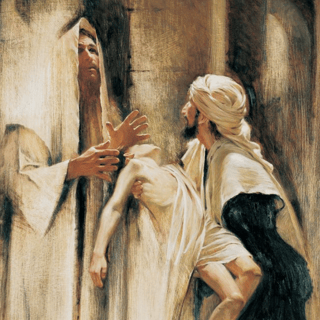
Speaker: And what I really like about in verse 33, it says, a certain Samaritan, as he journeyed, came where he was and he saw him and he had compassion on him.
Speaker: So one quick thing about Samaritans is I think now because this story is so well known, we're not making the cultural distinction between Samaritans.
Speaker: But essentially what I understand is that a Samaritan, so when the Jews were taken into Egypt, they
Speaker: There were some Jews who weren't.
Speaker: And some of those Jews basically intermarried with other people living in the area.
Speaker: And that created a different group of people, the Samaritans.
Speaker: And so they are looked down upon by the Jews because basically they broke the bounds of the covenant.
Speaker: um by marrying people who were not jews um but essentially the samaritan sees him and takes him into an inn and he basically gives the innkeeper enough money to take care of him until he returns um and i think we all know this story it's a great story but there's two things i really that stuck out to me this time that haven't stuck out to me in the past the first is the idea of
Speaker: the Savior being the Good Samaritan.
Speaker: And that I think a lot of times, like in last week, we were talking about Jesus not being necessarily who we thought he was going to be or not acting in the way we thought he was going to be.
Speaker: And I think we can see a type of Savior in the Good Samaritan.
Speaker: He's come to save his people, but the way he saves them is not what they expected.
Speaker: And likewise in this story, the person who saves this man is not the man
Speaker: who you would have expected to be the one who did.
Speaker: And the second, the other thing I like here is when it says, and he came to where he was.
Speaker: I think often we see, I think we've seen over and over again that the savior comes to the people where they're needed, where he's needed.
Speaker: And he comes to you in your own story and finds you.
Speaker: I think we talked about last week, um,
Speaker: healing the man who was blind and the Savior touching his eyes and touching him in a way that he felt his presence and knew he was there in a way that he wouldn't have been able because he couldn't see him.
Speaker: And so we see the Savior doing that.
Speaker: He's coming to him where he is.
Speaker: And the other thing that I think is interesting, and I'd never thought about this before, is
Speaker: But the Samaritan leaves him in the inn, right?
Speaker: He gives the money to the innkeeper and then he leaves.
Speaker: And he says, when I come back next time, I'll settle any remaining debts.
Speaker: And it kind of made me wonder, like, where is he going?
Speaker: And maybe it's this idea of like, maybe he's going back to the road to Jericho.
Speaker: Or maybe he's going back where somebody else needs him.
Speaker: And he will be back.
Speaker: And the idea of him being back as well reminds me that like,
Speaker: He's done this before.
Speaker: You know, this is what he does.
Speaker: And there's sort of a reliance in that, that like he's going back out to help more people, but he will be back because this is a pattern for him.
Speaker: Those are great points, Cassie.
Speaker: I think this story is really interesting in context of how it comes about.
Speaker: And the background there is it says an expert in the law stood up to test Jesus and said, what must I do to inherit eternal life?
Speaker: And Jesus asked him what's written in the law.
Speaker: And he answers and says, you shall love the Lord your God with all your heart and all your soul and with all your strength and with all your mind and your neighbor as yourself.
Speaker: And Jesus tells him he gave the right answer and says, you know, you'll do this and you'll live and you'll receive eternal life.
Speaker: But then he asked Jesus the question that leads to this parable, which is,
Speaker: you know, who is my neighbor?
Speaker: And on that note, you said about, about the Samaritan, you know, coming back and going out.
Speaker: I think the Samaritan in this story, of course, represents Christ.
Speaker: And, um,
Speaker: It's nice to think that this is what Christ does.
Speaker: He goes out and he saves us and rescues us and heals us.
Speaker: And then he comes back and he continues to minister to us as time goes on.
Speaker: I think that's great.
Speaker: Well, I also think it leads to a broader conversation about who is your neighbor.
Speaker: And I think the Savior's choice of characters here is meant to symbolize
Speaker: To symbolize that everyone is your neighbor, there is no distinction.
Speaker: Whatever cultural distinctions that you've created, those don't exist and those don't exist to God either.
Speaker: Everyone is your neighbor.
Speaker: Yeah, absolutely.
Speaker: I mean, that's what Christ did in his ministries.
Speaker: He tore down the existing fabrics and notions of the covenant people versus the Gentiles and basically said, you know, the gospel is for everyone.
Speaker: And, you know, it comes to the Gentiles just like it comes to the Jews.
Speaker: And if you're not part of God's covenant people, you can become one of God's covenant people.
Speaker: So a really interesting story, and I think that leads into a next little bit, which is there's an interesting adaptation of this story in The Chosen, the TV show, where Christ visits with a man who they kind of make out to be the man who jumped the guy who was then taken care of by the good Samaritan.
Speaker: um so one of the one of the thieves and they take the perspective of of this this man and why he did it and and the the guilt that he has after the fact and how christ came to him and ministered to him and forgave him and helped him just like christ also was there for the man who was ultimately the one that was was jumped and injured and um and beaten and
Speaker: And it's really interesting and it leads into this thought that's discussed in these verses in Matthew 18 about forgiveness.
Speaker: And the story in essence goes that Peter comes to Christ and he says, you know, how often should I forgive my brother?
Speaker: He says until seven times.
Speaker: So seven times should I do it?
Speaker: And I think Peter thinks that's a stretch, right?
Speaker: To seven times, you know, to forgive someone is a lot.
Speaker: And then, of course, we know Christ says until seven times 70, which is, I don't even know, 490.
Speaker: And obviously doesn't mean 490 times, just means, you know, you know, an unlimited amount.
Speaker: And the realization that I had about forgiveness that in the last week or two was was really prompted by a forgiveness story that President Nelson shared over Easter is there's a great video about it.
Speaker: And I hadn't seen the video before Easter, actually, but I was just thinking about a situation in which I was really upset with someone.
Speaker: I hope it wasn't me.
Speaker: It wasn't you.
Speaker: No.
Speaker: But it was a situation in which I was just kind of thinking about how I was upset with someone and then that upset had kind of turned into anger and I was just mad at someone.
Speaker: And...
Speaker: I then kind of was showed this video about five minutes later from President Nelson and in the Easter Forgiveness video, it's worth a watch if you haven't seen it.
Speaker: Basically, President Nelson tells this story about how he was a when he was a surgeon young in his career.
Speaker: He tried to perform an operation on two twin girls who were infants.
Speaker: And tragically, they both died and didn't survive the surgery.
Speaker: And the family always blamed him, the surgeon, for them dying.
Speaker: And he, of course, was heartbroken over their deaths.
Speaker: But over the years, tried to reach out to them and tried to...
Speaker: mend the broken bridges and get forgiveness from them.
Speaker: Even though, in the way I think about it, he was a top heart surgeon and he had done his best and he obviously hadn't meant any harm and he obviously wanted them to survive, but he wanted their forgiveness and he wanted that guilt removed from him.
Speaker: But year after year, he would reach out and
Speaker: And they wouldn't respond to him.
Speaker: And then about 60 years later, so at this point, he's in his 90s.
Speaker: They finally responded to him reaching out.
Speaker: And he just tells this story about how he went to them and was basically on his knees begging for forgiveness.
Speaker: And ultimately, they were able to forgive him.
Speaker: And that was able to turn into a friendship and hearts were mended and healed.
Speaker: And it was a great experience of forgiveness for both parties.
Speaker: But what I was really admired about the story and about his example is that, in my opinion, from his describing the situation, I would have viewed the whole...
Speaker: incident as like 5% president Nelson's fault.
Speaker: I'm like 95% the family for holding a grudge for something that it wasn't, he didn't intentionally do.
Speaker: Um,
Speaker: And I thought about how in my own situation, I kind of viewed myself at like 30% my fault and 70% the other person's fault.
Speaker: And what I realized was that in that story, President Nelson, he didn't care about them asking him for forgiveness and him being hardened up or not hardened up.
Speaker: Him being, I guess, harped up by this grudge that they held against him that weighed upon his mind.
Speaker: But all he wanted from them was forgiveness for whatever he did wrong, for that 5%.
Speaker: And I thought about a conversation that my family was having about how God judges us.
Speaker: And my uncle Chris made the comment that too many people still think that we're going to show up and have our good deeds and then our faults balance each other out.
Speaker: When in fact, we know it's all about grace.
Speaker: And I kind of put this idea together about forgiveness, that for me to actually forgive someone, I have to let go of the idea that I was wrong 70% and that I need to repent for the 30%.
Speaker: That was actually my fault.
Speaker: And in fact, I think it's all about me repenting for the 30% and the 70% isn't even relevant.
Speaker: And to truly live that principle of grace, we need to forgive others of all and seek forgiveness for where we have fallen short because it's not about who is more in the wrong.
Speaker: It's about the fact that we were in the wrong at all and therefore we're transgressors and therefore we need forgiveness and we need Christ.
Speaker: And to receive that ourselves, we need to give it unrestrained.
Speaker: I think that's beautiful.
Speaker: Well, I think this also teaches an interesting lesson about being upfront about when you like, not only like seeking forgiveness for your actions, but also like being upfront about like, when you feel that like somebody, somebody has transgressed against you and that you like,
Speaker: that you need to be upfront about that.
Speaker: And I'm not good at this.
Speaker: This is something I'm actually really bad at.
Speaker: But I actually think it ends up doing you more harm.
Speaker: And it ends up being the one that you
Speaker: rather than like maybe they wronged you, but suddenly like if you're unable to confront someone about that or you're unable to like have an honest conversation, then you start to build resentment and hold a grudge.
Speaker: And then the fault for that, if there is some, transfers I think more to you than to the other person.
Speaker: Recently I was annoyed at a friend of mine over something silly, but it had hurt my feelings.
Speaker: And yeah,
Speaker: She brought it up, but she didn't really bring it up to ask my forgiveness.
Speaker: She more brought it up to like test the waters, I think.
Speaker: And so she asked me if I was mad at her.
Speaker: And I said, well, I wouldn't tell you if I was.
Speaker: Mostly because I was trying to avoid this conversation because, yes, my feelings were hurt, but it also felt kind of trivial and I thought, you know, I don't really want to get into this.
Speaker: But, like, I realized after that, like, that was the wrong thing for me to say.
Speaker: You know, like, if you have been hurt or if there is a situation where you think both parties need to ask for forgiveness from the other –
Speaker: God's telling you that that's something that you need to like have an open and honest conversation about because ignoring those feelings, those feelings don't go away.
Speaker: They just grow.
Speaker: And then I think it shifts the burden of who really is at fault and who needs to seek forgiveness.
Speaker: And I think in most situations, both people do.
Speaker: I think there's very few situations.
Speaker: And of course, there are some when one person is completely at fault.
Speaker: That's an interesting insight.
Speaker: Do you want to talk about Martha and Mary quickly?
Speaker: Yeah, I do.
Speaker: So there's a story at the end of Luke 10.
Speaker: And I think this is a story that like, it's interesting because I said I wanted to talk about the story and I kind of got the sense that you were a little surprised that I want to talk about this story.
Speaker: But I think this is a story that a lot of women can relate to.
Speaker: And part of the reason also I want to talk about it is it's one of the few instances where we talk directly about
Speaker: women in the scriptures, but it's in Luke 10, 38.
Speaker: And basically you have this story where Jesus comes into Mary and Martha's home, or I suppose it's Martha's home.
Speaker: And he's sitting there teaching a bunch of people.
Speaker: And Martha's sort of running about the house, doing all these things.
Speaker: you know, serving all of these people and Jesus who have come to like, listen and learn of Jesus.
Speaker: And she's frustrated because her sister, Mary is not helping her.
Speaker: Mary's just sitting there listening to Jesus.
Speaker: And in 40, it says, but Martha was cumbered about much serving and came to him and said, Lord, dost not thou care that my sister has left me to serve alone?
Speaker: Bid her therefore that she helped me.
Speaker: So I think this is relatable to most people.
Speaker: I think most people have been in this situation.
Speaker: I mean, just look at siblings, for example, if you're like helping in the kitchen and you're like, but he's sitting on the couch.
Speaker: He's not doing anything.
Speaker: It's sort of that kind of situation.
Speaker: And I think a lot of times we think, oh, and so then in 41, Jesus answered and said unto her, Martha, Martha, care is not thou art careful and troubled about many things, but one thing is needful and Mary hath chosen the good part, which shall not be taken away from her.
Speaker: So I think personally, and this is my personal belief, that when we're thinking about, I think a lot of times we think about this scripture incorrectly.
Speaker: I don't think in 42 Christ is saying Mary made the better choice.
Speaker: Or I don't think in any way he's disregarding Martha's service.
Speaker: I think that they're both good things.
Speaker: Martha's doing a good thing and Mary's doing a good thing.
Speaker: And I think that the way, you know, like the way that we serve and the way that we are receptive to hear the words of Jesus is different for different people and different situations in different moments.
Speaker: And go ahead, Will.
Speaker: I just, I think that's why Jesus's teachings can be tough.
Speaker: And there's something from last week's come follow me about how the priests, the Pharisees come to Jesus and they say, why don't your disciples wash their hands before they eat according to the traditions?
Speaker: And the traditions are, um,
Speaker: just, I guess that traditions that have come about, um, from the law of Moses that aren't in the scriptures, but had started to be done and, and thought of to be, um, like commandment.
Speaker: And Christ basically comes back at them and says, well, why don't you guys keep the commandments?
Speaker: And, um,
Speaker: You know, Christ, what the Pharisees are advocating for here is like good hygiene.
Speaker: They're saying, why don't you guys wash your hands before you eat?
Speaker: It's a good practice.
Speaker: And Christ isn't saying that's a bad thing to do.
Speaker: What he's telling the Pharisees is that they're missing the point and they're focusing on these little things that don't matter in the eternal scheme of things.
Speaker: Like, yeah, I mean, they'll probably be healthier and avoid disease better if they wash their hands.
Speaker: And it's a good thing.
Speaker: But
Speaker: the savior, the son of God is, is sitting there and the disciples are choosing to be with him and to listen to him and to hear him and to come onto him.
Speaker: Whereas the Pharisees are looking for excuses and, and, and reasons why they're, um, why they're not in compliance with, with God.
Speaker: And that's the lesson I think of the story of Martha and Mary.
Speaker: And that's the lesson of the, of that story is, is about prioritization and about choosing the better part and choosing, choosing the things, you know, good, better, best, choosing things that are, that are best, the things that are going to bring us closer to Christ and that ultimately are going to make an eternal impact.
Speaker: Yeah.
Speaker: I mean, I think that's great.
Speaker: Well, but I also think, see, I think I would quibble a little bit, honestly, with the good, better, best here.
Speaker: I think,
Speaker: I think obviously you see like the value and what Mary's doing, but I think there's also a similar value in what Martha's doing.
Speaker: I mean, Martha is functionally living what Christ is teaching.
Speaker: She's serving her fellow men.
Speaker: And I think, I think,
Speaker: I guess I would say that I don't think Mary's is necessarily better than Martha's.
Speaker: I think maybe at the time, I think that we have different times and seasons in our life and even different points in our day where we might be more, um, more open to, or a better type of service or a better, a better way or the best way, um, changes throughout the day.
Speaker: And so I think this is more about, um,
Speaker: I think this is less about a comparison and more about the ways in which the gospel is individual.
Speaker: And it's about making individual decisions for yourself about the best way at a particular moment in your day that you can live your life and that you can listen and really act upon the words of Christ.
Speaker: The other thing I just want to point out, and this is a super side note,
Speaker: Well, I don't think it's a side note, but it's a side note to this discussion we've been having.
Speaker: I think there's also this piece in here, which is really quite neat about Mary and Martha and like the characters we've chosen in this story.
Speaker: Um, because I think everything that's in the scriptures and everything Jesus does is very specific and the conversations he has with different people and the stories that he tells and the characters through which he teaches those stories are intentional.
Speaker: Um, and I think it's intentional that we're talking about two women here.
Speaker: Um, um,
Speaker: Obviously, at this time, you had a greater distinction about like traditional roles between men and women.
Speaker: And often, you know, I read one Bible scholar was talking about how typically Martha would not, Mary and Martha wouldn't even be in the same room as the house, right?
Speaker: They would be in the kitchen and everyone else would be in the other room learning from and talking with the Savior.
Speaker: But I think the point here is that everyone is welcome and it doesn't matter that they're women.
Speaker: They too are welcome at the feet of the Savior.
Speaker: and to learn from him and to sort of take away those teachings from him.
Speaker: That's a great point.
Speaker: And I think that that's the message at the end of the day that Christ gives is we're all welcome, you know, Jew, Samaritan, Gentile, and, you know, he will come to us and he will come again and again to tend to us.
Speaker: And, you know, I appreciate the thoughts, Cassie.
Speaker: And it's a,
Speaker: It's fun to be able to do come follow me and talk about these experiences and these stories of Christ and how they can change us.
Speaker: Whether we're on the road to Jericho ourselves or if we're being tended to in the end, I think the message is that Christ is there and Christ will come.
Speaker: So I'll close there.