Transcript
Speaker: and welcome back to Podcast 13. I'm Ian. And I'm Vanessa. And this time we are really back from quite a journey. This is episode seven and we're coming in to it straight from two different places geographically and conceptually.
Speaker: Exactly. Over the past few weeks, we've both been traveling, attending conferences on AI and in the arts. And what's interesting is that we were on completely different sides of the planet, but the conversations where we encountered were deeply connected.
Speaker: One of these was in Malta and the other one was in Toronto. Different contexts, different communities, but the same core questions running through both. How is AI shaping the way we create, perform and remember experiences?
Speaker: And what does that mean for theatre, for artists and for spaces like Venue 13? So today's episode is about reconnecting these threads and bringing them back home. Let's dive in.
Speaker: I want to start with Malta. We were invited to take part in Vanishing Act's AI performance technology and sustainable memory, which was hosted by the University of Malta. The title alone of the conference already raises a lot of questions.
Speaker: We were there with our production, AI Campfire, and gave a talk on the trinomial futures encompassing nature, humanity, and technology. Ian, can you share a little bit about the focus of this conference?
Speaker: Yeah, there was a lot of discussion about the idea of performative knowledge, that knowledge doesn't just exist as something we share or store or document, but it's something that happens through practice, through bodies, through a time.
Speaker: And that becomes complicated when you start introducing AI, because then the question becomes what happens when that knowledge is digitalized, automated, or abstracted away from the conditions that produced it.
Speaker: So it's not just about preserving knowledge, but how the knowledge changes in the process. there was a strong emphasis on the ephemerality. Like we're talking a lot about theater and dance and on the fact that performance is something that disappears and maybe it should disappear. But at the same time, then there's this push to archive, to capture, to stabilize, to come to like, what is the true record of the thing that happened?
Speaker: What stood out the most to you about the conversations there, Vanessa? Vanessa? I think you're right in what you said. There was a a few points there that say that AI will always try to be agreeable. And that there was also this idea that real art is conflicting and it also sits in the discomfort.
Speaker: And that's something that stood out to me. And another thing was this keynote that we had by Chris Salter. He started by giving us a a tour of all the terms that meant what is AI today, but kind of the beginning, so throughout the years. So he presented AI as this tool that is embedded in these questions of action, but then throughout the years it changes politically, you know, so it changes about questions about agency, and then lately it's very much a question about the environment. So one of the key things that his critique was was called closed systems of optimization.
Speaker: and So most AI systems are designed to become more efficient, more accurate, you know, more optimal. um And they are self-regulating, so they they will always prioritize this efficiency. And they're built to produce predictable outcomes, which makes them reliable, but at the same time, artistically a bit dull.
Speaker: And so the point that he was making, and this is really will stay with me, is that this kind of closure is not the technical. So... Because it's not technical, the cultural condition that reflects is broader. So, for example, when they this optimization becomes this this dominant logic, it starts to shut down other ways of thinking. And this is what I'm saying back to AI will always be agreeable. So especially the the kind of thinking that art depends on, such as disambiguity or speculation or conflict and the things that don't resolve themselves neatly. AI doesn't like that. So it will always err within a bias.
Speaker: So that's, again, that's what it's meant to do But the problem is, like guess, when it's widespread and people don't know that that's what it does, it becomes sort of like the norm and it starts killing out the the artistic element within things.
Speaker: In the previous episode, we talked about the closure of the Center for Contemporary Arts, the CCA, and discussions about this. It's not just about one space closing. it starts to feel like a a wider pattern, a kind of cultural closure. Spaces that allow for open-ended, non-optimized experimentation start to disappear.
Speaker: There's a link between the way that AI systems are structured and what's happening to cultural spaces. Because at the same time as these physical spaces, while they're disappearing, we're seeing digital infrastructures expanding. But those infrastructures are often like very opaque to the user. They're centralized and driven by very different priorities than, you know, an art space. So the question becomes, what kind of space is left for artistic agency?
Speaker: I think the also what they were talking about is more the idea of defining the agency as something relational. So this keynote for Salter, in the keynote he was drawing on biological theories, talking about the difference between closed systems and what's called operationally closed systems. So this closed system is isolated, but an operationally closed system still maintains internal structure,
Speaker: as it interacts within its environment. So that is the part that becomes important when you think about AI and arts institutions, because if yeah AI is being treated as this closed optimizing system, and at the same time, institutions are disappearing, then we're losing the environments where agency can actually emerge This is about the ecology around the technology. What disappears with spaces like the CCA is not just the venue space. It's that form of openness, the place where artistic, social, and political forces can interact in unpredictable ways.
Speaker: And so, you know, Vanessa, where do you think art sits in all of this? I think that's that's sort of like what we're coming around to in the in the idea that the art is fundamentally non-optimizing.
Speaker: It doesn't need this drive that AI has to make it right, make it neat or close it It's kind of like art is something that is is out there to to make you feel and represent things that happening around the world.
Speaker: And it sometimes it's not meant to have a nice and neat package around it. So where AI is trying to reach the best possible outcome, art that's enough doesn't do that. It's often the opposite. It stays unresolved. It embraces this failure. It resists the efficiency that AI pushes for.
Speaker: And that creates ah this tension. Because on one hand, you have artists that increasingly using AI. But on the other hand, you have the underlying logic of those systems that doesn't necessarily align with conflicted feelings the art that that are part of this artistic practice in general. So even though there are shifts happening in AI research, so we're moving towards more agent-based systems, the dominant model is still tied to optimization and by extension to efficiency and productivity.
Speaker: This is also very similar to what we talk about usually in our and our talks about trinomial features. You know, what are we going to do with all of this push for productivity? And again, that's where the loss of physical spaces matter, because those were places where non-optimized practice could exist. There's also this question of sustainability that then comes up a lot in these conversations because ai is often framed as supporting sustainability.
Speaker: But when you look at the material reality around the energy consumption, data centers, resource extraction, it's a lot more complicated. So you end up with this paradox. Culture institutions are clues closing due to lack of funding while high energy digital infrastructure is expanding.
Speaker: And when someone in the audience asked this really simple but important question, what is actually sustainable about AI? The answer was not straightforward. It came down to balance, thinking about both the benefits and the costs.
Speaker: But it definitely opened up that tension between the idea of sustainability and the reality of what's happening. This has been a huge focus of our work as well, right? Like what happens when you apply this idea of efficiency and optimization towards expanding inefficient systems? Like how do you define what inefficiency is? Like something that is not necessarily optimized for a single ultimate, but like it's a complex goal,
Speaker: And that sort of becomes i idea that we're basing these relationships in for it. And that becomes really interesting, especially when you start to think about like the way that resources get used by these data centers, like their choices, not necessarily made by the AI itself.
Speaker: The AI isn't choosing where the data center is. Maybe, maybe there's some model somewhere that's like being asked, where should I put a data center? Where does it make the most sense to do it? But, you know, the way that it does energy consumption, the way that it needs a water consumption for cooling, the way that that like architecture is built it is a is a human choice for it. And I think that' that's a really interesting like tension to exist with it on that side as well.
Speaker: Yeah, no, I agree. And I also think it's all like, but this conversation, what this, I guess, this point of this podcast specifically is to highlight the importance of the funding. And it is basically we're trying to say here, and the reason why this is such an important topic is that you have these organizations that are closing down. Also, a lot of funding is going towards this new and, you know, AI models or data centers or, you or this idea that AI will actually you know step up and fill this cultural gap. And what we're trying to say here is that it won't, because what will give us what we will end up, if this continues to happen, is this sanitized version of what art should be. But at the end of it, it's actually not being truthful to really what art should be, which is the discomfort, really stay the the questioning, you know the emotions and the things that are not necessarily ah nicely packaged.
Speaker: So another key point was that AI isn't this fixed concept, so it has shaped historically. So since the 50s, it was about the rule-based problem solving, so this became this data-driven and statistics like it was statistical. And now we're talking about generative systems, agents, and things that will feel autonomous.
Speaker: So each of those definitions reflects the time they come from. So the technology, the culture, and the power structures of that time. So the way we talk about AI now has as much to do about us as it does about technology of our present time. So right now we tend to frame AI in extremes, either something that will save us or something that will destroy us. And you will see that the current conversation around AI is very tied to in the environment.
Speaker: I think that's that this that connects to the idea of vanishing acts. That's where they really land, you know, the title of the conference, because it's not just one thing disappearing. It's happening on a couple levels.
Speaker: There's the material part of it, the actual like spaces closing, like practices ending, things like that. And then there's the epistemic, like the narrowing, how we think about agency, creativity and intelligence and,
Speaker: And maybe, you know, that's where art still has a role to resist that closure, to keep things open, to complicate that narrative and to hold onto the possibility of thinking differently. i think that this got covered in a ah few of the other sessions that we ended up getting to attend as well. Like.
Speaker: roeberger feibrink who's from ual university of arts london was you know talking about the different things that wekinator a platform a program that that she designed that people use for like a visual recognition of of different things so that they can implement that within creative practices was really interesting Because it's it's looking at it as co-collaborator and not just as like, this is the actual tool. It's creating an output for it. It's something that can't exist on its own. And there were a number of different ways of looking at archiving ancestral and and diasporic futurities.
Speaker: We were looking at it in terms of Brenda Sanderman Bravo's like real-time full-body multiplayer interaction with dance models and a i which was, you know, a bit of ah an interactive installation that was also there.
Speaker: Conversations around artificial versus effective intelligence. Yeah. It was an interesting collaboration between departments of performance, including theater and dance and music, and also ah computer science and artificial intelligence that I think I left with as many more questions or opening up as many more things as I did, if not more than when I showed up with ideas that were there by trying to have a conversation about these things and where they fit culturally.
Speaker: But just after we went to Malta, we traveled to Toronto. I'm based there, so really it's you who was traveling to a new place. i just went home. We attended the Creative AI Symposium, which was hosted by the the Creative AI Hub at Toronto Metropolitan University, TMU.
Speaker: And where Vanishing Axe was looking at AI memory and performance and some robotics. Uh, this one in Toronto is much more grounded in like contemporary, like practice that's happening right now. And what artists are doing right now with AI, especially within the creative AI hub and how they're integrated into workflows and collaborating with technologists or working as technologists and how quickly those practices are evolving. This is really interesting in that it came right after the department of heritage Canada had hosted an AI and culture.
Speaker: summit sort of There's a plan that's supposed to be coming out. And they brought together a bunch of people to talk about what the state of that art is, the literal state of the art.
Speaker: And there was a real sense in that conversation that AI is no longer something that's external to the creative process, that it's becoming something more like a collaborator. Artists are working with generative systems, they're training models, they're experimenting with outputs. In some cases, you know building their own tools, because a lot of these models that we're looking at are open source. So they'll modify them.
Speaker: And so the relationship starts to feel much more embedded and reciprocal. Alongside that, there's also quite serious conversation about authorship and ownership. ah Because if a work is generated through a system that's trained on vast data sets, who owns that output?
Speaker: but In most legal systems, like a machine can't hold copyright. It has to be human. But then when you get to these collaborations, how do you define who the author is and what responsibilities come along with this? This is all underpinned by this incredible speed. The tools are evolving so fast that even within the space of the symposium, people are already talking about things that felt slightly outdated. I know we talk about that a lot. like AI campfire, we had our initial run of it, our premiere of it in August of last year. Yeah, August 2025, right? And now here we are in in April of 2026 having these conversations, eight months later, and we would have taken out a completely different process. Like, there's been multiple jumps in
Speaker: not just one, of evolving these types of of software. So it's it creates this sense of the ground constantly shifting underneath your feet. No, yeah, I absolutely agree with that. So to me, Toronto felt, mean, it was it was great to be back. I did not see any raccoon, so that was really upsetting, but it was really nice and sunny. um It was fantastic to be part of that conference.
Speaker: It felt like the meaning of AI in the arts was treated more as a fragmented concept. but in a productive way. So like people were more, you know, this is what it is, this is what we're using, what can it do? There wasn't really a single consensus, but there was a sheer urgency that everyone seems to agree that something significant is happening, and kind of as a movement.
Speaker: And if they disagreed on what that meant or where it's going, I mean, it doesn't really show. There was really a lot of, you know, what are you doing and what are you doing? What can I do with that? And so there was a lot more collaboration, it seemed.
Speaker: So there was this mix of excitement and bit of caution running through the conversations, I guess is what you're saying about the ownership. On one hand, you have people that are genuinely energized by the possibilities, so new forms of expression and the collaborations.
Speaker: But on the other hand, there's this real awareness of of the risks, so these ethical concerns, the issues on labor, the questions around it the dependency on the corporate platforms. What came through quite strongly was that the artists don't want to be passive users of these tools. Like you said, that they are out there are creating these things. There is this recognition that they need to be actively involved in shaping how these technologies develop.
Speaker: What's really interesting, if you think about it, is is how these two events start to connect when you put them side by side, because it almost feels like they're asking two sides of the same question. One is asking what we might lose, and the other is scoring what we might create.
Speaker: In Toronto, there was a lot of focus on innovation, on what new forms are emerging, what new possibilities are opening up. There's this tension between pushing forward and holding on to cultural memory. I think what's really important not to separate those two things, but to hold them in relation to each other.
Speaker: And if we lose that context, and even if something is technically preserved, it's not the same thing anymore. That's where theater becomes really important, actually, because it's a space where these two questions can be explored live in real time with audiences.
Speaker: It allows for that tension to exist rather than conforming to the AI tendency to resolve it. When I was in Montreal at this AI humanities sandpit and sort of the token theater person there, right? was only person who did theater. There was other people who worked in the arts.
Speaker: The other theater person, we were talking about this idea of collective memory making, that it's something that we agree to on it and and talking about each of these instances and what AI does is sort of like...
Speaker: It attracts to these gravity wells of like dominant attractors of flattening culture. Right. And sort of everybody in the room across the, you know, the different humanities fields that were represented there was like, that's not what we want to do That's a racing culture. That's a racing complex meaning.
Speaker: And saying ultimately that the most statistically prevalent culture Data that's out there on the training model ultimately ends up being the right, the quote unquote right answer. People can't see me doing scare quotes right now, but the right answer for that.
Speaker: And as we talked about it, we were explaining, well, it's like, actually the way that like meaning making happens, it's a social process that we get to like agreed truths for things. And if you really wanted to establish what the truth was, you get a group of people together and they take like an event and maybe they pull out specific facts from it and then they'd reenact it and like put it together. And in reenacting that there'd be like, it would be within the context of a larger group so that like different people were seeing those perspectives and then they could have a conversation about it.
Speaker: which I said, it was like, oh, so you mean theater and people were like, yeah. What mean? Tell me more. was like, that's, that's for a lot of theater. That's the process of theater is we're not trying to get to like one truth, but we're trying to have this conversation with a bunch of people in a room and we're distilling it down to the parts of it that we want to dissect. Sometimes it's very personal. Sometimes it's bigger issues, but it's very abstracted in that it's very human way of socially constructing like collective meaning and collective identity.
Speaker: for it. And i think what we're going to see, and I've seen some articles about this recently too, is that, especially because like, things in person and live, you can't question the authenticity when you're talking about like synthetic content, like generative AI content, that we're going to need a lot more theater moving ahead, not just to counter AI, but also to understand what it is and to, for it to learn what it means to be, to actually be useful to, you know, long-term human survival.
Speaker: These conversations about AI aren't happening in isolation either. They're part of a much wider shift across the immersive sector, including XR.
Speaker: So at the symposium, this came through quite strongly in discussions about virtual production and AI-driven environments. There's a panel at TMU moderated by Afsin Asudi that brought together practitioners from across industry and academia.
Speaker: And what was clear from that discussion is that storytelling is still at the center, but but the tools are changing about how the stories get constructed, visualized and experienced.
Speaker: Uh, there were also project like Michael Wheeler's agency, a protocol for an AI performance from your, where I teach, he's a colleague of mine. We're actually going to be co-teaching next year, which blurs line between system and performer.
Speaker: Yep, and I think what we're seeing is that the boundaries so like between the theatre and digital art and the immersive experience are becoming much more fluid and they're overlapping, but this is also constantly shifting. And I think that it's okay as long as there is this slow, sort of, you know, like the step back that we take the control if we are involved to say, i don't want organizations where, you know, artists can actually have the conflicting art to disappear because then the AI right, rightness will take over. And then, like you said, you were the only token person at this theater person at this group. And they could not have seen that this was about theater.
Speaker: if it wasn't for you there. that that You were already telling them there is a system that already works, that does everything that they were presenting, and they did not know to you know to associate those two things together. So the problem this is the problem I'm talking about. If we're closing down artistic organizations, most people won't know about the options that they have and where they can experience different perspectives. So whether it's AI, XR or immersive work, the core question is still the same. How do we create experiences that feel meaningful, that connect people and they will hold attention and in a world sort like where what's increasingly mediated by technology?
Speaker: And yeah, that that is an area where theater has a lot to offer. Agreed. So while this is happening globally, we've been very lucky to attend quite a lot of art and exhibitions. One of the things that we attended when we were in Malta was this government-funded exhibition, which was this cube, and which had these mirrored walls. And I believe that's a thing called Malta of the Future.
Speaker: Now, I did do a video on this, so you will find it on the description. It's under the Be Kind Arts channel on Instagram, so you can get an idea of what it looked like. So you went to this cube and you experienced in about, think it was like seven to 10 minutes,
Speaker: what Malta would look like in 50 years. And we know with the use of AI and technologies and how they're going to use those technologies to create a better tomorrow for Malta. And it went through lots of different industries. so There was health and there was technology and there was arts. and education.
Speaker: And it also has this big message with sustainability and how it pulls the community together to you know so that everyone feels part of this journey. And it's kind of like this net zero goals that they had for Malta. And it is something I would like to see in other cities like Edinburgh and more cities in general, because I do feel like there was this big boom of you know the net zero goals and the 2030. But I feel like that's kind of died a little bit. And I do believe that the conversations of AI and and environment sustainability has taken over. But there isn't really a conversation of where that fits within that original message and what we're aiming towards. And I do feel like that having a an exhibition like that
Speaker: And, you know, even if it created Scotland or something that, you know, they they could work together. And it also is quite good for tourists as well, because we were tourists from Malta, but we really enjoyed it. And it really gave lot of inspiration. So I do feel like that's something I'd like to see and do if you're interested, please have a look at the link that we're going to put in the description.
Speaker: and while there is a lot happening globally there's a lot happening in edinburgh too but we are in you know final preparation for getting all of our shows registered those will be coming forward we'll be sharing all that information in an upcoming episode so stay tuned for that but if you're in edinburgh right now and you want to see something and you can't wait for the fringe We were both sort of intrigued by a play, a pie and a pint presenting off the rails at assembly Roxy. That's going to be from April the 29th until May 3rd.
Speaker: That's a live looped musical comedy by Stephanie McGaird that follows a woman on a train journey as she confronts a personal crisis. It combines original songs, humor and character driven storytelling. The ticket price also includes a drink. that You can have a beer, wine or a soft drink.
Speaker: They don't have to have alcohol. alcohol And a meat pie, ah which there is a vegan option in case you thought that our vegan cred was slipping here at Venue 13. And there's a £1.50 booking fee. There's some transaction fees that would apply when you buy them online. But you can see them at playpiepintnospaces.com.
Speaker: So that's playpiepint.com. Say that for three times. I think I just did.
Speaker: But as always, this week's Climate Change Theater Action reading continues our connection to global voices responding to the climate crisis. These plays remind us that while technology is rapidly evolving, the need for storytelling, reflection, and action remains...
Speaker: And as usual, Ian, I'm going to continue my really bad habit of not reading the plays ahead of reading them here. So then you get the full run motion. I think like, was it a couple of weeks ago that was in tears?
Speaker: And i was like, oh my God, why am I reading this? And then i realized that, no, I am actually reading this because this is the correct reaction. And I am a human being after all. For this episode, CCTA reading, we're going to be reading the project hope by Catherine banks.
Speaker: Catherine banks is based in Nova Scotia Canada. Her play bone cage asked the question, if a man's job is to destroy what he loves the natural world, how does he treat the people he loves at the end of a shift?
Speaker: She is the recipient of two Governor Generals Literary Award for English Drama. Her play Downed Hearts from 2023, inspired by the Swiss air disaster, focuses on the fishers who went out to rescue people and came back forever changed.
Speaker: In her introduction to the Project Hope, she says, i think children are enthralled with the wonder of all living things, but most people lose this in the business of life.
Speaker: My play is about remembering that wonder and using it as a blueprint to reconnect to nature and then to fight for all the beauty we are losing. There are two characters, Dr. Hope, female, who will be played by Vanessa, and an observer who could be any gender, but will be played by me, Ian, also contribute stage directions. A laboratory.
Speaker: The room is dark except for many small glass jars glowing with vibrant colors around the space. Dr. Hope is sitting at her desk, waiting. The Observer arrives. The Observer seems to expect some reaction, but none is forthcoming. It's over!
Speaker: This Hope project of yours has failed. Did you hear? We've... I've... closed it down. The lights have been... Yes, yes, turned off weeks ago. Look, you told us people would leave here renewed.
Speaker: They are renewed. But renewed to action? Energy has been created. Look, the power has been turned off for weeks, yet these jars, they glow with light.
Speaker: Doctor, simple tricks that a child could do with a toy chemistry set. You didn't want to shut the project down, did you? Who wants to feel completely without hope? But there's been no action, so What if you are the fulcrum, you? You are that thing that will play the essential role in the Hope Project and the world. Would you participate? Ridiculous. Me?
Speaker: No one person is the solution to changes coming. Are here? Do you know that there are stumps of trees felled 500 years ago that live on yet under the earth, nurtured by the trees around them?
Speaker: Think of it. Whole networks of trees gathering light from the surface, moving the neutrons down to their own roots, but then pumping sugar to the roots of those stumps unable to gather their own nourishment?
Speaker: And for what end? Will the stumps push out a branch with the leaves ever again? What is it that compels the surrounding trees to continue to support the life of something that, to you and me, is dead? On some level, the nourishing trees must believe that one day the stumps will revive and thrive.
Speaker: I fought for this project, and you talk of dead stumps? Unbelievable. Not dead, living still. Aren't you curious about these memories here? Memories? Dr. Hope holds up a glowing jar.
Speaker: Memory as kinetic energy. Guides observer to a chair. Does that even make scientific sense? Memories transform into energy. Let's say that.
Speaker: I can't tell you how it happens. I only know that it has over and over again. Sit. I don't know what good having me participate will do. The trees that feed the roots or stumps over 500 years are without a goal or outcome. Hold this jar in your right hand.
Speaker: Now tell me your first memory of the natural world. When I finish, is it understood the project is over? You will get to the side. I'll give you that.
Speaker: I was four years old. Press in 10, please. It helps. I am behind the house by myself. My mother watches from the window. My older brothers have run off.
Speaker: It is hot. Very hot. And there are flying grasshoppers in the long grass all around me. Are there flying grasshoppers any longer? i see them in your memory. Observer becomes the child as he tells the story. I catch one.
Speaker: I can't believe it, but I do. i cut my hands together. I feel his straw legs, his body moving around on my paws. I peek in at his eyes. Oh, the eyes. He spreads out his wings. It scares me a little and I drop him.
Speaker: My palm has a little brown spot. Molasses. That's what they say. He's left his molasses behind. Observer touches, tongue to palm, the glass jar and his right hand against the glow. I don't understand. There was nothing in the jar. It glows with your purest wonder of the natural world. This is not a metaphor.
Speaker: This is my memory. The first time i know that I know the name of the bird fishing at the river's edge. Kingfisher. am six. What good are memories, however magical?
Speaker: If you're asking what the outcome will be, I don't know. I only know that we are forgetting the beauty of the world. We see the present as everything on the brink. We see the future destroyed by draft or flood or fire. And yet, if we tell the purest beauties of the world in our experiences by our child selves, there is created, I believe, a nourishing energy for the planet.
Speaker: This energy is my Kingfisher. This is your flying grasshopper. Do we not hope that the Earth will be sustained by this energy for as long as it takes until the moment of the planet's renewal arrives?
Speaker: The energy of... Wonder. You are the fulcrum. I am the fulcrum. Out there, their memories are the essential elements to keep the world alive. You can close down the project or we can go out into the world and ask everyone over and over again, what is your first memory of the natural world?
Speaker: Until we have created enough energy, like those nourishing trees, to care for, to sustain and renew the world, we can hold enough memory for the future to retrace its own blueprint.
Speaker: Is wonder energy? Is hope action? You decide. The stage darkens as the jars break with intensity. End of play.
Speaker: Well, that's it, folks. What this episode really shows is how connected these conversations are. From Malta to Toronto to Edinburgh, artists are asking similar questions. Yeah, how do we create, how do we remember, and how do we do both responsibly?
Speaker: And as we move forward, like you said, Ian, with Venue 13 and Future 13 and the plans for this year's incredible fringe, those questions will stay at the center of what we do. Thanks for listening. And we'll see you next time.
Speaker: Thanks for listening to this episode. If you enjoyed the conversation and the play and want to know more about our travels through AI and culture, make sure to hit subscribe so you never miss a future episode.
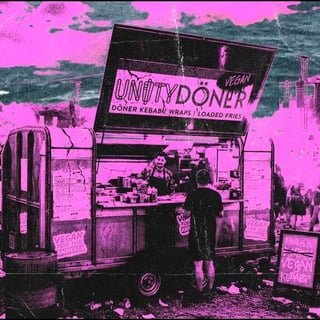
Speaker: You can find us wherever you get your podcasts. In addition to this podcast, we're also excited to announce that we are starting a crowdfunding campaign to support bringing a food trailer outside of the venue for this year. We'll put some information onto the webpage and have more information about that coming soon.
Speaker: But as we expand our programming inside Venue 13, let them move some of the food outside, and we'd love your help in making that a reality. If you've got any other thoughts, questions, or future ideas for Venue 13 or for an episode, we'd love to hear from you. You can reach us at podcast at Venue13.com. That's the number.
Speaker: not spelled out, Venue13.com, and across the socials similarly at Venue13Fringe. Our back episodes and transcripts can be found on our website at Venue13, Venue13.com.
Speaker: The music you heard through the episode is by Dusty Dex, and we get that through Epidemic Sound. Until next time, thanks for listening, and we'll be back with another episode soon.