Transcript
Speaker: So I always look at like the way that I kind of connect people and build my network. It's like, how do i provide something of value to the network first before I start taking from it or receiving from it? Welcome to Friction Reloaded, the podcast.
Speaker: I'm Florian Schleicher, a marketing strategist, and this is where we cut through the noise. Because everyone is talking about trends, but most of it is noise. In this podcast, I sit down with industry leaders, marketers, and strategists.
Speaker: And together, we don't just talk about what's coming. We uncover what it means and what you can do with it. It's all about real perspectives and actionable insights. No fluff.
Speaker: So let's dive in. Today I'm speaking with Fredrik Böderström. He is the world president and chair of the IAA, the International Advertising Association, a body that spans 56 countries bringing agencies, brands, media owners and academia under one roof.
Speaker: He stepped into that role in 2025 after leading the UK chapter from 2017 and becoming the global chair in 2024. By day, he is the director of international agency development at LinkedIn across the EMEA and Latin American markets, working with brands and agencies from countries like Germany, Austria to Spain, Israel, and Brazil.
Speaker: And before LinkedIn, he spent years in global media and tech at Euronews and Eurosport, close to 25 years in the industry, all told. Very happy to have you with me here today, Frederik.
Speaker: Thank you, Florian. It's a pleasure to be here. Makes me sound old when you say 25 years, but I guess its age is is just a number, I guess. Totally, yes. So when we talk about age also, we also can talk about the future, not just the past. And in this podcast, I really want to focus on trends. So I would be curious, in your current role, both at LinkedIn and also at the IAA, what do you currently find fascinating to watch when it comes to marketing and advertising?
Speaker: There's tons, right? I think it's an incredibly exciting time that we are living in. I said, I've been in this industry for 20, 25 years and um started out in TV, then went into TV and digital, then went into pure mobile. And for the last 10 years, I've been on the platform side with LinkedIn. So touch quite a lot of the different parts of this industry. The future we have ahead of us, and actually if you're thinking you about the probably the past 12, 24 months, you can't really get past the whole notion of ai right? Yeah. It is basically having a a role in every single thing that we do. And one of the kind of trends that I'm finding fascinating at the moment is basically how we now and as an industry, how brands and agencies are having to pivot completely.
Speaker: from what they do, what they say, what content they produce and share in this new world of LLMs, right? Like our behavior and consumers' behavior all over the world has completely changed, right? No longer do we go on to to Google and just search for whatever we want. like We are now having full-blown Q&A sessions, discussions with the likes of Claude, Copilot, ChatGPT,
Speaker: And that's where also our consumers or buyers are kind of doing their research. So for us as an industry, we just have to figure out, like, how do we adapt to this new world? And brands in particular have to figure out how do they show up in these elements? Because if I'm a B2B buyer, for example, like, I will do 80 plus percent of my research before ever reaching out to a salesperson.
Speaker: yeah And I will do that with an LLM most likely. And whatever shortlist I get there is the one I will then use for briefing. So that to me is like, obviously the top of eye is massive, but like really how the consumer behavior is shifting and how brands are adapting to it. I think that's ah fascinating and something, you know, is evolving every single day. So it's not just brands using L&Ms, but also people, everybody.
Speaker: And we know that half of all long form posts on LinkedIn are now likely to be AI written. One of the things that we as a platform are taking incredibly seriously is, no matter how do we build a platform at a feed that is full of credible, real content written by real people and that comments that are in those posts are also by real people.
Speaker: Yeah, it's something that is top of mind for our our team and our engineers. And I actually recently shared a post from our CEO that he outlined some of the work we're doing in this space. So,
Speaker: It's probably also hard to really narrow it down what the actual percentage is because many people may be using lines that they get from an L&M and then they combine it with their own thoughts. But I think the interesting thing is, and and I did a post a couple of weeks ago on LinkedIn, which was my second most viewed post this year, which was me saying, i will unfollow everyone who visibly uses AI to write their posts. I saw that. I think yeah i think yeah I liked it or put it as an insightful one. I i saw that as well. yeah And it blew up and it also shows I think what lots of people are experiencing right now is that so much feels just so unauthentic and I think I read this somewhere.
Speaker: ah from a fellow strategist that she said, it feels like the contract is broken because I subscribe to you, for example, because I want to hear your voice and not what Claude or something else writes for you.
Speaker: And we see the same with brands where some brands like Lego or Gucci, I think, are actually being punished by consumers when they do too much with AI. And then consumers say, hey this is not real. this This is not what I signed up for. Yeah. No, I think so too. And I remember speaking to someone um at an event a few months ago, and he was like, saying, if you haven't bothered writing it, why should I bother reading it?
Speaker: um And I think, you know, I think that is a pretty right position to have, right? I would be curious, what do you hear from people, brands, agencies that you work with in the IAA when it comes to AI? Is there a certain anxiety around that topic? Is it more excitement? Is it more, we don't know what's going to happen? I think there's a lot of excitement. There is obviously, like with every industry, I think there's there's a healthy dose of anxiety.
Speaker: skepticism or or concern into what will this mean for, let's say, the agencies or the platforms or the brands, right? like um But I think in general, it is an air of excitement. i like You're able to to do a lot more. You can test and learn a lot more, right? One of our members is a synthetic research company.
Speaker: So you can do market research with synthetic data and synthetic groups of people. So all of a sudden, you can test something very quickly and actually get great data back, which is now kind of something that wouldn't have been available to a small startup, right? Because you wouldn't have had the money to pay a a Nielsen or Kantar to do you know a massive study or these things, right? So you are democratizing some of this intelligence that has been available only to the large global corporates, right? so So in that instance, yeah, I think there's a lot of excitement around it. you know Time to market could be quicker.
Speaker: we can kind of leverage tools to make us more efficient and then hopefully allow like the people that are in these roles, in these companies to do things that humans do best, right? Like be really creative, leverage like the experience that you have from 20 plus years in industry or third plus years in industry. It's like, and have that kind of almost like, like gut feeling. I'm like, it's, this will probably work. Right. I think it was, uh, so John Hegarty spoke a little bit about originality in the past. And he was like, there's no, no one is kind of a completely unique and original. Like you just have to, you're adapting something that's happened before, but I, it's the person behind that is basically fixed up. Yeah. Now it's correct. Like this is now right. Now we need to go. So I think there's like, um, kind of the human engagement, the human interaction, the kind of the partnership you build, these things are still not something that an AI tool or an LN can do. right So it's probably an air of excitement. I totally agree. And I just wrote a newsletter about this skill of critical thinking
Speaker: that the AI can't do for you because it will always try to give you what you want, what you've briefed it. yeah Whereas in marketing, it's oftentimes our job to challenge the people around us and to say, hey, I don't think that is actually the best thing. Or let's look at a door that nobody's looking at right now.
Speaker: And that's the sparks of inspiration that come from outside or connecting the dots. I can still remember when I started writing my trend report, Friction Reloaded. And I started in November just reading a lot of other trend reports, talking to a lot of people. And then I ended up with 600 pages of screenshots, quotes, data. And then I was curious and I just fed it to all the other lamps. And I said, okay, now deduct five things out of this for me that I can build a report on.
Speaker: And it didn't work. yeah Because it wasn't able to make these connections actually, because it was just looking at what is there and what was already written. And then it came up with things nobody would have wanted to read about. And then I had to sift through it and really say, okay, these are the things that I think are curious and connecting the dots. And that's, I think, why it also worked and why lots of people then came to me and said, hey, this is amazing. I want this to ah have at my company or let's look at it in more depth because it had some originality in a way to it and this human element of connecting things. 100%, right? And I think that's the thing. i it like It's using kind of like human connection, human experience, creativity, critical thinking,
Speaker: which requires depth of knowledge and experience. right And I think that's, again, as I said, like that's not something an LLM can do at the moment. like God knows what's going to happen in the future. But I think that's kind of well why I'm excited about kind of our industry and and and the future that we have within it, because creativity is such an incredible superpower.
Speaker: you know And it's like it is really kind of like, well, building strong brands that deliver you know value, to our industry, right but also value to society. right like I think it's so that's something we as as an industry need to think about as well. How do we really create and champion brands and partners that are in that intersection of doing well by doing good?
Speaker: Because again, like but these are things that we always have to think about. And I think that's where our creative industry is is well-placed to leverage the tools that we have at disposal, but then always sprinkle that ingenuity and creativity on top. Yeah. One of the things that I also mentioned the trend report was this shift to IRL activities.
Speaker: People crave real interactions, going outside, meeting up together, joining a club, a run club, a chess club, whatever. And I would love to hear your take on also what that means for your work at at the IAA, because we also know that lots of organizations have this challenge of actually bringing people in the room together for networking events, maybe. And do you also want to play with that more to create more formats of IRL interactions with the association?
Speaker: Or do you put more emphasis on digital connection? What's your take on that? No, I think if there's one thing we do incredibly well within the IEA across all of our markets where represent them, we represent them in about 53 markets. We have chapters in about 40 markets around the world. And I think the many things we do really well, but one of the things we do incredibly well is bringing the industry together. And that means the entire industry.
Speaker: right It is agency, it's brand, it's platform, it's academia, it's consultancies. And bringing it them together under the same roof around a particular topic, if it's creativity, if it's B2B, if it's professional development, if it's public policy, legislation, ah or it can also be to just also bring the industry together to just celebrate the industry as it is. right We do... summer soirees in Singapore. We do Christmas lunches in the UK. We do kind of about back-to-school soirees in Switzerland and in France. We're obviously in Cannes for the Cannes Lions event. We do ah big events in Africa, in Middle East, in North America, South America, me and APAC. So bringing people together
Speaker: In real life is is definitely something we do incredibly well, and I think it's only going to become more and more important. And again, that's also an area where AI can't create it themselves, right? They can help, you know, they can help, you everyone like take notes if you have a meeting, or so you don't have to sit to yourself and like scribble on a piece of paper, right? but yeah um Yeah. We are firm believers in in the power of of networking and bringing people together and how that then creates incredible synergies. And it's something we will just continue to do, be it on the local level, regional level, global level, in areas where the people congregate anyway, like say Canlion, South by Southwest and others. But yeah, it's um it a very important thing for us. I totally agree on that with you because now being a member of the board here in the Austrian Association of the IAA, these gatherings of bringing people together, and maybe with a keynote speaker, but just these conversations to have them with like-minded people,
Speaker: is so valuable and not being pitched constantly because that's I think also one of the curses of our industry that there's always someone who wants something from you but just have these conversations and have honest conversations on where the market is at right now what's on people's minds and having access, I think that's the big thing for me with the IIA to these conversations and to these rooms were which are sometimes very exclusive like a dinner and sometimes more open and broad.
Speaker: Yeah, 100%, right? I was just speaking to someone this morning over breakfast about it and I kind of liken it a little bit Soho house membership, right? like yeah remember so how's you can access so houses all over the world and yeah you walk into the house like you cannot feel like you belong and you are part of this group but then again like you have to make something out of it yourself right just if i sit in the uh the house on greek street know that's nothing's going to happen if i don't get involved and get engaged and contribute to this community right and i think that's what we definitely feel and um
Speaker: know it's it's it's upon us as an industry to also champion not just kind of the exclusive senior level it's like how to bring people in through their entire career journey so from when they are students, when they're graduates, when they have their first job, when they start to like build their careers, when they're middle management, when they're senior management.
Speaker: How do we show up to you at every single stage there and provide you with opportunities to to learn, to connect, to build a brand, to get exposed to other people? like I've said many a time over the the years at that,
Speaker: like I would not be where I am in my career today and where I sit within the industry if I wasn't part of the IA. IA has played an incredibly important role for me personally and professionally.
Speaker: I've been involved since 2007 when I first attended my, my actually, my first event I attended was in 2006, but I was probably in more than 2007. And, you know, the people that I've met, the connections I've made, the relationships I've built, the partnerships I've built, they came out.
Speaker: the network that I now have access to personally and through the, the IA network is, I would never have been able to do that if I wasn't involved. Um, and you know, I, I feel super privileged to have, you know, I've had that experience and super privileged to now be in the role of leading this organization for the next three years.
Speaker: And, um, you know, it's exciting. yeah I was in, was in Amsterdam on Wednesday for an IAEA dinner. um We have our large global IAEA dinner in CAD on Monday night, but we have, you know, 130, 150 people from all over the world joining us for what we call United Nations IAEA dinner. and like It's an incredible network be part of where you have globally-minded marketers and professionals that, you know, share and discuss global perspectives. So, yeah.
Speaker: It's privilege really. And one thing stayed with me from that, what you just said is that it also requires the effort of actually participating there. So it's not that anything is being handed to you just by being there as a member, as you said, with the Soho House example, you can't just enter and then you're there, but you have to invest something, which also reminds me of this theme of the trend report is friction, which is another word for effort. You have to do something in order to get something. it's about that investment as well. Yeah, 100%.
Speaker: When I joined LinkedIn 10 years ago, i was working with a lot of media creative agencies. And I was like trying to encourage the leaders of these agencies to write more long-form articles on LinkedIn.
Speaker: Because it can of be positions them to those leaders and it helps kind of communicate and own the narrative around there. But I felt a little bit conscious that that I had never written a long-form article in my life. on LinkedIn. So i was like, well, who am I to tell you to like go and do this if I don't like do it myself? was like, what do you say? Like drink your own champagne or eat your own dog food kind of thing, right? So so i was like, kids what i what do I have, you know, something to merit expertise about? I'm like, I can't do nothing really. Like I'm im a salesperson.
Speaker: So i was like, but I then took on the role as president of IAUK. So I wrote an article about my journey over the past 10 years from like the first event I went to to now ah being part of And it was all about kind of the power of a network.
Speaker: And and i basically titled the article as not what the network can do for you is what you can you can do for your network. I always look at like the way that I can of connect people and build my network. It's like, how do I provide something of value to the network first before I start taking from it or receiving from it? So I think it's true in like in like kind of my network. I think it's true in in kind of any network that you're in or any kind situation. right like You need to be there to be an active participant.
Speaker: of your field and of your network and of your industry. And if you are, like, good things will come. But, yeah, you definitely feel like you need to be... Yeah, friction is an interesting word because it sounds almost negative, but actually it's not. It's just like you so you need effort to kind of persist and go through it. One last thing that I would be curious about the IAA, because we're also in the Austrian chapter circling around this.
Speaker: Whenever I do a marketing strategy for a client, I mostly work with corporates. I always want to focus the whole strategy on one thought or one feeling that we want to get across.
Speaker: I would be curious what, in your opinion, what thought or what feeling should people have when they interact with the IAA on whatever level? That's a great question. It needs to be a... Obviously, it needs to be positive.
Speaker: That goes without saying. But I feel like it's it should be like you are in a global environment with global leaders and thinkers and marketers and brands that are kind of...
Speaker: joined by this kind of common purpose of providing value back to our industry. And how do we then build a sustainable industry, a sustainable brands within that industry?
Speaker: So you need to come in it with that kind of like forward-looking, positive, it was like, not growth mindset, but like they're kind of like constructive mindset. Like how do we jointly bring together an industry that is for doing well by doing good and bringing that kind of um bringing sustainable growth into this industry. Because that we all know that consumerism is em missing in like saving the world. like We have and an industry that is having a significant impact on and the environment. right So how do we think about sustainability as well? So like we are here to to basically champion commercial free speech, building enduring brands. But I think we need to make sure that we do that in a sustainable way.
Speaker: I think that's kind of the feeling. i ah I hope everyone who gets involved in some way has when they they kind of engage with us or kind of spend time on us. I like that a lot. Final question. Do you have any question for me, Fredrik?
Speaker: Yeah, so I think, you know, obviously it's always interesting when you kind of meet someone who, meets other people and interviews other people, right? And if you think back to kind all the interviews you've had with this kind of podcast series, that out of all the interviews, like what is the most surprising, like impactful, thought-provoking answer, question, or statement that you've heard in the the interviews you've had to date for this podcast series? That's a brilliant question.
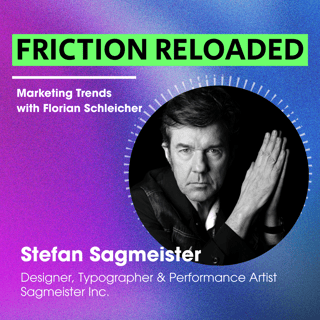
Speaker: I think it was Stefan Sagmeister, the designer, um in my first interview. I met him for a talk that he gave on his current exhibition, and I approached him there to give me also an interview.
Speaker: So I knew a lot of the stuff that he would be mentioning, but what inspired me most was not the answers per se that he gave me, but the optimism he used and had while he said those answers. yeah His whole last piece is about bringing optimism back and to have people also look at, because we live in times when there's with 24-hour news cycle postings everywhere, it's very easy to be drawn to all the negative stuff.
Speaker: But taking kind of the bird's eye view level on things makes you see that we're actually moving in a good direction with a lot of things out there.
Speaker: And that was a great reminder for me too to refocus on looking at things from a good side. And also, I was then very honored that I interviewed another marketing expert here on the podcast. and he said to me, you know, Florian,
Speaker: you are one of the people who really always brings optimism to the table. And I think that's also in a way a USP because in times where everybody's going crazy and they're like, oh, it's exciting, but what are we going to do?
Speaker: Being a person who says, hey, I think it's going to be fine because other things have also turned out fine. And to maybe add on that, a couple of weeks ago, I was in the Sigmund Freud Museum here in Vienna.
Speaker: then for his ah Wasn't it a big birthday of his recently? 170 year birthday, something like that, right? yeah Exactly. And Sigmund Freud wrote a couple of letters to friends and some of the letters are there in the exhibition. And in one of the letters, he wrote to a friend of his, we live in strange times.
Speaker: And I thought it's so funny because everybody always constantly says, we live in strange times. And it was just reminder of perspective that it always feels strange while you're living in these times.
Speaker: And then coming back to one of the things that Stefan Sackmeister said is that no invention ever was created by someone who was a pessimist. 100%. hundred percent You have to be an optimist. You have to believe in the future to actually build something meaningful. And I think that stays with me ever since. Yeah, I think i think it's really true, right? I think there's like, yeah, if you were to spend time watching the news at the moment, there is ah very little to be hopeful for. But then if you look at other data points, right? I saw a presentation, it was probably a couple of years ago, where they looked at like infant mortality rates, like literacy rates.
Speaker: Like in some ways, like, poverty rates globally. There's like a lot of these like macro stats are actually trending in the complete right direction. Yes. So whilst if you spend too much time watching the news, you probably get quite depressed and I'm proactively trying to stay away from news to be honest but because I just don't see the, it's hard, right? um But if you if you look for the signs that there are definitely signs of positivity. So optimism should be something we should be all kind of trying to practice.
Speaker: What a nice way to close this conversation. Perfect. perfect Lovely. Thank you, Frederik, so much. This has been delightful. Thank you for taking the time, sharing your perspectives and insights. and Thank you for having me. It's been an absolute pleasure. And thank you for for kind of the work you do and the kind of the involvement and contribution you do to the the chapter in Austria as well. It's something we definitely appreciate.
Speaker: Very happy to. him Thank you again and have a good rest of your day. Thank you too. And that's it for today. If something here made you think, send it to someone who could use it. You can find me on LinkedIn or through my newsletter called Future Strategies on Substack for More.
Speaker: And if you're ready to move your marketing from insight to action, reach out. That's what I do. Until next time.