Transcript
Speaker: It's a lot easier to be the leader who's positive, cheers the guys on great job, you know, hyping guys up. It's easy. It's much harder to be confrontational. yeah But I think the ability to be confrontational is crucial.
Speaker: Empowering some of those those players on the team who have the respect, they've they've they prove it on the field, empowering them and pushing them to be willing to be confrontational with some of their teammates. Okay, it doesn't mean be an asshole, it doesn't mean just be a total dick.
Speaker: Being able to look a guy a man in the eye and say, this isn't how we do things. right you know And have that harder conversation, which is gonna be uncomfortable in the moment, and like, those are your boys, those your teammates.
Speaker: um But it's I think it's the teams that are able to do that, have leaders who can do that. That's where the locker room really thrives. My guest today walked away from the NFL and division one football, not because he had to, but because he had something to build.
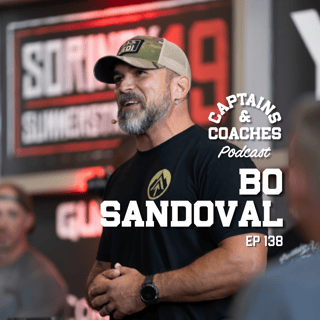
Speaker: Welcome to the captains and coaches podcast. We explore the art and science of leadership through the lens of athletics and beyond. I'm your host Tex McQuilkin. And today I traveled to summer strong in South Carolina at Soren X to sit down with John Heck. a two-time All-ACC offensive tackle at UNC.
Speaker: Heck has spent nearly a decade coaching strength and conditioning for football at the highest levels, including a stop at the Carolina Panthers and Houston, Texas. He has trained under some of the best minds in the game.
Speaker: Now he runs hammer and chisel performance, where performance and physique aren't opposites. They're the same goal. Today we get into what real player-led leadership looks like from the inside, why the ability to confront your teammates is a non-negotiable, and how the standard you hold in the weight room shapes the culture of an entire program.
Speaker: With that, let's hand it off to John Heck, who helps us raise the game. Ready, ready, and beret. Have you been back at all? You know Eric Fernandez? Yeah, so I've known Eric for years. So i still, I live in the area. I live in Durham.
Speaker: So i I haven't been out to the facility. Are we rolling right now? we Yeah, we're having a conversation talking about UNC. You live in Durham, went to UNC, played ball at UNC. Correct. And now, how is it living at the Rival Top? I spent five years coaching there as well. Okay.
Speaker: Yeah. Strength conditioning or ball? Strength conditioning. So I played ball there and got my degree there. Exercise physiology. I was a four-year starter at right tackle. um Got into my strength and conditioning career. And then a few years into that, a job opened up at my alma mater and I interviewed and got hired.
Speaker: I spent a year working under Larry Fedora, the coach I played for. After that year, staff got fired. Mac Brown came in, new strength coach. I fortunately was retained.
Speaker: Spent another four years on staff there. um Then went on to coach for the Houston Texans, Troy University, and then launched my own business and decided to move back to tarhi Tar Tar Heel motherland. So 15 minutes down the road. Awesome.
Speaker: Yeah. Yeah. And well, speak to us about the online training and experience you're providing. You're also doing a cool thing with your media where you're going, finding great coaches. and I'll say jokingly, making them look small and training with them and learning.
Speaker: I do tend to have the effect of out angling people at, you know, six, seven, 330 pounds. But yeah, it's it's been a blast. You know, it ah I had my online coaching business operating as a side gig for many years. um I started working with remote clients in 2017 and it you know became profitable over the years and I started getting more of a presence on social media, um which at the time during my strength and conditioning years, I was really using it, um highlighting the team training. And and I saw other coaches were kind of using it as like almost an online portfolio. And I was aware of so many coaches through social media. So I started putting out content. I was doing my own training and I'm, you know, have the advantage of being a bit of a physical spectacle. So I started getting some
Speaker: eyes on me. And I also wanted to show that I'm not just a big dumb meathead. I can speak and articulate about programming, speak intelligently. Um, so by the end of the, uh, you know, my final years in strength and conditioning, I had this side business that was doing well and huh I got to have creative autonomy with it and work with people I wanted to work with and all sorts of different people. And, you know, my wife had gotten pregnant and we're spending so many, we're bouncing around from jobs. So ultimately launched the coaching business. I'm in year two um and i've I've had the pleasure of getting to travel, set my own schedule, collaborate with with great people within the industry. And I've i've really I've I've got my own podcast, which is really helped expand the network, meet people um and then, you know, set up a hey, let's let's meet up and train and and talk shop and film some content. So had the opportunity to learn from people and and just
Speaker: meet people who I i was following them for since I was a teenager. So it's been ah it's been a fun two years. Yeah. And then you're just getting started. The the podcast for me professionally has just opened up so many doors, opportunities, and conversations of dudes that I read their book. And then I get the opportunity to have a coffee with them and press record. So that the books come to life, which is always fun. Yeah.
Speaker: all right What I want to explore is your exploring experience working with high-performing teams and then the leadership dynamics within those. Because as a fan, we're just watching on TV and doing the armchair quarterback, but then you're behind the scenes. You're seeing where things go. You had a lot of experience as an athlete.
Speaker: and So you know good seasons, bad seasons. You can see patterns and the the team starts to turn this way. You do your damnedest as a coach, leader on the team to help turn and steer it in the right direction.
Speaker: So I want to go back to your playing days to start. Yeah. Where you stepped into being a leader for the first time and you had to call out your voice. Yeah. Goals didn't, actions didn't always match their goals.
Speaker: So what were those conversations like? What was the teams like that for, for what was your coach's name? When I was a player, I played for Larry Fedora at UNC, correct. So we're in ah a Fedora era right now and How much autonomy did he give y'all or responsibility did he give y'all to lead each other?
Speaker: Yeah, so we, um man, I was playing there my my first year starting as a redshirt freshman was 2013, graduated in 16. And we kind of had a roller coaster during that time. We had a phenomenal year in 2015. We went 11 and two.
Speaker: um and And that year we had amazing player-led leadership. However, the year prior it was abysmal i mean i think we were it was a was five or six win season um very poor leadership within the team very fractured team um now i'll wholeheartedly admit i didn't step into my own as a leader until post playing career yeah i um and i think part of that comes from confidence you know i think um
Speaker: My real calling in life was not as a football player, it was a coach. um And I think as a player, it wasn't truly my passion.
Speaker: i was always I kind of had imposter syndrome. i um I had a good career, but I wasn't the man on the team. Yeah. um So I think I was reserved in stepping into a leadership role as far as I wasn't the guy confronting teammates.
Speaker: I was, you know, when it came to the weight room, the training, that's where I thrive. That's where I had confidence. I was good at that. That was my element. So I felt like I was a leader in the weight room within the conditioning. i was good at it.
Speaker: I was, you know, able to push guys, but in the locker room as a whole, um I look back on my playing career and what I know now, I feel like I could have been a much more effective leader.
Speaker: Um, and I think when you're a player, you know, it's, it's tough because. It's hard to be viewed as a leader by your teammates if you're not one of the top players. Mm-hmm.
Speaker: Right? So a lot. Yeah, yes. So, you know, we have walk-ons on the team who, some of them were constructed of pure leadership material, hard workers, blue collar guys, you know, phenomenal in the classroom, do all the right things.
Speaker: Nobody's going to listen to them because they're the walk-on, right? their Their voice doesn't carry as much weight, unfortunately. Whereas just some of the ballers, you know, sometimes they were, they had a voice and they were leaders, but they were leading people in the wrong direction. i was, you know, I spoke with this with Judd, Leinhardt on, on my podcast. And he pointed out, you know, leader, you can be a negative leader, right? You know, there's examples in history of people who had vast influence in a very negative direction. So I noticed that as a player,
Speaker: If you were one of the better guys on the team, your voice would carry a lot more weight. And when I was with the Carolina Panthers as a coach, that was my first coaching gig. I got to witness Luke Keekly, Ryan Khalil, Greg Olson, those guys who were the best players on the team, some of the best in the league.
Speaker: And they were the leaders. They were the ones who were taking charge of the team. And because they were the best players, also everyone listened, everyone fell in line. I've never seen player led leadership like I did that year with the Panthers.
Speaker: um We didn't quite have that when I was a player at Carolina. A lot of our best players were not the most positive leaders. Um, and I wish I could have filled that role better.
Speaker: So with that understanding, and now you created an awareness gap because you saw what real leadership looked like at that Panthers. So now when you step back into your job as a collegiate level coach,
Speaker: What was the balance like? Did you now see the gap between your own personal skill and ability as a leader, not football-wise, and then seeing what was possible from the the Panthers you named to now bring back and try to teach these these Tar Heels?
Speaker: Yeah, and it was just a realization of, man, we got to empower the the the the best players on the team. We got to try to empower them to have a voice in a positive direction. And we had some some players who were phenomenal players, who were hard workers, they did all the right things, but they were quiet.
Speaker: They, um, you know, I think one of the hardest, but most important qualities of a leader, particularly, I'm not just relegated to sports, but is the ability to have confrontation. It's a lot easier to be the leader who's positive, cheers the guys on great job, you know, hyping guys up. It's easy.
Speaker: It's much harder to be confrontational. Yeah. But I think the ability to be confrontational is crucial. and And I think um empowering some of those those players on the team who have the respect, they've they've they prove it on the field, um empowering them and pushing them to be willing to be confrontational with some of their teammates. And that doesn't mean, what's the length we cuss in the podcast? I'm gonna bleep it out. Okay, well, it doesn't mean be an a-hole.
Speaker: Well, you can say asshole. Okay, it doesn't mean be an asshole. doesn't mean just be a total dick, you know, it doesn't mean, yeah but being able to look a guy a man in the eye and say, this isn't how we do things, right you know, and have that harder conversation which is gonna be uncomfortable in the moment. And like, those are your boys, those your teammates.
Speaker: um But it's I think it's the teams that are able to do that, that have leaders who can do that. That's where the locker room really thrives. And once you establish that culture,
Speaker: that standard and guys know, Hey, if we, if we're stepping out of line, we're going to get called out, not just by our coaches, but by the leaders in the locker room that carries a lot more weight. man Yeah.
Speaker: So with those quieter leaders that were doing the right things, did you see yourself in them and try to get them out of their shell earlier? when you were Yeah, so as strength coaches, you know, for some of those guys, we'd find how can we get them more comfortable speaking? Like, hey, let's um let's get them to break down the group after the lift. Or, hey, let's let's get a guy to say a few words at the end of every lift. just Getting guys a little bit more comfortable with...
Speaker: kind of the public speaking and and addressing the rest of the team or just just finding little ways to get those guys out of their shell and and to get the rest of the team to see them in that light where guys are are getting accustomed to seeing these, the best players on the team having a voice and um And then they start to get a little bit more confident with that a little bit more comfortable with that and you know if we see guys you know doing the wrong thing in the weight room sometimes know go up to a Pull one of the leaders aside and say hey man like you know let this happen like this is this is your team this is You got to get on that you know so finding little ways to
Speaker: Get them to get reps. Yeah. at at you know Using their voice. I say it often. Leadership takes reps. Yeah. Time out. Coach needs a coach. I want you to take a second to reflect on this past season and what did not click. Were there moments where you lost your temper, lost your cool, felt your team was mentally soft, weak, not prepared to face competition? Were there moments where they put their heads down and were not ready or accepting?
Speaker: Did they quit on you? Did they quit on their their teammates during a game? What was that experience like? How did you manage it? How did you handle it? I have a course out here. It's called Why They're Not Listening, Coaching Today's Athlete, where I dive into a concept I've been working on that's called social-emotional leadership. How do we use practices? How do we use strength and conditioning sessions to develop our leaders to have self-awareness, social awareness, and then have a toolkit to then lead not only their teammates, but themselves.
Speaker: But it starts with you, Coach. I encourage you, check out this. my first lesson in the course is free. To find that, head to listen.captainsandcoaches.com. Start preparing now for next season and everything that you're investing will start to pay off.
Speaker: Now, back to the show. Ready, ready, and break. The two easy ways that I hand off to high schoolers is count. So we always do four count push-ups or four count squats.
Speaker: So just like military, we start up one, two, yeah three. Then the team says one, counts out the reps. So then I'm not leading those counts, hand it off to, all right.
Speaker: Coach John, you're going lead, or John, Captain, you're gonna lead this one. So then they start to associate this voice with action, a movement, something. And then give them tips for the huddle. I do was have them do a circle before a warm-up lap because no person's greater than the other versus like a a tight huddle.
Speaker: So circle and then start them out in the beginning of the season. I'm helping them, hey, what did coach head coach wrap up practice with yesterday? but We're going start day two with what we finished day one with. Yeah.
Speaker: And so then help them recall what it is. Eventually, I try to fade away once I give them these tools. So it's the count. And then they don't have to be creative. They don't have to overthink what to say because a lot of shyer kids at high school level are like, I don't know what to do. don't know what to say. Here's exactly what I need you say. Coach already said it. He did the hard work for you.
Speaker: And eventually, the guys that do grow into themselves have their own words for the team. Yeah, you reminded me with ah the count. We did something very similar at Carolina. So in our first block of training, we would do slow eccentric work and we'd have the whole team on the same tempo. So a coach would come out and say, under the bar, take it out.
Speaker: Three, two, one. You're down on that slow eccentric. Oh, the team shouts at one. And we'd start getting players to do that. So we'd say, yeah hey, we had Drake May and he was a awesome player for us. We love Drake, but...
Speaker: You know, initially when he came in, he wasn't the most vocal guy. This is our quarterback. We need to get him more vocal and kind of have that presence with the guys. So we'd say, Drake, take the count.
Speaker: You know, those guys come out at first. They're like, take it out. Three, two. Come on, Drake. Like, use that voice. And then next thing you know, a few weeks in, a couple reps, they're booming that thing. Yeah. And it gives them, like you said, reps.
Speaker: Yeah. this You know, ah something we did at Troy, um and I got to credit Coach Darrell Bauer to this, and and this is a slight tangent, but it it was just something that created team accountability that really resonated with me and I thought it was highly effective was we had a T-shirt system. So, you know, we we start the winter program day one.
Speaker: Everyone on the team is in a blank white T-shirt. And if they could go through 15 perfect days, perfect days perfect day being defined as you weren't late for anything. You showed up, you you did all your stuff, made all your tutoring sessions, you know, no infractions whatsoever in any way.
Speaker: Um, you graduate to a, a, uh, a maroon t-shirt. Another 15 perfect days, you graduate to the black t-shirt, Troy logo and everything. And at any point, if you get an infraction of any sort, you're late to a lift,
Speaker: get caught doing whatever, um, anything we deemed as an infraction, you would be relegated to the previous shirt. And, you know, a few weeks into this thing, most of the teams in a black shirt, and then you'd see who's in the, who's been dropped down to a white shirt or a maroon shirt and their black shirt. We'd be laid out for the team to see. And, you know, team walks in for the left. They see a couple shirts laid out. Oh, a couple guys lost their shirts.
Speaker: I mean, you know, at first we were the ones enforcing that, okay but suddenly the it started to mean something to the guys, that shirt, like they became, they didn't want to be seen in that you know lesser t-shirt.
Speaker: Everyone would see it and notice it. And then suddenly the other players started calling that out. Like, come on, man, like you haven't been in a black shirt in three weeks. and And it became a thing that everyone cared about. And suddenly the the team started enforcing it more and getting on each other more and it just kind of created the thing that spread yeah and was there a reset for that each year yes yes so at the end in fact every uh semester so we would go through the winter and then know the spring and then once training camp started reset everyone's back to the white shirt i love it so yeah the one thing i've noticed is
Speaker: It's very interesting and maybe this exists at the college level or your experience where our freshmen look up to our seniors and see them as these big, scary people. They're intimidating.
Speaker: What these freshmen don't realize is that seniors were once in their shoes and vice versa. the The seniors don't see themselves as awesome. Because they still see themselves as these, you know, wiener kids as freshmen.
Speaker: So they don't have necessarily the confidence to lead. That's what a coach has really got to step up and help them realize, hey, these guys look up to you. Yeah. Even though you're not looking up at yourself right now, they're still looking up to you.
Speaker: And so how would you go about expanding a young athlete's perspective to help them understand, like, These seniors, they put in the reps, they put in the time, they were in your shoes once now.
Speaker: How would that conversation go with one of your college athletes who may be acting a fool or not bought in or just doesn't necessarily believe in themselves? e That's a good question.
Speaker: um
Speaker: Reframe that question for me. I, I, I want to make sure I've got a good, ah good answer to this. For how do you, how do you help ah a young athlete understand that the people that they're looking up to and listening to were once in their shoes, they, they, they listened to, they climbed the mountain.
Speaker: Like you can get up to Drake May's senior year ability and confidence if you're a freshman quarterback. Yeah, that's a, that's a good question. That's tough. I mean, um,
Speaker: You know, something I went back and forth on as a coach was we'd have incoming freshmen and there'd be this question, do we have the freshmen in a separate lift group of their own so we can really just focus on them, teach all the all the fundamental basics?
Speaker: but they're they're separated from the rest of the team. They're not exposed to the rest of the guys. Or or on the flip side, do we immediately just kind of throw them into the fire and and integrate them?
Speaker: um And from a training standpoint, a pure training standpoint, I think there's there's value to, hey, get the separate the freshmen separate, just you know teach all the basics. but And that's what we did at UNC. But when I was at Troy, we threw them right into the fire.
Speaker: And i think something that's crucially important is just establishing a standard of accountability that's held across the board. And... um It doesn't matter if if you're the starting quarterback, if you're a senior or whatever, if you are late, if you have an infraction, you are reprimanded in the same exact fashion. You are subject to the same exact, um consequences, whether you're a freshman or a senior. And I think.
Speaker: The players saw that, they just saw that level of just accountability across the board. And when an older guy got called out, You know, and you see some programs, it's like the, you know, the senior who's established, he's late, it's kind of like, we'll give him a little pass. And, you know, whereas the freshmen, they're getting up downs and called out. And then it kind of creates like some resentment. It creates this like, it exasperates the, you're a freshman. senior. You're different. He gets special treatment now. Yeah.
Speaker: Whereas... I thought we did such a good job at Troy of just the standard was the standard. It doesn't matter who you are. You're not above the team. Doesn't matter what. And um the players all really, really respected that. And I thought it kind of um You know, and we would have conversations with the seniors like, listen, like these young guys they're integrated with you. Like we have them in this group with you so you can show them what the standard is. Yeah.
Speaker: And it's a bad look for a – like if you guys are the ones who are constantly getting infractions and called out, losing your T-shirt, what kind of standard are you setting for this team, for the younger guys?
Speaker: um And we are going to hold the standard. We're not going to give you – we're not going to make you look good because you're a senior. That's on you. um And I think that meant something to those older guys and that I think the freshmen – They saw that those seniors were still human, that they were subject to that same level of accountability. And, and that because they were integrated, they felt this pressure of like, I got to step my game up. And, and then some of those younger guys would see like, oh I can hang with these guys, you know, I can hang with them.
Speaker: And so I think that kind of integrating them all and throwing them into the fire a little bit together. um I walked away from that thinking, I think that's the better way to do things. Yeah.
Speaker: I don't know if that directly answered your question, but that's... In in a sense, and then it it reminds me, ah yeah, coach at Georgetown University, coach Kevin Warren, who's still there right now, and they're still in the tournament, much like Tar Heels, at the time of this recording. So now...
Speaker: I was a training purist, so then freshmen needed to get into the development. And unlike football, lacrosse doesn't have a a training base. A lot of the kids that are so good, they're coming from prep schools that don't have a weight room, now they're at Georgetown University, and the first time they touch a barbell is that fall.
Speaker: Coach wanted, he cared more about the team connection, cohesion, so he was like, integrate them all, everybody. So now the rack has a mixture of upperclassmen and lowerclassmen.
Speaker: And so where wanted to put in this foundational work, it's like, well, man, team first and seeing that and being forced to do that from sport coach, I actually did learn a lot. Yeah.
Speaker: Yeah. wood Was there any sport coach stuff that you're like, that actually it turned out to be a good thing, uh, over, you know, that you learned in your strength career. Hmm. I bash on sport coaches a lot, but there are still some value out there.
Speaker: You know, this, this, uh,
Speaker: This more is just something I, and this isn't going to be so much of like a constructive lesson as much as just something I like really opened my eyes to when I became a coach was, you know, our like offensive line coach was like, would get so emotional and like angry at times. And like, you're like, man, why is this guy such a jerk sometimes? And then you get on the coaching side and you realize like,
Speaker: your unit is is being displayed for the rest of the coaching staff and the rest of the team. And it's like, if they're not doing a good job, like that's on you and that's your, like you're subject to getting fired. And like, as a strength coach, it's like all of a sudden the football coaches come in, they're watching our guys training. It's like, and you see a guy not executing the technique. We've spent so much time teaching him and it just like,
Speaker: It makes your blood boil. Yeah. um So I gained a much higher level of empathy and understanding. I'm like, man, these these football coaches, like the lives of their families are are they're dependent on their players executing what they're teaching them.
Speaker: Yeah. So it it just it gave me a whole different level of respect for what's on the line for coaches and. you know, how it makes them look if guys are not properly executing little small fundamentals that we might've looked at as very arbitrary. um So I've i've got a whole another level of appreciation. Yeah.
Speaker: Did you ever have to i communicate to the kids that emotion of why you care so much about the freaking technique of this RDL or whatever it may be? Yeah. Yeah. and And I think like a big thing that i think was important was before you can get mad at a kid, like they have to trust you.
Speaker: You know, they have to know that you care about them. You're not just some authority figure who's screaming at them. So i think, um you know, it starts with showing that the standard the standard. Everyone is held accountable the same way. There's no special treatment given anyone. There's no harsher treatment given to anyone. And I think it's,
Speaker: you know, when they do things right, it's like, man, you love on them and you're fired up for them. And you're like, you're, you pull guys aside and have personal conversations with them. And if you can establish that level of trust, then I think when you're ripping into them a little bit, you know, that, um, it comes off, it can come off more constructively and then you can pull them aside afterwards and explain, I'm like,
Speaker: you know why why I care so much about you doing this little technique correctly. I'm like, listen, it's it's my job to help you develop as much as possible here in this weight room and to keep you safe and to help you get as as strong as possible. And these are the techniques that are gonna allow you to do that.
Speaker: And if I don't get on you for not executing the technique, well, what's the other? You know, everyone else is going to see that again. Standards of the standard. So starts with established trust. Show the guys that you care.
Speaker: Hold the the standard of accountability across the board and never waiver from it. And then when it comes time where you need to raise your voice, you need to get on a guy, though. they'll respect it a little bit more, and but then always pull them aside and just explain like why this is important.
Speaker: Yeah. And think this is a ah great segue and opportunity to talk about self-leadership because I imagine you were still banging weights at this time. Oh yeah. And they, did you time your lifts so they just so happened to catch you?
Speaker: Um, yeah, man. I, um, and you know, honestly, and ah they'd follow me on Instagram and they'd see me posting my own training and, um, man, the players respect that a lot.
Speaker: And, uh, we'd lift at the facility and yeah, man, if I got the opportunity for some of the boys to, to see it and, uh, we'd love that. And, um,
Speaker: Yeah, we want to show those guys that we practice what we preach. We we walk the talk, man, and and we we push ourselves through the same pain that we're going to ask them to go through. Yeah. And I think that's important.
Speaker: and I don't think you have to be the strongest guy ever, although I so strive to be. Yeah. um But if you show them that that you you live that life too, yeah that you push yourself too, it gives them a whole new level of respect for you when you're telling them to do it. Yeah. Time out. Let's take a second to talk training. I'm giving more of my training tools that I'm doing for myself to you. i have a new dynamic movement and kettlebell flow program. It takes less than 15 minutes a day. I use this in the morning right when I wake up. Yoga mat.
Speaker: red light, kettlebell, hit my flow. This also can double down as a warm up for any program that you're following. There is no one in the strength conditioning game that cares more about the warm up than I do. Bull Bull has it, my Strength Speed Swagger program has it, a lot of the programs out there that you're following, they don't have it.
Speaker: What I want to do is maximize any program that you're following using this warm up or get your day started right. It's up to you how you use it. takes less than 15 minutes a day to flow, hit a kettlebell, and feel great.
Speaker: Check out a seven-day free trial of this program. Hit the link in the show notes, or if you're watching on YouTube, here's the link right here. Now, back to the show. Ready, ready, and break. Instagram has has been ah beneficial for me for coaching and connecting with kids because they see a follower account or see ah a see me lifting and then they buy in. And then over the course of a season, like we just wrapped up lacrosse season, I had a dude who highlight highlights from his season and then he invites me to collaborate. Yeah. And I'm like, dude, one, hilarious. Two, no, sorry.
Speaker: So thats that that's entertaining, but they they're in on the joke. yeah I feel that that's a good team culture. um So then I think these are also great tools. we were talking about client retention for your Train Heroic team is building that.
Speaker: Because what are we doing with Train Heroic, but teaching self-leadership, self-discipline for them to take into their family, to take into their work life and career. We're just giving them exactly what to do.
Speaker: right So here's the plan, much like you gave your college kids and You're the mentor. yeah You're filming, you're doing a lot of your same workouts. i Imagine you're the demo video as well.
Speaker: So they can see you do it. It's helping them make the connection, but you're following this program too. You're holding yourself accountable. And this is me being here for you as well. I think that's a good perspective yeah through your training. So talk us through your training a little bit. What are aiming to accomplish on it? What's the old said principle, one-liner ah sales pitch for us?
Speaker: Well, for my own personal training or for... for but look I mean, train heroic. It's... Yeah, so i are monsters i'm usually yeah I'm usually a training cycle ahead of my yeah of my Train Heroic, honestly. So usually like I'll you know go through a training cycle myself, and once I've completed it, then I you know get my get my guys on something similar. So they're always what they're doing in real time is usually you know a few months um behind me and I'm
Speaker: you know Personally, I've drifted a little bit more into the bodybuilding realm because you know I'm also a nutrition coach. i have very need to look the part physique-wise. Right now, a lot of what we're doing is get you know get yeah get jacked but have the strength and performance to back up the physique.
Speaker: Yeah. Right. So I just, you know, launched a summer shred program on train heroic, you know, summer's around the corner. I'm going into my diet phase. So all of them are going to see me dieting down, posting physique updates, posting the training, and we're doing some more, you know, condition, metabolic conditioning type work, you know, short rest intervals, higher volumes, things like that. so Yeah, get them to post their shreds as well. Yeah. so that that's an opportunity to build, continue to build that community. Yeah. The one move that I i love, and i I mean, just natural coach, is have them post their lifts, and then I just shoot them feedback within the the team feed, not individual.
Speaker: And then most likely I've seen enough people lift. They're going to make the same common mistakes. So then they read somebody else's corrections and then take it into their left. Right. So that and that way people are now and I love the leaderboard for chasing numbers because now guys, they're not always going for number one, but they find somebody else. Yeah, I was alongside with and now I'm competing against JP. Right.
Speaker: And I, you know, you're a guy I i need to take notes from on this. You know, i spent ah I spent a decade being a student of the game for coach for programming and for you know coaching on the weight room floor with a whistle in hand and and nutrition. And I'm only in in year two of of you know private sector business on my own. So I'm a student of a whole new game right now. so i'm Well, everything I wrote down that you said for your yourself and your kids, how can you translate it into into your team?
Speaker: You know, it's that's what I would write. And you know, you're you're spot on with it. And I think, you know, at times I've been guilty of of being a little bit more of a training purist, a programming purist and um you know, I think towards the tail end of my strength and conditioning career, I really started to adopt more of the um art of coaching, the intangibles, the team building and all those different things. And um to your point now, it's okay, how can i take those principles and
Speaker: apply it to the, you know, the private coaching I'm doing or, to you know, to the train heroic, the team and everything and not looking at it as, oh, this is just um X's and O's programming on a document, you know, still fine. Okay, no, it's it's how can we make this a community and make this interactive? so You know, the that's something I need to get better at.
Speaker: Yeah. Frankly. And I mean, every cycle. it's that's that That's the cool thing about it. It resets. I do three-week cycles just to keep keep the names fresh. Yeah. And the lifts fresh.
Speaker: So is that purist programming? No. But... People are sticking to the program. and What do I want? People having fun, staying connected and getting time out. Text here at train heroic headquarters meeting with the team to talk about the coaching experience that I'm able to provide for my athletes. So if you're a coach and want to put your program out there on an app that athletes actually enjoy using train heroic for you. I've been using it since 2014. delivering literally over tens of thousands of workouts to athletes.
Speaker: And Train Heroic allows me to provide the unique coaching experience that I want to. Uploading video, providing coaching feedback, directions, and building a community, that's why I love Train Heroic. And if you want to take your athletes where they can't take themselves, that they want to go, head to trainheroic.com slash captains and check out how you can deliver programming to them.
Speaker: And now, back to the show. Ready, ready, and
Speaker: Yeah, and like, you know, you look at like ah personal training, for example. Like if you're training a client face-to-face, one-on-one, it's like the vast majority of people, it's more important to them, like who do they enjoy spending an hour with? Like who, someone they respect, they like being around. Like, you know, if you're training someone gen pop in a personal training setting, they may not be like, okay, just give me the most optimal program possible. That's all I care about. A lot of them is like, oh, I want someone I can relate to and someone who,
Speaker: They push me in a way that I respond to well and and I just resonate with them personally. I have fun doing it and they know which buttons to push. So yeah, you know, a lot of those more intangible qualities, I think. Yeah. Probably a lot more important in this in this setting.
Speaker: Yeah. And then, I mean, it's cool that you have the the podcast too. because now that the the followers on the program they get to know you and then they hear your voice so now when i you type instructions they literally know what you sound like and they they hear that so it's gonna as the podcast grows as the the training team grows the more your voice is out there like it's gonna start to they're gonna hear you and connect with you so yeah it's good it's cool experience just all around on know
Speaker: Yeah, I think, you know, if anyone who's, um you know, making any sort of content, I think long form content is a phenomenal asset for exactly what you just pointed out, which is it's an opportunity to humanize yourself and expose your personality.
Speaker: You know, if you're just putting out, you know, reels on Instagram, you know you probably don't get to see that. But if I'm having an hour long conversation with a guest on my podcast, they're able to really know who John Heck is. And they listen to my show. They feel like they almost feel like they know you, they can kind of trust you more. And I think that's, um, powerful from a business standpoint and from just, you know, continuing to build buy-in with, you know, any of your clients or customers. So. Yeah, you know, my podcast, it allows me to selfishly learn from all the guests that I have on. And it's so much fun for me and I enjoy public speaking, but it's also an opportunity to connect with the audience in a and on a deeper level. Yeah.
Speaker: With that, this is what we call a transition, where can people follow the podcast, follow the YouTube channel, and then future speaking opportunities that you have coming up this summer? For sure. So um I've got the Hammer and Chisel Performance Podcast, which guest episodes every Tuesday. You can find that YouTube, Spotify, and Apple.
Speaker: I'm i avid on putting out lots of stuff on YouTube, nutrition rants every Thursday, Q&A answered every month. I put out a lot of stuff on Instagram. Check out my website, hammerchiselperformance.com, coaching services, training programs, ebook. I've got my couple programs on Train Heroic, and membership team, Team Hammer and Chisel.
Speaker: And then this summer, I'll be speaking at the Coach Em Up Conference in Austin, Texas. of Some banger lineup of speakers out there. so I'm very honored to have been invited to that and very excited for it. I'll be speaking on performance nutrition. Sweet. And I'll be there in the audience. Yes, sir. Just taking notes. So we are at Summer Strong. We got to get back to the show. So I appreciate you taking time, man. And always a pleasure. Thank you for having me.
Speaker: And scene. All right.