Transcript
Speaker: You're listening to From the Horse's Mouth, intrepid conversations with Phil First.
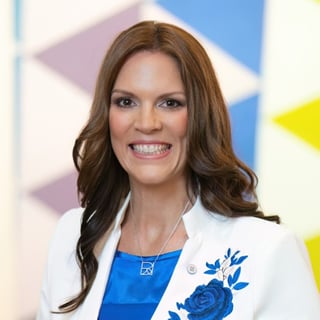
Speaker: Hello and welcome to the latest edition of From the Horse's Mouth podcast and I'm your host Phil First and joining me today is a woman called Jessica Mathiron who is the Chief Data and AI Officer for Zone Europe at Nestlé.
Speaker: It's great to have you here Jessica and maybe you could for our audience share little bit about your background and what led to you to live in Paris and run the job that you're doing today. Hi, Phil. It's fantastic to be with you today.
Speaker: Yes, of course, I'd be delighted to give a little bit more on my background. So my mother's American, my father's French, and I've been back and forth in the U.S. and France my entire career.
Speaker: And currently, i'm so I'm Chief Data and ai Officer at Nestle, and I cover data and engineering, data analytics, data science, machine learning, ai and some of the top priority projects and products for Zone Europe CEO. Terrific. And I've been hearing a lot about Nestle from, we work a lot with IBM, for example. They're very proud of their relationship with Nestle and the work they're doing with you guys. But maybe you could tell us a little bit about this consumer data overhaul that you're working on and how are major you know corporation like Nestle is handling it.
Speaker: So the consumer data project is really interesting because it's one of the first projects I got to do from scratch. You know, i obviously at a company like Nestle, there's a lot going on and multiple zones at the global level, etc. And oftentimes you have to work with what has already been started. But this one was amazing because it was from scratch. And so, of course, the various countries, the we call them markets, Europe, had separate stacks, local stacks. They were working with partners. It wasn't IBM, but a bunch of media partners. And the the data was very dispersed. It was all over the place. And when I came in, I saw an opportunity to really pull everything together in one place to benefit from the scale. And we're talking about tens of millions
Speaker: of consumers in particular. And above and beyond the household penetration rate, we also have a lot of people in the CRMs, so tens of millions. And we couldn't leverage the use cases across Europe. So basically,
Speaker: every market, and even worse, every category and more in Europe. So categories would be pet care, coffee, food, just to give your ah the audience has some idea of what that would be. And so each one of those categories in each country would reinvent the wheel. And so there was a lot of waste and it wasn't scaling.
Speaker: And so we had this opportunity to bring everything together in one place, to build a modern data foundation and to build it in-house, which is something that Nestle doesn't often do. As you said, we have many partners. IBM is only one of them. and But my background is really tech.
Speaker: So I, and I didn't, you know, give more detail, but basically I have ah ten a decade of experience in financial markets. I was a trader in various institutions and hedge funds. And then I moved to to tech.
Speaker: And I've been in multiple tech companies. And so, you know, coming into Nestle and seeing, you know, everything had been outsourced, I saw an opportunity there to build a team with technical competence and actually have more control over this over this new stack. And so fast forward, been about two years on this project, and we are covering 80% of the consumers in Zone Europe. which were in our CRM. And we're starting to scale not only traditional machine learning, and you know maybe you'd be familiar with models like churn, models for our consumers. That's you know one way of doing things. Implied interests.
Speaker: Are people... liking flavored coffee, for example, but to go deeper. And this is the journey that we've been on for the last few months. And this is really building AI agents on top of that stack. And this is particularly interesting because now that the stack is 100% clean, so with proper semantic models and the right technology, it's really easy to put AI agents on top and achieve ah results really quickly. So over the last few months, we've been partnering with the marketing teams to do audience building at scale.
Speaker: And we've brought it down from about 10 days to 10 minutes. So that's that's a success the team has really enjoyed. And we're looking to build an entire agentic suite.
Speaker: around that that product to really improve the ways of operating. And it's not just speed, it's also compliance. So maybe some of your audience will be familiar with the regulation. GDPR in Europe is ah pretty intense. And what we have with this additional control is we ensure and enforce compliance with regulation to a far greater degree than we would have in the past. We don't have to rely so much on people following procedures. We can make sure that they are enforced at source. So that's been that's been quite a journey involving probably 100 stakeholders on this project. So one we're really excited about.
Speaker: Yeah, I mean, this this touches upon so much of what we talk about at HFS. And one is about sovereignty of data and what you trust to like a rented shared model and what you need to keep sovereign in-house, obviously for compliance, but also because that's your core. That's your everything, right? if you know You need to understand if you raise the price of Coffee Mate by 5%.
Speaker: five percent Is it going to sell more or less? That sort of thing. But talk to me a bit about how you make these decisions around data sovereignty, what is core to Nestle that mustn't sit on a shared model and how you're leveraging those shared model relationships. Mm-hmm. So from the perspective of sovereignty, that would be a global IT topic. So it's not handled within my team, but of course we abide by the same rules. So those are generally contractual negotiations with providers. Now, we're on Azure right now.
Speaker: and So obviously it's ah it's a us it's a U.S. company, but there are contractual agreements that can help with that respect. With respect to the LLMs themselves and in terms of not sharing information that we do not wish shared, on above and beyond contractual agreements,
Speaker: ah obligations. We have filters in-house and we call them NestGen. So Ness is for Nestle. And basically the all of the models, the U.S. models, most of them, would be going through that specific routing that ensures additional filtering and protections. And when I build custom agents,
Speaker: In my team, I make sure to use those LLMs which are protected. Now, you know, protection is never 100% and those topics of sovereignty are evolving very quickly. So I expect to see some movement there. But from my perspective, it's really transparent.
Speaker: Yeah. And I'm fascinated with how you're, you said you moved from like 10 days to 10 minutes, whatever. i how I know how difficult it is. My company has to be GDPR compliant as well. And we all take our training and all that sort of stuff. And what goes on our database is Sagresang. So how do the AI models help with GDPR compliance?
Speaker: in terms of pulling this together so quickly and being able to just operate differently with the data? So because Nestle is such a large company and because it has that history of outsourcing or offshoring, what is critical to understand in that process is that the marketing team's don't necessarily do what we call an end-to-end process, right? So they might want to activate an audience, which would be coffee lovers in Spain which have ah who have pets and children, okay? So that might be the audience that they want to activate. But then they will have to submit tickets, which will go to some offshore center. It could be in Lisbon or it can be
Speaker: ah even further away. And there is someone there that's going to start checking um the people who have recorded consent, so very specific types of consent.
Speaker: And then they will realize that the audience doesn't have the dimension that is necessary to reach achieve impact. So then they will get on a call with the marketing teams and there will be some back and forth to align the briefs. And this is why it takes 10 days to activate an audience. And today, if you want to achieve impact, sometimes you have time, but sometimes you have to be very reactive. Think about, for example, what happened with the KitKat heist when that that that truck of KitKats got stolen. And the marketing team was extremely reactive in terms of
Speaker: Taking hold of that narrative and turning it into a detective story and trying to find the Kit Kats that were lost. They were stolen. Right. And that was ah a huge marketing success. In fact, more so than the cost.
Speaker: of the Kit Kats that were lost. And so you can see how timely marketing has become. And with that in mind, you need to revamp the entire process. So it's not just ah the GDPR compliance. It's also that end-to-end process. Now, in terms of the GDPR specifically, I mentioned the registration codes, the subscription codes, which are really critical. You want to make sure that everybody that you will be activating in a specific way has consented to that. It's not the same thing to send an email.
Speaker: or to be retargeted on Facebook, for example. So want to make sure that it's automated and not left to interpretation. So that's one of the ways in which agents can help. the The other thing is simply by unifying all the information so that people don't have to check across multiple systems.
Speaker: Another way is to make it so that the ease of finding that information on whatever system it is, is improved. example, if you need to find the right subscription code in a list of 10, then probably someone is going to make a mistake. And yes, it will be that human in the loops mistake, but it will also be poor design. So from a digital perspective, My role is to make it as easy as possible for people to do the right thing.
Speaker: And in fact, we made many mistakes along the way because we didn't understand fully the end-to-end. And in fact, it was only when we sat down with marketing support teams and saw what their process was that we were able to redesign agents that take that in mind. And the web app that we created is not just like a chat GPT, right? It's a lot more than that. There are dropdowns and all the information that person would would need is on one page and at their fingertips.
Speaker: So that's part of it. And then going further, what we want is for the marketing person to be able to interact with the machine itself, with the agent itself, to specify exactly what it is that they're trying to achieve.
Speaker: We don't want them to create tickets and then go back and forth and have meetings. They should be able to play with the tool and come up with the right audience themselves. So we're facilitating that.
Speaker: And that way, the brief, when it reaches the marketing support teams, is 100% there. And all we need is just extra validation that the you know GDPR compliance is there. So they will always remain a human in the loop, but all of the grunt work of that process will be taken out. And we're not going to be letting go of anyone because that's, I know, the next question, obviously, with automation. But in fact, this team that was only covering Purina, which is Petcare is big at Nestle, but it's only one part of the business, that same team will now be able to cover
Speaker: all of the categories at Nestle, even those that didn't have the resources, the funds, to be able to afford such processes. So we made the cost of it so low because it's so short in time that we are now able to cover everyone.
Speaker: So this is why I really like this project. i'd just have a new dog and she eats Purina. So there you go. There you go.
Speaker: to To be able to have decision-making capabilities that are minutes versus days, it's a massive difference to a business, particularly when highly competitive markets like pet care and confectionery and things like that. So it's fascinating to hear what's happening. And how does this compare with the US a bit? Because the US right now has a much more, let's say, lenient view for compliance. They're almost deliberately trying to ah deregulate AI industries, it's becoming a bit of a political issue, as we all know at the moment, versus the European attitude. Is it doing very different having to operate consumer data this way in a US market versus a European market?
Speaker: So I do think it's very different today, although there is the California Act, which is, you know, has a lot of the same elements as GDPR. So it's not like the US s is a uniform thing. Obviously, there's differences in states. But, you know, I would love to draw a comparison between that and financial markets. So I used to be a trader of securitized products. And after the financial crisis, there was a regulation called CRD-4 in Europe. And then risk retention regulation in the U.S. happened, I guess it was five years later. OK, so there was a little bit of ah a difference. The U.S. took more time to to to bring on this trend. I'm not going to debate, you know, whether the regulation was 100 percent what it should have been. But what was interesting is that even though the U.S. took a more light handed approach, they were very much inspired in in their regulation by what had happened in Europe.
Speaker: And when the regulation got turned over because of the same administration as we have now, and at that point, the market still took those. they He didn't have to comply, but they still did.
Speaker: So they it transformed the market, ah even though the constraint wasn't there. It made the mentalities. And I think it's the same thing. here So consumer regulations, consumer preferences, giving people the choice, um I think is something that is becoming more and more front and center, even in the U.S. Now, that said, today, you can do a lot more with consumer data in in the U.S. And, you know, we're we're seeing very advanced. You say we would love to be able to do that in in Europe, but we can't.
Speaker: So taking a classical tech team, which has been your background to this kind of AI assisted tech team in a big company like Nestle, how do you do that? How do you go beyond like personal AI assisted coding to this like enhanced AI team? What's it would have been the wins and the challenges that you can share with us? Yeah. So when I arrived, there was no one from tech in the team that I was managing. And in fact, very few people knew how to code at all. I would say I was the best coder at the time in that department, which, you know, for a manager is not really what you want to hear, right? You want the experts involved.
Speaker: to be in your team. And I was very fortunate that my... So I got promoted to Zone Europe really quickly. And with that, I was able to restructure a little bit how data was operated at the Zone Europe level, whereas in each market, it would have been quite tricky.
Speaker: So I inherited about 145 people in in markets, which are mostly focused on dashboarding and data governance, master data management, etc. But I was able to build from scratch a tech team, which is now 25 people. And that tech team already knew what we needed to achieve. So that vision of, you know, proper data engineering, getting the right tools, orchestrators like Airflow, etc. Those are not, we didn't have to reinvent the wheel because we all knew where we needed to go from ah from a tech perspective. It was quite a change for Nestle.
Speaker: which outsources, you know, most of IT and beyond data and IT are are are massively outsourced um for for reasons of, you know, benefits of of scale. And data today is not really something that you can leave on the sides of your strategy. I think it of it as the central nervous system of the ah the corporation. And if you don't have control over that, it's hard to make that business evolve, right? It's how will you define the new business opportunities related to data if you don't know how to operate your data?
Speaker: So I think that mastery was key. And of course, to make that happen, we needed to convince senior stakeholders to take a different tack. And that didn't happen overnight. It's a very large organization.
Speaker: But I will say that I have never had so much support from senior stakeholders all the way to the CEO. The ability to listen, to understand, to engage, and um and to try it out. And so both at the worldwide level, but also especially at the zone level,
Speaker: we We have ah a CEO who is a tech enthusiast and ah very excited to come up with new ideas and growth advisors, etc. So it's been really helpful in terms of getting the organization online.
Speaker: Now, in terms of the various levels of AI, I think there's not just the personal level and whether that's just building a little bit of an agent technology. cloud coworker or actually having your more advanced agent, but that's at the personal level. That's just, it's one piece. And then you have, of course, you have AI assisted coding.
Speaker: Then you have team level AI assisted coding, which is already something that is not a hundred percent mastered even in tech, right? How can you just leverage? If you're a single developer, right?
Speaker: You can code probably five times faster with AI. But as soon as you're a team and a sizable team, um that benefit of productivity ah decreases. So we've been able to achieve about 2x productivity with AI-assisted coding, but it does require system prompts and a little bit more foresight on how you implement it. And then you have at a higher level the priorities of Zone Europe. So the priorities of the CEO, for example, this consumer activation and engagement at scale, but also marketing mix models, etc. So those are like some some big projects that have hundreds of stakeholders, which, you know, that's another level.
Speaker: And then you have the end-to-end projects. workflows of the company. So if you think about ah hire to retire, for example, for HR, and HR is probably one of the easiest things to to understand for a broader audience.
Speaker: So hire to retire is a bunch of different processes, which now need to be stitched end to end. And the final level where AI can have impact is the data foundations. And I know we've been talking about these topics for 15 years, but they're really key. And the reason I was able to deploy AI so quickly on a particular and scope at Nestle was because the foundations were really clean clean. In other of the company where we're still struggling on the foundations, deploying AI agents would not achieve that kind of impact.
Speaker: So what I'm hearing here, it feels like a coming together of the business professional and the tech professional in a way that we've never really experienced before. And there's a lot of talk in the industry that AI is a business transformation first and it's not a technology transformation. What I'm hearing from you, especially you being a technologist at heart, is you've been the one who's really had to sit down with the business line folks to figure this all out and really work out how to drive the impact that they need. So I, of course, it's all about, you know, adoption and processes, etc.
Speaker: However, I don't think that someone who doesn't understand the tech can really do that efficiently. And sometimes I think the people at at very senior levels in data are coming more from the business. And I think sometimes there's a gap there. And maybe I'll share a a particular story.
Speaker: but In terms of addressing like the change, leadership needs to understand what the technology is capable of. And oftentimes they have extremely busy agendas. I mean, Nestle is 270,000 people. So it's our CEO has a lot on his plate and he can't keep track of the, you know, the differences in the technology, obviously.
Speaker: But the pace of change in that technology is incredible. i In fact, I have never witnessed something so rapid in my career. And if you think about, for example, AI-assisted coding two years ago, it was a year ago, started getting good. And today, it's nothing short of amazing. Yeah. Right. But you can't expect senior leadership that has never been technical to really understand profoundly how that technology is affecting things without touching it.
Speaker: And so what I did is I actually sat down with our CEO and I helped him to vibe code for an hour. And he had never coded before in his life. And he started asking exactly the right questions about our foundations. And I think it really made it much more palpable to him.
Speaker: And I don't think that someone who never codes on their own would have done that. And so I think while you're right that it is about business adoption and understanding, it does require some technical background. And it also requires the right tech. So in a lot of companies, the tech is a little bit lagging. And when you don't have the right tools, that transition is going to be tricky.
Speaker: So yes, it's about process. It's about people. But it is also about technology and the understanding of how to leverage it. Yeah. So as you start to look at where this goes next in terms of governing agents and in terms of broadening out these sort of AI leadership roles, where do you think this is going to look in terms of the broader implications on work? You know, you mentioned things like Taylorism and offshoring and stuff like that. I think this is a very profound shift and and people are still working through those implications. So if you, and I'm going to go really far back here, but if you think about the Middle Ages, you had a tailor making a pair of shoes, for example. And I imagine that the client would come into that little shop and say, this is what I have in mind. And the person would sit down and maybe
Speaker: scribble something, draw the shoe, and then make it to custom. And then there would be fittings and changes, obviously, and then the final shoe. And it was great because it was perfectly what the consumer wanted. And also it cost so much money that people probably didn't have much more than one pair of shoe, except for, you know, the kings and queens. But it was, it that was one process.
Speaker: And then with the Industrial Revolution, what you have is the standardization. And obviously, with that comes efficiency and productivity, which reduces the cost. And so suddenly, people have multiple pairs of shoes. You have this growth. Fantastic.
Speaker: But the people who are working on these assembly lines, well, it's well documented that those roles were sometimes dehumanizing, ah where the tailor would have end-to-end and see the shoe created and have a lot of pride and in their work.
Speaker: It was harder for people, humans, to adapt to this kind of very fragmented and repetitive kind of work. Now, fast forward to the 1980s with consultants, you know, pushing people to optimize supply chains and obviously the cost of labor in some are developing ah emerging countries was a lot lower. And so it made, you know, business sense to offshore. And there were struggles related to cultural differences and time differences, etc. Companies achieved success also in that fashion. And now I think there's a very profound shift with eight not just AI, but agentic AI, or rather suites of AI agents, whether you orchestrate them you know completely autonomously or not is is something else. This is a profound change in that paradigm because suddenly you can have one human in charge of a succession of tasks, which in a very productive way. So you have the productivity of a factory, an assembly line, but you have that ownership that you haven't had for centuries. And that's very interesting shift.
Speaker: And I can see that people are worried about And, you know, it has to be done in the right way, of course. But I see that as a very human thing to regain control and mastery over a greater spread of things.
Speaker: And then, yes, we will need to invent new roles because we will be very efficient with these AI agents. But I'm not sure that it's as dehumanizing as or depressing as some people would have it.
Speaker: Yeah, I think our swim lanes are broadening, our roles are broadening. It's not the old days where you would do one or two things in very specific ways. And, you know, back in the past, you might only need to retool once or twice in your career.
Speaker: Now it's happening on an annual basis, it feels. The pace of change is really quick. And I think the younger generation will need to adapt a lot more and a lot faster than my parents or my grandparents, for sure. But they will be evolving in that ecosystem. So it's, I think,
Speaker: We need to teach them the right things and the right things are to learn how to think. So obviously agents will be able to do a lot of the things that humans are able to do. But taking that step back and being able to think holistically is is something where, you know, even if AI might do it, I think there's still value. And I, at least for several years into the future, humans with AI will do a lot better than humans alone or ai alone.
Speaker: And so i'm just i'm just generally enthusiastic and excited to see what we can achieve together. Yeah, it's don't let the AI think for you, let it do for you.
Speaker: And you do the thinking. And I think that's something to really think about. I mean, I'm an ah analyst, so... You know, if you want to be good analyst, you've got to keep thinking. And it's sometimes very tempting for people to just to let the AI run and do it all for you. And what do you end up doing? you just become a prompter.
Speaker: No, you've got to think and you've got to think, how can I leverage this tool to advance my thinking to the next level? And can you get to that next level? And it's iterative. So the AI can help you to think. So the AI can be incredibly creative. It can explore so many different directions.
Speaker: And then you get to do the filtering. And I think it can be really helpful for some people who, you know, you have a blank page. It's hard to get started. Well, the AI can get you started. So get you over that little hurdle of activation.
Speaker: And then you can take it into a different direction. I can, I really see this as iterative. Yeah. Well, on that note, I think let's share this conversation with our audience. And I really loved your thoughts and the way you've thought so hard about how the role has shifted, how you work with the business lines and how you've adapted in a large corporation to make it move quickly and move it forward. So it's great hearing from you, Jessica. Thank you so much, Philly. It was a pleasure for me. Thank you.
Speaker: Thank you for listening to From the Horse's Mouth. Don't forget to subscribe and like wherever you listen to podcasts. Got something to add to the discussion? Drop us a line at fromthehorsesmouth at hfsresearch.com or connect with Phil on LinkedIn.