Transcript
Speaker: You're listening to From the Horse's Mouth, intrepid conversations with Phil First.
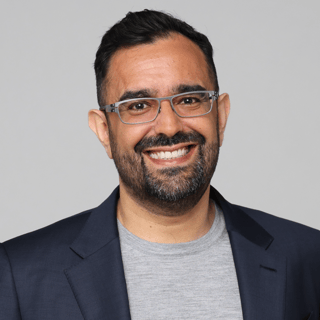
Speaker: Greetings and welcome to the latest edition of From the Horse's Mouth podcast. And joining me today is Kristin Milchanovsky, who is the Chief AI and Quantum Officer and Founding Director for BMO's Institute for Applied Artificial Intelligence and Quantum.
Speaker: And that's part of the b BMO, the Bank of Montreal Financial Group. So welcome, Kristin. It's great to have you here. Thanks, Bill. It's really exciting to be with you today. And um thanks to all the the viewers tuning in.
Speaker: I have the privilege of running AI and quantum for Bank of Montreal. We are one the 75th largest publicly traded companies in the world. um And I am a quantum mathematician. And I am living in probably the absolute best era there could be for everything that's going on right now. and and looking forward to our time together. Yeah, and do you have an interesting sort of multi-geographic background where you learn your trade and growing up. Maybe you could share a bit about that.
Speaker: Yeah, absolutely. So I've lived in over 20 countries and I have always been in some form or fashion of analytics or AI in everything that I do. i i worked in the steel industry for a while, but most of my 25 years is in banking. um ah I was the chief data scientist at Morgan Stanley back when ah big data and Hadoop was was cool. ah And then um I ran a global innovation team at e y and then came over to BMO about two years ago and have been running this. I sat on the board of Lamborghini. So that's always a fun fact. And um i like to drive fast cars.
Speaker: There we go. um so I didn't realize I'd be talking to a Lambo driver today, but let's get moving. So let's get to the AI conversation. And you every bank says it's a strategic priority, but what's the biggest misconception that CIOs still have about trying to become and AI first enterprise?
Speaker: You know, it's more than just a technology transformation, and it's not just a tool that we're trying to implement. And I think that when we get some more momentum around this being treated as infrastructure, i think we'll start seeing more more adoption and the What we're trying to do is is bring infrastructure in or bring AI as infrastructure so that it helps us with all of our decisions and helps us um make decisions better, for smarter, faster, and increase that decision velocity is what we're after.
Speaker: You know, you you guys have been in around at BMO for like 200 years. So how how do you how do you introduce Frontier AI into such an institution that's so built on trust and stability and risk management without slowing everything else a crawl?
Speaker: Well, you know, one of the the big ways that we're doing it is um is just leaning into the core of who we are. and So, yes, we've been around for 200 years, but for 38 of those, we've built a capital markets practice on AI. AI is not new. That's the thing that I try to remind people. It's been around for 40 years as a discipline. The agent part is the new part and that that everyone is hyped up about and and we're trying to implement and and bring ah more scale and more efficiency and and net new revenue around.
Speaker: um But for us, it also starts with a tone at the top. And our CEO has ah a mission statement for us. And in that strategy that he's laid out, we're a digital first AI powered bank that is doing this to drive business value. And when you set that tone from the top and all of our goals and everything aligns up to that top of house strategy,
Speaker: mindtat mindset and mission statement, that's really how we're able to move progress forward because we're all aligned to the same goal. Right, right. But then at what point, you know, does AI stop being all about making employees and businesses more efficient and the focus really does pivot towards creating entirely new business value, which is the So for us, it's not about efficiency. really is about driving business value. And you can drive business value by creating net new revenue. You can drive business value by reducing some of the costs of your organization. In a bank, risk reduction actually drives a lot of benefit for a financial institution. So there's multiple levers that you can pull on to And I think that that is one of the strategic approaches that I'm bringing to the table is that we're focused on first the revenue generating side of the equation. And we're doing that because when you focus on the revenue, your efficiencies naturally come to bear.
Speaker: But the firms who are solely focused on efficiency gains are going to miss out on those revenue opportunities almost every time. um So that focus um allows us to to really deliver ah the return. And we're also leaning into disciplined acceleration. We are building our governance early. We're an embedding AI into our decisions, like I was talking about at the beginning with the infrastructure, so that
Speaker: that we're not just layering AI on top, really embedding it and in everything that we're doing. That way that the the innovation is going to compound without really compromising any of our um ah control processes or or governance processes.
Speaker: Yeah, and um and and in in this vein, um what do you think are the hardest leadership challenges when you decide what should kind of remain human versus, you know, what do you really trust to the AI? you know, what decisions do you believe should never be delegated to AI?
Speaker: I think that first um we want to to accelerate decisions, but not necessarily let let an agent own those decisions.
Speaker: And risk-taking, ethical components, um moments of of client trust, those are decisions that are always going to remain with my teammates. And those those are um very much the human decisions that we want to encourage. It's the thing that we do best. um And so what we're focused on is enabling our teammates to be better, smarter, faster so that um that we can provide that intelligence to them, make intelligence abundant but very useful And then that that judgment of our teammate, and the experience of our teammate, that becomes the real differentiator for us as it always has been. It's just they're they're kind of um given an extra boost. so So you oversee both AI and quantum initiatives.
Speaker: So getting beyond all the noise and hybrid, where do you generally see these technologies intersecting and and which industries do you think will feel the impact first? AI is um a lot about pattern recognition, prediction, decisioning at scale.
Speaker: Quantum is about solving optimization problems that are computationally intractable today. um And where you can explore massive solution spaces in parallel is this beautiful intersection point between AI and quantum. So it's it's those complex systems where does decisions and optimization converge.
Speaker: So places like portfolio optimization, and risk and capital allocation, supply chain and logistics, um energy systems, those are all places well-poised. The material science ah players are probably going to be the first big winners with quantum. and There's a lot of molecular design when it comes to chemical compounds. So your petroleum market, anything in the material science place where ah where molecular science is important is probably going to change first with quantum. And then fast followers, I guess pharmaceuticals would be a big place where molecular science is is huge.
Speaker: And then fast followers are these optimization platforms problems. and And that's the thing, Phil, about quantum is that it's hard to think of an industry it's not going to impact because, Phil, can you think of one industry that or one human being that isn't impacted by optimization, right? Like we optimize our day. I optimize my first cup of coffee in the morning for sure. So we, you know, we're the ability to create optimal um equations is is coming very soon with quantum and and it's got a universal impact. But I do think that that material science kind of industry is is probably going to benefit first and most.
Speaker: Yeah. And um maybe you could share with us how far off do you think quantum really is? Because, you know, it's obviously been an and unstable for a long time to get into an enterprise type situation. But do you think we're a lot closer now to really starting to see real quantum applications in practice?
Speaker: I do. I believe we will hit quantum advantage in this calendar year, Phil, um and and then commercially viable um ah quantum computers will probably come online in the next 12, 18, 24 months. It's hard to have the perfect crystal ball, but there's a lot of progress um that has been made in the last ah just 12 months alone. And anytime you see capital injection um the way that we're seeing it fill right now in the market, that's a really good signal that it's coming fast.
Speaker: And is the whole anxious investment behind AI driving bigger focus towards quantum just because of the you know compute problems that are that are potentially facing compounding us?
Speaker: AI and quantum are um are always going to be together. ah So AI makes quantum smarter. ah we're We're reaching um more advances with quantum because of the advances in AI that we've made and then vice versa. i The quantum will also help make the AI world ah better, smarter, faster.
Speaker: And so i I do contribute a lot of the progress that's been made on the timeline to quantum advantage. because of the investment and and the acceleration and the progress that we made in AI. So hands down, I i do attribute um those two things. But i wouldn't I wouldn't say that it's because of like the hype of one or the fear of one going somewhere. And then that's why we're investing in quantum more. Like I really just think that um there's been enough proof points um by IBM, for example, that that they're going to be hitting their milestones. and And there's a few other companies that are making good progress as well.
Speaker: So every... Big technology investment, and especially AI right now, is competing for capital. And we're hearing all these stories of companies overextending use of tokens and that lovely term token maxing being used. Was it one company ended up spending $500 million one quarter on tokens because they just told all their staff to go, about it? But how do you...
Speaker: distinguish between the experimentation that creates learning and the experience that we need than, you know, real value that isn't just burning budget.
Speaker: Look, not all experimentation is equal. and You've got good experiments that ties to clear economic outcomes. It builds reusable capabilities. ah Bad experimentation is going to be those things that create ah noise and activity and doesn't translate into value. So discipline is around, um you know, having very clear pedantically, my team knows that I'm very pedantic about it, where do we expect to see this move revenue, cost, or risk? And if you can't answer any of those things, it's not an experiment. It's an expense and you're wasting your time.
Speaker: Fast forward, we'll rewind 200 years and we're starting BMO from scratch today. And AI is available right from day one. What would you build completely differently if you had that green field in front of you and you could just start from scratch?
Speaker: If I could start with AI native architecture, ah that would mean I can have decisioning embedded from day one. I can have that data structured for continuous learning. All of the workflows would be designed around intelligence and not around um bloat or, ah you know, different different agendas. And I wouldn't separate technology from operations, from decision making. I would design an institution that is a learning system from the start. But one of the things that we've done right that I absolutely wouldn't redo is that we are a relationship business. Yes, I run AI and quantum. But what I care most about is our trusted relationships and with our clients and our teammates and that human connectivity and that human experience. Phil, I think we're all going to crave that human experience more and more and in the years that come with everything becoming so digital. Yeah.
Speaker: that I don't want to leave you with the impression that I would recreate some just purely digital bank if I had to redo 200 years of history. i I just wouldn't do that. and I would leverage the technology, but it's really that human connectivity, the relationships of of why our clients do business with us and and why they trust some of the decisions that we make. And and yeah, yeah.
Speaker: It's a very good point you have, and and I just remember being listening to Alex Karp, the Palantir CEO last week, talking about why would you trust all your intelligence with these public LLMs because eventually they're going to create intelligence to compete against you. But it also got me thinking around when everybody gets...
Speaker: um standardized AI platforms or they're using what they need to get the processes run, the the workflows designed, et cetera, then surely it is about human beings because yeah the more we commoditize intelligence, the more the need to have that unique value differentiation, that customer experience um capability, surely that's where things really starts so start to shift. like Who are you going to work with and why?
Speaker: Do they have the best people? Do they have ah the right ethics and things like that? So, I mean, do you really think we're going to get get back to that place eventually? It's interesting, the self-fulfilling prophecy of of um what people like to talk about in in the media.
Speaker: But ah first of all, I think it's really important for for people to understand what an LLM um is. And an LLM is um content representment. So whatever you put into it is what it's going to eventually represent to you. um And that's why human nature is C-dog.
Speaker: If you finished my sentence, Phil, you would say C-dog run, right? and um And two plus two equals four. Well, the LLM is not actually calculating two plus two. It's just seen the content that it equals for so many times. This is representing it to you. It has seen so many stories where in childhood we read these books, see dog run, but the dog could have been barking. It could have been jumping. It could have been playing. it could have been doing a lot of things. And and eventually these LLMs are going to be quite dumb. um So I think ah a better play that we'll probably see more of ah in the near future are small language models um because that recursive loop, whether it's a public...
Speaker: ah model or a private model, that recursive loop that those LLMs are stuck in um aren't aren't necessarily going to provide all the best value to to what it is that you need to have a return on investment. And you were asking at some point about tokens. The expense of this is getting very costly. So if I can so if i can actually have a return on my investment with a small language model that doesn't use nearly the um same level of tokens, then I'm going to start shifting left, basically.
Speaker: I definitely think that there's a shift happening. And, um you know, yeah fundamentally, we're going to have to redesign what opportunity looks like.
Speaker: Yes, that's very well put. And I mean, it's like when you see people present things or companies present things and it's clearly written by ai everything sounds very sanitized, you start to recognize the syntax, the types of sentences used.
Speaker: It puts me off. I don't want to read it. um I want to read from a human. I want to hear from a human. Exactly. if i talked i have ah I have investment banks all the time trying to convince me to invest my money with them. and The way they sell to me is if I get on a call and I meet their team and they start telling me why they're investing in this and that, giving me the the reasoning.
Speaker: Otherwise, I can just use one of these services that they keep trying to sell me through Instagram and things about AI investment funds and stuff. So you're absolutely right. I think i think in In a weird way, this is going to increase the amount of ah value on being human, interacting with customers in a different way more than ever. So yeah I agree with you. It's the human part and those relationships and that I am so proud of and i want to harvest and leverage and motivate those.
Speaker: Because most importantly, we're understanding early that advantage isn't going to come from the intelligence alone. It's going to come from how consistently can I translate that intelligence into outcomes for for my teammates, for my clients to do what they do best. um So that that's that's what we're after. it's um it's been It's been a really fun, fast ride.
Speaker: So finally, if we were going to have this very same conversation in 2030, what would you hope people say, you may got right about AI that most of your industry missed?
Speaker: You know, i I almost have said it um already here and that, you know, we we will have gotten this right because we kept a human-centered approach. um we We kept our our core values. We did governance with excellence.
Speaker: And we really scaled this responsibly. But we focused on how do we bring the intelligence of the AI systems into our infrastructure so that our our most important assets, which is our relationships with our clients, can be the thing that's highlighted in the news. So that's what I want highlighted is is that our human-centric relationships remained at the forefront and um
Speaker: And the technology was just ah a mechanism to help do that.
Speaker: Terrific. Well, Christine Maltonowski, very much enjoyed hearing about your journey and some of the great experimentation and ideas and and innovation that you're trying to implement at BMO.
Speaker: It's been fascinating and a real pleasure. And we look forward to having you join us again soon. Sounds great, Phil. Thanks for having me. appreciate it. Thank you for listening to From the Horse's Mouth.
Speaker: Don't forget to subscribe and like wherever you listen to podcasts. Got something to add to the discussion? Drop us a line at fromthehorsesmouth at hfsresearch.com or connect with Phil on LinkedIn.