Transcript
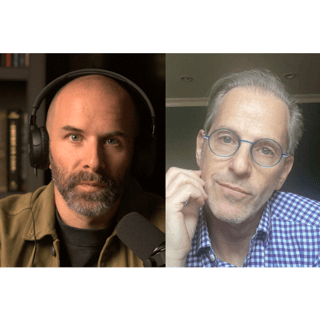
Speaker: Well, Ron, thanks very much for joining me today. i know it's ah it's a little bit early for you on the on the West Coast. um You are my ah podcast number eight.
Speaker: Hopefully, yeah and in a long line and and years from now, you'll be one of those those early ah ah presenters having joined me. But thanks again you know for joining me and making time. um You've got a really ah varied, deep background in the healthcare space.
Speaker: um I would say you've you've probably, looking at, you've you've done everything except for diagnosing, and maybe you've done that as well. um Can you give me give me a little bit of a bit of history about yourself? i Actually, I'd love to learn about a little bit about your upbringing. um You know, I'm always interested to know kind of, you know, how did you how'd you get to where you are today?
Speaker: um And what what decision points yeah were were key along the way? Yeah, thank you, Robert, for inviting me to your podcast. I appreciate it. I did do a little research on what you've been doing, and it's exciting. It looks great. So, yeah, hopefully I wish you the best in the future that you're doing many more of these. But, yeah, my background is I grew up with ah my father was in the military. He was in the Air Force, and we moved around a lot. So i lived ah i lived at Air Force Base Housing up until I was probably five or six years old.
Speaker: Did you say Calgary? ah No, I lived on Air Force Base housing. My dad was in the Air Force. My father was in the Air Force. so That caused us to move around quite a bit.
Speaker: and i In some cases, would live somewhere for maybe six months and then have to switch to a different school and meet new people. so In a way, it was good for me to have those types of experiences because it forced me to be a little bit more outgoing and make friends and and learn how to adapt to ah different school systems and different teachers and different, you know, environments. So that helped me, I think, along the way to where I'm at today.
Speaker: And as you mentioned, I've i've got a wealth of experience with the the medical industry. I've been working in it since 1973. And i have a background as a respiratory therapist.
Speaker: and a paramedic and worked in a teaching hospital in the Midwest for eight years. And that's where I actually made my first invention. And along the way, I've now got 17 patents and been steadily working primarily in respiratory care and in sleep medicine.
Speaker: Okay. so So you started your career as as a respiratory therapist. um and And which hospital was that? Wesley Medical Center. It's in Wichita, Kansas.
Speaker: Okay. Fantastic. um And so but what happened, um I guess maybe towards the end of that, you said seven years, I think that changed directions for you.
Speaker: Yeah, it was that interesting interesting. I worked in a... a pretty large respiratory department and I got exposed to a lot of the sales reps that were coming in and I help helped do a lot of teaching and training, particularly for ventilators. And I got to be friends with ah a sales rep for a large manufacturer and long long story short is they actually brought me on as a sales rep to cover a territory. And then I moved up into product management from there.
Speaker: And, uh, And how long were you with with that company? Nine years. Nine years. I'm sorry. And you said you helped develop the product or or they they brought you on to help sell out sell and and promote one their third product line?
Speaker: Yeah, ah as I mentioned, I helped, well, I developed a product that that I invented working in the hospital. it was a communication board type product that enabled people to communicate with the staff and with family members. And it was a simple invention, but the manufacturer that made ventilators got to see it firsthand and use in the ICU. And before too long, they invited me to join their company. And so tell me, tell me about that platform. Is this before pre web?
Speaker: Oh, yeah, this was a very simple, it literally was a
Speaker: I interviewed probably a hundred patients after they were extubated and taken off of ventilators and asked them what were their most common things that they were trying to communicate to the staff. And it was like, I'm in pain, I'm thirsty, I'm hungry.
Speaker: of I need to use the know bathroom or whatever. And so I put all that stuff on ah just a simple laminated, like a piece of vinyl sheeting.
Speaker: and put the alphabet on it and that they would just basically point at stuff because when you're intubated, you can't literally talk. yeah You can do sign language or point at things. And it's very the the main thing I took away from that is patients were extremely frustrated losing their ability to communicate. So this was ah an easy, simple, low-cost way for patients to get things fairly quickly.
Speaker: Yeah, i i don't think um I don't think mainstream you know understood you know the product or the term ventilators until COVID, unfortunately. yeah Yeah, that is unfortunate. But no, that led led to my career in medical sales, marketing, product development, and but that's a whole line of products that I've launched and in patent patents that I received on products that I invented and helped of build and produce with the manufacturers that I work for.
Speaker: Well, so so tell me so tell me a little bit about where the what are the products you're most proud of that you you've you've worked on since those early days? Well, you mentioned COVID. So one of the products that I spearheaded and and pioneered was non-invasive ventilation, which didn't require endotracheal tube. You could actually ventilate a patient using a a full face mask and they could take the mask off and they could drink, they could speak and, you know, communicate, but non-invasive ventilation became a mainstream. And that was something that I worked on in the early, late eighties, early nineties. And it became a main, uh, go to kind of a therapy for many patients that needed ventilatory assistance.
Speaker: and And was that used um quite a bit during COVID? i what what's What's the circumstances where that would be applicable versus ah ah the full ventilator system?
Speaker: Yeah. i So I did a ah clinical research project in San Diego during COVID about the incidences that were the mortality and morbidity that was created through intubating patients that had COVID. It actually made them worse.
Speaker: So by intubating the patient and ventilating them under higher pressures than than ambient pressure, it actually forced the COVID virus deeper into the lung, and that's what caused a lot of patients to expire or pass away more quickly. So i in the study, it showed by switching to heated high flow therapy, it was much more effective and mortality went down by 70%.
Speaker: So that paper was published, i think, sometime around 2022. And that's now become, through the Department of Defense and through a lot of other agencies, high flow, heated high flow therapy now is is the go-to therapy for COVID patients.
Speaker: So and unfortunately, that research came came, I guess, a little late during the pandemic to to have an impact. Yeah, it it was unfortunate. And it was...
Speaker: I guess the fortunate thing was that there was a database that was shared from Italy, France, a lot of European countries that use ventilators, as well as the United States. And through you utilizing that database, coupled up with ah artificial intelligence, it actually started to assemble what was going on and why these patients were not doing well after they were innovated and put on a mechanical ventilator.
Speaker: Johnson, Tell me tell me about another product development or patent that you're proud Brian Johnson, M.D.: Probably be like some sleep products that I had worked on again in the 90s and early like 2000s, and it was more to do with mask interfaces, the mass that patients.
Speaker: typically wore or would wear were very uncomfortable and they created a lot of problems with skin breakdown around the nose and facial areas that were sensitive to pressure.
Speaker: So I helped develop a series of different types of masks that were made out of really soft silicone. And those really were a huge breakthrough in making oh the treatment for sleep apnea a lot more comfortable.
Speaker: Well, actually, we were we were talking a little bit about VR in the beginning. know, there's a soft silicone inserts is kind of a popular use method for ah being able to share a headset between people and and trying to minimize, you know, ah infection and and and contamination issues.
Speaker: I'm guessing that that probably goes a little bit back. It it sounds like a very, very similar type of product. Yeah, yeah. It'd be very similar to what you just mentioned. me So, listen, we I think um you have a vast amount of experience. It sounds like you've been helping a lot of entrepreneurs and and startups over the last few years.
Speaker: um Maybe, you know, can you comment a little bit on is it Is it easier or more difficult today to get a product to market, to get it approved regulatory-wise, than it was 30 years ago?
Speaker: In some ways, it's easier, and in some ways, it's more difficult. The book that I published a couple years ago called Someday is Today, goes through one one whole chapter is about funding and another chapter is about the FDA, about regulatory issues, patents, a number of different things that you've got to be aware of if you're going to try to commercialize a product anymore.
Speaker: But, ah you know, I still encourage entrepreneurs that have ideas that are clinicians to Try to get get together with someone that understands, you know, the business side of of of medicine and help them get through the gamut or the the maze of things that go on. And I think the most difficult things today probably if you're you're startup is is funding.
Speaker: Money is incredibly tight right now. It's hard to find ah venture capital money. or even friends and family sometimes for startups. And it is expensive. Just a basic product anymore can cost any anywhere between $200,000 $500,000 to go through all the you know the regulatory processes, the patent filings, building prototypes, even though I think the big breakthrough in the past five years is using 3D printers is a lot better than what I used to use, which was stereo- And now today I can make something with a 3D printer, a prototype that's pretty functional. You can't really use it on patients, but you can make something within a few hours compared to it would take two or three weeks.
Speaker: And it's a lot less expensive. So there are some advantages to working in today's environment. And AI is going to be, I think, a big help in some ways as well to try to determine what's the sweet spot in the demographics and the population that you want here your device or your product to really be focused and centered on.
Speaker: So so on on the funding side, you know maybe yeah you're you're on the West Coast. it's It's always a little bit hard to have a sense of, you know, how fluid funding is from ah from an East Coast perspective and and and being in in the center of DC. um You know, at least from an outside looking in, it it seems like there's, you know, yo god awful sums of money going into the AI left and right.
Speaker: um is you know are people just jumping on the bandwagon or is that is that money that um is is not being very well invested and is it taking away from you know you know other other um opportunities like healthcare and uh and product investment yeah well i think ai in the healthcare space it's a an approach that i would say it's crawl walk run because you've got to be careful in terms of how you apply ai where you apply it and in what you're offering. And, you know, you go on chat GPT or you go on Gemini or any of these AI models that are, that are currently being used through Google or whoever.
Speaker: And there's tons of disclaimers, particularly if you ask it a question about something related to a medical condition. So I think people are,
Speaker: They're slowly understanding, and I think AI is getting smarter as people challenge it and ask it you know more difficult questions. It's learning. But I don't, my wife's a physician. I don't see, for instance, her in jeopardy of losing her job due to AI. I think AI work can help doctors and clinicians is helping them speed up doing routine mundane tasks that are low risk.
Speaker: and helping them with things maybe like charting, for instance, so they can spend more time with actual patient care or hands on patient care. But yeah, I think there, like you said, Robert, a lot of money is being put into utilizing AI, but not so much, I don't think, in the medical industry right right now at this point, but it probably won't be advancing and we'll see more more opportunities in the future as we get to understand it.
Speaker: Well, you know, and and I've only you know, been traditionally working in healthcare care for for less than 10 years now. mike My father was an OBGYN, but all all three of his sons ended up being engineers, however.
Speaker: ah But it does seem, you know, having worked in the in the VR space, it it seems like it's it's extremely hard to bring efficiency processes into the hospital setting or or healthcare care in general.
Speaker: IT, you know i t um yeah very older systems, and we're just, um you know we have we have a system that that is not working for most and and and is extremely, extremely expensive um and insurance keeps going up.
Speaker: And we see you know places like the NHS in the UK, barely keeping it together. um You know, based on on your your years and and experience, where do you see the, the where where what's the low hanging fruit to to streamline things? Or are there so many middlemen involved in the system now that it it's ah it's almost it's almost impossible to Yeah.
Speaker: Well, I think the insurance companies are a big part of the inefficiencies. There's just a lot of filings for claims and paper processing and just a whole whole maze of different things that ah hospitals, clinics, and I've owned sleep labs. For instance, you know, you submit a claim, it gets denied, then you've got to you know, have a justification, for instance, why the patient needs a sleep study, or why do they need to go on CPAP.
Speaker: And you go back and forth for weeks, sometimes with an insurance company trying to get the patient covered. you know, and the patients get frustrated in the meantime, and they're not being cared for it because they're stuck in between their insurance carrier and in the clinician or the clinic or the the hospital to try to get their their care their care pathway, you know, get it up and going. and And I think what you see in Canada and in Europe, like you mentioned,
Speaker: There's long waiting lists for people that need procedures. And i you know I laugh about it. Sometimes my my brother works up in Canada and he just told me, he said, sometimes it'll be six or seven months before I can actually see somebody about a problem. And I think what they're wishing for is that I just would either die or go away or I'd get better on my own somehow or or pay cash for it.
Speaker: And that's what a lot of patients do. They get frustrated and they finally to say, I'm going to go somewhere where I can pay cash out of pocket and get this taken care of. Well, and you see a lot of um you know ah perverse effects in the healthcare system. you know for For whatever reason, the last couple of months, I've seen a number of examples where alright it costs $5,000 to get an MRI if you use your insurance.
Speaker: But if you pay out of pocket, yeah um you can get get an MRI $500. Yeah, or an x-ray for $50 $100. yep or an x-ray for fifty dollars or a hundred dollars So is um I mean, do you feel that one of the main opportunities to fix is to go back to a a pay as you go um service?
Speaker: Yeah, i I just got back from Mexico and visited ah a friend of mine that's a nurse down there. She lives in a in San Felipe and most the people that that are coming down there are Americans and they're paying cash to get dental procedures, simple surgical procedures done, because frankly, their copay and their insurance here is it's astronomical. Like they have $5,000 out-of-pocket copays. Down there, they can get a procedure done for a few hundred dollars.
Speaker: And it's, you know, they're they're well-trained physicians and the clinics are nice and everything. So down in Mexico, it's mostly cash pay. and and And you feel the quality is is is is good just on par Yeah, the the physicians are typically a lot of them are trained in Mexico, but they come to the United States and get additional training or they do residencies here with teaching hospitals, particularly the ones that are near are are where I live in San Diego. A lot of doctors come up and cross train in San Diego at Sharp or Scripps.
Speaker: if ah if you're If you were a new company and you have a product um that you're confident ah works well and and will be successful in the market, um but you know it's going to require regulatory approval to get it where it needs to be,
Speaker: Yo, based on your experience, how what's what's what's your process of of having worked with the FDA? I i hear a myriad of different opinions. Some people say, don't don't don't even start with the FDA until you'rere you're well ahead and and and you have your data and and and it's kind of your last step. Other people say, oh, you should start with them at the very beginning and make sure you understand what data they expect and and want from you.
Speaker: Yep. the The advice I give my clients is it's changed over the years because it is expensive to go to market with something.
Speaker: there's there's ah There's a sunk cost to do clinical trials and things like that. and i'm I'm speaking from more of my expertise is on devices, not not pharmaceuticals.
Speaker: And so I've developed and designed diagnostic equipment as well as you know just their therapeutic equipment. But lately, the the advice I give clients is that if you're you're far enough along and you've got a good set of data that you could actually present to the to the FDA, you can do what's called a preliminary investigative phone call with a reviewer that would be in the division that you're going to be submitting your 510 application to And that discussion is kind of, it's it's kind of one of these things, what if, what if we went to market with this product that does the following things and you explain to the the FDA examiner the how the product works, what patient population you're going to be using that on.
Speaker: and then you you have a ah q and a with this person that is all preliminary before you would ever do a filing and that investigative discussion can save you a lot of time and money and lot most of the time if you get a good reviewer that's pretty experienced and i always tell people ask them how long they've been been with the fda and what's their background and how many how many 510k applications have they have they actually approved or gone through and so that one hour or two hour discussion, and you can call them up again if you have additional questions, can save you a lot of time and a lot of money.
Speaker: And it can also give you more laser focused direction on what data sets do I actually need to put together to submit to the FDA to show that the product is safe and efficacious.
Speaker: So does that make sense, Robert? Yeah, yeah, very much so. i appreciate that. um let's Let's talk a little bit about, because I see on on your profile, yeah you've got a quite experience with with international distribution.
Speaker: um We have a lot of members within Evere, those who are based in the US, those who are based in Europe, um that you know the European startups want to come to North America. They they think maybe the the US market is is much larger. And and and ah I don't know if they think it's easier to get into or not. It its it seems it's it's difficult no matter where you are.
Speaker: But um any advice for those that, um you know, are looking to branch out ah overseas? Absolutely. I think now in this day and age, I've had a lot of clients, they launch in Europe before they launch in the United States because sometimes the FDA process here is is slower than the process it is to get approval, let's say, in Europe.
Speaker: And a lot of the what I'd call the European markets that you are going to focus and target, they're very familiar with what's going on in the United States in terms of therapy and diagnostics, particularly for sleep and and respiratory.
Speaker: So I have some clients that have chosen that pathway to set up distribution, get approval first in the European nations, and then eventually they get approval here in the United States and commercialize the product here here locally. But yeah, there's a lot of opportunity and the the patients are the same. I mean, the database and the the populations and demographics are very similar.
Speaker: The areas where you might have more difficulty getting into, like Japan, it it has a very extensive kind of ah an FDA kind of formulation that goes on there. And it can take actually longer to get into Japan than it than it would take to get into the United States in terms of an FDA or an approval to to market something.
Speaker: So, yeah, I would, I would, totally support or advise at least my clients to take a look at commercializing something over in Europe. and And the other thing too, your sales and distribution pathways are pretty similar to what you've been setting up here in the United States.
Speaker: um Actually, I've got a couple couple of questions. It looks like you've you've done a lot of work and in sleep um therapy technology. um In today's market, I'm seeing a lot of sleep support therapies, products, apps that would come under the the wellness category.
Speaker: um Can you maybe talk a little bit about, and and with with say sleep as an example in particular, you know when when that product, you know is okay to stay out of the regulatory process and when, and at what step it really needs to go to the FDA from a, from a business planning and a go-to market strategy.
Speaker: Yeah. It's, it's, it's a the dividing line is the claims that you're trying to make. If they're therapeutic in nature and specifically the products as it treats sleep apnea, for instance, you, you've crossed over into ah an area where you you must have you know, an FDA 510 approval to make those types of claims.
Speaker: So I'm working with a client now that makes a, uh, a ring like, uh, wearable. So this is, this is something that I've been involved with over the last three or four years is looking at watches and in rings and different types of wearables that, that can pick up and they're fairly sensitive and specific to things like motion, snoring,
Speaker: sleep apnea, but they don't make those types of claims. that They're, like you said, Robert, they're in the health and wellness space, so they can say, you know, use marketing terms that maybe insinuate that it's going to be maybe therapeutic in some ways or diagnostic in some ways, but they don't come out and make really specific claims like you could if you had the FDA 510 approval.
Speaker: So that's how they get around that. Like, for instance, there's a company called Ora out of Finland that makes pretty nice wearable rings. It can give you, you know, your but blood oxygen saturation. It can look at how many hours you've slept. And Ultra Human is another company that's based out of San Diego that I work with.
Speaker: And they've they've launched now like a, it's like a hub, it's called a human and it picks up and can detect noise. So if you're snoring or whatever, it detects the quality of air that's in your house. It picks up like CO2 and a whole bunch of other things, as well as it can, if you wear the ring that they have, it couples up or it pairs up with the the hub and can show you some really incredible data and information about your sleep patterns.
Speaker: but they don't make any like specific medical claims. So with that, is it then it's then up to the the user to do self diagnosis to a certain extent and decide yeah what data is kind of helpful for them.
Speaker: I kind of compare it to if you feel like you have COVID, but you don't really know. You can you know get these little kits that you can use at home, but even the kits have disclaimers on them that you really should seek the advice of ah of ah of a physician to determine and do more testing to see if you have the flu or if you have COVID or whatever. so And it's kind of the same thing with home pregnancy testing and a lot of things that you can use at home.
Speaker: you even a blood pressure cuff. I mean, it's even though it shows your you may have hypertension or you know some kind of blood pressure issue, even on the box or the labeling, it says you you should really consult with your physician to determine you know what's the best treatment for blood pressure. Actually, let me um let's let's talk about market validation for for a minute. what um How much data and how many pilots are are necessary whether it's a, whether it's a, a, a therapeutic or, or, um or even a versus a wellness product, um you know, at what point can a startup feel good about um the the data that it has and and it's, and it's test pilot testing to, you know, really then take it to a next level.
Speaker: My advice for clients that are getting into either the health and wellness space or even if you're going to go for a five ten k is have an end of at least 30 patients and do a really good job of collecting data on those patients that you're going to be able to utilize in the claims that you make from a marketing standpoint or your FDA 510K submission.
Speaker: You know, and obviously, the more the larger the database is, David Larson, accurate it becomes and what we talked about earlier that a lot of clients that I have now are using is they're running this data through some Ai ah formulations to. David Larson, To ensure accuracy sensitivity specificity and things like that so, but the minimum would be, I would say 32 give you the comfort.
Speaker: and the knowledge at least to make claims that you feel are valid about what your product is actually offering or doing, either from a diagnostic standpoint and or from a therapy standpoint. So that's 30 individuals or 30 trials?
Speaker: 30 individuals. and Okay. Well, that seems on the pretty, on the low side. Yeah, it is low, but if you think about it, let's say you did, and the way you can ensure a higher degree of accuracy use the same protocol, but do the trial or the pilot in three different centers.
Speaker: And what you learn from that is you learn the nuances from one facility to another in terms of the way the nurses work or the doctors or the clinicians and how they apply your product to a different patient. So if you did 10, 10 and 10 with an N of 30, you can do a nice comparison then of, well, hospital A, they had these issues with the product in terms of the way they turned it on or the way they worked it or, and you have them fill out you know, a post survey about, you know, the quality of the product, how it performed, any issues they had with ah educating people how to use it during the pilot.
Speaker: And then you can compare that to facility B to facility C. And what you should see is a common point with the outcomes from the patient part of it that you're measuring.
Speaker: But the other part of it you'll see is what can we do to actually make the GUI the interface actually more intuitive and better so that everybody across all, you know, an entire huge population of hospitals and clinics all have basically the same experience.
Speaker: um When it comes to companies just trying to get their first their first patients, their first trials. And let's assume they don't, they don't, would you say it's almost imperative for a startup to have a a physician ah or a nurse as part of their team if they're going to work in healthcare? care I think it's important to have a ah clinical person. Most of the companies that I advise, I i did encourage them to find some medical person, a nurse or ah physician that would be part of the staff or a consultant or a 1099. I think you need that kind of balance, particularly if you let engineers just design something.
Speaker: It's very engineering driven. If you have an engineer that's combined with the input of a clinician, then you have something that's more balanced. It's, you know, just designed and developed from an engineering standpoint, but the clinician can give them, you know, great advice, you know, about how the product's used, how to make it easier to use, what's more comfortable for the clinician and the patient, and how how the the device is utilized.
Speaker: You know, so things like that. And I find that more successful companies have a medical director full-time on staff or someone that they can at least bring into regular and routine meetings during the projects.
Speaker: and And what have you seen work best for ah for those startups that are early and trying to just get their first partnerships and and ah patient experience with ah with a hospital?
Speaker: but but What's their best way to get their foot in the door? Because that is a very, very hard hard thing within healthcare is even to get somebody's attention. It is difficult because hospitals do not want to take any risk with trying trialing or trying something particularly that's new.
Speaker: And if it's a pioneering type of but a technology that even creates more red flags. So that's why it's helpful if you do have someone that that works at a hospital of that that's trusted and respected in the community, a doctor or a nurse,
Speaker: that can go to their their department heads and say, you know i'm I'm working with this company as you know full disclosure, and they they're looking for a pilot site. could Could we set up a meeting with them? They'd like to come in and show show you the product.
Speaker: And if it doesn't have a 510K on it, then you have to do what's called an investigational review board type of a pilot. So that's a third party that actually implements and helps construct the the protocols and oversees this.
Speaker: And then you have to have a bunch of different documents signed for risk and safety mitigation, you know, in case there's ah an accident with the the product. So you have to be... you know show that you have proof of insurance typically it's up to a million dollars per incident sometimes it'll last for as much as five million but for a startup that's why i said earlier it can be quite expensive just to get to a point of where you're trying to prove ah prove a product and you need to do clinical trials and you actually need to use this on patients so that's where the that's a big cost of getting startup going
Speaker: so how do you advise um this will be this is a hard one how do you advise startups um on whether they should continue to keep at it um you know again it getting into healthcare care is so difficult um there are lots and lots and lots of good ideas um there are even very many good products that never see the light of day for x number of reasons.
Speaker: You know, at what point do you do you advise a company that look this, you know, it's just not going to work or, um you know, this is definitely worth continuing and and do whatever it takes.
Speaker: boy Robert, that is, that is a tough question, because Many of my clients, they're so passionate about what they're working on and they believe in it so much. It's hard to tell them to this really is probably not going to work and it's going to take you a lot longer to get it to market.
Speaker: and by the time you do get to market, your burn rate or your sunk cost is going to be 4x of what you anticipated it to be. And that's where investors and even people that are working at a startup company get a little bit nervous. It's like when you kind of project you're going to be in the market in two years, you hit that two-year point and you've spent $2 million, dollars and your investors, which you have quarterly typically meetings and give them an update on it, and you're not even You're not even at the 50 yard line, let's say. And so they get a little bit nervous and start wondering, well, and you start asking them for more money because you need more money to do additional prototypes or clinical trials.
Speaker: That's where things get a little bit shaky. And I've seen, like you said, a lot of good ideas pretty much just sit in a box in a corner and there's a, the business is closed sign on the door.
Speaker: Yeah, it's it's ah it's very difficult. I mean, I think everyone, almost everyone that I know that works in healthcare is is yeah is doing it because they want to see you know a positive impact on on people at the end of the day.
Speaker: um ah But you have to make a living too. And it's it's it's very, very hard. That's for sure. that's a ba
Speaker: Before I change tack a little bit and and and and close up a little bit, what any Any last thoughts, points about healthcare in general, how you see the market 10 years from now?
Speaker: you know what's whats What's your best advice for for anyone thinking about this space?
Speaker: Well, from the ah product development or therapy standpoint, always kind of hold fast to a rule that you've got to have, if you have ah a solution for a problem, make sure you really in theory, test it out as best you can before you you go to the next step and try to take a lot of time to seriously consider, does this product really have a right to be in the marketplace and challenge yourself and, you know, talk to some different people outside of your own, you know, circle of friends that can actually challenge you and say, well, have you thought about doing it this way? Or have you thought about changing this particular aspect of your product to do this and other things?
Speaker: So that upfront investigating work will pay off big time if you take the input and you get the right input from the right people. And don't try to develop everything you know internally with just a ah couple people, like two or three engineers.
Speaker: I call it drinking your own bath water or you know drinking your own Kool-Aid because everybody in this little circle of people go, yeah, you're great. This is fantastic. Let's keep spending money on this project.
Speaker: And then when you finally hit the real the reality of taking it outside the four walls of your little business and you have doctors and nurses and people start poking holes in it, you've got to be sensitive and you've got to take their input. You've got to be a good listener and and don't talk a lot. Just listen and learn.
Speaker: So a fright aside from all this, you're ah you're musician as well. So tell me a little bit about that. Yeah, well, I started my music career when I was pretty young. I was in Texas, and my dad was, like said, in the Air Force, and we were stationed in in Fort Worth.
Speaker: And someone heard me singing in church, and they came up to my mom and dad and said, you know, would your son be interested maybe in being in the Texas Boys Choir? And ah my mom and dad said, well, sure, what's what's that entail? And we never realized it was a really professional experience.
Speaker: you know, great group. So I did an audition and I got, I got to be a tenor singer in basically their choir and then moved into Broadway musicals. And I was with the the Texas Voice Choir for about two years and learned, learned a lot. But then from there in junior high and high school, I started playing in rock and roll bands and started playing sax, flute, harmonica, and percussion. Oh, wow.
Speaker: And currently I'm touring with a ah blues band on the West Coast right now. We do pretty much authentic blues from the Delta to Chicago. You know, we try to represent the roots of the blues that came out of the Delta area, particularly from the 1920s and 30s, and then it progressed up into Chicago. So we cover artists that, you know, are from, you know, the 30s, 40s, and 50s primarily.
Speaker: Right, right. so And do do you still sing? Yeah, I still sing. and i so In this band, I pretty much play harmonica and and sing lead and backup vocals. and And can people find your your music online anywhere?
Speaker: Oh, yeah. We've got a ton of videos on YouTube. it's The name of the band is the Barn Owl Blues Band. The Barn Owl Blues Band?
Speaker: Yeah, Barn Owl Blues Band. Okay. And yeah, we're on YouTube. we're on we're We're actually in the studio recording a new record we'll have out the first next year. It'll be an EP of all original blues blue songs that we've been writing. Well, that's fantastic. And how many how many concerts year do you normally play now?
Speaker: We do about five to six shows a month. Okay, wow. Well, that that keeps you very busy. Yeah, yeah, it's fun. lot of fun. it It creates a good balance for me. You know, being in the medical business can be a little bit hectic. So the the music side of it really is, it's fun and it' something I look forward to doing and performing live in front of an audience.
Speaker: That's fantastic. and any Any upcoming shows before the holiday? Yeah, I've got a show coming up on the 21st that's it's out in the desert near Palm Springs at an old gas station that typically a lot of bikers go to. So that's always a fun of gig. and and Well, my my wife and I just drove to ah Joshua Tree for the first time oh back back in September. so and and and And I remember driving by Palm Springs.
Speaker: ah never never having been there. I never, never driven out to that part of California before from, from l LA. It's, it's, it's mysterious and beautiful. And it's just, uh, one of it's, it's a unique place in the world. That's for sure.
Speaker: Well, Ron, it's, uh, it's actually, it's been a real pleasure speaking with you. Um, I appreciate your time and and your expertise. Um, and, uh, And all we can do is ah is is tell people that to keep at it. and And if you have a good, it' you know, sometimes sometimes you're the only person that believes in yourself. ah even Even significant others or or close friends, you know, might not might not see it.
Speaker: um But if it was easy, everybody would be doing it. Yep. Like Arnold Palmer said, the road to success is always under construction. Ron, thanks very much and enjoy the rest of your day.