Transcript
Speaker: With AI, there's no chartered path already. So there is no cookie cutter approach. You're working on cutting edge you know technologies, cutting edge implementation and ideas.
Speaker: And you've been given a playground where you can make an enormous amount of impact.
Speaker: You're listening to From the Horse's Mouth, intrepid conversations with Phil First.
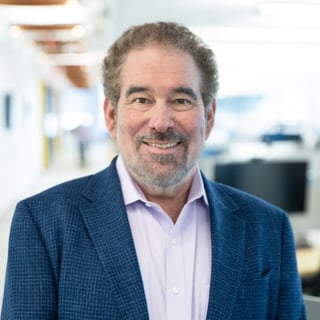
Speaker: Welcome to the latest edition of From the Horse's Mouth podcast. I'm your host, Phil Fersht, and joining me today somebody I've known very well, actually, in the industry for longer than I think we both care to remember. Rohit Kapoor is the CEO at eat egg EXCEL Service. Rohit, we've been through a lot together, so great to get you on this platform. And just to get started, maybe can you tell audience a little bit about you and and how you started out and a little bit about the early days.
Speaker: Yeah, sure. So Phil, firstly, thanks for having me. It's wonderful to be here together. So we started out at EXL in 1999, which was the height of the dot-com boom days.
Speaker: And at that point of time, the internet was just coming onto the scene and it became possible to be able to do work from offshore locations in India. And we decided to start out as an email processing company.
Speaker: Our thinking was very simple. We would basically support the likes of Amazon and Yahoo and Google and help them deal with their customer email traffic.
Speaker: And that would be a very simple yet powerful business model. Here we are 27 years later, and we are still continuing to help our enterprise clients deal with their clients, grow with their business, and remain relevant in the marketplace and stay competitive. I remember when I first met you, you must have been around 2005, you were five you pre-IPO back then.
Speaker: And then you actually invited me to your IPO party the following year, which was very nice. it's where I got know guys really well out of a nice vineyard of one of your investors. But what was it like back then? You know, you were starting out You were fairly small at the time and and in your the industry was kind of different, right? How would you describe it then compared to what we're going through today?
Speaker: Well, back then we were tiny. I think our total revenues were less than $75 million dollars in the year, you know, but the entire landscape was of high growth.
Speaker: There was a lot of adoption of BPO services that was taking place. The kind of work that we did for our clients was actually very basic.
Speaker: But, you know, there was a lot of enthusiasm. There was a lot of excitement. And this was a new business model just kind of bursting onto the scene. And we were one of the first few companies, you know, which were in this space of digital operations to go public.
Speaker: We had four investment banks line up to take us public. And we had our IPO in October of 2006. It was a grand success because i remember the offering was oversubscribed right on day one.
Speaker: We traded really well and we were off to the races. So a very exciting time and, you know, a good period for us to have gone public at that time.
Speaker: Do you feel we're back in the 90s again a little bit with what's happening in our industry right here? With so much noise, but also some of these deals are out in the marketplace and clients asking for tremendous investments up front and things.
Speaker: It really does feel a bit like we're going into a whole new building phase for the industry that we're in. Yeah, but I think it's quite different. I think in the 90s, the business model was not very well proven.
Speaker: One had to kind of demonstrate credibility to the clients that this can indeed be done. There used to be a fair amount of skepticism around it. This time around, it's much more about putting up investments, but also focusing in on the on the business outcome.
Speaker: And I think the metric for evaluation is quite different as compared to what was there earlier. In the 90s, it used to be you know basic things like service delivery quality, the ability to recruit talent, the ability to scale up.
Speaker: And today, it's about putting everything together, delivering real tangible business outcomes, getting to adoption, and actually staying one step ahead and and and being able to leverage each of the new pieces of AI, you know, evolving technologies that keep emerging every day and how to kind of stay ahead of that and apply that.
Speaker: Yeah, so i think you summed that up very well, isn't it? Like, used to be clients would look to take out low-risk work and look primarily at cost savings. And now it's kind of like a lot of clients, they're really stuck and they, they, I need a partner to help me figure this out, to help me build out an AI platform.
Speaker: I need access to talent more than I've ever needed it. And I need them to take a lot more risk. I mean, I saw, I saw a deal the other day where a client, demanded 40% upfront transformation costs being cut as a check.
Speaker: And one of the providers went for it. They went for that deal. And I'm like, don't think I've ever seen anything quite like this where providers are being asked to take enormous risk if they wanna be competitive, right?
Speaker: Yeah, well, you know, I can understand that because, you know, the market has generally been quite slow. And so service providers are not seeing too much of growth.
Speaker: And so if you are in that kind of a position, you know, you you will kind of opt in for providing that kind of a discount and literally buying a deal. So that's, ah you know, quite possible.
Speaker: But I think clients are also looking for partners who are going to be strategic, long-term, and forward-leaning partners. I think they've also realized that just trying to play on the price game is not a long-term, durable, and a sustainable pathway to either efficiency or growth or enablement.
Speaker: And I think they're also trying to rationalize the partners that they work with They're trying to make sure that they get more forward-leaning partners and partners who will lead them forward and and create differentiation for them.
Speaker: And therefore, execution and enablement becomes ah really, really important. interesting So what so do you think everyone's missing with AI, Rajiv? The biggest thing is, i think when AI came onto the scene, everybody thought it's going to be a plug and play.
Speaker: And ai is just not a plug and play. The other thing which everybody thought is that with AI, the thing that matters the most is the AI model.
Speaker: And then I think quickly, everybody has realized that it's not just the model. They then tried to gravitate towards, all right, if I can throw more compute and more data at the model, maybe we'll get to the right result.
Speaker: And again, that's ah that's not really the story. The story that, you know, I think everybody now is starting to understand and and starting to kind of believe in is that you need to bring together all of the pieces in terms of the model, the context, the data, the workflow, and the human together. And you need to kind of stitch this thing up together in a tightly integrated way. And that's the only way to kind of to leverage AI. I think the other thing which people got wrong is
Speaker: They thought initially that ai is a technology transformation project. And again, it's not a technology transformation project. It's actually changing the business workflow.
Speaker: And so you need to change the workflow alongside with applying the technology. So again, a number of misconceptions that existed. I think some of these are gradually kind of being realized and being accepted by enterprise clients.
Speaker: And there's a long road ahead of us. And I'm i'm sure we'll see this pathway becoming clearer to you know service providers and and to our clients. There's talk in industry that, oh, the BPO, whatever we want to call those firms, are going to get hit hardest by AI.
Speaker: But from what I'm seeing, buying Agentic is like buying BPO. It's similar. you' It's the business line, unless it's a very specific IT process, you're buying a business process.
Speaker: Business lines like subscription models and they like to look at outcomes. They like to say, how can you grow my revenue or improve my credit collections or that sort of thing. So isn't this creating a lot more opportunities than it is you know disruptive threats for a company like yourselves?
Speaker: Oh, absolutely. I think the biggest advantage that people who understand operations is we understand the workflow, we understand the context, we understand the semantic layer, we understand the data.
Speaker: And therefore, when you need to apply agentic AI into the workflow, that's a much easier pathway. And you know I think your point about agentic is very important, Phil, because Using AI, it's it's not a one-time project that you you know undertake and you have a definition of what is the functionality that needs to be built and you build it and you're done. Actually, it's much more like an ongoing process and it's an ongoing journey.
Speaker: And so having that cadence of deep process management capability That becomes really important. To your point, the business outcome becomes very important.
Speaker: And it's the ongoing execution that becomes ah very important. So it's not project management as such. It's much more akin to integrated process management, you know, kind of a work style that you need to have. we're seeing going on is obviously intelligence getting cheaper, more accessible.
Speaker: People talk about Jevons principle where the cheaper intelligence gets, the more people want. So how do you protect your business around this when intelligence is getting cheaper and more commoditized in many respects? Look, we have a very simple philosophy, which is things which are ah commoditized or getting commoditized, we should actually help our clients achieve that commoditization as quickly as possible. Because if our clients benefit from that, they're going to trust us even more to be able to drive greater amount of change. And they're going to give us much more business to be able to work upon and create efficiency and effectiveness around that.
Speaker: Not only will our existing clients do that, other clients who look at that, they're going to actually partner with us because they're going to find us to be a strategic partner. So instead of running away from this stuff, we've chosen to actually embrace it wholeheartedly. And I keep telling my team,
Speaker: If you are able to you know really cannibalize any part of the revenue by using automation, by using AI, we will give you double the credit for doing that because now what you've done is you've elevated the organization even more significantly amongst all of our customer base.
Speaker: So that's the first thing, which is don't be afraid of it, but rather embrace it. And the second part of it is actually... applying some of these newer technologies and learning very quickly and really kind of bringing it together. And I think that requires a whole amount of execution, a whole amount of you know planning and and intelligence.
Speaker: And while the while the model layer and the intelligence layer might be getting more commoditized and might be becoming cheaper, the correct way of applying it and actually delivering value, that's becoming more and more difficult, particularly as you get into complex ah you know business processes and complex areas.
Speaker: So I think the value associated with that goes up very significantly as you embrace this. So how does that change your whole hiring model? Because this just feels like there's a talent race out there to who can actually get more appropriate talent, more AI native talent, faster than everybody else.
Speaker: How has that changed the profile of people you're hiring and maybe your whole talent strategy? You're absolutely right, Phil. So I do think that in this era of agentic AI, the biggest constraint to growth is talent.
Speaker: It's not demand. Frankly, the amount of work that needs to be done is enormous. but having the right talent to support that, that's a critical resource that is very, very scarce.
Speaker: So the best way in which we are trying to kind of make sure that we have adequate talent is number one, the talent that we have in-house within EXL We're obviously training them and curating them so that they can learn these new technologies and not just learn it from an academic standpoint, but actually learn how to apply it from a practical stand and standpoint.
Speaker: So we've created an agentic AI sandbox that allows them to learn, to experiment, and to innovate in the sandbox. We've created some co-labs that allows us teams of people to collaborate and work together and build on top of each other's ideas. And that becomes very effective.
Speaker: And then of course, we have to source new talent and bring in new talent. And the talent that we are trying to bring in is neither a technologist nor just a business subject matter expert.
Speaker: What we are trying to hire for is somebody who is ambidextrous, who can really understand the business context, but is unafraid of applying the technology associated with it. And that kind of a combination is difficult to find. But if you bring that kind of a new talent into the into the company, then they are able to kind of drive this change in a very, very meaningful way.
Speaker: So for for us, that hiring has been great. And I would say one last thing, which is in this time period, where everybody seems to have cut back on their hiring at the entry level.
Speaker: We are finding that there's an abundance of talent at that entry level, which wants to work, which is very curious, which has this mindset of understanding the business and applying the technology.
Speaker: And so we are hiring actually much more aggressively at those junior levels. Because those are the people that can enable this change and drive this at scale.
Speaker: and And for us, this is this is a great environment to be hiring. know, it's interesting because a lot of people reach out to me, ask me what their kids should study at college or A-levels or SATs and things like that. And it's a fascinating conversation to have because I'm kind of like, train yourself to come out ready to to ambiguity and taking on roles that do require the personality more, requires curiosity, requires context and that sort of thing. It's a really different world that these kids are coming into. Do you find then you're bringing them in and sort of having big focus on this sort of training around how to use the tools, how to understand process? How how are you doing it internally to to sort of get them through those first couple of years? Yeah, so but so we have a pretty strong summer internship program where we bring them in and we give them projects and we just allow them to think in totally different ways of coming up with solutions. So we don't give them a predefined pathway of working at things, but we literally give them what the business problem is and ask them to solve it you know using their own creativity, but giving them all the necessary tools associated with it.
Speaker: The same thing actually holds when we hire full-time you know employees in the company at the entry level. It's really exposing them to different environments, different businesses, different geographies, and giving them that experience and that exposure, and then allowing them to experiment and allowing them to innovate as they go along, where you can bring together multiple decades of experience and bring that together with the enthusiasm of a freshly graduated engineer who might want to be able to demonstrate what they can do with AI.
Speaker: Interesting. Yeah, because remember particularly in our industry, we always complained that it was very hard 10, 15 years ago to get top talent to come in and process invoices and reconcile ledgers and things like that. They were boring jobs, but it feels like this industry could actually get kind of exciting for ambitious talent who do want to get more involved with clients and with solving problems and things, right?
Speaker: Yeah, I mean, look, the real thing is that with ai there's no chartered path already. So there is no cookie cutter approach. Everything that is being created is being created afresh.
Speaker: You're working on cutting edge technologies, cutting edge implementation and ideas. And you've been given a playground where you can make an enormous amount of impact.
Speaker: So it's a much more fulfilling role. It's a much more satisfying role. It's a huge learning experience. And just having the flexibility and the freedom to do this is very invigorating. So ah yeah, it's a great time to be in the industry at at this time.
Speaker: So I guess the next challenge is how do you prove to everybody and your clients and your Wall Street analysts, and how do you prove to everybody that AI is working, working for your business, working for your growth?
Speaker: So we've been somewhat fortunate, Phil. We've been fortunate because you know some of these secular trends that have been driving up in the in in the environment, we were able to kind of identify them a little bit early on and take ah action early on. So today, if you take a look at EXL's portfolio,
Speaker: It's a great portfolio, which we would call is in the Goldilocks zone, where 40% of the revenue of the company today comes in from digital operations, which really provides a deep understanding of the workflow and the business context of our clients and domain knowledge.
Speaker: And then we've got 60% of our revenue, which comes in from work that we do with clients around data, analytics, and AI. And that allows us to be able to stay at the cutting edge of AI technologies that are evolving and apply them for our clients.
Speaker: And these two are ah very synergistic. Because everything that we learn on the operation side, we can apply that on the data analytics and AI part of the business.
Speaker: And everything that we are learning on on the other side, we can embed that into the operation. So number one is the portfolio mix that we've got is such that it allows us to be able to grow our business in a very, very predictable format and at a double digit growth rate in terms of year on year growth rate.
Speaker: The second part of this is I think we've invested in areas which are high growth areas. So we've invested very deliberately over the last five years in terms of data management because we felt data management was going to be really important and integral to this whole play out of AI and agentic AI.
Speaker: More recently, just last month, we've done an acquisition of a company called iMerit, and that's much more centered around model evaluation. It's centered around red teaming. It's around centered around how can we do evaluation of models? How can we create the rubrics to be able to help our clients evaluate models and be able to kind of train specialized and small language models?
Speaker: So we think you need to work on your data estate, but soon enterprise clients will also start to move towards owning their own language models.
Speaker: And we need to be able to be there in position for for helping them train and create their own small language models. Since I met you, we've been through a major recession.
Speaker: We've had the birth of cloud pandemic. Now, AI and everything like that, and you've grown a company from very small to 2.4 billion, something like that. and so what what would you say the two or three things that you've learned along the way that you could maybe share with other budding business leaders that, you know, they could learn from you? I think in our business, the number one factor is talent and team working. And I think if you bring in you know competent individuals and high profile executives to be part of your team and you can work together in a collaborative way, that's fundamental and paramount. The second thing is, i think the industry underestimates the value of execution.
Speaker: And just being able to execute and deliver for your clients day in and day out and making sure that whatever promises you're making to your clients, you are overachieving on them.
Speaker: That's very, very critical. And then lastly, it's not easy to kind of read some of the signals because the environment is changing so rapidly, but it's a lot easier to read secular changes that are going to take place.
Speaker: And because these secular changes are over a longer period of time, and if you just pay attention to some of the fundamental changes which are pretty basic that are taking place and just make slight adjustments to position your company to be able to participate in those trends, I think that works really well. So from my lens, it's the talent, it's the execution,
Speaker: And it's trying to you know to read some of these signals on secular changes that are taking place a bit ahead of the curve. Fantastic. And if I'm not incorrect, you must be the longest serving CEO so by by a long way. And you also seem more and more relaxed every time I talk to you. So what's the what's the secret? to I mean, clearly you're not you know going through the four-year burnout cycle. You're staying very consistent. Yeah. Well, the biggest thing is, as long as my board is happy with me and our shareholders are happy with me, I can continue to remain the CEO.
Speaker: and And from my perspective, this is an exciting time to be part of the company. So I'd love to kind of continue to be here for a while. You know, I think one of the advantages of having co-founded the company when it was so tiny and so small is that I got to take on the CEO role ah pretty early on. You know, Phil, I became ceo in 2008, which was right at the time of the global financial crisis.
Speaker: So that wasn't a very pretty time to become the CEO. But I think we've come a long way from there. And it's just been a fun ride. Terrific. Well, it's been great catching up with you on such a regular basis and really enjoy our conversations very much and can't wait to share this with our network very, very soon. So thank you very much for time today.
Speaker: Thanks, Phil. Thank you so much for doing this. I really appreciate it. Thank you for listening to From the Horse's Mouth. Don't forget to subscribe and like wherever you listen to podcasts.
Speaker: Got something to add to the discussion? Drop us a line at fromthehorsesmouth at hfsresearch.com or connect with Phil on LinkedIn.