Become a Creator today!Start creating today - Share your story with the world!
Start for free
00:00:00
00:00:01

Ep 14: An interview with Barry Ritholtz

287 Plays3 years ago
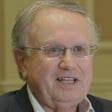
On this week’s podcast we speak to Barry Ritholtz, co-founder and CIO of Ritholtz Wealth Management.
Barry is a tireless blogger and advocate for evidence-based investing. It was his team that put on last year’s inaugural EBI conference in New York. Following on from that success, this year the show is travelling west to Dana Point, California.
Listen below to find out:
- How the idea came about for the EBI conference
- Why the financial media is so unhelpful
- His view on the dramatic changes taking place on Wall Street
- How to prevent behavioural biases from ruining a portfolio.
Recommended














Transcript
Introduction to Tebi Podcast
00:00:04
Speaker
Hi there, my name is Sam Lewis and welcome to this week's Tebi podcast, brought to you by the evidence-based investor in conjunction with Regis Media, connecting advisors with clients.
Interview with Barry Ritholz
00:00:15
Speaker
Earlier this week, we spoke to Barry Ritholz, the co-founder and chief investment officer of Ritholz Wealth Management based in New York. As well as running a financial planning and asset management firm, Barry is a prolific writer and a regular commentator in the States on a wide range of financial topics.
EBI Conference Expands to West Coast
00:00:32
Speaker
Last year, Rick Holtz and his partners put on the very first evidence-based investing conference in New York. It was such a success that this year, they're heading to the West Coast as well. We began by asking Barry about how the idea came about for this year's event, taking place in Dana Point, California. So we did a one-day event
Investment Philosophies: Data vs. Myths
00:00:51
Speaker
in New York. We had some great speakers, Bill McNabb, Charlie Ellis, Jim Chanos, and everyone discussing
00:00:58
Speaker
how their investment philosophy was based on data, not based on myths or beliefs or hopes, but data. And the problem with a one-day event is, for most people, it's not worth flying in from. For the average person toiling away in an office, it's probably not worth taking three or four days off from work, flying cross-country, attending the event for the day and then flying home.
00:01:24
Speaker
uh... we had people from all over the country all over the world but they were professionals who this is part of their job so it wasn't uh... that disruptive but we had a lot of people who were very interested in the idea they were uh... from the western half united states mostly california seattle portland that that side of the world vancouver but we got a lot of requests asking us to be a uh...
EBI West Conference in Dana Point
00:01:54
Speaker
asking to if we were going to do an event out west ever. And so we were speaking with the co-producers of the event. They're great. We've been really happy with them. And they suggested, hey, we have this other conference that we've been doing out in California, but we would really like to give it a little more focus and a little more specifics instead of just having to be a general investing conference.
00:02:23
Speaker
Evidence-based investing, West was born, and it's June 28th out in Dana Point, California. It'll be three days long, and we're really jazzed about it. It's a really nice lineup of investors. It's definitely an impressive list of speakers, including Rob Arnott and Michael Mobison. Who are you particularly looking forward to hearing, and why? So I've interviewed Arnott, and I know him personally for years, and I'm always a fan of what he has to say.
00:02:52
Speaker
And I love Michael Mobouson's work. We've had him on the show twice for a deep dive interview. His stuff is always fascinating. The person who I only know from their writing but have never seen them present in a room, the other keynote, is Ed Rupetto. He's a fascinating guy and I'm really looking forward to seeing his presentation. That is going to be really interesting.
00:03:19
Speaker
These conferences have helped to raise the profile of evidence-based investing. Do you get the sense that as a concept, EBI is really starting to take off? You know, the funny thing is when we did the first conference, previously we had been doing the big picture conference, we put it on hiatus in 2014 and 2015, and then when this opportunity came along,
00:03:42
Speaker
uh... we wanted to re-brand it and the idea of evidence-based was everybody as soon as we someone said it everybody not at their heads the fascinating thing is that someone said to us why are you guys calling this the evidence-based investing conference isn't all investing evidence-based and
Rise of Evidence-Based Investing
00:04:03
Speaker
the short answer is now a lot of it is based on myth then and unproven assertions and
00:04:12
Speaker
You know, all these theories that are completely unproven. So there was a real receptive audience. And I think it's sort of a dual track. On one hand, there's a lot of interest in the data that's out there. And the data says people aren't great stock pickers. People are terrible market timers. People's own behavior gets in the way of them being good investors. And here's what the evidence shows.
00:04:40
Speaker
And on the other hand, there's a group of people who are kind of surprised that investing isn't like medicine or accounting or name the other profession that's based on rigorous standards and science. They're like, wait, this isn't evidence-based. So I think, A, the trend is definitely there.
00:05:03
Speaker
We see it in how fast indexing shops like Vanguard and DFA have grown. We've seen it in the rise of ETFs and how an inexpensive, simple product that's something that's cheap and transparent has been just sucking assets away from the more complicated, less transparent mutual funds. We're starting to see
00:05:29
Speaker
the citadel of of hedge funds venture capital private equity uh... some of the mystery has been stripped away and distilled a out of hedge funds are still three trillion dollars you know that the question when you look at the trend though hedge fund seemed to have sort of plateaued a little bit and ETFs and indexing and evidence-based seems to be a trend with the wind at its back that it's going to continue to go along so a shift away from
00:05:58
Speaker
the old way of doing things and a modern mathematical statistical approach to investing, that there's a reason why quants have become so ubiquitous on Wall Street.
Appeal of Active vs. Evidence-Based Investing
00:06:12
Speaker
Looking at something from a statistical perspective is much better than from a mythological perspective. One of the problems with evidence-based investing is that it's just not as exciting as active investing. Is that a challenge when putting on an event like this?
00:06:26
Speaker
one of the things they say all the time is that good investing should be or the financial media likes to to focus on the activity the action the upgrades the downgrade stocks that are moving that's what what you know the news media covers because uh... you know stop and think about this jim cramer who who is thought of the popular host of bad money he cannot come out each night at six p m and say owner broadly
00:06:56
Speaker
diversified portfolio of global indices that are low cost, rebalance once or twice a year, see you tomorrow night. He's got another 59 minutes and 45 seconds to fill. Half the financial press out there is about clicking and eyeballs and attention. And to make that work, you have to jump up and down and yell.
00:07:21
Speaker
and you have to either push people's greed buttons or fear buttons it's a little bit of a challenge to get people to say hey listen monkey boy sit down and take your inner primate brain and throttle it back and can I just push your logic button for one second and I want you to think about this objectively and rationally and if you could get people to do that you know we watched this happen when we speak to people when we
00:07:50
Speaker
speak to prospective clients, when we talk to the media, very much we see the light bulb go off. It's not everybody who gets it, and there are a lot of people. There's a wonderful book called What Investors Really Want by Myer Statman, and he talks about
00:08:09
Speaker
Objectively, we think about investing for the long term and having sufficient money to meet future needs, whether it's buying a home or putting our kids through college or retiring comfortably in the future. But there's another component to that, which is the non-financial aspect of investing, the expressive side of it. And some of that is the buzz, some of that is the juice.
00:08:37
Speaker
There are two ways to deal with that behaviorally. One is when we know a client really is goose about tracking specific stocks. So we say to people, if you want to be an active trader, if you want to catch that buzz, and we can't talk you into something like skydiving, take 5% of your portfolio and put it into a fun account. And the expectation is, well, if you
00:09:05
Speaker
mangle it if you get it cut in half. Well, it was only five percent. Thank goodness you didn't do it with all your money. And if it does really well, well, let's be honest. If you're in a stock like Apple or Amazon and it's your whole net worth, are you really going to be able to stay with it? The odds are very much against it. However, if it's five percent and it goes up and down, you could probably ride that out if you have to. It's really a genuine issue that the sort of things that we invest in
00:09:35
Speaker
It's boring. It's certainly a stellar list of speakers, but there aren't many academics. Have you thought of inviting notable thinkers like Sharp, Merton, Farmer or French?
00:09:45
Speaker
So we have a number of invitations out to some academics. The one we're waiting on is Bob Schiller. So we're waiting to find out if that'll play out. That's a really interesting issue. There are some people out in California that we're interested in speaking with. We actually have a handful of academics that are already confirmed for the November event.
00:10:12
Speaker
in New York, so that's teed up for November 2nd. So one of French's colleagues at Dartmouth, who I cannot say until it's official, we have tremendous amount of respect for the academic world of finance. There's just a run of people whose contribution to the world of finance is measured in trillions of dollars.
00:10:39
Speaker
And that becomes really significant. Just finally then, Barry, how can people sign up to the event?
EBI Conference Registration Details
00:10:45
Speaker
You could go to the website. You can either go to ridholz.com and look at the link for it, or you could go directly to imn.org, and you'll see the evidence-based investor conference is June 25th to June 27th are the actual dates of it.
00:11:07
Speaker
I am told by a number of people that the place where this is is one of the most lovely hotels in the country. If you can't make it to Dana Point in June, the Evidence-Based Investing Conference will be returning to New York City on the 2nd of November. A date for your diary there.
00:11:31
Speaker
Thanks to our guest Barry Ritterholz. That's it for another Tebby podcast. As ever, you can subscribe on iTunes and follow us on SoundCloud. And if you enjoyed it, please share it. And if you're feeling particularly generous, you can leave us a review on iTunes. You've been listening to me, Sam Lewis. This podcast is produced by Kent Lau and is brought to you by the evidence-based investor in conjunction with Regis Media, connecting advisors with clients. Visit regismedia.com for more information. We'll be back next week. Goodbye.