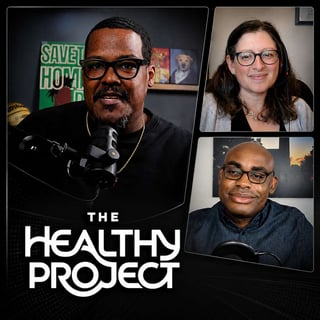
After 30 years bridging the gap between public policy and communities, Darolyn Davis knows why most public health engagement efforts fail—and more importantly, how to fix them. In this episode of The Healthy Project Podcast, host Corey Dion Lewis speaks with Darolyn Davis, founder of DNA Communications, about the critical disconnect between well-intentioned public health initiatives and the communities they aim to serve. This conversation goes beyond surface-level community engagement to explore what it really takes to build institutional trust.
Darolyn shares the pivotal moment in her career when she realized that policymakers were making decisions for communities without including the voices of those most affected. Working in the California State Legislature, she witnessed firsthand how missing perspectives—particularly women and people of color—led to unintended harmful consequences in public policy. This realization launched three decades of work focused on equity-first communication strategies, where community voices aren't just heard, but actively shape outcomes.
Key Discussion Points:
Why Traditional Outreach Fails Darolyn explains why treating outreach as a distribution problem rather than a relationship problem dooms most initiatives from the start. Sending mailers, holding meetings, and posting information online doesn't equal meaningful engagement—and communities see right through it.
The Trust Gap in Healthcare. The conversation addresses uncomfortable truths about why communities, particularly communities of color, distrust healthcare institutions. With Black women facing maternal mortality rates 3-4 times higher than white women, and Black Americans comprising only 5-7 percent of clinical trial participants despite representing 14 percent of the population, historical and ongoing systemic failures shape present-day healthcare decisions.
Measuring What Actually Matters Most agencies measure engagement success by counting meetings held or materials distributed. Darolyn argues for a completely different approach: measuring sentiment, behavioral change, and whether you've actually moved people from one understanding to another. She reveals why superficial metrics waste resources and erode trust further.
Real-World Case Study: Six Years to Build Trust Darolyn shares the remarkable story of working with the Bayview Hunters Point community in San Francisco. When a public agency wanted to build a new 62 million dollar community facility, residents initially refused—they didn't trust that promises would be kept. It took six years of consistent relationship-building, honest dialogue, and demonstrating follow-through before the community agreed. The result: a state-of-the-art Southeast Community Facility that now serves as a healthcare, education, workforce training, and community hub.
This case study illustrates a critical truth: meaningful change takes time, and there are no shortcuts to building trust.
Institutional Responsibility vs. Personal Choice One of the most important reframings in this episode is shifting from "Why don't communities trust us?" to "What are we doing that earns trust?" When trust is treated as an institutional responsibility rather than a personal choice, the burden shifts from communities to the organizations that serve them.
What Keeps Failing After 30 Years Darolyn identifies recurring problems: communities brought in too late in the decision-making process, equity treated as a checkbox, budgets too small for genuine engagement, organizations moving faster than relationships allow, and failure to acknowledge historical harms that shape current perceptions.
The Question Every Public Health Leader Should Ask Before launching any campaign or initiative, Darolyn advises asking: "Who is not at t