Transcript
Speaker: Welcome to the Solarpreneur Podcast where we teach you to take your solar business to the next level.
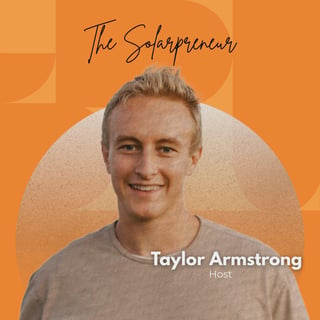
Speaker: My name is Taylor Armstrong.
Speaker: I went from $50 in my bank account and struggling for groceries to closing 150 deals in a year and cracking the code on why sales reps fell.
Speaker: I teach you to avoid the mistakes I made and bring in the top solar dogs of the industry to let you in on the secrets of generating more leads, falling up like a pro and closing more deals.
Speaker: What is a Solarpreneur you might ask?
Speaker: A Solarpreneur is a new breed of Solar Pro that is willing to do whatever it takes to achieve mastery and you are about to become one.
Speaker: Okay, what's going on?
Speaker: Taylor Armstrong here with the Solarpreneur Podcast.
Speaker: And we've got another one that I'm stoked about because we've got someone that we've been in the same circle for a while now.
Speaker: But this is really the first time we've kind of connected on a deeper level.
Speaker: Just been able to talk and relate a lot.
Speaker: We're both in San Diego.
Speaker: And so I'm excited for today's episode.
Speaker: We've got the one, the only John Soriano coming on the show.
Speaker: Thanks for coming on the podcast with us, John.
Speaker: Yeah, thanks, Taylor.
Speaker: It is a privilege and honor to be here.
Speaker: So appreciate you sharing the platform.
Speaker: Yeah, I'm excited.
Speaker: And I've been following you for a long time.
Speaker: You've been doing amazing things in the industry.
Speaker: He is the regional, or I know I just barely asked you this.
Speaker: It's regional, but yeah, senior director over at Legacy.
Speaker: You've been through a ton of challenges we're going to talk about and just growing massive regions, recruited an insane amount of reps.
Speaker: So yeah, we're going to jam on all that today and...
Speaker: hear how you've done it, what's working for you to build San Diego and, you know, a lot of other markets that you've helped build.
Speaker: So yeah, man, I mean, let's just run it from the top.
Speaker: How did you get into solar?
Speaker: And what was that?
Speaker: What was kind of like the beginning like for you?
Speaker: Yeah, let me let me say this first.
Speaker: You know, I am passionate about this industry.
Speaker: I am passionate about transforming lives.
Speaker: I truly believe that the doors has the ability to transform an individual if they allow it.
Speaker: Because I think in this world,
Speaker: Everybody can pretend to be somebody they're not right.
Speaker: It's really easy to look confident online It's really easy to show up to a meeting and talk about how you're gonna do X Y & Z But on the doors you go against the real version of you, right?
Speaker: if you struggle with you know being lazy or You're scared to knock doors like the doors don't lie, right?
Speaker: You go against the real version of you and that's why I love the doors That's why I love this space
Speaker: Because it's an opportunity for you to go against you every single day and truly become a better person.
Speaker: And I am passionate about helping others do that because it's done in my life.
Speaker: You know, you ask about kind of how I started.
Speaker: I mean, seven years ago, I was a very like I had no sales experience.
Speaker: Door to door was my first sales job.
Speaker: Solar was my first sales job.
Speaker: Legacy has been my only company, right?
Speaker: I'm like that virgin in the solar that I stayed with one company for the last seven years.
Speaker: I haven't gone anywhere else.
Speaker: And so it's transforming.
Speaker: But I remember my first door.
Speaker: I remember my first door when I knocked it.
Speaker: My mouth instantly went dry.
Speaker: Instantly and I remember luckily the guy was really nice I remember he opened the door my mouth went dry and I was like trying to talk with like dry mouth you know how that goes and he didn't understand me he was like hey I don't know what you're saying But I'm good and then he like closed the door and he said it very nicely I remember I went home that day I was like one door my first door wonder I went home I was like this is hard
Speaker: But I kept going.
Speaker: And it's crazy because I still remember that version of me, you know, and that was seven years ago.
Speaker: Started, you know, just learning the art of setting appointments, then closing and then so on and so forth.
Speaker: And, you know, to be here now and now we have a sales organization of about 200 reps in Southern California.
Speaker: You know, we're about averaging like last month we did 630 sales.
Speaker: You know, that's definitely been a high month for us.
Speaker: Last year, we averaged about four to 500 sales a month.
Speaker: And just to go from that John to now, it's been great.
Speaker: But that only happened because I allowed the doors to truly transform who I am.
Speaker: And I love seeing that happen in countless other people.
Speaker: Yeah, for sure.
Speaker: And I remember before we met up, you know, we have a mutual friend, someone used to work with Hunter Lee, but he actually told me before I got here, he's like, yeah, John, he actually was pretty bad at sales and he really struggled starting out.
Speaker: For 18 months.
Speaker: It took me about 18 months to get decent, like decent.
Speaker: Wow.
Speaker: It took me two weeks to get my first lead.
Speaker: I still will never forget my first lead.
Speaker: Didn't close.
Speaker: But it took weeks.
Speaker: I remember I got a bill and I hit up Ashton Buswell, actually, and I was like, I got a lead.
Speaker: What do I do with it?
Speaker: And then I didn't close, but it took me about two months to get my first sale.
Speaker: Wow.
Speaker: And then four or five months to get my first install, you know?
Speaker: And it's crazy.
Speaker: I mean, I did probably like, I don't know, 15 accounts my first year.
Speaker: I was really bad.
Speaker: I was, you know, but I will tell you what I did have was determination, you know, and that's really all it takes.
Speaker: Like, I don't care if it took me.
Speaker: I don't care if some guy took him a year to get to do what I did in three, four or five years.
Speaker: Doesn't matter.
Speaker: The outcome is the same.
Speaker: And I really believe if you stay with it long enough, eventually the results will come.
Speaker: Yeah.
Speaker: You know, and others have done what I've done a lot faster, but I don't care because the reality is I'm in competition with me every single day.
Speaker: Yeah.
Speaker: And too often people try to compete with others.
Speaker: They see what other people are doing and like, oh, well, it's like, dude, no, like compete against you.
Speaker: Just compete against the version of you yesterday, last week, last month, last quarter.
Speaker: If you do that long enough, eventually you look back and be like, wow, I've actually accomplished a good amount.
Speaker: Yeah.
Speaker: But yeah, I, you know, all that to say, like, yeah, I was, I was really bad the first 12 months and I'm happy I had people that believed in me.
Speaker: So the gold in me and, you know, we're, we're patient with me and.
Speaker: Yeah.
Speaker: To eventually become the person I knew I could become.
Speaker: Yeah.
Speaker: Well, that's awesome.
Speaker: And I relate to that, too.
Speaker: I mean, I was similar to that.
Speaker: Took me.
Speaker: I think I got a sell on my first week, but then they canceled, of course.
Speaker: And, you know, didn't get one that stuck until like a month later.
Speaker: And, you know, just living off other guys' food because I came out worth 50 bucks in the bank account and everything.
Speaker: So, yeah, I really relate to that.
Speaker: And in my opinion, I think in a way people that have to go through that struggle and it's not like instant success.
Speaker: I think a lot of times they end up being a stick it out.
Speaker: Like those are the ones that I see stick in the industry more than someone that sometimes has like instant success.
Speaker: So I think there's something to be said about really pushing hard and developing the traits to stick it out and develop those skills.
Speaker: But speaking of that, like, I know a lot of reps listening to this, they might be in the same boat.
Speaker: Maybe they're just starting, maybe they're struggling.
Speaker: And you know how it is.
Speaker: A lot of people quit.
Speaker: A lot of people start out and if they don't have success, they just quit.
Speaker: And so for you, was there something that clicked that finally was like, okay, this is working now?
Speaker: Or like, what, what drove you to keep going?
Speaker: And what made you think that you would eventually have success?
Speaker: And I don't know, maybe something that helps you finally start having success.
Speaker: Yeah, the way I saw it is if one person could have success, then that means countless others could.
Speaker: That's all.
Speaker: It just takes one person.
Speaker: And when I first started, I saw there were a few people that was like, OK, like they're making good money.
Speaker: Like, cool.
Speaker: They're making five, eight, ten thousand a month.
Speaker: Right.
Speaker: Which back then in the 250 kilowatt days, for those of you that remember that, that was good money back then.
Speaker: Right.
Speaker: Like if you're making ten thousand a month, like that was good.
Speaker: Where nowadays it's like, you know, people are like, yeah, that's not enough.
Speaker: Yeah.
Speaker: Anyways, but I remember there were people that were making good money, and I was like, well, if they can do it, why can't I?
Speaker: And, you know, I also have four years in the Marine Corps, and one of the biggest things to learn in the Marine Corps was this philosophy or this mindset of adapt and overcome.
Speaker: Right in the military they teach you like hey like you never know what situation you're gonna walk into right?
Speaker: They make you ready to where if you're literally in a light for that situation you have to adapt to that situation and overcome and we can't do that and so I was like, okay, well Who do I have to become to have the results this person has because I was like if they can do it Why why can I like I'm no different?
Speaker: Yeah, like I have the same resources
Speaker: You know, I can, I would knock the same doors.
Speaker: So that was the kind of like the mindset that carried me through.
Speaker: So it's like, just remember that.
Speaker: And especially even back then, we didn't have that many people that were operating a high level.
Speaker: You fast forward to 2023.
Speaker: If you're starting solar, you have so many people.
Speaker: Yeah.
Speaker: right like think like podcasts like these really weren't that big in 2016 when i first started sure you know where now you have so many people that are providing a great amount of resource on social media on youtube instagram podcasts whatever so like if one person can do it which now we have countless of people that are making crazy good money yeah like why can't you you know and adopt that mindset like hey like
Speaker: I will persist until I succeed, right?
Speaker: From the greatest selves in the world.
Speaker: That was the book I read when I first started, and that first scroll stuck with me.
Speaker: I will persist until I will succeed.
Speaker: And that might take a year, might take two years, five years, but the way I saw it is I would much rather grind it for five years if I knew that for the next 30 years I was set up, than to do the normal right route, nine to five, whatever, and
Speaker: Kind of barely make you buy it for 40 years.
Speaker: I would much rather have the first option.
Speaker: Yeah.
Speaker: Well, yeah, and it paid off for you, which we'll talk about.
Speaker: But, yeah, it's funny you're talking, you know, all the resources we have now.
Speaker: Just because I don't know if you knew this story, but when I first started in 2016 as well, one of the first people I reached out that I saw was having a ton of success was Ashton.
Speaker: And, you know, everyone talked about Ash, you know, he's closing all these deals, the goat.
Speaker: And so shout out to him.
Speaker: But I reached out to him and I was obviously not with legacy, but I'm like, Hey man, I see you're having a ton of success.
Speaker: Can I like take you out to lunch, take you out to dinner?
Speaker: Just ask me and ask you some questions.
Speaker: And he turned me down.
Speaker: He's like, he's like, no, I only, I only meet with people within my company.
Speaker: I'm like, come on, man.
Speaker: Free food isn't enough for you.
Speaker: I can't find you lunch.
Speaker: And so that was, you know, I give him crap about that.
Speaker: But that was one of the reasons I started the podcast.
Speaker: And obviously we have way more resources now.
Speaker: Yeah.
Speaker: So that's cool to see how it's growing and way more abundant mindset.
Speaker: And it's nothing against Ashton, I'm sure.
Speaker: You know, he wanted to keep it tight-lipped and everything.
Speaker: It's crazy.
Speaker: Actually, I want to give him a praise, too.
Speaker: Ashton was one—he was my early mentor.
Speaker: I was under his office when I first started.
Speaker: He was the district manager of San Diego at the time, and he took me in the doors for a few hours, and I quickly saw that the guy literally runs from door to door.
Speaker: Like, literally.
Speaker: Like, it's crazy.
Speaker: Like, you know, he jokes about it sometimes when you listen to him, but—
Speaker: If you ever see him knock, he's like, he walks so fast that it looks like he's running.
Speaker: So it's a funny thing about him.
Speaker: But, yeah, no, he's great.
Speaker: But, yeah, it's crazy that nowadays, though, we have so many guys to learn from.
Speaker: It's, like, free now, right?
Speaker: You go on Instagram, and you don't have to search for that long to find –
Speaker: good content on Instagram, YouTube, whatever.
Speaker: So there's really no reason, like we have so many more resources for people to be successful.
Speaker: So just learn it.
Speaker: Remember, go, like I would say, like the advice I would give is to new people is just go against the version of you from yesterday and just go to sleep knowing that the version of you going to bed is better than the version of you that woke up.
Speaker: Like 1% better.
Speaker: Yeah, 100%.
Speaker: And so I wanted to ask you too, John, how did you get recruited?
Speaker: Like, was this zip recruiter indeed one of those guys there?
Speaker: How did you first get recruited into solar?
Speaker: No, so it wasn't Indeed.
Speaker: So I, like I mentioned, so I did the Marine Corps for four years, right?
Speaker: And I actually wanted to do like 20 years in the Marine Corps.
Speaker: I was like one of those guys that's like, I love it.
Speaker: I was gung-ho.
Speaker: But my last about 18 months in the Marine Corps, I got exposed to network marketing.
Speaker: And so I actually did Vima for about three years.
Speaker: So I don't know if you remember Vima, but I did Vima.
Speaker: It was a network marketing company.
Speaker: We sold energy drinks.
Speaker: You know, we were competing against Red Bull and
Speaker: And that was my first exposure to self-development.
Speaker: That was my first exposure to entrepreneurship.
Speaker: It was my first exposure of like, hey, you don't have to go the traditional route.
Speaker: Right.
Speaker: I bought into that.
Speaker: I believe that you have to take the traditional route of, you know, nine to five, whether it's the Marine Corps or some corporate job, go to college, all that.
Speaker: Yeah.
Speaker: And so we did VMA and I loved it.
Speaker: The company went under, unfortunately.
Speaker: Well, I guess fortunately reflecting on it.
Speaker: Yeah.
Speaker: But the principles I learned stuck with me.
Speaker: And so for about a year after that, I was kind of in this weird limbo, kind of looking for the next thing.
Speaker: I knew that the lifestyle of a nine to five wasn't for me, but I didn't know what my future held me.
Speaker: So I was like open minded to new opportunities.
Speaker: And so my friend, Michael from the Marine Corps,
Speaker: We did a demo together.
Speaker: He one day hit me up.
Speaker: He was in Vegas and he's like, dude, everything we were looking for in network marketing is in solar.
Speaker: I'm like, what are you talking about?
Speaker: What do you mean solar?
Speaker: They didn't know anything about solar.
Speaker: And then he kind of told me all about it, the money you can make, you know, and all that.
Speaker: I was like, cool, I'm in.
Speaker: Nice.
Speaker: Like it was, I was, I was laid out.
Speaker: Because I was open to the next, like, cool, what's next, you know?
Speaker: And so he wanted me to go to San Jose with him, but I was doing an internship at the church at the time.
Speaker: And I was like, well, I got to finish the internship.
Speaker: Let me just do it here in San Diego.
Speaker: Once I'm done, you know, I'll go up to San Jose.
Speaker: And, well, a few months later, he actually got promoted, became the new manager of San Diego.
Speaker: And then he was like, hey, you don't got to move.
Speaker: And I'm like, thank God, because I did not want to go to San Jose.
Speaker: And then kind of after that, the rest is history, you know?
Speaker: But that was my kind of intro to Solar.
Speaker: Okay, nice.
Speaker: And this guy is still doing solar to this day?
Speaker: Yeah.
Speaker: Okay.
Speaker: Yeah, we parted ways in 2019, unfortunately.
Speaker: Okay.
Speaker: He's over our competitor now and doing great things over there.
Speaker: But yeah, we no longer work together.
Speaker: Okay.
Speaker: Yeah.
Speaker: That's cool.
Speaker: So that's why they call you the general, right?
Speaker: Yeah.
Speaker: So it's funny.
Speaker: He actually is the one that gave me the nickname.
Speaker: That same guy, Michael.
Speaker: Yeah.
Speaker: So he actually we were doing a coaching.
Speaker: It's funny because I don't I don't I don't call myself that.
Speaker: I didn't just one day wake up and I'm like, I want everyone to call me the general.
Speaker: So the kind of quick, funny story.
Speaker: But him and I were doing a business coaching class together for six months.
Speaker: We did this.
Speaker: There was only 12 of us.
Speaker: And one day randomly we went to the class and he just called me like, what's up, general?
Speaker: And I was like, okay, that sounds weird.
Speaker: Like, all right.
Speaker: But I was like, okay, hey, what's up, man?
Speaker: Ha ha.
Speaker: And then he kept calling me that.
Speaker: And then after a few weeks, the people that were in that class with us, then they started calling me general.
Speaker: And I was like, okay.
Speaker: Like, I didn't like it.
Speaker: I was like, I thought it sounded weird.
Speaker: And then he started calling me that at the sales meetings, correlations, and then, like, some of the other reps started calling me that.
Speaker: And then I went to a Grant Cardone conference, the 10X conference in 2019, and Grant Cardone talked about, like, the power of branding.
Speaker: And he just said in such a way where I was like, man, why, like, why don't I just own the general?
Speaker: Because people organically were calling, they were already calling me that.
Speaker: Yeah.
Speaker: Again, I didn't self-promote it.
Speaker: It was like I was like trying to stop it.
Speaker: But they were like, what's up, General John, General General?
Speaker: And I was like, OK, whatever.
Speaker: And then I had this thought and I was like, man, the reason I don't like it is because I don't view myself as a real general.
Speaker: Because when you think about a real like military general.
Speaker: Yeah.
Speaker: The person that comes to mind is an alpha, strong-minded, physically fit, right?
Speaker: A strategist, right?
Speaker: You don't think of a weak dude when you think of a five-star general.
Speaker: Yeah.
Speaker: And I kind of had this, like, this revelation of, like, man.
Speaker: The reason I struggle with like kind of owning it is because I don't feel worthy of that.
Speaker: And then after that message from Grant Cardone, I was like, you know what?
Speaker: Like I may not be it in the real world, but I can believe it in my mind.
Speaker: And that moment I kind of made this this point of like, you know what?
Speaker: I will become I will I will operate as a real general.
Speaker: Like so in my mind, I have convinced myself that I am a real general.
Speaker: Right.
Speaker: In my mind.
Speaker: Right.
Speaker: It exists in my mind.
Speaker: And so I'm like, cool.
Speaker: How would a general think?
Speaker: Right.
Speaker: Because running a sales organization is kind of like having an army.
Speaker: Yeah.
Speaker: You know, you got all these like freaking strong alpha personalities, which is kind of like running a like.
Speaker: you know, like running Spartans or running like, running like Steel Team Six.
Speaker: And so I was like, man, okay, how would a general think?
Speaker: How would he treat his people?
Speaker: How would he show up to meetings?
Speaker: You know, what accolades would he have?
Speaker: And ever since then, I made this decision of, I'm going to work towards that.
Speaker: I'm still working towards that to this day.
Speaker: But that really helped me with my identity and kind of helped me with my self-worth.
Speaker: Because I do think men in general struggle a lot with self-worth.
Speaker: They don't feel worthy of certain successes.
Speaker: And I was like, no, I'm going to own that.
Speaker: And then
Speaker: that's kind of where i was like i changed my instagram name i was like i'm gonna own this you know what people already calling me i don't care i'm gonna own it was weird at first yeah but it's actually helped a lot with the brand and but more importantly it's not that it's more what it's done within me yeah that i really have this sense of self-love towards myself because i'm like no i am worthy of that and i'm gonna till the day i die i'm gonna keep working towards being that person right thinking acting like a real general that
Speaker: commands an army like my goals in the next 10 years i want to have 10 000 people in my organization right and again if i was a real general how would i lead these 10 000 people okay because to lead 10 000 people you better have your crap dialed in yeah and so i'm working towards that every single day yeah that's awesome well no i can tell i mean you got you got your systems dialed you guys are growing massive teams and uh it's funny i've heard a lot of people talk about almost like you know business guys almost having like an alter ego or
Speaker: Someone that they're like trying to be when they're like in business mode and everything.
Speaker: So, yeah, I think it's worked for you.
Speaker: And, you know, you you're probably the dream recruit.
Speaker: Like if I could think of my dream recruit, it'd be someone that was like military experience, network marketing experience.
Speaker: And yeah, I have I will say some of the best sales guys are like one of the two.
Speaker: Network markers are great.
Speaker: Yeah.
Speaker: Like we were like Jack Pastrana.
Speaker: He was the top earner.
Speaker: He did like he made one point, I believe, three million last year and install commission.
Speaker: And he came from a network market.
Speaker: He did it for seven years.
Speaker: All right.
Speaker: And so when he like found about solar, he's like, dude, this is.
Speaker: Yeah, he's like, he's like, I've been doing in-home presentations already for like 100 bucks.
Speaker: And when he saw this, he was like, and dude, second last year was his second full year into solar.
Speaker: Yeah.
Speaker: And he did 1.3.
Speaker: You should get him on your podcast because he's a beast.
Speaker: He's on your team?
Speaker: Yeah.
Speaker: Jack Pastrana, he's a beast.
Speaker: We'll show pay stubs, but he did 1.3 million and just install commission.
Speaker: Oh, my gosh.
Speaker: Right?
Speaker: Like, that's not even including leadership pay yet.
Speaker: So, I mean, he installed about 170 accounts, I believe, around there.
Speaker: Yeah.
Speaker: Give or take a few.
Speaker: Peace.
Speaker: Yeah, no, I know there's certain guys that have that background that you want to go after them in.
Speaker: I think network marketing is one of them.
Speaker: Military is another.
Speaker: I guess what was the third Mormons maybe?
Speaker: I will even say this on recruiting.
Speaker: I would love to see more of the industry shift towards recruiting non-door-to-door guys.
Speaker: What I see happening a lot in the industry is like the same solar companies are going against other solar companies and they're recruiting and that's their style.
Speaker: And a lot of like all my growth has been organic.
Speaker: You know, we have it's been a slow way to build.
Speaker: However, it's been a strong way to build.
Speaker: I have 18 managers right now.
Speaker: All 18 of them were one setters with me.
Speaker: All of them.
Speaker: There's not a single one.
Speaker: You know, my two regionals, there were one setting for me like years ago, right?
Speaker: And all of them didn't, had never done solar, never done door-to-door.
Speaker: And I do believe that it's much better to take somebody new and like they will learn a lot faster because if you hire a guy that...
Speaker: maybe has a door-to-door background.
Speaker: Sometimes they have to unlearn certain things that maybe is not conducive with your culture.
Speaker: And so I will say I think the industry should, like, make more of a shift.
Speaker: Like, hey, go after the servers.
Speaker: Like, there's a lot of people right now that are doing some dead-end job that –
Speaker: don't want to be there and they have no idea and opportunity like solar exists yeah and i think we owe it to ourselves to share that with people you know because i will say that some of the most loyal people you will recruit are people who had nothing to give you when they first started yeah
Speaker: Because they, like, a brand new guy has nothing to give you.
Speaker: Like, you actually have to pour a lot into them.
Speaker: You have to be patient.
Speaker: It takes sometimes a few months.
Speaker: Like, Jordan Metesias, he's one of my best leaders.
Speaker: He's practically my right-wing man.
Speaker: But the first six months, he sucked.
Speaker: He actually quit.
Speaker: He quit and then went back to a corporate job.
Speaker: And after five months of me like pestering him, like, dude, come back, come back.
Speaker: He's like, all right, I'll give him the shot.
Speaker: You know, but he's one of the most loyal dudes because he had nothing to give me back then.
Speaker: So I will say like some of the best recruits are actually people who don't have some type of sales.
Speaker: I'm not saying that's the case all the time.
Speaker: Yeah, yeah.
Speaker: But it is a slow way to build.
Speaker: It will take time.
Speaker: Yeah.
Speaker: But you will have a really strong foundation that when weather, when storms come, you'll be able to survive that because those guys are so loyal to you because they know that you gave them a lot when they had nothing to give you.
Speaker: Yeah, exactly.
Speaker: Well, and the other thing, they're way less needy too because guys come from their companies like, oh, okay, what's my sign-on bonus?
Speaker: Or like, what are you going to give me if I come over?
Speaker: Guys that I ask for sign-on bonus usually suck.
Speaker: Yeah.
Speaker: I'm just going to say that.
Speaker: Yeah.
Speaker: They will Like that guy That's been my experience Like if you ask for a sign on bonus Because then I ask him Like well If you're so good Why do you need a bonus Yeah If you're so good Then shouldn't you have money Yeah Like I just I'm just like Kind of a little dumbfounded By that sometimes In the industry Yeah I know
Speaker: So, yeah, no, I agree.
Speaker: I mean, way more loyal, less needy guys for sure.
Speaker: And, yeah, I mean, you've been able to weather a lot of storms.
Speaker: And that's actually what I want to talk about next.
Speaker: Just transition a little bit is before we started the podcast, you told me, you know, some of the big challenges you guys have been through over at Legacy.
Speaker: And, you know, maybe you don't have to get super in-depth on all of them.
Speaker: But, like, most people, they quit.
Speaker: When the first storm comes, they quit.
Speaker: They jump to another company.
Speaker: Or if there's one issue, you know, they're having tons of doubts.
Speaker: And I'm sure there's doubts and all that.
Speaker: But maybe you could speak to that.
Speaker: Just maybe, you know, give a little overview of some of the big storms you've had to weather as you've been at Legacy for seven years.
Speaker: And then just like what gave you this strength or how did you keep going where most guys would quit and be like, I'm just going to bounce to another company and go take the easier route.
Speaker: But why did you continue with the same company and maybe how it's paid off for you?
Speaker: But, yeah, let's hear a little bit about that.
Speaker: Yeah, I think first it begins with adopting a mindset of you're forged through the fire.
Speaker: You know, there's like a verse in the Bible that talks about like as iron sharpens iron, so a man sharpens another man.
Speaker: You know, in other words, you can interpret that as you have to go through fire.
Speaker: You have to go through friction to truly become that best version of yourself.
Speaker: Yeah.
Speaker: And so I think too many guys, they want the easy path.
Speaker: And that's fine because our brains that we are wired, we're built to always take the path of least resistance, right?
Speaker: Our brain's main function in life is to help us survive, right?
Speaker: Like that's that fight or flight.
Speaker: If a bear pops up,
Speaker: The brain's like, okay, what do I need to do to survive?
Speaker: Yeah.
Speaker: Right.
Speaker: So, of course, we have to understand that our brain is wired that way.
Speaker: But sometimes we have to, you know, have the awareness of like, no, brain, I know you're trying to make me survive.
Speaker: So I know you're trying to tell me I shouldn't take this hard path, but I actually need to take this hard path.
Speaker: And so I think first is adopting this mindset of like, hey, you're forced to the fire.
Speaker: You have to go through challenges.
Speaker: Right.
Speaker: In order to see this version of you that doesn't know exists.
Speaker: So I like maybe the military helped me believe that I'm not really sure where that belief came from for me.
Speaker: But that's why whenever any challenges come, I actually get excited because I'm like, dude, this is an opportunity for me to discover a new version of me that I don't know exists yet.
Speaker: You know, like if you would have told me that I am, I would have been where I am today three years ago, I wouldn't believe you because I didn't know that version of me existed.
Speaker: But I'm only here today because I have weathered many storms.
Speaker: And I think people are too quick to be like, oh, it's hard.
Speaker: I'm going to quit.
Speaker: I'm going to go somewhere else.
Speaker: Or they point the blame and say, oh, well, this didn't work out because of X, Y, and Z. It's like, I believe in radical ownership.
Speaker: I do.
Speaker: I believe in absolute radical ownership.
Speaker: I truly believe that everything that is going right in your life is your fault and everything going wrong in your life is also your fault.
Speaker: So I think it begins with that adopting that mindset of like, hey, just if you if your company is going through some growing pains, grow with them.
Speaker: Yeah.
Speaker: Right.
Speaker: Stop looking somewhere else, you know, because on the other side of that is a lot of fruit.
Speaker: You know, you can't like no different than the gym.
Speaker: Right.
Speaker: You can't go to the gym and expect to stay in the comfort zone and for your muscles to grow for your muscles to grow.
Speaker: You have to at this point where you're like, it hurts so bad.
Speaker: I don't want to keep going.
Speaker: But that's where the growth happens.
Speaker: And everyone knows that.
Speaker: But when it's time to actually do it, I don't understand why some people have this kind of victim like, oh, I'd rather just deflect than just absorb it.
Speaker: And I'm not sure if that answers your question.
Speaker: Yeah.
Speaker: Well, no, it's true.
Speaker: Yeah, a lot of people have – and I was telling before, I've gone through some situations where –
Speaker: Maybe I should have weathered the storm a little bit more.
Speaker: You know, sometimes it's tough to know when it's time to jump ship and everything, but obviously it's paid off for you.
Speaker: And, like, you're in an extremely good position now where you've gone through these obstacles and you've grown with it.
Speaker: And now you're out on the other side that much stronger where, you know, people that jump ship early, it's like I think there's a lot of lessons maybe they could have learned if they would have stayed there.
Speaker: But yeah, so I know you had, you know, with legacy, you guys had the people that broke off, did the whole slender thing.
Speaker: You talk about some other people, key people leaving your organization.
Speaker: What do you think?
Speaker: I don't know if you're willing to speak to that, but what's been like the toughest challenge that you've had to go through in these seven years?
Speaker: And how did you get through it?
Speaker: Would you say?
Speaker: Yeah, that was easy for me.
Speaker: So I would say for a long time, I had this fear of man.
Speaker: I was afraid of what others thought of me.
Speaker: And so I was this kind of passive leader in the sense that I was more of a people pleaser.
Speaker: So in 2019, you know, we, like I said, had a really bad breakup with some of the key people in there.
Speaker: I think the industry knows it, you know.
Speaker: And overnight, you know, we lost two thirds of our sales force.
Speaker: You know, we went, they went to a different installer and started their own company.
Speaker: And regardless of what, like the right or wrong, it doesn't really matter.
Speaker: Yeah.
Speaker: But it did cripple us.
Speaker: It did.
Speaker: You know, like I remember staying back and at the time our office had maybe like 50 guys in there.
Speaker: And there were like 20 left, like with Legacy.
Speaker: And I was like, I hit this point where I'm like, crap, I got to rebuild again.
Speaker: You know, like I was finally gaining some traction back then.
Speaker: I was like, like a year prior to that.
Speaker: We had another company that recruited a lot of our guys and we lost them.
Speaker: And then we finally rebuild that.
Speaker: And then that that thing happened in 2019.
Speaker: And then I was like, I hit this point where I was like, I don't want to rebuild again.
Speaker: Like, I remember feeling the sense of, man, I'm raising up my competition because there were so many people that I trained.
Speaker: And then now they're with a competitor.
Speaker: Yeah.
Speaker: And I was like, who's to say this person won't leave me?
Speaker: And so I think that traumatized me to where I didn't want to invest in people because and then I turned more into a people pleaser than being the person I knew I needed to be.
Speaker: So then fast forward about two years after that, I went through another challenge where I had one of my one of my leaders.
Speaker: that there were just some issues with his sales practice.
Speaker: And when we confronted him about it, it didn't turn out too well.
Speaker: And so there was like another challenge we had to go through and I failed, I did turn a blind eye towards certain things that were being done.
Speaker: And I was doing it out of fear of
Speaker: correcting this person i thought if i corrected this person that this person will leave me and then other people will leave and i had to go through this season of owning my crap i had to apologize a lot of people say i wasn't the leader i needed to be and all that to say this that i made this pivotal point that i'm like you know what i am done being afraid of other people's opinion on me like i know the person i need to be and if people don't vibe with that that's fine
Speaker: Because in this industry, it's very easy to get become a people pleaser because like we all know that our reps have many options as to where they can work.
Speaker: Yeah.
Speaker: Like if we're being real, right?
Speaker: Like there's not a like there's an abundance of places reps can work.
Speaker: Yeah.
Speaker: Right.
Speaker: So because we know that we have this sense of like, oh, I got to please them or they're going to go somewhere else.
Speaker: But I've actually discovered that when I actually became.
Speaker: a leader of conviction, a leader that was like, nope, I'm not afraid if I piss you off.
Speaker: I'm not afraid if I say something to you and you don't like it.
Speaker: What actually happens, the opposite of what I thought would happen, happened.
Speaker: Like people actually didn't leave me.
Speaker: If anything, they had more respect and reverence towards me.
Speaker: Yeah.
Speaker: And I think we need more of those leaders sometimes in this space.
Speaker: Sometimes I look at, you know, like some of the organizations and some of them are kind of ran kind of fratty and kind of like party and all that and whatever, teach their own, I guess.
Speaker: But I think we need more leaders that are not afraid to step into their masculine core and be that masculine leader.
Speaker: Right.
Speaker: Kind of like that father's.
Speaker: You know, like just like on every healthy household, right?
Speaker: You have the voice and the correction of the father.
Speaker: Yeah.
Speaker: Or of a father, I mean.
Speaker: Like same thing, I think, in a sales organization, right?
Speaker: Somebody on that team better be that voice of that father that's like, yeah, it can be fun, but also can kind of be like, no, when it's time to correct somebody, we're going to correct somebody.
Speaker: Yeah.
Speaker: And when I made that shift, dude, my results changed.
Speaker: And I was able to operate with more peace.
Speaker: I had more peace in my life.
Speaker: I was like, thank God I'm not stressed about people leaving me because it was more about me just coming in alignment with, like, my worth.
Speaker: And I was like, no, like, this is who I am.
Speaker: And if you don't like it, that's fine.
Speaker: Like, I'm cool with that.
Speaker: I'll go to sleep at night fine knowing that this person doesn't like me.
Speaker: But it's crazy how much, like, actually the results change when I made that pivot.
Speaker: That's awesome.
Speaker: Well, I love that because I think it applies in so many other things aside from, you know, growing and growing teams and offices.
Speaker: It's like even in sales, the people that have the abundance mindset and are like, you know, I was just having a conversation with the guy I'm coaching this morning is just him sitting in appointments with like one layers, just a wife or husband is there.
Speaker: And like he used to sit in so many of these appointments.
Speaker: And obviously, you know, we know that has a lower chance of closing.
Speaker: I'm like, dude, just switch it to abundance mindset.
Speaker: Be like, hey, I got 10 more of these waiting for me.
Speaker: like if if you don't want you know husband wife to be here just on to the next one and like you got to create that frame and i think it's the same thing that some of us are afraid to do as leaders is we're you know um walking on eggshells and afraid to upset this rep afraid to offend this person where i think if you you know once like you're saying once you created that frame people are respected at more and um you're probably able to grow your team and way better leaders and have a lot more success i mean it's kind of like this too you know think about this if if somebody's breaking in your home
Speaker: Yeah.
Speaker: What kind of what kind of person do you want to show up to your house to protect you?
Speaker: Right.
Speaker: What kind of police officer do you want?
Speaker: Do you want the passive like, oh, let me just make sure you're OK kind of police officer?
Speaker: Or do you want that alpha?
Speaker: Right.
Speaker: Strong like police officer.
Speaker: I think we all know what kind of police officer we want.
Speaker: You know, because I do believe there's something in each human that they want to be led by somebody that can operate in true masculine power.
Speaker: Right.
Speaker: And masculine power isn't like, you know, you tell people what to do.
Speaker: It's not that.
Speaker: Right.
Speaker: I believe like a masculine leader like invites others.
Speaker: Right.
Speaker: A masculine leader empowers others, you know, challenges others, but also with love.
Speaker: Yeah.
Speaker: And I think everyone deep down inside does want to follow a leader like that.
Speaker: Not someone who just tells them what they want to hear, but someone who really does tell them what they need to hear sometimes.
Speaker: Of course, again, out of love, not in a like you suck kind of way, but in a like, hey, I care so much about you.
Speaker: And I care about your development that I need.
Speaker: I need to point out a blind spot in your life.
Speaker: And I discovered that actually people become more loyal to you because I had this mindset of like, oh, if I say they're going to leave me or even even in the home.
Speaker: Right.
Speaker: Like I've had cases where I have a one legger and I just leave.
Speaker: Yeah.
Speaker: I'm just like, oh, well.
Speaker: And they're like, oh, well, we'll just meet here.
Speaker: And I'm like, no, because I know where this ends.
Speaker: And there's like there's been there's been times where like I'll be meeting with the wife and the husband's just kind of doing his thing.
Speaker: And I will literally say, hey, I need both of you guys present.
Speaker: If both of you guys can't be here, then I can't meet with you.
Speaker: And if you say that with conviction, they're just like, oh, okay.
Speaker: And then they sit down with you.
Speaker: And if they say no, then cool.
Speaker: Like you said, you know your worth, right?
Speaker: Just walk out.
Speaker: There's more homeowners out there that will buy your product, but there's only one of you.
Speaker: Definitely, yeah.
Speaker: Well, and it's impressive.
Speaker: You're talking about just how you build all these leaders organically.
Speaker: And yeah, I don't really know.
Speaker: I don't think I've had really anyone on the podcast that's built that many leaders from within the organization and had them turn into such strong reps.
Speaker: You know, we were just talking about one guy that actually used to work at a previous company with me before, and he wasn't doing a ton, but now he's one of your leaders.
Speaker: He's producing a ton.
Speaker: So I think there's something, you know, you guys got a secret sauce over there.
Speaker: You're growing a lot of people.
Speaker: And so what's been the secret?
Speaker: Like, how do you take some of these people that, um,
Speaker: Maybe it seems like they're not going to be super solid reps.
Speaker: Maybe it seems like they're not hitting it off and having a ton of success initially.
Speaker: But how have you taken these people and grown them into leaders?
Speaker: What's your secret on that?
Speaker: Yeah, I would say one of the things is you got to give them, they have to believe in something bigger than themselves, something bigger than solar, something bigger than money.
Speaker: Okay.
Speaker: So about 20, end of 2020, we made this pivot to where like I had done enough volume within like, so legacy has this thing where when you do a certain amount of volume, you can start branding your own, your own teams.
Speaker: Right.
Speaker: Okay.
Speaker: And so for a while, when we finally hit that, I was like, okay, what are we going to name our team?
Speaker: Like what's going to be the name?
Speaker: And I, even my wife will tell you for weeks, I was like, man, I was like, no, but what about this?
Speaker: And I was like, ah, that sounds corny.
Speaker: This, this, this, this.
Speaker: And
Speaker: And the word valor came to mind for me.
Speaker: And I was like, ah, valor.
Speaker: I'm like, okay, that sounds good.
Speaker: But I wasn't sold yet.
Speaker: And, you know, I'm a man of faith, right?
Speaker: And so I was like praying about it.
Speaker: And then I was just guided to this passage.
Speaker: And I'm getting to a point to all this.
Speaker: But I was guided to a passage in the Bible through King David.
Speaker: And everyone knows King David, right?
Speaker: You know, fought Goliath, a really mighty warrior, a great king.
Speaker: And, you know, this is after he slays Goliath, and then he goes, and then Saul tries to kill him.
Speaker: And then now he's hiding in the cave of Dulem.
Speaker: And the Bible says that 300 men come to his aid.
Speaker: But it's interesting.
Speaker: The Bible describes these men as broken men, men in debt, discontent.
Speaker: Right.
Speaker: They were like the rejects of the society.
Speaker: Yeah.
Speaker: Right.
Speaker: They were the broken people.
Speaker: And I was like, huh, that's interesting.
Speaker: Like, these are the men that came to David's aid.
Speaker: Right.
Speaker: When David needed help, these are the men.
Speaker: Yeah.
Speaker: You fast forward a whole book later.
Speaker: Right.
Speaker: David is now king of Israel.
Speaker: Ten years have passed.
Speaker: Yeah.
Speaker: These same men are now being described as mighty men of valor.
Speaker: And if you have valor, valor is like a spirit, right?
Speaker: If you have a valor, you're just an individual that can do hard things.
Speaker: You're an individual that can go into battle, right, and, you know, can handle it, right?
Speaker: And when I read that, it kind of had this, like, you know, like God spoke to me and was like, hey,
Speaker: I'm calling you to raise up men and women of valor.
Speaker: I'm going to send you broken people.
Speaker: And your job is to empower them and help them become whole.
Speaker: And so when I thought about that, I'm like, wow, organically, we already are that.
Speaker: You know, when you look at any one organization, like all of us, I would say everyone in the industry probably entered the industry a little broken.
Speaker: Yeah.
Speaker: Right.
Speaker: Whether it's you weren't confident, whether it's you were broke, whether you were in debt, whether whatever it is, I think all of us entered a little bit broken.
Speaker: But if you allow the door-to-door space to refine you, you know, you can become an individual that can develop the spirit of valor.
Speaker: And so for me, I was like, man, that's it.
Speaker: So ever since then, I've been honing big on that brand of like, hey, this is who we are.
Speaker: Yeah.
Speaker: Yes, we sell solar.
Speaker: Yes, we knock on doors.
Speaker: That's the vehicle.
Speaker: But that's not our purpose.
Speaker: And I feel like that's been a huge reason why, like the guy you mentioned, have plugged in because they plugged into something bigger than solar.
Speaker: You know, like my guys don't work for me because of the money and selling solar, although that's an added bonus.
Speaker: You're right.
Speaker: But they do it because they buy into what our purpose is.
Speaker: You know, that's why our organization's name is Valor, right?
Speaker: That's the name of our division.
Speaker: And, you know, if you go to our meetings, you know, you'll hear seven, you know, we have seven core values, right?
Speaker: And we talk about what it means.
Speaker: It's not just a name.
Speaker: We live it.
Speaker: We embrace it.
Speaker: You know, we talk about, okay, like, what does it mean to come in broken?
Speaker: You know, like, cool, let's go from you're in debt to you're buying your first home.
Speaker: Right.
Speaker: And so I think, you know, for any leaders are listening to this, give your guys a purpose deeper than, than, than anything material, right?
Speaker: Like you can't buy what I just said.
Speaker: You can't, you know, it has to already organically be happening.
Speaker: When I named the valor, it wasn't like we weren't already doing that.
Speaker: We already were doing that.
Speaker: We already were taking broken people in.
Speaker: Right.
Speaker: Like one of my leaders used to be a drug addict.
Speaker: Right.
Speaker: Now he's married homeowner.
Speaker: Right.
Speaker: Like, you know, actually, I had one of my other leaders used to be an Uber driver.
Speaker: Right.
Speaker: Now also married about to buy a home in about a month, you know, up in Fallbrook.
Speaker: You know, so it's just crazy.
Speaker: When I look at least my organization, there's so many stories.
Speaker: Actually, almost everybody came in broken, but that's organically who we were.
Speaker: But now we talk about it, right?
Speaker: When we recruit people, we talk about, hey, this is who we are.
Speaker: You know, and I, we're unapologetic about it, you know?
Speaker: And so I think develop something like a purpose deeper than just making money, than just, yeah, we sell solar because those things come and go.
Speaker: You know, those things like, because if...
Speaker: Then another guy will come around and have a better pay scale or better product and then they'll leave you.
Speaker: But what I offer is not easy duplicatable.
Speaker: True.
Speaker: And so that's what allow certain guys to come in, plug into it, and then they're like, wow.
Speaker: Because everybody inherently wants to grow.
Speaker: I do believe if people don't feel like they're growing, eventually they will start looking somewhere else.
Speaker: I do believe that.
Speaker: I think as humans, we're wired to want to grow.
Speaker: And so, you know, if you're a leader of sales reps, you better have some type of, like, some type of system, some type of culture where people can truly feel like, wow, I'm growing.
Speaker: Whether that means they're growing in their sales.
Speaker: Like, I'm big on marriage.
Speaker: You know, like, I tell my guys, like, hey, the moment you get married, our relationship
Speaker: just changed you know actually just just recently i was at a wedding literally a week ago one of my guys now he's a husband and i noticed that he was um uh his now wife was at the table by herself you know like when people get married they have a dinner by themselves they have a table by themselves and they like have their first meal together yeah well i noticed that he was talking to one of his boys another table you
Speaker: You know, and like his wife.
Speaker: And so I walk over to him and some people may think I'm wrong for doing this or whatever.
Speaker: But this is who I am.
Speaker: I walk over to him and this is one of my friends.
Speaker: Right.
Speaker: I'm like, hey, I'm like, I walk.
Speaker: I'm like, hey, you're a husband.
Speaker: Right.
Speaker: He's like, yeah.
Speaker: He's like, well, hey, listen, one of the first rules being a husband is you don't leave your wife alone at the table.
Speaker: I've been looking at your wife for the last three minutes over there and I can tell that she wants you to come back.
Speaker: And I'm like, I like as a friend, I think you should go back.
Speaker: And he was like, oh, OK, you're right.
Speaker: Nice.
Speaker: You know, but I tell my guys that, hey, when you become a husband, for example, right, like people want to feel like they're growing, whether it's again in finances, in their salesmanship, in their parenting, in their fatherhood, motherhood, their fitness, whatever.
Speaker: Like you better have some type of culture that truly is helping people grow and develop.
Speaker: Yeah, that's a nugget right there.
Speaker: And it's so cool that you make this more than just about sales.
Speaker: Because like you're saying, if they're not growing, then second they get offered an extra 10 cents a watt or whatever, they're off to the next one.
Speaker: If it's all about the sales and the money.
Speaker: And yeah, I've definitely seen that in different organizations when they're bought in with a purpose.
Speaker: People are not only like bought in the organization, but they're also selling at a higher level because like...
Speaker: the motivation for money runs out pretty quick when you're out there.
Speaker: It's a hundred degrees outside and dogs barking at you, people yelling at you.
Speaker: And, but yeah, it's, that's awesome that you guys have been able to grow like that.
Speaker: And I'll say this, you know, and I said, it's actually with pride, but I would say that we have probably one of the higher economics in this market.
Speaker: Like my team does, but I will promise you, I will go against any team here and pound for pound.
Speaker: My guys make more.
Speaker: Yeah.
Speaker: And even though with us having higher economics, because again, it's more than just money.
Speaker: Yeah.
Speaker: Right.
Speaker: And so there's there's definitely power in that.
Speaker: I think a lot of leaders, they try to build it around like, let me offer the lowest pay scale.
Speaker: Yeah.
Speaker: But I would say we offer probably one of the highest.
Speaker: I'm not saying the highest, but we're definitely not in the cheap route.
Speaker: Like, you know, someone wants to ever work at Legacy.
Speaker: Like we definitely are not on the lower end, but we're also not on the highest end.
Speaker: I would say we're like a little bit above average.
Speaker: Yeah.
Speaker: However, though, we have done, I think, a great job at helping our people believe in something bigger than themselves.
Speaker: And that allows them to make even more money than a guy who has a lower red line, lower economics, whatever, but doesn't have maybe a deep purpose.
Speaker: Yeah.
Speaker: Well, you were telling me before we started the podcast, you were naming off like how many people made over a million, how many people made over half a million, and then so many people made over like six figures.
Speaker: And so for you as a leader, does that give you, I don't know, does that excite you more, almost more?
Speaker: Because I've heard from some people like, oh, it's more exciting to see like other people.
Speaker: making a ton of money than myself at this point would you agree with that is it pretty exciting yeah because i believe a real leader should want to see their people do better than them yeah right a real leader should want it like a leader paves the way so that when the people that come after them can do it better and faster yeah
Speaker: So, like, for me to go from my, like, it took me maybe three years to make my first six figures in solar.
Speaker: Okay.
Speaker: Right?
Speaker: But if right now it's also taking guys three years to make six figures, I am failing as a leader.
Speaker: Where we literally had a guy, I think, it was either January or December.
Speaker: He, in one week, he got paid $126,000.
Speaker: Oh, my God.
Speaker: Will Brenly.
Speaker: Another guy, if you want to get on the podcast, his name is Will Brenly.
Speaker: I don't think he has a social media.
Speaker: But we recruited him from, I believe it was a car dealership.
Speaker: I'm trying to remember what he was doing.
Speaker: But he wasn't doing solar door-to-door.
Speaker: And in six months, he literally made $400,000.
Speaker: Oh, my gosh.
Speaker: Six months.
Speaker: And I'm like, and that stuff excites me because I'm like, dude, it took me like five years to make my first $400,000 in solar.
Speaker: This guy did it in six freaking months, you know?
Speaker: And at the end of the day, like development and growing all these things, like the byproduct of that is the money.
Speaker: Yeah.
Speaker: Right.
Speaker: If you focus on truly helping your people level up, not just in money, actually, it shouldn't even be money.
Speaker: It should be like as a human, as a, as a, like if they're married, great.
Speaker: You better be a freaking a leader in the husband, right?
Speaker: Check in on their marriage.
Speaker: Yeah.
Speaker: I, I'll call my guys and say, Hey, how are you and your wife?
Speaker: And I'm the guy that I'll ask you about your sex life.
Speaker: I'll say, hey, Taylor.
Speaker: What's your wife's name?
Speaker: Natalie.
Speaker: I'll say, hey, Taylor, are you and Natalie having sex?
Speaker: I'm that guy.
Speaker: Okay.
Speaker: You know, and then sometimes they're like, actually, we're not.
Speaker: Well, what's going on, man?
Speaker: And, dude, guys open up, you know, because I know sex is very important to marriage.
Speaker: Hey, I'm being real here.
Speaker: I like it.
Speaker: Right?
Speaker: Like, I'm being real, right?
Speaker: If a man is not having sex in the marriage, it's going to disrupt their ability to lead.
Speaker: It's going to disrupt what they're bringing.
Speaker: Because I know if the marriage is not doing well, it's going to impact everything else.
Speaker: Yeah.
Speaker: So, like, I'm that kind of guy, right, to where, like, I don't care.
Speaker: I will get down raw and real with you.
Speaker: Like, that's just me, you know.
Speaker: Okay.
Speaker: But anyways, I don't know where I was going with that point.
Speaker: Well, I'll keep that in mind.
Speaker: I didn't think about checking on my guy's sex life.
Speaker: Dude, a little weird.
Speaker: Well, yeah, because if you're like, like for me, sometimes I've been in like little like fights or whatever with my wife and it affects you on the doors.
Speaker: It affects you going to meetings, trying to lead other guys.
Speaker: And like for me, I'm thinking about it all day.
Speaker: I'm like, she's going to be mad at me when I get home, like not resolved.
Speaker: So, yeah, I think it's like, you know, you got to dig deep.
Speaker: I think the true leaders, they're digging into more just like sales numbers, asking how the days go on.
Speaker: They're like, you know, digging deep.
Speaker: And it sounds like that's what you're doing, too.
Speaker: Yeah, I learned this from actually Greg Butterfield.
Speaker: He said a quote one day that stuck with me, and he's like, if your guys are struggling with work, it's probably not work-related.
Speaker: It's probably something personal-related.
Speaker: And so I've recognized that, that if my guys are not operating at the level I know they can, it's usually not like a skill thing.
Speaker: There's usually something going on in their personal life.
Speaker: And I hope that if you're the leader, that you have that kind of relationship with them where your guys feel comfortable opening up.
Speaker: Like my guys have opened up about some gnarly things.
Speaker: Yeah.
Speaker: You know, but I like that.
Speaker: And I think that's where true trust is formed.
Speaker: Yeah.
Speaker: You know, I really believe the people that get to see the real you, the real raw, not literal naked of you, but you know what I mean?
Speaker: Like figuratively speaking.
Speaker: Yeah.
Speaker: version of you, you know, with all the mask off with all the what, like, dude, that's where real trust is formed.
Speaker: Because it takes a high level of trust for for somebody to be like, Yeah, this is this is really what's going on my life.
Speaker: You know, it's easy for a guy to show up to a sales meeting and be all like, rah, rah, and I'm all this.
Speaker: But then they tell you that him and his wife are thinking about divorce.
Speaker: you know and to be that person that's like all right well i'm here for you you know what can i do what resource can i recommend yeah you know i had a friend i have a friend right now who him and his wife are going through it and uh i recommended a book to him called the masculine leadership and uh he's he's not like a self-help kind of guy like self-persevelopment but he finally he finally got the book and we literally talked two weeks ago and he's like dude that book has changed my life he's like thank you i guess our marriage is getting better hey you know
Speaker: Yeah, if the marriage falls apart, dude, like sales fall apart too.
Speaker: I know this is not a marriage podcast, but.
Speaker: Part two.
Speaker: Part two, yeah.
Speaker: That's awesome.
Speaker: Well, yeah, that's something we haven't really talked about on the podcast.
Speaker: So I appreciate you bringing that up because I think most leaders, especially, they're not really thinking about, you know, guys' marriages, guys' sex life, whatever.
Speaker: And, you know, maybe it's not appropriate to ask, like, the girls on your team that.
Speaker: No, probably not.
Speaker: Yes.
Speaker: Yeah, that's where then my wife comes.
Speaker: comes in my wife actually and we do this with intention and we're not my wife's not friends with them because she has to but i have also made sure that you know my wife has a good relationship with the wives of my leaders that's smart you know and again not because she has to like it just organically happens right when we have outings and
Speaker: events yeah she just gravitates towards them and yeah you know my wife's a stay-at-home mom and most of the other wives are also stay-at-home moms so you know sometimes if i know one of my guys going through it i'll say hey can you check in on so-and-so and she will then yeah you know because i think you're right yeah and my wife has helped with some of the female reps in my office because yeah that's not my place right that's a very dangerous place yeah yeah you should never go to a woman and ask those types of questions for sure
Speaker: Well, yeah, and speaking of that, like, I think that's a secret for guys recruiting people with wives or whatever.
Speaker: Like, I remember the previous company I was with, one of the main factors in me joining that company was my wife was, like, friends with the other wives before I joined the team.
Speaker: Yeah.
Speaker: So I'm like, okay, well, even though, I don't know, some of the other things I don't know about, but at least my wife is friends and she has friends out here because we're not from Southern California, too.
Speaker: So I think that's actually a secret for guys trying to, you know, maybe you're trying to bring someone on your team, have the wives go do the recruiting for you.
Speaker: Yeah.
Speaker: You definitely want to incorporate the wives and the kids in some way because it's going to help in the sense of if maybe the guy in your team is having thoughts about leaving or maybe I should go do something else.
Speaker: The wife could be a voice that says, no, I think we should stay.
Speaker: But if the wife doesn't have any type of relationship like herself with maybe people there or whatever, then she's like, oh, whatever.
Speaker: I'll just do whatever you want to do.
Speaker: Yeah.
Speaker: You know, because I've had it happen before where sometimes like the wife was the one that convinced like, no, you should you should stay here.
Speaker: And they're like, yeah, you're right.
Speaker: Because she was invested in us as well.
Speaker: So like, you know, we try to do something where like at least two or three times a year we put some event together where like, you know, they can bring their families as well.
Speaker: Yeah.
Speaker: You know, now.
Speaker: I mean, to host an event with four or 500 people, it's kind of gnarly.
Speaker: That's why we only do it like maybe twice a year.
Speaker: But we'll tell guys, hey, bring your wives, bring your girlfriends, bring your boyfriends, your fiancées, your kids.
Speaker: You know, because then it creates also this culture where like the wives and the husbands, whatever, they feel like they're a part of it too.
Speaker: Yeah.
Speaker: Yeah.
Speaker: Well, yeah, it's something we've done too on a smaller scale, just like having the wives of the salespeople go out.
Speaker: And obviously that's harder with, if you have 400 reps or whatever in your organization, but I think that's something cool to do that we've done is just have the wives go out and kind of hang out with saleswives.
Speaker: Um,
Speaker: But cool.
Speaker: Well, so just before I forget here, John, like, um, you're big on social media and where, if people want to connect with you more, reach out and hear more about what you guys got going, where do they found, if they're not, they should already be following you.
Speaker: I mean, come on.
Speaker: Thank you.
Speaker: This guy's a dropping value bombs every day on social media, but in case someone's living under a rock, where can they find you?
Speaker: Uh,
Speaker: Yeah.
Speaker: So, I mean, I'm on shout out to search, a creator, by the way, he has really helped level up my social media presence.
Speaker: Your social media is your is the modern day business card, just for the record.
Speaker: If you're not if you're a leader in solar, like I would say leverage social media.
Speaker: It is a free resource.
Speaker: Back in the day, people had to pay hundreds of dollars to be on newspaper ads, you know, thousands of dollars to be newspaper ads, TV ads.
Speaker: You know, to get their brand and their name and their message out there.
Speaker: Where nowadays, if you learn how to leverage social media, YouTube and all that, podcasts, like it's a free platform for you to leverage your message.
Speaker: So anyway, so I am on The General John on all platforms.
Speaker: That's Instagram, YouTube.
Speaker: I'm huge on YouTube.
Speaker: I post a lot of my longer kind of training contents on there.
Speaker: And, you know, I talk a lot about leadership.
Speaker: Like leadership is definitely my bread and butter.
Speaker: I love leadership.
Speaker: leadership.
Speaker: I love leading teams.
Speaker: Awesome.
Speaker: I'll do some sales stuff on there as well.
Speaker: And then I'll do marriage as well.
Speaker: So that's kind of like my, the three things I love to talk about.
Speaker: Yeah.
Speaker: So yeah, like I'm huge on, you know, you can have it all.
Speaker: You know, I adopt that philosophy.
Speaker: Like, Hey, you can have it all.
Speaker: That true success is winning in the areas of faith, family, fitness, and finance.
Speaker: Like I really do think that, um,
Speaker: we as men you know and that's my the main people i try to also speak to is the men of this world and because i think men can believe that you have to sacrifice yeah like the like your faith family fitness to succeed in the finance in the financial component but i'm like no you can have it all like you can have a thriving marriage right you can be a great dad yeah you can be in great shape
Speaker: And you can have a great business.
Speaker: Yeah.
Speaker: You know, and I really believe in that.
Speaker: And that's kind of what I try to do on social media and try to be that voice of like, hey, you can have it all.
Speaker: You know that I'm I got together all the time.
Speaker: Me and my wife still fight.
Speaker: You know, like I still go through my seasons where things are bad, but it doesn't mean I don't stop.
Speaker: So the general John, that's where I'm at.
Speaker: Okay.
Speaker: Well, no, and I appreciate that because so many people you see on social media, I've had good friends where it looks like they're crushing it in all areas of their life.
Speaker: They're just posting about the finances, but come to find out, you know, they're going through marriage issues and all that.
Speaker: So appreciate someone that's keeping it real like yourself and really talking about things that matter because we can make all the money in the world.
Speaker: But if our marriage is falling apart, if, you know, our kids hate us, if, you know, we're not, we're not developing the other relationships in our life.
Speaker: It's like, what are you going to do with that money?
Speaker: Exactly.
Speaker: So what's it all for, you know?
Speaker: Yeah, definitely.
Speaker: And so just to wrap up here, John.
Speaker: So something we touched on before the podcast, too, is just a lot of people these days, like we saw these solar fells and all that people, you know, sometimes we get competitive with each other.
Speaker: And really, I think at the end of the day, I think we both talked about this and agree we should want to be winning.
Speaker: And I know that's a message you're trying to spread and just promote to you on your social media and in general, just having everybody win instead of others drag people down and talk about like, you know, all the negatives in the solar.
Speaker: And so what's your message on that?
Speaker: And then just any like, you know, final words of advice or words of wisdom.
Speaker: I would love if the industry unified more.
Speaker: You know, I look at pages and if you're listening to this and you run solar fails, this is not a attack on you.
Speaker: But I just feel like why choose to highlight the negative components of this industry?
Speaker: Instead, let's highlight the good.
Speaker: You know, I'm on that Solar Pros Facebook group and I find that like 80 percent of it is just drama.
Speaker: Like, oh, don't use this as an installer.
Speaker: They screwed me over.
Speaker: And I get it.
Speaker: There's a place, I guess, in a way to share, like, maybe somebody who truly, a company that just truly is being extremely unethical.
Speaker: But I would like to see more unification where we're helping each other win.
Speaker: Because here's the truth.
Speaker: My, and I know even Sam Taggart, I've seen his videos where he has the same kind of thought.
Speaker: I worry about a day where this industry becomes regulated.
Speaker: Yeah.
Speaker: You know, because of...
Speaker: you know, company, like a lot of companies go out of business or there's a lot of bad practice.
Speaker: And I think we need to start elevating more of the good because it's kind of like, okay, so I think about when you're raising kids, right?
Speaker: Like when you're raising kids, you want to talk about the, what, what you want them to do, not what you don't want them to do.
Speaker: So same thing, like, let's talk about the good that we're doing in this space, not necessarily the bad.
Speaker: Yeah.
Speaker: And it's kind of like the military, too, where I remember when I was in the Marine Corps, like, we Marines, we thought we were better than the Army, and Army thought they were better than the Navy, and Navy than the Air Force.
Speaker: And we did have this competition.
Speaker: But at the end of the day, we were wearing different jerseys, but we all knew what the big picture was, which is we all supported the U.S. government.
Speaker: Yeah.
Speaker: You know?
Speaker: And on the battlefield, it was like, I got your back, right?
Speaker: But, yeah, at home, we're like, yeah, we can talk shit, whatever.
Speaker: Yeah, yeah.
Speaker: But it's kind of like that, you know, hey, like you and I, we're competitors in a way, but dude, like you're still my friend, you know, like me and this guy, like Cam Wallace, Cam Wallace, top rap over at Sunder, you know, dude, that's my homie.
Speaker: Yeah.
Speaker: You know, love that guy.
Speaker: I talked to Edmund Bayard a lot, Apricot Energy, you know, Apricot's doing big things and dude, talk to Edmund all the time.
Speaker: You know, Edmund, Edmund, Edmund's my boy.
Speaker: yeah you know uh alex smith over at sparring solar like dude talk to him all the time and it's cool i know he had like a kind of a fallout with i don't know some team of legacy i don't know the details but it's like i do my best to be like dude let's we're all friends you know like we're all a part of the same company let's i would like to see just more unification together um and uh yeah so that's kind of my message and yeah
Speaker: Kind of like last, I guess, things I would, last word of advice I would say is I think all of us need to put our head down and just simply plant your flag.
Speaker: Like decide where you want to be and stay committed on that path.
Speaker: Yeah.
Speaker: So.
Speaker: 100%.
Speaker: Love that.
Speaker: Well, John, we appreciate you coming on the show here.
Speaker: And for all those listening, yeah, like John was saying, do your best to unify.
Speaker: We don't have to be a...
Speaker: you know, cutting at each other's throats and bringing other people down.
Speaker: Like we can all up-level each other and it helps us all.
Speaker: Cause if some, you know, if a homeowner hears from two other people that their solar sucked, their company went out of business, all this negativity, it's only going to make it tougher for all of us to sell and to grow and just, you know, help each other out.
Speaker: So,
Speaker: Appreciate you coming, John.
Speaker: And yeah, we'll have to have you on for round two.
Speaker: We'll dig deep into, you know, guys, sex life and all the marriage stuff for the next one.
Speaker: The marriagepreneur podcast.
Speaker: Yeah, that's right.
Speaker: That's hard too.
Speaker: But guys, go give John a follow.
Speaker: You're not going to be disappointed.
Speaker: If you're not following this guy, he's dropping absolute value every single day and keeping it real in marriage and success in life and business.
Speaker: So go give him a follow and I appreciate you for coming on the podcast today, John.
Speaker: Thank you so much, Taylor.
Speaker: Okay.
Speaker: Great being here.
Speaker: All right, peace.
Speaker: What's up, solarpreneurs?
Speaker: Hope you enjoyed the episode.
Speaker: Before you run out and start selling more solar yourself, wanted to let you know about an exciting new cheat sheet we created specifically for you in mind.
Speaker: One of the top questions I get asked on Instagram, on Facebook, by our listeners is, Taylor, where should I start?
Speaker: What episodes should I listen to in the podcast?
Speaker: You got too many podcasts, man, because now we have over 200 episodes.
Speaker: So what we've done, we created the top 10 most downloaded, most listened to, and I would say widely accepted, most useful podcasts that we've done here on Solrepreneur.
Speaker: We put them together all in one sheet so you can go, you can hit the ground running, especially if you're new, you do not want to not have this sheet.
Speaker: So go download it right now.
Speaker: It's going to be at top10.solarpreneurs.com.
Speaker: Again, that's top10, the number 10,.solarpreneurs.com.
Speaker: Don't forget the S on solarpreneurs.
Speaker: We will have that in the show notes.
Speaker: Go download it right now.
Speaker: And especially if you have not listened to them, go listen to them and you can re-listen to them.
Speaker: That's going to show you how.
Speaker: So go download it and we'll see you on the other side.