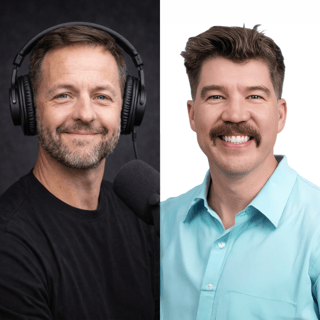
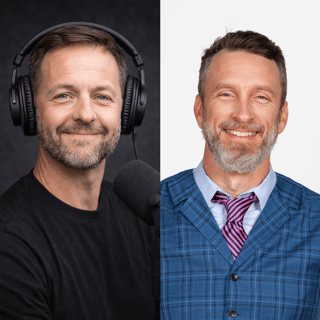
Transcript
Speaker: Jason Cevera, thank you for joining me. Where does today's recording find you? Today's recording finds me in my office located in my basement here in beautiful Ambler, Pennsylvania, just outside of Philadelphia.
Speaker: Would you mind telling me a bit about yourself? I've owned a creative agency here in Philadelphia um for about 15 years called Half Genius.
Speaker: ah My wife and I started it before we got married. We worked with some um pretty big name companies. Our our first client was ah was Gucci. We worked with Valentino. We worked with Canon.
Speaker: um We built a project that influenced the Pope to come and bless a... a project when he came to Philadelphia. We worked with the Academy of Music, Canon cameras, Little League World Series, a whole slew of you know local nonprofits and small businesses as well. Building
Speaker: you know building their... digital identities um and you know putting together their their marketing plans for them um through the years.
Speaker: um It's been a little different since COVID, obviously, just like everything else, but you know we're still sticking with it. and ah working on some new projects.
Speaker: So I know we're going to talk about the new projects. However, I feel like there's likely an interesting detail. There are probably a lot of them, Jason, so not to downplay your background by any means, but there's probably...
Speaker: One obvious interesting detail, I hope, in one of the first things you mentioned, which is if you got an agency going and your first client was Gucci, I'm going to guess that there was a story behind that because a lot of us, if we start some sort of services business, marketing agency, whatever it is, our first client is probably not a name that many people would recognize. So can you tell me how that came about?
Speaker: So it was, uh, what 2010. were at South by Southwest. Um, first day of, of conferences for the, the interactive festival and get on that van after, after the panels, um,
Speaker: the The air conditioning's blowing. There's this this woman that comes on right after me with this big you know red hair. like She's covered in Gucci.
Speaker: um The wind's blowing. Her hair's flying all over the place. And so I was like, excuse me, driver, can you turn the the air down? She's like, oh, thank you. And that opened the conversation. We started talking. Turns out she was Gucci's worldwide.
Speaker: Digital marketing manager at the time. um We hit it off, wound up going, um you know, hanging out all night that night.
Speaker: Turned into the next couple days of, you know, hanging out with her and then She went off to Milan to to go back to the office. And when she came back to New York, she was like, hey, let's meet up.
Speaker: Let's grab a drink um in Manhattan. We had that had that meeting. And then after that, she was like, hey, can you build a a custom YouTube channel for for Gucci?
Speaker: Back in 2010, before, you know, all of the modern web
Speaker: channels were were fully built. There was you know this short period of time where YouTube was allowing these like custom microsites essentially on their landing pages for big brands. There was only like 30
Speaker: um companies that were like invited to this trial and she was like we don't have anyone that like specifically builds these so i'd love to you know have you guys bid on this project we bid on it it worked great we got it up and running you know hit all of the the deadlines for that and then couple months later we're going to her her wedding in milan um And she's like, hey, so but right after the site launched, she's like, I took a new job. I'm now at Valentino. Can you guys build one of these for for us at Valentino as well? So, you know, that wound up turning into a good four year chunk of um custom YouTube development for high fashion to to get us out the bat, um which was, you know,
Speaker: Amazing. um As a small business, we were a two person shop at that time. ah We had an intern, I guess, um coming in help. But it was, you know, essentially me and my wife working.
Speaker: Managing contracts with the largest fashion house in in the world from our from our dining room table. um And we've just evolved from there.
Speaker: What are some of the types of events or experiences that you've worked on in the past? We did the Little League World Series um for about three or four years before COVID hit. um With Canon, we built this interactive um system that, you know,
Speaker: they came to us and they were like, we need something that's gonna draw people in get them in our booth. We need about 10 minutes of their time to be able to sell them the camera, show them the the printing from the printers.
Speaker: um How do we do that? And so what we came up with was this app that built these cheer signs. um Everyone, you know, you're cheering for a bunch of 10 year olds, essentially. So everyone had these signs that they would make and they'd hold up and you'd watch ESPN and it would just be like a whole entire like audience of people holding up. Go, Jimmy. Go, Timmy. Yeah.
Speaker: China team is great. Puerto Rico hit a home run like silly things like that. And so we took that concept that you know people were already doing and we built a custom app um that was able to, you know, just from touching on the iPads, draw um a cheer sign.
Speaker: We had, like, you know, they could use a font if they wanted a font. We had a couple icons that Canon provided us that were in there that, you know, you could put your stickers in. And it enabled them to have these, like, four stations where it drew an audience in They would get, you know, their little, like,
Speaker: um The Little League World Series was big on like giving out these pins. um So like they would earn their pin by making the sign. We would collect all the data from the wristband of who they are, what their nationality is, whatever, and kind of deliver that information back to to Canon. So Jason, tell me what you're working on today then.
Speaker: So today... um'm I'm pleased to announce that I'm a year into Pickles Apparel, which is my passion project.
Speaker: um It stemmed from ah last last summer i was with my kids and they were they were calling me Mr. Pickles.
Speaker: So I leaned into that um with their friends and... ah I wanted to get a hat that said pickles on it just to like, you know, show them that I was I was i was in in on the joke and I couldn't find exactly what I was looking for.
Speaker: Everything was selling a brand. Everything was selling, you know, a festival, ah you know, specific pickle. um in a specific style and nothing was just general pickles for the love of the game kind of vibe. So I figured, you know, this is a perfect opportunity to take my marketing background and apply this to something that I'm passionate about.
Speaker: um And, you know, at first I bought a hat. I did find a hat that just said pickles on it. I was getting comments from everyone everywhere I went. I would go out and five times a day they'd be like, I love that. What's pickles?
Speaker: And having to answer that, oh, it's a nickname my kids gave me is a lot less impressive than it's a company that I started that, ah you know, sells um quality merchandise with ah Pickles branding.
Speaker: So that's where we're at today. um a year into it, I have over 120 products on my website um My website's also kind of a little sounding board for, you know, the creative outlets that I am diving into ah with this brand.
Speaker: um One thing about me, the e-commerce was not something that I was... well-versed in prior to starting Pickles. um This was you know something I wanted to learn and get over and you kind of learn it on my own account um instead of having to figure it out on behalf of a client real time.
Speaker: um So I i went in set up my Shopify site, you know got it up and running, Got my vendors, started building the products, um getting them listed, rewriting the product descriptions, going, you know, soup to nuts through all the metadata, reformatting my images on the fly. And couple months in, i was looking at the site and I was like, I hate this site.
Speaker: I don't like a single thing about this. it was all generic, like Shopify templates with my graphics that weren't, you know, generic by any means. Um, so a couple months ago, I just said, I'm going to go unhinged.
Speaker: It was how I put it. I'm going I'm going to do the most crazy things that I can to this brand and see, you know, where it takes me. And that opened up a whole nother universe. Um, um,
Speaker: It's refined a bit from, from where it was now, but you're slightly more hinged than you were a while back. Yeah. Yeah. I, I, I did, I developed, I I'm calling it the, uh, the Brine Unconscious.
Speaker: Um, it's like, uh, a psychological take on the pickle, um where the pickle is pondering you know what's out there, what's outside of the jar. I was a cucumber and now I'm a pickle.
Speaker: These things, the the salt that that changed me is is what made me, but you know what does that mean when the pickle ascends outside of the jar? like What comes next?
Speaker: They get eaten. They're gone. The rest of the pickles, you know, they're there mourning they're their lost fallen soldier. But do they even know? Do they even care? Like that's that's the questions that we' we're asking at Pickles Apparel these days.
Speaker: And that's the story that I'm telling. So, you know, it's ah it it kind of got deep um at points and i kind of brought it back.
Speaker: But, you know, It was able to help me unload um all these creative ideas into a Shopify universe that I wasn't necessarily familiar with how to edit. I wasn't, you know, versed in building in the liquid framework that Shopify uses.
Speaker: um i was essentially, you know, choosing a template where that wasn't the brand. So i was able to, you know, teach myself enough that i could design it like a regular website that we would build in the past. And, you know, I relaunched Pickles Apparel couple days later.
Speaker: um I've been editing down all the the products, trying to get all the stuff that like didn't really fit the brand anymore um off the web website, rewriting all our meta and um product descriptions as we go, working on the pricing, adjusting um to try to target a wider audience.
Speaker: um But it's been really well received. And in addition to to to building... the website, um I started making these like graphic stories kind of explaining my my journey for Mr. Pickles, which I'm not a social media person either.
Speaker: um i hate social media. yeah Like I wouldn't be on social media if it wasn't for this. um But I couldn't tell my story without, you know, just like I couldn't,
Speaker: get a pickle hat without sticking my finger in it and creating ah the company, I'm now making music to go along with these stories. Big Bill Energy.
Speaker: inside the Brine Unconscious so i'm really curious whether it's just music or if it's other things how of all things did music or maybe anything else that wouldn't be expected come into the development of either this brand or the the marketing and the storytelling Well, with storytelling and music, you have a lot of overlap.
Speaker: And I saw the opportunity to kind of give my brand a voice um like I've never done before. And, you know, there's AI programs out there um and there's musicians out there that I was able to connect with and collaborate with um and kind of bring my storytelling into song form um where it,
Speaker: is i think it's good i think it's entertaining um but it sells the brand and it gives you so much more brand awareness if someone's sitting there for 20 minutes listening to your album because they like pickles it's about pickles it's also clever and it has like a good beat You can listen to it at the gym. You can listen to it in the car. If you're going to a pickle festival, put my album on.
Speaker: And it's going to inform you on the brand and what I've been building. Where previously you would have to be sitting on a computer Looking at my website to, you know, put together your own understanding of what this actually means.
Speaker: Looking at social media posts, you're not listening to my brand. You're listening to some other song or some person talking about the product. the music is able to tell the story, um again, get back into storytelling, of Pickles Apparel.
Speaker: And so the first album, Pickles Apparel EP, that is kind of diving into the products that we have,
Speaker: um the yeah know what we've built to that point, um It was so much fun. Like it's it's so fun to just get creative and have new channels that like you can just open up and there's so many opportunities out there. There's AI that can help you do anything. You can learn anything, build anything, say anything.
Speaker: um And, you know, essentially build a ah voice. um I have no musical bones in my entire body. i couldn't even, i i can't sing. i can't play piano. i i can't even like bend my fingers like properly to play a note on a guitar. But I was able to produce this album.
Speaker: Um, In a couple days. And I love it. I listen to it. i get feedback all the time that people are listening to it. So I kept going with it. I built a couple songs that were a little more personal. And then I developed this character, Gherkin Gary.
Speaker: um He is a little pickle with a big voice that, you know, his jar really stood behind him. Um, pickles in general, like they're searching for ascension, like being taken out of the jar.
Speaker: Um, and that's like their, their grand accomplishment. Are you selling the music or is this more like another way to touch people?
Speaker: It's a whole nother audience. It's all data. It's all metrics here is is how I'm looking at it. um The more exposure you have, the more places people can absorb your brand, the more channels and ways they can absorb your brand.
Speaker: the more it's going to get out there. So, you know, by doing it, putting it out on Spotify and Apple Music, um the album's out on like 28 other platforms too, I think. i I handled all the distribution myself as well.
Speaker: um
Speaker: You know, with Spotify, you have those little video clips that you can put in. So each song that I put out has like a video story that kind of goes along with it.
Speaker: um I just put in the merch to Spotify. So like Spotify now is a selling channel that links up to my Shopify store in the back end.
Speaker: um it's it's all tied in together. Like it's it's all selling the same thing and I'm not paying for ads here. So, you know, from an SEO perspective, I'm on i'm everywhere is how I'm looking at it.
Speaker: um And from genic SEO or AEO perspective, they They know what the brand's about because I'm painting the story in so many different ways. I'm filling in every meta field for every single product of every color, design, material,
Speaker: um you know, and then that links to the product name and then the product story is then animated in the video files, which is then on YouTube and Spotify and all these other channels. So, you know, it's building a whole universe where people are able to, you know, absorb my products, um enjoy them and kind of get to know the brand before, ah before making their purchase. So,
Speaker: That's how I'm looking at it. i I like doing it too. So it's entertaining and it's fun for me. um But the products are great. Like my sweatshirts here, like nice heavy cotton, um very fleecy and soft. The graphics are all perfectly printed.
Speaker: um And, you know, we've we've had a bunch of positive feedback from ah the orders on the the site. So... I think it's working. Why music and not just an ad campaign, for example?
Speaker: Ad campaigns cost money. Right?
Speaker: You got to pay for the ads. You got to put them out there. You got to see what comes back. um And it's not instant. I could put an album out tomorrow. I have Halloween album ready to go.
Speaker: um And I could put that out and with the right audience listening, you know, i have a couple influencers on social media that are really into the music, really understand the brand, love it, um and they're supporting it. They've already got a million people watching their content.
Speaker: So why put money into ads to target people that, you know, don't know me? When I could just go to the person that now knows me and now gets it, target them through, you know, our influencer agreements and build my brand with them, you know, involved. We have a affiliate program on Pickles Apparel where people could sign up and they make money now off of selling my product. So if you have a million people, give you a ah
Speaker: 15, 20% cut of all the sales that come in, you know, you're not going to want to put an ad. at I mean, maybe they'll be putting ads out on my behalf. But as far as my concern goes, this is how um to do it organically.
Speaker: I don't want to do social media. I hate social media. They love social media. They know how to talk to their audience. They can work their audience. They can sell, but they can also be authentic.
Speaker: And it's a very authentic process um for the authentic product that, you know, they love their audience loves and i love making it so it ties it all together.
Speaker: really nicely in my book um i've been working with an influencer the past week or so that she's like i listen to the music in the gym every single day like i know i see i see it on my spotify analytics Um, but you know, now she's able to share it.
Speaker: It's, it's on Instagram and Facebook, um, as like, uh, you know, song that you can select. So my goal is that enough people start, start sharing the content because they love it because they enjoy it.
Speaker: They don't need to know my brand. They don't need to buy my product right away, but eventually they're going to see it. And eventually they're, they'll make that purchase is is my goal.
Speaker: You can have the most amazing apparel, sweatshirts or whatever else, and you can have actually a very interesting brand. And you can also have some really great music for one audience or another, and yet still not get found and chosen, you know, chosen in terms of following, signing up for email, taking the next step, buying something, repeat purchase, and so on so I'm glad that you mentioned influencers because whether that is the primary method of discoverability for you, or it's just one of many, the next question in my mind, Jason, really was
Speaker: How do you go from, how have you gone from, or are you going from, I should say, how are you going from having something that's really great to having something that's really great that people can actually find?
Speaker: Where we're at now, we have i have no inventory. um My whole business is... direct to consumer. um You order it, it's printed and shipped to you right away. um I'm working on that. i think, you know, my goal is to get enough analytics from the website and from the traffic where I'll know my audience to the point where I can go and print a couple hundred shirts up and have them ready to go.
Speaker: um I want to start going to these events, the the pickle festivals and the big, you know, gatherings and start selling there.
Speaker: um You know, right now I just got so many different ideas that are still of kind of floating in the brine. So you said pickles festivals. So if I put that together with something else that I think you said in sort of the origin story of this brand, there is no...
Speaker: pickles brand out there in one respect or another. And so would you potentially be going to a pickles festival in some place in the United States at some point? And you have a, i don't know, a booth of some type where people can buy your apparel and you're playing your music and given some of the things that you've said, maybe there's an engagement like physical activation there.
Speaker: Well, ideally my band would be playing. Oh yeah. I'm working on building out like an actual band of, of humans that will be there, um, to, to perform. i I've been a couple, so I've,
Speaker: been doing this for a couple you know months. um A few promoters for these pickle festivals have reached out to me, um sometimes in a sales capacity where they're like trying to like get me to like sponsor a booth or something. But what's really been fascinating to me was when they come to me and they're like, we need an apparel company to like produce all of our merch for this thing.
Speaker: And to think that like, you know, I would be able to come in to these festivals and control the whole branding of all of the print material, their website, their, you know, t-shirts obviously, and kind of get them all like in the pickles universe as like a side job. And like, I love, like, I've been working, um, with a couple brands that like, you know, independent picklers, um, that,
Speaker: are trying to get their name out there and they're doing what they can to, you know, promote themselves. But like to have a song about their, you know, pickle company, like they can now use that music in all of their videos that they're posting. They can have a theme song intro, you know, design to it. They can have 20 little clips that are like essentially highlight reels of what they do.
Speaker: in song form to go along with all the like content that they're producing, which I think has tremendous value. Um, when you look at these videos, like I've been doing on Instagram of like,
Speaker: There's maybe like 10 songs that like come up over and over and over again. The most likely trending audio in their algorithm that, you know, is boosting their search results, um which is why they're using them.
Speaker: I want to be that music. And I think that with what I've been building, um Brand wise and how that's like kind of parlaying into my understanding of this whole like infrastructure of how things interact with each other. And i think brands are going to start seeing the value that I'm bringing to this.
Speaker: um They're going to want to collaborate with me. Um, whether that's through Pickles or through, you know, Half Genius working on their brand, it's giving me a whole, um you know, extra toolkit that can be applied through the digital channels of experiential and have them become real.
Speaker: Can you help me understand the scale of Pickle's event opportunities in terms of, I don't know, total revenue spent or total attendees or frequency or something like that?
Speaker: I just pulled a little bit of that up. um There was a Baltimore Big Dill Pickle Festival that came through last weekend. I was not able to attend because it was sold out. They sold over 30,000 tickets, I believe, to that.
Speaker: Um, there's one coming in Philly in a couple, in like a month and a half that I will be at. Um, hopefully I'll be selling some stuff there. Um, Picklesburgh in Pittsburgh, Pennsylvania, 208,000 attendance, attendances in 2025.
Speaker: attendances in twenty twenty five um
Speaker: All in all, there was over 3 million people in the United States that went to pickle festivals last year. From what I've gathered. And that's not including like the little tiny ones and the pop-up ones that weren't year-after-year events.
Speaker: These were just like the big the big dill, the... couple other um you know national ones that like tour they're sold out and like to buy tickets to this pickle festival um that's coming through philly in a couple weeks like it's like a hundred dollars a ticket for like the vip tickets like people love this and they go nuts for it and they're gonna sell out just like every other one did because you know you don't have to like be obsessed with
Speaker: eating pickles to enjoy the like environment and the happiness that like they bring to you know the festival so um i think
Speaker: and another stat too that i can put out there in 2024 the Picklesburgh 50 000
Speaker: attendants or attendees they traveled over 150 miles to get there from the information that i have here in front of me like that's commitment and that's like dedication and that's the kind of audience that i'm targeting with pickles apparel is these like diehard people that don't want like Jimmy Bob's like pickles listed on their sweatshirt. They don't want, you know, Times New Roman...
Speaker: fonts and comic sans on all their clothing. um But they want like a brand. They want something that they can, you know, feel represents them and represents me and represents, you know, a whole community of people. So that's what we're putting together here. And I'm trying to come up with as many interactive ways to, you know, invite the world to participate with ah the Brine Unconscious that,
Speaker: you know, I can and I think it's working. I think it's working. Hopefully, you know, a couple people listen to this. They check out Pickles Apparel dot com. um You know, maybe even buy a shirt or a sweatshirt. Hoodie season's coming. I got a whole campaign for a hoodie season that we're going to be launching soon.
Speaker: um Got a nice song that goes along with it, too. built a game the other day, never built a game before, but you know, I figured I might as well bring this world to life. Um, I did some 3d rendering of my Mr. Pickles character,
Speaker: um to like 3d print these like little, you know, key chains essentially. And I was like, why stop there? Let's build the entire universe that we've put together. And, uh, you know, that the, the,
Speaker: There's endless capabilities and endless um opportunities to, you know, get this
Speaker: built that I can manage and I can handle and I enjoy doing. So I'm i'm just going for it. You said, I think, a whole new toolkit. And what I wanted to ask you about then, Jason, is Has building your own brand changed how you think about your work for clients?
Speaker: Yeah. um You know, coming from an agency perspective, coming from the marketing perspective, I'm not looking when a client comes to me at every decision that's made to to get to the point leading up to, you know,
Speaker: us meeting like I'm not taking into account all of the different products that you know you went through and hand picked every one of these options necessarily to come to you know a point where you built your business and to be able to build it myself it gives me a whole new perspective and a whole new respect for these you know small business owners and brands that have been built that you know it's it's not as easy as as people think um there's a lot of tools out there we can get into ai and how much ai helps build you know the branding um but
Speaker: There's a lot of personal touches that you know have to be curated and decide decisions that have to be made. And a lot of you know things are set in stone with building a brand that aren't built necessarily um with a standalone marketing company.
Speaker: um For me with building Half Genius, building Half Genius itself and building the brand out was just as fun for me as you know working on our our big major clients and accounts.
Speaker: um I look forward to you know growing Pickles and then being able to hire the team and be able to train the team on my brand that I built selling my products um that you know represent my feelings, emotions, and you know outlook on whatever it was at the the time that I you know created them. um The ownership,
Speaker: that that comes along with it is, you know, great. And just, it's something that I really feel proud of. um I can't wait till the day comes where, you know, we're out and I'm seeing people wearing,
Speaker: um things that I made that I didn't know before then. You know, that that that's that's the excitement that kind of comes along with this. And I'm seeing it with the music.
Speaker: um The music's out there. So, you know, people are listening and I'm watching the Spotify numbers of, you know, in this town and then this town and then this town and then this town kind of like spread and, know,
Speaker: picking up a couple followers here and there. um it it's It's rewarding in itself. um And it's, you know, a whole different perspective than just going to going to work in the morning.
Speaker: Have there been changes or developments in AI that have made some of these things easier, cheaper, more realistic?
Speaker: AI is is the greatest thing I think that ever happened to my role. um I'm not speaking from a designer's role. I'm not speaking from a developer's role. I see all of the you know negative effects that it's having on people in in in the community. But from my perspective as a creative director, as an agency owner,
Speaker: As a person where most of my job on my day-to-day basis um is delegating and coming up with the idea, putting the big idea in place and then explaining how that will work um you know to a team, I can do that with AI.
Speaker: I can sit there and I can work out a full business plan you know in a couple hours on my computer by myself um with visuals, style boards. I can have everything, you know, built out rapidly to my liking. And then I can build my whole entire universe that way um to the point where, you know, I'm able to have conversations with it.
Speaker: um I can ask, is this worth doing? And it'll say, well, based on the analytics from Google or based on the analytics from Spotify or Shopify or Facebook or Instagram, um,
Speaker: I would say go for it. And that's helping me make these important business decisions where, you know, five years ago, I wouldn't have been comfortable saying, is it worth even doing this?
Speaker: Like, I'm shit like, instead of shouting into the void here, like the void's talking back. And like, that's kind of like the whole pickles thing is like, you know,
Speaker: answering the questions of the universe that um are out there. ai is helping me develop those answers um based off of my own weird,
Speaker: um you know, planning and thoughts. So interesting I'm all for AI. um I don't think it's taking everyone's job.
Speaker: I think it's, it's helping people do their jobs better. Um, and I don't think it's something that you can lean on to, ah work for you at this point.
Speaker: Um, but it's, it's getting smarter every day. And if you're not using that, then you're not getting smarter every day is how I look at it. Yeah. I mean, it's, it's a sounding board. It's, it's an honest reflection of what you put into it is, is what you get out of AI.
Speaker: um if you're, you know, you can go on ChatGPT and you could say, make me a logo. And it'll it'll make you a logo, but it'll look like every other AI logo. You can go on ChatGPT if you know the the programming and the backend um functionality, and you could tell it, make it with a one point vector font that you know is whimsical like you can you can really dive into the the nitty-gritty and details and then after doing this enough it understands your brand and it understands when you say this you mean this um and it you know builds out these long logs of
Speaker: You know, these MD files that will essentially give you all the details from your conversations with it that, you know, sometimes there's things there where you're like, that 100% accurate. And I had no idea that that's what I was talking about. Yeah.
Speaker: And that's you know what you need sometimes. um People are great. I love working with people. um I only hire humans, but I pay for AI software too.
Speaker: so Jason, if people remember only one thing after they walk away from this conversation, is there something that you would want them to leave with?
Speaker: I would want them to leave with a nice cozy sweatshirt. Pickles apparel, Doc. So then... I'll hit you with the second question, which you just I talked over you ah for a little bit of that. But where do you want people to go after this conversation then?
Speaker: That would be PicklesApparel.com. We're available on the website there. We're available through any of your platforms, whether it's. Google, TikTok, Instagram, Facebook, believe YouTube too were sold on. The Shop app, which I think is completely underrated but amazing um as far as tracking your packages go and stuff. We're optimized on there as well. And you know get into the Shopify store.
Speaker: I mean the ah Spotify. You can buy Pickles Apparel on Spotify too now. um and ah dive into the universe. The Brine Unconscious is is here for everyone.
Speaker: There's plenty of room in the jar. And if you're you know into the dad jokes, into the pickle puns, we got them for days and They play really well together.
Speaker: Jason, this conversation has been a long time coming. So I really appreciate you joining me today. And i hope that someone that listens to this will purchase one of those hoodies or sweatshirts.
Speaker: Me too. And I look forward to telling you all about this journey um from a beach in Mexico one day.
Speaker: Thank you again, Jason. I appreciate you being here. All right. Take care, Eric.
Speaker: Salt, dark, something listening.