Transcript
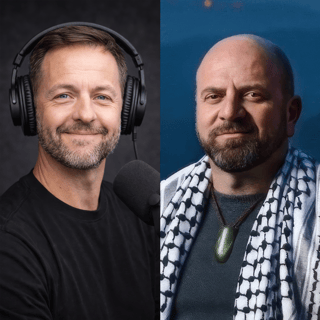
Speaker: Yuval Levin, thank you for joining me. Where does today's recording find you? Well, thanks very much for having me. I'm at my office, which is at the American Enterprise Institute in Washington, D.C., right off DuPont Circle, right in the middle of northwest D.C., so it's a lovely place.
Speaker: Well, I'm glad to hear that. Would you mind telling me a bit about yourself? Well, I am a think tank scholar. I'm a recovering political scientist. I kind of sit partway between the academy and public policy.
Speaker: um I spent a lot of time working in government, both as a White House staffer and a congressional staffer. Uh, but the work I do is kind of at the intersection of, uh, maybe political theory and public policy. And I think especially about the health and integrity of the institutions that are necessary for a free society to function. So from a variety of angles, that's what I've been doing now for almost 20 years.
Speaker: In your writing, or at least in how I think about your writing, you have some you you take up the challenge of dealing with longer term issues about the Constitution or aspects of the founding of the United States and what that might mean over the long term, but also what we might do today. And then you also, of course, in some of your writing,
Speaker: deal with things that are going on nowadays. And so we talked a little bit before we hit record about some of those longer term issues or discussing some longer term, bigger picture issues versus some things going on today. And given some of what you just said, I'd like to ask you about the piece that you published in the Atlantic just yesterday, which was titled Want to Reform Democracy? Start Here. And what I wrote down in reading that is that you proposed Senate approval of presidential pardons and also increasing the House by 150 seats. So there lot to say about
Speaker: there might be a lot to say about that article or the proposal or any number of other things. But I suppose where I'll start you is I'm curious, Yuval, why you think that these sorts of reforms might gain traction now and what might persuade people that a larger Congress could actually work better in one way or another?
Speaker: You know, I like the way you put the question because I think there is a connection between the short term and long term things. um And I think about the American founding and its relevance not simply as historical artifacts.
Speaker: but as representing some permanent and durable challenges, I think the basic human problems are more or less always the same. They're about how do we live together in a just society that treats people in the right way and that finds some kind of balance between majority rule, which is necessary for legitimacy, and the protection of minority rights, which is necessary because we're all equal.
Speaker: That big challenge has always been the American challenge. And in one way or another, every generation has had to face up to the ways that it isn't really meeting it very well. And some generations have done that well by rising to the challenge, fixing something, changing something, finding ways to help our country be a better version of itself.
Speaker: At other times, we've allowed frustration to fester and allowed division to grow. And I think we are living in a moment now in the 21st century when there is a lot of frustration and therefore a lot of division.
Speaker: Our politics feels very broken. But I think it's helpful to see that the challenges we face are very similar to the kinds of challenges that every American generation has faced. And the question is,
Speaker: Are we going to be one of those that is up to this challenge and that finds ways to change the incentives we confront as citizens, to change the structure of the system a little bit, to allow ourselves to do this better?
Speaker: Or are we going to be one of those that just festers in frustration and division? I think that in order to get from the latter to the former, in order to move from just being frustrated to fixing what's broken,
Speaker: We have to persuade ourselves that we have agency, that we can do something. And a lot of times that's actually the hardest case to make now to the American public and to public officials.
Speaker: I spend a lot of time with members of Congress, for example. A lot of them are very unhappy with the the state of the institution. their morale is not great. But when you tell them, well, if you hate the budget process, why don't you just change it?
Speaker: The idea that they could actually do that doesn't really occur to them in the course of their everyday work. They came to Congress, this is what it was like, and this is what it's like. But the fact is, all the structures, all the rules, they were made by people like them in circumstances like theirs, and they can be changed.
Speaker: I think helping Americans in general see that that's possible is the first challenge that any kind of political reform would face now. And the reason I think about the two reforms that I put forward in The Atlantic this week is that I think they're hard but not impossible, and they would make a real difference. They're not silver bullets. They wouldn't transform everything.
Speaker: but they’re a response to a genuinely felt frustration. So we've seen presidential excess, presidential power get out of control in the 21st century. And one straightforward way to try to get at it is actually to constitutionally constrain some of the ways that we've seen things get out of control.
Speaker: The pardon power is just a small example. It's not the worst thing that our presidents have done in this century, but It's been a problem with presidents of both parties, and therefore there could be an openness to doing something about it on both sides.
Speaker: And what we could do about it could be pretty straightforward, just give Congress a role in the way that Congress is involved in presidential appointments. It could also be involved in presidential pardons. And that would give everyone involved more of a sense of agency. The public could see that we can do something.
Speaker: Congress would have more of a role to play. The second idea I pointed to was increasing the size of the House, which is certainly not intuitive. I don't think a lot of people look at the House of Representatives now and think, I just wish there were more of these people.
Speaker: But the the House is meant to be the most representative part of our government. And originally, part of what that meant is that the House would actually grow every 10 years. After every census, Congress would vote to expand the size of the House, by a certain number based on the census, and to apportion those new seats based on states that had seen growth.
Speaker: They stopped doing that in 1920, and the House has been the same size now for more than 100 years. That has meant that every member now represents vastly more people than used to be the case, and many members represent almost a million people.
Speaker: That's not a functional way for the U.S. Congress, and especially the House, to really represent the public. And I think expanding the house in a modest way by the by the kind of formula that it would have been growing by had it just continued in its 19th century path could not only help it be a little more representative, but again, could show us that things can change and therefore open a path to other kinds of changes that would be needed.
Speaker: I think that's what need we need in this moment. There's not a perfect solution to the problems we have, but agency is necessary to addressing them. And persuading ourselves that we can have agency is really the big challenge of the moment.
Speaker: Is there a reason or do you have a theory as to why Congress stopped, the House stopped increasing in size? Well, yeah, there's a reason. the the the The pattern of immigration in the late 19th century and early 20th century um meant that if the House had grown after the 1920 census, there would be vastly more representation for Catholic voters in Congress. And both parties thought that would be bad for them.
Speaker: I don't know who was right. But it led to a peculiar kind of consensus that said, well, let's just not do it. And obviously, that's not really how either party now would think about these things. But they've just never revisited the question. And it's one of these things where the inertia of just standing in place persuades people that nothing can change.
Speaker: The idea that you could grow the house, the notion that it did grow every 10 years is totally unfamiliar to most members and to most of the public. And so that decision made back then, which is no longer really rooted in anything that's relevant to our contemporary political ideas. And, you know, expanding the House wouldn't really in any obvious way benefit one party over the other.
Speaker: But it's just not considered one of the options on the table. And I think it's important to remind ourselves that things don't have to stay this way. I think that any plausible reform movement in contemporary America could have as its motto, things don't have to be quite this bad.
Speaker: It's not utopian, but, you know, we don't have to keep doing just exactly this. Let's try something a little different and see how it works. It's very much within the logic of the Constitution. It's not a way, it's not revolutionary.
Speaker: It's just a kind of maintenance that we've failed to do for a long time. With increasing the size of the house potentially, Does this also tie back to an idea of agency in your mind? As in, it seems to me like one of the things that you said is that if a representative represented a smaller number of people, maybe it would be easier for them to have a connection to their constituency. And there could be a lot of things tied into that. But I'm also wondering about
Speaker: the voter if there's some tie to agency and feeling like my vote can really have an impact or I can have a relationship with my representatives or something of that nature?
Speaker: Yeah, I think that's right. the the The scale of representation matters, again, especially in the House, which is really intended to be the most representative of the institutions in our system.
Speaker: The Constitution creates a set of institutions with different attitudes about representation. The House is just simply supposed to be democratic. The Senate is a little less so. It was originally selected by the state legislatures. Even now, when it's elected directly, senators represent larger populations.
Speaker: They have longer terms. They're more separated from public opinion. The president in some ways, even more so. The president was never really expected to be representative. The president is elected in order to be accountable.
Speaker: No one person could really represent a vast, diverse society. And so I think the the answer to this question looks different through the lens of each of those institutions. But in the House, democratic agency has to look like some connection between the representative and the represented.
Speaker: And that's just much harder to do when a House district ultimately involves a larger population than some states. And in any case is four times as many people as it was 100 years ago.
Speaker: So with some of what you're saying, I'm thinking about potential cycles. yeah And i suppose my my question for you is how much of the challenges that we face today or our perception of challenges, cultural, political, or otherwise,
Speaker: relate to some of that cyclicality or our a narrower time horizon than perhaps we should have versus challenges of growth and time that, no, this is really something that we can fix it and we can move on to the next challenge.
Speaker: Yeah, I think it's a wonderful way to put the question. There there are challenges that are a function of change and growth, and our country has dealt with some extraordinary challenges along these lines.
Speaker: The United States had just been born when industrialization started to transform our way of life and very quickly became the leading edge of industrialization in in the world.
Speaker: We went through dramatic transformations, demographic and economic, through the whole of the nineteenth century. And then in the 20th century had to take a kind of ownership of the fate of the world and became the leading global power in ways that we were not prepared for to begin with and did not love. And we now again, we look forward to a moment that feels very uncertain, where it's entirely unclear what the direction of global affairs might be.
Speaker: There are new technologies that are going to be absolutely transformative in ways that we can't predict. And we know they're important, but we don't know exactly where they're going. This is very hard.
Speaker: But I do think that in one way or another, This is a challenge that every generation in our society actually has faced. You know, living at that at that moment of intersection between the past and the future, right? Living in the present when you know everything that's happened but not anything that will happen is always terrifying. And one of the strange things about it about being in that moment yourself, is it always seems like, well, people in the past just had it together. They knew what they needed to do. It was hard, but they knew how to win World War II. But let me tell you, they did not know how to win World War II, and they did not know how it would go. And they were just as baffled by tomorrow as we are
Speaker: What's different about this moment is that it's us, right? that That it's up to us. And you look around sometimes, you think, well, who's in charge here? who who's Who's supposed to know everything? And I'll tell you something. i I worked for the president of the United States for five years. I worked for the speaker of the house. I spent the whole time looking for that room where everybody knew what they were doing. And there is no room.
Speaker: And nobody knows what they're doing. There's some impressive people in government. There's some impressive people in a lot of American institutions. But they don't know that what the future holds any more than anybody else. and That means that the kind of challenge we confront is always about how do we take responsibility, ownership over that that joint fate that we have as a people. That problem is always the problem. And we do have some advantages. We have a system of government that's built to let us do this and that's endured over a very long time.
Speaker: It's adaptable. It's flexible. We also have a very dynamic society, people who welcome the future on the whole and who you know try all kinds of crazy things. That helps too, but it doesn't make it easy.
Speaker: And ultimately, I think it's been unusually difficult for us in the 21st century to just accustom ourselves to the sense that, well, we don't know where we're going. And that's that's what this is like. That's in part because we've lived through a long stretch that was dominated by a very confident generation. the generation of people born in the 1940s, the baby boomers, have been in charge of our institutions for a very long time.
Speaker: I put it this way. Bill Clinton, who was elected president in 1992, and Donald Trump, who is president now, 34 years later, were born at the same time. They were both born in the summer of 1946. They're exactly the same age. George W. Bush also was born in the summer of 1946.
Speaker: There's something very peculiar about that. It's not normally how things work. And for those of us who are younger than that, it's a little hard to imagine that, you know, now we're going to be in charge and that the future is really wide open. A lot of Americans walk around with a sense that the life cycle of the baby boomer is normal, that that's kind of what America is.
Speaker: And ways in which it's changed from that are really abnormal. But, you know, America has always been changing. And the America of the late 20th century was very strange, it was very unusual in many ways. We have to accept ownership of the future. And a lot of what that means is making decisions when you don't know where things are headed. It's not going to be easy, but maybe it makes it a little easier to know that that's what everybody's always had to do.
Speaker: You talked about some parallels to different points in the past, and I'm curious about some parallels of some of the points that you made. So do you see any parallels...
Speaker: between, for example, one generation of Americans continuing to hold power in one respect or another, you know, holding the presidency. Do you see that something like that has happened in the past or parallels to some time in the past to how we feel about political gridlock or cultural dissatisfaction or any number of things, I suppose?
Speaker: So, you know, it's interesting. One of the most peculiar things about our 21st century politics is not exactly that we're polarized. We're often polarized. We have a two party system, but that we're deadlocked.
Speaker: American politics has been at 50 50 now for 25 years since the 2000 election. And that is very unusual. Generally speaking, you look at our politics and there's a majority party and it's holding a very complicated, messy coalition together. There's a minority party trying to grow its own coalition.
Speaker: Those parties are both engaged in coalition building, which is the essential skill in American public life. For us, the last 25 years, we've had two minority parties at the same time. And they've gradually lost the knack for coalition building.
Speaker: And there is one analogy, I think, to that in our history, which is the end of the 19th century. From about 1875 to 1900, that period looks a lot like this one. It's 50-50 for a long stretch.
Speaker: Control of Congress keeps shifting back and forth. Presidential elections are extremely close. Twice in that period, presidents were elected without winning the popular vote, as we have also seen twice.
Speaker: There was a president in that period who won one term and then lost and then came back. It's the only other time that's ever happened. It looked a lot like this. And the generational element was part of it. A lot of the political leaders of that era had been Civil War generals.
Speaker: And the kind of core divisions of the immediate post-war moment persisted for a very long time. And ultimately, the the fifty fifty moment ended When a political talent, we don't think much about William McKinley now, but he saw his way out of that canyon. He didn't win the argument that had been going on for 25 years.
Speaker: He moved on to a set of issues that was closer to what the public was worried about in 1900. I think that's the kind of thing it's going to take for us to break the 50-50 dynamic. I think we will.
Speaker: But it would take a political talent that who can see that the public actually wants you to take voters seriously, to speak to what they're concerned about, to ask something of them.
Speaker: Our politicians now don't believe that. they've They've bought the logic of politics is just a circus. It's all about personality. You just have to win the day on Twitter. And the thing is, they don't see that doing this isn't actually working, right? They're not winning this way.
Speaker: Neither party is winning. And so maybe doing something else would work a little better. i do think that we will get there, but it'll take a certain kind of political talent that i guess so far I don't really see. But, you know, those often come out of nowhere, so we can hope.
Speaker: It seems to me like some of the incentives for politicians, at least, you know, at the at the national level, must I don't know if I want to say that they're different necessarily, but there has to be some difference from what there was maybe 70 years ago or so, because I'm wondering if I am not so concerned, if I'm going to run for the house or the Senate or whatever else, if I'm not so concerned about getting
Speaker: the job done of a representative or a senator and actually changing policies or whatever else. Because you know what? If this doesn't work out, I will get a commentator position on CNN or wherever it is, and I'll be set for life.
Speaker: And I do know, i i don't i don't want to straw man too many politicians because I believe that a large majority of them want to actually do the job and they want to represent people.
Speaker: I'm wondering if in the end though, when I get to Washington and I see that it's so incredibly hard or any number of other things, I see the reality.
Speaker: If I start to think, you know what, i I can't change this. So I'll just play the game and then I will be fine. And I become a little bit less concerned with my constituents or the the Republic.
Speaker: Yeah, i i think I think incentives are an enormous part of the problem now and that they are different in some important ways. I do think that politicians, you know, people who run for Congress want to succeed. They're ambitious men and women. They're smart. It's easy to from a distance to to look at them as clowns. They're really not.
Speaker: But What it means to succeed is ultimately up to the institution, right? The definition of success is a function of how the incentives are set up.
Speaker: And I think that in some respects, in an effort to strengthen Congress over the last 50 years, we've centralized power in the hands of party leaders in a way that has left most other members with very little to do that could be defined as success.
Speaker: So to really become a legislative expert, to really get to know a policy area now is not actually a rational way for a member to spend his or her time because you don't control the agenda. Even if you make it to be chairman of Ways and Means, you're basically still doing the bidding of the of the party leaders. Congress is run by four people. And that means that for most other members, the answer to how do I succeed actually is i build a ah social media following, I build my own brand, and I become a kind of celebrity in the political culture, whether they stay in Congress or not.
Speaker: Those incentives need to change. And when you think about how to change the institution, how to reform Congress, to my mind, a lot of it has to be about creating incentives for legislating, for cross-partisan bargaining directed to policy outcomes.
Speaker: And those incentives now are badly lacking. Some of these are electoral incentives. the The primary system, I don't think primaries cause the problem we have, but it's impossible to imagine a way of addressing that problem without changing how parties choose candidates.
Speaker: It's a very poor fit for 21st century political culture. There are also incentives inside the institution, the way the budget process works, the way that power is is allocated between committees and leaders.
Speaker: I think if we see that the purpose of Congress is to facilitate bargaining and negotiation, we could see our way to some reforms. The trouble is a lot of people who think about reforming Congress implicitly assume the purpose of Congress is to pass legislation, which is a natural way to think about it. But actually, that's a secondary purpose.
Speaker: That's what happens when you successfully facilitate bargaining and negotiation. If you just think the purpose is to pass legislation, then you want Congress to be more efficient. And that's how we got here. You centralize power, you empower party leaders, you weaken the committees, you give the president more agenda control.
Speaker: Now we would say maybe you get rid of the filibuster. You just make things move faster. I think all of that moves in the wrong direction. If you ask yourself the question, how do you get to a Congress where the incentives are in the direction of facilitating bargaining and negotiating, then you want Congress to be less efficient.
Speaker: You empower the committees where members engage with each other. You love the filibuster, as I do. It's the only reason we've had any bipartisan legislation in the 21st century. And you think about reforms in a way that is likely to make bargaining and negotiation more likely to happen rather than less necessary.
Speaker: And most of the reforms we talk about now make negotiation less necessary. And yeah, that would make for more legislation. Making negotiation more likely would also make for more legislation.
Speaker: But along the way, it would actually enable Congress to function as a legislature and it would improve the incentives that members face. So those are the kinds of reforms that I think about. I'm thinking a little bit about not just where this started, but you talked about McKinley.
Speaker: And I'm thinking... Well, do we wait for a hero to come in and save us? Do we realize that we at the ground level, you know, the grassroots level need to build some coalitions and and push our representatives for something else? Or how is it that not being able to predict the future, we can at least begin working toward a vision of a better future?
Speaker: I think it's important to know what we're looking for and therefore to be able to tell good ideas from bad. And it's especially important to start where we are, to start locally. The story of of the McKinley coalition isn't really a story of a hero. it's It's work that began long before a presidential race that began at the local level.
Speaker: It was a cross-partisan moment of reform. We think of it now as the progressive movement, but that That suggests that it was a kind of movement from the left. Progressivism really began in both parties.
Speaker: It reshaped both parties in different ways. And because we think of it the way we do, we have a kind of distorted image of the first third or so of the 20th century in our politics.
Speaker: We're very focused on Woodrow Wilson. Woodrow Wilson was the only Democratic president between 1896 and 1932. It's a very long stretch. There were six Republican presidents and Woodrow Wilson. And he was elected because there were two Republicans running against him at the same time, Teddy Roosevelt and and and Taft.
Speaker: So the the story of that period is actually the story of a political coalition emerging from a long 50-50 stretch to absolutely dominate an entire generation of American political life.
Speaker: And it did it by grasping a new set of issues that could allow for a durable coalition to be built, a coalition that had a lot of patience for internal diversity, a lot of patience for arguing with your own party.
Speaker: in a way that both of our parties have become very bad at. And one of the things that stands out about the model of McKinley is he's a type of figure that you see a lot in American history once you notice it and that we've seen a lot in the last hundred years.
Speaker: A governor from a competitive state who's used to a lot of people not agreeing with him and knows how to handle it. I think of Franklin Roosevelt, the person who kind of broke that coalition. He was a similar model. He had been governor of New York. He was a patrician liberal, a strange sort of thing. you Think of Ronald Reagan, the Republican in Hollywood for 30 years.
Speaker: There's somebody who knows that not everybody in every room is going to agree with him. Or Bill Clinton, the the the liberal in Arkansas. That's a type that's very important in American political life. Somebody who's spent an entire career being formed by the experience of having to persuade people.
Speaker: and learning that people who disagree with him are not idiots, but have different priorities. And that somehow they have to be accounted for and that they can be persuaded. Because in some ways, the hardest thing right now is to even see that it's possible to build a broad coalition.
Speaker: Both parties have persuaded themselves that the way to win an election is to win 50% plus one voter, a two-seat majority in the House, and one-seat majority in the Senate, and then just try to drag it out.
Speaker: But actually, i think you you could win 58% of the vote in a presidential election. Sure you could. Right now, just run a halfway normal human being, and you're going to win 58% of the vote.
Speaker: You can win a bigger House or Senate majority. You do have to make concessions. you In order to do that, you have to disappoint your activists some. And the thing about your most devoted activists is they're going to vote for you.
Speaker: They're not going to vote for the other party. They're really sure about that. And so think about people who aren't sure and ask yourself, what would it take to bring more of those people into the coalition? This is basic politics, obviously. It's not actually news to anybody. And yet we don't work this way.
Speaker: And we've our both of our parties have shifted their emphasis from coalition building to mobilization. They think the the the the recipe for winning is get every last person who's absolutely certain to vote for you out to vote.
Speaker: And that's important. But more important is to get people who might go either way to go your way. And that knack has really been lost in a fragmented politics where people spend all their time in their own little cocoons and not enough time thinking that actually maybe some of those people in the other party are not so terrible. Maybe if i actually made myself a little bit more agreeable to them, they might vote for me.
Speaker: Imagine that. Are there a few things that you might point to that have propelled some of these changes from the centralization of power, moving from coalition building to mobilizing and so on?
Speaker: It's certainly overdetermined. A lot of things have driven this. But if we try to break them down, i do think some of it has had to do with geographic sorting. There are just fewer competitive places, not none, but fewer.
Speaker: I think some of it has had to do with the fragmentation of political media so that The business model of political journalism now is not to get as broad an audience as you can and sell that audience to GM and Ford to sell them cars. It's to get a narrow but predictable audience and sell it to the narrow advertiser who wants exactly that person.
Speaker: And in order to do that, you know, to win the broadest possible audience, you have to kind of have a mainstream approach to politics to win that narrow audience, but keep them coming back.
Speaker: You've got to know what they care about, give it to them every day and make them angry enough to come back tomorrow. And political journalism has just changed from one to the other. I mean, you can look at some established journalistic institutions that have gone from one model to the other because they've had to. The economics of the internet and the fragmentation of media has meant that it's now harder to build a broad mainstream.
Speaker: I don't think any of this makes it impossible. to build a majority, but it's certainly harder. And you know beyond that, there's also been a kind of ideological sorting of the two parties. Right now, if somebody tells you they're a Republican, they're telling you a lot about what they believe about the world, much more than would have been the case in, say, 1970.
Speaker: when there were all kinds of Republicans and all kinds of Democrats, and there were many Democrats who were to the right of many Republicans. And, you know, it was possible to divide votes in a way that now really is kind of unimaginable i on a scale.
Speaker: Think about the 1972 election. Richard Nixon won 49 states in the Electoral College, the biggest win since George Washington. And the Democrats won both houses of Congress in the same election.
Speaker: That means there were millions, probably tens of millions of voters who voted Republican for president and Democratic for Congress. That is not about to happen. I don't think we can create that by some set of reforms of the system.
Speaker: But there's a place between there and here. And there are ways to build broader coalitions, even in a more fragmented American political culture. A lot of this in my mind comes down to a simplification of history, and you spoke to that a little bit.
Speaker: But if we have a greater appreciation for how confusing and how difficult the act of governing was in the past, we can realize that if we were just willing to do the work today, that we could see change.
Speaker: I agree with that. and And I think that seeing that most generations of Americans have had to overcome very difficult circumstances in the system or in the world, in the economy, and have not known how to do it, but have found ways to at least improve their situation some,
Speaker: could help us to see that too. There are some, they're not necessarily cycles, but there's a there's there' is an up or down kind of movement to a lot of the changes we're talking about. There certainly was centralization of power in Congress under Johnson in the 60s, but there was also an enormous assertion of presidential power under Richard Nixon in the 1970s. Congress then pulled back a lot of its power in fighting with Nixon created all kinds of new structures, including the budget process we still use, the War Powers Act, all kinds of things that gave Congress a role again.
Speaker: There was then another kind of move toward presidentialism in the Reagan years, and Congress reasserted itself under Newt Gingrich. These things do go back and forth. And so I think the the tendency we have to resist is the sense that, well, this is where we are and the future is a straight line from here. It is not.
Speaker: The future will not be what we expect. And so rather than expect, let's build, let's decide and try. Right. We're not going to we're not going to entirely succeed in framing it the way we want to. But if we're trying, then we will partially play that role. Right. And shape the future. So it does come back to my mind to agency.
Speaker: We're not just watching this happen. Citizenship is a verb. We're doing this. And if we choose to sit it out, we're still choosing what to do. We're just choosing to be bad citizens. And, you know, good or bad, it's our choice being made. And so I think we have to decide that we have that power.
Speaker: And we should decide what we want this to look like and think about what our role could be as individuals, as groups of people, as players and institutions, as citizens. The future really is ours to make. And ultimately, you know, every part of that, both seeing the agency piece, but also seeing the ours, right, that this is ours together and that we have to think of the future as something that the American people have under our common responsibility.
Speaker: including the people we don't like and the people who don't vote like us. That's really essential to understanding what our responsibility is. We're going to be judged based on what we do here, and history is going to think we did it on purpose.
Speaker: So we might as well do it on purpose and think about what we actually want. Oh, that's a really interesting way to turn something that you said earlier about, you know, we look back and think that people knew what they were doing.
Speaker: And history is people will look back. Yeah, they're going to think we knew what we were doing. And if this is what we're doing, they're going to think we had real problems. And look, maybe we do.
Speaker: Okay, so related to this then, I was filling out my mail-in ballot yesterday, and i I do not think of myself as being well-informed about the current political state, either at the national level or in my state. I'm not saying that I pride myself in being uninformed, but there's...
Speaker: there's a difficulty with some of us between feeling like, well, I'm busy with other stuff, right? I have a job, I have a family and so on. And also being turned off by, you know, you turn on the TV and it's all fighting or yelling at each other, or there's nothing of substance because it's all soundbites and so on. And so you've talked before about I think it is, and please tell me if I'm mischaracterizing this, Yuval, but that there's a greater threat to America from passivity and sort of spectator citizenship than there is from the actual disagreement.
Speaker: And so how, or do you have recommendations for how some of us might become better informed or better engaged while also trying to balance some of those big competing priorities like family or work?
Speaker: Yeah, I certainly do think that ultimately our system is built for disagreement. It's built for conflict. It's built to channel conflict in constructive directions. And the problem we have now in American political culture is not that we have too much conflict.
Speaker: In some ways, it's that we have too little conflict. People who are very politically engaged actually don't spend much time engaged with people they disagree with. We spend all of our time around people we agree with, talking about people we disagree with.
Speaker: And that's not really political engagement. And so we have to ask ourselves, how am I participating in some part of governing this society? That doesn't mean you have to be involved in national politics.
Speaker: It doesn't mean you have to go to party committee meetings and But in your local community, in the place that you touch every day, there are ways for you to be involved, to be a citizen and not a spectator. And obviously, we all have demands on our lives and our time.
Speaker: And, you know, it's not necessary for everybody to make politics a priority. But think about what part you're playing in solving problems wherever you are. That's not always politics.
Speaker: Sometimes it's just being involved in your community, being involved in your workplace, in your kid's school, in in your church, something that allows you to say, this is my problem to deal with.
Speaker: I am not just waiting for somebody else to show up and do something. I am that somebody and I'm going to do something. the We do all have many opportunities to do this kind of thing.
Speaker: And I just think it's important to try to pull ourselves out of spectator mode, because ultimately, if we if if we fall asleep at the switch, then the fault is only ours. And, you know, the the the greatest danger in democratic life is that kind of falling asleep. It's becoming passive and losing the sense of agency.
Speaker: And then you really do lose control and you really do look for a hero and your attitude about politics takes a wrong turn. And so this doesn't have to mean that you become a partisan in congressional race, but it ought to mean that somewhere in your life, you confront a problem that you understand to be one that you, together with other people, have to work to address.
Speaker: We all have those and we just have to own them. Do you think that... There might be some generational differences that have contributed to, you know, the boomers in large part holding power in some ways for so long that relates to a sense of, well, I can be the one as in, you know, i i don't want to oversimplify too much, but if you do think about generations very simply, might there have been something culturally when boomers were growing up that led them
Speaker: on average, to believe at a higher rate that I can and I should and and or I should versus Gen X millennials or so on that led me to believe, being of a later generation, that I can't or it's not worth my time or someone else will do it?
Speaker: Yeah, I do think so. I think that the... the the The lack, the shortage of of generational transition in a lot of institutions has meant that people who are even a little younger than the boomers, I'm kind of a younger Gen X, born 1977, just think, well, they're in charge and I'm, you know, I'm doing this. I just get to watch. I think you do fall into those habits and frustration comes to be expressed as cynicism rather than as act as action.
Speaker: And, you know, that frustration has built up. I think for a lot of younger Americans, that feeling is not a sense of relief that i don't have to be in charge, it’s a sense of frustration. i don't get to do anything. um I think a lot of younger Americans now look at our institutions and just think, well, there are other people hoarding it all.
Speaker: I don't get to be part of it. And there's just there's truth to that. And so I think it's understandable at some level, but it's not ultimately true. And part of what it's meant is we haven't been building enough new institutions to deal with new challenges.
Speaker: We're really trying to stretch a lot of infrastructure built in the middle of the 20th century. you know, out toward the middle of the 21st century. And a lot of it by that stretching has been made very brittle.
Speaker: And we should be asking ourselves, what do we need that's new? You find it in a lot of kind of distinct areas of American life for people. Like, for example, I think a lot about higher education now and people thinking about the the relationship between universities and the American government.
Speaker: And I think, well, this funding structure exists here and this is how we do things. Well, after that was all built after World War II for a very particular purpose. And, you know, it's coming on 80 years ago.
Speaker: A lot of things have changed and we have not built a lot of new institutions to think about how to do this now. And we're not building a lot of new universities. There have been moments of frustration. If we if we stick to that example, for for instance,
Speaker: At the end of the 19th century, there was massive frustration in the American elite with the the the elite universities. A lot of rich people sent their kids to Harvard and did not like the result.
Speaker: And what they did was start new universities. A lot of places we think about as elite now, the University of Chicago, Duke, Stanford, Johns Hopkins were built from scratch in the in the late 19th century in order to address a particular problem with American higher education.
Speaker: And they did. They transformed American universities. And ultimately, the the Harvards and Yales moved in their direction. That kind of institution building just doesn't come easily now.
Speaker: It's not how we think about what we ought to be doing. And I do think we need more of it. You're reminding me of an example that I've given plenty of people, and this is not a wholly original example, but I look back to the creation of the interstate highway system, and i think I just cannot imagine how we would go about building something like that today and to think of all of the things that are possible.
Speaker: because we can ship things, because people can travel, any number of things. I realize there are downsides. you know It makes it so much easier for people to just move to cities in some respects. and But it's a massive undertaking. It requires a huge amount of coordination and budget sharing and so on.
Speaker: And whatever that thing is that we might need today or in 10 years, while I do feel positive about the future, it's a very... diffuse or vague vague sense of of positivism, because which sorry which is not necessarily a a good position to be in. I think it's Peter Thiel says something in Zero to One like,
Speaker: One of the worst sort of perspectives to have is a sense that the future will be better, but no sense of why or how, because then you tend to not take any responsibility for getting better.
Speaker: And I realize there's a threat here for me to be optimistic, but also think, well, gosh, how are we going to build that next big thing?
Speaker: Yeah, that's right. I think we have to think of it as ours in specific ways. And, you know, just simply having a ah generically optimistic or pessimistic outlook it doesn't really get you anywhere.
Speaker: That's just being a spectator. That's just expecting something to happen. Whereas to to look for ways to build something in particular, I think ultimately builds out a kind of hopefulness. I'm very hopeful about the country's future.
Speaker: In part, I'm hopeful about it because the world grades on a curve and there's no one you'd rather be than the United States. We're going to own the 21st century. I mean, who else is? a lot of other societies that are developed and free are in massive demographic freefall.
Speaker: We have our own demographic problem, but it's not nearly as bad. um A lot of other societies confront those that that same kind of i mean look, China is going to have a great 10 years, but a very, very terrible 30 years. And you don't want the problems they have.
Speaker: There are some emerging societies that are impressive, but they'll take time to get to a place where they could be dominant players. And the United States is just going to own the 21st century. But what are we going to do with it? How are we going to actually make life better for people here? How are we going to create new opportunities? How are we going to address the problems we have?
Speaker: that Those are not abstract questions, and they're not questions for somebody else. They're questions for you and me. And so we have to take them seriously. I think it's in a few weeks that I saw that you'll be at Boise State talking about how the constitution can unify us, if I recall correctly. And yeah i think this, you talk about this a bit in American covenant in one way or another. I'm curious it if you might give me a preview of some of that talk so that I can see, we can think about what might help us build toward a better future.
Speaker: Yeah, really, at the essence of it is to recognize that the American Constitution was built for unity. It was built to address the challenge of disunity and to allow a an always diverse, divided society to hold together and govern itself well.
Speaker: And that's built on the proposition that unity in a free society does not mean unanimity. We're never going to agree, all of us, Unity doesn't mean thinking alike. It means acting together.
Speaker: And if we ask ourselves, how can we possibly act together when we don't think alike? We should look to the American Constitution, which is a framework for doing exactly that. It's a way of answering that question. How do we act together when we don't think alike? And the answer is through negotiation and competition, through a kind of accommodation of differences, through a constructive tension that lets people answer the same question in different ways at the same time.
Speaker: That's what federalism is for. It's what Congress is for. It's how the executive and the courts are meant to operate. And to see that is to see that the the system we inherit has some answers for us if we would accept them.
Speaker: That system now is telling us what you're doing isn't working. Try a different way. Try to deal with each other. Try to negotiate. And our political parties say, no, we don't want to negotiate.
Speaker: And so we look for ways around the system through presidential power by getting rid of various kind of supermajority constraints. But the Constitution wants to say, no, go through those, not around them, and you will achieve some durable change.
Speaker: the The fact that we are at 50-50 means we have to deal with each other, not that we have to avoid dealing with each other. And so I think the logic of the Constitution has a lot to teach us about the moment we're in, and we shouldn't see it as the problem, but much more like the solution.
Speaker: Yuval, as we think about...
Speaker: coming back, I suppose, a little bit to citizenship and potential passivity or not, are there things that you see that we're talking about that occupy our our mental space that are in the news that fall on you know the extremes of We're talking all about artificial intelligence, perhaps, and that should not be a point of discussion versus, or maybe you feel the other way. I'm wondering, what is it that is occupying our news and our mental space that is of actual importance?
Speaker: And what do you see maybe that isn't? And we would be better off if we just focused on the priorities, let's say. Well, i I think we do spend too much time on personalities in our politics and too little time on structural problems. There are politicians who do things that drive me crazy. And I'll just say a lot of what President Trump does drives me crazy.
Speaker: But I don't think that that's the way to conceive of the core challenges we face as a society. Those have to be understood as questions about, are we built for the future?
Speaker: Are we capable of adapting and and structuring our future in ways that facilitate a a flourishing free society? So I think we're right to think a lot about AI.
Speaker: I'm not entirely sure how to think about it, and nobody else is either. But That's a question that we should absolutely be wrestling with to think about its implications to understand actually what is this technology and where is it taking us? I don't think we're doing a good job of understanding that in part because the people who are making it don't actually understand it very well and don't understand our society really at all. So we have a lot of work to do on that front, but that's worth doing. That's important work.
Speaker: We also need to be thinking about structural questions in our political system and how do we facilitate a system that allows for more negotiation and more bargaining. You know, to instead think about the person who trolls us into being mad at them and whether they should go to jail or get a pardon.
Speaker: I do spend less time on that because I don't think that that's ultimately a question that will matter much in the long term. So when I get together with family for Thanksgiving, are there topics that would actually be worth talking about that might be productive?
Speaker: Look, i I do think that it's worth asking people how they're engaging with artificial intelligence in their everyday life and how they're thinking about it. Many people have kind of small ways of interacting with it so far that I think can tell us a lot about where the future is headed.
Speaker: I also think it's worth getting a sense of what people are frustrated about that the system is not speaking to. So not how angry you are at the party you didn't vote for, but what's not being addressed, what's not being talked about, what kind of problem do you have that doesn't really seem like our society cares enough about.
Speaker: That's where I learn new things. I think it's too easy to be distracted by the big headlines. Sometimes the small ones are much more important. If someone's listening to this and they remember only one thing or they take away only one thing from this conversation, Yuval, is there something you would want them to take away or remember?
Speaker: To me, it really is. Don't be a spectator. Be an agent. Be an actor. You know, when you see a problem, think, what can I do? Not who's going to show up and do something. And is there somewhere that people should go if they want to read your books, follow you or otherwise learn more?
Speaker: Well, I work at the American Enterprise Institute, so you can go to AEI.org and look for me and you'll find everything I write. Well, Yuval, I really appreciate you joining me. I said this before we started recording. I think I've read all of your books, so I'm certainly a fan.
Speaker: Yeah, exactly. I appreciate you being here. Thank you for joining me. Thank you very much for having me.