0 plays · Oct 24, 2026
“There are ways of being evil that are not fascist, but I don’t think there’s a way of being fascist without being evil.” — Joseph Kelly
INTRO
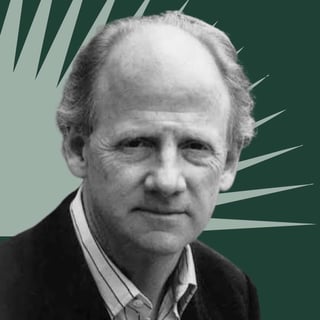
On yesterday’s show, Anthony Badger, author of Prosperity Road, told the story of America’s transformation into a global superpower between 1920 and 1945. Today is the prequel. Joseph Kelly, author of The Biggest Lie, narrates the story of America between 1818 and 1915. It’s what he calls the “prehistory of American fascism”. There’s no prosperity here. Nor nostalgia. It’s a miserable story.
The “biggest lie”, for Kelly, is the myth of white supremacy. He traces it back to a South Carolina congressman named William Smith who, in 1820, claimed that what the founders had meant by all men are created equal was that all men aren’t created equal. The convenient logic of Southern slave-owners. So America didn’t import fascism from Mussolini or Hitler, Kelly says. It’s actually a made-in-America product, the innovation of Southern racists. Thus the American white supremacist Madison Grant’s The Passing of the Great Race was the book that the pagan Hitler called his “bible”, and Jim Crow became, in all-too-many ways, a model for the Nazis.
“Nostalgia is a way of being modern”, Kelly says. Racialized American fascism took its romantic iconography from the Germanic knights and the Scottish lairds so mocked by Mark Twain. By reaching back into the European Dark Ages, the Confederates imagined they had invented the civilization of the future, one they sought to spread across the Western and Southern Hemispheres. So fascism, for all its fetishization of the volkish nation, is actually an early product of globalization. The biggest lie became the South’s “most successful export” — first shipped to the American North, and later, through Grant and the eugenicists, to Europe. A most unprosperous idea. And, Kelly warns, one that is returning to fashion. The prequel threatens to become the sequel.
FURTHER READING
• Joseph Kelly, The Biggest Lie: The Prehistory of American Fascism, 1818–1915 (Bloomsbury, 21 July 2026). Kelly is professor of English at the College of Charleston and has also written Marooned: Jamestown, Shipwreck, and a New History of America’s Origin, America’s Longest Siege: Charleston, Slavery, and the Slow March Toward Civil War and Our Joyce: From Outcast to Icon; he edits the Seagull Reader anthologies for Norton. Biography.
• Anthony Badger, Prosperity Road: America, 1920–1945, from Hoover to Roosevelt — yesterday’s episode, and the book Kelly’s argument hands off to. Kelly dates the reversal of the American fascist experiment to 1932; Badger starts there.
• Jonathan Rauch on Trump and the f word, and his six key moments. His The Constitution of Knowledge is the source of the phrase Kelly uses at 16:16 for the free press, academic tenure and peer review, and a reformed court system — institutions he argues were built in the 1920s and 1930s specifically to fight a politics founded on lying. Note that AK calls him John Rauch twice on the tape; it is Jonathan.
• Susan Neiman, Call It Evil: Understanding the Trump Era (Norton), and Andrew Curran,
1:01:44
45:12
38:000 plays · Oct 21, 2026
51:140 plays · Oct 20, 2026
44:07
54:511 plays · Oct 18, 2026