0 plays · Oct 23, 2026
“Hoover is probably the most intelligent president the United States has ever had. That is not necessarily a guarantee of political success.” — Anthony Badger
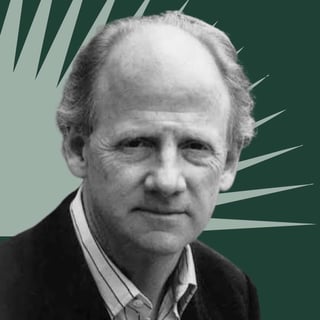
Given our preoccupation with American decline, it’s nice to sometimes remind ourselves of the reasons for the country’s rise to superpowerdom. Anthony Badger, the former Paul Mellon Professor of American History at Cambridge, has dedicated his life to charting the rise of the United States as the world’s leading economic and military power. His new book is Prosperity Road: America, 1920–1945, from Hoover to Roosevelt. There is, thankfully, no mention of Trump or MAGA in it.
Badger’s interest in the United States came through Huey Long, who he read about as a schoolboy in gray nineteen-fifties Britain. What intrigued him was not Long’s showmanship but his delivery. Plenty of Southern populists made grand promises. But the Kingfish actually delivered on some.
In Prosperity Road, Badger reminds us of America’s astonishing domestic transformation in the first half of the 20th century. In 1920, he notes, most Americans’ entire experience of the federal government was the mailman and the occasional man in uniform, and almost nobody paid income tax. By 1945, all Americans had a social security number, worked under the Wagner Act or drew a price support, and lived within sight of a public works project. And they came to trust it. By 1958 some 73 percent told pollsters Washington could be relied on to do the right thing. That trust, Badger dryly notes, is not something that would go on forever.
On Herbert Hoover, Badger is a revisionist without being excessively sentimental. The most intelligent president America has ever had, he says of the Stanford-educated engineer. But, like Jimmy Carter, Hoover was a technocrat with little political touch and an excessively thin skin. Not exactly Huey Long.
Oddly enough, he is less effusive about Roosevelt. Badger describes him as no intellectual, an actor, a patrician who somehow persuaded working Americans he was on their side. “He’s the first president who understands that my boss is a son of a bitch,” Badger quotes a textile worker on FDR.
I asked what we, in 2026, should make of all this. Hoover and FDR were serious people, Badger notes. And they both had a concept of public service that has proved very difficult to recreate in recent years. That said, he reminds us that the New Deal grew out of the near collapse of the country in 1932. So perhaps Prosperity Road hasn’t quite run out of asphalt. Although Anthony Badger is certainly less optimistic about the United States than he was when he fell under the spell of the Kingfish seventy years ago.
FURTHER READING
• Anthony J. Badger, Prosperity Road: America, 1920–1945, from Hoover to Roosevelt (Harper, 13 October 2026). Kirkus review. Note that Badger has reused his own title: his first book, in 1980, was Prosperity Road: The New Deal, Tobacco, and North Carolina — so a search on the title alone will return the wrong book.
• Badger was Paul Mellon Professor of American History at Cambridge from 1992 to 2014 and Master of Clare College from 2003 to 2014; he has been a professor at Northumbria since. Read at Sidney Sussex, took his doctorate at Hull in 1974. His Cambridge faculty page. The boo
45:12
38:000 plays · Oct 21, 2026
51:140 plays · Oct 20, 2026
44:07
54:511 plays · Oct 18, 2026
52:541 plays · Oct 17, 2026