Transcript
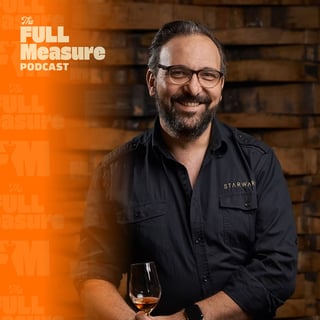
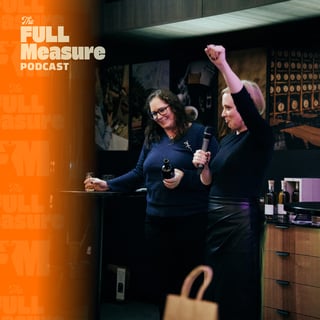
Speaker: Hello, James here from The Crafty Pint and as of today from The Full Measure as well. I'm here with Luke McCarthy, my partner in crime co-conspirator with The Full Measure. Yeah, hello mate. Pleasure to be with you. It's going be great. Yeah, for sure. And apologies in advance. this have a little bit of an inception moment here because this is kind of an introduction to a main podcast coming up in a few minutes, which is kind of the introduction to the full measure, but hopefully it all makes sense. So what's coming up after the break is myself and Will, my right hand man at The Crafty Pint. We sat down with you, Luke, in this same room in different positions a week or two ago and had a bit of a chat about your, I guess, career in in spirits, bartending as well as writing. um And also a bit of a chat about
Speaker: how the the full measure came about and what we're intending to do um with the site. If if you were to try and, you know, summarise the intentions of the full measure in, you know, 20 seconds if or or less, what would it be, Lou? Yeah, well, the full measure exists to tell the stories of the Australian spirits industry. but We want to get around to as many different producers as possible, um share their stories, taste their spirits, tell everyone about it, and hopefully become a bit of a hub and a resource for anyone who might be interested in Australian spirits moving forward. And get people excited right to support their local businesses, their local distillers. um So we won't go into too much detail now because, you know, that's the whole purpose of the main chat coming up later. But now that the the website is live, which it wasn't, you know, when we last chatted, we we probably look a bit more exhausted now because the two or three weeks since we did that thing is relentless getting everything ready. What I'd like to say is that when you jump online you'll see it you get a very clear idea of what we're doing with the full measure but it's not complete there are certain things we'll be adding over time we wanted to get something out there initially now so there are news features there's tastings there's some listings on there we'll be adding bars and bottle shops over time there'll be an industry section coming but you know we wanted to get something out there so people have a clear idea what we're doing and then it will just
Speaker: expand, you know, not sort of infinitely, but expand to where it needs to get over time. um But also just wanted to um shout out to the businesses that have jumped on board to support what we're doing. Obviously, um we started these conversations with businesses maybe, you know, a couple of months before we launched, but at the same time,
Speaker: we were sort of I guess bit of faith we were asking for people like hey yes I've done the Crafty Pint for 16 years and yes you know Luke is a font of all knowledge on spirits and you know a man of integrity but you know we've still not done anything yet and yet we've had a bunch of businesses jump on board which has been very reassuring and I think I did pinch myself a couple of weeks ago and i was like hang on we're like joint media partners with the Crafty Pint for two major industry events and we don't exist yet um So yeah, thanks, you know big shout out to Stu and the team at Voyager for bringing us on board for grain stock in October. Cannot wait, it's going be fantastic. Well, it was amazing last year and the CIBD Asia Pacific Convention in Brisbane in March. So that was cool. But you know they're not the only people that jumped on board. It's been amazing. So when you do jump on the website, you'll find a whole bunch of distillery listings already there. There's a few more who have signed up and sent all the information that might not be there on the Tuesday when we go live because, you know, with we're doing our bloody best. um But I wanted to thank them all in person. Neil Desperandum and Sunshine Sons, the sort of twin operation up on the Sunshine Coast, who are also backing a new campaign, which the details we'll be sharing very soon. Thank you, guys. Bellarine Distillery, they grabbed Luke on the way out of the Australian Distillers Association, and... conference earlier in the year going we want to be the first people to sign up so thanks to Craig and Nikki and Russ down there Fleurieu, Distillery and SA the Gospel Whiskey, Blue Sky Drinks yeah, Starwood Whiskey here in Melbourne, Sullivan's Cove in Tassie, are one of the big ones fantastic to have them with us, Ferno Distillery Bass and Flinders Distillery Antha Spirits, Tin Shed Distilling Co, Hunter Island down in Tassie as well, are fantastic producers of pot stew whiskey so fantastic to have them all with us, thank you We've got Hangten Distilling out on the northern beaches of Sydney. Awesome place, sharing it sharing a space with Half Pace Brewing. The Sensory Agency, Backwards Distilling. Thank you so much to Liam Brie for jumping on board. Naturi Vermouth, Whippersnapper. You were out visiting Jimmy and the team in Perth just recently. Yes, awesome spot. Amazing grain and American-style whiskeys. Get around them.
Speaker: We've also got Puppa Salt Gin as well. Fantastic. Tano Spirits here in Melbourne. Grandad Jack's up on the Goldie. Lark Distillery as well, which is fantastic. The drop in tone to acknowledge. course. It's just solemn ground, solemn ground. So amazing. i was i was down there recently a few weeks ago with Chris, Stu and the team. And yeah, I've got some some amazing stories to tell about Lark Way before. It's very exciting where they're going. We also have Bakery Hill Distillery. Shout out to Andrew and Dave here in Melbourne. And finally St Agnes Distillery as well. The people who you literally can say you wrote the book.
Speaker: yeah i guess so yes the centenary publication they turned 100 last year i was very lucky to to get the nod to write their story so um yeah what an incredible lineup to start with and obviously plenty more to cover moving forward yeah no no thank you so much everyone that jumped on board for launch we know that there's lot more conversations going on board if you do uh look at what we've you know got live so far have a listen the podcast and think yes i want to be part of this want to support this because i guess The more support we get, the more support we can give to the industry. The more that we can do, the more stories we can tell, the more people we can excite, and hopefully the more, well, the more spirits we can sell. At the end of the it becomes that money go around. If you are interested, the best thing to do is to send an email to Craig Williams, craig at thefullmeasure.com.au, and he would love to hear from you. But aside from that, Luke, best of luck with what lies ahead. Thank Luck to you too. think we're going to need it. Yeah, yeah. Hopefully we'll get some sleep at some point. But yeah, join us after the break when it will be us two again sat in different seats in this room with Will and for a lot more on the story of The Full Measure and why the story of Australian spirits matters so much. Yeah, fantastic. Cheers.
Speaker: Cheers.
Speaker: Returning this October, Grainstock is a truly unique conference created for the brewing, distilling and baking industries, and you're invited to be part of the experience. Held at the stunning Witten Malthouse in the Riverina, attendees will be able to take part in grain field tours, a technical symposium, trade show, live demonstrations and sensory tastings, networking with growers, maltsters, brewers, distillers, bakers and industry suppliers from across Australia and beyond.
Speaker: Even better, if you're a brewer or distiller and able to supply beer or spirits to be featured at the event, you'll be eligible for a complimentary all-access conference pass and return bus transport from selected capital cities. Check it all out at grainstock.com.au and hit the Fields and Ferment tab for details on the industry conference.
Speaker: Luke, here we are launching the full measure on the Crafty Pint podcast. It's also going to be the full measure podcast. This weird hybrid thing we've spent a long time creating. all of us have spent a very long time making. um Before we get into what we're doing here, for we'll be playing this on the Crafty Pint podcast. So maybe for our audience who doesn't know you so well, do you want to tell us a little bit about who you are? Yeah, so I have been and around the drinks world for a very long time. I started doing some very average bartending in some very average spaces when I was a lot younger. And then I guess fully properly got into it in around 2012 in a bar called Chez Regime, which was the forerunner to whiskey enowments. was lucky to be a part of the founding crew there. And then from 2013, 14 onwards, everything fairly well exploded with whiskey and other spirits for us as a bar. And then for me, i guess as a spirits writer, um not long after that, I was asked to write the drinks column, or I guess the national drinks column for the agency morning Herald, which is a pretty big role at that point, which I don't think I properly, fully understood when I agreed to it. But um but then, yeah, then everything exploded and got very serious very quickly. And Australian spirits culture, and I guess, especially whiskey culture was exploding. And not long after that, the first book that I was, I guess, commissioned to write, um agreed to get together with the Hardy Grant folks. And and we put together the Australian Spirits Guide, which came out in 2016, right at the, ah I guess, the initial coalescence of
Speaker: what becomes you know this big massive movement of Australian distilling. So everything has just evolved from there through books and spirits judging and and lots of other writing projects in between. So yeah, that's the progression.
Speaker: And how did you land the gig with The Age? Were you writing about spirits elsewhere? Like it's quite a big thing to take someone who's working behind a bar and go, hey, do our regular column. Yes, so my background before that, I'd finished by that stage my Bachelor in Writing Literature at the Union of Melbourne and was pretty aimlessly hunting around for some sort of career. I had started a Master's in Publishing. Books is my passion, that's what I love. I love being in around books. And so was doing some writing for various publications then, some really dodgy poetry reviewing. Yeah. You know, literary. Was the poetry dodgy or was the reviewing dodgy? No, the reviewing was dodgy. The poetry was good. Yeah, I can say that with certainty. And so, yes, I guess it became known to a number of people and around the drink scene that I was doing some writing as well. And then some of the travel that I'd done, I put together some travel pieces And I guess, I think it was actually Simon McGoram, who is a fan. He was the guy who was previously running that position for the City Morning Herald and the H. And I think he just got tied with the growth and the development of some of the bars and projects that he was working on. And he stepped down from the role. And then I guess I was the next cab off the rank. And it was a very funny meeting in Whiskey Enalment where Steve, the editor of Executive Style, came in and asked me some silly questions. still can't believe he actually gave it to me in the end. Because if I think back on my answers now, not what you want to hear from a potential drinks journo.
Speaker: But yeah, thankfully we got on and got the column rolling and then geez, it exploded from there and everything got very serious very quickly. And you've written a number of books since then as well. So it's not just been short form stuff. There's been some pretty involved writing as well. Yeah, I think with that study and background in publishing and literature, it was always my dream, my ultimate desire to get into book publishing. So when those, bizarrely, so much of the stuff around all of this happens at Whiskey Enourment. One of the Hardy Grant editors, Rohana, she came in with her partner. They were looking for a bottle of whiskey and we spent a good half an hour, way too long, dissecting which whiskey they should get. At the end of that, she was like, oh, are you right as well? Are you that guy? Yeah. And I said, yeah. And then from there, she was just like, great. Okay, well, why don't you send me an email? And that just started this ridiculous conversation with Hardy Grant that became the Australian Spirits Guide. And then following that, really digging into the history side of things with Forgotten Spirits, a publication we put out last year with Spirits Victoria. And a little bit before that, or sort of around about the same time, I was publishing with St. Agnes Distillery on their 100-year anniversary, which is fantastic, and turned into a really... amazing deep dive into Australian brandy culture and Australian wine culture and looking at their enormous, significant 100 years of history.
Speaker: yeah And where did the interest in Australian spirits come in? Is that just because what you were seeing coming across the bar at Whiskey and Ailmen or had you kind of you know been interested in it before that? I think the first time I had my knockoff, my first knockoff shift at Whiskey and Almond, Brooke Heyman said to me, what do you want? So you can have any whiskey on the bar to knock off with. And I think it was a bit of a test as well. And so I got a little bit nervous, but then immediately I'd only ever tried one Australian whiskey before I started at Whiskey and Almond. And this would be, so this is 2012.
Speaker: And I i had decided to go for a Sultans Cove, a French oak Sultans Cove. And that for me was a bit of a revelation because my background in in literature and publishing had always been thinking deeply about Australian literary culture, Australian writing. That was always one of my sort of main areas of interest. So to see that we had this nascent Australian distilling culture that no one was really paying much attention to, I thought, oh, this is great. I want to know everything I can about this. And
Speaker: And that was right at this time where so many amazing distilleries in Tasmania in particular, in Victoria, South Australia and elsewhere were just sort of starting to find their feet and starting to release some fantastic product. And it just all married up, yeah, quite seamlessly. It it seems seamless, I guess when look back on it now, but um From there, we really, a bar and as a, I guess, as a Melbourne bartending community as well, we were very keen on exploring and getting behind all of these facilities the people behind them and trying to bring them to a newer audience. And with the column, it just became the thing that I was most fascinated by where was always keen on yeah know exploring to and talking to to local producers and then A Bark or Bad Frankie came along in 2014 as well. Seb Costello you know founded this incredible, I guess, love letter to to Australian Distilling and then really the movement was was was well and truly on then and it became easier and easier for me to just go out and cover their stories and and and you know taste their amazing booze as well.
Speaker: And I guess you know here we are now, 14 years on from your sort first experience, or I guess serious experiences in the drinks world, launching The Full Measure, a publication covering and celebrating the world of Australian spirits. I guess you have partnership between Crafty Pint team and yourself. um I guess from your perspective, what was the appeal of getting on board with a project like this once I... sort of first approach you i know it's something that sort jewels at a whiskey and i would have been saying to you you need to speak to this james smith guy and saying to me need speak to this luke mccarthy guy yeah but once that conversation happened what was the ah appeal of getting on board with the project i think from an australian drinks media point of view it's always been pretty complicated in my time in the industry um i think you know you obviously have spent time in the in the glory days of print um and i sort of just tail end of the glory in tail end i came I came in the very tail end of it where it was, you know, majority of everything I was doing was digital. um So yeah, definitely i think whether it was, you know, thinking thinking about it from a publishing perspective, bartending perspective with something like Bad Frankie, And then more broadly thinking about what sort of spaces are available to cover Australian spirits producers in any sort of depth. There hasn't been any. And I think we've seen an evacuation from the majors in terms of covering spirits. There's really nowhere. Now there's sort of no dedicated people or spaces available to to cover the the industry in any sort of depth. And my frustration is I suddenly found myself after I i left Whiskey and Alma to concentrate more on on writing and publishing was that I was pretty much being asked by international publications to write about Australian spirits, which is great. And it's it's fantastic to hold those positions and to be able to broadcast the Australian spirits industry to the world like that. But um we're still missing them. I was just still missing out on all of the stuff that we could be publishing. You know, there's 600 distilleries in Australia. in Australia now, minimum. And the the bre it the breadth and the depth and the quality across all of those facilities and just how much is sort of not being spoken about and not being written about with any sort of depth, you know, it was like a dagger in my heart, basically, as someone who was so interested in the industry. And so, you know, Crafty Pint has been leading the beer coverage media side of things for for such a long time here. and I've always loved the way you went about it. um God, as a bartender, I read it religiously to to make sure that I knew what the hell I was talking about behind the bar. um
Speaker: But then seeing your coverage of the industry, especially as things exploded and got more difficult, the way that you've been able to work with people, tell their stories and and give people this great insight into what is a fantastic, amazing industry to be around. um you know, the the opportunity to to transfer that same level and depth over to the Australian Spirits landscape appealed instantly and it was a bit of a no-brainer when you were when we started talking. so Yeah, kind of I was kind of surprised when I first, i guess, started entertaining this idea maybe two or three years ago, going, there doesn't seem to be anything out there. And I couldn't quite believe it. And then when you know we spoke to yourself, you're like, no, no, you're right. there is i mean There's other publications out there, but nothing doing what we're planning to do. And and like you say, telling...
Speaker: all the stories and looking at the the broader industry and why why do you think that is that there has been that sort of bit of a sort of donut hole in in the in the middle of coverage of the industry? yeah it's an interesting one because, well I guess for one, as we know majority of the spirits industry is, well, in terms of Australian distillers, in terms of Australian-owned distilleries and spirits products is very small. um So majority of the market, the vast majority of spirits consumed, whether it's ah RTDs, you name it, is owned by you know foreign companies, which is not necessarily ah an enormous issue. And there's a lot of historical precedent to understand how we've got to that point. but
Speaker: It just means that there hasn't been, i think, the impetus there, probably because the finances are difficult. If you're dealing constantly with 95%, you know, mum and dad operations, small businesses that are, you know, pretty much only have anywhere between five and 10 employees max. um It's pretty difficult to sort of build an industry publication around what is an industry that's concentrated in you know, small private hands. And so I think that's probably part of it. If we look overseas, if I look at sort of coverage of UK spirits, you know, the American spirit scene as well, there's so much breadth and depth and size there that I guess industry publications, you know, i can... can manage to find their audience and find funding and and keep it and keep it keep it viable that way. So I think that's probably part of it. um And the other probably reason is is is historical.
Speaker: Like as I found out researching this, spirits have always maintained this complicated space in Australia. And if you look at our distilling laws in particular, so much of our excise and distilling laws have been around about been developed around curtailing, I guess, the the availability of spirits to to Australian consumers. um Not so much on the imported side of things though, as well. So like if you go all the way back to pre-World War II, Australia was the largest export market for Scotch whiskey in the world.
Speaker: So we were consuming enormous quantities of Scotch whiskey And I guess the influence and the development of those industries there really didn't seem to be hampered in ah in the way that what we see with Australian spirits producers and local spirits producers, where there's always been this prejudice um and it's been a colonial prejudice.
Speaker: where Australian spirits have often been seen as inferior to anything coming out of Scotland, in the yeah UK, America. So that's ah that's a big part of it. I think some of it has been born out of Australian prejudice to local spirits products as well. So it's just part of the appeal as well. You're going to help like celebrate and change people's opinions and perceptions on what's happening locally.
Speaker: Absolutely. And that's key, fundamental. It always has been for me to get people to understand that, ah look, I love Scotch. I love Scottish whiskey. It's what I've sort of grown up in. It's what my uncles drank. It's what my grandfather drank. It's what their grandfathers grandfathers would have drank. I can almost say that with certainty. So, but...
Speaker: the you know the The chance that we have right now is to is to get behind people who are making something that is specific to this place where we live and tastes of this place where we live too. And not only that, the people that make it are brilliant, fantastic. lovable likeable characters that just bring so much depth and color to everything they do so uh yeah to have an opportunity to to talk about all of those things and to cover it uh in the sort of depth that the crafty pint has been know applying to to the australian beer scene for many years now um yeah what an opportunity great let's take a break
Speaker: Calling all distilleries and spirit industry suppliers. At the full measure, we're aiming to build Australia's most comprehensive directory of distillers and the industry that supports them.
Speaker: Every listed distillery will benefit from product profiles, venue information, event promotion and more. Not only is it a great avenue to connect with new customers, driving both online sales and cellar door football,
Speaker: You'll also be supporting The Full Measure as we create a new home for spirits journalism. Be part of The Full Measure Directory. Reach out to Craig via craig at thefullmeasure.com.au for more information.
Speaker: Welcome back. And luke for those who are unfamiliar with the world of Australian spirits or distilling, or maybe, you know, know about names like Lark and and nothing else, how would you sort of introduce Australian spirits to to a potentially interested drinker?
Speaker: It's broad. That is the starting point. um It's multi-spirit as well. So that's sort of one of the key complexities get your head around from the start. Unlike a lot of old world producers, say if we think about you know Scottish single malt, Scottish single malt distilleries predominantly produce just the one thing.
Speaker: And they have been doing that for the same with cognac, same with American bourbon producers. they've They've got their style. that It's been established. Yeah. Australian producers, and this is not just a recent phenomenon. This is actually a phenomenon that has been happening here for a long time. And there are reasons for that, which I'll get to, but the majority of just Australian distilleries produce different styles for one. So all of our whiskey producers produce fantastic gin. So if you're keen on whiskey and a friend or your partner loves gin, then you know, you're both sorted in that sense. And the quality aspect to that is is is remarkable as well. So we're not just talking, they don't just do these little offshoot side projects. to to fill time or to plug a gap, oftentimes they're you know some of the best of their category and class as well. So that is super exciting. If you get around a certain distillery, then often you'll find that they produce something hopefully that will cover every flavor base um that you could be after. and
Speaker: Outside of that, um we get to work with incredible local produce here, which is one of the reasons why you know we we make fantastic rum because we have incredible cane growing fields. We have incredible agriculturalists in that space. And again, that's been developing for a long time too. So if you if you love Australian wine, then I hope that you've come across Australian brandy. Once upon a time, Australian brandy was you know the dominant age spirits category. here in Australia, some of the brandy that we produce here is is easily the some of the best in the world. So that is the the initial complexity to get your head around. Oftentimes what we get with Australian distilleries is lots of different spirits categories that they're inspired by and that they chase after. And then they do a really bloody good job of of nailing. So um that's the fun of it for sure. We get all of this amazing produce that that we can work into creating really fantastic spirits. That's a great place to start. um
Speaker: Other than that, it's about to find what do you like and hopefully Australian distillers and producers will have a product that can fulfill that gap for you. Whether it's a really bold sort of gin before gin, whether it's a 20, 30-year-old brandy, whether it's
Speaker: a heated you know heavily peated whiskey that you might be after um through to you know wild, wacky projects alongside that, sort of using native botanicals, using native ingredients to create something that, again, sort of speaks to this place. so Yeah, it's it's fun. It's often boundary pushing as well. So, you know, it's not tied to one style or or or one idea and which makes it fun. It's it's very dynamic. It's very agile industry as well, which is, again, what makes it so good to to go after. And when you talk it being boundary pushing, is it fair to say that a lot of Australian producers don't feel so bound by rules and parameters? It's like, well, we're over here, other side of the world, we'll do what we want, you know? Yeah, that's it. So the rule side of things is is probably something we'll explore on the full measure at some point. ah Rules or the lack of rules is is is a big side of the industry that a lot of people are talking about at the moment. So whether or not we get to a point where we've got more stringent regulations and requirements on what can be produced here and what should be produced here that's something that's definitely going to come into focus over the next few years but yeah other than that we're sort of not encumbered by you know very strict definitions and rules if you go to Scotland and start making whiskey then you know the Scotch Whiskey Association is going to have a very deliberate say about exactly what you can and can't do because that's you know, that's what's been happening there for a very long time. Likewise, if you're producing American bourbon, one of the most stringently sort of um styles that is, you know, very, very clear cut in terms of what it can and can't be. um
Speaker: That's what you have to follow over there as well. Now, if you want to make a single malt in Australia, there's currently a lot of a debate about what that should look like and how it should taste and where it should be distilled and where the wash can come from and all this sort of stuff. Likewise, if you're making a corn whiskey in Australia, you don't have to necessarily abide by the regulations that are thrown down in the States. we've got a lot of flexibility here. Dave Vitale, someone we're gonna speak on the full measure, he likes to say that you can shoot a cannon through our rules and that's pretty true. That's not to say that there aren't rules though, and they are very old. They're very long established going back to 1901, 1906 when the Disolation Act and then the Spirits Act came into play. So there's a lot of heritage to talk about and discuss there. And some of those rules predate anything that you get really out of the UK. So yeah, there's a lot of fascination to be uncovered there, but it just means that in general, we can be pretty free and fun in the way we go about it. I noticed just there, and when I've heard you speak elsewhere as well, you're always very keen to, I guess, emphasise that Australia's distilling industry far predates the current explosion, the last 20, 30 years. Why do you think that's important?
Speaker: Because, well, for one, those laws that we were talked about. um So, you know, rum producers at the moment are having an interesting time trying to figure out how Australian rum moves forward when all Australian rum, if you want to put rum on the title, has to be matured in a barrel for a minimum of two years. um Now, that is pretty well anathema to how rum is produced anywhere else in the world. But it's a regulation that has meant our rum producers have had to adapt and and and I guess alter their their stylistic preferences and even their production to make sure that we meet that that quality standard. um
Speaker: What that means for flavor and distillation technique and you know how you go about it, that's you know that's all critical and crucial there. so But beyond that, I mean, In terms of thinking about Australian spirits more generally, their global opportunity, I mean, we were global players once before in the early 1900s. You know, we were one of the fourth, fifth largest whiskey producer in the world. So um the opportunity from my perspective in terms of understanding this history is it guides where we're going. If we want to continue to be a global operator in the spirits industry and, you know, grow that grow our our presence in that space, we have a precedent that we can look back on.
Speaker: And likewise, to see how various distillers, especially in a brandy space, especially in the whiskey space, went about it in former eras, to see how they were able to create really high quality, matured products. The fact that we you know did it before, we can absolutely do it again. And obviously we are doing it now. There's so much history that we can that we can lean on in terms of what it is to be an Australian distiller and produce Australian spirits. And then, you know, what it is to get Australian consumers involved in that as well. Because in previous, in former eras, you know, 40, 50% of whiskey consumed in certain in certain sections and certain periods of history was Australian. So the the fact that we could potentially get back there in the next five to 10, 20 years is super exciting. For some, it seems like a huge mountain to climb, but the history tells you that we have climbed it before and I think we can do it again, so.
Speaker: So we've touched on styles as being a sort of big hot topic, one that we'll probably cover countless times on the full measure and growth of sort of local and export potential. What are some other big issues in the spirits world that you'd love to like, you think aren't getting coverage and you'd love to sort of touch on? Well, some of the issues are getting coverage, that's for sure, that I think we're going to be touching on. Certainly what's happening in the illicit spirits game at the moment is really complicated and really tricky. Some of that relates to government regulation and exercise. It is something that I guess we'll try and look at. It won't be something that we want to give too much space to because obviously we want to you know report on
Speaker: uh, licent distillers, not illicit ones. Um, we don't want to get firebombed either. Yeah. And yeah, preferably no firebombing of the office would be, would be handy. Um, so yeah, there's that side to it as well, but I mean, other big issues, obviously the regulatory side of things, uh, how we move forward on that. Um, Australia's global opportunity as a spirits exporter, I think is, uh, something that will be absolutely fascinating to watch. We have some distilleries in that space at the moment. Um, and that's just going to continue to grow. And I know there's appetite for, for Australian spirits overseas as well. If you look at what's happening in, in parts of Asia, even you know in the US and the UK, there's definitely a lot of interest in in what we're doing here. So that's going to be a fascinating thing to watch moving forward. And then I guess one of the other yeah really significant things is how our spirits products are going to continue to to match up against you know the best from around the world. I think we're already at that level at the moment. um So how we can tell that story and convince people both in Australia and overseas that what we're producing here is, you know, as good as it gets and how we can really sort of leverage that and promote that story to an Australian and a global audience for me is like it will be of the big things moving forward.
Speaker: And what about, we've talked about some issues and some challenges faced by the industry there in terms of, where the industry is now, what do you see as the as as its key strengths? Key strength is quality, for sure.
Speaker: um That has just been something that's come through loud and proud over the last 10 years, you know ever since Sullivan's Cove won World's Best Singamot in 2014. That was a pretty good quality argument. No one outside of... Japan or or Scotland had previously taken out that accolade and it showed everyone that you know a style that's difficult to you know absolutely nail and compete when you've got you know distilleries from around the world that have decades and decades of of mature stock sitting in in warehouses ready to be put in a bottle. um The fact that a little upstart from from Tassie can compete with them and then beat them is is pretty staggering. And then, you know, ah two, three years before that, Westwinds won double gold at San Francisco. i mean, the awards have just piled up and piled up since. So hopefully Australians are now aware of the fact that we're producing some of the best spirits in the world right here. And then what happens from there is, well, you know, how can we continue to sort of convince people that... um
Speaker: the flavors and the uniqueness of you know our our local products, and our our native botanicals, our you know our woods as well. how how do we put sort of native flavors into spirits products? It's something that probably you don't see as much of, certainly in wine. i know some fantastic brewers have explored that space over the last decade. but That to me is what really stands out, especially when I'm overseas talking to other distillers, writers, other spirits, producers, consumers. When they get a taste of that you know unique Australian flavor that can only come from here, they're instantly transported and they're interestingly and they're instantly transfixed by what our distillers are capable of doing. so That, to me, is ah is ah is a really fantastic strength that will become more and more apparent over the next five to ten years just how unique Australian spirits can taste. And, you know, hopefully we'll get people both in Australia and and internationally get behind that.
Speaker: And I guess aside from how the liquid is looking and tasting, like in terms of the Australian industry, know, how does that, if we go back to that sort of newcomer to the industry and you're trying describe it to them, you know, is is there a vibrant cellar door culture? Is there a vibrant bar culture, you know, celebrating this industry? Yeah, so the cellar door stuff is is incredible. where Look, I'd say the vast majority of Australian distilleries have their own cellar door operations. At least 50% of distilleries in Australia are based regionally as well. So there's an incredible story to tell there around getting people out into the regions, but then for people who are in the regions to get them to support their local producers and and to really get behind them because that to me is yeah absolutely one of the best sides of the story. Certainly early days, whiskey and almond, my early days covering the industry, it was all about getting to these locations and getting to these distilleries. meeting the people and then and then covering what they're up to from there and hopefully getting people really excited to to do the same, to get out to the distilleries and visit them. Because that's, I think, always been one of the big missing pieces in Australia. We're so bloody far away from, and it's not easy for to pop over a distillery in Scotland and and see what they're doing. So to have that same level of knowledge and complexity right here on our doorstep and to see how our you know local distillers are adapting
Speaker: those styles and those ideas to Australian conditions is is really fantastic. So certainly that's something we're definitely going to be doing, popping into a lot of cellar doors and distilleries and and and talking to and meeting the people behind them.
Speaker: We've got a work cut out. Yeah. Big country. and you know and five years on hopefully we're all still here doing this and what what do you sort of hope to have achieved in those five years or what what do you think like something you'd really like to hang your hat on the first few years of the full measure and james i'm going to make you answer that as well afterwards great okay um look getting in there and helping and supporting as many stories as possible for one. So having a space where they can share their stories, promote what they're doing for one. And then also having a space where we can do the same for them. So building that home base where they feel comfortable, supported, challenged at times as well, because we're definitely going be doing that. And yeah fingers crossed, become an industry partner that people can get behind. And then more than anything, I suppose, like getting into the heads of consumers and convincing them that this amazing industry is worth getting behind, is worth getting excited about. And you know the next time they're in the bottle shop or the bar, that it's not complex or difficult or confusing for them to to jump straight behind an Australian product. um
Speaker: That to me is is one of the ultimate goals. If we can be in that space and and make consumers aware of the fact that we have this incredible industry here that we need to get behind and support. um If in five years' time, we're telling that story and we're and we're well advanced and we've got people even more engaged with with Australian spirits, then yeah, that would be...
Speaker: Yeah, that would be the dream, I guess, in in a few years' time. James, what's your dream? Yeah, well, I think echoing one of the things that Luke said there, I think when i started The Crafty Pint, the idea was you know but there was no one cover in covering the Australian craft beer scene, and it was more about...
Speaker: doing that and putting some stories out there and it wasn't necessarily my intention for it to become like this industry hub but it kind of did it became this central point where whether you were a consumer or a retailer or a brewer you had this sort of hub bringing things together so it'd be great to create something like that I think for the full measure um but you know what I've realised over time is i ah my story i love love telling storys I'm a storyteller more than anything else. And yes, we've addressed all manner of issues. We've created campaigns over the years to try and sort of help support the beer industry. I'd like to think if there's a need to do that in the spirits world, we can do that as well. But really, you know,
Speaker: just celebrating the amazing stories that are out there. like As it goes without saying, it's been tough few years for anyone in in you know a booze production or booze retail. But you know especially since we started doing the the Crafty Pine podcast, you know it reminds you of how many amazing people are out there doing incredible things, how much innovation there is. And I think, you know, if there has been that sort of dearth of coverage of of what's happening in that space within the spirits industry, it'd be great to be able to look back in a few years' time and go, we've started to
Speaker: I guess, create that picture, almost like document. I'd love to think, somehow I've thought for a number of years with the Crafty Pint is hopefully in years to come or decades to come, people look back and go, yes, it might be sort of created in this sort of sprawling, organically growing website, but here is the story of Australian craft beer, you know, told in a sort of over however many decades the the Crafty Pint goes on for, but to create something similar for the you know with the full measure as well and actually do justice to an industry that perhaps hasn't been...
Speaker: hasn't been covered or celebrated in the way that it perhaps deserves. Yeah, definitely. Yeah. Wonderful. Let's leave it there. Fantastic. Cheers. Cheers.
Speaker: The Full Measure podcast is produced and edited by Matt Hoffman. For all partnership inquiries, reach out to Craig Williams, craig at thefullmeasure.com.au. To keep up to date with everything happening in Australian spirits, a visit thefullmeasure.com.au and subscribe.