Transcript
Speaker: Most businesses fail. You might as well start one with the lowest possible failure rate. So I'm going to share with you the six businesses with the lowest failure rates. Then i'm going to tell you exactly which one is the best to start this year.
Speaker: These businesses have five-year success rates between 85% and 95%, meaning for one of them, there's only a 5% chance you'll fail, which is absolutely insane.
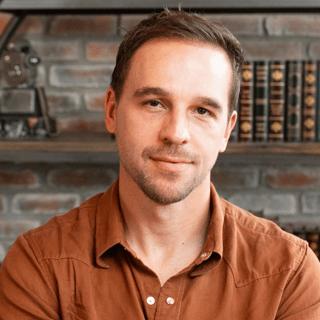
Speaker: I'm Matt Clark, and I've been building businesses for 16 years. My failure rate was slightly higher than what I'm going show you in this video. I started 20 companies in my first two years of business, and 19 failed.
Speaker: Fortunately, things worked out okay. I built businesses with over $450 million dollars in sales and have helped others make over $10 billion dollars in sales so far. I'm sharing everything I know right here for free so you can skip as much of the pain I experienced as possible on your journey to massive success.
Speaker: So the data for the six businesses with the lowest failure rate comes from the Bureau of Labor Statistics, BLS, and some proprietary surveys published from industry associations and some investment firms. So here are the six businesses with the lowest failure rates from worst to best. And even the worst is still pretty darn good.
Speaker: So number six is senior care services, an 85% specific. five-year success rate. Now, most commonly, this business looks like a non-medical sort of home care business, you know, people that are going to help seniors with daily living, housekeeping, meals, bathing, errands, medication, reminders, people going to old people's homes and helping them sort of live their lives.
Speaker: Now, the way to start this kind of business is you would need to hire some caregivers, match those with clients, manage schedules, handle billing, do basic marketing, and it really becomes closer to like a staffing and service business than a healthcare care business. You don't have to have any medical licensing or nurses required.
Speaker: So this business, like all the ones we're going to cover today, you're going to notice that they are basically essential services that we all need in our lives. They're basically facts of the world, and that's what makes these businesses have such low failure rates. So I'd like to show you, because in case you don't want to start one of these businesses, what does it look like with one of these businesses that's for sale today?
Speaker: So I've opened up this site over here called Biz Buy Sell, and this is an established home care business. A lot of the ones that I'll look at just because I did a search, they're kind of in Texas because I'm in Austin, Texas, but you can really find these all over the United States. So this business is asking only $86,000. They say they do revenue of $260,000, cash of $34,000. So $34,000 cash flow, an asking price of $86,000 is pretty darn good. And a lot of these businesses, because they're small and tiny, you know, they're only going to be worth two to four X their cash flow, but that's what this business is.
Speaker: So this is in Austin. It's got three full-time team members, 22 part-time caregivers and admin staff. It says that it's already got some good market position. And they basically have no other assets in this business other than $2,000 in furniture and equipment. So this is an example of a business in this market with only a 15% failure rate or an 85% success rate that would allow you to start with this kind of business if you didn't want to build one from scratch.
Speaker: Now, the number five business with the lowest failure rate is essential home services. And so you commonly think for this category of plumbing, HVAC, electrical, but the most common in this category is actually just residential cleaning.
Speaker: It's got the lowest barrier to entry. It's extremely fragmented, meaning there's not just one company that's sort of built up a monopoly because they have lower prices, bigger marketing, all that sort of stuff. It's a bunch of little tiny businesses doing this sort of stuff all over the US. It's got a simple operational model.
Speaker: You basically got to get some people that want their houses cleaned. You've got to find some people to do the cleaning. You've got to do some quality control, some customer service, some scheduling and dispatching the cleaners out to go clean houses.
Speaker: So which makes this an extremely simple business to build and run. The next most common business in this category is handyman services and then landscaping and lawn care. Now, a lot of people I've heard these days have talked about even private equity funds, buying up, you know, HVAC businesses and that sort of thing. Problem with with those is, and maybe it's also a benefit, is that they require more licensing. There's more regulation. And so if you don't have any of that sort of stuff going on or you don't really want to have to maintain maintain all that, the most common business in here is actually just literally cleaning houses or taking care of people's lawns or doing basic handyman stuff.
Speaker: So here's an example of a business like this that's actually for sale. So says profitable established residential cleaning business for sale. Asking price, 1.55 million. cash flow, grand.
Speaker: That's a little bit more than four times its cash flow is what they're asking for this business. Says the company closed this year with one point 2022 with $1.68 million sales. 2023 to 2 million. 2024, 2.15 million. 2025 revenue projected reach 2.35 million dollars. in sales twenty twenty three jump to two million twenty twenty four two point one five million twenty twenty five revenue projected to reach two point three five million dollars They have 20 cars in their fleet that basically run around with their logo on there. They have W2 employees.
Speaker: They have $36,000 in inventory. They actually have 43 employees. And this one is actually right here in Austin, Texas. Now, the number four business with the lowest failure rate is vending machine routes out of all things with an 85 to 90% success rate.
Speaker: So what does this business look like? You literally own the machines. Could be a snack machine, a drink machine, or some combination that that does snacks and drinks. A lot of these people will start with just two to 10 machines, and each machine costs somewhere between $2,000 and $5,000.
Speaker: Now, the big thing with this, you can buy the machines all day long, but then you actually have to get them somewhere where they're going to get traffic. You have to negotiate to place them in places like offices, warehouses, apartment complexes, car dealerships, schools, gyms, hospitals, that sort of thing.
Speaker: Then the way this business typically works is you give those locations a commission, usually 10 to 20% of your gross sales. Interesting thing about this business is it makes me think about Warren Buffett's first business.
Speaker: I read a lot about Warren Buffett. And when he was a little kid, him and a buddy who was kind of mechanically inclined, they basically bought a pinball machine together. And his buddy fixed that thing up because it was broken. Because, of course, Buffett wanted a deal on this thing. So he fixed the pinball machine up. And they went into a barber shop. And they said, hey, you know, ah Mr. Barber that owns the shop, let us put this pinball machine in here. And we'll split the profits with you. Cost the barber nothing, which makes the sale pretty easy. And then Buffett comes back a week later has just blown away.
Speaker: This... pinball machine is making enough money that's basically going to make back its cost in a month. And so every month after that is basically free money. So he takes this and basically starts running out to multiple different barbers and has these things all over town. That was one of his first businesses. The cool thing about this is it basically is once you get one of these going and that cash flow starts coming in, eventually that is enough cash flow to buy another one then you have two of these things generating twice the amount of cash flow allows you to buy two more and that's the whole nature of how compounding works and he didn't keep selling pinball machines but that math that formula of using some money that makes money to generate more money to generate even more money is basically how warren buffett went from that tiny pinball machine to building a trillion dollar business today so this super interesting business So here's an example of what this business looks like. This one's actually in Charleston, South Carolina, because when I search for vending machine businesses on Biz by Sell, it seemed like somebody was just spamming it with some sort of toy things, which is not really what we were looking for. And so this one has an asking price of $155,000, cash flow of $40,000. So that's about a 4x markup on cash flow.
Speaker: They say it's in a Charleston metro area and 13 strategically positioned vending machine locations. They say they specialize in freezer units for frozen product offerings.
Speaker: And they said all equipment, contracts, and operational systems transfer with the business. The number three business with the lowest failure rate, mobile home parks with a 90% success rate.
Speaker: Now, the most common way this business works is not owning the trailers. The most common is just owning the land and the infrastructure and then renting out the lots to people who own their own mobile homes.
Speaker: Now, this is primarily full-time residential communities, not RV parks. My wife and I, we had an Airstream for a year, kind of during the pandemic, and we would go around the country and sort of park our thing at little vacation spots. That's not typically what this is. It's not going to make this business have a 90% success rate.
Speaker: These are mobile home parks where people actually live permanently or full-time. And so your day-to-day work and running this kind of business, you got to collect the rent. You got to handle late notices and evictions for people who don't want to pay. You've got to pay and manage the utilities and the roads. You got to deal with disputes between people. You got to make sure that place stays occupied, do some sort of advertising and marketing, or at least to keep place nice enough so that people want to stay there and enforce the rules.
Speaker: So here's an example of what one of these businesses looks like for sale. So this is a 64-unit mobile home park on 3.7 acres in New York, actually, Erie County, New York. And so asking price $2.9 million, dollars they don't disclose the cash flow or revenue.
Speaker: It says it has 64 mobile home lots, one large storage rental, and mostly leased, which includes 12 new 2023 Champion mobile homes. They said they've done some upgrades and it's a great business, which they're all going to say it's the world's greatest business.
Speaker: The second business with the highest success rate, 90 to 95% survival rate after five years is self-storage facilities. There are tens of thousands of these in the US. The most common is kind of a long single story building. We've used some of these when we were moving from one house to another and there was a delay or something. So we'd put all our stuff in there for a few weeks. And so long single story building, you drive up to them. It's not one of those ones with multiple levels, non-climate controlled in most cases.
Speaker: There's roll-up door units, super simple, and a metal construction. So this is what makes this business have such a low failure rate. There's not a lot that can go wrong. It's literally ah metal buildings that you drive up to. It's got a security gate and there's locks and that's it. That's basically the entire business.
Speaker: And as an example of one of these businesses, this is in Hickory, North Carolina, asking price $629,000. Doesn't disclose the cash flow. It says the gross revenue is $65,000. My guess is most of that probably drops close to the bottom line. And then the real estate is $450,000. you're getting a significant amount of real estate with this thing.
Speaker: Has 60 units. All businesses have cement slabs, asphalt driveways, cemented, fenced in, full covered, security camera, lighting, everything. And the interesting thing about this in this business is this one is remotely managed. You don't even have to have a person on site doing anything because people sign agreements that say, if your stuff gets stolen, that's your problem. and So this thing is 100% remotely managed. You can't get much more passive than that.
Speaker: Last but not least, the number one business with the highest success rate with 95% over five years, laundromats. There's over 35,000 of these in the United States.
Speaker: Why is there so much demand for these things? Because there's about 130 million households in the And 15 to 20% of those don't have a functioning washing machine. That means 13 to 26 million people have to go do their laundry somewhere. They're not going to be doing in the sink. So they got to go wash it somewhere. And it's at these laundromats.
Speaker: So this typical kind of business is going to have self-service laundry machines. We've kind of all seen these kind of things. Sometimes they'll have a wash and fold service, which is very high margin because it takes zero skill, but they're able to charge a decent amount for that. And sometimes they'll even have commercial accounts.
Speaker: hotels and that sort of thing that will pay to go do their laundry there. And a lot of times they'll have a vending machine. So you could actually combine more than one of these businesses to have multiple sources of cash flow at the same time. Vending machines and laundromats. And then sometimes they'll have little game machines also.
Speaker: An example of this kind of business right here in my hometown of Houston, Texas, has nine-year established laundromat in and the Houston metro area for sale. You can buy this business for $400,000 or less with some negotiation, cashflow $120,000. So not too much more than a 3X markup on cashflow.
Speaker: So it has been there since 2017, generating consistent annual revenue of $200,000, which is also super interesting because it generates $200,000 in annual revenue and seller's discretionary earnings, basically how much cash they can do whatever they want with, of $120,000. That's a 60% profit margin, which in case you don't know, is better than Facebook, Google, and all of the big companies.
Speaker: ah They'll, you know, exceptional, still 30% in some cases, 60%, you can't beat that. So what's the commonality with these businesses? Well, they all provide essential recurring needs. People need to eat some snacks.
Speaker: People need to do their laundry. You got to take care of the old people. People need to store all their stuff in places. And you get the idea. Essential recurring needs. And the big part is, is that people need these things on an ongoing basis. It's not just a one-time purchase. For example, I bought a really nice blender, a Vitamix blender, costs like $500.
Speaker: I haven't needed a new one of those to replace that one in 10 years. These businesses, on their hand, people need to do laundry every single week. People need to pay rent for their mobile home every single month.
Speaker: They need to keep paying every single month to store their stuff. These things don't go away, which is a great part about these businesses is that not only are they essential, but they're also recurring in nature.
Speaker: And once you establish these, like we talk about with a self-storage facility, you don't need a lot of overhead. You can even run that kind of business remotely with zero people and an automatic gate. Bad part about these businesses, in my opinion, is they have kind of high startup costs. $200,000 minimum for a laundromat to $1.5 million dollars for a mobile home park. The cheapest is vending machines, which is maybe $5,000 to $20,000 depending on how much you buy.
Speaker: Other thing is is, that there's a bit of a pain in the f***ing factor. You got to deal with people and especially mobile home park disputes. The question this comes down to, which would I personally choose? My answer is none of them.
Speaker: I want the good with the bad. I want repeat purchases, low pain in the f***ing factor, and super low startup costs. That's been kind of my bread and butter ever since I've been building businesses. If I can start a business that costs $0 to start,
Speaker: That's my preference. And so my preference has been to build e-commerce businesses or SaaS companies, or in some cases, educational businesses. So good thing about e-commerce, you can also find recurring revenue. So I'd highly recommend that if you decide to start an e-commerce business, look for a product with repeat purchases, health supplements, beauty products, food products, all the kinds of things that people just keep rebuying again and again and again. So you don't have to go constantly chasing after new sales like Vitamix.
Speaker: Now, here's the downside with these kind of businesses, SaaS and e-commerce. Your failure rate is going to be higher. I did some research, and the data that I found said that failure rate can be as high as 95% in a consumer products brand in 10 years.
Speaker: But then if you dig a little deeper, why is failure rate so high? First, they have poor online marketing and visibility. They just hope they're going to find customers. They have cashflow mismanagement, just poor running of a business. They lack market fit differentiation. They're the 8,000th yoga mat to the market and they wonder why nobody wants to buy it. They get out-competed by big giants. They enter commodity markets and they have inventory and supply chain issues.
Speaker: These are all things you can solve for. It's not gonna make your risk as low as starting some of these other businesses we've talked about, but I like that your potential upside is very high and your average cost to launch a product is maybe you know five to 10 grand max and you should get some of that back in inventory.
Speaker: So how many attempts at an e-commerce business, for example, could you make compared to a $1.5 million dollar mobile home park? Well, you could probably make about 150 to 300 attempts for the same exact cost at launching 150 to 300 different products, even at a 95% failure rate. That's still 8 to 15 products that could knock it out of the park.
Speaker: Jeff Bezos said, given a 10% chance of 100 times payoff, you should take that bet every time. but you're still gonna be wrong nine times out of 10. So putting a dollar in and having a 10% chance of making $100, that means your expected value is $10 or 10X your investment.
Speaker: So that's the kind of bets that I've been placing in my entire career so far in business. It doesn't mean all these six businesses are bad. They have super high success rates, Startup costs are high in my opinion, but not astronomical compared to some other kind of businesses. So they're not a bad place to look if you don't want to start something from the ground up, such as an e-commerce or SaaS business.
Speaker: So to wrap up, any one of these six businesses is proven to have exceptionally low failure rates. But you can also take what's good about those businesses and apply it into some businesses with lower startup costs and lower pain in the factors like maybe e-commerce or SaaS. Regardless of what you choose, building a business is the way to go. You control your freedom, you build more wealth, and you have the opportunity to make a bigger impact in the world. But who knows?
Speaker: Maybe I'll try one of these businesses out there to see if I can prove myself wrong. I'm only 39 years old and I still have a lot to learn about businesses and life. So comment below if you'd like to see me try one of these six businesses.