Zencastr
00:00:00
00:00:01
Speed1x
Share
Embed
Report

The Yesterday of the Jackal: Joby Warrick Meets Carlos, the World’s Original Super-Terrorist

Keen On
Keen On

0 plays · Aug 13, 2026

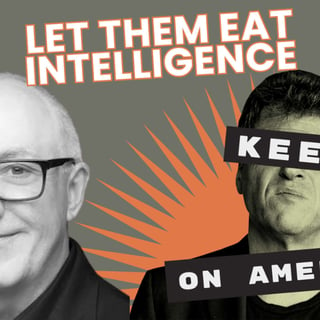
  “He’s not a trustworthy witness to his own story. Everything is ten times bigger and better than it really was — except when he was accused of crimes, in which case he can’t really remember anymore.” — Joby Warrick on Carlos the Jackal   Yesterday, WOLA’s Adam Isacson and John Walsh described how the US government has appropriated the term “narco-terrorism” to justify their Latin American killing spree. Today, we talk the real thing. Pulitzer Prize-winning Joby Warrick [https://www.simonandschuster.com/books/The-Jackal/Joby-Warrick/9781668070550] has a new book out about the rise and fall [https://www.simonandschuster.com/books/The-Jackal/Joby-Warrick/9781668070550] of Carlos the Jackal, who he calls the “original super-terrorist.”   So who was Carlos the Jackal? Originally he was named by his Venezuelan Marxist father Ilich in homage to Lenin. Then he renamed himself Carlos, borrowing from a fake passport the French police happened to find in 1975. While The Jackal came from the London Guardian after reporters spotted Frederick Forsyth’s best-seller on the bookshelf of his London safe house. Ilich (i.e. Carlos) loved it. Anything for attention. Especially from the capitalist media.   His career, as a proxy Palestinian terrorist, was equally audacious. His solo debut, at 24, was the attempted London assassination of Marks & Spencer chairman Joseph Sieff. Two years later, Carlos waltzed into OPEC headquarters in Vienna and kidnapped most of the world’s oil ministers, a terrorist heist that, Warrick reveals, was financed by Muammar Gaddafi.   Then all of Carlos’ yesterdays — and there are many, as Warrick discovers when he interviews him in his French jail. He spent twenty years on the run, mostly barely camouflaged in faded Eastern European hotels. The Mossad didn’t even consider him worth assassinating. By the eighties he had become a gun for hire who’d stopped attacking Israelis. And at 75, in his convent-turned-prison outside Paris, the world’s original super-terrorist cooks his own meals, repeats old leftist slogans, and misremembers everything except his innocence.   In spite of his pathetic fate, Carlos matters because, as Warrick notes, the Jackal model is back in fashion. Russia and Iran now hire petty crooks on Telegram for a few hundred dollars to firebomb synagogues or assassinate dissidents. Gaza’s tragic hopelessness echoes the post-1967 conditions that bred the first wave of Palestinian terror. Social media is now infested with wannabe violent influencers. The day of the Jackal, then, is not only our history but also our future.   Five Takeaways   •       Interview with the Jackal. Warrick negotiated for over a year — with Carlos, then with a French government determined he not be glorified, since his gravest crimes were against French citizens — for roughly ninety minutes in March 2025, no recorder, no camera, notebook only. The prison is a converted sixteenth-century convent outside Paris where the Nazis once tortured members of the Resistance; inside it, Carlos remains the big man on campus — guards call him Carlos, not Ilich, and he keeps a large cell, cooks his own meals, and browses the internet. At 75 he is natty, polyglot, charming — and stooped, forgetful, repeating himself into what Warrick calls a fog of old memories. As a witness he is worthless: everything ten times bigger and better than it was, except the crimes, which he suddenly cannot recall. •       Ilich, Carlos, Jackal: An Accidental Brand. His ardent-Marxist father named his three sons Vladimir, Ilich, and Lenin, after the founder of the Soviet Union. “Carlos” came from a fake passport — Carlos Martinez — that French police happened to seize in 1975; the pudgy dark-glasses photo the world memorized was a passport fake he remains embarrasse