Transcript
Speaker: All right.
Speaker: Welcome to Hiring Great Talent podcast.
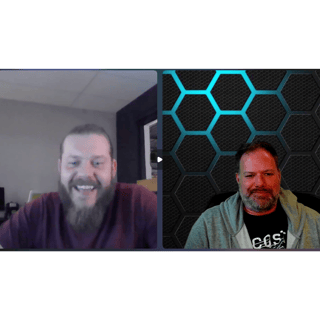
Speaker: Today we have Andrew Beers, who is vice president of engineering over at Emporos.
Speaker: He's somebody that OpenArc has worked with one way or another for, I think, about 15, 16 years, something like that.
Speaker: So, Andrew, I appreciate you coming on.
Speaker: Yeah, thanks, Scott.
Speaker: Happy to be here.
Speaker: So even though we've known each other a long time, I did a little bit of research, checked out your LinkedIn profile before we get on.
Speaker: So even though this podcast is about hiring great talent, there is something else I did want to ask you about.
Speaker: I noticed that you are a hydroponics enthusiast.
Speaker: Can you tell me a little bit about what that means?
Speaker: Yeah.
Speaker: Growing plants indoors in water and
Speaker: really stemmed from what are some better ways of growing food with less water, less bus.
Speaker: Anybody that's had a garden, especially out here in the Northeast, it's deer season, bunny season, and your tomatoes are just doomed.
Speaker: So grow them inside.
Speaker: It's been pretty successful.
Speaker: It's a lot of fun, and I think it's a good hobby for anybody who's kind of interested in doing some gardening who doesn't really want to fight climate or the critters.
Speaker: What out do you grow?
Speaker: I've got some lettuces.
Speaker: I've got strawberries, some tomatoes.
Speaker: I've got peppers down on a shelf.
Speaker: I run a YouTube channel called Inspired Produce.
Speaker: Just kind of showing people tips and tricks around how to get things to grow, how to maybe cut that grocery bill in a little bit.
Speaker: And it's more convenient, too, right?
Speaker: Don't have to run to the grocery store to make a salad.
Speaker: I can do it off of
Speaker: stuff growing on my countertop.
Speaker: Now, I assumed the setup is probably a lot, but once you have it set up, would you say it's easier than traditional gardening?
Speaker: I would say even the setup.
Speaker: I mean, if you're wanting to do it yourself and build your own, you can do it with recycled materials that you get.
Speaker: But if you want to drop a little bit of money, you can get some aero gardens, garden, or stuff like that.
Speaker: And you can trade that for convenience, right?
Speaker: Cost for convenience.
Speaker: And then it's mostly plug and play nowadays, right?
Speaker: Like follow the assembly instructions.
Speaker: It's an hour set up maybe.
Speaker: And then maybe half hour maintenance every other week, give or take.
Speaker: I've been thinking about gardening, but it seems a little too daunting to me.
Speaker: So maybe offline, I'll talk with you a little bit more about this.
Speaker: And what was your YouTube channel about it?
Speaker: It's Inspired Produce.
Speaker: Inspired Produce.
Speaker: So anyone interested in hydroponics as well should go ahead and check that out.
Speaker: Back to the format, I suppose, of the conversation here.
Speaker: So I'll go ahead and compliment you in that you have been one of the most effective hiring managers I have seen throughout my career.
Speaker: That's not to say you were the easiest hiring manager we have ever worked with, but definitely someone very good at identifying talent.
Speaker: What advice would you offer to hiring managers out there in order to make sure you are being effective?
Speaker: Yeah.
Speaker: I mean, you got to know what type of person you're looking for.
Speaker: As managers, leaders, we all have our ideal employee type.
Speaker: And know what that is, right?
Speaker: Know your strengths, know your weaknesses, know what you need to cover your weaknesses and know what you need to go fast with your strengths.
Speaker: Personally, it's one of those never compromise.
Speaker: I do look for some pretty great talent.
Speaker: Anybody that's interviewed with me knows I can be a little daunting.
Speaker: But what I'm always looking for is that drive and passion above almost everything else.
Speaker: The more senior that you get,
Speaker: you know, you want to be able to have more of those skills around delivering value quickly.
Speaker: But the more junior you are, it's like drive and passion is almost the most important piece.
Speaker: There's an aptitude, but drive and passion is what drives success.
Speaker: How do you suss that out?
Speaker: Like how are you, you know, in your interview processes, what are some of the ways you try to find out about a potential candidate's drive and passion?
Speaker: Yeah, I mean, if you're a technology leader, get them talking about what's the thing you need them to do, right?
Speaker: If you're looking for developers, they should be able to give you litanies of examples of projects that they're working on that they're excited about.
Speaker: There's this new cool technology that person XYZ is discussing.
Speaker: And I did this thing with it.
Speaker: And so that would be if you're looking for a developer and you can tell that they've got that passion.
Speaker: Some people are scared off by moonlight projects.
Speaker: And I guess my piece there is those moonlight projects are what gives your resources those bleeding edge skills that allows you to compete at levels that you've never been around, right?
Speaker: As a serial entrepreneur with a number of successful exits under my belt, it's one of those...
Speaker: you know, you want to look for that success, look for that drive, look for that talent and get those results out there.
Speaker: So that's what it takes.
Speaker: It's interesting.
Speaker: You mentioned that, that, that was brought back a core memory of one of our initial interactions and a client that had some concerns over, um, uh, uh, I think one of the company, I want to say owl something, uh, uh, it was, uh, it was an early LLC that I had that, uh, I did some freelance consulting and it came down to, uh,
Speaker: You know, if you're going to learn a new skill, find somebody who's willing to pay for you to learn it, right?
Speaker: And so somebody wants a new shopping cart or somebody wants you to integrate their nowadays Shopify, PayPal, all of that fun stuff.
Speaker: You can use some of these new technologies and plug them together to deliver things that are going to be great value for small mom and pop shops or manufacturing or factories or small software kits.
Speaker: Um,
Speaker: And that was what I had.
Speaker: And it was a moonlight.
Speaker: And it did intimidate some bigger corporate types.
Speaker: Right.
Speaker: And I think that that's something that people applying for jobs can really think about is don't apply for things that aren't you.
Speaker: Right.
Speaker: Like if you're not a big corporate type, don't go apply for big corporate positions.
Speaker: There's plenty of startups that would be happy to have you.
Speaker: And I think that's one of those.
Speaker: Know your fit.
Speaker: Use your fit.
Speaker: What would you say to, you know, if you were working for a company and, you know, your boss or somebody was showing hesitation for somebody that had a company on the side that was moonlighting or whatever you want to call it, what would you tell them as to the reasons why you maybe shouldn't be scared away of something like that?
Speaker: You want to make sure that they get excited about what you're putting in front of them, right?
Speaker: At the end of the day,
Speaker: that moonlight that they've had has been to scratch an itch or solve a curiosity or learn a skill that they wanted to be able to apply.
Speaker: And most times, like that refresh, that step away, come up with an agreement, talk about it, be open about it.
Speaker: Instead of kind of being like, oh, no, like we just don't talk about that.
Speaker: Your time is your time and my time is mine.
Speaker: Conversations.
Speaker: And I think that those boundaries can help to build confidence.
Speaker: And at the end of the day, there's going to be trading of skills that you're getting stuff for free there because they're spending more time of their own free time.
Speaker: And if you notice that you start to get out of bounds with them, have that conversation.
Speaker: Yeah.
Speaker: But it's an ebb and a flow, right?
Speaker: It could be just the same as somebody getting into cooking too much and spending too much time trying to perfect ragu as it could be, you know, somebody doing a little bit of studying about computer science on the side.
Speaker: Absolutely.
Speaker: I mean, that's an excellent point.
Speaker: Like everyone has their side projects.
Speaker: Everyone has their hobbies.
Speaker: Everyone has their things to do.
Speaker: You know, you could definitely look at it as valuable, but hey, and they're also spending their free time getting better at the things that we're going to want them to do.
Speaker: And if I could offer my humble advice on top of yours, I would say, just kind of continue to say, like, don't make assumptions.
Speaker: And that's what I've tended to see is like, you know, people will see somebody that's moonlighting or has a different project and the immediate assumption is, oh,
Speaker: well, they're not going to be fully dedicated to us.
Speaker: It's like, you know, talk to them, have that conversation, get a sense of, you know, what level of time they're going to be spending.
Speaker: And in most circumstances, you know, they're going to go for the place that has the paycheck.
Speaker: And hey, if their company takes off and becomes the next big thing, then you can just brag that that person worked for you for a little while as they were making it rich in the technology field.
Speaker: Yeah.
Speaker: And it's like my personal thing comes down to it's time with my kiddo, right?
Speaker: That's why we do the gardening stuff together.
Speaker: And he's been getting into some code, right?
Speaker: But at the end of the day,
Speaker: you know, taking a step away from the day to day is important too.
Speaker: Absolutely.
Speaker: So, you know, the job market out there now, you know, see a lot of candidates on the market, you know, definitely switch to more of a, what we call like a client's market as opposed to a candidate's market.
Speaker: I've been putting some polls out there and I appreciate the votes you've given me on those.
Speaker: But now that I, now that I have you recorded here, what's some of the advice that you would offer candidates that are coming your way
Speaker: or you know just as they're kind of looking for opportunities in general what can candidates do uh to stand out to hiring managers to yourself from from a resume perspective during the interview like what are what are the things that that you look for yeah i mean the the resume side is target to what you're going after um
Speaker: One of the things that'll scare me off is when you have a candidate that literally has 172 technology skill sets on there.
Speaker: And it's like, I bet you are hyper optimized for Google.
Speaker: This is not great when you actually get your resume in front of somebody.
Speaker: Another one is like when you get your shot.
Speaker: And this is one of the things that I think people too often look over is you get your shot, you got in front of somebody, make sure you don't squander it.
Speaker: Make sure you can do what you're selling.
Speaker: And I think you see some challenges around that where people are shooting for that next year and it's like make sure that you can do some of those like if you can say I'm an expert at coding I can code if I'm an expert at networking I can do networking diagrams and I can talk about networking solutions.
Speaker: And I think that that's the follow through, right?
Speaker: So getting your shot, there's plenty of hacks out there on how to get your shot, right?
Speaker: Handwritten notes, make sure you do your research, narrow your skillset to what they're shopping for.
Speaker: But once you get your shot, make sure that you can make the most of your shot by proving that you can sell and realize what you originally were pitching with your resume because it's a value generation market.
Speaker: what value can you generate for me and how can you efficiently do that more so than the other person who's charging 5k less than you?
Speaker: Right.
Speaker: So why do I go with you?
Speaker: Can you think of a time where, you know, a candidate might've done that really well, um, where they got the opportunity to have a conversation with you, got the shot, so to speak, and, you know, really backed up what they had on their resume.
Speaker: Yeah.
Speaker: Um,
Speaker: I think that there's probably a handful of my ex-colleagues or current colleagues that have been around with me for a long time would be like, I better dang well get a shout out.
Speaker: And this is the unnamed shout out for all of them.
Speaker: You know, you do come across people that they get that shot.
Speaker: They prove that they have that drive.
Speaker: They prove that they have that passion.
Speaker: And then they follow through with, I said I can code.
Speaker: Watch me code.
Speaker: And I guess that's where it comes down to if you've got spare time on your hands, like maybe lay off the YouTube a little wee bit more and maybe drive a little wee bit more towards, you know, Code Academy or Udemy and bust off some of your Git skills and start working on a personal project or an open source project.
Speaker: Sharpen those skills because that's what's going to be the differentiator between people who are landing the positions that are out there and people who aren't.
Speaker: Do you, what are you, what's your opinion on, you know, tests, coding exercises?
Speaker: You know, do you utilize those much?
Speaker: Do you put much value in anything like that?
Speaker: You can probably look at my checkmarked career in Glassdoor to kind of find the answers to that.
Speaker: But it's, I'm a big believer in,
Speaker: talk through code, watch people code.
Speaker: If you know it, you can do it.
Speaker: If you're nervous, it's like shake that off, right?
Speaker: I always tell people interviews are the opportunity to learn on both sides, whether it's succeed or fail, right?
Speaker: Both parties walk out of it having experienced at least each other for a second.
Speaker: And that comes down to
Speaker: either a coding skills challenge or an experience in what you've done in your career and what are we offering as a company.
Speaker: And so it kind of gives you an idea of some options out there, even if you don't do anything like successfully out of it.
Speaker: But when it comes to the coding skills thing, take home stuff, even verbal things, it's becoming increasingly easy to memorize a script and kind of be able to talk the talk.
Speaker: And this is one of those, anybody who's watching this, this is like, hey, I'm really good at memorizing scripts and I found your interview out there and I can ace it.
Speaker: It's like, you're not going to get past the coding part.
Speaker: So please don't gum up that system.
Speaker: Like cheating systems to get further along, you're just going to get filtered out.
Speaker: That's why we do what we do.
Speaker: And if you don't get filtered out, if you can't deliver results, it's like you've just created a bigger problem further down the pipe.
Speaker: And so...
Speaker: Anybody looking at quick, easy fixes there aren't.
Speaker: Like, learn the skills, go after it.
Speaker: But, yeah, it's a fun time, though, if you do it right, right?
Speaker: Like, go after it because you love it.
Speaker: Correct me if I'm wrong, because this is a piece of advice I have offered that I believe in, but you can let me know if you think a little bit differently.
Speaker: I've always recommended that any time you're talking about technology on an interview process, and that's whether you're whiteboarding, live coding, just talking about your skills and background,
Speaker: to talk as you think, to talk about your logic, talk about your thought process.
Speaker: And my recommendation is that's what they're looking for.
Speaker: No one really expects someone, it's always great when it happens, but no one really expects someone to be able to put pristine code on a whiteboard or pristine code
Speaker: in a live coding section.
Speaker: What they're looking for is how you think through problems, how you solve problems, and also maybe some coachability.
Speaker: If they offer you a tip, how you take that.
Speaker: Was that something that you would say, I'm offering good advice or what would you add to that?
Speaker: I think that it's good advice, but I think at the same time, get a for loop down.
Speaker: If you can't write a for loop in whatever language they're shopping in,
Speaker: Unless it's a junior level position, you should probably think about like, huh, this is a senior.
Speaker: I should be able to probably pretty immaculately write some C sharp just off the cuff in a notepad.
Speaker: And I think that there are definitely elements of coachability, right?
Speaker: Especially for mid-level positions, junior level positions, your ability to kind of think on your feet.
Speaker: I would say get code down.
Speaker: I've seen people lock up and they'll freeze in trying to get the perfect solution.
Speaker: And that lock up isn't doing them any favors.
Speaker: It's like start.
Speaker: Like most things are either some form of recursion or some form of a loop or some form of a data structure, whether it's a tree or something.
Speaker: a dictionary or a hash table.
Speaker: It's like there's only a handful of tricks.
Speaker: And if you know the general tricks, like you can pick the wrong one.
Speaker: But if somebody is looking for a tree and you pick recursion, it's like you're at least showing them that you know some data design patterns and you can put some code down.
Speaker: And this is one of those know your position, right?
Speaker: And I think that there is some variability out there and position definitions.
Speaker: But like if you're a senior, you're not spending all day on Google.
Speaker: And I know that that has been one of my most contentious positions and it's just one of those like you're meant to be efficient you're meant to get code down and IntelliSense, you can lean on it when you need to but for some of the basics, make sure you can put that down.
Speaker: You've kind of mentioned a couple of times differences between junior positions, mid-level positions, and senior positions.
Speaker: Can you expand on that a little bit more as it relates to kind of the evaluation and interview process?
Speaker: Like, what are you looking for on the junior side?
Speaker: What changes on the mid-level?
Speaker: And then what changes as you get into more senior-level positions?
Speaker: Yeah, and I think that this is something that changes a bit leader to leader.
Speaker: So I will say this isn't a everybody has the same viewpoint.
Speaker: But my view is your junior is I'm freshly minted out of either a code camp or a university, taking those fledgling steps into working on a scrum team.
Speaker: That's like your first year to three years of experience.
Speaker: Some people pick it up a little bit quicker.
Speaker: Some people don't.
Speaker: And that transition period from junior to mid is really the ability to start taking on bigger, bigger, bigger tasks without that handholding, without that coaching.
Speaker: And so I would consider a mid is kind of your power band of your worker bees, right?
Speaker: These are the people that produce code.
Speaker: These are the people that
Speaker: They might have some opinions, they might ask some great questions, but they're not looking to architect and design full structures or lead features.
Speaker: They're just like, what's the next thing I need to do?
Speaker: Okay, I need to take this API that writes this data to disk and has this UI that does this thing, right?
Speaker: They are contributing on these features.
Speaker: The transition period from mid to senior, I think, is where you start to pick up more of that mentorship accountability.
Speaker: I kind of normally frame it as your seniors are your feature leads.
Speaker: This is somebody that takes that whole, here's the handful of pages, here's the handful of APIs that you need to deliver to get this, I call it a statement of customer value.
Speaker: What does it take to get that shipped?
Speaker: And that feature lead is managing that epic, right?
Speaker: What am I delivering that the customers care about?
Speaker: And that's what the senior's doing.
Speaker: Senior's pretty broad for me.
Speaker: Some people start to talk about principles and other things like that.
Speaker: The only distinction I really make is senior to lead.
Speaker: So my senior salary band is pretty broad.
Speaker: When you throw in HR is you're a working manager, right?
Speaker: That's how you get lead.
Speaker: I keep it narrow.
Speaker: I'm a firm believer of flatter structures can get more results out.
Speaker: But, you know, the transition periods between those seniorities is really
Speaker: How big of a thing can you take and get done to deliver value for a customer?
Speaker: And I think one of the things that doesn't get enough attention, and I'll put a plug in there for some of the universities that I work with, you know, Slippery Rock alum here.
Speaker: But, you know, look at your internships too, right?
Speaker: There's a lot of kids out there looking for opportunities to break into industries.
Speaker: And I think not enough companies are really taking shots to bring on interns.
Speaker: for the companies that are picking up interns, like congratulations, thank you.
Speaker: The university systems, thank you.
Speaker: But, you know, interns can be invaluable when you start to look at, you know, they can pick up some tasks that maybe you wouldn't make progress on.
Speaker: And you start to also get a bit of a talent farm and some contacts that when you do have that senior or mid-level position open or that junior level position open, you might have more people that,
Speaker: you've had exposure to pick up.
Speaker: Speaking of education, do you have any thoughts, preferences, because you also mentioned like boot camps and things like that over, you know, university education, boot camp, some combination between the two?
Speaker: What's kind of been your experience working with interviewing candidates, working with people from these various educational backgrounds?
Speaker: Yeah, I've got a story that I like to tell of I hired a pizza guy because he knew what f of g of x was just for mathematical functions.
Speaker: He was delivering pizzas.
Speaker: I've had a math degree.
Speaker: So I think it really comes down to what are you willing to put in?
Speaker: So your boot camp people, you know, they're six weeks, right?
Speaker: Or six months, or sometimes they go for two years, right?
Speaker: It depends on what boot camp you go for.
Speaker: And think of it as it's a cramming method for what otherwise should probably be a good solid four-year degree.
Speaker: The bachelor's degree side, you're learning more of the theory, right?
Speaker: you're going to stand up better to technology that continues to evolve.
Speaker: Now, not saying that if you do a bootcamp, you can't do that.
Speaker: It's more of, you've got to put your own time in to understand that theory to evolve with technology.
Speaker: You know, we look at some of the latest paradigm shifts, like we've got AI that's coming out right now.
Speaker: And, you know, we're all kind of reacting to that.
Speaker: Anybody that's like, I'm an expert on prompt engineering.
Speaker: It's like, congratulations.
Speaker: It's been out for six months.
Speaker: But, you know,
Speaker: we all have to evolve with technology.
Speaker: And I think that your more traditional computer science degrees, you're going to get more efficient coders out of that.
Speaker: Your boot camps, they can be really good, but that's where that passion and that drive has to make up that gap in the traditional education.
Speaker: But one of my greatest engineers is a history major, right?
Speaker: So, and he's one of my closest friends and a phenomenal engineer.
Speaker: Like when you kind of look at that, you start to get into this.
Speaker: Like it doesn't matter.
Speaker: It's the person that makes a good engineer or a good QA or a good developer, a good DevOps.
Speaker: It's not necessarily their education that makes them good.
Speaker: So go get the education that you feel is right for you, that you feel engages with you, that you can take something away from because all of it is what you make of it.
Speaker: So similarly, as we were talking about, you know, don't avoid people who might be moonlighting, you know, don't avoid people who have different educational backgrounds or even different career experiences, whether they be a pizza delivery driver or a history major.
Speaker: It's more about the individual.
Speaker: And I absolutely agree with that.
Speaker: I think that is a really interesting thing.
Speaker: you know, kind of powerful message and a good message for people who are here to might be intimidated.
Speaker: How am I supposed to compete in this market to hear, you know, not easy hiring managers such as yourself still very much willing to look at people from different backgrounds and different experiences and really evaluate them as a person.
Speaker: I did want to get your opinion on something else that you mentioned there.
Speaker: And that's kind of like
Speaker: you know, emerging technologies, you know, and then obviously AI being the hottest, newest button on that.
Speaker: But feel free to expand on any emerging technology.
Speaker: You know, what are your thoughts on some of the things that are coming out?
Speaker: What do you think new technologies like AI, you know, what effect are they going to have on the technology industry writ large on development?
Speaker: You know, and I know we're both speculating, but I'm just curious to know your thoughts.
Speaker: Well, I mean, it's one of those, as you mentioned before, we, you and I have been working together for 16 years before Open Art there was Sapphire and right, like, so like relationships are going back decades at this point.
Speaker: And, and I think through that we've seen this ebb and flow of technology will take a couple of steps forwards.
Speaker: And it'll be running towards something and then we'll see a recession where we'll see more field more positions like laid off and stuff and then.
Speaker: That will spawn the next wave of innovation, which will end up generating a rush and it's like anybody that's been with this long enough it's like knows that it's just.
Speaker: 2006 2012 2018 and then up wait 2023 now the weird thing is right now is we kind of hit this like recession but the recession really came from holy crap we've got this thing that can make everybody so much more efficient and it was also paired with a lot of big tech over hiring um
Speaker: And there was some driftwood, like, I'm not going to lie.
Speaker: Like people are like, oh, but there were people that were double employed and overhired, overemployed.
Speaker: Yeah, there were.
Speaker: But I think there was also a lot of overhiring, right?
Speaker: If you couldn't put a position out there and not keep them busy, like shame on you.
Speaker: So, but when we look at like AI in the terms of that technology ebb and flow, I think that we're currently in that we're rushing towards something.
Speaker: So we're starting to see that wave of innovation.
Speaker: We saw a wave of layoffs.
Speaker: And so that forces people to like, oh crap, I got to put food on the table.
Speaker: And then you're like, oh, hey, I've got money.
Speaker: So investors put money into it.
Speaker: And then it's like, oh, this wave of innovation.
Speaker: And, you know, there's a lot of people that think that they're, you know, brilliant oracles that are saying like, oh, it's going to be another dot com bubble.
Speaker: And it's like, congratulations, you've seen the pattern that's been happening for the last three decades.
Speaker: And.
Speaker: you know, I think that you're going to see this big rush to AI and there's going to be some novelty companies that aren't going to make it.
Speaker: There's going to be some novelty models that might have some neat ideas, but they're not going to survive.
Speaker: And then you're going to have some of the other companies like the next Google already is here.
Speaker: And it's just picking which player out of the thousands that are now out there.
Speaker: And, and people are always like, well, if I was around when Google was at the beginning of technology and it's like,
Speaker: Next, Google's here.
Speaker: And people are like, oh, well, Google already in its garden.
Speaker: It's like, it's not the big general AI models that are going to be the boom.
Speaker: It's going to be that model that's the go-between between human DNA and CRISPR and figures out how we live forever.
Speaker: It's going to be that thing that it's like, oh, you want your hair color to be purple.
Speaker: It's like, here's a shot.
Speaker: It's those AIs that are going to be the ones that are the ones that are the models that revolutionize things.
Speaker: the productivity hacks and tricks of the linguistic models of choose the next word.
Speaker: Like that's what it's doing, right?
Speaker: It has modeled human language down to a tree of who's the next word oversimplifying.
Speaker: So don't, don't, but it's, it's one of those, we see that gold rush to AI right now and people need to understand we're all going to that gold rush and you all got investors that, that let you go on that gold rush.
Speaker: And,
Speaker: we will see a pullback from that gold rush in the next couple of years when some of the money starts to dry up and people go back to investors and say, I need more money.
Speaker: That I need more money, only a fraction of them are going to get that money because we'll have started to hone out what are the good ideas and what are the bad.
Speaker: So like I would say anybody that's sitting around saying like, oh, I'm not building an AI product right now.
Speaker: It's like,
Speaker: okay you got a little bit of time we're in the first wave right like the first phone that we were all typing on was a blackberry like who has a blackberry still so the first wave of innovation yeah it's it's that first wave of innovations out there and it's it's let's not be easily scared off it's
Speaker: Let's stick with it.
Speaker: Keep an eye towards it.
Speaker: Know that there's a bubble booming.
Speaker: And it's like, if you're in the bubble and you're making money from the bubble, enjoy the bubble.
Speaker: It's like when the bubble bursts, there will be another bubble that comes along behind it.
Speaker: It's like you can bubble surf, but it's one of those build cool things, right?
Speaker: Like help.
Speaker: If your product doesn't make it, at least make sure that you have forwarded the overall technology by what you've shared.
Speaker: Like turn to Stack Overflow, turn to blogs, turn to whatever, right?
Speaker: Share what you're knowing or what you're learning.
Speaker: Yeah, I mean, in the 10 plus years even that I've been involved with it, I've been through many, this is the next big thing.
Speaker: This is the next big thing.
Speaker: And I think to your point, like, yes, I think AI is the next big thing.
Speaker: But after AI, there's going to be another big thing.
Speaker: I'm certainly not going to be the one to actually predict or know what that actually is.
Speaker: But I'm comfortable in the sense that I've seen the cycle and we've seen the cycle enough times to know that, you know, there will be something else.
Speaker: There will be something else.
Speaker: And maybe it's iterative of AI.
Speaker: Maybe it's not.
Speaker: Are there any other kind of, you know, emerging technologies that, you know, you're paying attention to?
Speaker: Yeah.
Speaker: So some of the data exploration and content generation pieces are,
Speaker: Not all of them are necessarily AI, but some of the, how do we look at data?
Speaker: How do we look at data manipulation?
Speaker: How do we use data to make things actionable?
Speaker: I will say that for any tinfoil hat wearers out there, it's like things are starting to get scary with what you can do with the amount of data out there.
Speaker: So anybody that tells you like, hey, this is what your data is being used for.
Speaker: Yeah, seriously, this is what your data is being used for.
Speaker: I will say a lot of the robotics stuff that's going on out there right now is really exciting.
Speaker: Um, you see some of the stuff coming out from Boston dynamics, you see some of the stuff coming out from Tesla.
Speaker: And even though some of the Tesla stuff is early days, you look at trajectory where they're, they're headed.
Speaker: You look at some of the Honda robots and, you know, uh, my wife, you know, their work is using one of those, you know, little robots that can go through, uh, and do some inspection stuff so that, you know, humans aren't having to put themselves at risk.
Speaker: And it's,
Speaker: It's interesting when you start to think about what robotics assistants can do.
Speaker: You see things about exoskeletons that are helping people lift lots of objects.
Speaker: And you think about these traditional hard on your body jobs.
Speaker: You could maybe have an exoskeleton that's helping you lift those bricks.
Speaker: Or instead of you having to swing that hammer, it's just like, and it's part of your exoskeleton that you're carrying around.
Speaker: And people say that it's like, oh, that's super far out sci-fi.
Speaker: And it's like, yeah, but it's sci-fi that you can find on YouTube of people actually doing.
Speaker: So YouTube is the greatest time waster and one of the greatest shares of innovation.
Speaker: Do you let your kid watch YouTube?
Speaker: Monitored.
Speaker: Monitored, we let him watch YouTube.
Speaker: It's pretty exciting.
Speaker: He's learned YouTube can be a source of information.
Speaker: And, you know, people out there using YouTube for cat videos, it's like, that's great for stress relief, but, you know, limit that.
Speaker: Use YouTube for a driver for innovation and learning.
Speaker: And, you know, my six-year-old, you know, monitored heavily while using YouTube, you know, but it's exciting what he'll want to go research and what they learn.
Speaker: And if you let them use it as a tool for exploration, it's kind of really interesting to
Speaker: what directions they'll go with it.
Speaker: Right.
Speaker: And you learn stuff too.
Speaker: It's like, I, I, the things that I've learned in the last six years that like, as a, you know, I'm a technologist, I'm a background computer scientist.
Speaker: Right.
Speaker: And it's like, I've learned things that it's like, no, I, I'd have never told you six years ago that I didn't know about that.
Speaker: How, so my, my four-year-old is currently banned from YouTube.
Speaker: That is because he just likes to watch those unboxing videos.
Speaker: which is just infuriating to see, especially because I literally have a picture of him watching an unboxing video of Toy Story toys.
Speaker: And then the Toy Story toys that he was watching being unboxed were sitting on the mantel place underneath.
Speaker: I'm like, you could be playing with these toys.
Speaker: How do you, we're in a parroting conversation, but how do you keep your son kind of on the right track?
Speaker: Yeah.
Speaker: on these things how do you like closely monitor make sure that it's going in the right direction and he doesn't want to be a youtube star himself one day um and so as somebody that makes some youtube videos my son thinks you know one of the reasons i started making it is you know my six-year-old's like youtube videos are so cool we should like oh they're so awesome i was like we can make youtube videos like really and i was like yeah watch and
Speaker: My first YouTube video was born out of pictures of my strawberry plants.
Speaker: I was sending them my mother and sister.
Speaker: So, you know, it's kind of interesting when you start to look at it that way of look at the world through the eyes of a six-year-old.
Speaker: But, you know, steer them away from the stuff of like, that's fun to watch.
Speaker: It's cool to watch.
Speaker: But that's for entertainment, right?
Speaker: And entertainment, put it in a box and limit it.
Speaker: Entertainment's great stress relief.
Speaker: But, you know, stress relief isn't a 40-hour-a-week job.
Speaker: is what I'll encourage people to remind, like, remember anybody with kids is like 40 hours a week.
Speaker: It's like, I'm lucky to get an hour a week to watch stuff.
Speaker: And it's like, yes, parents, I feel your pain.
Speaker: Sure.
Speaker: Uh, two little ones, myself, like, yes, hang in there.
Speaker: 18 years.
Speaker: Well, I appreciate it because, yeah, I do see like the, I mean, there's literally he has the entirety of human knowledge available to him on his television, on his iPad, which yes, I let my four-year-old use an iPad.
Speaker: But it's just like, you know, the crap that's out there and trying to keep him in the right direction and head away from that.
Speaker: I'm just curious to know how everybody else is dealing with it as well.
Speaker: It's...
Speaker: It's interesting.
Speaker: I mean, you see some of the younger generations are really shunning technology and trying to stay away from it during personal lives.
Speaker: And I encourage them, like, keep going.
Speaker: Like, that's an interesting way to live life.
Speaker: Like, I think that there's a lot of respect out there also for the Mennonites and Amish that just completely shun it all.
Speaker: So there's varying degrees.
Speaker: And I think we're entering into the next age of technology that there may be some people that are like, I'm out.
Speaker: And I think mad respect to those people, right?
Speaker: Now, if you're raising your kids that, you know, the next frontier of at some point in time, they'll probably be joined with an AI, like a true AI, one of the fancy parlor tricks that we have right now.
Speaker: It's one of those, let them with the devices.
Speaker: They have to learn.
Speaker: They have to learn digital security and information and privacy and the importance of it.
Speaker: And I think using iPads, like my son has an iPad.
Speaker: It's not an iPad.
Speaker: We actually got rid of the iPad.
Speaker: Their monthlies are horrible.
Speaker: Yeah.
Speaker: Yeah.
Speaker: We went back to the Samsung.
Speaker: So I'll plug the product that we actually use.
Speaker: But he uses it and, you know, it's teaching him what's okay to use.
Speaker: We recently introduced the internet for CodeAcademy.org or Code.org, which has some great kiddo coding.
Speaker: teaching stuff that he wanted.
Speaker: He's like one day, one Saturday he woke up and he's like, daddy, you want to code?
Speaker: Um, and after I realized teaching him JavaScript, wasn't going to work.
Speaker: Um, I started like, how do you teach a six year old how to code?
Speaker: It's like, well, there's a website for that.
Speaker: But some of the early lessons that they have is like how to talk to people, what you can do online.
Speaker: And that's like, and there are varying degrees of like digital, digital citizenship that it has.
Speaker: And, um,
Speaker: I will say anybody out there that says that they have an answer, like this is, you got to understand this is the first time in history that literally, like you said, some total of human knowledge in your pocket at all times.
Speaker: And the thing is, is you can run trillion dollar companies off of this thing.
Speaker: Right.
Speaker: And I think people tend to forget that.
Speaker: So this is the first generation that's exposed to that since birth, really.
Speaker: So.
Speaker: When we go through that, anybody that says that I'm an expert, it's like there is no 30 year old that's been exposed to this.
Speaker: So nobody's an expert.
Speaker: It's like pick your path through it.
Speaker: And it's like it's why we all have free will and free choice.
Speaker: Somebody will win in the end.
Speaker: Might be you.
Speaker: And that's why we have conversation like this, because, you know, me, I'm just literally personally trying to figure out how to raise a kid in this day and age.
Speaker: All right, back to hiring and- Fun tech stuff.
Speaker: Back to hiring great talent.
Speaker: You know, one of the things that you, as I was doing my research, you had posted an MIT commencement speech, and you were talking about embracing challenges and embracing failure.
Speaker: You know, expand on kind of what you meant by that, you know, a little bit.
Speaker: Have there been failures in your life that you've learned from, challenges in your life that have affected you profoundly?
Speaker: I'm sure, like everyone else.
Speaker: Yeah, I mean.
Speaker: it's, it's, I reposted the Mark Rober speech because I think that he put it quite astutely.
Speaker: That was pretty good life advice.
Speaker: Go look it up if, if you haven't seen it.
Speaker: But the embracing failure and embracing challenge is one of it's there's, there's people that say like, go fast and break things.
Speaker: And it's like, this is the point a little bit.
Speaker: It's like, go fast.
Speaker: And when you break things, learn from it so that you're better on the other side of it.
Speaker: And,
Speaker: you know, anybody that's been doing tech for as long as I have has made mistakes, right?
Speaker: Like I have had projects that have failed colossally.
Speaker: I have had projects that didn't succeed until after I had moved on.
Speaker: I have had projects that were wildly successful while I was there.
Speaker: And it's a roller coaster and every project has a life of its own.
Speaker: And so you have to be able to embrace the challenge and failure that you go through and understand that
Speaker: you're going to evolve to the challenges posed to you and that evolution is what makes you stronger and better as a technologist or as a whatever you want to be.
Speaker: I mean, I've been part of companies that pretty much had to collapse at one point in time.
Speaker: I do believe our CEO was arrested for a company back in my early years.
Speaker: So, I mean, it's, it's, it's an excellent, I wouldn't call that a failure on your end, but definitely a challenge.
Speaker: Yeah, but it's, it's, it's, if you do it, and you work for enough companies, you will be posed with a litany of situations and solutions that bring you to what and who you are now.
Speaker: And what you who what you are today is some unique composition that is really tailored for a problem that's out there.
Speaker: If you can go find that problem, awesome.
Speaker: If you're tailored to multiple problems, find one that you're passionate about.
Speaker: But
Speaker: Like that's the important thing for people to understand is a failure is now you know what not to do.
Speaker: Right.
Speaker: And through learning what not to do, you might have actually learned what to do.
Speaker: Yeah.
Speaker: How would you kind of, you know, advise somebody if you notice something that, you know, maybe was a challenge they had, a failure, maybe like a short-term stand at a company, you know, what are some of the things that people have done when talking to you about to make you understand that this is the failure I had or this is the challenge I had, but this is how I learned for it?
Speaker: You know, how do you...
Speaker: put that message out there for, for someone you're looking to work for when you don't want to say, admit, you know, it's a, it's a, you know, it's often like a first date.
Speaker: You never want to admit there's, there's anything wrong.
Speaker: And once they hire you, they can find you, you snore later.
Speaker: You know, how do you, how would you recommend someone going about that?
Speaker: Or what have you done in your career, your interviews to talk about failure and spin it in a positive way?
Speaker: Yeah.
Speaker: I mean, there's, there's a couple of different varying degrees of things.
Speaker: I mean,
Speaker: There's the short-term stints.
Speaker: Let's talk to that one because I think that's one of the most hard ones to overcome.
Speaker: So let's say that you had multiple six-month engagements just back-to-back-to-back of different companies.
Speaker: You weren't a consultant, just whatever fell through or six months a year, eight months, nine months.
Speaker: If you start to get that pattern, it really comes down to you have to embrace it, right?
Speaker: They're going to see it.
Speaker: And so if you don't embrace it in your overview, some people are split on overviews, I would say a situation like that is a good opportunity to kind of, you don't want to defend yourself, but you want to put it as like, hey, here's what's going on.
Speaker: I understand it.
Speaker: Like, here's my value pitch to you.
Speaker: And that might get somebody's attention.
Speaker: It's not going to get everybody's attention.
Speaker: And that's one thing that if you're batting, you know, 100, you
Speaker: you gotta make sure that you understand that you're gonna get some headwinds when you're going into the market.
Speaker: And that's where tenacity takes over.
Speaker: You just gotta go after it.
Speaker: I mean, this here is company failure when you're leaving a company.
Speaker: This is where I will tell people, and personally, I've had to do this too, right?
Speaker: Like, you go do one of those like ice cold dunk packs and just shake it all off, right?
Speaker: Like, do not take your drama
Speaker: with you into an interview because i will tell you that when i have had candidates that just come in and just immediately start spewing talks in about their old ex-employer or still current employer it's one of those like just no like that's an immediate thanks for your time
Speaker: Yeah, and it doesn't matter how true it is.
Speaker: And fortunately or unfortunately, it's the way it is.
Speaker: Like, you know, you could absolutely have had the worst boss in your previous role and, you know, be absolutely legitimate in anything you might have said about them or the company, et cetera.
Speaker: It's always going to scare.
Speaker: It's always going to cause some concern to a potential employer.
Speaker: You're absolutely right.
Speaker: You just kind of shake it off, talk about the positive experience you have there.
Speaker: And you mentioned kind of an overview or a summary at the top.
Speaker: Again, my advice I would add in is it's about you and the decisions you made and the things that you did.
Speaker: If that summary is like, well, this company was absolutely terrible and you know they're terrible and I know they're terrible, it's not something that's going to get you to move forward.
Speaker: And I want to be very clear.
Speaker: right, wrong, or indifferent, you know, regardless of the circumstances, the best thing you can do, and you talked about this a little bit when you were getting into challenges and failure, is talk about what you learn and talk about what you can bring to the table and the things that, you know, you can overcome.
Speaker: So, yeah, I absolutely agree with you that, you know, you want to address it because you know it's something that they're going to see, but you want to address it in a way where you're talking about yourself and what you've learned and the things you can accomplish.
Speaker: Any previous company, you know, bashing, it just has never once served any single person on an interview unless they're specifically hiring you because you hate that company.
Speaker: And that's just a completely made up scenario.
Speaker: Well, and I think, you know, to talk to some of the people out there that feel trapped where they're at in their current companies, right?
Speaker: Because we do have a current climate that's not exactly shopper friendly.
Speaker: So, you know, I would say even if you're in a place that, you know, maybe you're not in love with, look at it in terms of what positive impact can you bring?
Speaker: What change can you bring to what otherwise you see as a problem in your company?
Speaker: And look at it as that is part of your challenge.
Speaker: I think, you know, we all hear the trends of quiet quitting, you know, we've probably some of us suffered from it.
Speaker: Given the stats, I would probably say most of us have suffered from it.
Speaker: And, you know, to candidates that are out there or people that maybe are contemplating something like quiet quitting or malicious compliance, it would say flip the script on it.
Speaker: Like,
Speaker: Most times, no matter how awful a company is, there's some piece of it that you're feeding into.
Speaker: And I think that sometimes it's just a mental state change.
Speaker: If you can make that jump, you can probably turn something that might currently not be a solution or situation that you're in love with.
Speaker: And you could turn it into something that you might actually quite enjoy, that you might have to change your perspective to do it.
Speaker: And I think that
Speaker: you know, I'm a builder, I'm a doer, right?
Speaker: Like I'm a, I'm an eternal optimist.
Speaker: And that comes after like, you know, go after it, like try to build something, try to change something, try to influence something.
Speaker: And sometimes it's best to leave, but like, if, if you need some time, like some value, right?
Speaker: like the economy, you start to look at it, you hear stats that, you know, people talk about that they're starting to see like a 22% reduction in worker efficiency across the US, right?
Speaker: Like, everybody listening to this, it's like, you're part of that stat, right?
Speaker: And so are you 22% less efficient than you were three years ago?
Speaker: And if your answer is yes, it's like, what can you do to change that?
Speaker: And I think that
Speaker: you know, part of it is work-life balance, but part of it too is like work smarter, right?
Speaker: Like that extra meeting that you had to talk about your coffee this morning, it's like, if you're remote, it's good to have some of that, but you know, maybe don't spend two and a half hours talking about it.
Speaker: I think that that's just the other piece of this because you kind of have full spectrum, right?
Speaker: Like my resume is crappy.
Speaker: I've got holes or I've been too short stays of someplace where I'm in a bad place right now.
Speaker: And
Speaker: I think all of them are things that you have to consider because there's candidates across the whole spectrum.
Speaker: You kind of touched on it.
Speaker: We'd be remiss if we didn't talk about one of the major things going on in the tech and the working space, and that is remote work.
Speaker: Just generally speaking, what are your thoughts and experiences with remote work?
Speaker: And then we'll get on some specifics as well.
Speaker: Yeah, sure.
Speaker: So remote work is a fun one.
Speaker: We are a fully remote engineering organization ourselves.
Speaker: You know, been doing that now for many, many, many, many years, even pre-COVID.
Speaker: And we even had optional and office time pretty heavily flex work from where you want to.
Speaker: And I think that there's one piece of this that everybody misses, right, is make it about the results.
Speaker: Make it less about where somebody is working from and make it more about the collaboration and make it about the results that that person delivers.
Speaker: If you do, then it matters less where they're doing it from and that they're being more collaborative.
Speaker: Like you and I have in this chat and doing a podcast, it's like it's still a conversation.
Speaker: It's still people.
Speaker: It's still connections.
Speaker: And, you know, everybody that's just like, oh, my camera's off.
Speaker: My internet's too crappy.
Speaker: Think about upgrading your internet.
Speaker: If you want to be remote, like you need decent internet.
Speaker: If you have your camera off, like, well, my hair's a mess.
Speaker: It's like, wear a hat.
Speaker: So I think about that human connection, being able to look somebody else in the face is important.
Speaker: And that's one of the things that counteracts remote and do frequent working sessions, not meetings, like jump on together and jam through something, solve something.
Speaker: It doesn't mean you always got to be talking.
Speaker: You could be working on the item and it can be like, Hey, X, Y, Z, did, did you think about, you know, something?
Speaker: And it can be a quick reaction, just like if you were in a bullpen, you know, and working together.
Speaker: And I think that people not taking advantage of the tools that are in front of us to be able to do bullpen style war rooms or still have conference rooms with like zoom whiteboards or, you know,
Speaker: take the plunge, buy your Lucidchart subscription and, you know, have a good fully fledged whiteboard tool that gives you some pretty good documentation too.
Speaker: I don't think it works for everything, right?
Speaker: But I do think that there's a lot of traction right now of like, oh, well, motivation starts to slump and it's like, or is it just your management style didn't make the jump?
Speaker: And
Speaker: I think that when it starts to become more about results and the problem and the impact that you can have as an employee, that starts to become more impactful.
Speaker: And it's not for everybody, right?
Speaker: You may have to exit some people or some people may leave because this may not be for them.
Speaker: And you can't be upset about that either.
Speaker: And it's knowing the type of people and the type of person that you need.
Speaker: That's that self-starter that can wake up in the morning, not go sit down and play Xbox.
Speaker: but can sit down in front of their computer and be like, this is a good day to code.
Speaker: And that's what you're looking for.
Speaker: Yeah, I've always felt myself pretty lucky as we've gone through this whole remote transition because in the industry I'm in and what we do, it was always results oriented.
Speaker: It was very clear of like, these are the expectations, see the results and we can look at that.
Speaker: And quite honestly, for me, I don't care where people are when they're getting their results.
Speaker: I don't care the amount of time they're necessarily, if people are able to, we have the 40 hour work week,
Speaker: If you're able to get it done in 2010, I mean, I don't think 10 is actually realistic, but if you're able to do it, then great.
Speaker: You're hitting the results.
Speaker: I would encourage somebody, if you can get those results in 10, maybe put in 20 and get a little bit more.
Speaker: But as somebody who manages remote teams, who is doing it even pre-pandemic, what's kind of your best tips and tricks or advice to other hiring managers out there to do it effectively?
Speaker: Yeah.
Speaker: I mean, one of my favorite analogies is blue face paint.
Speaker: I learned from my mentor, who I will actually give a shout out, Derek Jarrett Myers, because he doesn't get any, hardly ever publicly because he hates them.
Speaker: He's a great guy.
Speaker: Yeah.
Speaker: But it was a Braveheart reference.
Speaker: And if you think about the battle scene where literally think about the daunting task that was in front of them.
Speaker: And dude's got half of his face painted blue just riding in front of his troops, like getting them, you know, keyed up.
Speaker: And it's like when when he's done with his speech and he's he's gotten his troops all on the same vision, the same game plan, ready to charge down that field.
Speaker: He was the first one to hit the line to start going through.
Speaker: And it's like that's kind of how you've got to look at it from a remote work standpoint.
Speaker: Right.
Speaker: Like this is where results start to ring true.
Speaker: And if your troops aren't seeing you being that shield and leading the organization with an ironclad vision of this is where we're going, this is what we need to do, then you're not going to be successful in remote, right?
Speaker: Like at the end of the day, I would say a remote technology leader is probably more tired at the end of the day than an on-prem technology leader because it does take more out of you.
Speaker: But yeah,
Speaker: We think that it is both possible and something that is going to become important to compete in what is quickly shaping up to be a distributed world economy.
Speaker: And so like, if you're not realizing some gains from abroad hiring and getting 30, 40, dare I say 50, 60% discounts from U.S. labor rates, like maybe you should think about it, right?
Speaker: Like, oh, I've got some compliance and regulatory stuff.
Speaker: It's like, okay, take away production access.
Speaker: They can still contribute code, put it through code review cycles that goes through U.S. citizens.
Speaker: Like there's ways around a lot of it that I would really put it as like,
Speaker: To embrace remote and to do remote, yeah, it's harder.
Speaker: Yes, you have to be more clear.
Speaker: Yes, your documentation has to be more buttoned up.
Speaker: Yes, you have to be results-oriented so that you can pick out your quiet quitters because it's harder.
Speaker: So that you can pick out somebody that's trying to do over-employment.
Speaker: But if you're results-focused, it's like a handful of sprints go by and you're not getting results, that's going to start being like, hey, where are we?
Speaker: And it doesn't necessarily mean that needs to be termination conversations, but it can be like, hey, it's been like a couple of sprints and you haven't demoed anything.
Speaker: Sprint reviews are necessary for remote work, I do say.
Speaker: But you haven't demoed anything.
Speaker: Like, what's going on?
Speaker: And that may yield like a, you know, this ticket was hard.
Speaker: It was undersized.
Speaker: We should really break it apart.
Speaker: And it's like, okay, so...
Speaker: for better help next time, let's maybe call that out during the sprint so we don't come down to the end of two, three, four sprints and haven't delivered anything.
Speaker: And I think that that's where, you know, what remote unlocks is well worth the lift that it costs.
Speaker: Both in some of my hardest workers aren't in the US, right?
Speaker: No offense to anybody who currently works for me.
Speaker: But, you know, you can have phenomenal teams, but
Speaker: you know, when you start to go abroad, there are ebbs and flows and kind of like, like you come off of, you know, Argentina, for instance, just winning soccer, big news everywhere.
Speaker: Right.
Speaker: It's like, they're all pumped up and excited.
Speaker: And it's like, if you have employees that are there, that excitement kind of starts to bleed over and you get that art benefit.
Speaker: And I think that when you start to look at the world as a whole, you know,
Speaker: I think that's where we're headed, right?
Speaker: Like if we were all collaborating, coordinating more, like some of these, not to bring politics into it, but some of the current things that are going on with some nasty world leaders that just can't get along, it's like, let's do business together.
Speaker: Let's build things.
Speaker: And we have to get along.
Speaker: Absolutely.
Speaker: How do you balance having internationally distributed teams, keeping a company culture, team cohesion?
Speaker: What are some of the things you do to maintain that?
Speaker: Make it about the work, right?
Speaker: And I guess at the end of the day, like ages ago, it came down to if we all show up and what we're talking about day to day is about the work,
Speaker: then our political and ideological differences don't really matter.
Speaker: Right.
Speaker: It comes down to how do we make a better widget?
Speaker: How do we deliver a better point of sale?
Speaker: How do we make better patient experiences?
Speaker: How do we make safer healthcare commerce?
Speaker: Right.
Speaker: To do some plugs for, for my company.
Speaker: And I think that that's one of those, you know, you make the work about that.
Speaker: And yeah,
Speaker: that starts to become your culture.
Speaker: It starts to become about getting results.
Speaker: It starts to become about making it about the people, right?
Speaker: Because be relentless about your English, right?
Speaker: Like it's one of those, when you start to go abroad and building that diversified team, you may have to go through another five interviews that can't speak English well enough to do the interview.
Speaker: And it's like, just cut it off after five minutes, like be pleasant about it, but cut it off.
Speaker: But yeah,
Speaker: you know, make the culture about the work.
Speaker: And then across the employees, I pretty much shoestring myself into time zone.
Speaker: I have picked up employees from India that have worked my core hours, but I run a core hours of 10 a.m.
Speaker: to 3 p.m.
Speaker: Work your 40 hours a week on either side, but 20 hours a week, you're going to work when I want you to.
Speaker: And that's a collaboration time.
Speaker: It also tries to reign in the meetings dragon.
Speaker: And, you know, I think that's another important piece of like keeping the company culture of like, you got to slay the meeting dragon and you can make it about results and make sure that if you look at any individual contributor in your company and their calendar is just like meeting, meeting, meeting, meeting.
Speaker: When are they coding?
Speaker: And I, you know, Shopify did a pretty interesting thing where they just,
Speaker: took a hatchet to all the meetings across the entire company.
Speaker: I wonder if that worked.
Speaker: You saw the news articles that was like, oh, they did this thing.
Speaker: Everybody's freaking out.
Speaker: And it's like, cool, that's the clickbait.
Speaker: Tell me in six months and let me know, did it work?
Speaker: And so I'd be interested.
Speaker: So anybody catches that from that, like, did it work?
Speaker: Leave it in the comments below.
Speaker: Yeah.
Speaker: So results oriented, slaying the meeting dragon.
Speaker: And I think, you know, you've kind of come full circle when you're talking about like making it about the work and getting things done to like, that's why a big part of the hiring that you do is focused on drive and passion, right?
Speaker: The people that are driven, the people that are passionate are going to be the ones that are making it about the work and that are going to be results oriented.
Speaker: And not what it's in in meetings 10 hours a day.
Speaker: Yeah, and I mean, depending on what level you're at, you know, these are some of the Emporos company cultures, but like, we've got Get Scrappy as one.
Speaker: Now, not everybody's in the same financial area, but
Speaker: We're in a wartime economy, right?
Speaker: Margins are slim.
Speaker: It's costing people a lot more money.
Speaker: You hear about inflation.
Speaker: And what I encourage you to think about is your company is paying vendors too.
Speaker: And the vendors all cost more money when they're talking about, hey, we're charging 15% more for our products and services because every vendor that you're paying for is also paying 15% more.
Speaker: And markets got tighter.
Speaker: So people are trying to compete with tighter margins where they can, but everything is more expensive.
Speaker: Um, and you know, you've got to kind of encourage people at the end of the day of realize that and embrace it and kind of go after it.
Speaker: Right.
Speaker: So that get scrappy mentality of know what your costs are.
Speaker: You know, if you could do something for $120,000 instead of splurging for $175,000, you can have a $120,000 option.
Speaker: If you can, um,
Speaker: take a seat and go to Mexico or Brazil or Puerto Rico or Argentina.
Speaker: Like, go do it, right?
Speaker: If you need international coverage and you don't want to keep developers up all night, it's like, consider a team in Australia.
Speaker: Consider a team in, right, Midway Point so that you can get some of that knowledge training to get that 24-hour coverage just in business hour shifts.
Speaker: And so it really comes down to like getting scrappy really means be effective.
Speaker: Don't burn out your employees, but at the same time, make sure you're delivering that, that prime experience for your customer, which is,
Speaker: Yeah, paramount.
Speaker: And at the end of the day, the companies that do get scrappy are gonna be the ones that survive, make it through, succeed in these challenging economic times across board.
Speaker: anything I didn't ask you, anything Mr. Andrew Beers wants to get out there for candidates looking for positions, for other hiring managers, any last pearls of wisdom that I didn't ask about in this conversation?
Speaker: I'll put a plug out there.
Speaker: So we have a senior seat that's currently out there and then we kind of have a, we'll call it a wildcard seat, currently looking for more abroad candidates.
Speaker: So
Speaker: anybody that happens to stumble across this in the Mexico, Argentina, or Puerto Rico markets, please feel free to let me know because we can handle candidates in almost all of them.
Speaker: And we can and have personally recommended people to work for Andrew for years.
Speaker: So it's definitely worth the opportunity.
Speaker: Yeah, yeah, for sure.
Speaker: And, you know, it's one of those, if you want to always go through a middleman,
Speaker: OpenArc has been a fantastic partner that's done a lot of great sourcing for me over the years too.
Speaker: So I'll put the plug where the plug is due.
Speaker: Listen, he would work with us if we were good, as we discussed.
Speaker: He's not easy.
Speaker: All right, Andrew.
Speaker: Well, I appreciate your time today.
Speaker: And we'll talk again very soon, I'm sure.
Speaker: Thanks a lot, Scott.