Transcript
Speaker: All right, welcome to another episode of Startup Impact Radio, the podcast about entrepreneurs and their vision for changing the world.
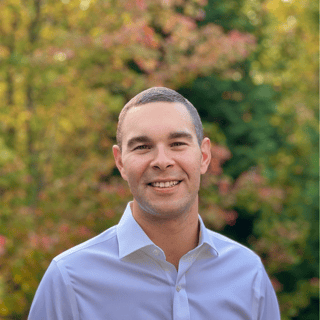
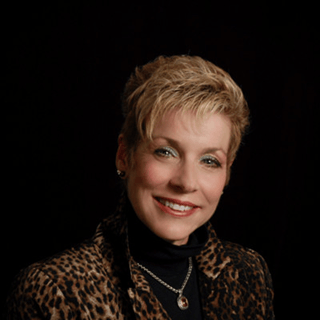
Speaker: My co-host is Scott Tobe, CEO of Signature Financial Planning, and I'm Joel Reed, CEO of OpenArc.
Speaker: Today, we're talking about MAPS Technologies with Steve Weissman, who is a 25-year entrepreneur and a veteran of the U.S. Navy.
Speaker: We'll discuss everything there is to know about helping small and medium-sized businesses better navigate the road to digital transformation and Steve's work with Inspire DR. Thanks for joining us, Steve.
Speaker: Hey, thanks.
Speaker: I appreciate the opportunity, and it's good to get the word out about MAPS and about our vision.
Speaker: That's great.
Speaker: Well, tell us a little bit, give us a 10,000 foot view of what Maps Technologies is, Steve, just to give us a starting point.
Speaker: Yeah.
Speaker: So there's been a lot of evolution in Maps and we kind of started as a single focus business application for the economic development industry.
Speaker: And as you mentioned with Inspire DR, a nonprofit, and we'll get into that, I'm sure, later, we broadened our focus out a little bit to helping
Speaker: a small nonprofits and community-based businesses with regards to their business application needs and fulfilling all those needs within one single application.
Speaker: So that's kind of like the 10,000 foot overview without getting too deep into the woods.
Speaker: Well, let's get a little bit deeper into the woods.
Speaker: Tell us a little bit about who did you develop this for and what was the goal for development?
Speaker: So it all started in just a casual meeting with a couple of executives of
Speaker: Economic Development Organization and the Chamber of Commerce, and they were discussing, complaining really about their needs for different software applications and multi logins and passwords and having four or five different billing, monthly billing fees for these applications.
Speaker: And just through the discussions and me being a serial entrepreneur, my takeaway was when I left that I can build something like this.
Speaker: So I quickly put together some business partners that I've been associated with for many years and we had a great whiteboard discussion on it.
Speaker: And within a couple of weeks, we started framing out the documents, hired our business analysts and
Speaker: and started building our application, which is MAPS technologies.
Speaker: The application itself was called MAPS.
Speaker: And it stands for marketing automation, proposals and solutions to business management.
Speaker: Not anything unique, obviously, but it's catchy maps.
Speaker: And we really built, we evolved from there.
Speaker: So as we begin to put it out to the marketplace, we realized that there were more than just the economic development industry and chamber of commerce that had the need for this type of platform.
Speaker: And so we started bringing on particularly community-based organizations, some YWCAs, YMCAs, some small nonprofits, and we found a niche.
Speaker: And we just started developing that niche and we listened to our customers.
Speaker: So as we work with nonprofits and they show us the different applications that they are using,
Speaker: We analyze that and we make a business decision on whether or not we should build that application to the MAPS as well, because MAPS is very customizable and we do customize it for each type of business that uses the platform.
Speaker: Steve, can you just expand a little bit on the challenges that nonprofits have with the current software ecosystem and their pain points that you're trying to overcome for them?
Speaker: Sure.
Speaker: So every nonprofit, as you guys well know, uh, their biggest, uh, well, their, their whole mission is built on bringing money in from donations and then putting in and then placing the money with those that are in need.
Speaker: And we'll just take in case Inspire DR since you brought it up earlier.
Speaker: So Inspire DR is a Dominican Republic.
Speaker: um non-profit organization and that was actually started by a really good friend of mine that we actually went to high school 50 years ago and um he it's it's basically it's a boys organization uh in dominican republic and he has gone from
Speaker: having two or three boys in this organization to building a community center with a pool and teaching them life-saving techniques, having computer resource room and just making a big difference in their life and really transforming them from fatherless boys to young, respectable men.
Speaker: And it's a great mission.
Speaker: And he's done a great job with bringing in sports figures, Dominican Republic baseball players and football players to help support the cause.
Speaker: But just like every nonprofit, they are budget constraint.
Speaker: So creating a donor base takes up a lot of time.
Speaker: Having a volunteer base is just an arduous task.
Speaker: And then placing the monetary base
Speaker: not compensation, but placing the monetary reward to the need-based recipients is tough.
Speaker: And so that is just a lot for any nonprofit to handle.
Speaker: So there's a lot of software platform applications out there.
Speaker: I won't name off the hundreds of them, but a typical organization will use three or four or five different platforms.
Speaker: So as I mentioned earlier, there's three or four different logins.
Speaker: They normally don't talk to each other because they don't have APIs that connect them.
Speaker: So there's the data download and upload, download and upload.
Speaker: And it just makes it tough for, especially the smaller organizations, they're maybe run by a founder, a spouse, a sister-in-law, a brother-in-law.
Speaker: So it's a closely held type of organization.
Speaker: And so the administration work takes up so much of their time compared to the actual doing good.
Speaker: And so really our mission has been helping them do the good rather than doing the administration time.
Speaker: That's great.
Speaker: That's a great goal.
Speaker: And it's neat to hear about Inspire DR. I actually was with my family in the Dominican Republic last week for spring break.
Speaker: And so that's even more near and dear to my heart at this moment than ever.
Speaker: What a great country.
Speaker: Well, very good.
Speaker: Yes, actually.
Speaker: So it is a fantastic organization.
Speaker: And hopefully everybody that hears this podcast, I'm just doing a little shout out to them and just look them up.
Speaker: And we actually are having a, as part of Maps, we built in a vent platform.
Speaker: plan your uh module event plan our module and uh so inspired dr is actually running a golf charity event in orlando in november the first week in november and it's all being run through maps so from the early stages to the payment portal to coordinating the the um the teams to the sponsorships and so forth it's all being run by maps so it's pretty exciting so
Speaker: Anyway, if you guys are in Orlando in November, you like to be part of a golf charity, Ben, I'll send you the date and so forth.
Speaker: You're more than welcome to show up.
Speaker: We have some, well, I don't, but Adam, the executive director and CEO of Inspire DR. He is bringing some DR sports figures since I mentioned.
Speaker: So I think Big Poppy is going to be there.
Speaker: Oh, yeah.
Speaker: I'm a Red Snug fan as well.
Speaker: Oh, very good.
Speaker: See, there you go.
Speaker: Yes.
Speaker: I found it interesting that you serve the nonprofit market all the way through to real estate and finance and everything in between.
Speaker: But I'm curious, how do you serve all of those markets and serve them well?
Speaker: Yeah.
Speaker: So, um, obviously we're still in a startup base, so it isn't like we have 10,000, uh, a beach type of, uh, target market, but what we have done is as we brought on a, like a real estate property manager, uh, we kind of teamed up with them, give them a, an incentive to, um, help us to build the tools that will.
Speaker: enable us to build that market.
Speaker: And we have learned a lot from our customers.
Speaker: And if you can't, if you don't learn from your customers, if you don't allow your business to learn from your customers, that is a, in my mind, that's a form of failure because your customers are the experts.
Speaker: We're just the administration of a business
Speaker: of a widget, of a tool, of whatever your offering is, but your customers know better than you do what is needed in the marketplace.
Speaker: And so through learning through different customers and our customers have been our biggest source of referrals.
Speaker: In fact, and I'm just throwing out a percentage.
Speaker: I don't really know what the exact percentage is, but at least 90% of our customers have come from referrals from other customers.
Speaker: because they've seen the power of using maps, the user-friendly, the intuitiveness of it, and this helped us spread the word into other markets.
Speaker: Yeah, it's been a good process for us.
Speaker: Steve, when we started the show, we mentioned that you were a veteran of the U.S. Navy.
Speaker: Thank you for your service to our country.
Speaker: Talk a little bit about how your Navy background has influenced you as an entrepreneur.
Speaker: Yeah, so that was an interesting time in my life.
Speaker: I was in college and I really didn't have a direction of what I was going to do with all that college education I got.
Speaker: So I decided I would join the Navy.
Speaker: I have a long background of Navy and my family.
Speaker: And actually I went in with the intent to retire, but...
Speaker: I went into what they call the Naval Nuclear Power Program, which they run nuclear reactors for the nuclear Navy, both on submarine and service ships.
Speaker: And one of the things it does is there's a weeding out process.
Speaker: So obviously boot camp, which is a very...
Speaker: That's that to me, that wasn't a weeding out process.
Speaker: But from there, once you get through your, your, what they call a school, your primary school, you get into the nuclear power program.
Speaker: And the first school you go to is the Naval Nuclear Power School.
Speaker: And I went down in Orlando, Florida, and it is, it is the attrition rate, uh, particularly in our class, which is back in 1984.
Speaker: was almost 80%.
Speaker: So of all the guys that went, which was over 400 and something in our class, only about 20% actually graduated.
Speaker: And it wasn't necessarily because of the material was that intense.
Speaker: It was just that the structure and the demands and the routine was very intense.
Speaker: And that taught me a lot.
Speaker: And I was, again, I was a little older, so I wasn't a high school grad.
Speaker: I was older, so I had a little bit more structure in my life.
Speaker: But to get through that and the stress involved in it, that teaches a lot about life.
Speaker: Because being an entrepreneur, if anybody tells you being an entrepreneur is not stressful within their
Speaker: telling you a lie, right?
Speaker: Because we all know being entrepreneurs, every day is full of stress from the time that you get the idea of the company to the time you sell off the company, if that's your goal, it is one day full of after another full of stress.
Speaker: But the Naval Nuclear Power experience taught me a lot about being able to absorb
Speaker: deal with and, and, um, manifest that stress with, or basically get through the stress of, of every day.
Speaker: And the same thing, when you get down in the fleet, the fleet, whether you're on a submarine down at X number of feet underneath the water, where, uh, you know, it's, it's a vessel designed to sink, but you want to hope that that vessel also floats back up to the top or if it's on the surface ship where you're a enemy target at all times,
Speaker: Uh, it's every day is, is full of stress and in the Naval nuclear power program, you are training every day.
Speaker: So there are drills every day in the middle of the night.
Speaker: And always happens to be when you just get right to sleep and you're woken up by, by alarms and you are, uh, going through all different types of drills.
Speaker: So every day you're experiencing stress.
Speaker: So stress to me, and this is what I try and convey to my entire team is, uh,
Speaker: It's just a, an item that requires action, but you don't have to overreact.
Speaker: You analyze it and then you react and that taking a second or two or five minutes to discuss it and analyze it gives you the opportunity to, um, act in the appropriate manner.
Speaker: Well, I echo Joel's sentiment.
Speaker: Thank you for your service.
Speaker: Thank you.
Speaker: It is much appreciated.
Speaker: And since we're talking about your past, I'd love to hear after the Navy, you know, what happened between the Navy and maps that led you to creating maps?
Speaker: Yeah.
Speaker: So there's a lot in there.
Speaker: So I won't be able to go through all of it.
Speaker: But when I, when I got out of the Navy, I still want to be associated with the nuclear power.
Speaker: I get on after nine years, I was actually over in Desert Storm and, uh, for various reasons and I just got married.
Speaker: So for various reasons I got out of the military.
Speaker: Um,
Speaker: But when, when I got out, I worked for actually right down the road from you guys, I worked at the Beaver Valley, uh, power plant.
Speaker: So it was a decommissioning of, I can't recall if it was Rector one or two.
Speaker: So I worked for a contractor and I was a project manager on there with the decommissioning.
Speaker: Uh, so it was cool.
Speaker: Uh, but it wasn't really the light for me.
Speaker: It was again, it w it was 84 hours a week, which was good.
Speaker: The money was great, but I wanted something more stable in my life.
Speaker: Uh,
Speaker: And so I decided I'd go to work for a, uh, it was a division of waste management.
Speaker: So it was the nuclear remediation division.
Speaker: And we traveled all over the United States running projects to decommission, um, DOE facilities, mainly department energy facilities.
Speaker: And I, um, uh, various projects between Cleveland.
Speaker: I ended up in Saratoga Springs, New York, Connecticut, New York there for the old GE, um, department of energy research facility, very cool location.
Speaker: I was a Florida boy.
Speaker: I grew up in the warm, the Florida.
Speaker: I got put up in Saratoga Springs by choice because I thought it'd be a good place to go on a project.
Speaker: And the wintertime was a brutal.
Speaker: Beautiful in the summertime, wintertime was a brutal.
Speaker: But anyway, I worked there.
Speaker: And then finally in 1997, my wife and I took a trip out to Las Vegas.
Speaker: in February and we were coming back and the weather in Saratoga Springs was horrid feet of snow.
Speaker: And I was like, why are we going back here?
Speaker: I had to cancel.
Speaker: And so I just, I decided that was done with the corporate world.
Speaker: Uh, the corporate world wasn't really for me anyway.
Speaker: I wasn't a great fit just because, um, I wanted to be able to, to create, meet creative, show, uh, more of my expertise in just a def, on a defined project.
Speaker: And, and not that the corporate world is, is not a great thing, but, uh, I, for me, it was a little stifling to where I couldn't, um, provide all that, those different levels of creativity that I, that I think I have.
Speaker: So anyway, I quit the corporate world.
Speaker: I never lived in Dallas, Texas.
Speaker: We picked that as a place to live.
Speaker: We went out to Dallas, Texas, and then I just had to decide what I'm going to do with my life when I grow up.
Speaker: And the easiest thing to do as a person with no job is to what?
Speaker: Become a consultant.
Speaker: So I started becoming a consultant, right?
Speaker: A self-proclaimed consultant.
Speaker: And I did that for chiropractic facilities and physician offices and so forth.
Speaker: And from there, I just started becoming an entrepreneur.
Speaker: I got these opportunities from friends and so forth to say, hey, I'm thinking about...
Speaker: this or this and, and, but of course having the ideas of, of different opportunities is one thing, but taking initiative to actually act on is another.
Speaker: And so most of these friends, uh, while they were great ideas, they had the fear of actually acting on those opportunities.
Speaker: And that's the difference with me is I didn't have fear.
Speaker: So we, I, I've done everything from, uh, creating, uh, Sear, S-E-A-I-R, the flying boat.
Speaker: which was a really cool startup that my friend out of Orlando, Florida and I did.
Speaker: And actually we were on a episode of Baywatch.
Speaker: So if you ever Google Sea Air on Baywatch, you can actually see the YouTube video of that.
Speaker: And two, starting and developing a day training platform
Speaker: or a broker dealer firm in New York City, to a casino gaming boat, to a real estate technology platform, and of course, mats.
Speaker: So a lot of different entrepreneur opportunities.
Speaker: There's a couple others I didn't mention that weren't so successful.
Speaker: We always like to brag about successes, right?
Speaker: So I'll stop it there.
Speaker: So you're telling us Scott and I could have been on the Baywatch set if we had known you earlier in your career.
Speaker: So my buddy, Steve Kerr, not the basketball player, but he actually, I think was polite.
Speaker: Anyway, one of the girls, her contract wouldn't allow her to go up in the...
Speaker: in the boat and they were launching it from the ocean out there in California.
Speaker: So he had to put on a one piece bathing suit with a wig on.
Speaker: And he actually went up there with the pilot as yes.
Speaker: It was funny.
Speaker: It was a great episode.
Speaker: Yes.
Speaker: That's funny.
Speaker: Well, we definitely have to Google that on YouTube later.
Speaker: Yes.
Speaker: You should attach it to the end of this.
Speaker: You'll get a kick out of it.
Speaker: Yes.
Speaker: Very good.
Speaker: Steve, I love what you said earlier about not overreacting.
Speaker: That's one of the things you learned about handling stress in the Navy.
Speaker: And that's something I had to learn
Speaker: through starting my company, it took me probably eight years to learn that, that not overreacting in those stressful moments.
Speaker: Have there any been any times recently where you've maybe had to remind yourself not to overreact or something stressful that's been happening with maps that, that you've been able to apply that kind of experience to help you get through?
Speaker: Sure.
Speaker: So, um,
Speaker: I think a lot of that, and I think any entrepreneur, especially when they have partners, right?
Speaker: So there's, although I'm the first founder of Mavs, I quickly brought in two fellow partners or founders.
Speaker: And of course you have those partner discussions, right?
Speaker: And it is very tough.
Speaker: I mean, that's what broke up the Beatles, right?
Speaker: They couldn't handle that stress and the differences of opinion on how to run a company.
Speaker: But we manage that well.
Speaker: And I have, as I tell everybody, I have two very, very type A partners.
Speaker: And I love them to death because that type A...
Speaker: Their attention to detail and their drive to succeed is beyond measurable.
Speaker: It is fantastic.
Speaker: And they are the reason why we are where we are today.
Speaker: I don't think I could have done.
Speaker: Maps could be where we are without.
Speaker: I know we couldn't be there without Brad Prater and Alicia Rogers.
Speaker: So two fantastic partners to have.
Speaker: But it is admittedly, it's a challenge.
Speaker: It is absolutely a challenge because we do not always see eye to eye.
Speaker: And so my ability to, to stand back, analyze the situation and not overreact is key.
Speaker: And I always have to maintain that.
Speaker: And so that's the most glaring example.
Speaker: Obviously day to day, there's other examples where perhaps, and we've all been through, if you've been part of a software company and you launch a project
Speaker: platform or if you make iterations your platform and you release those those updates you have bugs and there have been times when oh we release up the dev team releases how the bugs and you know the platform goes haywire and then of course you are in damage control thankfully you're not on a submarine you're not
Speaker: You know, going to general court is cause of flooding.
Speaker: So everything is, is, we'll be okay.
Speaker: Uh, but we go into damage control, especially with our customers.
Speaker: And, um, so, but, but that takes having some really being able to analyze it and knowing, or at least you, you have to think, you know, what the right decision is to make, uh, with regards to those type of, uh, situation.
Speaker: Hmm.
Speaker: So Steve, just like you, I also prefer talking about my successes, but Joel and I have definitely found that the entrepreneurs that we talk with have learned the most from their failures.
Speaker: And so I'm going to make you talk a little bit about something you didn't want to talk about.
Speaker: Let's hear a little bit about some of the failures that you had and what were the main lessons that you pulled out of there that you feel you'll be able to apply to making maps a success?
Speaker: Yeah.
Speaker: So, uh, um, truth.
Speaker: Well, I had this just idea and again, it was by Steve Kerr, who he's my oldest friend in the world.
Speaker: We have known each other more of well over 50 years and just my best friend in the world.
Speaker: But he convinced me one day to get into a motorcycle dealership, to buy one, run one.
Speaker: And it doesn't seem like it'd be that big of a challenge.
Speaker: And we both grew up riding motorcycles every day, obviously living down in Florida and so forth.
Speaker: So I know a lot about
Speaker: uh bikes uh but i knew nothing about running a retail operation and neither did him and not only is it just retail with um sales and marketing but i also do with customer service and then running the service department and so forth
Speaker: And then having a floor plan, everything.
Speaker: And I just let you know, it was a total disaster.
Speaker: Okay.
Speaker: It was a very expensive lesson learned, but there was a lot of lessons learned in there.
Speaker: And that is the main lesson is, and I can't stress this enough for every entrepreneur and everybody says it is to surround yourself with people who are smarter than you.
Speaker: But oh my gosh, how helpful is that to have people that are smarter than you?
Speaker: Not everybody needs to be the expert to be an entrepreneur, but you better surround yourself with people that are pretty close to being experts.
Speaker: And as the CEO or the president or whoever you're going to be, if you can be the facilitator of that expertise, then you can have a successful business.
Speaker: And, um, if you, and you also need to be able to work on your company and not work in your company.
Speaker: And that's key too, because in that particular motorcycle industry, um, dealership, I was working in it.
Speaker: Steve was working in it.
Speaker: And we, that old, um, saying you can't see the forest through the trees.
Speaker: We were there.
Speaker: Right.
Speaker: And it just, it was, it was tough.
Speaker: And, uh, so that was probably my very, it was smaller than a lot of projects, but it's probably my worst experience as an entrepreneur.
Speaker: Yeah, because we thought it was a slam dunk because we knew everything there is to know about the product, but we knew nothing else about the rest of the action items to run the business.
Speaker: That's great, Steve.
Speaker: Thanks for being a little vulnerable and talking about those.
Speaker: Just don't ask me how much I lost.
Speaker: Dang, that was my next question.
Speaker: I'm teasing.
Speaker: No, that's great.
Speaker: You were talking about how you're trying to enable nonprofits to be more effective and actually do the good work that they're setting out to do rather than bookkeeping and marketing and all those back behind the scenes type of things they have to do.
Speaker: Can you just talk about the impact you've already had on that front with your customers?
Speaker: Any stories they've shared with you?
Speaker: Kind of validation of that vision?
Speaker: Yeah, so I'll put another shout out to Grady's Decision.
Speaker: They're out of Erie, Pennsylvania.
Speaker: And Ryan Smith, similar to you, Scott, he has a wealth management firm, very successful out there in Erie.
Speaker: But through some tragedy in his family, he started Grady's Decision quite a few years ago.
Speaker: And when I first met him, and this was as an investor opportunity and not so much as a customer opportunity,
Speaker: And he learned more about maps.
Speaker: He actually asked us if maps can handle some of his
Speaker: This is back office with regards to his volunteers and scheduling coordinating.
Speaker: And of course we could, uh, and this was still really when we were in our beginning stages development, although we had a, a working beta platform out there.
Speaker: So through his, again, expertise and guidance, he really helped us structure, develop, um,
Speaker: code, new tools for nonprofits to make maps a one-stop platform for the nonprofits.
Speaker: And actually he was one of the, the, the innovators.
Speaker: shall I say for the event planner, because we, that was never on our radar, but he talked about, he ran a golf event every year and how the three different platforms he had to use.
Speaker: And he was still also using Excel spreadsheets and everything.
Speaker: And, and he asked if we could,
Speaker: if maps can do that.
Speaker: And he worked with, with our, uh, development team, uh, with a couple of people that, uh, the guys that we have upstairs in our innovation group, and we'll put together the, uh, events, uh, planning module as well.
Speaker: So, um, but,
Speaker: through Gray's decision and he actually goes on many customer road shows with me and just gives them real life experience about how his staff now is more focused on the placement of that monetary value in helping the recipients of the who are in need versus trying to run their day-to-day operations.
Speaker: And his
Speaker: this is back in uh the end of march so a couple weeks back year to date uh since the end of march compared year over year last year he's had 100 already of his 100 of his donations they took in all of last year so he's feeling that impact just by using maps which is incredible right so a big shout out to uh grady's decision and uh but yeah hopefully that's a good story
Speaker: That's a great story, 100% in only three months or four months into the year.
Speaker: That's fantastic.
Speaker: And as he says, he and a couple of his team members have had the time to dedicate to raising money versus the back office administrative activities.
Speaker: So that's a big difference for him.
Speaker: That's great.
Speaker: So let's fast forward five, 10 years.
Speaker: Maps is a huge success.
Speaker: What does it look like?
Speaker: Yeah, so three or four or five years.
Speaker: Well, yeah.
Speaker: I would love to see, there's two segments that I really want to focus on.
Speaker: And obviously we've talked a lot about nonprofits.
Speaker: So nonprofits has become our vision, our mission.
Speaker: And Alicia Rogers says it the best in that she has a passion for nonprofits.
Speaker: It's close and dear to her heart.
Speaker: She actually has a touch point with every non-profit that's on board maps.
Speaker: He was up last week at Erie with a new one called Emma's Footprints in Erie, Pennsylvania.
Speaker: Again, another non-profit that was born out of tragedy, and I think that's the...
Speaker: precedents of most nonprofits is that there was some sort of tragedy in a family or something and people start up in nonprofits.
Speaker: So I want to grow this nonprofit space a lot and help as many small nonprofits as we can.
Speaker: We're working with United Ways and so forth.
Speaker: So they're large and they have a much bigger budget, but they also have a need
Speaker: Um, so that's, that's one, um, sentiment I really want to see in five years that we really excel at.
Speaker: And the other one is healthcare.
Speaker: We're, we're in that space helping rural hospitals, rural facilities, um,
Speaker: with regards to the patient outcomes.
Speaker: And once the patient reaches the home, just because they're discharged from a hospital, they're not just left out there on their own.
Speaker: We're working in this space called the social determinants of health.
Speaker: And we've teamed up with a company out of Wexford, Pennsylvania called Centers for Healthcare Solution.
Speaker: And so we have a pilot program in place for the social determinants health program.
Speaker: And I'm really excited about that.
Speaker: So in five years, I'd like to see us have a huge footprint in the rural health space as well.
Speaker: That's great.
Speaker: You know, selling motorcycles sounds very sexy and cool, Steve, but I think the impact you're having on the nonprofit world and healthcare seems more fulfilling ultimately.
Speaker: So I wish you all the success in that.
Speaker: Thank you.
Speaker: Yeah, it is.
Speaker: Like I said, personally to me and then certainly to every team member that we have on board.
Speaker: And the biggest impact obviously is on those that are touch points of every nonprofit and also in the healthcare.
Speaker: Well, Steve, we'd like to finish up our show with a couple of light questions.
Speaker: I'll start with what advice would you give your younger self?
Speaker: So you've just gotten out of college 22, starting over again, what would you tell younger Steve to do differently?
Speaker: Yeah, when I first got on the military, if you'd asked me that question, I would have said, don't join the military.
Speaker: Okay.
Speaker: But I just left Desert Storms.
Speaker: I wasn't in the best of my, but now looking back, I would say I wouldn't change that at all.
Speaker: Um,
Speaker: If we were just out of reflection, I would have said, I would tell myself, stay in and make a career out of it because the military is a great opportunity.
Speaker: You just have a lot of patience and you can learn so much from being in the military.
Speaker: But again, it was a good boilerplate for me to start and excel in my entrepreneurial career.
Speaker: So that would be...
Speaker: One thing I told myself, and obviously there's a lot of lessons in life we learned along the way.
Speaker: So there's a few things I might change.
Speaker: But honestly, when we talk about this, all those failures, they're invaluable, right?
Speaker: I mean, we talked about it.
Speaker: And I don't want to change those.
Speaker: You learn the most from the failures more so than you do those that are successful.
Speaker: So because we kind of take the success for granted,
Speaker: Uh, we may cry internally a little bit about the failures for a while, but we can always reflect back and say, well, you know what?
Speaker: I probably should have done that.
Speaker: So that, that's type of situation, uh, comes up again.
Speaker: Uh, it's, it's makes for an easy decision process.
Speaker: Yeah.
Speaker: It's probably almost a good thing that we can not go back and wipe out those failures and change history.
Speaker: Cause we wouldn't be the people we are today without those.
Speaker: Yeah.
Speaker: Yeah.
Speaker: Well, look at Michael Jordan, right?
Speaker: Everybody brings that up, but it is so true.
Speaker: His failure is that he didn't even make the junior high team, right?
Speaker: Or whatever team it was.
Speaker: And he set his mind, whether he told himself to be the greatest basketball player ever, that's debatable.
Speaker: But in my mind, he is.
Speaker: But look what he became because of that failure.
Speaker: And if he would not have had that failure, who knows?
Speaker: Maybe he would have sat on his hands a little bit more, just said, okay, I'm good.
Speaker: And maybe he would not have been the best player that he turned out to be.
Speaker: I would add going to baseball on the list of his failures, but.
Speaker: Well, look, I never made the MLB, so I guess I'll really count that up as a failure.
Speaker: Well, you compare to me, I wasn't even thought of from any, you know, that was, yeah, anyway.
Speaker: Yeah.
Speaker: So, you know, having, as I mentioned, just come back from the Dominican Republic, I've got rum cocktails on the mind.
Speaker: So my last question to you is, what's your favorite drink?
Speaker: Is there a certain drink that you've been enjoying recently?
Speaker: Yeah.
Speaker: So I love hazy IPAs, but I, the older I get, the more they don't necessarily agree with my stomach, unfortunately, but I love hazy IPAs.
Speaker: But so I've kind of turned into a, uh,
Speaker: uh a vodka and a grapefruit juice kind of guy believe it or not so i know it sounds kind of uh benign and you know but it is i i enjoy it have you have you tried dancing gums uh hazy ipas i have not are they easy on the stomach or they in my opinion their lustra is very easy on the stomach and okay uh in my opinion best hazy ipa
Speaker: in Pennsylvania.
Speaker: All right.
Speaker: So dancing gnomes.
Speaker: Okay.
Speaker: That's, that's a easy name to remember.
Speaker: I will try those.
Speaker: They're in Sharpsburg.
Speaker: Okay.
Speaker: They've got a great outdoor and, uh, highly recommend them.
Speaker: All right.
Speaker: Very good.
Speaker: So we have a local brewery up here.
Speaker: It's called Trails to Ails up in Franklin.
Speaker: And so they have custom beers, I'll be craft beers.
Speaker: And they have the River Fog, which is, I hate DIP, which is really, again, it's really, really good.
Speaker: And so usually on, in fact, tonight's wean night there.
Speaker: So I'll go there tonight.
Speaker: And I'll usually have one, but then I regret it then.
Speaker: later on, but it's still good.
Speaker: Sometimes you just do what you, you know, you shouldn't do what you do it anyway.
Speaker: So yeah.
Speaker: Well, Steve, I really enjoyed hearing about your story and what you've learned from the motorcycles and the Baywatch and the Navy.
Speaker: and what the impact you're trying to have with maps technology.
Speaker: So thanks so much for being a guest today.
Speaker: And thanks everybody for listening.
Speaker: If you enjoyed this episode and you'd like to help support the podcast, please share it with others, post about it on social media or leave a rating and review.
Speaker: It all helps.
Speaker: Steve, how can people follow you if they want to learn more about maps or you and your, what you're up to?
Speaker: Yeah, sure.
Speaker: So obviously I have a LinkedIn page, so it's just Steve Weissman, W-E-I-S-M-A-N-N.
Speaker: And then also you just go to MAPS Technologies, www.maps, M-A-P-S, technologies.com.
Speaker: And you can learn all about us.
Speaker: All right.
Speaker: Great.
Speaker: So do that.
Speaker: And you can follow me on LinkedIn at Joel-Reed-O-A and follow Scott on LinkedIn at Scott Tobe-SFP.
Speaker: Thanks again.
Speaker: And we'll see you next time.
Speaker: Thank you.
Speaker: Thank you.