Transcript
Speaker: Welcome back to the Policy Biz Podcast. I'm your host, John Schwabisch. I hope your 2026 is off to a good start. As we continue to reflect back into 2025, one of the things that definitely happened that affected a lot of our work for those of us working in the data field is changes in data policy under the new Trump administration. Many data sets were taken down from federal websites. Some were put back up, some not. Some federal surveys were canceled or stopped or delayed.
Speaker: And some federal servants were fired, were let go or asked to retire, including the BLS commissioner, Erica McIntyre for sort of most famously.
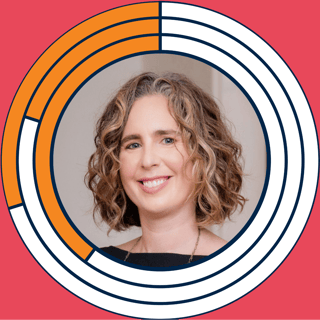
Speaker: So on this week's episode of the show, I am pleased to be joined by Denise Ross, who's the former US chief data scientist under the Biden administration. And Denise, along with many others have been undertaking a lot of work to try to rescue point to refund or highlight the importance of the federal data and the federal statistical agency ecosystem. And so I invited Denise to come onto the show to talk about her work, to talk about the importance of federal data and what she and others are doing to try to ensure that our federal data system is as reliable and as steadfast it as it always has been. And of course, looking forward, where should the federal data system go? What is a good model into the future? And so we talk about what's been happening, what she's been doing and as well as others and what a model of the federal statistical system might look like going forward.
Speaker: If you are in the data analysis field, if you're a researcher, you're a scientist, you are a data visualization expert. You are some way survey methodologist. This is the episode for you. Denise is doing amazing work.
Speaker: And I think you're going to find a lot of resources here. A lot of ways that you as an individual can also participate in this effort to save and solidify the federal data and federal statistical agency ecosystem. So let's get over to my interview now with Denise Ross only on the policy of viz podcast
Speaker: Hi, Denise. Great to see you again. Hey, John, you too. I mean, let's see. I saw you, what, like a couple of months ago at this USA Facts event in DC.
Speaker: Yep. Very excited to be, like, focusing on this challenge we have with federal data. So let's um let's let's get into it. So a lot's changed. Yeah.
Speaker: In the last like, the last like 12 months, you left your position US chief data scientists at the end, right? The end of 2024. have you been to since then? Last 12 months.
Speaker: since then last twelve months Yeah, well, um so a few weeks after the election and in 2024, group of what I'll call federal data watchers, um and I convened in my dining room. And I took all the pictures off the wall, and we got out the post-it notes, and we, ah you know, we... we looked back to the lessons from the first Trump administration and what happened with with data in that administration and what we learned, especially around climate and environmental data. And we mapped out all of the things that could go wrong and how we would know what was happening and what we might do to sort of head off the worst um the worst impacts on the the nation's capacity to to use data to inform all of the the things that we need to do as a modern society.
Speaker: And, um yeah you know, it was it's been a rough year from a data perspective. It's no surprise. um and And what I'm doing now is, ah the first, working with a group of colleagues to to monitor changes to federal data sets and to figure out how to assess the risk of a given data set um for not continuing And then looking for these policy windows where public input might have an outsized impact to protect the flow of a federal collection.
Speaker: um Often that manifests in like federal register notices, for example, and and places where data users aren't typically spending their time. yeah as As data users, we just take for granted that these data will continue flowing. um And so that it is, yeah i think 2026 is going to be a good year for people who use data to start thinking about how to also become data policy advocates at the same time.
Speaker: So we're doing that work through a website called dataindex.us. it's um It's pretty wonky, ah but um ah but we we have a newsletter. And so about once a week, we'll just send the highlights of what opportunities there are for public input around specific federal data sets.
Speaker: And so how are you doing that part of it? Because I think one of the challenges data people have had is how to keep on top of, say, the Federal Register. It's not like...
Speaker: there's an easily accessible newsletter that comes out with all the notices. So are you and your, the folks you're working with just like mining that every week to see what's popping up?
Speaker: ah Yeah, we scraped the website. um there's there's no um And it's it's worth sort of stepping back and thinking about what we mean when we talk about federal data. we um It depends on what field you're in, right? Like I think you and i you know, um you know we we came of age professionally sort of working on on data about people. yeahp um And so data collected through forms and surveys that are subject to the Paperwork Reduction Act, which um there's a lot of derision um around the Paperwork Reduction Act and how it makes it harder to serve the American people sometimes.
Speaker: But it also requires some transparency and accountability and engagement. around changes to federal collections. That's really important. yeah um And so any any data set that is collected through a former survey, um if a change is being made to it, it has to go through this formal process of public notice, and then there's a comment period.
Speaker: right yeah um But there's so many other types of data. For example, the satellite data, right? Yeah. um The geospatial data, there's there's reference data, like the census tiger line files. Mm-hmm. Or the the FDA has a ah data set that provides what the generic drug equivalents for name brand drugs are. Mm-hmm.
Speaker: Right, so these are all these are all data sets. there's There's data sets that help us navigate the federal government. So there's clinicaltrials.gov, for example, which that behind that is there's a data set and an API that has the characteristics of clinical trials. So if, you know, you you've got a specific type of cancer, you can go to this federal data set and see what clinical trials are available. um and and And then, of course, there's all of this really rich geospatial data, like the the National Geodetic Survey that that gives us a single source of truth for latitude, longitude, and elevation, even as the earth is shifting and wobbling. yeah
Speaker: And that you know stuff like that's really important. like We don't want every self-driving car company coming up with their own source of truth for lat, long, and elevation. yeah Right? We want them to stay in their lanes. yeah yeah Yeah, yeah. Yeah, those cars should all agree. That's right. yeah They should all agree. Yeah. Yeah. And there's just something that only only the federal government can do. um Right.
Speaker: Right. um So ah there's a lot to talk about, but but let's let's stay on this topic. Like from your perspective, what can the individual data users, and that could be researchers or analysts or people who are just, you know, they're just want to make a cool map of something.
Speaker: In addition to sort of following the federal register, like what other actions can they, can can an individual take? Yeah, so here's something really simple that we as um as sort of tool builders or map makers even policy analysts don't always do a great job of. And that is...
Speaker: citing your source explicitly. You might've been following the last decennial census, for example, when um there's a ah census behaviors and attitudes survey and the the the Census Bureau asked members of the public if they thought that census data was unique. And one common answer was no, you know there's nothing unique about the census data because you can get it from Google.
Speaker: ah Right? Right. Yeah. Right. You just get it from Google. Yeah, get it from Google. Similarly, if a football coach might be using a weather app in their pocket to know when the heat index crosses an unsafe threshold so he knows when to move football practice inside, without the National Weather Service, that app wouldn't have the data it needed.
Speaker: Yeah. um Or or if you're moving to a new town and you know you're using Zillow or Redfin or one of these real estate apps and you know one of the factors that you're considering is ah you know the quality of the schools in the neighborhood. That's coming from the Department of Education but it's like about three levels removed.
Speaker: Yeah. And you know and it's not like these real estate apps are being like here's you know brought to you by federal data. right Right, right, right, right. They take all the credit, right? Take all the credit, right. Yeah. But they've ingested all these different federal sources. I mean, not only that, like the Zillow example is a good example, like all the maps that they build.
Speaker: I mean, those are ingested using federal geospatial data. Totally. the The other one that I've heard in talking to people, I think more geared towards researchers is to, um I guess, promote the quality of the data. Like I think there's like researchers tend to say, oh, this data, you know, i use this data, but it doesn't have x Y, and Z, right? And so like I, you know, could only do this thing.
Speaker: But there's a flip side to that, which is, but it has all this other stuff that I can get nowhere else. um And so I've heard a few people say, like, ah from particularly researchers, but I think it extends to anyone using data to just say, like, this is the highest quality data we have. And without it, I couldn't do any of this, even though there are lots of other things I wish I had.
Speaker: Right. And that's the interesting tension with federal data, right? um Another project I've been working on is ah documenting the ways that specific federal data sets benefit everyday American lives and livelihoods. And we and that that work manifests at EssentialData.us. And we're almost at 100 use cases, 100 examples of of how federal data impact people's lives. And when I talk to data users, like people who know data sets really well inside and out, ah and I ask them about their favorite federal data set, they almost always say like, I can't live without it. It's the best thing that we have. And then they say, but it's got these shortcomings, like the, you know, it's got too much latency and it doesn't go into enough geographic detail. And I wish they would disaggregate by X, Y, and z yeah um And so we all, you know, you're you're right. Like we're all of two minds. Like we desperately need this data. And it's also not.
Speaker: not meeting the needs, especially of a rapidly changing world and society. Yeah. So I want to look for a moment, look beyond, and I think we should pull back and give people sort of ah a background of where things are right now. But when you think about the next five, 10 years of the federal data system, where do you think, and we can even just sort of like carve out where we are right now and to sort of ignore it. But like, where do you kind of want to see the federal data system be in another decade?
Speaker: Yeah, well, we um it's clear that we need to build more resilience into the system. the And ah one ah the the Evidence Act that that President Trump signed in 2019, I think was a really good first step there. um and you know when i um So I served in the Obama administration as a presidential innovation fellow and worked a lot on policing data and climate and environmental data. And then and then when I came back in the Biden administration, i was struck by how much more capacity the agencies had.
Speaker: you know most of The major agencies all had a chief data officer, there's a CDO council, um there were um ah ah you know data scientist jobs, and there were hiring pools, and like so you know a lot of progress had been made in in building the capacity. Right.
Speaker: to to ostensibly drive better outcomes and um and then in in the biden administration we took it to the next level my role as the chief data scientist was to build the data backbone so that we could disaggregate data, identify disparities, and then fix them. Right? Like if you don't have the detail, you can't fix the problems. right um And and that was that was really important. And that that's when we talk about disaggregating data,
Speaker: it It includes things like rural versus urban, you know, just the small area geographies and the discrepancies that you see, you know, based on based on place. It includes things like veteran status, whether somebody is a caregiver for an an injured an injured veteran or whether someone's a military survivor. you know there's different um There's different ways to slice and dice populations, race, gender, ethnicity, um income levels, access to a vehicle. like It really really depends on what the research question is. um And and in the in the Biden administration, OMB made really good methodological progress on updating, like modernizing the race and ethnicity categories for disaggregation, and also made progress on ah on some emergent ah best practices for collecting data about sexual orientation and gender identity.
Speaker: um And ah however, still... we still the system was still so highly fragmented. um And there were there were these weird divisions. And I'm sure you felt this in your career. Like, we treat our tabular data so differently than our geospatial data. Yeah. Right? yeah and like yeah And that's just, it's silly. and the And the silos, you know, I've heard that there are,
Speaker: There are you know like dozens of ways that the federal government collects data on rainfall, for example, precipitation. um And so like as ah as a local practitioner when I worked for City Hall in New Orleans, it was really hard for me to even figure out like which federal data set is most relevant to us in terms of future planning for future storm surge and rainfall.
Speaker: Right. um And and it shouldn't it shouldn't be that hard. It shouldn't be so siloed. right and and and And going back to the Evidence Act, I think one thing that was really brilliant about it is there was a requirement in there that federal data stewards engage with the public about the value of the data and how it could be improved.
Speaker: what What we haven't done a good job of is thinking across the federal silos. Yeah. um to So that that there's not that artificial distinction between data collected in different components across agencies and really more of a focus on the users.
Speaker: So what in your mind is the role of individuals, but also like private sector companies, private sector organizations in, i guess, improving or streamlining? i mean, all these things, I guess, improving sort of takes care of all it. But what is the role of like the private sector and individuals in improving the the federal statistical system?
Speaker: Yeah, that's a really good question. ah Sometimes when I zoom out a little bit and I think about building a more resilient national data infrastructure, thinking about um some points of resilience that have happened organically that maybe we should be more intentional about. um One good example was with COVID, um how entities like the COVID Tracking Project and Hopkins Stepped in to harvest the data from state and local public health agencies and harmonize it when the CDC sort of hadn't hadn't caught its groove yet with that collection. And that that went on for about a year.
Speaker: um And more recently, last September, ah or two Septembers ago, the Jeff Asher launched the real time crime index.
Speaker: and And it similarly harvests data crime data directly from jurisdictions and gives a monthly s national estimate of crime. And um and that's in that's complementary to the official statistics that the FBI produces on an annual basis, right? but But the way the FBI does it is the year closes and then it takes them nine months to process the data to make sure that the quality is the level that it needs to be if it's an official government statistic. yeah um but in the But in the meantime, policymakers and the the public need yeah access to this.
Speaker: Yeah. And so, so I, there's, um there's, there's a ah real beauty in the innovation that can happen when you're outside of government and you don't have, you don't have to worry about getting called before Congress to explain why you had to, you know, revise number. Right. You just, yeah you've got your method. It's like good enough. You're going to, you know, and, and so that, that tension between quality and timeliness yeah having Having some of these um sort of scrappier ah collections that are closer to the source can can help us build a more complete system where we've got the official data come coming with a little bit of a lag, but you know very high quality, um not as flexible in terms of like the you all of the data collected. But covering the core and then you can have innovations with it are more timely that might add on new attributes, for example, um you know, experiment with collecting data about non fatal shootings, which until recently wasn't in the federal standard, but seems super important for understanding violence in America.
Speaker: Yeah. Do you have. strong feelings or even a proposal on whether the future of the U S system is more like, uh, to, to, to sort of address these siloing issues is more like a statistics Canada type approach where it's like, there is a single like statistical agency versus the way we, the U S has sort of set up now, which is a little bit more, I guess, you know, topic sort of specific.
Speaker: Yeah, my, um so what I would say is if we're talking about data, think statistical data is just one type of data. And um it's ah it's a very important type of data, but, yeah,
Speaker: But it's worth thinking about how we manage data at the federal level across all of the types, including administrative data, for example, you know that FEMA collects to give benefits to people impacted by disasters, or the performance data that, for example, the VA a collects on its healthcare facilities. Yeah.
Speaker: that then veterans can use that performance data to find the clinic that's going to have the services that they need at the quality that they want and, you know, that they can get to by car.
Speaker: So I would say like, you know, thinking about it just as it as as as a statistical unit would is too narrow. Yeah. Yeah. um And especially because of the um the super important role of the geospatial component. Right. Right.
Speaker: And how we need to really start to integrate the geospatial component into all of our data. All of it. Yeah. So I don't know. Now's a good time for us as data policy stakeholders to start thinking about what the future should be.
Speaker: And I'm also reflecting, you know, it wasn't like I'd been in this field for 15 years until I realized I was a data policy person. Yeah. Right, yeah. Right, I mean, like, there's no, you know, there's no sort of field of data policy. No, right.
Speaker: Right, or but I mean, we know each other when we find each other. yeah And some data users sort of you know, make the jump to also being data policy and people and and data advocates. and i And I think that's something that more data users are going to need to do. We can't take the data flowing or being high quality or relevant to our current needs. We can't take that for granted anymore. And so anyone who's a data user needs to also be a data policy person.
Speaker: Yeah. I'm definitely looking forward to you having like the endowed chair, the Denise Ross endowed chair at the university of whatever for like the data policy department. Right. i like love that. Yeah. Right. Yeah. i mean, that sounds like a good, a really good degree. You're like a data scientist, but you're doing public policy. You're figuring out the best technologies to use. yeah I mean, that, that, that sounds like a pretty, pretty good degree to me.
Speaker: So I wanted to ask, and we've talked about this already, but but a lot of things have happened in the in the in the new Trump administration. They've taken a lot of data sets down. They've announced stopping a lot of data of different surveys. They've put some data back up, and some people are sort of trying to figure out, like, have there been changes to those data? Yeah.
Speaker: But I wanted to ask, and you've already touched on this a little bit, but but maybe like for people who are not data policy wonks, um what are the implications of the loss of these data these data tools um and even just the websites that you can't yeah get to anymore?
Speaker: Yeah, it's um it's worth stepping back a little bit and ah defining what we mean by data. because the the scale of the losses so far are different depending on whether you're talking about a primary collection of data versus a data product like the national climate assessment or the environmental justice screening tool or the climate.gov website that had a bunch of different content on it.
Speaker: And, um, And with any administration change, you see the the websites change their focus. um You don't see like the type of large-scale removal um that you know that we saw with this administration. But you you always see changes in the interpretation of data across administration changes. And and and the and and also um you know what data are focused on, depending on what the administration's priorities are.
Speaker: um And so that level of churn we would expect to see. um Data tools, interestingly, um some of them, for example, FEMA's Future Risk Index, was that was launched just in December of 2024 and then was terminated like two or three months later.
Speaker: And that tool was a really important shift for FEMA thinking about not just risk based on historical events, but risks based on the best science about what the future likely risks are.
Speaker: Right. um and And that tool being terminated certainly is ah puts more burden on the private sector to to take their best guesses.
Speaker: Right. So there's been a lot of removal of those those data products, the derivative works. yeah Some would be expected, most of it is is sort of above and beyond what we normally see with transitions.
Speaker: What's been and unnerving for people like me is when those primary data data collections start to disappear. Yeah. um Now, the when we look at the the primary data that have disappeared, though the number that have been actually explicitly terminated is really quite small at numbers in the dozens.
Speaker: um If you look at the number of web pages that were taken down, it numbers in the thousands. Right. um and ah and so And where we are right now is it's it's really a ground game, data set by data set.
Speaker: ah And there are different risks that did the data sets experience. Some data sets like the nation's report card, the National Assessment of Educational Progress, are statutorily required. Right.
Speaker: So they might be, they're more protected than a data set like the police use of force collection, which is not statutorily required.
Speaker: But could Congress, ah presumably Congress, right, could pass a law that would statutorily require... any of these data sets, right?
Speaker: Correct. Yeah. Yeah. And that that's why I think, you know, sort of a whole of government approach, whole of society approach makes sense moving forward. And we certainly don't want to over prescribe methodology. Right. Right. it in um in In law, that's not useful, but it is it is useful to.
Speaker: So, for example, the the National Assessment of Educational Progress specifically mentions the demographic attributes that need to be collected. isn and right And that's useful and meaningful. And i believe that that collection instrument over time has added additional instruments. So with any given data set, you might have a patchwork of some some pieces of the data set might be statutorily required and other parts might not be. and then And then we're also starting to see some examples where agencies are starting to add questions.
Speaker: For example, the one at the post-secondary survey recently. it For people who... I'm sure there are a lot of people who take a lot of these data for granted. So, oh, I can just go grab tabs of education or ACS or whatever it is. but but And so their reaction to this whole conversation may be, well, the private sector has a lot of data.
Speaker: um We saw during the government shutdown of the fall that like ADP and Indeed and a few others were putting out like job market numbers. Should people be nervous about a world in which private sector data are expected or preferred or people want them to replace the the federal, the publicly funded, the publicly created data?
Speaker: Yes. ah any Any of the private sector companies that were filling in the gap during the shutdown, ah all of them said that this is not a replacement for the official federal statistics. Just to be clear, they were very explicit about that. um And if you think about it, the longer you go with without that official benchmark, the further from reality you can veer.
Speaker: And especially with what's unique about the federal approach, right, is that it it has to cover all ah all of America, all places and all people, and not leave anybody behind. But private sector entities have different forces that act on them. I recall after Hurricane Katrina, we were using Google Street View data to see if we might be able to assess housing condition after the storm, like sort of, you know, across time. and
Speaker: it quickly became apparent that the Garden District and the French Quarter had more current imagery than like Village de Leste, where the Vietnamese community lived in New Orleans East.
Speaker: e And so there was this data discrepancy ah for different places and different populations. And when you have data discrepancies, it just amplifies the structural disparities that are already in place.
Speaker: and um And so that's that's why it's it's so important that we we continue the you know the official like federal data collections. um But we are, you know, we are going to need to supplement with private sector data and incorporate those into the different data products.
Speaker: um And there are, but ah but I also, there's some exceptions here too, right? Like, um I remember after Superstorm Sandy, I was in Department of Energy as a Presidential Innovation Fellow.
Speaker: And um President Obama was very frustrated that he didn't have visibility on which gas stations were open and able to serve people. You might recall the um the footage of like angry people, lots of cars, yeah trying to get gas and um A group of high school students like crowdsourced which gas stations were open and made a map, you know, it was it was the height of the civic tech yeah a movement. And, um and Energy Information Administration at the time was literally calling gas stations to see if they were open and if they had fuel.
Speaker: um And you can imagine like, you know, here's this gas station owner who's under siege. He's got all these angry customers out front and the federal government's calling him calling, that yeah. but He's open. um And so like a much better solution is the data that's already collected and and is very robust through the private company called GasBuddy.
Speaker: It's, you know, and GasBuddy like has this crowdsourcing and it's used heavily by people who drive for a living, like, um you know, Uber and Lyft drivers and truckers. Right. And when they stop and get fuel, they submit the price of gas, the price that they paid, and then it incentivizes them. Then they get you know coupons to buy something in the in the little store at the gas station. And so during blue skies, that data is really high quality and there's already a very strong user base. And so when a disaster happens, that also is probably the best source of information for open gas stations.
Speaker: Now, that you know that I'm sure the National Security Council doesn't like having to you know cite GasBuddy as their source. Yeah, probably not. gas and and And it certainly like makes us as a as a as a public a little bit vulnerable if um GasBuddy decides not to share the information. Right.
Speaker: And so that's like that's an interesting next frontier, right? It's like, how do we how do we identify those what our information needs are as a public and... what is the federal government best at collecting and what are other entities best at collecting and how can create we create a national data infrastructure that meets our needs for the future?
Speaker: Yeah, I just wanna add to that The combination of those are not, or or these different data are not just valuable for researchers, right? Like if you are a person who wants to open a gas station, being able to use GasBuddy to see where the gas stations are open and also to use Census Bureau data to see where people live and the median income and how long people have to commute to work. Like the combination of those two data sets would help you make a decision about where to open your next gas station or something like that. right um And then for and and for local transit companies where they should put a a bus line or something like that. So um I often think that, that
Speaker: We all get stuck in our little, our little avenue or whatever, and forget that, you know, combining data or there are just different needs and different actors in the, in the economy. I wanted to ask, ah you mentioned the the civic tech and the crowdsourcing. I wanted to ask you specifically about what's happening right now. um And you already mentioned the the two sites that that you work on, the data index and America's central data.
Speaker: How are other people, organizations stepping in to do the similar kind of work that you're doing? Yes. The, um, So we're we're monitoring and telling the story about why the why the data matter.
Speaker: And others, especially those who work in specific domains, like Climate Central, for example, when NOAA announced the termination of the billion-dollar climate and weather disaster data set,
Speaker: Climate Central hired the NOAA researcher behind that. And and that we we we we we call that a data set, but it's actually sort of a derivative product of yeah ah a bunch of different, mostly federal data sets. And so as long as those inputs keep flowing from the federal government,
Speaker: It may be that Climate Central is actually a better home for the billion-dollar disaster data set. they um you know you know they're They're really good at sort of that last mile of making data actionable and you know and and locally relevant. They're looking at adding features to the data set, you know maybe maybe making it the million dollar disaster data set. So it covers more and more disasters, right? Yeah. um So that, you know, maybe, maybe that's, it's, it's better home or maybe in the next administration, you know, Noah decides to, to sort of take up the reins again.
Speaker: um That is in contrast to, for example, what Partnership for Public Service is doing around the Federal Employee Viewpoint Survey. ah that That's an incredibly important survey of of federal employees that happens every year. across the agencies. And this has been the most disruptive year, I think we could agree, for the federal um for federal workers. And if we ever needed to understand, like, how are they feeling? Like, what's going on? It's this year. So it was really a shame that it was it was canceled for 2025. Partnership for Public Service saw that gap and stood up their own lighter weight version of the survey. But they don't have the email addresses for all the federal employees. Right. So they just don't, they like, they literally are not positioned to do a comprehensive survey and they can't replace the Office of Personnel Management's role with FED. So it's ah it's ah it's an important stopgap measure, but um but not at all a replacement for the federal data.
Speaker: Yeah. um Yeah, there's just a lot to do and a lot to sort of organize and in our brains. So before we wrap up, like, what does 2026 hold for you? Like, where you focusing your energy in this in this space or other spaces?
Speaker: Maybe you're just going to set up that endowed chair somewhere. i Exactly. Definitely building the field is important. we've the The bright spot of all of this is that people are not taking federal data for granted anymore.
Speaker: is So it's a good chance to talk about what we need from a national data infrastructure and how can we build more resilience into it. There's, um as i as I mentioned before, there's so many different types of data. So um I just wrapped up a a fellowship with with Berkeley and ah in the next couple of weeks, I'm going to be launching a field guide to federal data, which I'm really excited about because I feel like the jobs and the weather data just get so much attention.
Speaker: But data touch every every pieces of our lives. when i take you know When I go camping with the Boy Scouts and you're going into the forest and there's that sign that tells you about what the fire hazard is, that comes from a federal data set.
Speaker: Right? Yeah. Yeah. So being more explicit about all the different types of federal data so that as we're talking about what the future is, where we have we're not just over-indexing on the statistical agencies, for example.
Speaker: Right. um Well, I'll look out for the field guide because I think that could be a big value to folks. um I think you've got your work cut out for you in the next couple of years. So it'd be my, be my guess.
Speaker: Well, it's ah it is a team sport. ok And i think there's I think there's a lot of room for um for people to just continue to build value on the federal data that are flowing. And again, like give credit where it's due. Let's just call, let's name the data sets that we count on every day. Yeah. So last thing, Denise, if people want to participate, help out, team up with you or the other folks that you um work with, you already mentioned the the newsletter. um
Speaker: Where else can they connect with you or or other folks in this space? Like what's the what's their best first move? Yeah, so sign up for the newsletter. um when we um We often host webinars when there's ah ah a flagship data set that's at risk and there's a policy window where public input could save it. So you'll you'll learn about those opportunities to submit federal register comments.
Speaker: Also, one fun thing that we've been doing is hosting workshops to... create those one sentence use cases about how a specific federal data set benefits everyday Americans. And so if you've got a group of data users and you want to sort of shift the focus from how they use the data to how the data benefit everyday people, those workshops are there an hour long, they're really fun to do, very satisfying, and then we'll do, you know, social media campaign that gets a lot of attention. um So please reach out through essentialdata.us if that's something you might be interested in. Or if you just have one story about your favorite data set that you want us to put on the website, drop us a line.
Speaker: Awesome. Thanks, Denise. Appreciate it. Always good to see you. And I'm sure we'll talk this year. Yeah. Thank you, John. Sounds good. Thanks for tuning in everybody. Hope you enjoyed that.
Speaker: Please do check out the different projects that Denise mentioned, dataindex.us, essentialdata.us. These are really important websites. Sign up for those newsletters, get that information.
Speaker: Anyone can submit a response to the federal register. So be involved and take ownership of the data that we need to do our work well and objectively. So that's what I have for you this week. Until next time, this has been the PolicyViz podcast.
Speaker: Thanks so much for listening.