Transcript
Speaker: There was a summer, I wanna say 94, maybe 95, where didn't know what anyone was doing.
Speaker: was a summer i want to say ninety four maybe ninety five where i didn't know what anyone was doing Not because I was lonely, because there was no way to know.
Speaker: No group chat blowing up, no Instagram story to check, no last active timestamp to stalk, just the unknown, the void, the beautiful, terrifying freedom of being unreachable.
Speaker: I'm Jeff Pablisco, and this Xenialist, a show about the generation that remembers both the before and the after. The last kids to grow up analog, the first adults to live digital.
Speaker: We are the translators, the witnesses, and yeah, sometimes the casualties. Today, the last analog summer. What we lost when the world got a notification bell.
Speaker: Let's talk about boredom. Real boredom. The kind that didn't have a scroll function. I was 11 years old in the summer of 1995 and I was bored out of my mind.
Speaker: My friends were at a camp or on vacation or just, I don't know, elsewhere. There was no text to send, no DM to slide into. If I wanted to know if Jamie was home, I had to ride my bike to his house and physically find out.
Speaker: And if he wasn't there, that was it. That was the end of the mission. No backup plan. No infinite scroll of content to numb the disappointment.
Speaker: And here's what nobody tells you. That boredom was productive. It was an incubator. Because when you have nothing, like literally nothing, your brain starts generating its own entertainment.
Speaker: You draw, you write terrible stories. You build forts that would fail every building code. You stare at clouds until they become dragons, then battleships, then your anxiety about starting middle school.
Speaker: Now my phone is never more than three feet from my hand and I am never bored. I am also, I suspect, never as creative i as I was at 11, staring at a ceiling fan for 45 minutes and somehow developing an entire mythology about where it does come from.
Speaker: But here's the raw truth. We did this to ourselves. We were the beta testers. We were the 14 year olds on AIM, the college kids on Facebook when it still required a.edu email.
Speaker: The first adults to carry computer in our pockets and call it a phone. We watched the analog world die. And then we helped build the digital one that replaced it.
Speaker: And now we're the ones who remember what it felt like to be unreachable, to be unfindable, to exist in a space where your location, your status, your current emotional state were not data points and they weren't available to anyone with a wifi connection.
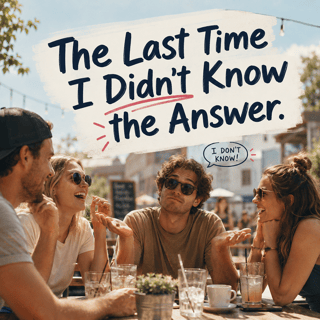
Speaker: Do you remember the last time you were truly unreachable? I don't mean like phone on airplane mode. I mean, genuinely, structurally, no one knows where you are or what you're doing, and there's no mechanism to find it.
Speaker: That used to be the default state of human existence. Now it's a luxury product. You have to pay for digital detox retreats experience what really used to be free.
Speaker: I want to read you something. This is from a journal I kept in 1998. I was like about 13. It says, Saturday, July 11th. Nothing happened today.
Speaker: Woke up at 10, ate cereal, watched TV for like four hours. Went outside, but was too hot. Came back in Mom made spaghetti. Bed at 11. Tomorrow, maybe ride a bike.
Speaker: That's it. That's the whole entry. And I remember writing it. This profound sense that I needed to document something, even nothing was happening. Because the nothing was the point.
Speaker: The nothing was the texture of the time. Now my journal is a notes app full of ideas I'll never execute and screenshots of tweets I'll never reference again. The texture is gone.
Speaker: Everything is high resolution, instantly shareable, and somehow less rude. So let's talk about influencers. Not the ones you love to hate, the ones you hate that you kind of understand.
Speaker: i was at a coffee shop last week, and yes, I know. I was at a coffee shop. It's the most zennial sentence ever uttered. Just behind, I was s thinking it about starting a podcast.
Speaker: And I watched a woman maybe 24, 25 spend 45 minutes filming herself spontaneously enjoying a lot. 45 minutes for what will become, I assume a 15 second reel with the caption.
Speaker: Slow mornings are my love language. And I want to be clear. I'm not above this. I've taken photos of my coffee. I've curated my Instagram. I have on occasion.
Speaker: Thought about how a moment would play before I thought about how it felt. But here's the Xennial difference. I remember when that wasn't an option. I remember the only documentation of a moment was the memory of it.
Speaker: The performance of authenticity is the defining aesthetic of our time. And Xennials, we are uniquely positioned to see the seams. We remember when authentic wasn't a brand strategy.
Speaker: when relatable wasn't a content vertical, when people had thoughts without hashtagging them. I want to tell you something I like to call the Xennial glitch. It's the moment when the digital performance breaks down and you see the actual machinery behind it.
Speaker: You're watching a day of my life video and suddenly you notice this person set up a tripod to film themselves spontaneously waking up. They have arranged their bedhead.
Speaker: They have placed the coffee mug at a specific angle for our optimal morning light. And you think, this is not a day in your life. This is a day in your content strategy.
Speaker: But here's the thing, and this is where it gets raw. We are not immune. We are the generation that learned to perform online in real time. We were the first to curate our lives for an audience.
Speaker: We were the MySpace top eight drama. We were the Facebook relationship status updates. We were the original content creators. We just didn't have a monetization strategy yet.
Speaker: The difference is depth. We had years of analog childhood before the performance started. We knew what it felt like to exist without an audience. And I think, or at least I hope, that memory is kind of immunity.
Speaker: A vaccine against total absorption into the content machine.
Speaker: But I'm not sure. because I also know what it's like to post something and feel the dopamine hit of engagement. I know what it's like to check my phone before I'm fully awake. I know what it's like to see my life through the lens of shareability.
Speaker: And here's the darkest thought. Maybe the influencers aren't the problem. Maybe they're just the logical endpoint of a culture that taught us to commodify our own experiences.
Speaker: Maybe the authenticity they're selling is just the free market responding to our deep, zenial need to feel seen. And if what we're being seen in is a performance of ourselves.
Speaker: I don't have an answer for this. I really don't think there is one. I think the best we can do is stay conscious. Keep noticing the machinery. Keep remembering that there was a time when a slow morning was just a slow morning, not content.
Speaker: When a coffee was just a coffee, not a brand partnership. When being yourself didn't require ah ring light. Let's talk about our relationship with technology.
Speaker: And I mean relationship to like the fullest sense. Because we are in a trauma bond with the internet. And I think it's time we named it. We didn't grow up with smartphones.
Speaker: We grew up with expectations. The expectation that if someone called, you answered. Because there was no voicemail notification, no text to follow up, just the ringing phone and the crushing guilt of letting it go.
Speaker: The expectation that if you made plans, you kept them. Because there was no running latex, no GPS tracking, no way to to communicate a delay. You just had to be there, on time, or you were an asshole.
Speaker: And then the technology arrived, and it arrived fast. It went from a pager in high school, yes, a pager, to a Nokia 3310 in college, to a Blackberry in my 20s, to an iPhone by 30.
Speaker: Each step felt like liberation. No more pay phones. No more, I'll meet you at the movie theater at 7, and if you're not there, I'll just stand there like an idiot. No more not knowing.
Speaker: But liberation has a cost, and the cost was a slow erosion of boundaries. The expectation that you are always reachable, that you always know what's happening.
Speaker: that you are always in some sense on. I wanna talk about something specific, the red receipt, the most diabolical invention of the digital age.
Speaker: There was a time, and again, I'm not that old. This was like 2008, when you could read a text and simply just not respond.
Speaker: And no one knew. It was the digital equivalent of getting a letter and taking a few days to write back. It was normal. It was healthy. It was human. And then Apple, or whoever, don't know, some engineer who has never experienced anxiety, decided that we needed to know when someone has read our message.
Speaker: And suddenly, the grace period was gone. The space between receiving or responding just collapsed. Now, if you read a text and don't respond immediately, you are making a statement.
Speaker: You're either busy, angry, dead, or deliberately ignoring someone. There is no neutral option. And Xenials, we're the generation that straddles this divide.
Speaker: We remember the grace period. We remember when communication had friction, when it took effort, when it meant something. And we also live in the world of instant response, where a three minute delay in answering a text can spiral into a relationship crisis.
Speaker: But here's what I want to explore. What did we lose when we lost this friction? Friction is not always bad. Friction creates heat. Friction creates meaning.
Speaker: When you had to write a letter, you had to choose your words. When you had to make a phone call, you had to commit to a conversation. When you had to meet someone in person, you had to show up as your full, unedited self.
Speaker: Now, we have the infinite channel and infinite retreat option. We can ghost. We can soft launch. We can breadcrumb.
Speaker: We have an entire vocabulary for digital cowardice. that didn't exist 20 years ago. Because 20 years ago, cowardice required really more effort.
Speaker: I'm not saying the old ways were better. I'm saying they were just different. And as Xenials, the last witnesses to both, I think we have a responsibility to remember the difference, to not let the digital present erase the analog path, to hold on to the knowledge that there was another way to be human, even if we can't fully return to it.
Speaker: I want to end with nostalgia. Because if there's one thing Xennials are accused of, it's nostalgia. We're the generation of Stranger Things and reboots, and only 90 kids will remember.
Speaker: And I want to defend it. Not as escapism, but as survival. The world we live in now is a lot. The climate is collapsing.
Speaker: Democracy is fragile. The economy is a funhouse mirror where houses cost ten times what they did when our parents bought them, and wages have barely moved. The future feels less like a promise, and more like a threat.
Speaker: And in that context, remembering a time when the biggest worry was whether your Tamagotchi died or you could get your CD player to skip the scratch track on your Green Day album, that's not escapism.
Speaker: That's regulation. your nervous system saying, there was a time when things were simpler, and I need to remember that time so I don't lose my mind in the present. But here's the raw truth.
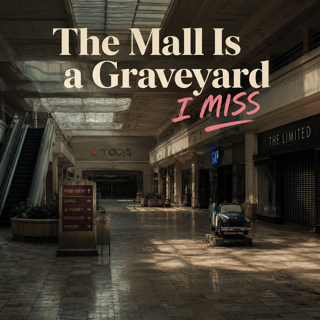
Speaker: We can't live there. Nostalgia is a vacation spot, not a residence. The last analog summer is a memory, not a destination.
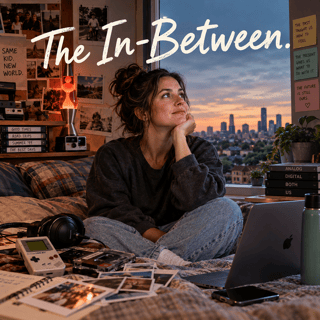
Speaker: And the danger for Xennials is that we get so good at remembering the before that we stop engaging with the after. So what do we do? We translate. We bridge.
Speaker: We take the values of the analog world, patience, presence, the willingness to be bored, and the courage to be unreachable. And we import them into the digital present.
Speaker: We play a model, a different way of being, for the generations that come after us, who never knew that before. We teach them that it's okay to not know. That it's okay to wait.
Speaker: It's okay to be unreachable. to be unfindable, to exist in a moment without documenting it. And we teach them the best memories are the ones that don't have a filter, the ones that exist only in your mind, imperfect and unshareable and completely irreplaceably yours.
Speaker: That's it for this episode of Xenialists. If you're listening to this, you're probably one of us, the last analog kids. The first digital adults.
Speaker: The generation that remembers both and fully belongs to neither. I want to leave you with a challenge. This week, find one moment to be unreachable. Turn off your phone, leave it in another room, go somewhere.
Speaker: A park, a coffee shop, your own backyard. And just be there. Don't document it. Don't perform it. Don't turn it into content.
Speaker: Just be bored. Just be present. Just be.
Speaker: This is Zenny List. See you in the after or the before, if you know how to find