Transcript
Speaker: I used to own a stereo. Not a smart speaker. Not a Bluetooth-enabled, voice-activated, algorithmically optimized content delivery cylinder.
Speaker: An actual stereo. A heavy, black, boxy constellation of components. Receiver, CD player, cassette deck.
Speaker: Two speakers the size of microwave ovens. Bought, with money I save from a summer job. Also carried up three flights of stairs by me and a friend, set up with wires and patience, and the specific tactile pleasure of twisting banana plugs into binding posts.
Speaker: It weighed about 40 pounds. It consumed electricity, whether it was playing music or not. It had no remote control. it had no software updates. It had no terms of service.
Speaker: And yet it worked for 23 years. I know because I checked. It's in my parents' basement. Dusty, but functional. Waiting for a future that will really never arrive.
Speaker: Because no one wants a stereo anymore. Because music lives in the cloud now. Because ownership is a burden. Access is freedom.
Speaker: And nice things are a relic of a stupider, heavier time.
Speaker: I'm Jeff Peblisco. This is Zenulous. Episode 7. Why we can't have nice things. The subscription economy.
Speaker: Planned obsolescence. The end of ownership. And the quiet rage of remembering when objects were built to outlast us. I want to talk about what it meant to own something.
Speaker: Not to access it. Not to subscribe to it. Not to rent it through a platform that can revoke our privileges with just a simple terms of service update.
Speaker: To own it. To hold it. To repair it. Break it. Modify it. Pass it down. Sell it.
Speaker: Keep it until it crumbles into dust. When I was a kid, ownership was the default. You bought a movie. You owned the tape.
Speaker: You bought a game. You own the cartridge. You bought a tool. You own that tool. These objects had weight, permanence, a physical reality that existed outside any corporate ecosystem.
Speaker: They could not be updated into obsolescence. They could not be rendered incompatible by a software patch you never agreed to. My grandfather owned a drill.
Speaker: A Black & Decker corded drill, purchased in, I think, 1974. It still works. It will probably still work when our children's children are dead.
Speaker: It is a simple machine. A motor, a trigger, a chuck. Built with metal gears and copper windings, and the arrogant, beautiful assumption that the user might want to use it in 50 years.
Speaker: I bought a drill last year. it is cordless, lightweight, Bluetooth enabled for reasons I do not understand. The battery died after 11 months.
Speaker: The manufacturer does not sell replacement batteries. The drill is not designed to be opened. When I searched for repair instructions, I found a forum post from a man who said, and I quote,
Speaker: Don't bother. It's cheaper to buy a new one. That sentence, it's cheaper to buy a new one. It's the anthem of our age. It is the death kneel of ownership.
Speaker: The motto of a culture that has traded durability for convenience, repairability for price point, the right to own for the obligation to consume.
Speaker: And of course, Xenials, we are the hinge generation. We remember ownership. We participated in its dissolution. We were there for the transition from buying to subscribing, from owning to accessing, from objects that age gracefully to objects that age deliberately designed to fail on a schedule that maximizes corporate profit.
Speaker: I want to read you something. This is from the terms of service for a popular streaming service. I won't name it, but I think you know the one. The one that has your movies.
Speaker: And it reads, content available through the service is licensed, not sold to you. The provider reserves the right to modify, suspend, or remove content at any time without notice.
Speaker: You agree that you do not acquire any ownership rights by using the service. You do not acquire any ownership rights by using the service, which you pay for monthly, forever.
Speaker: Let me translate that. You are not buying movies. You are renting the possibility of watching movies, subject to revocation, subject to change.
Speaker: Subject to the financial health and strategic priorities of a corporation that does not know you exist. And we accept this. We accept it because it was easy.
Speaker: Because the alternative? Buying physical media, storing it, maintaining it, finding shelf space for it, started feeling like a burden.
Speaker: Because we were told that ownership was clutter. That access was liberation. that the cloud was infinite and benevolent. But the cloud is not benevolent.
Speaker: The cloud is a landlord. And we are tenants, paying rent on our own culture, building no equity, accumulating no assets, leaving nothing for the people who come after us.
Speaker: Let's talk about subscriptions. Because this is where the end of ownership becomes inescapable. where the economics of access reveal their true architecture.
Speaker: I subscribed to 17 services. 17. I counted this morning, and I felt a shame so profound. I had to sit down.
Speaker: Netflix, Spotify, HBO, the one with the sports, and the one with the anime, the cloud storage, the password manager, the meditation app, the workout app,
Speaker: The app that organizes my other apps. The software that lets me write the script. The software that lets me record it. The software that lets me distribute it.
Speaker: Each one is affordable. Each one is only $10, $15, $8, $12. Nothing, right? A coffee, a sandwich. eight dollars twelve dollars nothing right coffee a sandwich A trivial amount for the convenience, the content, the seamless integration into my digital life.
Speaker: And here's the architecture. The hostile, brilliant, invisible architecture. Subscriptions are designed to be forgettable. They auto-renew.
Speaker: They bury themselves in your credit card statement. They rely on your inattention, your inertia. You're reluctant to go through the cancellation process, which is always, always more complicated than the sign-up process.
Speaker: Have you tried canceling a gym membership lately? A meal kit? A software subscription? It is a job. It requires phone calls, retention specialists, guilt trips, offers of discounted rates.
Speaker: The specific exhausting labor of extracting yourself from a financial relationship you entered in one click. This is not accidental. This is design.
Speaker: The friction is the feature. The difficulty of leaving is the business model. These companies are not selling you a service. They are harvesting your forgetfulness.
Speaker: your exhaustion, your learned helplessness in the face of bureaucratic resistance. And Xennials, we are uniquely vulnerable to this.
Speaker: We remember ownership. We remember buying something once and owning it forever. But we also adopted the digital economy early, enthusiastically, without reading the terms of service.
Speaker: We taught our parents how to stream. We canceled our own cable. We moved our music to the cloud, our photos to the cloud, our documents to the cloud, our identities to the cloud.
Speaker: We are the generation that built the subscription economy and now cannot afford to live in it. Time for the Zenial Confessional. This one is about objects, about the things we kept, the things we lost, the things we cannot get back.
Speaker: And the listener wrote, I still have my CD collection. They take up an entire shelf in my living room. My partner hates them. My friends mock me.
Speaker: Just use Spotify, they say. Why do you need physical media? And I try to explain. These are mine. I bought them.
Speaker: I can lend them. Sell them. Leave them to my nephew. They cannot be deleted by a server outage. They cannot be removed from availability because of a licensing dispute.
Speaker: These are mine in a way that streaming will never be. But when I say this, people look at me like I'm hoarding garbage. Like I'm clinging to a dead format out of stubbornness.
Speaker: Maybe I am. Maybe i look at my shelf. at the albums that got me through breakups and graduations, and the long, lonely winters of my 20s.
Speaker: And I feel something I never feel when I open Spotify. I feel like I own a piece of my own life. Thank you, listener, for sending that in. I feel that too.
Speaker: I feel it when I hold a book I bought in the 2000s. Its spine cracked. Its pages yellowed. My notes in the margin. feel it when I find a mixtape.
Speaker: Yes, we are full circle back to mixtapes. And a shoebox, the ink faded, the tape warped.
Speaker: But the object real, present, immune to deletion. And I feel its absence when I open my streaming library and find a movie missing. When a song I loved is grayed out, unplayable.
Speaker: When an app I relied on shuts down, taking my data with it, because I never owned the data, I only rented the interface. The confessional is right.
Speaker: We are mocked for clinging to objects.
Speaker: We are called hoarders or nostalgics. But what if we're not clinging to the past? What if we're defending the future? What if ownership, real, physical ownership, is the only thing standing between us and a world where we rent every aspect of our lives from corporations that can change the terms whenever they want?
Speaker: I want to end with a question. The question I'm carrying into next episode. What did you used to wonder about? I mean this literally. Before Google.
Speaker: Before the instant answer. before every question. Every trivial, profound, ridiculous question could be resolved in 0.4 seconds by a search engine that knows you better than you know yourself.
Speaker: Do you remember not knowing? Do you remember the specific, agonizing pleasure of a question with no immediate answer? The way a conversation could spiral into speculation, into argument,
Speaker: into elaborate, creative bullshitting that lasted for hours because no one could prove anything. The way a mystery could linger. I used to wonder about everything.
Speaker: I used to carry questions around for weeks, months, sometimes years. I used to debate with my friends about whether penguins had knees, about the name of the actor in that movie from 1987.
Speaker: These debates were not frustrating. They were fun. They were social rituals. They were the practice of curiosity without resolution. Now, I wonder for about three seconds.
Speaker: Then i Google it. Then I know. Then the conversation moves on, flattened, deflated, stripped of the creative tension that not knowing provides.
Speaker: We are the last generation to remember wonder as a state of being, not a search query. We were the last to know what it felt like to not know. And next episode, we're going to talk about what we lost when we outsourced our curiosity to the algorithm.
Speaker: That is episode seven of Xenulous, why we can't have nice things. If you have a confession about an object you still own, a service you cannot escape, a subscription that haunts your credit card, send it in.
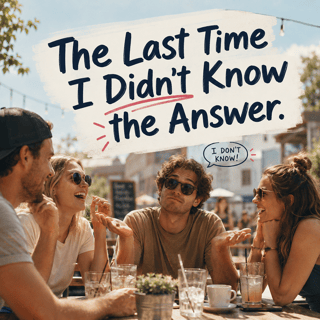
Speaker: I will read it. I will sit with it. I will not auto-renew your trauma. Next episode, the last time I didn't know the answer.
Speaker: Google as external memory. The death of wonder. Expertise in the age of instant information. Until then, buy something physical.
Speaker: Hold it in your hands. Write your name on it. Remember that ownership is not hoarding. It is not clutter. It is the practice of saying, this is mine.
Speaker: The corporations cannot have it. The cloud cannot dissolve it. It exists in the world, heavy and real and yours.
Speaker: No subscription required.