Transcript
Speaker: Just what will this change mean to the Channel 2 viewers who will still be watching this in black and white? Well, we think you'll see a big difference on black and white receivers. The new color cameras will give an improved monochrome picture, and all our new color sets here in the studio were designed with that in mind.
Speaker: Are you all set, Take it in spectrum fellow Color. fellow Color. Welcome. You've got mail.
Speaker: We are the hyphen, not the word before and not the word after, the dash in the middle, the pause, the connection, the place where two things meet and neither one dominates.
Speaker: We are not analog. We are not digital. We are the generation that watch one become the other. We are not young.
Speaker: But we are not old. We are the generation that feels both, sometimes within the same afternoon. We are not parents in the traditional sense, not childless in the carefree sense.
Speaker: We are the generation for whom the choice was often made by economics before it could be made by desire. We are the in-between.
Speaker: And this, this show, this season, these 10 episodes have been an attempt to map that territory, to name what we have lost, to acknowledge what we have built, to ask what we do with the memory of before, now, that we live in the after.
Speaker: I'm Jeff Pavlisko. This Xenialist. Episode 10. The In Between. Our season finale.
Speaker: Synthesis survival. And what we do with the time we have left. I want to start with a fact that sounds like a boast, but is actually a burden.
Speaker: We are the only generation in human history to experience a complete technological paradigm shift during our formative years. Think about that.
Speaker: Every previous generation lived in essentially the same technological world from birth to death. The two will change incrementally. Better pillows.
Speaker: faster trains, louder radios, but the structure of reality remained stable. Then we arrived.
Speaker: And in the span of roughly 20 years, the entire architecture of human experience was rewired. Communication, navigation, memory, friendship, commerce, knowledge, entertainment.
Speaker: All of it migrated from physical space to digital space. And we were there for the whole migration. We saw the border.
Speaker: We crossed it. We helped build the bridge. This gives us a specific, irreplaceable skill. We are bilingual.
Speaker: We speak analog and digital with equal fluency. Not because we are specially talented, but because we were forced to learn both languages to survive.
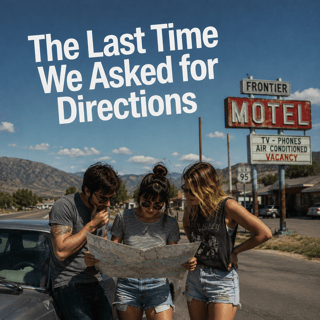
Speaker: We can read a paper map and debug a router. We can write a letter and compose an email. We can sit in silence without panic and navigate a group chat without drowning.
Speaker: These are not trivial skills. They are the skills of a translator. and translators are exactly what this moment requires.
Speaker: Because the world we live in now is divided between people who only know the after and people who remember the before, the digital natives. They are fluent in the new world, but they cannot see its seams.
Speaker: They do not know what was lost because they never had it. The analog holdouts, they remember the old world. but they have rejected the new one entirely.
Speaker: They cannot see what was gained because they're too busy mourning what was taken. We are the only ones who see both. We are the only ones who can compare.
Speaker: We're the only ones who can say with authority, this is better, this is worse, this is different in ways that matter. We are not nostalgic for nostalgia's sake.
Speaker: We are critical. We are specific. We know the difference between a mixtape and a playlist, between a mall and an app, between getting lost and being recalculated.
Speaker: We know because we live both. And that knowledge is not personal. It is political. It is structural. It is the foundation for any meaningful resistance to the worst excess of digital life.
Speaker: Not the resistance of rejection, but the resistance of discernment, of choosing what to keep and what to discard, of importing analog values into digital spaces without demanding that every everyone return to the analog world.
Speaker: So what do we do with the memory? That is a question the question this season has been circling. We have named what we lost. Boredom, privacy, ownership, spatial memory, wonder, friendship without performance.
Speaker: We have acknowledged what we gained. Access, connection, convenience, democratized information, the ability to maintain relationships across impossible distances.
Speaker: Now we have to decide what to do with that double vision. Nostalgia is a trap when it becomes an escape. When it becomes a refusal to engage with the present.
Speaker: When it becomes a performance of superiority. We knew the real world. You only know the simulation. That posture helps no one.
Speaker: It is not translation. It is tourism. But nostalgia is a tool when it becomes a standard, when it becomes a way of measuring what we have built against what we have lost, when it allows us to ask, is this new thing actually better?
Speaker: Or is it just easier? Does it serve human flourishing? Or does it serve engagement metrics?
Speaker: Does it make us more free? Or does it make us more predictable? This season, we have used memory as that standard.
Speaker: We have looked at the present through the lens of the past and found it wanting in specific, defensible ways. Not because the past was perfect.
Speaker: It was not. But because the past had qualities that the present has discarded without fully acknowledging the cost. The cost of convenience is patience.
Speaker: The cost of access is ownership. The cost of connection is presence. The cost of information is wonder. The cost of navigation is spatial memory.
Speaker: The cost of digital friendship is physical friendship. None of these costs are visible on a balance sheet. They do not show up in a quarterly earnings.
Speaker: They show up in our bodies, our attention spans, our capacity for solitude, our tolerance for boredom, and our ability to exist in public space without performing.
Speaker: And what do we do with the time we have left? What I want to propose in this finale is the work of translation. of taking the values from the analog world and installing them deliberately, consciously, against the grain into the digital world we now inhabit.
Speaker: Time for the Xennial confessional. This one is about action, about choice, about what we do with the time. And the listener wrote in, i deleted Instagram six months ago.
Speaker: not as a statement, not as a digital detox. I just got tired of performing my own life. I got tired of watching other people perform theirs.
Speaker: I got tired of the feeling that every moment was either content or waste. At first, I felt invisible, like I had disappeared from the social world.
Speaker: Then I felt something else. I felt present. I started reading books again. Physical books with pages I turned.
Speaker: I started taking walks without my phone. I started having conversations that lasted three hours because no one was checking a feed. I still use technology.
Speaker: I still work online. But I have drawn a line. I have decided that some parts of my life belong to me, not to the platform.
Speaker: It is not a perfect solution. It is not a solution at all. It is just a choice. And the choice feels like the first real thing I've done in years.
Speaker: Thank you, listener, for writing that in. That is what I mean by translation. Not rejection. Not escape. Choice.
Speaker: Deliberate, conscious, and perfect choice. That person who wrote that did not move to a cabin in the woods. They did not throw their phone in the ocean.
Speaker: They simply decided that some parts of their life would operate on analog rules. Presence. Patience. Privacy.
Speaker: Slowness.
Speaker: they became bilingual in their own daily existence. They used the hyphen. And that is what I think we are called to do. Not to go back.
Speaker: Not to pretend the internet does not exist. But to become the generation that insists on friction. That insists on inconvenience.
Speaker: that insists on the right to be bored, to be unreachable, to be unproductive, to be alone. So, the bridge question from last episode.
Speaker: What are we gonna do with the time we have left? I do not have a five-step plan. I do not have an app. I do not have a productivity hack or a morning routine or a framework for optimized living.
Speaker: Have a suggestion. It is not original. It is not revolutionary. But it is honest. Use the memory.
Speaker: Use it as a standard. When you encounter a new technology, a new platform, a new convenience. Ask the Xennial question, what does this replace?
Speaker: What does this cost? What am I giving up in exchange for this ease? Sometimes the answer will be nothing important.
Speaker: Sometimes the convenience is worth the cost. Sometimes the digital tool genuinely improves human life. We are not obligated to reject everything new.
Speaker: We are obligated to notice, to choose with awareness rather than defaulting to the path of least resistance. Protect boredom.
Speaker: Protect it like an endangered species. Do not fill every empty moment with content. Let your mind wander. Let it generate its own entertainment.
Speaker: Let it become strange and uncomfortable, and then, eventually, creative. Protect presence. When you're with another person, be with them.
Speaker: Not as a performance, not as content, but as a body and a room sharing physical space. Put the phone away. Not because it is evil.
Speaker: but because the person in front of you is more interesting than the feed. Protect slowness. Do not outsource every task to an algorithm.
Speaker: Cook a meal from scratch. Walk somewhere instead of driving. Write a letter. Make a mixtape. Yes, a real one on a cassette for someone you love.
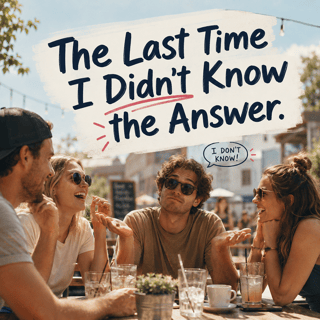
Speaker: Do the thing that takes time, because the time is the point. Protect wonder. Do not Google everything immediately.
Speaker: Carry a question. Let it live in you. Let it shape your thoughts, your conversations, your dreams. Not knowing is not a failure.
Speaker: It is a practice. It is the space where creativity grows and protect each other. We are a small generation, a micro generation, a hyphen, but we are not alone.
Speaker: We recognize each other. We know the same references, the same losses, the same stubborn bilingual fluency.
Speaker: We can build communities, real ones, physical ones, not just group chats, around the values we remember. We can model a different way of being for the people who come after us, not by lecturing, but by living.
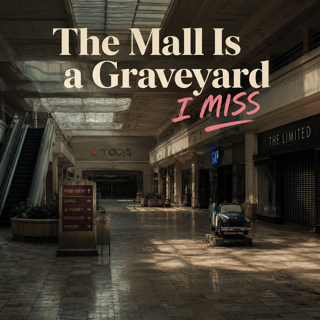
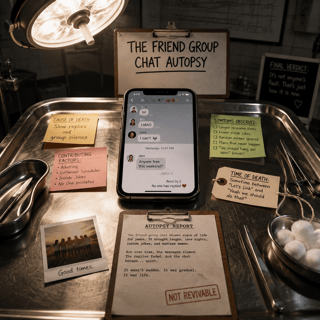
Speaker: That is season one of Xenulous. Ten episodes. Ten attempts to map the in-between. We talked about boredom, mixtapes, adulting, getting lost, group chats, dead malls, ownership, wonder, parenthood observed, and this.
Speaker: This attempt to figure out what we do with the memory of before, now, that we live in the after. I do not know if we will figure it out. I don't know if there's anything to figure out.
Speaker: But I know that naming the loss matters. That comparing the worlds matter. That being the hyphen matters.
Speaker: If you listen to this season, you're one of us. The last analog kids. The first digital adults. The translators.
Speaker: The witnesses. The casualties. and the survivors. Thank you for spending your time here. Thank you for letting me occupy your headphones while you drove, or cooked, or walked, or lay on your floor, staring at the ceiling.
Speaker: We will be back. There is more to say. More to map. More in between to explore. Until then, be bored.
Speaker: Be present. Be slow. Be unreachable. Be exactly as human as the algorithm does not want you to be.
Speaker: Stay in between.