Transcript
Speaker: We talk a lot about how to grow your startup on the show.
Speaker: But once you've mastered the startup part, how do you ensure you don't get left behind as a leader?
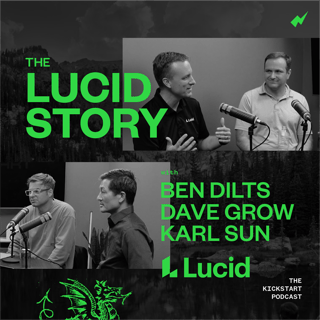
Speaker: Join us in today's conversation with Dave Groh, CEO of Lucid and investor Gavin Christensen as we bring you both sides of A Perfect Pitch.
Speaker: Perfect Pitch is a podcast from Kickstart that reveals the minds of both investors and entrepreneurs throughout a startup's journey.
Speaker: I'm your host, Karen Zunlick, and I'm really excited to introduce you to our guest today.
Speaker: Dave, we're going to start with you.
Speaker: You earned your bachelor's in finance from BYU, where you graduated summa cum laude.
Speaker: And after that, you started your career at Bain, a global management consulting firm, for those who don't know.
Speaker: And from there, you joined a small basement startup called Lucid in 2010.
Speaker: And you were the company's very first business hire.
Speaker: And from there, there was no turning back, it seems.
Speaker: Because over the next decade, you rose from VP of operations, a strategy to CRO to COO.
Speaker: to president.
Speaker: And today you're now the CEO of the thousand plus person company.
Speaker: And what's really, really impressive is that since you've joined this basement based company, you've helped lead Lucid to more than hundreds of millions in ARR and tens of millions of users.
Speaker: That's a lot of millions upon millions upon millions, which is really impressive.
Speaker: What else would you like us to know about you?
Speaker: Well, thanks for that intro.
Speaker: It's great to be here.
Speaker: I would say I'm a family man first, amazing wife, four great kids who keep me grounded every day.
Speaker: I can get pretty competitive, generally regardless of the activity.
Speaker: The last thing I'll say is I probably have my most unhealthy meal each quarter over breakfast with Gavin.
Speaker: What is that breakfast?
Speaker: It's called the Dutch baby, a very unhealthy version of pancakes with a lot of butter, a lot of syrup.
Speaker: And Gavin always orders a healthy dose of bacon on the side.
Speaker: Yeah, that's right.
Speaker: And you lately you've been passing on the bacon.
Speaker: So I think you get credit for like a pretty healthy breakfast.
Speaker: Yeah, the original pancake house, shout out.
Speaker: And the Dutch baby is just a beautiful piece of breakfast artistry.
Speaker: It's been a good problem solving energy builder in tough times.
Speaker: And then we celebrate it.
Speaker: It's just good times at that Dutch baby.
Speaker: Absolutely.
Speaker: And as we were prepping for this podcast, Dave, I thought about the first interaction I had with you when I joined Kickstart.
Speaker: I joined in 2018.
Speaker: And I asked you to speak at a meetup that we were hosting for fellow executives.
Speaker: And before I could get a thank you out, you had sent me a thank you card for asking you to speak.
Speaker: And I just think that's very indicative of the type of person you are.
Speaker: And I was just like, this guy is just wonderful.
Speaker: And over the years, you've just proved that assumption correct.
Speaker: And so I've been very excited about this conversation.
Speaker: And Gavin, it's always great to have you on the show.
Speaker: We're gonna have a link to your bio in our show notes at kickstartfund.com.
Speaker: And it's been a while since we've had you on the podcast.
Speaker: So we're hoping you can tell us something new.
Speaker: Maybe you can tell us a little bit about some of the epic VR ping pong battles you've had lately or what's new with you, Gavin?
Speaker: Gosh, I feel pressure to say something interesting right now.
Speaker: I'd say we're doing a lot.
Speaker: There's a lot going on at Kickstart related to companies and new companies, existing companies.
Speaker: It's an interesting time.
Speaker: I just got back from a nice time with my wife's family in Oceanside.
Speaker: We do that every few years.
Speaker: One of the highlights for me of this week, so two highlights, which were pretty funny.
Speaker: One was we were playing a lot of family ping pong and I've invested a lot in my ping pong game lately.
Speaker: There was almost a couple of local toughs came up to the table and were like, hey, are you guys even good?
Speaker: And what was fun is I said, oh, we're okay.
Speaker: And so for the next hour, proceeded to dish out a little humility to some local ping pong players, which was very satisfying, more satisfying than it should have been.
Speaker: That was fun.
Speaker: And then we're out in the water and we're over-equipped for what we were doing.
Speaker: We're boogie boarding and we had a little kid say, are you guys professionals?
Speaker: And we're like, no, we're definitely not.
Speaker: But you made our day.
Speaker: So it was, those are a couple of highlights from the week.
Speaker: So it was a good time, you know.
Speaker: And impressively, Gavin called into a board monthly call from the group.
Speaker: So I appreciate it.
Speaker: Yeah, that's right.
Speaker: That's right.
Speaker: It was always good to be on the list of calls.
Speaker: Anyway, so a couple of things going on for me, Kez.
Speaker: How about you?
Speaker: Any updates for us?
Speaker: Well, I mean, what's new with me right now is I'm prepping to move back to Utah.
Speaker: So I've been in Virginia for the past couple of years.
Speaker: So I'm like sorting Marie Kondo-ing my life or trying to, and then moving back.
Speaker: So that's new with me.
Speaker: And it's really exciting.
Speaker: I'm excited to be back in the Mountain West.
Speaker: Yeah, we're really excited to be back.
Speaker: It's great.
Speaker: Great.
Speaker: So let's dive into the discussion today.
Speaker: Dave, we're going to talk about your growth journey at Lucid.
Speaker: So as the intro explained, you joined Lucid as the first business hire and rose to be CEO.
Speaker: What was the moment when you realized that this was bigger than a post-college job at Lucid, that this is a place you wanted to stay and put down some roots?
Speaker: Yeah.
Speaker: When Carl and Ben, our co-founders, first approached me and pitched me about joining Lucid over a decade ago, they essentially said, we've got a great product, but we need someone to come figure out and grow the business.
Speaker: Immediately upon seeing Lucid chart, it resonated with me because at my consulting firm, I had spent many months helping redesign a complex aerospace and defense engineering process of how to build helicopters.
Speaker: And I had done all of that in PowerPoint.
Speaker: which was a tool that was never built for that level of complexity and collaboration.
Speaker: And so when I saw Lucidchart, I thought about all the hours and pain I could have saved, you know, had I had that tool.
Speaker: And so early on, the vision resonated with me.
Speaker: That said, at the same time, I decided to join, but it was pretty clear I was focused on getting an MBA.
Speaker: So I told them I'd give them six months, and then I was off to do that.
Speaker: And that time came later when I had to decide whether I was going or not.
Speaker: And I remember this distinct moment of being in that basement, looking around,
Speaker: And just seeing the small group of impressive people and thinking, regardless whether we have it all figured out or not, which we didn't, this is a group of people that I can stake my next couple of years on.
Speaker: So it's just a phenomenal team.
Speaker: So that was one of those early moments.
Speaker: And then I think consistently along the way, there were those moments that helped raise our sights even further.
Speaker: I remember a few years after that, and not to butter up Gavin here, but we had this moment where we needed to decide whether we were going to accept a term sheet for our big first round.
Speaker: I think we were excited about that potential, but also a little nervous because it would set a really high bar for what we had to achieve to make that a success for everyone involved.
Speaker: And I remember as we discussed that, Gavin essentially said, guys, you've got something special here.
Speaker: And I'll be supportive of whatever you decide to do, but don't overlook what the amazing opportunity here is, along with the team that you have.
Speaker: And ultimately, that was a special moment where, again, it helped cast that site even higher.
Speaker: And then the final thing I'll add on this is just all the reinforcement along the way of our users and customers.
Speaker: And especially as we've grown to the point where now we see kind of wall-to-wall opportunities where thousands or tens of thousands of employees at companies are using Lucid.
Speaker: And it's reinforced that confidence and conviction that we started with early but has grown over time that every knowledge worker can, should, and will use visual collaboration and we should be the leaders in that.
Speaker: So there have been some of those special moments along the way, but I also think it's been relatively gradual as we continue to cast our sights even higher.
Speaker: Sorry, this is a little bit of a tangent, but I think it's kind of fun.
Speaker: So Dave mentioned how consulting was kind of what got him his experience in consulting.
Speaker: It's like, Lucid, wow, this is a big idea.
Speaker: So when I was in management consulting with another group called Monitor, I spent a lot of time with a pharmaceutical company mapping out all their research process on one PowerPoint slide in a flow chart with like two-point font.
Speaker: And it was like probably six months of my life.
Speaker: It was so stupid.
Speaker: It was so stupid.
Speaker: It was like, yeah, we had Zoom.
Speaker: There's all these things we would do and Zoom in and it would break.
Speaker: And all this money spent on that, even not even using Vizio because it was just too hard.
Speaker: Anyway, so I was like, I know how painful this is and these guys have just a slick solution.
Speaker: And my experience was part of the passion as well.
Speaker: So paid the price.
Speaker: That's amazing.
Speaker: And now we're all thinking like, how small is two point font?
Speaker: We're going to have to put a little bit in our show notes.
Speaker: We're going to put something that's two point font in the show notes, but... Yeah, two point font.
Speaker: All right, let's go.
Speaker: We're coming at you guys.
Speaker: Two point font.
Speaker: So I love this topic, especially with Dave, you know, the risk of embarrassing him.
Speaker: I would say Dave's been one of the single most impressive people I've worked with in my career.
Speaker: And so just seeing Dave's growth from like our business guy.
Speaker: in the garage, then in the weird office space in Draper, and now our CEO.
Speaker: It's been amazing to watch the growth.
Speaker: Just from looking from the outside, what I would say is, it's like there's been this amazing mix of competence and competitiveness and drive, but also humility.
Speaker: Like I say, I think that conversation we had in the conference room in South Jordan was very much like, hey, this is a
Speaker: more than $100 million valuation on the business, which seems kind of laughable talking about a business that is worth more than $3 billion now and has all this revenue and all these customers.
Speaker: And they were very successful even at that point.
Speaker: But there was this element of humility, which has been part of this lucid culture.
Speaker: And I just think so many startups could learn from that.
Speaker: And I think Dave and Carl and the rest of the team have embodied this.
Speaker: because they've kept learning and growing.
Speaker: Like in some ways, it's so hard to scale as a leader.
Speaker: The things that Dave is solving now at Lucid are so different.
Speaker: And his role is so different.
Speaker: But like, I think if I had to generalize from the outside, what I've seen is he's kept his humility and he's kept his curiosity and his level of work.
Speaker: That's one of the things we've had to work on.
Speaker: Like, okay,
Speaker: what's sustainable, what's not, right?
Speaker: That's been a good journey for him.
Speaker: But if I had to articulate it, I feel like those have been some of the keys that I've seen where he's been able to kind of consistently reinvent the company or what he does.
Speaker: And I would say another consequence has been this incredibly loyal set of executives, many of which could be CEOs somewhere else, who've been loyal to Lucid and Dave because they have really leveled up as well in his wake or alongside what he's doing.
Speaker: So just a couple of things I've observed about Dave and Lucid that I think really make this story special.
Speaker: And I think a lot of people have seen that from the outside.
Speaker: Yeah.
Speaker: And Dave, what was going on for you on the inside?
Speaker: What were the skills that you felt carried over with each role that you had versus the ones you had to develop?
Speaker: Yeah, when I came to Lucid from my prior role in consulting, I think there were kind of two core skills that I brought with me at the time.
Speaker: One was a strong analytical foundation, and the other was training of how to break down hard, ambiguous problems into a plan you can actually go action to learn, to iterate, and scale.
Speaker: And a startup is often just a collection of hard, ambiguous problems that you try to inform best you can with the data you have.
Speaker: And so those skills have remained helpful in every role along the way.
Speaker: But certainly one of the areas where I've had to grow and develop a lot along the way is the softer interpersonal management skills.
Speaker: For example, how do you build buy-in and consensus on key strategic decisions?
Speaker: I remember a number of years ago when I spent a full week and then an entire weekend putting together a presentation on one of the more challenging problems that we had at Lucid at the time.
Speaker: And I believed I was putting forth this really compelling proposal of how we were going to solve it.
Speaker: And on Monday, I rolled into our leadership meeting, shared this presentation enthusiastically, and I was expecting a rousing endorsement and similar enthusiasm from around the room.
Speaker: And it mostly fell flat.
Speaker: which was super disappointing.
Speaker: I left that room and thought about that over the coming days and weeks and realized that it was largely because I hadn't done the hard work to understand others' perspectives and concerns and questions.
Speaker: And so people weren't prepared to back a proposal that seemed like it lacked context and bias.
Speaker: And so it's a specific example, but it's one of those, I think, many skills that I've had to learn and still learning every day, where I think in the early days of Lucid, I often wanted to make just the decisions based around the data and let that speak for itself.
Speaker: When growing to a company with now 1,000-plus employees, a lot of it is around how do you cast that vision?
Speaker: How do you build alignment?
Speaker: and make sure everyone is rowing in the same direction with a deep level of intrinsic motivation around it.
Speaker: And that is a very different skill set than I initially came to Lucid with.
Speaker: And I'm still very much on the journey, I think, of learning that.
Speaker: You were going to coach somebody on how to develop those skills.
Speaker: Could you give them a couple key points?
Speaker: I'm like, this is where you start.
Speaker: Do they need a coach?
Speaker: Do they need to find a mentor to help them?
Speaker: How do you start developing sort of the EQ side of that leadership?
Speaker: Well, I think the first benefit I had was to surround yourself with people with patience.
Speaker: I've actually gone back and apologized to the first person I managed at Lucid, you know, because I recognize and retrospect all the mistakes that I made, you know, then that I would do very differently now.
Speaker: And I appreciate the grace that he and others have given me over the years.
Speaker: I think a lot of it is just being deliberate and actually making it a focus because, you know, the time we are caught up in the big problems, big challenges.
Speaker: And if I have 10 minutes of spared mindshare, that's where my mind inherently goes, or at least has historically, where now I try to make that kind of deliberate space and time to prepare for meetings.
Speaker: And to prepare for big communications.
Speaker: You know, what do I want people to know, feel, and do coming out of those meetings and those communications with me?
Speaker: And so I think part of that has come from certainly watching and learning from others around me.
Speaker: We've brought in some tremendous people and executives over time who have, frankly, a lot more years of experience than I do.
Speaker: And I've learned a lot from them.
Speaker: I've had some great mentors, board members, and others.
Speaker: I've read a lot.
Speaker: I like reading biographies of great leaders and great companies and looking for the analogs and learnings along the way.
Speaker: And then more recently, actually for the first time in my career, I actually have engaged an executive coach over the last year.
Speaker: And it took me some time, I think, to figure out what do I want out of this?
Speaker: What's the right fit?
Speaker: But again, it's helped me create that space and deliberate focus on trying to be a great leader.
Speaker: And it's helped a lot.
Speaker: You know, most leaders come with, you know, strong strengths and weaknesses.
Speaker: Dave has a great broad skill set.
Speaker: He's naturally data driven, analytical, and kind of conservative for like a startup leader.
Speaker: He's not somebody who's getting on stage and talking about how he's going to take over the world just because.
Speaker: We have some of those in Utah and they can be amazing leaders.
Speaker: But I think it's been really interesting to watch as he's grown into the current role he has, as he really...
Speaker: really understands the situation and context of various meetings and communications and balancing the role of the CEO, which is interesting, which is people feed off your belief and your vision.
Speaker: And they're really key into what your concerns are, what your questions are.
Speaker: And so I think he's really learned to balance this.
Speaker: Just saying like, hey, the difference between being CEO and president is different than being CEO.
Speaker: And I think he's really figured that out and is
Speaker: kind of really coming into his own and leading in a very balanced way that works for Dave and really works for a company.
Speaker: But it's really different than where he started.
Speaker: Maybe one more thing I'd say is, it wasn't too long ago, it's like Dave knew the data about everything elusive better than most people.
Speaker: But I think over time, he's learned to really trust and rely on others to dig deep in certain areas.
Speaker: Yeah, well, it's kind of like that article, Give Away Your Legos or something like that.
Speaker: Yeah, I actually think Dave cited that.
Speaker: I remember you citing that article.
Speaker: Yeah, it's definitely a favorite of mine and written by a great operator and woman who helped scale a number of companies and just gives that analogy of building companies like sitting in front of a table full of Legos and you start to build...
Speaker: But pretty quickly, you realize to reach your vision of what you want to do, you need to invite other people to the table to build with you.
Speaker: But they can actually only be successful if you're willing to give them some of your Lego, some of your responsibilities and things that you've done historically.
Speaker: And you go through all this introspection as you go through that process.
Speaker: But it's certainly part of, I think, evolving as a leader.
Speaker: And I really appreciate some of the things that Gavin's calling out because they're spot on.
Speaker: You know, a COO, my role largely was to uncover the biggest risks or problems in the business and try to mitigate or fix them, as well as identify the biggest opportunities and how do we take advantage of them.
Speaker: Sometimes I think that could lead to that very conservative, very pragmatic approach to things.
Speaker: And maybe even could be classified at times as a half glass empty approach because I was very critical at all times about things going on in business.
Speaker: But that was part of the balance of what was required in that role.
Speaker: Whereas I think as I transitioned into the new role over the last year and a half, it is a lot more around what is possible.
Speaker: And helping everyone in the company catch that vision because we have lots of people who can uncover the problems and help fix and mitigate them.
Speaker: But again, coming back to how do I cast that vision and build the strategy and the alignment and enthusiasm for the team to go after that hard together.
Speaker: And that's certainly been an area I've embraced and a continued area of learning.
Speaker: And you pull in the strength of just having this super transparent culture where people can bring up challenges and problems and you can have a very grounded conversation about the data and fixing it because everybody knows that's not a problem with Dave.
Speaker: With the Legos, I want to circle back to that really quickly.
Speaker: Was that hard at first?
Speaker: It's one thing to say, give away your Legos, you've got to empower other people, but that's obviously a muscle you have to develop.
Speaker: Any tips for that, Dave?
Speaker: Yeah, very hard at first.
Speaker: What it concretely meant for me, and probably the biggest first experience I had with it, was I had led marketing for the first number of years of Lucid.
Speaker: And in many ways, I had done a pretty good job.
Speaker: We had attracted millions of users, had millions of ARR, we were doubling every year.
Speaker: But Carl and I had this conversation about, as we think about the company we want to build over the next few years, what is required of the marketing leader?
Speaker: And it required a different skill set along with the things that I had than I had at that point.
Speaker: Working with sales teams, product marketing, positioning, all of these new skills that I didn't have yet.
Speaker: And so it became clear that we needed to hire an external marketing leader.
Speaker: And fortunately, we found someone great who brought those skill sets and more.
Speaker: And on that day when he started, I shifted about 70% of the team that I had built and recruited and developed up until that point, along with all the initiatives that went along with that, to his leadership.
Speaker: And I had confidence in that leadership, but you bet it was hard to then look at what was left on my plate and say, what does this mean for me now?
Speaker: It took some time to kind of work through that around, okay, what is my role now?
Speaker: And what are the next big opportunities to run at?
Speaker: But as I've talked about this with a number of people who find themselves in similar situations where maybe they're a little bit of the generalist in a startup, and they're trying to figure out what does their path look like as the company continues to grow, a lot of it for me boils down to trust.
Speaker: I was willing to make that change and not cling to my Legos because there was this deep inherent trust that Carl and I had.
Speaker: Where he had confidence in my ability to, yeah, go run at the next thing and figure out what that was.
Speaker: And he had confidence I would add value for the business.
Speaker: And I trusted that he was not going to leave me high and dry.
Speaker: That I was going to be able to give away these responsibilities and so much of the value that I created up until that point.
Speaker: but that together, we would create the right role for me, the right learning for me, and the right outcome for the business.
Speaker: And so I think so much of it boils down to that, is do you have the trust with your team and particularly with your manager or whoever that is
Speaker: to make those kind of changes confidently.
Speaker: One interesting thing about this experience and watching the process is I actually think Kickstart learned a lot from watching Lucid and how great the culture was between Carl and Dave and the rest of the team.
Speaker: It's almost like an archetype now for us, for the hiring for the rest of the company, right?
Speaker: Where we would call it the athlete model, right?
Speaker: We'd go get somebody who was
Speaker: earlier in their career, ambitious, super smart, very driven, great broad skill set, great analytical skills, great people skills, and go solve retention.
Speaker: Let's do A-B testing and figure out how to go to market.
Speaker: And these were people with backgrounds in chemistry and backgrounds.
Speaker: And I just think about the various people.
Speaker: They were not specialists.
Speaker: But they were smart, ambitious, and there was value in specialists.
Speaker: What Lucid taught me is, wow, there's a ton of value for a lot of startups for quite a while to having generalists in a high-trust environment who can apply their curiosity and horsepower to challenges.
Speaker: There's different ways to do this.
Speaker: But I think if you're a startup listening to this and you're kind of wondering...
Speaker: you're probably better off going with some kind of generalist early for a while until you really know what's required to scale.
Speaker: Yeah, and I would just add on to that two thoughts.
Speaker: One was we did hire a lot of generalists in the early days.
Speaker: Really high aptitude, high learning people who fit our core values really deeply.
Speaker: We talk about giving away the Legos, and I joke sometimes in retrospect about this...
Speaker: situation we had where it became clear that I had led product for the first few years.
Speaker: I was a competent product leader, but that was not the visionary product leader that perhaps we needed.
Speaker: And so as we looked at the org, most leadership team took a step up, moved a seat to the right and sat back down.
Speaker: And so in one day, I moved from product to marketing.
Speaker: Our marketing leader moved to customer success.
Speaker: Our analytics leader moved into growth.
Speaker: Our growth leader moved into product.
Speaker: And
Speaker: It was kind of this amazing transformation that happened almost without a lot of conversation or angst around it.
Speaker: And again, it comes back to that level of trust that we had and still have today among the leadership team.
Speaker: But there was a day that came when it became clandestine.
Speaker: that we needed more specialists than we had.
Speaker: And part of that was what I referenced earlier.
Speaker: I've heard the analogy too of when you sort of evolve from being a basketball team and I think roles are very fluid and what's happening on the court to more of a football team.
Speaker: When roles become a little bit more clearly defined, you've got clear plays that you're running.
Speaker: People know exactly what they need to do and there's value in recognizing what stage you're at.
Speaker: Yeah, that's really good.
Speaker: If I had to generalize, I would say most startups go to specialists too soon.
Speaker: It's really tantalizing because you're like, whoa, this person did this thing.
Speaker: And the specialists are amazing.
Speaker: They're world class.
Speaker: However, they generally have a playbook.
Speaker: The value in holding off a little bit is you kind of know exactly where you are.
Speaker: And that's what the generalist at Lucid did such a great job is really refining product market fit and dialing in in such that we, okay, we know what groove we're in now.
Speaker: And now we can bring in somebody, hopefully who has enough curiosity and lateral thinking to navigate within this lane.
Speaker: But if I had to generalize, I would say many of the companies we work with have probably brought in specialists too soon and brought in big resume people who struggle in the environment they're coming into because they're like, man, I've got no brand now.
Speaker: It's hard to separate someone's success from the tailwind of the brand they were part of, especially someone who hasn't operated in a true startup.
Speaker: Because until you've been in that true startup and you realize that actually nobody wants to return your call when you're from Nothingville startup,
Speaker: It's a little different than when you're at Google and you're like, hey, I just wanted to... Anyway, some of these things are maybe... I think some entrepreneurs underrate the type of people they want to bring in that go for maybe a little too much resume too early.
Speaker: Yeah.
Speaker: And I think like most startup advice, it's very nuanced.
Speaker: Because there are those times where I think the playbook is clear and analogous.
Speaker: And if you can bring in those specialists with that experience, it can shortcut your path.
Speaker: I think the reason, or at least part of the reason why the generalist model worked so well for us in the beginning was because we were helping pioneer the product-led growth model.
Speaker: There wasn't a lot of playbook there.
Speaker: And there weren't people who had been a generation or two at other companies in the product-led model.
Speaker: And so we had to figure a lot of it out as we went.
Speaker: And so having those generalists to help us figure out what that meant, how to operationalize it, how to scale it, and so on and so forth across every function of the business was really helpful.
Speaker: It's very good advice.
Speaker: I was taking notes for my... I'm not doing a startup either, but it's very good advice.
Speaker: Dave, you had mentioned going back to the Lego conversation a little bit, obviously not giving away your Legos can be a mistake for growth at a startup.
Speaker: Are there other mistakes that an entrepreneur could make, which could lead them to be left behind by their company?
Speaker: Because the fear here is that if you don't grow with your company, your company outgrows you.
Speaker: Are there other mistakes you can make along the way?
Speaker: I would say one would be shying away from parts of the business that you're less comfortable with.
Speaker: Everyone has a natural affinity, and this is particularly true for founders, to a certain part of the business.
Speaker: They may be more product-oriented.
Speaker: They may be more of a sales-oriented, whatever it may be.
Speaker: And I think you should absolutely lean into those strengths.
Speaker: You should spend more time leaning into those strengths, I think, than trying to shore up your weaknesses.
Speaker: But you can't do it to the exclusion of other parts of the business.
Speaker: I can't tell you how many recruiting emails I've gotten over the years referencing a great product founder who's decided it's time to hand the reins to a more go-to-market oriented CEO.
Speaker: And again, that may be the right decision to make at certain times.
Speaker: But I also think continuing to have that natural curiosity and getting out of your comfort zone to engage deeply across the business is important.
Speaker: Sometimes I think about Ben Diltz, one of our co-founders and our CTO, is a great example of this.
Speaker: Ben labels himself as the original mad scientist who built Lucidchart and still today leads out in solving many of our most technically complex problems and opportunities in the business.
Speaker: That said, Ben doesn't shy away from go-to-market or other conversations.
Speaker: And I'm consistently impressed by the thoughtful questions and the insights and the synthesis that he'll do in these conversations where, again, it's not that he spends most of his time or mindshare there, but over the years, he's spent enough time asking the right questions.
Speaker: and being naturally curious and spending time with leaders in other parts of the business so that he can hang and add a lot of value in all of those kinds of conversations.
Speaker: And so I think one of them is don't shy away from parts of the business you're less comfortable with.
Speaker: I think at the same time, the corollary or counter is to that is taking too long to find the right compliment.
Speaker: Gavin, you know, obviously mentioned a little bit about the dynamic that Carl and I have had over the years, which has worked tremendously well.
Speaker: And so sometimes people ask me for advice on what they should be considering as they're either working toward or considering a COO role and what the scope of that should be.
Speaker: And I often say, well, it depends entirely on
Speaker: on the CEO.
Speaker: Because you're trying to be that complement for their skill set, their experience, and so on.
Speaker: And I think one of the things that Carl did phenomenally well over many years was hire truly exceptional people across the business, including in areas where maybe he had a little bit less affinity or less experience.
Speaker: And I've tried to continue to follow in that pattern because it makes all the difference, I think, in giving you more strength and longevity and confidence as a CEO if you have a tremendous leadership team around you.
Speaker: So don't shy away from the parts of the business you're less comfortable with, but also, I think, lean into finding the right leaders who can complement you.
Speaker: You think about how rare Ben was in the sense that he knew he had a tiger by the tail.
Speaker: He was able to go out and convince Carl to kind of join him as a co-founder.
Speaker: This guy, Carl, who is one of the highest profile people here locally, just come off running Google China,
Speaker: really the perfect person to come in and help build the team.
Speaker: So many founders would have been so intimidated by someone like Carl.
Speaker: They would be like, oh, shoot, I'll be in the room and everybody will talk to him and not me and all these little petty things that we all worry about.
Speaker: But Ben, just from the very beginning, had enough self-confidence and enough belief to say, let's just win.
Speaker: Let's have the winning team.
Speaker: In order to do that, I'm going to stack this team.
Speaker: So it's just not fair.
Speaker: And then Carl goes and gets Dave and Dave and Carl go and get all the other folks.
Speaker: And that's kind of like a huge part of this story that Dave is now perpetuating is like...
Speaker: Your product market fit is super important.
Speaker: Your product's important.
Speaker: All these things.
Speaker: But the most important thing is, do you have amazing people pushing the frontier of what you're doing every day?
Speaker: That's what I feel like this company has done so well.
Speaker: And it really started with really Ben saying, I'd just rather win than be whatever role.
Speaker: I just like to win.
Speaker: Yeah, I think massively important, right?
Speaker: That one decision set the path because to your point, I think Ben had both the confidence and the humility to go recruit Carl.
Speaker: And he recruited a very capable and humble leader in Carl that set the culture for the next dozen years now.
Speaker: That's right.
Speaker: Gavin, can you think of any other mistakes or examples?
Speaker: Because you have a breadth of experience with portfolio companies.
Speaker: Any other mistakes that entrepreneurs can make that can prohibit them from growing with a company?
Speaker: It's a really hard thing.
Speaker: If you had to boil it down, it ends up being a very psychological question, personal question, which is around trauma and there's so much excitement and there's so much validation that comes from the startup process.
Speaker: I think the leaders that get it right, they're grounded in who they are.
Speaker: They don't drink their own bathwater, read their own headlines around the highs or the lows.
Speaker: Again, Dave's probably one of the most humble guys I've ever worked with.
Speaker: And I'm sure he's had times he struggled with giving away Legos, doing this or that, even though it doesn't seem that way.
Speaker: I can relate to this.
Speaker: It's challenging.
Speaker: But I think it's the people that figure it out are the ones that stay grounded and stay focused on the goal, which is let's win as a team.
Speaker: And that might mean that we take different roles over time.
Speaker: And we actually take satisfaction in seeing other people win in what we were doing.
Speaker: You know, it's like, wow, you took my little Lego TIE fighter and you build a Death Star.
Speaker: That's awesome.
Speaker: I couldn't have done that.
Speaker: But hey, I recruited you.
Speaker: So that's awesome.
Speaker: You have to sometimes be in the background.
Speaker: If I had to like boil it down, I think that's what it is.
Speaker: It's like keeping your feet on the ground.
Speaker: Because it's the over focus on external validation on titles on blah, blah, blah, all those things that crush people.
Speaker: And I've seen it on the extreme negative side, I've seen it destroy people's lives.
Speaker: You kind of need to get good advice and mentorship early so you can handle what's coming, good or bad.
Speaker: The worst thing that can happen is extreme success early because you start to believe it's just you.
Speaker: Anyway, not to get too philosophical and more realistic, but I think ultimately it becomes a challenge of managing the invasive effects of extreme external validation or critique.
Speaker: Which is one of the amazing things about having young kids.
Speaker: Because I come home and they literally could not care less about my kids.
Speaker: You know, my oldest is now getting to his teenage years and has some understanding of what my job is and what we do.
Speaker: I ask my younger kids sometimes and they just think I'm on calls all day.
Speaker: But I love being grounded, coming home and spending the time with them because good or bad, what happened at work that day, that week, that month, it's put into perspective.
Speaker: And so I think whatever that is, for me, it's family.
Speaker: I think for other people, it can be other things, but to keep you grounded along the way, again, both for the highs and the lows.
Speaker: Dave, I really appreciate everything you've shared today.
Speaker: Dave and Gavin, this has been a really great discussion.
Speaker: We like to wrap up the show by asking every guest the same question.
Speaker: So Dave, I'd like to ask you, what's an effective practice you've implemented in your work or personal life that you think has had a great impact on your success?
Speaker: My team has heard me say it a lot over the years.
Speaker: So this probably wouldn't come as a surprise to them, but to give people the benefit of the doubt.
Speaker: And I think that's true both from a personal perspective as well as a work context.
Speaker: In a work context, especially when you're in a high-growth company, when there's a lot of changes, when you're no longer small enough that everyone's just in the room and understands what's going on, I think there can be a tendency...
Speaker: to start questioning decisions or motives or whatever may be the case.
Speaker: But the vast, vast majority of the time, if you take a breath and a step back, you give that benefit of the doubt, you ask sincere questions, far more often than not, we find that the people we've hired and work with are all trying to move the ball forward.
Speaker: Everyone's trying to do their best.
Speaker: And usually there's a reason why they made that decision or took that action, or maybe it was just a misunderstanding in communication, whatever it is.
Speaker: And so whenever possible, give the benefit of the doubt.
Speaker: And maybe that may lead to a couple of times where you're burned.
Speaker: from someone who is trying to manipulate or deceive or be out for their own personal gain alone.
Speaker: But that is so rare, I think, particularly in our community here, that it's not worth over-indexing on that, but rather take that risk and instead build the deep, meaningful relationships that come and work in personal life by giving everyone the benefit of the doubt.
Speaker: Gavin, do you agree?
Speaker: Totally agree.
Speaker: The way I frame it, Dave, is like, we just choose to round up on people.
Speaker: When you fund as many startups as I do, unfortunately, you encounter a couple outliers.
Speaker: But the worst thing you can do is treat the next great person like they're an outlier, you know, on the negative side.
Speaker: And you just choose to be optimistic because it's the right business thing to do.
Speaker: It just makes life so much better.
Speaker: I was recently watching the Wimbledon.
Speaker: And I wasn't there in person.
Speaker: That'd be amazing.
Speaker: That's one of my goals.
Speaker: But, you know, I love Roger Kipling.
Speaker: And one of the great quotes from him, just going back to what we're talking about earlier, was from his poem, If, which I love, which is to meet with triumph and disaster and to treat these two imposters just the same, which is he's talking to his son about what makes you a man or what makes you a whole person.
Speaker: And I just think that's the way to describe this is these are imposters in our lives.
Speaker: And we have the stream of just having this incredible experience and staying grounded is the key.
Speaker: It's staying grounded and staying optimistic because...
Speaker: What's the alternative?
Speaker: And it's easy to be optimistic when everything is up and to the right.
Speaker: Right.
Speaker: It's really a test of people's optimism and grit and everything else that we talk about, particularly right now, I think for a lot of startups and growth companies.
Speaker: And it's absolutely a decision.
Speaker: Again, if we make this space to be deliberate about the decisions that really matter and the actions that really matter, hopefully it helps us all be a little bit better leaders and fathers, mothers, brothers, sisters, peers, colleagues, whatever it is in our lives.
Speaker: Love, love that insight.
Speaker: Gavin, Dave, thank you so much for being on the show today.
Speaker: Thanks very much.
Speaker: It's been awesome.
Speaker: Thank you, Kaz.
Speaker: Thanks, Dave.
Speaker: And of course, thank you for listening as we dive deep into what it takes to create the perfect pitch.
Speaker: If you want to learn more about our investor, Gavin Christensen from Kickstart or our CEO, Dave Groh from Lucid, we'll have a link to the company and a longer bio in our show notes at kickstartfund.com.
Speaker: You can listen to more episodes of Perfect Pitch wherever you listen to your podcast.
Speaker: And if you like what you're learning, leave us a reviewer rating.
Speaker: We'll be back next time with more insights from entrepreneurs and the investors who fund them.
Speaker: So be sure to subscribe so you don't miss a thing.
Speaker: I haven't read If in a while and I'm like, that reminded me.
Speaker: I'm like, I need to go back and reread that.
Speaker: It's such a good... I love poetry and I don't make time to read it as much as I... I know, that's kind of me too.
Speaker: I love poetry.
Speaker: I like to actually write some poetry.
Speaker: I memorized it several times in my life and I'm a fan.
Speaker: I realized the other day, my daughter, who, you know, she loves reading and stuff.
Speaker: I realized that she's memorized The Raven just for fun this last summer.
Speaker: That's cool.
Speaker: Yeah, and Jabberwocky, actually, which was, I was on a hike with her and I was kind of joking, you know, the poem Jabberwocky, she's kind of joking about how we have a strange brand of humor in our family, but I was joking about the language in that, and then she started reciting it, and I'm like, oh my gosh, she knows the entire poem.
Speaker: So, you know, sometimes our kids surprise us.
Speaker: I'd say to God, he's not old enough yet, but he makes a really great Thomas the Tank Engine sound.
Speaker: There you go.
Speaker: Bye.